---
title: [BCM] [MOM] [E3] [BIA] [T2] [CBF] [5] Policy Formulation and Strategic Manpower Planning
description: [BCM] [MOM] [E3] [BIA] [T2] [CBF] [5] Employment Facilitation and Labour Market Resilience
image: https://blog.bcm-institute.org/hubfs/Ministry%20of%20Manpower%20Graphic%20Folder/MOM%20E3%20Morepost/MOM%20CBF%205/%5BBCM%5D%20%5BMOM%5D%20%5BE3%5D%20%5BBIA%5D%20%5BT2%5D%20%5BCBF%5D%20%5B5%5D%20Policy%20Formulation%20and%20Strategic%20Manpower%20Planning.jpg
---
.
[](http://www.bcm-institute.org/)
- [Home](https://www.bcm-institute.org/)
- [About Us](https://www.bcm-institute.org/about-us-3/)
- [A President’s Perspective](https://www.bcm-institute.org/about-us/a-presidents-perspective/)
- [Our History](https://www.bcm-institute.org/about-us/our-history/)
- [Our Advisory Council](https://www.bcm-institute.org/about-us/our-advisory-council/)
- [Customers’ Testimonials](https://www.bcm-institute.org/about-us/customers-testimonials/)
- [Credential Verification](https://www.bcm-institute.org/about-us/credential-verification/)
- [Courses](https://blog.bcm-institute.org/blog/course-fees-for-blended-learning-courses-master-catalog)
- [ISO 22301 Business Continuity Management System Audit](https://blog.bcm-institute.org/audit/business-continuity-management-audit-courses)
- [ISO 22301 Business Continuity Management](https://blog.bcm-institute.org/bcm/business-continuity-management-courses)
- [Crisis Communication](https://blog.bcm-institute.org/crisis-communication/crisis-communication-courses)
- [Crisis Management](https://blog.bcm-institute.org/en/crisis-management/courses)
- [IT Disaster Recovery](https://blog.bcm-institute.org/it-disaster-recovery/courses)
- [Operational Resilience](https://blog.bcm-institute.org/operational-resilience/courses)
- [Operational Resilience Audit](https://blog.bcm-institute.org/operational-resilience-audit/courses)
- [Certification](https://blog.bcm-institute.org/certification/types-of-certifications-offered)
- [ISO 22301 BCMS Audit Certification](https://blog.bcm-institute.org/certification/business-continuity-management-audit-certification)
- [ISO22301 Business Continuity Management Certification](https://blog.bcm-institute.org/bcm/business-continuity-management-certification)
- [Crisis Communication Certification](https://blog.bcm-institute.org/crisis-communication/crisis-communication-certification)
- [Crisis Management Certification](https://blog.bcm-institute.org/en/crisis-management/crisis-management-certification)
- [IT Disaster Recovery Planning Certification](https://blog.bcm-institute.org/it-disaster-recovery/it-disaster-recovery-certification)
- [Operational Resilience Certification](https://blog.bcm-institute.org/operational-resilience/operational-resilience-certification)
- [Operational Resilience Audit Certification](https://blog.bcm-institute.org/operational-resilience-audit)
- [Seminars](https://blog.bcm-institute.org/meet-the-expert/mte-webinar-mainpage)
- [Store](https://www.bcm-institute.org/store-2/)
- [Contact Us](http://www.bcm-institute.org/about-us/contact-us/)
-
-
##### Resilient Support: Implementing Business Continuity Management at Ministry of Manpower (Singapore)
# \[BCM\] \[MOM\] \[E3\] \[BIA\] \[T2\] \[CBF\] \[5\] Policy Formulation and Strategic Manpower Planning
Part 3: Impact Over Time of Business Functions[](https://cta-redirect.hubspot.com/cta/redirect/3893111/8c9d094e-b019-4313-b949-b3f9b287beb1)
Policy formulation and strategic manpower planning are long-horizon, intelligence-driven functions that underpin the Ministry of Manpower’s ability to respond effectively to labour market dynamics, economic shocks, and workforce transformation needs.
While short-term service disruption may not immediately affect frontline service delivery, prolonged disruption can significantly impair national workforce resilience, regulatory effectiveness, and socio-economic stability.
This section analyses the impact over time of disruptions to the detailed business processes (Sub-CBFs) supporting CBF-5 Policy Formulation and Strategic Manpower Planning, using a 1–5 impact scoring scale as defined in BCM impact assessment methodology.
The analysis identifies how impacts escalate over time, determines appropriate Recovery Time Objectives (RTOs) and Maximum Tolerable Periods of Disruption (MTPDs), and highlights vulnerable periods during which delayed recovery would lead to irreversible policy, reputational, or strategic consequences.
[![Banner \[BCM\] \[E3\] \[BIA\] \[P3\] Impact Over Time of Business Functions](https://no-cache.hubspot.com/cta/default/3893111/bc131ed6-ca92-4253-8940-2f98dad34599.png)](https://cta-redirect.hubspot.com/cta/redirect/3893111/bc131ed6-ca92-4253-8940-2f98dad34599)
Part 4: Supporting IT Systems and Applications
The Ministry of Manpower (MOM) plays a pivotal role in shaping labour policies and workforce strategies to ensure the nation's economic competitiveness and social stability.
To support these critical functions, the Ministry relies on a robust set of IT systems and applications that streamline the process of policy formulation, strategic workforce planning, and continuous monitoring.
These IT solutions enable MOM to collect, analyse, and disseminate critical data on labour markets, workforce needs, and the impact of various policy measures.
This chapter explores the key supporting IT systems and applications that underpin each of the detailed business processes (Sub-CBFs) within the Policy Formulation and Strategic Manpower Planning function (CBF-5).
It also discusses key metrics such as the Recovery Point Objective (RPO), System Recovery Time Objective (RTO), and the special resources and equipment needed to support these functions in times of crisis.
By understanding the interdependence of these IT systems with the Ministry’s strategic objectives, we ensure that the business continuity capabilities are aligned with the Ministry's long-term goals.
[![Banner \[BCM\] \[E3\] \[BIA\] \[P4\] Supporting IT Systems and Applications](https://no-cache.hubspot.com/cta/default/3893111/e60ed308-5615-4727-b6c2-5fb4eed933d7.png)](https://cta-redirect.hubspot.com/cta/redirect/3893111/e60ed308-5615-4727-b6c2-5fb4eed933d7)
[Dr Goh Moh Heng](https://blog.bcm-institute.org/t-e3-bcm/author/dr-goh-moh-heng) Jan 6, 2026
###### Business Continuity Management Certified Planner-Specialist-Expert
###### [](https://cta-redirect.hubspot.com/cta/redirect/3893111/b6d9d894-8ae4-44fb-8bac-fc8128f9c44d)
[](https://cta-redirect.hubspot.com/cta/redirect/3893111/326c85d5-f1af-4a99-9f0e-0072cfcad36a)
[![Banner \[BCM\] \[E3\] \[BIA\] \[P3\] Impact Over Time of Business Functions](https://no-cache.hubspot.com/cta/default/3893111/bc131ed6-ca92-4253-8940-2f98dad34599.png)](https://cta-redirect.hubspot.com/cta/redirect/3893111/bc131ed6-ca92-4253-8940-2f98dad34599)
CBF-5: Policy Formulation and Strategic Manpower Planning
Policy formulation and strategic manpower planning are long-horizon, intelligence-driven functions that underpin the Ministry of Manpower’s ability to respond effectively to labour market dynamics, economic shocks, and workforce transformation needs.[![\[BCM\] \[MOM\] \[E3\] \[BIA\] \[T2\] \[CBF\] \[5\] Policy Formulation and Strategic Manpower Planning](https://no-cache.hubspot.com/cta/default/3893111/ab3425fb-ba82-4915-953b-e789c8fb962c.png)](https://cta-redirect.hubspot.com/cta/redirect/3893111/ab3425fb-ba82-4915-953b-e789c8fb962c)
While short-term service disruption may not immediately affect frontline service delivery, prolonged disruption can significantly impair national workforce resilience, regulatory effectiveness, and socio-economic stability.
This section analyses the impact over time of disruptions to the detailed business processes (Sub-CBFs) supporting CBF-5 Policy Formulation and Strategic Manpower Planning, using a 1–5 impact scoring scale as defined in BCM impact assessment methodology.
The analysis identifies how impacts escalate over time, determines appropriate Recovery Time Objectives (RTOs) and Maximum Tolerable Periods of Disruption (MTPDs), and highlights vulnerable periods during which delayed recovery would lead to irreversible policy, reputational, or strategic consequences.
#### [](https://cta-redirect.hubspot.com/cta/redirect/3893111/4aefbd04-254a-4943-ae02-01465d10aab9)
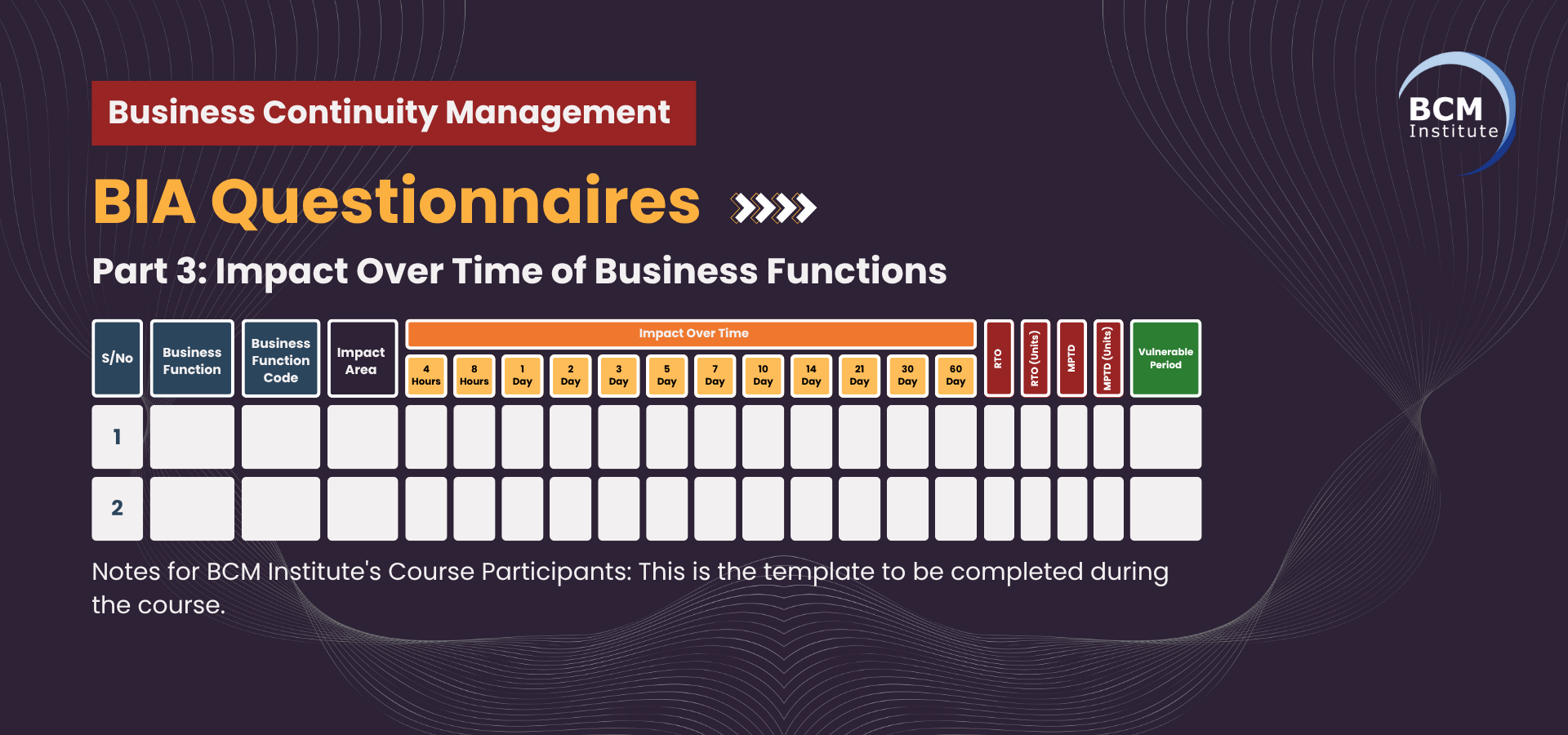
Table P3: Impact Over Time of Business Functions for CBF-5
| Sub-CBF Code | Sub-CBF | Highest-Impact Area | 4H | 8H | 1D | 2D | 3D | 5D | 7D | 10D | 14D | 21D | 30D | 60D | RTO | MTPD | Vulnerable Period |
| --- | --- | --- | --- | --- | --- | --- | --- | --- | --- | --- | --- | --- | --- | --- | --- | --- | --- |
| 5.1 | Environmental Scanning & Labour Market Analysis | Strategic / Regulatory | 1 | 1 | 2 | 2 | 3 | 3 | 4 | 4 | 4 | 5 | 5 | 5 | 5 Days | 21 Days | During economic downturns, major labour shocks |
| 5.2 | Policy Development & Formulation | Strategic / Reputational | 1 | 2 | 2 | 3 | 3 | 4 | 4 | 4 | 5 | 5 | 5 | 5 | 7 Days | 30 Days | Pre-budget cycles, legislative timelines |
| 5.3 | Strategic Workforce Planning & Scenario Modelling | Strategic | 1 | 1 | 2 | 2 | 3 | 3 | 4 | 4 | 4 | 5 | 5 | 5 | 7 Days | 21 Days | Major industry transformation initiatives |
| 5.4 | Stakeholder Engagement & Consultation | Reputational / Regulatory | 1 | 2 | 2 | 3 | 3 | 3 | 4 | 4 | 4 | 5 | 5 | 5 | 5 Days | 21 Days | Public consultations, tripartite negotiations |
| 5.5 | Policy Implementation Planning | Operational / Strategic | 1 | 1 | 2 | 2 | 3 | 3 | 4 | 4 | 4 | 5 | 5 | 5 | 5 Days | 21 Days | Transition from policy approval to rollout |
| 5.6 | Monitoring, Evaluation & Feedback Loops | Strategic / Compliance | 1 | 1 | 2 | 2 | 2 | 3 | 3 | 4 | 4 | 4 | 5 | 5 | 10 Days | 30 Days | Post-implementation review cycles |
| 5.7 | BCM Integration and Contingency Policies | Strategic / Organisational Resilience | 1 | 1 | 1 | 2 | 2 | 3 | 3 | 4 | 4 | 4 | 5 | 5 | 10 Days | 30 Days | During national crises or cross-agency activation |
#### [![Banner \[BCM\] \[E3\] \[BIA\] \[Summing Up\] \[P3\] Impact Over Time of Business Functions \[BIAQ\]](https://no-cache.hubspot.com/cta/default/3893111/987f8ca5-0ba4-4281-be57-5221186733d0.png)](https://cta-redirect.hubspot.com/cta/redirect/3893111/987f8ca5-0ba4-4281-be57-5221186733d0)
The impact-over-time assessment for CBF-5 Policy Formulation and Strategic Manpower Planning highlights that while most sub-functions have low immediate impact, their disruption becomes increasingly severe over medium to long durations.
Strategic intelligence gaps, delayed policy responses, and weakened stakeholder confidence can significantly undermine MOM’s mandate to ensure a resilient, adaptive, and future-ready workforce.
From a BCM perspective, Sub-CBFs related to policy development, labour market analysis, and strategic workforce planning demonstrate moderate RTOs but relatively short MTPDs, particularly during periods of economic volatility or national transformation initiatives.
Integrating these findings into continuity strategies ensures that policy-critical capabilities remain operational during crises, supports informed decision-making, and strengthens MOM’s overall organisational resilience.
This analysis provides a robust foundation for defining recovery priorities, resource allocation, and contingency arrangements for policy-centric functions that are vital to Singapore’s long-term manpower and economic sustainability.
---
[](https://cta-redirect.hubspot.com/cta/redirect/3893111/b6d9d894-8ae4-44fb-8bac-fc8128f9c44d)
### [](https://cta-redirect.hubspot.com/cta/redirect/3893111/58912f86-0de7-4b16-bcf9-99bdedd6b04d)
### [![Banner \[BCM\] \[E3\] \[BIA\] \[P4\] Supporting IT Systems and Applications](https://no-cache.hubspot.com/cta/default/3893111/e60ed308-5615-4727-b6c2-5fb4eed933d7.png)](https://cta-redirect.hubspot.com/cta/redirect/3893111/e60ed308-5615-4727-b6c2-5fb4eed933d7)
CBF-5: Policy Formulation and Strategic Manpower Planning
The Ministry of Manpower (MOM) plays a pivotal role in shaping labour policies and workforce strategies to ensure the nation's economic competitiveness and social stability.[![\[BCM\] \[MOM\] \[E3\] \[BIA\] \[T2\] \[CBF\] \[5\] Policy Formulation and Strategic Manpower Planning](https://no-cache.hubspot.com/cta/default/3893111/ab3425fb-ba82-4915-953b-e789c8fb962c.png)](https://cta-redirect.hubspot.com/cta/redirect/3893111/ab3425fb-ba82-4915-953b-e789c8fb962c)
To support these critical functions, the Ministry relies on a robust set of IT systems and applications that streamline the process of policy formulation, strategic workforce planning, and continuous monitoring.
These IT solutions enable MOM to collect, analyse, and disseminate critical data on labour markets, workforce needs, and the impact of various policy measures.
This chapter explores the key supporting IT systems and applications that underpin each of the detailed business processes (Sub-CBFs) within the Policy Formulation and Strategic Manpower Planning function (CBF-5).
It also discusses key metrics such as the Recovery Point Objective (RPO), System Recovery Time Objective (RTO), and the special resources and equipment needed to support these functions in times of crisis.
By understanding the interdependence of these IT systems with the Ministry’s strategic objectives, we ensure that the business continuity capabilities are aligned with the Ministry's long-term goals.
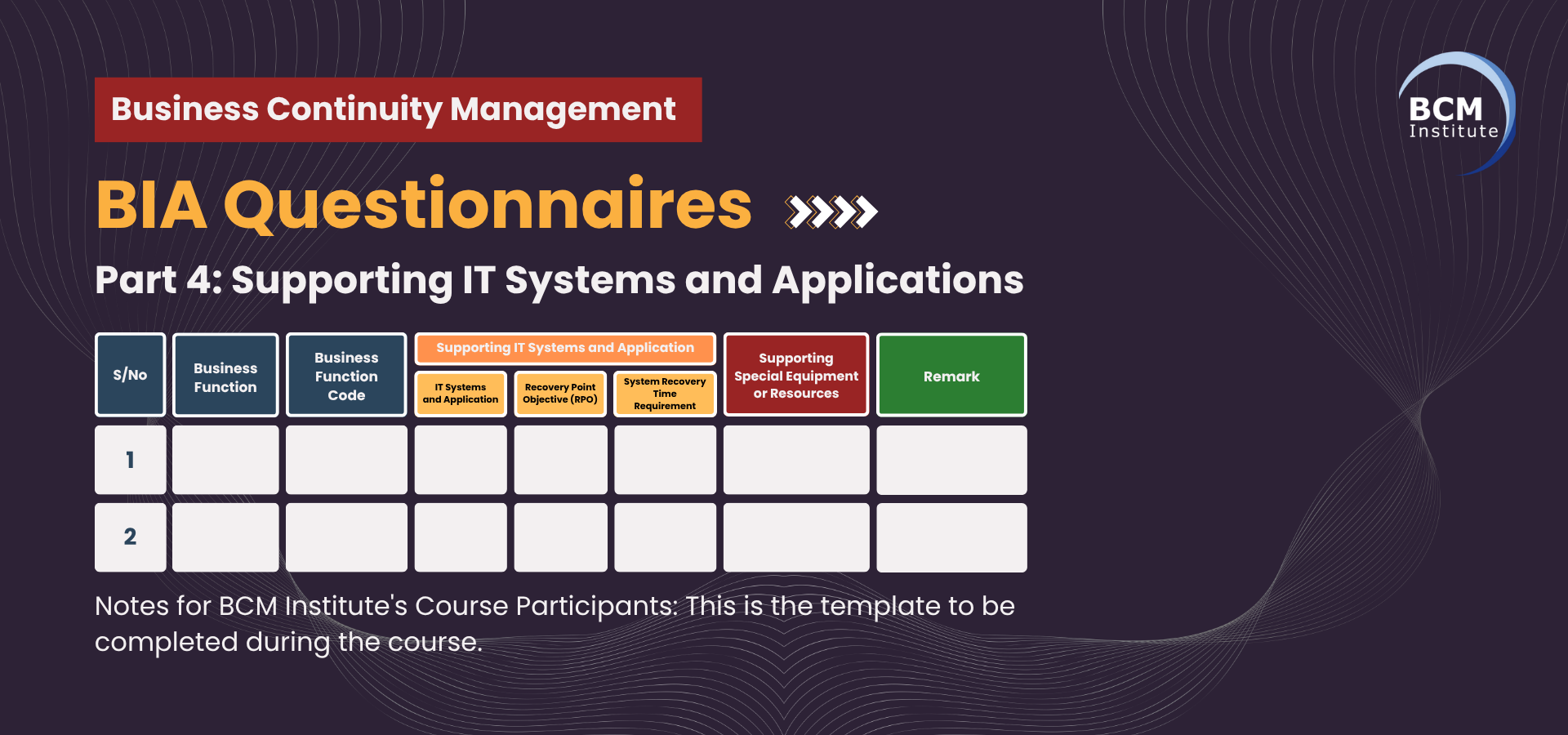
[![Banner \[Table\] \[BCM\] \[E3\] \[BIA\] \[P4\] Supporting IT Systems and Applications \[BIAQ\]](https://no-cache.hubspot.com/cta/default/3893111/b0e47631-f680-46d1-b7a9-040fce25e117.png)](https://cta-redirect.hubspot.com/cta/redirect/3893111/b0e47631-f680-46d1-b7a9-040fce25e117)Table P4: Supporting IT Systems and Applications for CBF-5
| Sub-CBF Code | Sub-CBF | IT Systems and Applications | RPO | System RTO | Supporting Special Equipment or Resources | Remarks |
| --- | --- | --- | --- | --- | --- | --- |
| 5.1 | Environmental Scanning & Labour Market Analysis | Labour Market Information System (LMIS), Data Analytics Platforms, Market Research Tools | 4 hours | 8 hours | Market analysis software, external data feeds | Crucial for real-time labor market data aggregation. |
| CBF-5.2 | Policy Development & Formulation | Policy Management Software, Document Management Systems, Collaborative Tools | 4 hours | 12 hours | Cloud storage for policy drafts, collaboration platforms | Enables the drafting and approval of policy documents. |
| CBF-5.3 | Strategic Workforce Planning & Scenario Modelling | Workforce Planning Tools, Predictive Analytics Software, HR Data Systems | 6 hours | 12 hours | Predictive analytics software, HR database | Essential for scenario modelling and workforce projections. |
| CBF-5.4 | Stakeholder Engagement & Consultation | Customer Relationship Management (CRM) Systems, Survey Tools, Virtual Meeting Platforms | 6 hours | 8 hours | Video conferencing platforms, email systems | Ensures efficient communication with stakeholders. |
| CBF-5.5 | Policy Implementation Planning | Project Management Software, Task Scheduling Tools, Resource Allocation Systems | 4 hours | 6 hours | Task management tools, Gantt chart software | Facilitates execution of policy initiatives. |
| CBF-5.6 | Monitoring, Evaluation & Feedback Loops | Monitoring & Evaluation Systems, Performance Tracking Tools, Feedback Mechanisms | 4 hours | 6 hours | Feedback platforms, data visualization tools | Helps assess the effectiveness of implemented policies. |
| CBF-5.7 | BCM Integration and Contingency Policies | BCM Software, Incident Management Systems, Risk Assessment Tools | 8 hours | 24 hours | Risk management software, incident logs | Critical for planning and responding to crises. |
#### [![Banner \[BCM\] \[E3\] \[BIA\] \[Summing Up\] \[P4\] Supporting IT Systems and Applications \[BIAQ\]](https://no-cache.hubspot.com/cta/default/3893111/9bde2d75-0c8e-4d9e-a8ca-e8d1655a082c.png)](https://cta-redirect.hubspot.com/cta/redirect/3893111/9bde2d75-0c8e-4d9e-a8ca-e8d1655a082c)
The IT systems and applications outlined above are central to the Ministry of Manpower’s ability to function effectively in the realm of policy formulation and strategic workforce planning.
These systems not only support day-to-day operations but also ensure that MOM is well-prepared to respond to any disruptions, minimising downtime and ensuring the continuity of critical services.
In times of crisis or business disruptions, understanding and preparing the IT infrastructure and its dependencies are crucial for swift recovery and resumption.
By aligning these IT systems with established RPOs and RTOs, the Ministry can ensure that business continuity remains uninterrupted, enabling MOM to continue its essential work of shaping policies that support the labour market and workforce development in Singapore.
| ###### Resilient Support: Implementing Business Continuity Management at Ministry of Manpower (Singapore) | | | | | | |
| --- | --- | --- | --- | --- | --- | --- |
| **eBook 3: Starting Your BCM Implementation** | | | | | | |
| **MBCO** | **P&S** | **RAR T1** | **RAR T2** | **RAR T3** | **BCS T1** | ** CBF** |
| [![\[BCM\] \[MOM\] \[E3\] \[BIA\] MBCO Corporate MBCO](https://no-cache.hubspot.com/cta/default/3893111/91c07ac1-2f4d-4acf-a002-df50ac7e8f19.png)](https://cta-redirect.hubspot.com/cta/redirect/3893111/91c07ac1-2f4d-4acf-a002-df50ac7e8f19) | [![\[BCM\] \[MOM\] \[E3\] \[BIA\] \[P&S\] Key Product and Services](https://no-cache.hubspot.com/cta/default/3893111/904a4659-6e74-4f50-a27d-b0543463d80a.png)](https://cta-redirect.hubspot.com/cta/redirect/3893111/904a4659-6e74-4f50-a27d-b0543463d80a) | [![\[BCM\] \[MOM\] \[E3\] \[RAR\] \[T1\] List of Threats](https://no-cache.hubspot.com/cta/default/3893111/41c8981e-45dd-416c-90e0-55c3a22753da.png)](https://cta-redirect.hubspot.com/cta/redirect/3893111/41c8981e-45dd-416c-90e0-55c3a22753da) | [![\[BCM\] \[MOM\] \[E3\] \[RAR\] \[T2\] Treatment and Control ](https://no-cache.hubspot.com/cta/default/3893111/02909b01-2511-4249-864b-967afcc727bc.png)](https://cta-redirect.hubspot.com/cta/redirect/3893111/02909b01-2511-4249-864b-967afcc727bc) | [![\[BCM\] \[MOM\] \[E3\] \[RAR\] \[T3\] Risk Impact and Likelihood Assessmen](https://no-cache.hubspot.com/cta/default/3893111/fd3dd074-a74d-45ec-8219-3cee4c0463c4.png)](https://cta-redirect.hubspot.com/cta/redirect/3893111/fd3dd074-a74d-45ec-8219-3cee4c0463c4) | [![\[BCM\] \[MOM\] \[E3\] \[BCS\] \[T1\] Mitigation Strategies and Justification](https://no-cache.hubspot.com/cta/default/3893111/06674b8b-3cf9-4855-a89a-ecd2baa9a395.png)](https://cta-redirect.hubspot.com/cta/redirect/3893111/06674b8b-3cf9-4855-a89a-ecd2baa9a395) | [![\[BCM\] \[MOM\] \[E1\] \[C10\] Identifying Critical Business Functions](https://no-cache.hubspot.com/cta/default/3893111/f19dbb07-448c-4021-9605-82ad98643d7f.png)](https://cta-redirect.hubspot.com/cta/redirect/3893111/f19dbb07-448c-4021-9605-82ad98643d7f) |
| **CBF 5: Policy Formulation and Strategic Manpower Planning** | | | | | | |
| **DP** | **BIAQ T1** | **BIAQ T2** | **BIAQ T3** | **BCS T2** | **BCS T3** | **PD** |
| [![\[BCM\] \[MOM\] \[E3\] \[BIA\] \[DP\] \[CBF\] \[5\] Policy Formulation and Strategic Manpower Planning](https://no-cache.hubspot.com/cta/default/3893111/37a18e69-4246-4d54-bea3-5a09d9e12f53.png)](https://cta-redirect.hubspot.com/cta/redirect/3893111/37a18e69-4246-4d54-bea3-5a09d9e12f53) | [![\[BCM\] \[MOM\] \[E3\] \[BIA\] \[T1\] \[CBF\] \[5\] Policy Formulation and Strategic Manpower Planning](https://no-cache.hubspot.com/cta/default/3893111/e1ca92dc-dbc3-40bb-953c-789fbf9f6729.png)](https://cta-redirect.hubspot.com/cta/redirect/3893111/e1ca92dc-dbc3-40bb-953c-789fbf9f6729) | [![\[BCM\] \[MOM\] \[E3\] \[BIA\] \[T2\] \[CBF\] \[5\] Policy Formulation and Strategic Manpower Planning](https://no-cache.hubspot.com/cta/default/3893111/ab3425fb-ba82-4915-953b-e789c8fb962c.png)](https://cta-redirect.hubspot.com/cta/redirect/3893111/ab3425fb-ba82-4915-953b-e789c8fb962c) | [![\[BCM\] \[MOM\] \[E3\] \[BIA\] \[T3\] \[CBF\] \[5\] Policy Formulation and Strategic Manpower Planning](https://no-cache.hubspot.com/cta/default/3893111/467af637-91cd-459c-9027-de4820c25964.png)](https://cta-redirect.hubspot.com/cta/redirect/3893111/467af637-91cd-459c-9027-de4820c25964) | [![\[BCM\] \[MOM\] \[E3\] \[BCS\] \[T2\] \[CBF\] \[5\] Policy Formulation and Strategic Manpower Planning](https://no-cache.hubspot.com/cta/default/3893111/a3f2c98b-cb81-41e1-a253-cb2ad4854ea4.png)](https://cta-redirect.hubspot.com/cta/redirect/3893111/a3f2c98b-cb81-41e1-a253-cb2ad4854ea4) | [![\[BCM\] \[MOM\] \[E3\] \[BCS\] \[T3\] \[CBF\] \[5\] Minimum Resources Required during a Disaster](https://no-cache.hubspot.com/cta/default/3893111/a3a30d14-c278-4bb6-8bae-62f8d814f1ea.png)](https://cta-redirect.hubspot.com/cta/redirect/3893111/a3a30d14-c278-4bb6-8bae-62f8d814f1ea) | [![\[BCM\] \[MOM\] \[E3\] \[PD\] \[CBF\] \[5\] Policy Formulation and Strategic Manpower Planning](https://no-cache.hubspot.com/cta/default/3893111/a9ef81f1-7349-4cfe-bae5-3cde76082a97.png)](https://cta-redirect.hubspot.com/cta/redirect/3893111/a9ef81f1-7349-4cfe-bae5-3cde76082a97) |
#### More Information About Business Continuity Management Courses
To learn more about the course and schedule, click the buttons below for the BCM-300 Business Continuity Management Implementer \[BCM-3\] and the BCM-5000 Business Continuity Management Expert Implementer \[BCM-5\].
| [](https://cta-redirect.hubspot.com/cta/redirect/3893111/f3922b80-e96a-46d6-8993-dc150a5de2d5) | [](https://cta-redirect.hubspot.com/cta/redirect/3893111/9ff8a3dc-e39a-465b-929f-72e232cdd5fb) | [![Register \[BL-B-3\]*](https://no-cache.hubspot.com/cta/default/3893111/ac6cf073-4cdd-4541-91ed-889f731d5076.png)](https://cta-redirect.hubspot.com/cta/redirect/3893111/ac6cf073-4cdd-4541-91ed-889f731d5076) |
| --- | --- | --- |
| [](https://cta-redirect.hubspot.com/cta/redirect/3893111/21525c10-4003-4934-95fc-fe218174bc5b) | [](https://cta-redirect.hubspot.com/cta/redirect/3893111/46460171-c91a-4936-9bb2-8dc5928a0e02) | [](https://cta-redirect.hubspot.com/cta/redirect/3893111/1cb17ac7-50b2-4f88-bc4b-c7444e4b57b5) |
| [![FAQ \[BL-B-3\]](https://no-cache.hubspot.com/cta/default/3893111/b3824ba1-7aa1-4eb6-bef8-94f57121c5ae.png)](https://cta-redirect.hubspot.com/cta/redirect/3893111/b3824ba1-7aa1-4eb6-bef8-94f57121c5ae) | Please feel free to send us a note if you have any questions. [![Email to Sales Team \[BCM Institute\]](https://no-cache.hubspot.com/cta/default/3893111/3c53daeb-2836-4843-b0e0-645baee2ab9e.png)](https://cta-redirect.hubspot.com/cta/redirect/3893111/3c53daeb-2836-4843-b0e0-645baee2ab9e) | [](https://cta-redirect.hubspot.com/cta/redirect/3893111/9c199ae8-c470-4bb7-9612-73c7a084e94c) |
| [](https://cta-redirect.hubspot.com/cta/redirect/3893111/8999211a-2c51-4be7-bf49-c393f6c67974) | [](https://cta-redirect.hubspot.com/cta/redirect/3893111/5c1aa95d-f6dd-4067-a95c-5cc0c32d7ed8) | [](https://cta-redirect.hubspot.com/cta/redirect/3893111/086ab3b9-4d66-4a95-b2f7-1148e9803a9c) |
#### **Your Comments Here:**
### More Posts
[](https://cta-redirect.hubspot.com/cta/redirect/3893111/839787f4-a4fd-456f-accf-54c947026558)

All rights reserved. Copyright 2026
```json
{
"@context" : "https://schema.org",
"@type" : "BlogPosting",
"author" : {
"@type" : "Person",
"name" : "Dr Goh Moh Heng",
"url" : "https://blog.bcm-institute.org/t-e3-bcm/author/dr-goh-moh-heng"
},
"dateModified" : "2026-01-10T10:54:15.416Z",
"datePublished" : "2026-01-06T03:34:58.000Z",
"headline" : "[BCM] [MOM] [E3] [BIA] [T2] [CBF] [5] Policy Formulation and Strategic Manpower Planning",
"image" : [ "https://blog.bcm-institute.org/hubfs/Ministry%20of%20Manpower%20Graphic%20Folder/MOM%20E3%20Morepost/MOM%20CBF%205/%5BBCM%5D%20%5BMOM%5D%20%5BE3%5D%20%5BBIA%5D%20%5BT2%5D%20%5BCBF%5D%20%5B5%5D%20Policy%20Formulation%20and%20Strategic%20Manpower%20Planning.jpg" ],
"mainEntityOfPage" : {
"@id" : "https://blog.bcm-institute.org/t-e3-bcm/bcm-mom-e3-bia-t2-cbf-5-policy-formulation-and-strategic-manpower-planning",
"@type" : "WebPage"
},
"publisher" : {
"@type" : "Organization",
"logo" : {
"@type" : "ImageObject",
"url" : "https://blog.bcm-institute.org/hubfs/BCMI%20Logo.png"
},
"name" : "BCMI Pte Ltd"
}
}
```