

Reimagining Exercise Design with AI: Key Lessons Learned
Introduction

BCM Institute's final Meet-the-Expert webinar of 2026 provided practical insights into the application of Artificial Intelligence (AI) in Business Continuity Management (BCM) and Crisis Management (CM) exercises.
Drawing on Norman Ramos's practical experiences and the concluding discussion led by Dr Goh Moh Heng, the session reinforced that AI is becoming an important tool for improving exercise effectiveness and professional productivity.
However, the benefits of AI depend on how responsibly, accurately, and effectively professionals integrate it into established exercise methodologies.
Ten Lessons Learned
Lesson 1 – Exercise Objectives Must Drive AI Applications
AI should support clearly defined exercise objectives rather than determine them.
Exercise designers must establish what capabilities are being tested, what outcomes are expected, and how success will be measured before using AI to develop exercise materials.
An attractive or sophisticated AI-generated scenario does not necessarily constitute an effective exercise.
Lesson 2 – Master Exercise Design Fundamentals Before Using AI
AI does not eliminate the need to understand conventional testing and exercising methodologies.
Professionals must remain competent in scenario development, exercise injects, facilitation, evaluation, debriefing, and corrective action planning.
AI should enhance these established capabilities rather than compensate for their absence.
Lesson 3 – Prompt Engineering Is an Essential Professional Competency
Effective AI-generated outputs require context, specificity, clarity, and clearly defined outcomes.
BCM and CM professionals should develop their ability to communicate requirements to AI through structured prompts, relevant reference materials, and precise instructions.
The investment in developing effective prompts can improve productivity and consistency in future exercises.
Lesson 4 – AI Hallucinations Must Be Identified and Managed
AI can generate convincing but inaccurate information, including misleading scenarios, incorrect geographical representations, and unsupported assumptions.
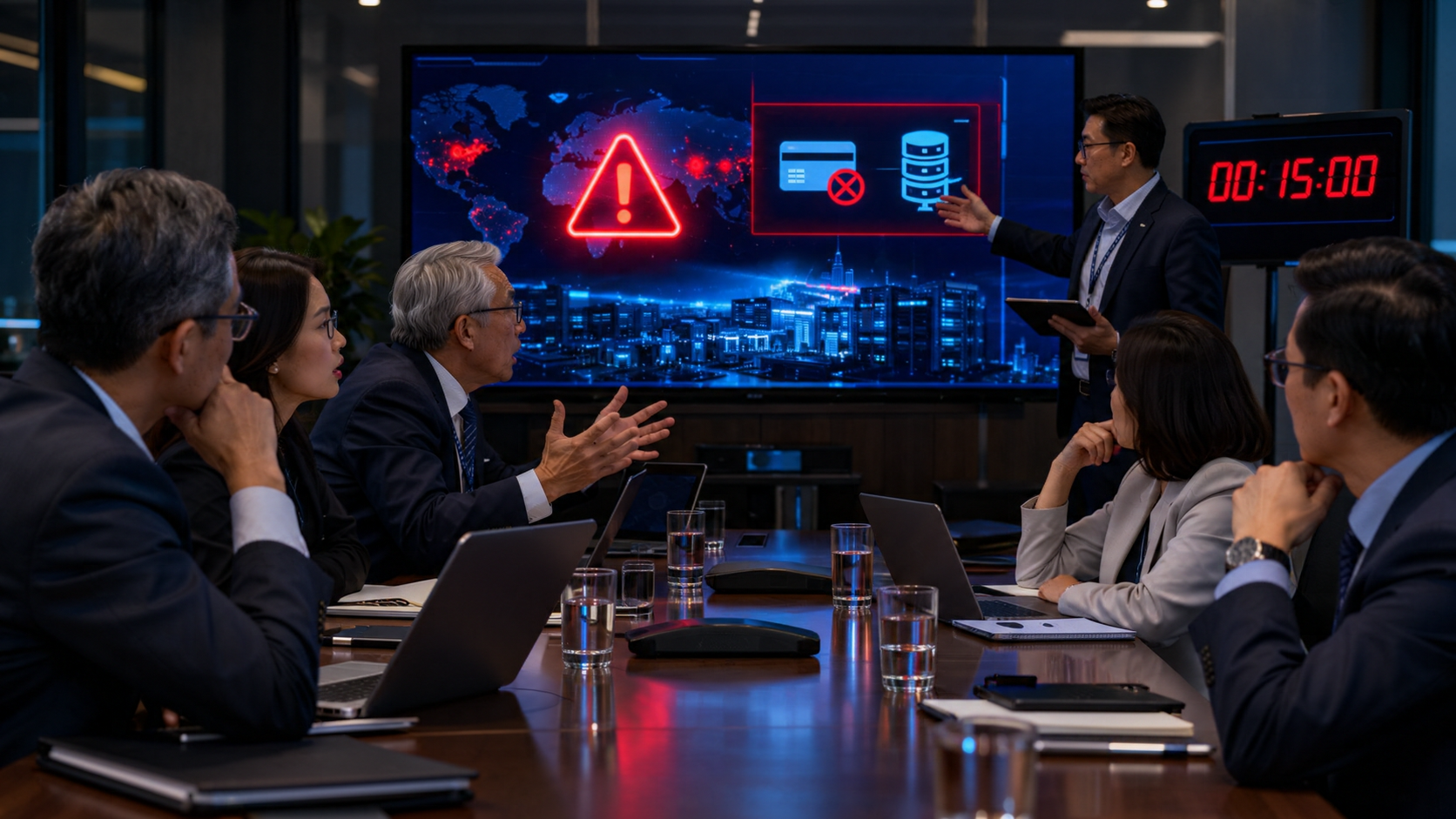
Norman's typhoon scenario demonstrated how seemingly realistic visuals could contain significant factual inaccuracies.
All AI-generated materials must therefore be reviewed against reliable information and professional expertise before being used in exercises.
Lesson 5 – Iterative Refinement Produces Better Exercise Materials
Effective AI-assisted exercise design is rarely achieved through a single prompt.
Exercise designers should review initial outputs, identify weaknesses, provide corrective feedback and refine their requirements progressively.
Providing examples of acceptable outputs and reliable reference materials can improve the relevance and accuracy of AI-generated content.
Lesson 6 – AI Can Improve Exercise Realism and Participant Engagement
AI-generated images, simulated news reports, social media posts and videos can make exercises more immersive and engaging.
These materials can help participants understand developing situations and respond to realistic operational and communication challenges.
However, exercise designers must ensure that these materials remain relevant to the exercise objectives and demonstrate appropriate cultural and social sensitivity.
Lesson 7 – AI Can Enhance Post-Exercise Analysis
AI can assist in consolidating exercise observations, comparing activity logs, reviewing communications, and identifying inconsistencies.
Norman demonstrated how AI could support the assessment of communication and information alignment between Incident Management and Crisis Management Teams.
By reducing administrative and analytical effort, AI enables professionals to focus more attention on interpreting findings and improving organisational capabilities.
Final exercise findings must nevertheless be validated by qualified evaluators.
Lesson 8 – Confidentiality and Information Protection Cannot Be Compromised
Exercise materials frequently contain sensitive information about organisational vulnerabilities, operational processes and response capabilities.
Professionals must exercise caution when submitting information to AI platforms.
Appropriate enterprise environments, redaction and the removal or substitution of sensitive information should be considered before uploading exercise documents.
Productivity improvements must not compromise organisational confidentiality.
Lesson 9 – Human Oversight and Independent Review Remain Essential
AI cannot replace the experience, contextual understanding and professional judgement of exercise designers.
Independent peer review can help identify inaccuracies, challenge assumptions and reduce confirmation bias.
Responsibility for exercise quality, evaluation findings and recommendations must remain with the professionals conducting the exercise.
Lesson 10 – Continuous Learning Is Essential for BCM and CM Professionals
AI technologies and capabilities are evolving rapidly.
BCM and CM professionals must continuously develop their AI literacy, experiment with emerging tools, and share their experiences with fellow practitioners.
Rather than immediately adopting sophisticated AI exercise platforms, professionals should begin by mastering fundamental AI capabilities and applying them to established exercise processes.
The future competency of BCM and CM professionals will increasingly depend on their ability to combine domain expertise with effective AI application.
Implications for BCM and CM Professionals
BCM Professionals
Integrate AI into business continuity exercise design, scenario development, recovery simulations, and post-exercise reporting while maintaining alignment with established continuity requirements.
Crisis Management Professionals
Use AI to develop evolving crisis scenarios, simulated media injects, and decision-making challenges that test crisis leadership, communication, and coordination.
Exercise Designers and Facilitators
Develop structured prompts, maintain reliable reference materials, and validate AI-generated scenarios, injects, and anticipated responses before conducting exercises.
Exercise Evaluators
Apply AI to consolidate observations, compare exercise documentation and identify potential gaps while retaining responsibility for validating findings and recommendations.
Senior Management
Support the responsible adoption of AI, professional competency development and appropriate information protection while ensuring that exercise programmes continue to deliver meaningful organisational learning.

Summing Up
Norman Ramos's presentation highlighted the significant opportunities that AI offers in transforming BCM and CM exercise design, development and evaluation.
AI can reduce preparation time, improve exercise realism, support analytical activities and enable professionals to focus more attention on meaningful improvement.
However, AI alone cannot determine whether an organisation is genuinely prepared for a crisis or business disruption.
The effectiveness of an exercise continues to depend on clearly defined objectives, realistic challenges, competent facilitators, accurate evaluation and the organisation's commitment to continuous improvement.
The ultimate measure of AI-assisted exercise design is not how quickly an exercise can be developed, but how effectively it strengthens organisational preparedness, decision-making and resilience.
 AI is here to stay. The challenge for BCM and CM professionals is to master AI as a professional tool while retaining the human expertise and accountability that underpin effective testing and exercising.
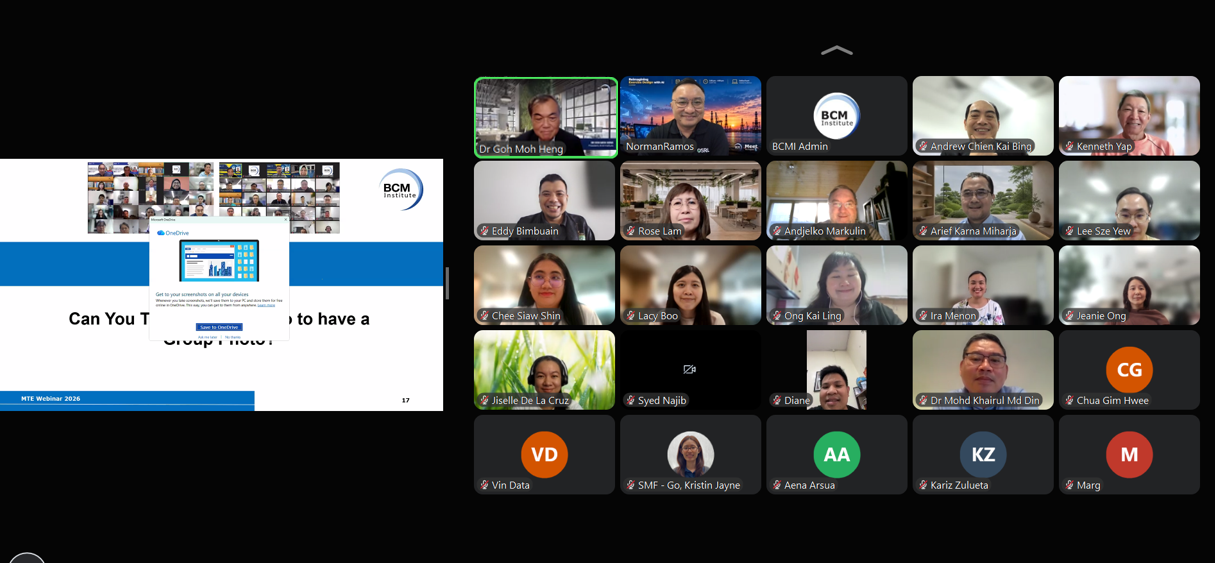
Dr Goh Moh Heng, President of BCM Institute, summarises this webinar.
Dr Goh Moh Heng, President of the BCM Institute, summarises this webinar. If you have any questions, please speak to the author.

Click the icon below to continue reading parts of Norman Lorica Ramos's presentation.
| Reimagining Exercise Design With AI | |||||


More Information About Crisis Management Blended/ Hybrid Learning Courses
To learn more about the course and schedule, click the buttons below for CM-300 Crisis Management Implementer [CM-3] and CM-5000 Crisis Management Expert Implementer [CM-5].