---
title: [CM] [SMU] [C5] Crisis Management Planning Methodology - A Phased Approach
description: [CM] [SMU] [C5] Crisis Management Planning Methodology - A Phased Approach
image: https://blog.bcm-institute.org/hubfs/New%20Planning%20Methodology/CM/New%20CM%20Planning%20Methodology/CM%20Planning%20Methodology.png
---
. .
[](http://www.bcm-institute.org/)
- [Home](https://www.bcm-institute.org/)
- [About Us](https://www.bcm-institute.org/about-us-3/)
- [A President’s Perspective](https://www.bcm-institute.org/about-us/a-presidents-perspective/)
- [Our History](https://www.bcm-institute.org/about-us/our-history/)
- [Our Advisory Council](https://www.bcm-institute.org/about-us/our-advisory-council/)
- [Customers’ Testimonials](https://www.bcm-institute.org/about-us/customers-testimonials/)
- [Credential Verification](https://www.bcm-institute.org/about-us/credential-verification/)
- [Courses](https://blog.bcm-institute.org/blog/course-fees-for-blended-learning-courses-master-catalog)
- [ISO 22301 Business Continuity Management System Audit](https://blog.bcm-institute.org/audit/business-continuity-management-audit-courses)
- [ISO 22301 Business Continuity Management](https://blog.bcm-institute.org/bcm/business-continuity-management-courses)
- [Crisis Communication](https://blog.bcm-institute.org/crisis-communication/crisis-communication-courses)
- [Crisis Management](https://blog.bcm-institute.org/en/crisis-management/courses)
- [IT Disaster Recovery](https://blog.bcm-institute.org/it-disaster-recovery/courses)
- [Operational Resilience](https://blog.bcm-institute.org/operational-resilience/courses)
- [Operational Resilience Audit](https://blog.bcm-institute.org/operational-resilience-audit/courses)
- [Certification](https://blog.bcm-institute.org/certification/types-of-certifications-offered)
- [ISO 22301 BCMS Audit Certification](https://blog.bcm-institute.org/certification/business-continuity-management-audit-certification)
- [ISO22301 Business Continuity Management Certification](https://blog.bcm-institute.org/bcm/business-continuity-management-certification)
- [Crisis Communication Certification](https://blog.bcm-institute.org/crisis-communication/crisis-communication-certification)
- [Crisis Management Certification](https://blog.bcm-institute.org/en/crisis-management/crisis-management-certification)
- [IT Disaster Recovery Planning Certification](https://blog.bcm-institute.org/it-disaster-recovery/it-disaster-recovery-certification)
- [Operational Resilience Certification](https://blog.bcm-institute.org/operational-resilience/operational-resilience-certification)
- [Operational Resilience Audit Certification](https://blog.bcm-institute.org/operational-resilience-audit)
- [Seminars](https://blog.bcm-institute.org/meet-the-expert/mte-webinar-mainpage)
- [Store](https://www.bcm-institute.org/store-2/)
- [Contact Us](http://www.bcm-institute.org/about-us/contact-us/)
-
-
##### Ebook Series

# \[CM\] \[SMU\] \[C5\] Crisis Management Planning Methodology - A Phased Approach
This chapter unveils a comprehensive crisis management (CM) planning methodology, guiding you through the seven steps to build a robust crisis preparedness program.
BCM Institute developed and adopted this CM planning methodology embedded in its training curriculum. This chapter is the introductory chapter, supported by seven individual blogs if you read online.
If you read as an eBook, this chapter will be included in your customised eBook for your organisation, courtesy of BCM Institute.
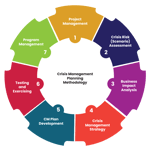
The chapter's core dives into a seven-phased approach, outlining each stage and its crucial activities. The initial phases focus on project management, crisis scenario risk assessment, and business impact analysis.
This groundwork lays the foundation for developing a crisis management strategy and a detailed CM Plan. The plan incorporates activation protocols and response procedures for various scenarios, integrated with other plans and recovery steps.
The methodology emphasises crisis management testing and exercise to ensure the effectiveness of the CM Plan. Through simulations, your team can identify areas for improvement and refine their response procedures. Finally, the chapter underscores the importance of program management.
This involves ongoing maintenance of the CM Planning, communication efforts to promote awareness, and continuous evaluation of the program's effectiveness. By following this methodology and fostering a culture of constant improvement, your organization can confidently navigate any crisis and ensure its long-term resilience.
[Moh Heng Goh](https://blog.bcm-institute.org/en/ebook-cm/author/moh-heng-goh) Feb 2, 2025
###### Crisis Management Certified Planner-Specialist-Expert
### Chapter 5: Crisis Management Planning Methodology: A Phased Approach
[](https://cta-redirect.hubspot.com/cta/redirect/3893111/1a8e2a34-95f1-46f9-9ee1-abdd9d608470)[](https://cta-redirect.hubspot.com/cta/redirect/3893111/e8ad8ed7-15cd-4d3e-a7d1-0b4755ede185)This chapter unveils a comprehensive crisis management (CM) planning methodology, guiding you through the essential steps to build a robust crisis preparedness program.
BCM Institute developed and adopted this CM planning methodology in its training curriculum.
*\[Viewing Online\]* This chapter is the introductory chapter, supported by seven individual blogs if you read it online.
*\[Viewing as eBook\]* If you read as an eBook, this chapter will be included in your customised eBook for your organisation, courtesy of BCM Institute.
The intermediate-level training focuses on developing the crisis management plan, while expert-level training continues, allowing practitioners to manage and sustain the crisis management effort as a program.
This CM journey begins by establishing a foundational understanding of crisis management and its significance in mitigating the impact of unforeseen events.
The chapter's core dives into a seven-phased approach, outlining each stage and its crucial activities. The initial phases focus on project management, risk assessment, and business impact analysis.
This groundwork lays the foundation for developing a crisis management strategy and a detailed crisis management plan. The plan incorporates activation protocols, response procedures for various scenarios, business continuity plans, and recovery steps.
The methodology emphasises crisis management testing and exercise to ensure the effectiveness of the CM Plan. Through simulations, your team can identify areas for improvement and refine their response procedures. Finally, the chapter underscores the importance of program management.
This involves ongoing maintenance of the CM Planning, communication efforts to promote awareness, and continuous evaluation of the program's effectiveness. By following this methodology and fostering a culture of constant improvement, your organisation can confidently navigate any crisis and ensure its long-term resilience.
This outline details the seven phases of a comprehensive crisis management planning methodology, guiding you through the implementation process. Each phase builds upon the previous one, culminating in a robust crisis management program.
#### Phase 1: Project Management
[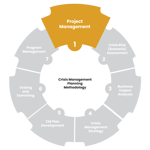](https://cta-redirect.hubspot.com/cta/redirect/3893111/531eb556-5e6b-498e-9d99-e9b4e52371d7)Effective project management is the initial step in constructing a robust crisis management plan. This foundational phase involves establishing a clear roadmap for the entire planning process, akin to building the blueprint for a resilient organization.
By defining project goals, assembling a skilled team, and outlining a realistic timeline, organisations lay the groundwork for a successful crisis management program. This phase ensures that resources are allocated efficiently and stakeholders are aligned with the project's objectives. This is a summary of the critical steps during the project management phase.
[](https://cta-redirect.hubspot.com/cta/redirect/3893111/0ae57b3d-d784-4e9f-80ec-3213f1bd995c)[](https://cta-redirect.hubspot.com/cta/redirect/3893111/dca2242f-b7e5-41c6-9f93-c497d123c795)Goals and Objectives. Define the goals and objectives of your crisis management planning project.
Project Team Establishment. Assemble a dedicated project team with the necessary expertise to lead the planning process.
Project Scope and Timeline. Determine the project's scope, outlining the deliverables and a realistic timeline for completion.
Communication Plan. Establish a communication plan to inform stakeholders about the project's progress.
#### Phase 2: Crisis Scenario Risk Assessment
[](https://cta-redirect.hubspot.com/cta/redirect/3893111/dc7c6eee-b8db-4e01-8c76-07f9ff37afe4)
[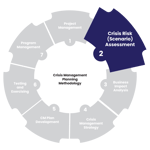](https://cta-redirect.hubspot.com/cta/redirect/3893111/e1ae6810-d56f-43ff-8aaa-89f50130d0e0)Understanding the potential threats to an organisation is paramount to effective crisis management.
Phase two of the crisis management planning methodology focuses on a comprehensive risk assessment to identify and evaluate potential crisis scenarios.
This involves a meticulous examination of both internal and external factors that could disrupt operations, damage reputation, or compromise financial stability. By systematically identifying and analysing these risks, organisations can prioritise mitigation efforts, allocate resources strategically, and develop tailored response plans.
This phase is crucial in building a robust foundation for the subsequent stages of the crisis management planning process. This summarises the key steps during the Crisis Scenario Risk Assessment phase.
Identifying Potential Threats. Conduct a thorough risk assessment to identify potential crisis scenarios (internal and external) your organisation might face.
Likelihood and Impact Analysis. Evaluate the likelihood of each threat occurring and the potential impact (financial, reputational, operational) on your organisation.
Prioritisation of Risks. Based on the analysis, risks should be prioritised to allocate resources effectively during planning.
#### Phase 3: Business Impact Analysis
[](https://cta-redirect.hubspot.com/cta/redirect/3893111/0118ac94-e2aa-4831-91f2-360f1c92bbe8)
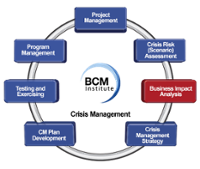
[](https://cta-redirect.hubspot.com/cta/redirect/3893111/fb527d9e-e121-4849-a28c-84be05543bde)You are expected to work with your business continuity management team to obtain access to your organisation's business impact analysis report.
Building upon the identified risks from the previous phase, the Business Impact Analysis (BIA) delves deeper into understanding the potential consequences of these threats on the organisation.
This critical phase systematically evaluates critical business functions (CBFs), processes, and resources to assess their vulnerability to disruption.
Identifying dependencies, recovery time objectives (RTOs), and recovery point objectives (RPOs) can help organisations prioritise resources and develop targeted recovery strategies.
The BIA provides invaluable insights into the potential magnitude of losses and informs the development of effective crisis response plans. This is a summary of the steps during the BIA phase.
Critical Functions Identification. Identify the critical business functions of your organisation that are essential for ongoing operations.
Vulnerability Assessment. Analyse how each crisis scenario might impact your critical functions and the potential disruptions.
Recovery Time Objectives (RTOs). Establish RTOs, which define the maximum acceptable downtime for critical functions after a crisis.
#### Phase 4: Crisis Management Strategy
[](https://cta-redirect.hubspot.com/cta/redirect/3893111/750a78da-bb36-4748-8c41-867bf6b4c7e5)
[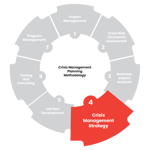](https://cta-redirect.hubspot.com/cta/redirect/3893111/9ad4f92d-0b0b-40ac-b57a-aabca2a292f1)The next phase focuses on developing a comprehensive crisis management strategy, building upon the insights gained from risk assessment and business impact analysis.
This strategic phase defines the organization's overall approach to crisis response and strategy, including key decision-making processes, communication guidelines, and resource allocation principles.
Establishing a clear and unified strategy can effectively guide organisations' response efforts during a crisis, ensuring a coordinated and effective response. This phase shapes the organisation's crisis preparedness and resilience culture. This is a summary of the steps during the CM Strategy phase.
Overall Crisis Response Philosophy. Determine your organization's crisis response philosophy, considering risk tolerance and communication approaches.
Strategic Decision-Making Framework. Develop a framework for making strategic decisions during a crisis, outlining escalation procedures and approval processes.
Crisis Management Team (CMT) Roles and Responsibilities. Clearly define each CMT member's roles and responsibilities within the crisis response framework.
#### Phase 5: Crisis Management Plan Development
[](https://cta-redirect.hubspot.com/cta/redirect/3893111/850e9d87-1814-4373-8aac-dfa0a3b64bde)[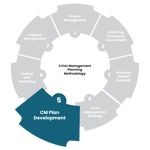](https://cta-redirect.hubspot.com/cta/redirect/3893111/8494747a-1a1c-463d-b779-4f4345c168b4)Phase 5, the culmination of the preceding phases, is where the rubber meets the road in crisis management.
Here, the blueprint for navigating a crisis is meticulously crafted. With a clear understanding of potential threats, their impacts, and the organisation's strategic response, the focus shifts to translating these insights into actionable steps.
A comprehensive crisis management plan outlines crisis activation, communication, resource allocation, and decision-making procedures. The CM plan is the organisation's playbook for managing crises, ensuring a coordinated and effective response.
Beyond outlining specific actions, this phase also emphasizes the importance of clear and consistent communication. Developing effective messaging strategies for various stakeholders is crucial. The CM Plan should also integrate business continuity plans to ensure the organisation's critical functions continue operating during and after a crisis. Creating a living document that can be easily accessed and understood by all relevant personnel is essential.
Developing a robust CM Plan requires careful consideration of various scenarios and potential challenges. It is not merely a theoretical exercise but a practical tool designed to guide the organisation through the complexities of a crisis. This summarises the key components of the CM plan development phase.
Crisis Activation Protocols. Establish criteria for declaring a crisis and initiating the crisis response plan.
Response Procedures. Detailed actions to be taken for various crisis scenarios, including communication strategies, resource allocation, and decision-making processes.
Business Continuity Plans. Integrate business continuity plans into the crisis management plan to ensure essential functions continue during a crisis. Outline steps for recovery and restoring normal operations after a crisis.
Document Development and Dissemination. Develop a clear and concise CM plan document and ensure it's accessible to relevant personnel.
#### Phase 6: Testing and Exercising
[](https://cta-redirect.hubspot.com/cta/redirect/3893111/ce86e3e8-980a-49b6-9569-5132cb5037b5)[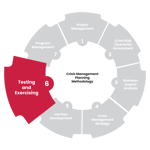](https://cta-redirect.hubspot.com/cta/redirect/3893111/084c0d4a-b952-4737-b355-0d84fc30811d)With a meticulously crafted crisis management plan in place, the next critical step is to test its efficacy and identify areas for improvement. This phase involves a series of exercises designed to simulate real-world crisis scenarios.
By subjecting the plan to rigorous testing, organisations can uncover weaknesses, refine response procedures, and enhance overall preparedness. Teams can practice their roles, refine communication protocols, and strengthen coordination through tabletop exercises, functional drills, and full-scale simulations.
It is essential to view these exercises as opportunities for learning and growth rather than merely compliance requirements. By analysing the results, organizations can identify plan gaps, refine response procedures, and improve decision-making capabilities.
This iterative testing and refinement process ensures that the crisis management plan continually evolves to meet the challenges of a dynamic environment.
Ultimately, the goal of this phase is to build confidence in the plan and the team's ability to execute it effectively when faced with a real-world crisis. By rigorously testing the plan, organisations can bridge the gap between theory and practice, ensuring their response is well-documented, well-rehearsed, and compelling. This is a summary of the steps during the testing and exercising phase.
Crisis Simulation Exercises. Conduct regular crisis simulation exercises to test your plan, identify areas for improvement, and ensure everyone is comfortable with their responsibilities.
Evaluation and Improvement. Evaluate the effectiveness of training and exercises, identifying gaps and opportunities for improvement in the plan and response procedures.
#### Phase 7: Program Management
[](https://cta-redirect.hubspot.com/cta/redirect/3893111/df11acd9-dded-420a-b750-81c7810a5e7a)
[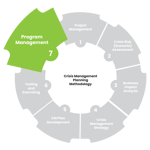](https://cta-redirect.hubspot.com/cta/redirect/3893111/57fffe8e-4f01-4bf9-a4af-ca7c2b2bd83e)The final phase of the crisis management planning methodology is dedicated to ensuring the program's ongoing vitality and effectiveness.
Program management focuses on the long-term sustainability of the crisis management plan, ensuring it remains relevant and responsive to evolving threats and organisational changes.
This phase extends beyond the initial development and testing stages, emphasising continuous improvement and organizational readiness. It involves a structured approach to maintaining and enhancing the crisis management program, ensuring its alignment with the organization's strategic objectives and operational realities.
Successful program management requires a comprehensive oversight of the entire crisis management lifecycle, from risk assessment to response and recovery. It entails monitoring the plan's effectiveness, identifying improvement areas, and implementing necessary changes.
Additionally, this phase emphasizes fostering a culture of preparedness throughout the organization, ensuring that crisis management is embedded into the organisational DNA. By establishing robust program management practices, organizations can build resilience and confidently enhance their ability to navigate future crises. This is a summary of the steps when managing the CM program.
Plan Maintenance and Update. Establish a process for regularly reviewing and updating the CM plan based on lessons learned from exercises, internal and external crisis experiences, and organisational changes.
Communication and Awareness. Continuously communicate the importance of crisis preparedness throughout the organisation and promote employee engagement.
Program Evaluation and Monitoring. Monitor the overall effectiveness of the crisis management program and make adjustments as needed to ensure ongoing preparedness.
### Summing Up ...
Effective crisis management requires a structured, systematic approach. The crisis management planning methodology provides a roadmap for organizations to develop and implement a comprehensive crisis response plan. This phased approach ensures that all critical elements of crisis preparedness are addressed, from identifying potential threats to ongoing program management.
The methodology begins by establishing a project management framework, defining goals, and assembling a dedicated team. Subsequently, a thorough risk assessment is conducted to identify potential crisis scenarios and evaluate their impact.
A business impact analysis follows, determining the possible consequences of these threats on critical business functions. With a clear understanding of risks and impacts, organisations develop a crisis management strategy outlining their overall approach to crisis response. You have to work closely with the business continuity management team.
The methodology's core lies in developing a detailed CM plan encompassing response procedures, communication protocols, and CM strategies. Rigorous testing and exercise of the plan are crucial to identifying weaknesses and enhancing preparedness.
The final phase focuses on sustaining the crisis management program through ongoing maintenance, evaluation, and improvement efforts. Following this phased approach, organisations can build resilience, minimise crises' impact, and ensure operations' continuity.
| [](https://cta-redirect.hubspot.com/cta/redirect/3893111/a31a256f-0841-4086-b662-f7d7564978b4) | [](https://cta-redirect.hubspot.com/cta/redirect/3893111/49fd76d9-0204-462a-99c2-2cdbc6d3eaca) | [](https://cta-redirect.hubspot.com/cta/redirect/3893111/3a8018a1-05fc-46a1-bba9-1c79ef638a72) | [](https://cta-redirect.hubspot.com/cta/redirect/3893111/13a89b5d-0dd4-470d-a5c6-0cec854411d9) | [](https://cta-redirect.hubspot.com/cta/redirect/3893111/83072019-114b-40c4-b876-c073b05d4cba) |
| --- | --- | --- | --- | --- |
| [](https://cta-redirect.hubspot.com/cta/redirect/3893111/1bb4fd5e-0fac-4eea-ab92-2a625c199b15) | [](https://cta-redirect.hubspot.com/cta/redirect/3893111/90330b2a-697c-45a7-9b86-538d63a5baa9) | [](https://cta-redirect.hubspot.com/cta/redirect/3893111/35bb6588-70ce-4041-af4f-450588f88c5d) | [](https://cta-redirect.hubspot.com/cta/redirect/3893111/29307d79-e220-4add-900d-f9727aefd874) | [](https://cta-redirect.hubspot.com/cta/redirect/3893111/050ded03-e301-43b2-ba6f-242c66bc48d5) |
| ##### **Crisis Management Planning Methodology** | | | |
| --- | --- | --- | --- |
| [](https://cta-redirect.hubspot.com/cta/redirect/3893111/e8ad8ed7-15cd-4d3e-a7d1-0b4755ede185) | [](https://cta-redirect.hubspot.com/cta/redirect/3893111/b36d7a35-d843-427c-9da1-e25b9b2c383f) | [](https://cta-redirect.hubspot.com/cta/redirect/3893111/0d7ec489-5d93-48e0-951b-524259a2b30e) | [](https://cta-redirect.hubspot.com/cta/redirect/3893111/97fc620d-9076-417d-974f-bed1397cba3e) |
| [](https://cta-redirect.hubspot.com/cta/redirect/3893111/835b2f38-3bbd-44d1-9f57-58c0b756afb9) | [](https://cta-redirect.hubspot.com/cta/redirect/3893111/74e741da-590d-41d1-9bae-afe2ef9d4cc2) | [](https://cta-redirect.hubspot.com/cta/redirect/3893111/45e1cf63-5954-4dfc-8022-914e5a429705) | [](https://cta-redirect.hubspot.com/cta/redirect/3893111/41f13ad5-16bd-4e43-83d9-e6e025bd6ed4) |
---
#### More Information About Crisis Management Courses
To learn more about the course and schedule, click the buttons below for the CM-300 Crisis Management Implementer \[CM-3\] and the CM-5000 Crisis Management Expert Implementer \[CM-5\].
| [](https://cta-redirect.hubspot.com/cta/redirect/3893111/5ffecd2d-8000-4805-b5e3-e9ead2e259cc) | [](https://cta-redirect.hubspot.com/cta/redirect/3893111/c3546220-6c76-4a10-8c76-4040b94e09e5) | [](https://cta-redirect.hubspot.com/cta/redirect/3893111/03294547-1df3-435c-9243-971c3d9bb6ce) | | |
| --- | --- | --- | --- | --- |
| [](https://cta-redirect.hubspot.com/cta/redirect/3893111/b29594fe-d44a-4ff8-8160-03f7ce454385) | [](https://cta-redirect.hubspot.com/cta/redirect/3893111/dd120e7f-9fe2-49ed-ad24-489b81c06739) | [![\[BL-CM\] \[5\] Register](https://no-cache.hubspot.com/cta/default/3893111/82024308-16f4-4491-98be-818a882c6286.png)](https://cta-redirect.hubspot.com/cta/redirect/3893111/82024308-16f4-4491-98be-818a882c6286) | | |
| [](https://cta-redirect.hubspot.com/cta/redirect/3893111/c8aaf76b-4c0b-402a-ad12-c8aff24eb911) | [](https://cta-redirect.hubspot.com/cta/redirect/3893111/695c974d-ad26-4e7b-b4d2-25ca9e080e0a) | Please feel free to send us a note if you have any questions. [![Email to Sales Team \[BCM Institute\]](https://no-cache.hubspot.com/cta/default/3893111/3c53daeb-2836-4843-b0e0-645baee2ab9e.png)](https://cta-redirect.hubspot.com/cta/redirect/3893111/3c53daeb-2836-4843-b0e0-645baee2ab9e) | [](https://cta-redirect.hubspot.com/cta/redirect/3893111/397d3df1-5691-4ee9-ba12-2cbe42fc8844) | [](https://cta-redirect.hubspot.com/cta/redirect/3893111/30bcbbbf-c8ea-48d8-8643-da2638f3f0f8) |
| [](https://cta-redirect.hubspot.com/cta/redirect/3893111/83d00c12-c51c-4476-9902-69f9b7667a91) | [](https://cta-redirect.hubspot.com/cta/redirect/3893111/672d2949-6233-4b26-ad42-ae0dd0a1a3ac) | [](https://cta-redirect.hubspot.com/cta/redirect/3893111/3ca6f50d-a3c5-41b8-8da2-26feb8a7613e) | | |
**Comments**

---

---

---

---


All rights reserved. Copyright 2026
```json
{
"@context" : "https://schema.org",
"@type" : "BlogPosting",
"author" : {
"@type" : "Person",
"name" : "Moh Heng Goh",
"url" : "https://blog.bcm-institute.org/en/ebook-cm/author/moh-heng-goh"
},
"dateModified" : "2025-02-09T15:29:56.138Z",
"datePublished" : "2025-02-02T11:04:06.000Z",
"headline" : "[CM] [SMU] [C5] Crisis Management Planning Methodology - A Phased Approach",
"mainEntityOfPage" : {
"@id" : "https://blog.bcm-institute.org/en/ebook-cm/cm-smu-c5-crisis-management-planning-methodology-a-phased-approach",
"@type" : "WebPage"
},
"publisher" : {
"@type" : "Organization",
"logo" : {
"@type" : "ImageObject",
"url" : "https://blog.bcm-institute.org/hubfs/BCMI%20Logo.png"
},
"name" : "BCMI Pte Ltd"
}
}
```