---
title: [CM] [SIT] [E3] [PB] [CS] [2] Playbook for Closure of Campus
description: [CM] [SIT] [E3] [PB] [CS] [2] Playbook for Closure of Campus
image: https://blog.bcm-institute.org/hubfs/CM%20Playbook%20for%20SIT%20Graphic%20Folder/CM%20Playbook%20Closure%20of%20Campus%20Morepost/%5BCM%5D%20%5BSIT%5D%20%5BPB%5D%20%5BCS%5D%20%5B2%5D%20Introduction.jpg
---
.
[](http://www.bcm-institute.org/)
- [Home](https://www.bcm-institute.org/)
- [About Us](https://www.bcm-institute.org/about-us-3/)
- [A President’s Perspective](https://www.bcm-institute.org/about-us/a-presidents-perspective/)
- [Our History](https://www.bcm-institute.org/about-us/our-history/)
- [Our Advisory Council](https://www.bcm-institute.org/about-us/our-advisory-council/)
- [Customers’ Testimonials](https://www.bcm-institute.org/about-us/customers-testimonials/)
- [Credential Verification](https://www.bcm-institute.org/about-us/credential-verification/)
- [Courses](https://blog.bcm-institute.org/blog/course-fees-for-blended-learning-courses-master-catalog)
- [ISO 22301 Business Continuity Management System Audit](https://blog.bcm-institute.org/audit/business-continuity-management-audit-courses)
- [ISO 22301 Business Continuity Management](https://blog.bcm-institute.org/bcm/business-continuity-management-courses)
- [Crisis Communication](https://blog.bcm-institute.org/crisis-communication/crisis-communication-courses)
- [Crisis Management](https://blog.bcm-institute.org/en/crisis-management/courses)
- [IT Disaster Recovery](https://blog.bcm-institute.org/it-disaster-recovery/courses)
- [Operational Resilience](https://blog.bcm-institute.org/operational-resilience/courses)
- [Operational Resilience Audit](https://blog.bcm-institute.org/operational-resilience-audit/courses)
- [Certification](https://blog.bcm-institute.org/certification/types-of-certifications-offered)
- [ISO 22301 BCMS Audit Certification](https://blog.bcm-institute.org/certification/business-continuity-management-audit-certification)
- [ISO22301 Business Continuity Management Certification](https://blog.bcm-institute.org/bcm/business-continuity-management-certification)
- [Crisis Communication Certification](https://blog.bcm-institute.org/crisis-communication/crisis-communication-certification)
- [Crisis Management Certification](https://blog.bcm-institute.org/en/crisis-management/crisis-management-certification)
- [IT Disaster Recovery Planning Certification](https://blog.bcm-institute.org/it-disaster-recovery/it-disaster-recovery-certification)
- [Operational Resilience Certification](https://blog.bcm-institute.org/operational-resilience/operational-resilience-certification)
- [Operational Resilience Audit Certification](https://blog.bcm-institute.org/operational-resilience-audit)
- [Seminars](https://blog.bcm-institute.org/meet-the-expert/mte-webinar-mainpage)
- [Store](https://www.bcm-institute.org/store-2/)
- [Contact Us](http://www.bcm-institute.org/about-us/contact-us/)
-
-
##### Crisis-Ready Campus: A Strategic Framework for Crisis Management at Singapore Institute of Technology
# \[CM\] \[SIT\] \[E3\] \[PB\] \[CS\] \[2\] Playbook for Closure of Campus
[![\[CM\] \[SIT\] Title Banner](https://no-cache.hubspot.com/cta/default/3893111/b3ec5c4a-5e8e-459d-bbf0-a19420a52cb5.png)](https://cta-redirect.hubspot.com/cta/redirect/3893111/b3ec5c4a-5e8e-459d-bbf0-a19420a52cb5)
This playbook provides a structured crisis management guide for SIT to prepare for, respond to, and recover from a campus closure crisis.
It supports SIT’s crisis management objectives by establishing actions before, during, and after the crisis to ensure student safety, continuity of education, stakeholder coordination, effective communication, and restoration of campus operations.
The playbook should align with:
- SIT Crisis Management Plan
- Singapore's national emergency and public safety frameworks
- Campus emergency procedures
- Student welfare and duty-of-care requirements
- Business Continuity and Operational Resilience principles
The playbook is also aligns with principles from ISO 22361 Crisis Management and is structured into:
- **Pre-Crisis** (Preparedness and Prevention/Reduction)
- **During Crisis** (Response, Recovery and Resume)
- **Post-Crisis** (Recovery, Restore and Return Home)
[Moh Heng Goh](https://blog.bcm-institute.org/en/ebook-cm/author/moh-heng-goh) May 21, 2026
###### Crisis Management Certified Planner-Specialist-Expert
[![\[CM\] \[SIT\] Legal Disclaimer Banner](https://no-cache.hubspot.com/cta/default/3893111/7cd96343-be69-4196-84d6-73f1153f1d2f.png)](https://cta-redirect.hubspot.com/cta/redirect/3893111/7cd96343-be69-4196-84d6-73f1153f1d2f)This chapter details specific actions to take before, during, and after a Campus Closure Crisis Scenario by the Singapore Institute of Technology (SIT)
| This playbook is a training aid for Module 2 participants in the CM-300/5000 Implementer/Expert Implementer Course to attempt the CM plan development assignment. This chapter introduces the planning considerations for this specific crisis scenario and documents the crisis management process across three stages: Pre-crisis, During-crisis, and Post-crisis. | [](https://cta-redirect.hubspot.com/cta/redirect/3893111/53c21098-45b7-4e00-87e1-f8e773869894) |
| --- | --- |
### Campus Closure Crisis Scenario – Singapore Institute of Technology (SIT)
#### **[![\[CM\] \[SIT\] Title Banner](https://no-cache.hubspot.com/cta/default/3893111/b3ec5c4a-5e8e-459d-bbf0-a19420a52cb5.png)](https://cta-redirect.hubspot.com/cta/redirect/3893111/b3ec5c4a-5e8e-459d-bbf0-a19420a52cb5)**
#### Note from the Author
This is an introductory chapter for the crisis scenario: Campus Closure Crisis Scenario.
The content provides the reader with background, planning assumptions, and considerations before developing the detailed steps to be taken pre-crisis, during crisis, and post-crisis.
When developing the detailed steps for the crisis management playbook, these steps are further broken down into three stages.
*Click the icon for the crisis management playbook for the three stages: Pre-, During-, and Post-crisis for the Managing Mass Casualty Crisis Scenario for Student Overseas Trips*
| **Pre-Crisis** | **During Crisis** | **Post-Crisis** |
| --- | --- | --- |
| **Preparedness and Prevention/Reduction** | **Response, Recovery and Resume** | **Recovery, Restore and Return Home** |
| [](https://cta-redirect.hubspot.com/cta/redirect/3893111/066e33b8-a8e7-4586-9eb0-8311f5ace6c1) | [](https://cta-redirect.hubspot.com/cta/redirect/3893111/ec1fb979-ed71-4549-bf60-95555b015f41) | [](https://cta-redirect.hubspot.com/cta/redirect/3893111/df59d570-4e1f-4814-86de-5a4a59a6881e) |
#### Purpose of the Crisis Management Playbook
[](https://cta-redirect.hubspot.com/cta/redirect/3893111/bf4f67a3-0800-4cad-b4f4-128650c23906)[![x eBook Cover \[CM\] \[SIT\] \[E3\] \[2D\]](https://no-cache.hubspot.com/cta/default/3893111/55e0c382-3460-403e-8c74-9b5059f58a2f.png)](https://cta-redirect.hubspot.com/cta/redirect/3893111/55e0c382-3460-403e-8c74-9b5059f58a2f)This playbook provides a structured crisis management guide for SIT to prepare for, respond to, and recover from a campus closure crisis.
It supports SIT’s crisis management objectives by establishing actions before, during, and after the crisis to ensure student safety, continuity of education, stakeholder coordination, effective communication, and restoration of campus operations.
The playbook should align with:
- SIT Crisis Management Plan
- Singapore's national emergency and public safety frameworks
- Campus emergency procedures
- Student welfare and duty-of-care requirements
- Business Continuity and Operational Resilience principles
The playbook is also aligns with principles from ISO 22361 Crisis Management and is structured into:
- Pre-Crisis (Preparedness and Prevention/Reduction)
- During Crisis (Response, Recovery and Resume)
- Post-Crisis (Recovery, Restore and Return Home)
#### **Scope of Crisis Scenario**
#### Scenario Category: **Closure of SIT Campus**
Definition:
An event requiring partial or full closure of one or more SIT campuses that significantly disrupts teaching, research, student activities, and campus operations.
Examples:
- Temporary closure
- Building closure
- Multi-campus closure
- Extended campus shutdown
- Evacuation with relocation
- Shelter-in-place scenario
#### **Possible Scenarios Resulting in SIT Campus Closure**
The playbook should contain scenario categories and planning assumptions.
| Scenario Category | Example Scenario | Potential Impact |
| --- | --- | --- |
| Public Health Crisis | Pandemic outbreak, infectious disease cluster | Suspension of classes and campus operations |
| Fire and Explosion | Major laboratory fire, electrical explosion | Evacuation and facility shutdown |
| Hazardous Material Incident | Chemical leak in laboratories | Campus evacuation |
| Structural Failure | Building collapse, unsafe infrastructure | Closure of affected facilities |
| Utility Failure | Long-duration power, water, and HVAC failure | Campus unusable |
| Cyber Incident | Ransomware attack disabling learning systems | Campus operational disruption |
| Terrorism/Security Threat | Bomb threat, active assailant | Immediate lockdown or closure |
| Mass Casualty Event | Major accident with injuries/fatalities | Closure and emergency response |
| Environmental Incident | Toxic haze, dangerous air quality | Suspension of campus activities |
| Natural Hazard | Flooding, severe storms, and lightning damage | Accessibility and safety issues |
| Transportation Incident | MRT disruption, bridge/access road failure | Large-scale access issues |
| Civil Disorder | Public unrest near campus | Security concerns |
| Third-Party Failure | Failure of outsourced critical services | Operational disruption |
| National Emergency | Government-directed closure | Compliance requirement |
#### **Crisis Objectives**
The playbook should establish key objectives:
1. Protect life and safety
2. Account for students and staff
3. Activate crisis management structures
4. Coordinate with authorities
5. Communicate rapidly and accurately
6. Support affected families
7. Ensure continuity of education
8. Preserve institutional reputation
9. Restore operations safely
10. Capture lessons learned
#### **Stakeholders Involved During Campus Closure**
##### **Internal SIT Stakeholders**
| Stakeholder | Roles |
| --- | --- |
| SIT Crisis Management Team | Strategic decision-making |
| Senior Leadership | Executive oversight |
| Campus Security | Incident response |
| Facilities Management | Site control and safety |
| Student Affairs | Student support |
| Registrar | Academic continuity |
| Human Resources | Staff welfare |
| Communications Team | Internal and external communications |
| IT Team | Digital learning continuity |
| Faculty Members | Student accountability and communication |
| Health and Counselling Team | Psychological support |
##### **Students and Family Stakeholders**
| Stakeholder | Roles |
| --- | --- |
| Students | Accountability and safety |
| Parents | Information recipients |
| Next of Kin | Casualty notification and support |
| Student Leaders | Communication support |
| International Student Representatives | Foreign student coordination |
##### **External Emergency and Government Stakeholders**
| Stakeholder | Roles |
| --- | --- |
| Singapore Civil Defence Force | Rescue and emergency response |
| Singapore Police Force | Security and investigation |
| Ministry of Health | Public health guidance |
| Ministry of Education | Educational directives |
| Ministry of Home Affairs | National emergency coordination |
| National Environment Agency | Environmental hazard assessment |
| Hospitals and Emergency Services | Casualty treatment |
| Foreign Embassies | Support for international students |
##### **External Operational Stakeholders**
| Stakeholder | Roles |
| --- | --- |
| Public Transport Operators | Access and evacuation support |
| Vendors and Contractors | Service continuity |
| Technology Providers | Digital platform support |
| Insurance Providers | Claims management |
| Media | Public communications |
| Partner Universities | Alternative arrangements |
##### [](https://cta-redirect.hubspot.com/cta/redirect/3893111/5404effa-ac11-44ba-a782-31a19cc7ef69)
This playbook structure enables SIT to move beyond emergency response and establish a complete crisis lifecycle approach: preparedness before the crisis, coordinated action during the disruption, and structured recovery afterwards.
The emphasis on stakeholder engagement—including students, next of kin, hospitals, and Singapore authorities—ensures that SIT maintains safety, continuity, and institutional resilience during a campus closure.
#### **View CM Playbook with Detailed Steps**
##### Pre-Crisis: Preparedness and Prevention/ Reduction
##### During-Crisis: Response, Recovery and Resume
##### Post-Crisis: Recovery, Restore and Return Home
*Click the icon for the crisis management playbook for the three stages: Pre-, During-, and Post-crisis for the Closure of Campus*
*[![\[CM\] \[SIT\] Title Banner](https://no-cache.hubspot.com/cta/default/3893111/b3ec5c4a-5e8e-459d-bbf0-a19420a52cb5.png)](https://cta-redirect.hubspot.com/cta/redirect/3893111/b3ec5c4a-5e8e-459d-bbf0-a19420a52cb5)*
| **Introduction** | **Pre-Crisis** | **During Crisis** | **Post-Crisis** |
| --- | --- | --- | --- |
| **Closure of Campus** | **Preparedness and Prevention/ Reduction** | **Response, Recovery and Resume** | **Recovery, Restore and Return Home** |
| [](https://cta-redirect.hubspot.com/cta/redirect/3893111/bf4f67a3-0800-4cad-b4f4-128650c23906) | [](https://cta-redirect.hubspot.com/cta/redirect/3893111/066e33b8-a8e7-4586-9eb0-8311f5ace6c1) | [](https://cta-redirect.hubspot.com/cta/redirect/3893111/ec1fb979-ed71-4549-bf60-95555b015f41) | [](https://cta-redirect.hubspot.com/cta/redirect/3893111/df59d570-4e1f-4814-86de-5a4a59a6881e) |
#### Reference Guide
[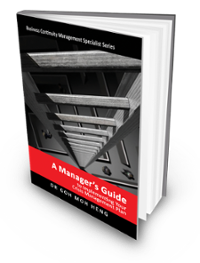](https://cta-redirect.hubspot.com/cta/redirect/3893111/2bd34f48-92c6-4ab1-8477-5dcde4d3546e)Goh, M. H. (2016). **A Manager’s Guide to Implement Your Crisis Management Plan**. Business Continuity Management Specialist Series (1st ed., p. 192). Singapore: GMH Pte Ltd.
#### More Information About Crisis Management Blended/ Hybrid Learning Courses
To learn more about the course and schedule, click the buttons below for the CM-300 Crisis Management Implementer \[CM-3\] and the CM-5000 Crisis Management Expert Implementer \[CM-5\].
| [](https://cta-redirect.hubspot.com/cta/redirect/3893111/5ffecd2d-8000-4805-b5e3-e9ead2e259cc) | [](https://cta-redirect.hubspot.com/cta/redirect/3893111/c3546220-6c76-4a10-8c76-4040b94e09e5) | [](https://cta-redirect.hubspot.com/cta/redirect/3893111/03294547-1df3-435c-9243-971c3d9bb6ce) |
| --- | --- | --- |
| [](https://cta-redirect.hubspot.com/cta/redirect/3893111/b29594fe-d44a-4ff8-8160-03f7ce454385) | [](https://cta-redirect.hubspot.com/cta/redirect/3893111/dd120e7f-9fe2-49ed-ad24-489b81c06739) | [![\[BL-CM\] \[5\] Register](https://no-cache.hubspot.com/cta/default/3893111/82024308-16f4-4491-98be-818a882c6286.png)](https://cta-redirect.hubspot.com/cta/redirect/3893111/82024308-16f4-4491-98be-818a882c6286) |
| [](https://cta-redirect.hubspot.com/cta/redirect/3893111/c8aaf76b-4c0b-402a-ad12-c8aff24eb911) | Please feel free to send us a note if you have any questions. [![Email to Sales Team \[BCM Institute\]](https://no-cache.hubspot.com/cta/default/3893111/3c53daeb-2836-4843-b0e0-645baee2ab9e.png)](https://cta-redirect.hubspot.com/cta/redirect/3893111/3c53daeb-2836-4843-b0e0-645baee2ab9e) | [](https://cta-redirect.hubspot.com/cta/redirect/3893111/30bcbbbf-c8ea-48d8-8643-da2638f3f0f8) |
| [](https://cta-redirect.hubspot.com/cta/redirect/3893111/83d00c12-c51c-4476-9902-69f9b7667a91) | [](https://cta-redirect.hubspot.com/cta/redirect/3893111/672d2949-6233-4b26-ad42-ae0dd0a1a3ac) | [](https://cta-redirect.hubspot.com/cta/redirect/3893111/3ca6f50d-a3c5-41b8-8da2-26feb8a7613e) |
#### **Comments**
---

---

---
---


All rights reserved. Copyright 2026
```json
{
"@context" : "https://schema.org",
"@type" : "BlogPosting",
"author" : {
"@type" : "Person",
"name" : "Moh Heng Goh",
"url" : "https://blog.bcm-institute.org/en/ebook-cm/author/moh-heng-goh"
},
"dateModified" : "2026-06-29T13:15:16.258Z",
"datePublished" : "2026-05-21T07:16:10.000Z",
"headline" : "[CM] [SIT] [E3] [PB] [CS] [2] Playbook for Closure of Campus",
"mainEntityOfPage" : {
"@id" : "https://blog.bcm-institute.org/en/ebook-cm/cm-sit-e3-pb-cs-2-playbook-for-closure-of-campus",
"@type" : "WebPage"
},
"publisher" : {
"@type" : "Organization",
"logo" : {
"@type" : "ImageObject",
"url" : "https://blog.bcm-institute.org/hubfs/BCMI%20Logo.png"
},
"name" : "BCMI Pte Ltd"
}
}
```