---
title: [CM] [SIT] [E1] [C9] Pre-Crisis - Risk Identification and Crisis Preparedness
description: [CM] [SIT] [E1] [C9] Pre-Crisis - Risk Identification and Crisis Preparedness
image: https://blog.bcm-institute.org/hubfs/CM%20SIT%20Graphic%20Folder/SIT%20CM%20E1%20Morepost/%5BCM%5D%20%5BSIT%5D%20%5BE1%5D%20%5BC9%5D%20Pre-Crisis%20-%20Risk%20Identification%20and%20Crisis%20Preparedness.jpg
---
.
[](http://www.bcm-institute.org/)
- [Home](https://www.bcm-institute.org/)
- [About Us](https://www.bcm-institute.org/about-us-3/)
- [A President’s Perspective](https://www.bcm-institute.org/about-us/a-presidents-perspective/)
- [Our History](https://www.bcm-institute.org/about-us/our-history/)
- [Our Advisory Council](https://www.bcm-institute.org/about-us/our-advisory-council/)
- [Customers’ Testimonials](https://www.bcm-institute.org/about-us/customers-testimonials/)
- [Credential Verification](https://www.bcm-institute.org/about-us/credential-verification/)
- [Courses](https://blog.bcm-institute.org/blog/course-fees-for-blended-learning-courses-master-catalog)
- [ISO 22301 Business Continuity Management System Audit](https://blog.bcm-institute.org/audit/business-continuity-management-audit-courses)
- [ISO 22301 Business Continuity Management](https://blog.bcm-institute.org/bcm/business-continuity-management-courses)
- [Crisis Communication](https://blog.bcm-institute.org/crisis-communication/crisis-communication-courses)
- [Crisis Management](https://blog.bcm-institute.org/en/crisis-management/courses)
- [IT Disaster Recovery](https://blog.bcm-institute.org/it-disaster-recovery/courses)
- [Operational Resilience](https://blog.bcm-institute.org/operational-resilience/courses)
- [Operational Resilience Audit](https://blog.bcm-institute.org/operational-resilience-audit/courses)
- [Certification](https://blog.bcm-institute.org/certification/types-of-certifications-offered)
- [ISO 22301 BCMS Audit Certification](https://blog.bcm-institute.org/certification/business-continuity-management-audit-certification)
- [ISO22301 Business Continuity Management Certification](https://blog.bcm-institute.org/bcm/business-continuity-management-certification)
- [Crisis Communication Certification](https://blog.bcm-institute.org/crisis-communication/crisis-communication-certification)
- [Crisis Management Certification](https://blog.bcm-institute.org/en/crisis-management/crisis-management-certification)
- [IT Disaster Recovery Planning Certification](https://blog.bcm-institute.org/it-disaster-recovery/it-disaster-recovery-certification)
- [Operational Resilience Certification](https://blog.bcm-institute.org/operational-resilience/operational-resilience-certification)
- [Operational Resilience Audit Certification](https://blog.bcm-institute.org/operational-resilience-audit)
- [Seminars](https://blog.bcm-institute.org/meet-the-expert/mte-webinar-mainpage)
- [Store](https://www.bcm-institute.org/store-2/)
- [Contact Us](http://www.bcm-institute.org/about-us/contact-us/)
-
-
##### Ebook Series
# \[CM\] \[SIT\] \[E1\] \[C9\] Pre-Crisis - Risk Identification and Crisis Preparedness
[![x \[CM\] \[SIT\] Title Banner](https://no-cache.hubspot.com/cta/default/3893111/ac11333b-2002-43b6-9cbf-a85a01f35ce1.png)](https://cta-redirect.hubspot.com/cta/redirect/3893111/ac11333b-2002-43b6-9cbf-a85a01f35ce1)
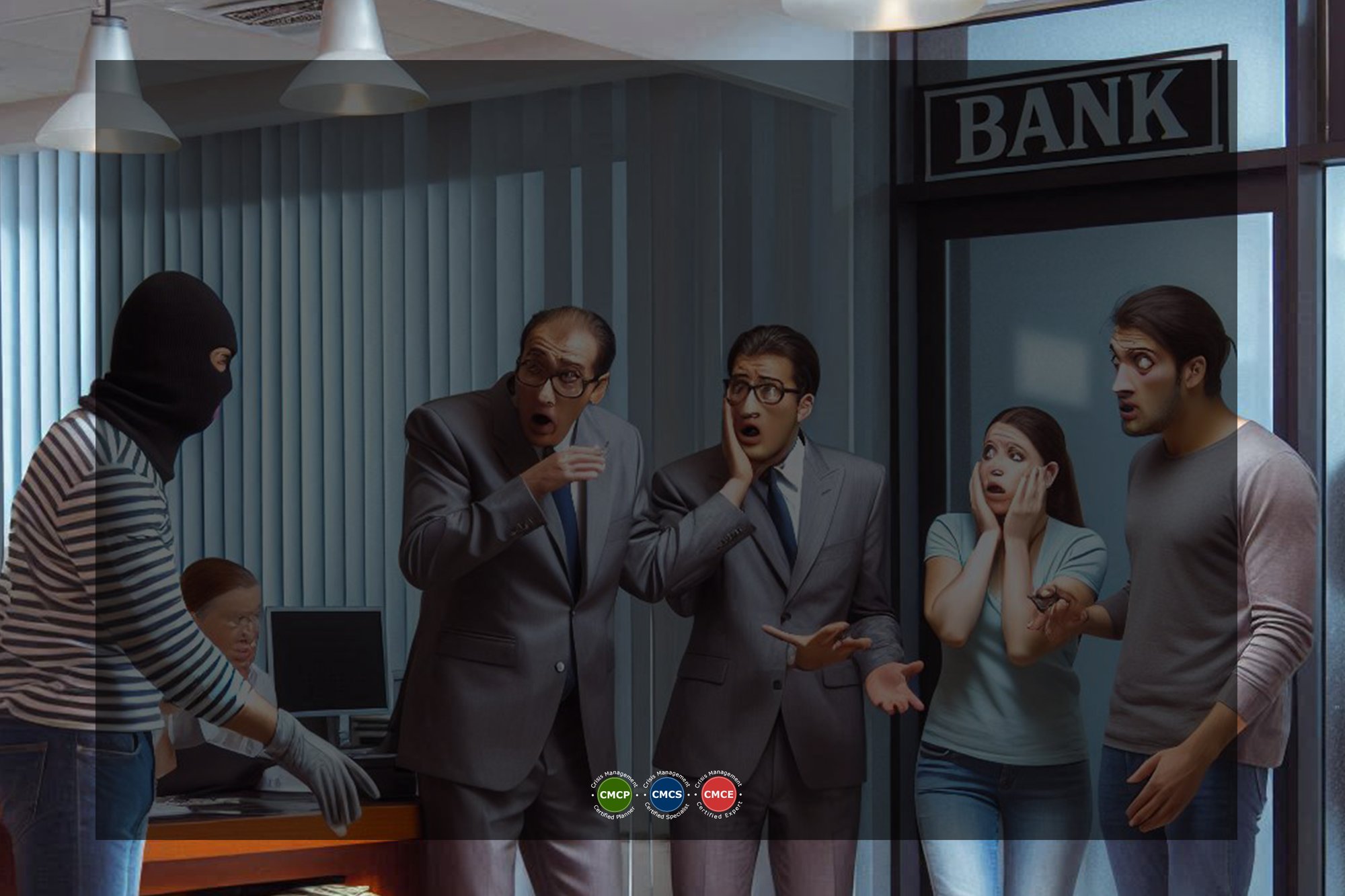
In alignment with ISO 22361, the pre-crisis stage represents the most critical phase in building a resilient organisation.
It focuses on **anticipation, assessment, prevention, and preparedness**, enabling institutions to proactively identify threats and establish the capabilities required to manage crises effectively.
For the Singapore Institute of Technology (SIT), a university operating within a highly digital, interconnected, and student-centric environment, pre-crisis preparedness must integrate **academic continuity, campus safety, digital resilience, and stakeholder communication**.
### [](https://cta-redirect.hubspot.com/cta/redirect/3893111/981cfdd3-4d91-4cec-b657-2b6feaa7ef76)
[Moh Heng Goh](https://blog.bcm-institute.org/en/ebook-cm/author/moh-heng-goh) Apr 10, 2026
###### Crisis Management Certified Planner-Specialist-Expert
###### [![\[CM\] \[SIT\] Legal Disclaimer Banner](https://no-cache.hubspot.com/cta/default/3893111/7cd96343-be69-4196-84d6-73f1153f1d2f.png)](https://cta-redirect.hubspot.com/cta/redirect/3893111/7cd96343-be69-4196-84d6-73f1153f1d2f)
### Chapter 9
### [](https://cta-redirect.hubspot.com/cta/redirect/3893111/981cfdd3-4d91-4cec-b657-2b6feaa7ef76)
### Singapore Institute of Technology
[![\[CM\] \[SIT\] \[E1\] \[C9\] Pre-Crisis - Risk Identification and Crisis Preparedness](https://no-cache.hubspot.com/cta/default/3893111/077341af-cdfe-4644-a420-092c1158a151.png)](https://cta-redirect.hubspot.com/cta/redirect/3893111/077341af-cdfe-4644-a420-092c1158a151)In alignment with ISO 22361, the pre-crisis stage represents the most critical phase in building a resilient organisation. It focuses on **anticipation, assessment, prevention, and preparedness**, enabling institutions to proactively identify threats and establish the capabilities required to manage crises effectively.
For the Singapore Institute of Technology (SIT), a university operating within a highly digital, interconnected, and student-centric environment, pre-crisis preparedness must integrate **academic continuity, campus safety, digital resilience, and stakeholder communication**.
#### **1. Identifying Potential Crises Affecting the Singapore Institute of Technology**
ISO 22361 emphasises the need for organisations to **anticipate and identify potential crisis triggers through structured horizon scanning and environmental analysis**.
##### **Key Crisis Domains for SIT**
SIT must consider a broad spectrum of crisis categories relevant to a modern applied university:
**a. Operational and Academic Disruptions**
- Campus access denial (e.g., Punggol Digital District disruptions)
- Faculty shortages or industrial attachment disruptions
- Examination or academic integrity breaches
**b. Technological and Cyber Crises**
- Learning Management System (LMS) failure
- Cyberattacks on student or research data
- Smart campus infrastructure breakdown
**c. Health and Safety Incidents**
- Pandemic resurgence or infectious disease outbreaks
- Laboratory accidents in applied learning environments
- Mental health crises among students
**d. Reputational and Governance Crises**
- Academic misconduct scandals
- Data privacy breaches under PDPA
- Public criticism or misinformation affecting SIT
**e. External and Environmental Threats**
- Supply chain disruption impacting industry projects
- National-level crises affecting higher education operations
##### **SIT-Specific Requirement**
SIT must establish a **Crisis Risk Register** that integrates:
- Academic operations risks
- Digital campus dependencies
- Industry partnership exposures
This aligns with ISO 22361’s requirement for **systematic identification of risks across internal and external contexts**.
#### **2. Crisis Risk Assessment and Categorisation**
Following identification, ISO 22361 requires organisations to **assess risks based on likelihood and impact**, enabling prioritisation and informed decision-making.
##### **Risk Assessment Framework for SIT**
| Risk Category | Likelihood | Impact | Risk Level | Example |
| --- | --- | --- | --- | --- |
| Cybersecurity Breach | High | Very High | Critical | Student data compromise |
| Campus Closure | Medium | High | High | Pandemic or infrastructure failure |
| Academic Disruption | Medium | Medium | Moderate | LMS outage during exams |
| Reputational Crisis | Low | High | High | Social media misinformation |
| Laboratory Incident | Low | Very High | High | Engineering lab accident |
##### **Risk Categorisation Dimensions**
SIT should categorise risks into:
- **Strategic Risks** (affecting long-term institutional goals)
- **Operational Risks** (affecting daily academic delivery)
- **Reputational Risks** (affecting public trust)
- **Compliance Risks** (regulatory breaches in the Singapore context)
##### **SIT-Specific Requirement**
Develop a **Crisis Risk Matrix aligned with ISO 22361 and ISO 31000 principles**, ensuring:
- Clear escalation thresholds
- Defined ownership for each risk category
- Integration with enterprise risk management (ERM)
#### **3. Scenario Planning and Contingency Planning**
ISO 22361 highlights the importance of **scenario-based planning and preparedness activities**, including simulations and exercises to test organisational readiness.
##### **Scenario Planning Approach for SIT**
**a. Development of Crisis Scenarios**
SIT should develop **“severe but plausible” scenarios**, such as:
- Cyberattack disrupting all digital learning platforms
- Fire or safety incident affecting a key campus facility
- Mass absenteeism due to a health outbreak
- Failure of third-party service providers (e.g., cloud systems)
**b. Contingency Planning Components**
Each scenario must include:
- Response strategies and decision triggers
- Resource mobilisation plans
- Communication protocols
- Recovery priorities (aligned with academic continuity)
**c. Integration with Business Continuity**
- Alignment with ISO 22301 Business Continuity Plans
- Continuity of teaching, research, and student services
- Hybrid learning fallback mechanisms
##### **SIT-Specific Requirement**
SIT should implement **scenario playbooks for each critical function**, including:
- Academic continuity (online transition within defined RTO)
- Student welfare support mechanisms
- Crisis communication templates for stakeholders
#### **4. Early Warning Systems and Crisis Indicators**
A core principle of ISO 22361 is **anticipation through early detection**, enabling organisations to act before a crisis escalates.
##### **Key Early Warning Mechanisms for SIT**
**a. Digital and Cyber Monitoring**
- Real-time cybersecurity alerts
- System performance monitoring for LMS and IT infrastructure
**b. Operational Indicators**
- Attendance anomalies (students or staff)
- Sudden disruptions in academic scheduling
- Vendor or partner service degradation
**c. Health and Safety Indicators**
- Increased clinic visits or reported illnesses
- Incident reports from laboratories or facilities
**d. Reputational Monitoring**
- Social media sentiment analysis
- Media monitoring for emerging issues
##### **Crisis Indicators Framework**
SIT should define:
- **Leading Indicators** (early signs of disruption)
- **Lagging Indicators** (post-incident metrics)
- **Trigger Points** (thresholds for escalation to Crisis Management Team)
##### **SIT-Specific Requirement**
Establish an **Integrated Crisis Monitoring Dashboard** that:
- Consolidates data from IT, campus operations, and student services
- Provides real-time alerts to the Crisis Management Team
- Supports rapid, evidence-based decision-making
### [![\[Summary\] \[CM\] \[E1\] \[C9\] Pre-Crisis - Risk Identification and Crisis Preparedness](https://no-cache.hubspot.com/cta/default/3893111/d9982046-32d9-47ce-a0d4-990cca0e43f0.png)](https://cta-redirect.hubspot.com/cta/redirect/3893111/d9982046-32d9-47ce-a0d4-990cca0e43f0)
The pre-crisis stage, as defined by ISO 22361, is fundamentally about **building foresight, structured awareness, and organisational readiness**.
By systematically identifying potential crises, assessing risks, developing scenarios, and implementing early-warning systems, the Singapore Institute of Technology can transition from a reactive posture to a proactive, resilient,** crisis-ready institution**.
In the context of SIT’s applied learning model and digital ecosystem, pre-crisis preparedness must be **deeply integrated across academic, technological, and operational domains**.
This ensures that when a crisis emerges, SIT is able not only to respond effectively but also to safeguard its students, staff, reputation, and mission continuity.
[![x \[CM\] \[SIT\] Title Banner](https://no-cache.hubspot.com/cta/default/3893111/ac11333b-2002-43b6-9cbf-a85a01f35ce1.png)](https://cta-redirect.hubspot.com/cta/redirect/3893111/ac11333b-2002-43b6-9cbf-a85a01f35ce1)
| **eBook 1: Understanding Your Organisation** | | | | | | |
| --- | --- | --- | --- | --- | --- | --- |
| **C1** | **C2** | **C3** | **C4** | **C5** | **C5A** | ** C6** |
| [![\[CM\] \[SIT\] \[E1\] \[C1\] Overview of Case Study](https://no-cache.hubspot.com/cta/default/3893111/c306682c-662e-43ff-9827-263b8a185f30.png)](https://cta-redirect.hubspot.com/cta/redirect/3893111/c306682c-662e-43ff-9827-263b8a185f30) | [![\[CM\] \[SIT\] \[E1\] \[C2\] Understanding Your Organisation](https://no-cache.hubspot.com/cta/default/3893111/5bb8d4e5-a096-4e49-a4dc-b19050e134e7.png)](https://cta-redirect.hubspot.com/cta/redirect/3893111/5bb8d4e5-a096-4e49-a4dc-b19050e134e7) | [![\[CM\] \[SIT\] \[E1\] \[C3\] Establishing CM Goals](https://no-cache.hubspot.com/cta/default/3893111/b1be0165-3080-4042-8859-f932fd7ea2cd.png)](https://cta-redirect.hubspot.com/cta/redirect/3893111/b1be0165-3080-4042-8859-f932fd7ea2cd) | [![\[CM\] \[SIT\] \[E1\] \[C4\] CM Vs BCM](https://no-cache.hubspot.com/cta/default/3893111/c606b602-57b3-41ff-8f4e-1c26adbf45ee.png)](https://cta-redirect.hubspot.com/cta/redirect/3893111/c606b602-57b3-41ff-8f4e-1c26adbf45ee) | [![\[CM\] \[SIT\] \[E1\] \[C5\] Identifying the Types of Crisis Scenarios](https://no-cache.hubspot.com/cta/default/3893111/6d8c5080-64b3-4799-a43c-793a153fd9bf.png)](https://cta-redirect.hubspot.com/cta/redirect/3893111/6d8c5080-64b3-4799-a43c-793a153fd9bf) | [![\[CM\] \[SIT\] \[E1\] \[C5A\] Technological Crisis Scenarios](https://no-cache.hubspot.com/cta/default/3893111/950c2f25-e066-4d7c-8d2b-025b42e2b0ae.png)](https://cta-redirect.hubspot.com/cta/redirect/3893111/950c2f25-e066-4d7c-8d2b-025b42e2b0ae) | [![\[CM\] \[SIT\] \[E1\] \[C6\] Assessing Risks and Threats](https://no-cache.hubspot.com/cta/default/3893111/d2359b4e-e4ea-4da8-85af-cedfc06717f0.png)](https://cta-redirect.hubspot.com/cta/redirect/3893111/d2359b4e-e4ea-4da8-85af-cedfc06717f0) |
| **C7** | **C8** | **C9** | **C10** | **C11** | **C12** | **C13** |
| [![\[CM\] \[SIT\] \[E1\] \[C7\] Composing the CM Team](https://no-cache.hubspot.com/cta/default/3893111/ffe3bd40-3117-4baa-926a-121807395d35.png)](https://cta-redirect.hubspot.com/cta/redirect/3893111/ffe3bd40-3117-4baa-926a-121807395d35) | [![\[CM\] \[SIT\] \[E1\] \[C8\] Implementing the CM Planning Methodology](https://no-cache.hubspot.com/cta/default/3893111/77927905-bf78-49de-bea6-e2602a05d6f8.png)](https://cta-redirect.hubspot.com/cta/redirect/3893111/77927905-bf78-49de-bea6-e2602a05d6f8) | [![\[CM\] \[SIT\] \[E1\] \[C9\] Pre-Crisis - Risk Identification and Crisis Preparedness](https://no-cache.hubspot.com/cta/default/3893111/077341af-cdfe-4644-a420-092c1158a151.png)](https://cta-redirect.hubspot.com/cta/redirect/3893111/077341af-cdfe-4644-a420-092c1158a151) | [![\[CM\] \[SIT\] \[E1\] \[C10\] During Crisis - Crisis Response and Decision-Making](https://no-cache.hubspot.com/cta/default/3893111/e8036dfa-5a13-4cfa-97a9-6186e3673cf2.png)](https://cta-redirect.hubspot.com/cta/redirect/3893111/e8036dfa-5a13-4cfa-97a9-6186e3673cf2) | [![\[CM\] \[SIT\] \[E1\] \[C11\] Post Crisis - Crisis Recovery](https://no-cache.hubspot.com/cta/default/3893111/3be8d3fc-39a0-432d-859c-4644cec92ad4.png)](https://cta-redirect.hubspot.com/cta/redirect/3893111/3be8d3fc-39a0-432d-859c-4644cec92ad4) | [](https://cta-redirect.hubspot.com/cta/redirect/3893111/d4ef6d11-8eb4-4dfe-9ff7-31d18848a04e) | [![\[CM\] \[SIT\] \[E1\] \[C13\] \[Back Cover\] CM eBook 1](https://no-cache.hubspot.com/cta/default/3893111/3845b345-5344-42d7-8a17-4691c64a807a.png)](https://cta-redirect.hubspot.com/cta/redirect/3893111/3845b345-5344-42d7-8a17-4691c64a807a) |
| | | | | | | |
#### More Information About Crisis Management Blended/ Hybrid Learning Courses
To learn more about the course and schedule, click the buttons below for the CM-300 Crisis Management Implementer \[CM-3\] and the CM-5000 Crisis Management Expert Implementer \[CM-5\].
| [](https://cta-redirect.hubspot.com/cta/redirect/3893111/5ffecd2d-8000-4805-b5e3-e9ead2e259cc) | [](https://cta-redirect.hubspot.com/cta/redirect/3893111/c3546220-6c76-4a10-8c76-4040b94e09e5) | [](https://cta-redirect.hubspot.com/cta/redirect/3893111/03294547-1df3-435c-9243-971c3d9bb6ce) |
| --- | --- | --- |
| [](https://cta-redirect.hubspot.com/cta/redirect/3893111/b29594fe-d44a-4ff8-8160-03f7ce454385) | [](https://cta-redirect.hubspot.com/cta/redirect/3893111/dd120e7f-9fe2-49ed-ad24-489b81c06739) | [![\[BL-CM\] \[5\] Register](https://no-cache.hubspot.com/cta/default/3893111/82024308-16f4-4491-98be-818a882c6286.png)](https://cta-redirect.hubspot.com/cta/redirect/3893111/82024308-16f4-4491-98be-818a882c6286) |
| [](https://cta-redirect.hubspot.com/cta/redirect/3893111/c8aaf76b-4c0b-402a-ad12-c8aff24eb911) | Please feel free to send us a note if you have any questions. [![Email to Sales Team \[BCM Institute\]](https://no-cache.hubspot.com/cta/default/3893111/3c53daeb-2836-4843-b0e0-645baee2ab9e.png)](https://cta-redirect.hubspot.com/cta/redirect/3893111/3c53daeb-2836-4843-b0e0-645baee2ab9e) | [](https://cta-redirect.hubspot.com/cta/redirect/3893111/30bcbbbf-c8ea-48d8-8643-da2638f3f0f8) |
| [](https://cta-redirect.hubspot.com/cta/redirect/3893111/83d00c12-c51c-4476-9902-69f9b7667a91) | [](https://cta-redirect.hubspot.com/cta/redirect/3893111/672d2949-6233-4b26-ad42-ae0dd0a1a3ac) | [](https://cta-redirect.hubspot.com/cta/redirect/3893111/3ca6f50d-a3c5-41b8-8da2-26feb8a7613e) |
### Your Comments Here:
---

---

---
---


All rights reserved. Copyright 2026
```json
{
"@context" : "https://schema.org",
"@type" : "BlogPosting",
"author" : {
"@type" : "Person",
"name" : "Moh Heng Goh",
"url" : "https://blog.bcm-institute.org/en/ebook-cm/author/moh-heng-goh"
},
"dateModified" : "2026-04-11T15:48:09.486Z",
"datePublished" : "2026-04-10T08:09:21.000Z",
"headline" : "[CM] [SIT] [E1] [C9] Pre-Crisis - Risk Identification and Crisis Preparedness",
"mainEntityOfPage" : {
"@id" : "https://blog.bcm-institute.org/en/ebook-cm/cm-sit-e1-c9-pre-crisis-risk-identification-and-crisis-preparedness",
"@type" : "WebPage"
},
"publisher" : {
"@type" : "Organization",
"logo" : {
"@type" : "ImageObject",
"url" : "https://blog.bcm-institute.org/hubfs/BCMI%20Logo.png"
},
"name" : "BCMI Pte Ltd"
}
}
```