---
title: [CM] [SIT] [E1] [C1] Overview of Case Study for CM Implementation for Singapore Institute of Technology
description: [CM] [SIT] [E1] [C1] Overview of Case Study for CM Implementation for Singapore Institute of Technology
image: https://blog.bcm-institute.org/hubfs/CM%20SIT%20Graphic%20Folder/SIT%20CM%20E1%20Morepost/%5BCM%5D%20%5BSIT%5D%20%5BE1%5D%20%5BC1%5D%20Overview%20of%20Case%20Study.jpg
---
.
[](http://www.bcm-institute.org/)
- [Home](https://www.bcm-institute.org/)
- [About Us](https://www.bcm-institute.org/about-us-3/)
- [A President’s Perspective](https://www.bcm-institute.org/about-us/a-presidents-perspective/)
- [Our History](https://www.bcm-institute.org/about-us/our-history/)
- [Our Advisory Council](https://www.bcm-institute.org/about-us/our-advisory-council/)
- [Customers’ Testimonials](https://www.bcm-institute.org/about-us/customers-testimonials/)
- [Credential Verification](https://www.bcm-institute.org/about-us/credential-verification/)
- [Courses](https://blog.bcm-institute.org/blog/course-fees-for-blended-learning-courses-master-catalog)
- [ISO 22301 Business Continuity Management System Audit](https://blog.bcm-institute.org/audit/business-continuity-management-audit-courses)
- [ISO 22301 Business Continuity Management](https://blog.bcm-institute.org/bcm/business-continuity-management-courses)
- [Crisis Communication](https://blog.bcm-institute.org/crisis-communication/crisis-communication-courses)
- [Crisis Management](https://blog.bcm-institute.org/en/crisis-management/courses)
- [IT Disaster Recovery](https://blog.bcm-institute.org/it-disaster-recovery/courses)
- [Operational Resilience](https://blog.bcm-institute.org/operational-resilience/courses)
- [Operational Resilience Audit](https://blog.bcm-institute.org/operational-resilience-audit/courses)
- [Certification](https://blog.bcm-institute.org/certification/types-of-certifications-offered)
- [ISO 22301 BCMS Audit Certification](https://blog.bcm-institute.org/certification/business-continuity-management-audit-certification)
- [ISO22301 Business Continuity Management Certification](https://blog.bcm-institute.org/bcm/business-continuity-management-certification)
- [Crisis Communication Certification](https://blog.bcm-institute.org/crisis-communication/crisis-communication-certification)
- [Crisis Management Certification](https://blog.bcm-institute.org/en/crisis-management/crisis-management-certification)
- [IT Disaster Recovery Planning Certification](https://blog.bcm-institute.org/it-disaster-recovery/it-disaster-recovery-certification)
- [Operational Resilience Certification](https://blog.bcm-institute.org/operational-resilience/operational-resilience-certification)
- [Operational Resilience Audit Certification](https://blog.bcm-institute.org/operational-resilience-audit)
- [Seminars](https://blog.bcm-institute.org/meet-the-expert/mte-webinar-mainpage)
- [Store](https://www.bcm-institute.org/store-2/)
- [Contact Us](http://www.bcm-institute.org/about-us/contact-us/)
-
-
##### Crisis-Ready Campus: A Strategic Framework for Crisis Management at Singapore Institute of Technology
# \[CM\] \[SIT\] \[E1\] \[C1\] Overview of Case Study for CM Implementation for Singapore Institute of Technology
[![x \[CM\] \[SIT\] Title Banner](https://no-cache.hubspot.com/cta/default/3893111/ac11333b-2002-43b6-9cbf-a85a01f35ce1.png)](https://cta-redirect.hubspot.com/cta/redirect/3893111/ac11333b-2002-43b6-9cbf-a85a01f35ce1)
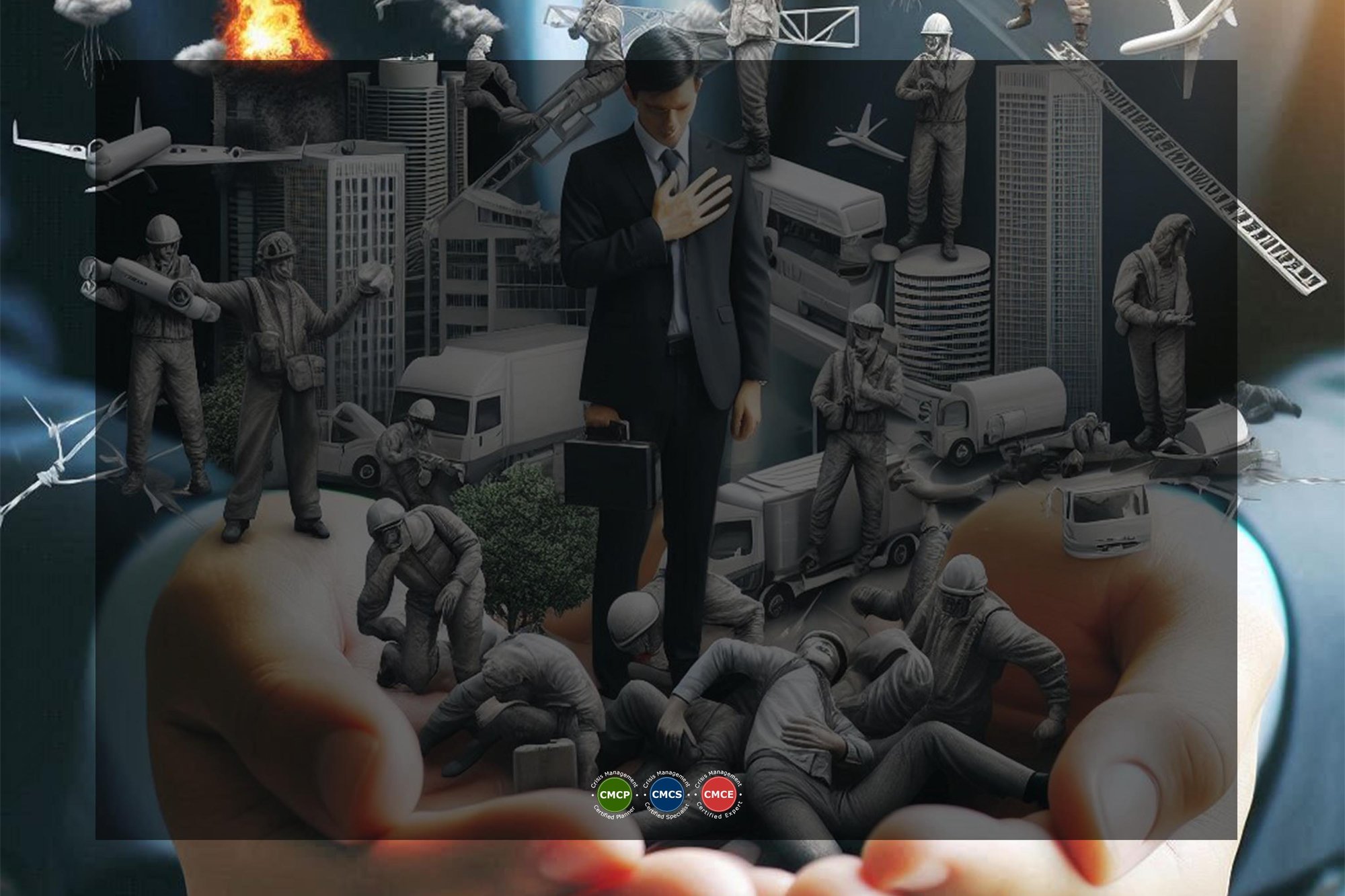
In today’s dynamic and increasingly uncertain operating environment, higher education institutions are no longer insulated from crises.
From pandemics and cyber threats to campus security incidents and infrastructure disruptions, universities must be prepared to respond swiftly and effectively.
[![eBook Cover \[CM\] \[SIT\] \[E1\] \[2D\]](https://no-cache.hubspot.com/cta/default/3893111/a2714b57-016b-4475-93f8-b43f412bbea6.png)](https://cta-redirect.hubspot.com/cta/redirect/3893111/a2714b57-016b-4475-93f8-b43f412bbea6)The Singapore Institute of Technology (SIT), as Singapore’s university of applied learning with a distributed campus model and strong industry integration, faces a unique set of operational and crisis-related challenges.
This eBook, *“Crisis-Ready Campus: A Strategic Framework for Crisis Management at Singapore Institute of Technology,”* begins with a foundational exploration of SIT as an organisation.
Understanding the institution—its structure, stakeholders, operating environment, and risk landscape—is essential before designing and implementing an effective Crisis Management (CM) framework.
This introductory chapter sets the stage by examining how crisis management can be contextualised within SIT’s ecosystem.
It provides a structured approach to identifying crisis scenarios, defining organisational goals, and aligning crisis preparedness with SIT’s strategic objectives.
### [](https://cta-redirect.hubspot.com/cta/redirect/3893111/f88736fc-7f6e-4d99-93ae-301e6bb45ac5)
[Moh Heng Goh](https://blog.bcm-institute.org/en/ebook-cm/author/moh-heng-goh) Apr 10, 2026
###### Crisis Management Certified Planner-Specialist-Expert
##### [![\[CM\] \[SIT\] Legal Disclaimer Banner](https://no-cache.hubspot.com/cta/default/3893111/7cd96343-be69-4196-84d6-73f1153f1d2f.png)](https://cta-redirect.hubspot.com/cta/redirect/3893111/7cd96343-be69-4196-84d6-73f1153f1d2f)
### eBook 1: Chapter 1
### [](https://cta-redirect.hubspot.com/cta/redirect/3893111/f88736fc-7f6e-4d99-93ae-301e6bb45ac5)
### ** Overview of Case Study for CM Implementation for Singapore Institute of Technology**
[![\[CM\] \[SIT\] \[E1\] \[C1\] Overview of Case Study](https://no-cache.hubspot.com/cta/default/3893111/c306682c-662e-43ff-9827-263b8a185f30.png)](https://cta-redirect.hubspot.com/cta/redirect/3893111/c306682c-662e-43ff-9827-263b8a185f30)
Crisis Management (CM) refers to the coordinated approach an organisation adopts to prepare for, respond to, and recover from disruptive incidents that threaten its people, operations, reputation, or stakeholders.
For SIT, crisis management is not merely reactive—it is a proactive capability embedded within governance, leadership, and operational processes.
Given SIT’s distributed campuses, industry partnerships, and reliance on digital infrastructure, CM must address both physical and virtual disruptions.
#### **[](https://cta-redirect.hubspot.com/cta/redirect/3893111/40cdcb39-a53f-4f89-9e19-8f0495bb7e3d)Understanding the Singapore Institute of Technology**
[](https://cta-redirect.hubspot.com/cta/redirect/3893111/83735804-5393-4332-a2df-acfba9ef8328)
The Singapore Institute of Technology operates as Singapore’s university of applied learning, emphasising industry collaboration and practice-oriented education. Its ecosystem includes:
- Multiple campus locations (including the Punggol Digital District)
- Strong partnerships with industry stakeholders
- A diverse student and faculty population
- Heavy reliance on digital learning platforms and IT infrastructure
These characteristics introduce complexity in crisis scenarios, particularly in areas such as campus access, technology disruptions, and stakeholder coordination.
#### **[](https://cta-redirect.hubspot.com/cta/redirect/3893111/ace00f5a-ce58-4ec0-86b0-618e217c40af)**Identifying CM Goals for Singapore Institute of Technology
Effective crisis management at SIT must align with its institutional mission and stakeholder expectations. Key CM goals include:
- **Protecting Life and Safety:** Ensuring the well-being of students, staff, and visitors
- **Maintaining Academic Continuity:** Minimising disruption to teaching and learning
- **Safeguarding Reputation:** Preserving public trust and institutional credibility
- **Ensuring Regulatory Compliance:** Meeting national and sectoral requirements
- **Strengthening Organisational Resilience:** Enhancing SIT’s ability to adapt and recover
#### **[](https://cta-redirect.hubspot.com/cta/redirect/3893111/74a1449a-0be0-4782-a700-8ab0f2e5e4a6)**Differentiating Crisis Management and Business Continuity Management
While often used interchangeably, Crisis Management (CM) and Business Continuity Management (BCM) serve distinct but complementary roles:
- **Crisis Management (CM):** Focuses on leadership, decision-making, and communication during high-impact, time-sensitive events
- **Business Continuity Management (BCM):** Focuses on maintaining and recovering critical operations following disruptions
At SIT, CM governs the strategic response to crises, while BCM ensures that academic and administrative functions continue or are restored within acceptable timeframes.
#### ** [](https://cta-redirect.hubspot.com/cta/redirect/3893111/2caf9039-e27e-4c1b-a49d-61a883128f35)Identifying the Types of Crisis Scenarios**
[](https://cta-redirect.hubspot.com/cta/redirect/3893111/97370b82-58df-4302-ad1d-1b4cdc183f30)
SIT must prepare for a wide spectrum of crisis scenarios, including:
- **Health Crises:** Pandemics, infectious disease outbreaks
- **Cyber Incidents:** Data breaches, ransomware attacks
- **Physical Security Threats:** Campus violence, terrorism threats
- **Infrastructure Failures:** Power outages, system downtime
- **Environmental Events:** Flooding, haze, extreme weather
- **Reputational Crises:** Social media incidents, governance failures
Each scenario requires tailored response strategies, supported by predefined escalation protocols.
#### **[](https://cta-redirect.hubspot.com/cta/redirect/3893111/f5cb412d-322e-48d6-8264-e4e236c60a24)Assessing Risks and Threats (Crisis Risk Assessment)**
Crisis Risk Assessment (CRA) forms the backbone of crisis preparedness. SIT should adopt a structured approach to:
- Identify potential threats across operational domains
- Evaluate the likelihood and impact of each risk
- Prioritise risks based on severity and criticality
- Establish mitigation and preparedness measures
This aligns closely with broader operational resilience and risk management frameworks.
#### ** [](https://cta-redirect.hubspot.com/cta/redirect/3893111/d1ec5829-2f11-4f12-9888-6617b9092a0e)Implementing the CM Planning Methodology**
A structured Crisis Management Planning Methodology ensures consistency and effectiveness. For SIT, this includes:
- Establishing governance structures (e.g., Crisis Management Team)
- Defining roles, responsibilities, and escalation protocols
- Developing crisis response plans and communication strategies
- Integrating CM with BCM and IT disaster recovery frameworks
- Conducting training, simulations, and exercises
#### ** [](https://cta-redirect.hubspot.com/cta/redirect/3893111/981cfdd3-4d91-4cec-b657-2b6feaa7ef76)Pre-Crisis – Risk Identification and Crisis Preparedness**
The pre-crisis phase focuses on readiness. Key activities include:
- Risk identification and monitoring
- Development of crisis response plans
- Stakeholder communication planning
- Training and awareness programmes
- Simulation exercises and scenario testing
Preparedness ensures that SIT can respond swiftly and effectively when a crisis occurs.
#### ** [](https://cta-redirect.hubspot.com/cta/redirect/3893111/534413f5-32e8-48ee-8dcf-fb5d150e7918)During Crisis – Crisis Response and Decision-Making**
During a crisis, SIT must demonstrate:
- **Rapid Decision-Making:** Guided by predefined authority structures
- **Clear Communication:** Timely and transparent updates to stakeholders
- **Coordination:** Across campuses, departments, and external agencies
- **Adaptability:** Ability to respond to evolving situations
Leadership plays a critical role in managing uncertainty and maintaining confidence.
#### ** [](https://cta-redirect.hubspot.com/cta/redirect/3893111/fdaa676d-372d-4ec3-804d-4ef4b3b7ef43)Post-Crisis – Crisis Recovery**
The post-crisis phase focuses on recovery and learning:
- Restoration of normal operations
- Assessment of impact and response effectiveness
- Identification of lessons learned
- Updating plans and strengthening resilience
This phase ensures continuous improvement and long-term organisational readiness.
### [![\[Summary\] \[CM\] \[E1\] \[C1\] Overview of Case Study](https://no-cache.hubspot.com/cta/default/3893111/73e373d9-e9c6-4f87-b2ee-53f60b8a384d.png)](https://cta-redirect.hubspot.com/cta/redirect/3893111/73e373d9-e9c6-4f87-b2ee-53f60b8a384d)
Understanding the Singapore Institute of Technology is the essential first step in building a robust crisis management framework.
By examining its operating environment, defining clear crisis management goals, and adopting a structured methodology, SIT can position itself as a crisis-ready institution.
This chapter lays the foundation for the eBook's subsequent sections, where strategies, frameworks, and practical implementations will be explored in greater depth.
Ultimately, a well-prepared SIT is not only capable of managing crises effectively but also of emerging stronger and more resilient in the face of adversity.
[![x \[CM\] \[SIT\] Title Banner](https://no-cache.hubspot.com/cta/default/3893111/ac11333b-2002-43b6-9cbf-a85a01f35ce1.png)](https://cta-redirect.hubspot.com/cta/redirect/3893111/ac11333b-2002-43b6-9cbf-a85a01f35ce1)
| **eBook 1: Understanding Your Organisation** | | | | | | |
| --- | --- | --- | --- | --- | --- | --- |
| **C1** | **C2** | **C3** | **C4** | **C5** | **C5A** | ** C6** |
| [![\[CM\] \[SIT\] \[E1\] \[C1\] Overview of Case Study](https://no-cache.hubspot.com/cta/default/3893111/c306682c-662e-43ff-9827-263b8a185f30.png)](https://cta-redirect.hubspot.com/cta/redirect/3893111/c306682c-662e-43ff-9827-263b8a185f30) | [![\[CM\] \[SIT\] \[E1\] \[C2\] Understanding Your Organisation](https://no-cache.hubspot.com/cta/default/3893111/5bb8d4e5-a096-4e49-a4dc-b19050e134e7.png)](https://cta-redirect.hubspot.com/cta/redirect/3893111/5bb8d4e5-a096-4e49-a4dc-b19050e134e7) | [![\[CM\] \[SIT\] \[E1\] \[C3\] Establishing CM Goals](https://no-cache.hubspot.com/cta/default/3893111/b1be0165-3080-4042-8859-f932fd7ea2cd.png)](https://cta-redirect.hubspot.com/cta/redirect/3893111/b1be0165-3080-4042-8859-f932fd7ea2cd) | [![\[CM\] \[SIT\] \[E1\] \[C4\] CM Vs BCM](https://no-cache.hubspot.com/cta/default/3893111/c606b602-57b3-41ff-8f4e-1c26adbf45ee.png)](https://cta-redirect.hubspot.com/cta/redirect/3893111/c606b602-57b3-41ff-8f4e-1c26adbf45ee) | [![\[CM\] \[SIT\] \[E1\] \[C5\] Identifying the Types of Crisis Scenarios](https://no-cache.hubspot.com/cta/default/3893111/6d8c5080-64b3-4799-a43c-793a153fd9bf.png)](https://cta-redirect.hubspot.com/cta/redirect/3893111/6d8c5080-64b3-4799-a43c-793a153fd9bf) | [![\[CM\] \[SIT\] \[E1\] \[C5A\] Technological Crisis Scenarios](https://no-cache.hubspot.com/cta/default/3893111/950c2f25-e066-4d7c-8d2b-025b42e2b0ae.png)](https://cta-redirect.hubspot.com/cta/redirect/3893111/950c2f25-e066-4d7c-8d2b-025b42e2b0ae) | [![\[CM\] \[SIT\] \[E1\] \[C6\] Assessing Risks and Threats](https://no-cache.hubspot.com/cta/default/3893111/d2359b4e-e4ea-4da8-85af-cedfc06717f0.png)](https://cta-redirect.hubspot.com/cta/redirect/3893111/d2359b4e-e4ea-4da8-85af-cedfc06717f0) |
| **C7** | **C8** | **C9** | **C10** | **C11** | **C12** | **C13** |
| [![\[CM\] \[SIT\] \[E1\] \[C7\] Composing the CM Team](https://no-cache.hubspot.com/cta/default/3893111/ffe3bd40-3117-4baa-926a-121807395d35.png)](https://cta-redirect.hubspot.com/cta/redirect/3893111/ffe3bd40-3117-4baa-926a-121807395d35) | [![\[CM\] \[SIT\] \[E1\] \[C8\] Implementing the CM Planning Methodology](https://no-cache.hubspot.com/cta/default/3893111/77927905-bf78-49de-bea6-e2602a05d6f8.png)](https://cta-redirect.hubspot.com/cta/redirect/3893111/77927905-bf78-49de-bea6-e2602a05d6f8) | [![\[CM\] \[SIT\] \[E1\] \[C9\] Pre-Crisis - Risk Identification and Crisis Preparedness](https://no-cache.hubspot.com/cta/default/3893111/077341af-cdfe-4644-a420-092c1158a151.png)](https://cta-redirect.hubspot.com/cta/redirect/3893111/077341af-cdfe-4644-a420-092c1158a151) | [![\[CM\] \[SIT\] \[E1\] \[C10\] During Crisis - Crisis Response and Decision-Making](https://no-cache.hubspot.com/cta/default/3893111/e8036dfa-5a13-4cfa-97a9-6186e3673cf2.png)](https://cta-redirect.hubspot.com/cta/redirect/3893111/e8036dfa-5a13-4cfa-97a9-6186e3673cf2) | [![\[CM\] \[SIT\] \[E1\] \[C11\] Post Crisis - Crisis Recovery](https://no-cache.hubspot.com/cta/default/3893111/3be8d3fc-39a0-432d-859c-4644cec92ad4.png)](https://cta-redirect.hubspot.com/cta/redirect/3893111/3be8d3fc-39a0-432d-859c-4644cec92ad4) | [](https://cta-redirect.hubspot.com/cta/redirect/3893111/d4ef6d11-8eb4-4dfe-9ff7-31d18848a04e) | [![\[CM\] \[SIT\] \[E1\] \[C13\] \[Back Cover\] CM eBook 1](https://no-cache.hubspot.com/cta/default/3893111/3845b345-5344-42d7-8a17-4691c64a807a.png)](https://cta-redirect.hubspot.com/cta/redirect/3893111/3845b345-5344-42d7-8a17-4691c64a807a) |
| | | | | | | |
#### More Information About Crisis Management Blended/ Hybrid Learning Courses
To learn more about the course and schedule, click the buttons below for the CM-300 Crisis Management Implementer \[CM-3\] and the CM-5000 Crisis Management Expert Implementer \[CM-5\].
| [](https://cta-redirect.hubspot.com/cta/redirect/3893111/5ffecd2d-8000-4805-b5e3-e9ead2e259cc) | [](https://cta-redirect.hubspot.com/cta/redirect/3893111/c3546220-6c76-4a10-8c76-4040b94e09e5) | [](https://cta-redirect.hubspot.com/cta/redirect/3893111/03294547-1df3-435c-9243-971c3d9bb6ce) |
| --- | --- | --- |
| [](https://cta-redirect.hubspot.com/cta/redirect/3893111/b29594fe-d44a-4ff8-8160-03f7ce454385) | [](https://cta-redirect.hubspot.com/cta/redirect/3893111/dd120e7f-9fe2-49ed-ad24-489b81c06739) | [![\[BL-CM\] \[5\] Register](https://no-cache.hubspot.com/cta/default/3893111/82024308-16f4-4491-98be-818a882c6286.png)](https://cta-redirect.hubspot.com/cta/redirect/3893111/82024308-16f4-4491-98be-818a882c6286) |
| [](https://cta-redirect.hubspot.com/cta/redirect/3893111/c8aaf76b-4c0b-402a-ad12-c8aff24eb911) | Please feel free to send us a note if you have any questions. [![Email to Sales Team \[BCM Institute\]](https://no-cache.hubspot.com/cta/default/3893111/3c53daeb-2836-4843-b0e0-645baee2ab9e.png)](https://cta-redirect.hubspot.com/cta/redirect/3893111/3c53daeb-2836-4843-b0e0-645baee2ab9e) | [](https://cta-redirect.hubspot.com/cta/redirect/3893111/30bcbbbf-c8ea-48d8-8643-da2638f3f0f8) |
| [](https://cta-redirect.hubspot.com/cta/redirect/3893111/83d00c12-c51c-4476-9902-69f9b7667a91) | [](https://cta-redirect.hubspot.com/cta/redirect/3893111/672d2949-6233-4b26-ad42-ae0dd0a1a3ac) | [](https://cta-redirect.hubspot.com/cta/redirect/3893111/3ca6f50d-a3c5-41b8-8da2-26feb8a7613e) |
### Your Comments Here:
---

---

---
---


All rights reserved. Copyright 2026
```json
{
"@context" : "https://schema.org",
"@type" : "BlogPosting",
"author" : {
"@type" : "Person",
"name" : "Moh Heng Goh",
"url" : "https://blog.bcm-institute.org/en/ebook-cm/author/moh-heng-goh"
},
"dateModified" : "2026-06-27T06:15:51.308Z",
"datePublished" : "2026-04-10T06:48:46.000Z",
"headline" : "[CM] [SIT] [E1] [C1] Overview of Case Study for CM Implementation for Singapore Institute of Technology",
"mainEntityOfPage" : {
"@id" : "https://blog.bcm-institute.org/en/ebook-cm/cm-sit-e1-c1-overview-of-case-study-for-cm-implementation-for-singapore-institute-of-technology",
"@type" : "WebPage"
},
"publisher" : {
"@type" : "Organization",
"logo" : {
"@type" : "ImageObject",
"url" : "https://blog.bcm-institute.org/hubfs/BCMI%20Logo.png"
},
"name" : "BCMI Pte Ltd"
}
}
```