---
title: [CM] [OCBC] [E3] [RAR] [T1-2] List of Threats Crisis Scenarios
description: [CM] [OCBC] [E3] [RAR] [T1-2] List of Threats Crisis Scenarios
image: https://blog.bcm-institute.org/hubfs/OCBC%20CM%20Graphic%20Folder/OCBC%20CM%20E3%20Morepost/%5BCM%5D%20%5BOCBC%5D%20%5BE3%5D%20%5BRAR%5D%20%5BT1-2%5D%20List%20of%20Threats.jpg
---
.
[](http://www.bcm-institute.org/)
- [Home](https://www.bcm-institute.org/)
- [About Us](https://www.bcm-institute.org/about-us-3/)
- [A President’s Perspective](https://www.bcm-institute.org/about-us/a-presidents-perspective/)
- [Our History](https://www.bcm-institute.org/about-us/our-history/)
- [Our Advisory Council](https://www.bcm-institute.org/about-us/our-advisory-council/)
- [Customers’ Testimonials](https://www.bcm-institute.org/about-us/customers-testimonials/)
- [Credential Verification](https://www.bcm-institute.org/about-us/credential-verification/)
- [Courses](https://blog.bcm-institute.org/blog/course-fees-for-blended-learning-courses-master-catalog)
- [ISO 22301 Business Continuity Management System Audit](https://blog.bcm-institute.org/audit/business-continuity-management-audit-courses)
- [ISO 22301 Business Continuity Management](https://blog.bcm-institute.org/bcm/business-continuity-management-courses)
- [Crisis Communication](https://blog.bcm-institute.org/crisis-communication/crisis-communication-courses)
- [Crisis Management](https://blog.bcm-institute.org/en/crisis-management/courses)
- [IT Disaster Recovery](https://blog.bcm-institute.org/it-disaster-recovery/courses)
- [Operational Resilience](https://blog.bcm-institute.org/operational-resilience/courses)
- [Operational Resilience Audit](https://blog.bcm-institute.org/operational-resilience-audit/courses)
- [Certification](https://blog.bcm-institute.org/certification/types-of-certifications-offered)
- [ISO 22301 BCMS Audit Certification](https://blog.bcm-institute.org/certification/business-continuity-management-audit-certification)
- [ISO22301 Business Continuity Management Certification](https://blog.bcm-institute.org/bcm/business-continuity-management-certification)
- [Crisis Communication Certification](https://blog.bcm-institute.org/crisis-communication/crisis-communication-certification)
- [Crisis Management Certification](https://blog.bcm-institute.org/en/crisis-management/crisis-management-certification)
- [IT Disaster Recovery Planning Certification](https://blog.bcm-institute.org/it-disaster-recovery/it-disaster-recovery-certification)
- [Operational Resilience Certification](https://blog.bcm-institute.org/operational-resilience/operational-resilience-certification)
- [Operational Resilience Audit Certification](https://blog.bcm-institute.org/operational-resilience-audit)
- [Seminars](https://blog.bcm-institute.org/meet-the-expert/mte-webinar-mainpage)
- [Store](https://www.bcm-institute.org/store-2/)
- [Contact Us](http://www.bcm-institute.org/about-us/contact-us/)
-
-
##### Ebook Series
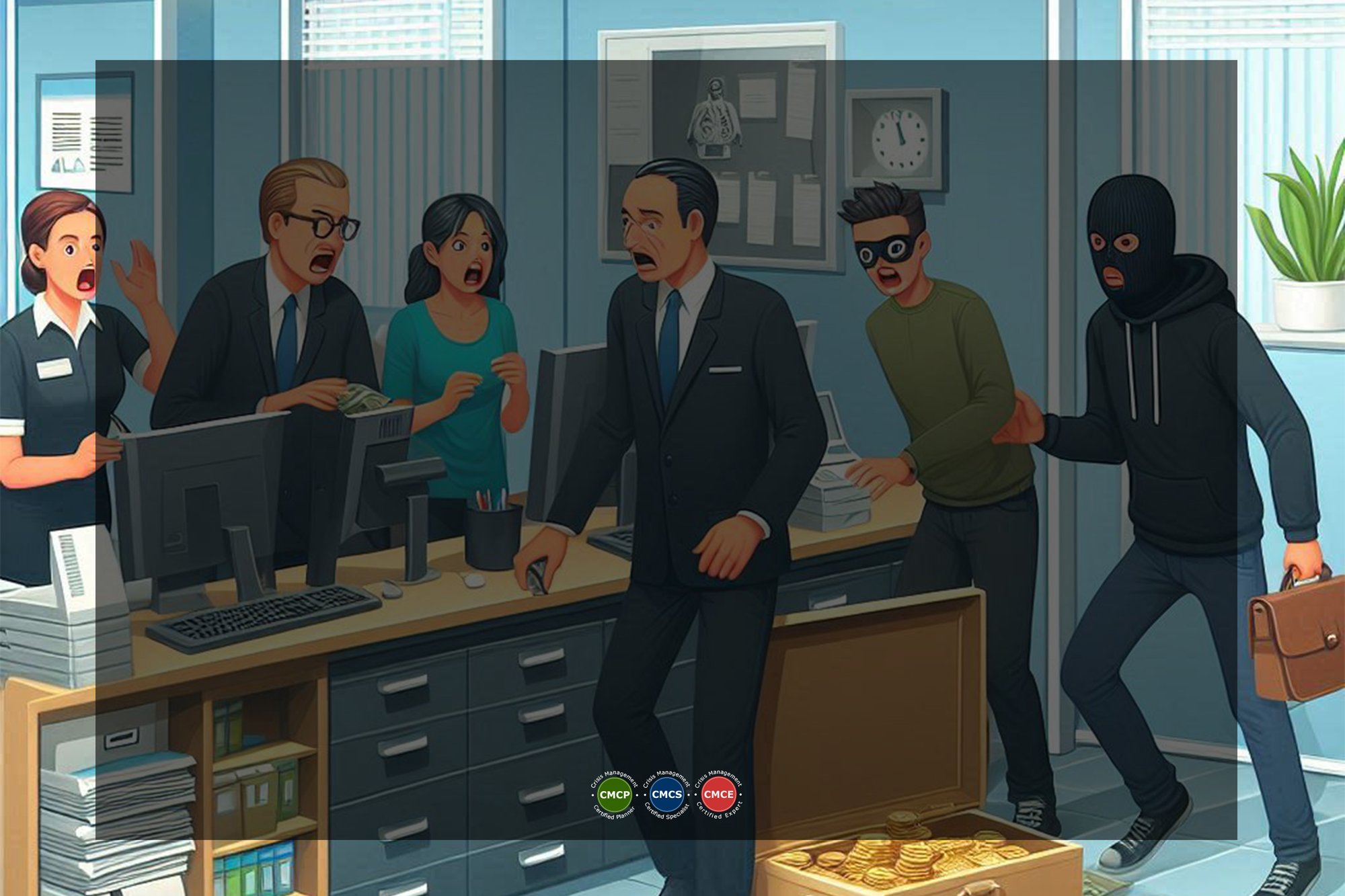
# \[CM\] \[OCBC\] \[E3\] \[RAR\] \[T1-2\] List of Threats Crisis Scenarios
[](https://cta-redirect.hubspot.com/cta/redirect/3893111/638c0235-8e02-44a4-8263-3e69c648c706)
In the ever-evolving landscape of business operations, organisations must remain vigilant against a wide array of threats that can disrupt their services, impact their reputation, and jeopardise the safety of their employees.
The identification and assessment of these threats are crucial to developing an effective Crisis Management and Business Continuity strategy. "" provides a comprehensive breakdown of various crisis scenarios that could potentially affect OCBC Bank, its stakeholders, and its operations.
This chapter categorises potential threats into key crisis types—Confrontation, Malevolence, Organisational Misdeeds, Workplace Violence, Rumours, Lack of Funds, and Natural Factors.
Each of these crisis types is further examined by specific scenarios that may occur at both the country and organisation levels.
[![\[CM\] \[E3\] \[Risk Assessment\] List of Threats and Crisis Scenario \[Part 2\]](https://no-cache.hubspot.com/cta/default/3893111/dc11ba44-67c2-424c-8ceb-b5ace0685d51.png)](https://cta-redirect.hubspot.com/cta/redirect/3893111/dc11ba44-67c2-424c-8ceb-b5ace0685d51)
[Moh Heng Goh](https://blog.bcm-institute.org/en/ebook-cm/author/moh-heng-goh) Nov 17, 2025
###### Crisis Management Certified Planner-Specialist-Expert
##### [](https://cta-redirect.hubspot.com/cta/redirect/3893111/93d7fcf1-0d3a-47b4-86fd-b3f5952d2cd9)
[![\[CM\] \[E3\] \[Risk Assessment\] List of Threats and Crisis Scenario \[Part 2\]](https://no-cache.hubspot.com/cta/default/3893111/dc11ba44-67c2-424c-8ceb-b5ace0685d51.png)](https://cta-redirect.hubspot.com/cta/redirect/3893111/dc11ba44-67c2-424c-8ceb-b5ace0685d51)
### **Part 1-2: CRA- List of Crisis Scenarios for OCBC Bank**
#### **Introduction**
[![\[CM\] \[OCBC\] \[E3\] \[RAR\] \[T1-2\] List of Threats](https://no-cache.hubspot.com/cta/default/3893111/12778e40-a0dd-48d1-bb65-dea921921eb1.png)](https://cta-redirect.hubspot.com/cta/redirect/3893111/12778e40-a0dd-48d1-bb65-dea921921eb1)In the ever-evolving landscape of business operations, organisations must remain vigilant against a wide array of threats that can disrupt their services, impact their reputation, and jeopardise the safety of their employees.
The identification and assessment of these threats are crucial to developing an effective Crisis Management and Business Continuity strategy. "" provides a comprehensive breakdown of various crisis scenarios that could potentially affect OCBC Bank, its stakeholders, and its operations.
This chapter categorises potential threats into key crisis types—Confrontation, Malevolence, Organisational Misdeeds, Workplace Violence, Rumours, Lack of Funds, and Natural Factors.
Each of these crisis types is further examined by specific scenarios that may occur at both the country and organisation levels.
By understanding these scenarios, organisations can better prepare for and mitigate the risks they pose, ensuring operational resilience and continuity during times of crisis.
Through this structured approach, OCBC Bank can identify and prioritise threats, implement tailored risk mitigation strategies, and enhance its crisis management preparedness, ultimately safeguarding its operations, assets, and reputation.
#### Part 1-2: CRA – List of Crisis Scenarios
Based on the information provided and referencing the requested sources, here's a structured table for "Part 1-2: CRA- List of Crisis Scenarios," broken down by the crisis types and specific threats.
| Crisis Type | Type of Threats/ Crisis Scenario | Description of Threats | Country Level | Organisation Level |
| --- | --- | --- | --- | --- |
| Confrontation | Labour Strike | Disruption due to employees or labour unions organising strikes or work stoppages, affecting operations. | National | Severe impact on operations if unresolved. |
| | Protest or Civil Unrest | Social unrest, protests, or demonstrations disrupt normal business operations. | National | Business operations are interrupted in affected areas. |
| Malevolence | Cyber Attack | Malicious attacks targeting IT systems and infrastructure can lead to data breaches or service outages. | National/ Global | Severe operational disruption; data loss; reputational damage. |
| | Vandalism or Sabotage | Deliberate destruction of physical or IT assets with the intent to harm the organisation's operations. | National | prioritises personal interests over organisational |
| | Skewed Management Values | Instances where leadership prioritises personal interests over organisational goals, leading to unethical actions. | National | Damage to corporate culture; ethical violations result in a loss of trust. |
| | Deception | Misleading stakeholders or customers about products, services, or financial health. | National | Legal consequences; damaged brand reputation. |
| | Management Misconduct | Senior management is involved in unethical behaviour, embezzlement, or fraud. | National | Legal actions, financial loss, and damage to employee morale. |
| Workplace Violence | Physical Violence | Incidents involving physical violence in the workplace that disrupt business operations and cause harm. | National | Safety risks; legal liabilities; operational disruptions. |
| | Verbal Abuse/Harassment | Workplace harassment can lead to a toxic work environment, increased legal claims, and decreased employee morale. | National | Decline in productivity and morale, as well as legal issues. |
| Rumours | False Information Spread | Rumours or misinformation that impact stakeholder trust or trigger unnecessary panic. | National | Reputational damage; loss of customer confidence. |
| Lack of Funds | Financial Insolvency | Lack of liquidity or financial mismanagement leading to the risk of bankruptcy or inability to meet obligations. | National | Business unable to sustain operations; risk of closure. |
| Natural Factors | Floods | Excessive rainfall or river overflow can lead to widespread flooding, disrupting operations. | National/ Regional | Disruption to facilities; delayed operations due to damage. |
| | Earthquakes | Natural seismic events can cause physical damage to infrastructure and pose risks to employee safety. | National/ Global | Severe infrastructure damage; inability to resume operations quickly. |
| | Hurricanes | High winds and flood damage caused by hurricanes, particularly in coastal areas. | National | Facility damage; operational shutdowns in affected regions. |
| | Wildfires | Fires that spread rapidly due to dry conditions pose a threat to physical assets and employee safety. | National/ Regional | Destruction of infrastructure; workforce displacement. |
| | Pandemics | Global or local health emergencies affecting employee health, safety, and operations. | National/ Global | Shutdown, remote work transition, and health-related impacts. |
This table outlines the types of threats, their descriptions, and the impact levels at both the country and organisation levels.
Each threat scenario corresponds to different crisis types such as confrontation, malevolence, and organisational misdeeds, which may affect OCBC Bank and its stakeholders.
[](https://cta-redirect.hubspot.com/cta/redirect/3893111/9f00129b-47f5-4a92-8db4-88b9bc250036)
The **List of Crisis Scenarios** serves as an essential resource for crisis management teams within OCBC Bank, helping to identify, understand, and respond to a wide range of potential threats.
From natural disasters, such as floods and earthquakes, to internal issues like management misconduct or workplace violence, the scenarios outlined in this chapter provide a detailed perspective on the various risks the organisation may face.
It is essential to recognise that crises are dynamic and may evolve rapidly, necessitating proactive planning and flexible response strategies.
By incorporating these scenarios into its Crisis Management Framework, OCBC Bank can better anticipate potential challenges, allocate resources efficiently, and ensure the safety and well-being of its employees and customers.
Ultimately, the insights gained from this crisis scenario list will help OCBC Bank build a resilient, well-prepared crisis response plan that not only addresses immediate threats but also strengthens the organisation’s long-term sustainability and success in the face of adversity.
| ###### Leading Through Crisis: Implementing Crisis Management at OCBC Bank | | | |
| --- | --- | --- | --- |
| **eBook 3: Starting Your CM Implementation** | | | |
| \[RAR\] \[T1-1\] | \[RAR\] \[T1-2\] | \[RAR\] \[T1-2\] \[Technology\] | \[RAR\] \[T2\] |
| [![\[CM\] \[OCBC\] \[E3\] \[RAR\] \[T1-1\] List of Threats](https://no-cache.hubspot.com/cta/default/3893111/cc6fdeec-0a2d-4353-a727-210aaed89bdb.png)](https://cta-redirect.hubspot.com/cta/redirect/3893111/cc6fdeec-0a2d-4353-a727-210aaed89bdb) | [![\[CM\] \[OCBC\] \[E3\] \[RAR\] \[T1-2\] List of Threats](https://no-cache.hubspot.com/cta/default/3893111/12778e40-a0dd-48d1-bb65-dea921921eb1.png)](https://cta-redirect.hubspot.com/cta/redirect/3893111/12778e40-a0dd-48d1-bb65-dea921921eb1) | [![\[CM\] \[OCBC\] \[E3\] \[RAR\] \[T1-2\] \[Technology\] List of Threats](https://no-cache.hubspot.com/cta/default/3893111/f7188ecf-7f44-4e7a-94f5-2b673aebb29c.png)](https://cta-redirect.hubspot.com/cta/redirect/3893111/f7188ecf-7f44-4e7a-94f5-2b673aebb29c) | [![\[CM\] \[OCBC\] \[E3\] \[RAR\] \[T2\] Treatment and Control](https://no-cache.hubspot.com/cta/default/3893111/34b476a9-fc87-4f78-b447-32152190e449.png)](https://cta-redirect.hubspot.com/cta/redirect/3893111/34b476a9-fc87-4f78-b447-32152190e449) |
| \[RAR\] \[T3\] | \[CMS\] \[T1\] | \[CMS\] \[T2\] | \[PD\] \[CS\] \[1\] |
| [![\[CM\] \[OCBC\] \[E3\] \[RAR\] \[T3\] Risk Impact and Likelihood Assessment](https://no-cache.hubspot.com/cta/default/3893111/242a323d-53ee-4135-b0fb-3b86ce4548c0.png)](https://cta-redirect.hubspot.com/cta/redirect/3893111/242a323d-53ee-4135-b0fb-3b86ce4548c0) | [![\[CM\] \[OCBC\] \[E3\] \[CMS\] \[T1\] Crisis Prevention Strategy](https://no-cache.hubspot.com/cta/default/3893111/593b9821-fbe4-43b9-a21e-6a2bf50dd589.png)](https://cta-redirect.hubspot.com/cta/redirect/3893111/593b9821-fbe4-43b9-a21e-6a2bf50dd589) | [![\[CM\] \[OCBC\] \[E3\] \[CMS\] \[T2\] Crisis Response Strategy](https://no-cache.hubspot.com/cta/default/3893111/7aaf0c28-abe9-472e-acf8-063212f030c7.png)](https://cta-redirect.hubspot.com/cta/redirect/3893111/7aaf0c28-abe9-472e-acf8-063212f030c7) | [![\[CM\] \[OCBC\] \[E3\] \[PD\] \[CS\] \[1\] Mass Casualty Incident](https://no-cache.hubspot.com/cta/default/3893111/395f1f1c-599b-49bd-940f-d2cc417a817e.png)](https://cta-redirect.hubspot.com/cta/redirect/3893111/395f1f1c-599b-49bd-940f-d2cc417a817e) |
| | | | |
#### More Information About Crisis Management Blended/ Hybrid Learning Courses
To learn more about the course and schedule, click the buttons below for the CM-300 Crisis Management Implementer \[CM-3\] and the CM-5000 Crisis Management Expert Implementer \[CM-5\].
| [](https://cta-redirect.hubspot.com/cta/redirect/3893111/5ffecd2d-8000-4805-b5e3-e9ead2e259cc) | [](https://cta-redirect.hubspot.com/cta/redirect/3893111/c3546220-6c76-4a10-8c76-4040b94e09e5) | [](https://cta-redirect.hubspot.com/cta/redirect/3893111/03294547-1df3-435c-9243-971c3d9bb6ce) |
| --- | --- | --- |
| [](https://cta-redirect.hubspot.com/cta/redirect/3893111/b29594fe-d44a-4ff8-8160-03f7ce454385) | [](https://cta-redirect.hubspot.com/cta/redirect/3893111/dd120e7f-9fe2-49ed-ad24-489b81c06739) | [![\[BL-CM\] \[5\] Register](https://no-cache.hubspot.com/cta/default/3893111/82024308-16f4-4491-98be-818a882c6286.png)](https://cta-redirect.hubspot.com/cta/redirect/3893111/82024308-16f4-4491-98be-818a882c6286) |
| [](https://cta-redirect.hubspot.com/cta/redirect/3893111/c8aaf76b-4c0b-402a-ad12-c8aff24eb911) | Please feel free to send us a note if you have any questions. [![Email to Sales Team \[BCM Institute\]](https://no-cache.hubspot.com/cta/default/3893111/3c53daeb-2836-4843-b0e0-645baee2ab9e.png)](https://cta-redirect.hubspot.com/cta/redirect/3893111/3c53daeb-2836-4843-b0e0-645baee2ab9e) | [](https://cta-redirect.hubspot.com/cta/redirect/3893111/30bcbbbf-c8ea-48d8-8643-da2638f3f0f8) |
| [](https://cta-redirect.hubspot.com/cta/redirect/3893111/83d00c12-c51c-4476-9902-69f9b7667a91) | [](https://cta-redirect.hubspot.com/cta/redirect/3893111/672d2949-6233-4b26-ad42-ae0dd0a1a3ac) | [](https://cta-redirect.hubspot.com/cta/redirect/3893111/3ca6f50d-a3c5-41b8-8da2-26feb8a7613e) |
### Your Comments Here:
---

---

---
---


All rights reserved. Copyright 2026
```json
{
"@context" : "https://schema.org",
"@type" : "BlogPosting",
"author" : {
"@type" : "Person",
"name" : "Moh Heng Goh",
"url" : "https://blog.bcm-institute.org/en/ebook-cm/author/moh-heng-goh"
},
"dateModified" : "2025-11-17T07:29:49.057Z",
"datePublished" : "2025-11-17T06:15:43.000Z",
"headline" : "[CM] [OCBC] [E3] [RAR] [T1-2] List of Threats Crisis Scenarios",
"mainEntityOfPage" : {
"@id" : "https://blog.bcm-institute.org/en/ebook-cm/cm-ocbc-e3-rar-t1-2-list-of-threats",
"@type" : "WebPage"
},
"publisher" : {
"@type" : "Organization",
"logo" : {
"@type" : "ImageObject",
"url" : "https://blog.bcm-institute.org/hubfs/BCMI%20Logo.png"
},
"name" : "BCMI Pte Ltd"
}
}
```