



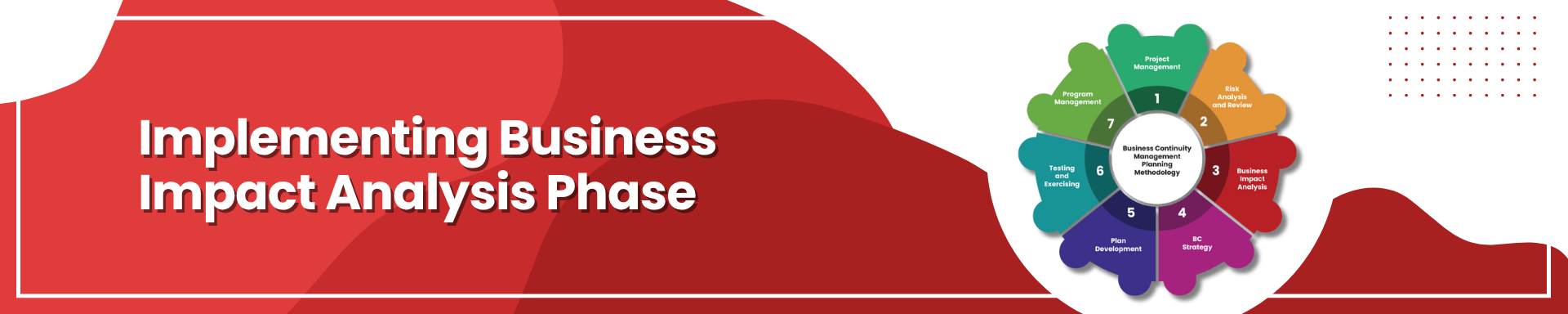
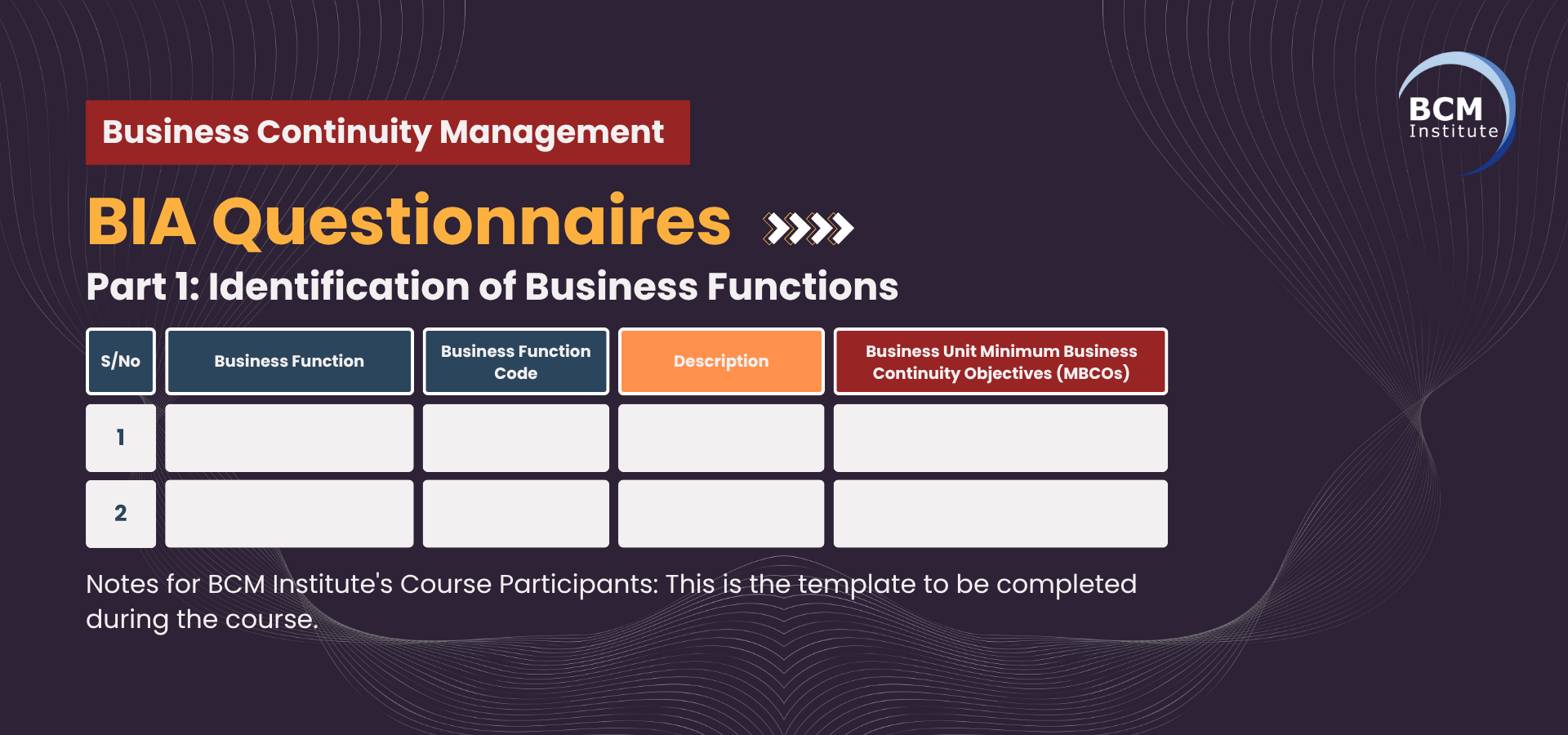
![Banner [BCM] [E3] [BIA] [P1] Identification of Business Functions](https://no-cache.hubspot.com/cta/default/3893111/206ddd7e-615a-42c8-aa2a-3416a1ad06b3.png) Consolidated Report for Identification of Business Functions for CBF-1 to CBF-12 for SHINE
Consolidated Report for Identification of Business Functions for CBF-1 to CBF-12 for SHINE
Introduction
This chapter outlines the Business Continuity Plan for SHINE Children and Youth Services, focusing on the Critical Business Functions (CBFs) and their associated Sub-Critical Business Functions (Sub-CBFs).
SHINE is dedicated to providing a wide range of essential services to children and youth in need, including educational psychology, social work, counselling, case management, and more.
Each of these services is integral to the organisation's smooth operation and its ability to fulfil its mission.
The BC Plan ensures that SHINE can continue delivering these services during disruptions, minimising downtime and maintaining continuity of care for the children and families it serves.

The CBFs and their Sub-CBFs, as detailed in this chapter, represent key operational components within the organisation.
 Each Sub-CBF is aligned with a Minimum Business Continuity Objective (MBCO), ensuring that critical functions can be restored and maintained quickly during and after a crisis.
This chapter presents a consolidated view of the essential business functions, including the services provided, objectives, and strategies for maintaining operational resilience.
By organising these functions across various service areas—such as Educational Psychology Services, Social Work, Counselling, Case Management, and IT & Infrastructure—SHINE ensures it remains responsive, accountable, and able to fulfil its obligations even in challenging circumstances.
![Banner [Table] [BCM] [E3] [BIA] Identification of Detailed Processes (Sub-CBF)](https://no-cache.hubspot.com/cta/default/3893111/e69735a1-32fb-4ea9-945b-9d2a3ef04f93.png)
Table P1: Critical Business Functions and Business Unit Minimum Business Continuity Objective (MBCO)
|
Sub-CBF Code |
Sub-CBF |
Description of Sub-CBF |
Business Unit Minimum Business Continuity Objective (MBCO) |
|
1.1 |
Psycho-educational Assessment & Diagnosis |
Assessing children and youth to diagnose learning difficulties and psychological conditions. |
Ensure continued ability to conduct assessments and provide diagnostic reports for immediate cases. |
|
1.2 |
Reassessment & Educational Needs Review |
Ongoing review of educational needs to adjust intervention strategies. |
Maintain the ability to reassess students' educational needs to ensure their ongoing academic success. |
|
1.3 |
Learning Intervention Programmes |
Implementing tailored learning interventions for students with identified needs. |
Ensure interventions are available to support the educational development of students in need. |
|
1.4 |
Consultation & Stakeholder Engagement (Parents, Schools, Volunteers) |
Engaging with parents, schools, and volunteers to coordinate student support. |
Maintain effective communication with all stakeholders to ensure interventions align with student needs. |
|
1.5 |
Intake & Referral Management |
Managing student intake and referring students to appropriate services. |
Ensure seamless intake and referral processes for new students who require psychological or educational support. |
|
1.6 |
Progress Monitoring, Review & Exit Planning |
Monitoring student progress and preparing for transition or exit from the program. |
Ensure continuous monitoring and planning for student exit from the program based on their progress. |
|
1.7 |
Documentation, Reporting & Compliance |
Managing documentation of cases and ensuring compliance with legal and ethical standards. |
Ensure accurate documentation and compliance with reporting requirements for all cases. |
|
1.8 |
Capacity Building & Volunteer / Community Programmes |
Training volunteers and engaging community members in educational initiatives. |
Ensure the continued development of community-based resources to support educational psychology services. |
|
2.1 |
Community Social Work – Community Engagement & Development |
Facilitating community engagement and development initiatives. |
Ensure sustained community engagement in supporting social work programs. |
|
2.2 |
Community Social Work – Family Support & Coaching |
Providing direct support to families and coaching to improve family dynamics. |
Ensure availability of family support services to improve social outcomes. |
|
2.3 |
School Social Work – In-School Social Work & Student Support |
Providing on-campus social work support to students in need. |
Ensure ongoing in-school social work support for students to manage personal and academic issues. |
|
2.4 |
School Social Work – Preventive & Developmental Programmes |
Implementing preventive programs to address future social issues among students. |
Ensure the continued delivery of preventive programs to mitigate future social challenges for students. |
|
2.5 |
Casework & Counselling Support (Community & School) |
Providing casework and counselling to individuals in the community and schools. |
Ensure that casework and counselling services are available to those in need within schools and the community. |
|
2.6 |
Collaboration & Partnership Management |
Managing partnerships with other agencies, organisations, and community groups. |
Ensure effective collaboration with partners to enhance service delivery. |
|
2.7 |
Volunteer & Youth Engagement / Capacity Building |
Engaging and developing volunteers and youth in community and school programs. |
Ensure continuous engagement and capacity-building for volunteers to support social work activities. |
|
2.8 |
Monitoring, Evaluation & Research-informed Practice |
Monitoring and evaluating programs, and using research to inform practice. |
Ensure ongoing evaluation of social work programs to improve efficacy and outcomes. |
|
3.1 |
Case Identification and Assessment |
Identifying at-risk youth and assessing their specific needs for intervention. |
Ensure ongoing identification and timely assessment of at-risk youth to provide appropriate interventions. |
|
3.2 |
Individualised Intervention Planning |
Developing personalised intervention plans based on assessments. |
Ensure the ability to create individualised plans for at-risk youth to address their unique needs. |
|
3.3 |
Program Delivery and Monitoring |
Delivering intervention programs and monitoring their progress. |
Ensure the seamless delivery of targeted interventions and the ability to monitor progress. |
|
3.4 |
Stakeholder Collaboration and Coordination |
Coordinating efforts with stakeholders to ensure effective intervention. |
Ensure continued coordination with stakeholders to support youth intervention programs. |
|
3.5 |
Crisis Management and Emergency Support |
Providing immediate crisis management and emergency support to at-risk youth. |
Maintain the ability to respond effectively to crises involving at-risk youth. |
|
3.6 |
Evaluation and Adjustment of Intervention Plans |
Evaluating the effectiveness of intervention plans and making necessary adjustments. |
Ensure the continuous evaluation and adaptation of intervention strategies to meet the evolving needs of at-risk youth. |
|
3.7 |
Post-Intervention Follow-Up |
Conducting follow-up with youth after intervention to ensure sustainable outcomes. |
Ensure follow-up services to assess the long-term impact of interventions on youth outcomes. |
|
4.1 |
Assessment and Intake Services |
Providing initial assessment and intake services to clients. |
Ensure uninterrupted intake and assessment processes for clients seeking therapy. |
|
4.2 |
Individual Counselling Sessions |
Delivering one-on-one counselling sessions for clients. |
Ensure the availability of individual therapy services for clients in need of counselling. |
|
4.3 |
Group Therapy Sessions |
Offering group therapy sessions to clients with everyday issues. |
Ensure the continued availability of group therapy for clients requiring collective support. |
|
4.4 |
Crisis Intervention and Immediate Support |
Providing immediate crisis intervention services. |
Ensure rapid response and effective intervention in client crises. |
|
4.5 |
Therapeutic Program Development |
Developing therapeutic programs tailored to client needs. |
Ensure the ongoing development of relevant, effective therapeutic programs to meet diverse client needs. |
|
4.6 |
Family Therapy and Support |
Offering therapy services for families to address systemic issues. |
Ensure access to family therapy services to improve family dynamics and support the client. |
|
4.7 |
Referrals and Collaboration with External Agencies |
Coordinating referrals and collaborating with external service providers. |
Ensure a seamless referral process and collaboration with external agencies to deliver holistic client support. |
|
4.8 |
Monitoring and Evaluation of Therapy Effectiveness |
Monitoring and assessing the effectiveness of therapy interventions. |
Conduct ongoing evaluations of therapy sessions to monitor client progress and program effectiveness. |
|
4.9 |
Case Documentation and Record-Keeping |
Documenting and maintaining client case files and records. |
Ensure accurate and secure documentation of all therapy sessions for legal and therapeutic purposes. |
|
5.1 |
Client Intake & Assessment |
Conducting initial intake and assessment of new clients. |
Ensure smooth intake and thorough assessment processes for new clients. |
|
5.2 |
Case Management Planning |
Developing comprehensive case management plans based on client needs. |
Ensure the creation and implementation of tailored case management plans for each client. |
|
5.3 |
Coordination of Support Services |
Coordinating the delivery of support services across multiple providers. |
Ensure seamless service coordination to address client needs across domains. |
|
5.4 |
Monitoring & Follow-up |
Tracking client progress and following up on ongoing needs. |
Ensure continuous monitoring and follow-up with clients to support long-term outcomes. |
|
5.5 |
Documentation & Reporting |
Managing case documentation and ensuring timely reporting. |
Ensure all case details are correctly documented, and reports are submitted as required. |
|
5.6 |
Client Discharge & Transition |
Facilitating the discharge and transition of clients out of the program. |
Ensure smooth transitions for clients leaving the program to maintain support and service continuity. |
|
6.1 |
Client Information Collection |
Collecting accurate client information for service delivery. |
Ensure the collection and protection of client data to facilitate accurate service delivery. |
|
6.2 |
Client Records Maintenance |
Maintaining and updating client records in compliance with legal requirements. |
Ensure proper maintenance and periodic updating of client records to ensure accuracy and compliance. |
|
6.3 |
Confidentiality & Privacy |
Ensuring client data confidentiality and privacy in line with legal standards. |
Maintain strict confidentiality of client information to comply with privacy laws. |
|
6.4 |
Document Management |
Managing client documents in a secure, organised manner. |
Ensure that client documents are well-organised, accessible, and secure. |
|
6.5 |
Record Retrieval & Access Control |
Ensuring that only authorised personnel can access client records. |
Ensure secure and efficient retrieval of client records while controlling access to maintain privacy. |
|
6.6 |
Record Disposal |
Disposing of client records securely once no longer required. |
Ensure secure disposal of client records to protect their confidentiality. |
|
6.7 |
Compliance Monitoring |
Monitoring compliance with relevant data protection laws and policies. |
Ensure ongoing compliance with regulatory and legal data protection requirements. |
|
7.1 |
Stakeholder Identification |
Identifying key stakeholders involved in the organisation's operations. |
Ensure continuous stakeholder identification and engagement to improve coordination and impact. |
|
7.2 |
Communication Planning |
Developing communication strategies for internal and external stakeholders. |
Ensure effective communication strategies to manage relationships and maintain transparency. |
|
7.3 |
Crisis Communication Execution |
Executing communication plans during a crisis. |
Ensure swift, effective communication with stakeholders during crises. |
|
7.4 |
Internal Communications |
Facilitating communication within the organisation. |
Ensure continuous internal communication to align teams and share critical information. |
|
7.5 |
External Communications |
Managing communication with external stakeholders and the public. |
Maintain clear, consistent communication with external stakeholders to enhance the organisation's reputation. |
|
7.6 |
Stakeholder Feedback Collection |
Collecting feedback from stakeholders to improve services. |
Ensure the ongoing collection and analysis of stakeholder feedback to improve services. |
|
7.7 |
Stakeholder Coordination |
Coordinating stakeholder activities to achieve organisational objectives. |
Ensure effective coordination among stakeholders to maximise impact. |
|
7.8 |
Post-Crisis Communication Review |
Reviewing and analysing post-crisis communication effectiveness. |
Ensure continuous improvement of the communication strategies base. |
|
8.1 |
Talent Acquisition & Recruitment |
Recruiting skilled professionals to fulfil organisational needs. |
Ensure continued recruitment to fill essential positions and support organisational goals. |
|
8.2 |
Staff Training & Development |
Providing professional development opportunities for staff. |
Ensure continued investment in training to enhance staff capabilities and performance. |
|
8.3 |
Performance Management & Appraisal |
Managing staff performance through regular evaluations. |
Ensure continued performance appraisals and feedback mechanisms to support staff development. |
|
8.4 |
Succession Planning |
Preparing for the smooth transition of leadership and critical roles. |
Ensure ongoing succession planning to minimise disruption during transitions in key roles. |
|
8.5 |
Employee Well-being & Support |
Promoting employee health, well-being, and work-life balance. |
Ensure the continued availability of support services to maintain staff well-being. |
|
8.6 |
Workforce Planning |
Managing workforce requirements based on organisational needs. |
Ensure optimal workforce planning to meet the organisation's operational demands. |
|
9.1 |
Fundraising & Grant Applications |
Securing funding through fundraising events and grant applications. |
Ensure continued fundraising efforts to secure financial support for organisational initiatives. |
|
9.2 |
Donor Management |
Managing donor relationships and sustaining their engagement. |
Ensure ongoing donor engagement to sustain financial support for the organisation. |
|
9.3 |
Resource Allocation & Budgeting |
Managing the allocation of resources to ensure efficient operation. |
Ensure effective allocation of financial and material resources to support critical programs. |
|
9.4 |
Financial Reporting & Accountability |
Ensuring financial transparency and accurate reporting. |
Ensure the continuous provision of accurate financial reports to stakeholders. |
|
9.5 |
Partnership & Stakeholder Engagement |
Building and maintaining partnerships with stakeholders and donors. |
Ensure strong relationships with partners to secure long-term support for programs. |
|
9.6 |
Emergency Fund Management |
Managing funds designated for emergencies or unforeseen events. |
Ensure emergency funds are available to address immediate needs during crises. |
|
10.1 |
Partnership Development |
Identifying and developing new partnerships to expand the organisation’s reach. |
Ensure the continuous development of strategic partnerships to enhance service delivery. |
|
10.2 |
Stakeholder Engagement |
Engaging stakeholders to support the organisation’s mission and objectives. |
Ensure continuous stakeholder engagement to align efforts with organisational goals. |
|
10.3 |
Community Outreach |
Promoting services and engaging with the community. |
Ensure continued outreach to raise awareness and build trust with the community. |
|
10.4 |
Network Maintenance and Coordination |
Maintaining and coordinating networks of partners and stakeholders. |
Ensure the maintenance of key networks to support collaborative initiatives. |
|
10.5 |
Resource Sharing and Collaboration |
Sharing resources and collaborating with partners to maximise impact. |
Ensure seamless collaboration and resource sharing to enhance service delivery. |
|
10.6 |
Partnership Monitoring and Evaluation |
Evaluating the effectiveness of partnerships and collaborative efforts. |
Ensure ongoing monitoring and evaluation of partnerships to ensure they meet objectives. |
|
10.7 |
Conflict Resolution and Mediation |
Addressing conflicts and resolving disputes among partners and stakeholders. |
Ensure effective conflict resolution to maintain positive working relationships. |
|
11.1 |
Facility Management |
Managing physical infrastructure and facilities required for service delivery. |
Ensure continuous facility maintenance to support operational needs. |
|
11.2 |
IT Systems Management |
Overseeing and maintaining IT systems and infrastructure. |
Ensure that IT systems are operational and secure for service delivery. |
|
11.3 |
Telecommunication Services |
Managing telecommunications services for communication needs. |
Ensure uninterrupted telecommunication services for organisational communication. |
|
11.4 |
Data Centre Management |
Managing data centre operations to support IT services. |
Ensure the continued functionality of data centres to maintain operational IT services. |
|
11.5 |
Service Support and Vendor Management |
Managing relationships with vendors and service providers. |
Ensure the availability and reliability of third-party services and support. |
|
11.6 |
Business Continuity Planning for IT Infrastructure |
Developing plans for maintaining IT services during a disruption. |
Ensure continuity of the IT infrastructure during crises to support ongoing operations. |
|
12.1 |
Compliance Monitoring |
Monitoring compliance with laws, regulations, and organisational policies. |
Ensure adherence to all legal and regulatory requirements across all operations. |
|
12.2 |
Regulatory Reporting |
Reporting to regulatory bodies as required by law. |
Ensure timely and accurate reporting to regulatory agencies to maintain compliance. |
|
12.3 |
Governance Oversight |
Overseeing governance frameworks to ensure proper leadership and accountability. |
Ensure effective governance to maintain operational integrity and accountability. |
|
12.4 |
Policy Development & Review |
Developing, reviewing, and updating organisational policies. |
Ensure policies are up to date and aligned with best practices and applicable regulations. |
|
12.5 |
Audit and Risk Management |
Conducting audits and managing organisational risks. |
Ensure ongoing risk management and regular audits to minimise operational risks. |
![Banner [BCM] [E3] [BIA] [Summing Up] Identification of Detailed Processes (Sub-CBF)](https://no-cache.hubspot.com/cta/default/3893111/4960f7b4-098c-4f68-84dc-aa250b8acd86.png)
In conclusion, the Business Continuity Planning for SHINE Children and Youth Services is a comprehensive framework that prioritises the resilience and sustainability of the organisation's core functions.
The identification and management of Critical Business Functions and their corresponding Sub-Critical Business Functions are essential in safeguarding the organisation's ability to provide uninterrupted support to vulnerable children, youth, and families.
The Sub-CBFs, as outlined in this chapter, reflect the intricate and interconnected nature of SHINE’s operations.
By establishing clear Minimum Business Continuity Objectives (MBCOs) for each Sub-CBF, SHINE can effectively mitigate service-disruption risks, ensure swift recovery from any crisis, and maintain high service-delivery standards.
As SHINE continues to grow and adapt to changing needs and environments, the BCP will evolve to address new challenges and incorporate best practices in continuity management.
This ensures that SHINE remains a reliable and trusted partner in the community, offering essential services to children and youth in Singapore, regardless of the external challenges it may face.
The ongoing review and refinement of this plan will be key to the organisation's ability to thrive in the face of adversity, ensuring that its vital services remain available to those who need them most.

| Continuity of Care: Ensuring SHINE’s Mission Through Effective BCM | |||
| eBook 4: Consolidate and Report Your BCM Implementation | |||
| Consolidated Report for BIAQ (Part 1 to Part 6) for CBF-1 to CBF-12 | |||
| PM: BIA | BIAQ T1 P1 | BIAQ T1 P2 | BIAQ T2 P3 |
| Consolidated Report for BIAQ (Part 1 to Part 6) |  |
![[BCM] [SHINE] E4] [BIA] [CR] [P2] Impact Area of Business Functions for CBF](https://no-cache.hubspot.com/cta/default/3893111/8f041b8f-e767-4b52-9509-e528a10b8f5f.png) |
![[BCM] [SHINE] E4] [BIA] [CR] [P3] Impact Over Time of Business Functions for CBF](https://no-cache.hubspot.com/cta/default/3893111/fb5aa1d6-202c-499c-8c3d-460fb90ec5ff.png) |
| CBF | BIAQ T2 P4 | BIAQ T3 P5 | BIAQ T3 P6 |
![[BCM] [SHINE] [E1] [C10] Identifying Critical Business Functions](https://no-cache.hubspot.com/cta/default/3893111/6fba5a23-5e02-4368-aa88-65a252d4edd7.png) |
![[BCM] [SHINE] [E4] [BIA] [CR] [P4] Supporting IT Systems and Applications for CBF](https://no-cache.hubspot.com/cta/default/3893111/0823b5f1-b57d-48f5-86d0-90b8eb6b851a.png) |
![[BCM] [SHINE] [E4] [BIA] [CR] [P5] Inter-dependencies for CBF](https://no-cache.hubspot.com/cta/default/3893111/74cebdbc-3526-40b8-b3d4-de6f6e25296d.png) |
![[BCM] [SHINE] [E4] [BIA] [CR] [P6] Vital Records for CBF](https://no-cache.hubspot.com/cta/default/3893111/e860a0ec-3363-4333-8cf1-86ee7e4bcccc.png) |
More Information About Business Continuity Management Courses
To learn more about the course and schedule, click the buttons below for the BCM-300 Business Continuity Management Implementer [BCM-3] and the BCM-5000 Business Continuity Management Expert Implementer [BCM-5].


![Register [BL-B-3]*](https://no-cache.hubspot.com/cta/default/3893111/ac6cf073-4cdd-4541-91ed-889f731d5076.png)



![FAQ [BL-B-3]](https://no-cache.hubspot.com/cta/default/3893111/b3824ba1-7aa1-4eb6-bef8-94f57121c5ae.png)
![Email to Sales Team [BCM Institute]](https://no-cache.hubspot.com/cta/default/3893111/3c53daeb-2836-4843-b0e0-645baee2ab9e.png)


