


![[BCM] [GEN] [E3] [C1] Starting Your BCM Implementation Banner](https://blog.bcm-institute.org/hs-fs/hubfs/BCM%20E3%20Blog%20Long%20Banner/%5BBCM%5D%20%5BGEN%5D%20%5BE3%5D%20%5BC1%5D%20Starting%20Your%20BCM%20Implementation%20Banner.png?width=1920&height=250&name=%5BBCM%5D%20%5BGEN%5D%20%5BE3%5D%20%5BC1%5D%20Starting%20Your%20BCM%20Implementation%20Banner.png)
9

eBook 3: Chapter 1
Introduction to "Starting Your BCM Implementation" at SHINE Children and Youth Services
![[BCM] [SHINE] [E3] [C1] Starting Your BCM Implementation](https://no-cache.hubspot.com/cta/default/3893111/be72c7ee-8b54-4078-9e72-bc44debf1039.png)
![eBook Cover [BCM] [SHINE] [E3] [2D]](https://no-cache.hubspot.com/cta/default/3893111/572079ee-1e3d-4802-89e6-8a161a2eff56.png) SHINE Children and Youth Services (SHINE) plays a critical role in supporting vulnerable children, youths, and families across Singapore through educational support, counselling, intervention programmes, social work, and community partnerships.
SHINE Children and Youth Services (SHINE) plays a critical role in supporting vulnerable children, youths, and families across Singapore through educational support, counselling, intervention programmes, social work, and community partnerships.
As an organisation entrusted with safeguarding the well-being and development of young individuals, maintaining the continuity of essential services—especially during disruptions—is both a responsibility and a strategic imperative.
This third eBook, “Starting Your BCM Implementation,” is the third instalment in the SHINE BCM eBook Series and serves as a practical guide to help SHINE prepare, implement, or update its Business Continuity Management (BCM) programme.
It is designed for project teams, department heads, BCM coordinators, and operational leaders involved in strengthening SHINE’s resilience.
Purpose of This eBook
This eBook provides step-by-step guidance for executing the four phases of the Business Continuity Management (BCM) planning methodology used by BCM Institute:
- Risk Analysis and Review (RAR)
- Business Impact Analysis (BIA)
- Business Continuity Strategy (BCS)
- Business Continuity Plan Development (PD)
It acts as a compilation guide for all submissions made during the BCM planning exercise. Each template, requirement, and deliverable is explained to ensure SHINE’s BCM team can confidently complete documentation aligned with BCM Institute’s best practices and ISO 22301 standards.
This eBook is value-adding and complementary to SHINE’s BCM journey. It supports organisations starting a new BCM programme or enhancing an existing one while participating in BCM Institute’s training-led implementation through certification or competency-based courses.
How This EBook Fits Within the BCM Series
This is EBook 3 of SHINE’s BCM eBook Series. It builds upon the foundations laid in two earlier eBooks:
eBook 1 – “Understanding Your Organisation”
This first eBook introduces SHINE’s operating environment, organisational structure, mission, key services, and stakeholders. It serves as pre-reading to understand the context in which BCM will be implemented.
eBook 2 – “Implementing the BCM Planning Methodology”
The second eBook explains the BCM framework, roles and responsibilities, and the overall planning lifecycle. It equips staff with the conceptual understanding needed to execute each phase.
eBook 3 – “Starting Your BCM Implementation” (This Volume)
This eBook takes the next step by operationalising BCM, guiding the project team through templates, analysis steps, documentation requirements, and deliverables for each BCM phase.
The Four Phases of BCM Planning
The content of this eBook 3 "Starting Your BCM Implementation", drills down into the specific requirements for each phase of the BCM planning methodology.
The four phases of the BCM planning methodology are
- Risk analysis and review (RAR)
- Business impact analysis (BIA)
- Business continuity strategy (BCS)
- Bc plan development (PD)

In the Risk Analysis and Review (RAR) phase, the content includes the completion of these three templates:
- List of Threats [RAR T1]
- Treatment and Control [RAR T2]
- Risk Impact and Likelihood Assessment [RAR T3]
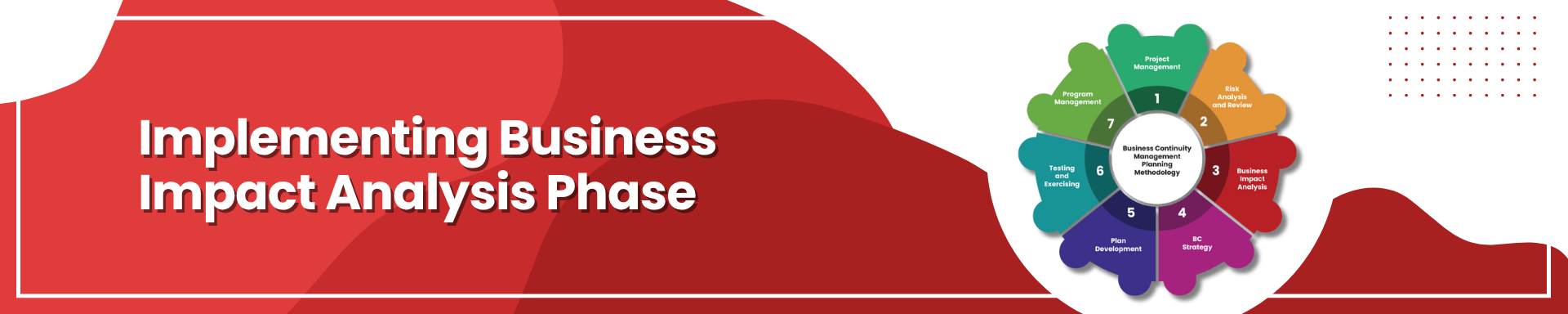
In the Business Impact Analysis (BIA) phase, the following six-part templates are completed for each critical business function.
- Part 0: Corporate MBCO & Product and Services [MBCO] [P&S]
- Part 1: Identification of Business Functions [BIAQ T1]
- Part 2: Impact Areas of Business Functions [BIAQ T1]
- Part 3: Impact Over Time of Business Functions [BIAQ T2]
- Part 4: Supporting IT Systems and Applications [BIAQ T2]
- Part 5: Inter-dependencies [BIAQ T3]
- Part 6: Vital Records [BIAQ T3]

In the Business Continuity Strategy (BCS) phase, each critical business unit will have the following requirements presented:
- Mitigation Strategies [BCS T1]
- Recovery Strategies and Justifications [BCS T2]
- Minimum Resources Required during a Disaster [BCS T3]
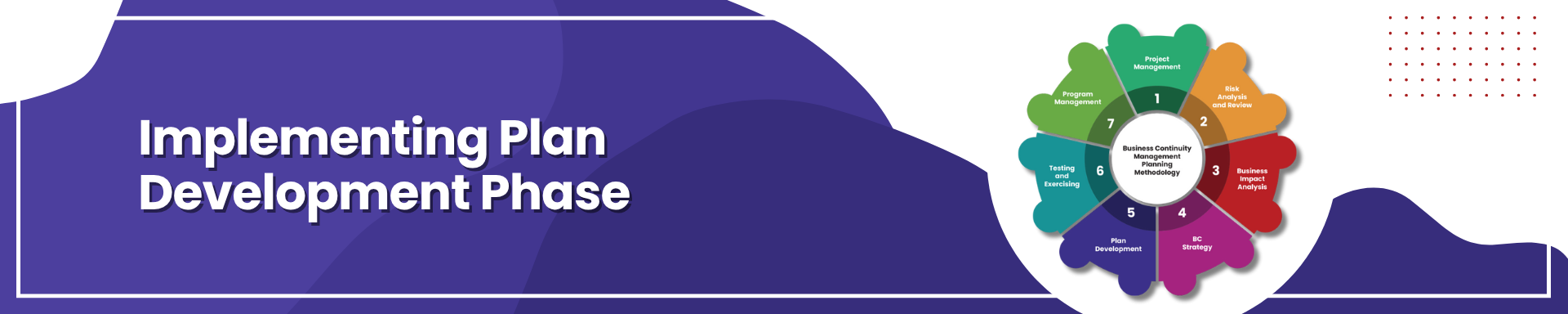
Once strategies are finalised, the BCM team proceeds to develop and document the actual Business Continuity Plans [PD] for each business function. This includes the:
- Procedures and workflows tailored to each Sub-CBF
- Communication protocols
- Roles and responsibilities during disruption events
Critical Business Functions (CBFs) at SHINE
![[BCM] [SHINE] [E1] [C10] Identifying Critical Business Functions](https://no-cache.hubspot.com/cta/default/3893111/6fba5a23-5e02-4368-aa88-65a252d4edd7.png) The BIA enables SHINE to identify how disruptions may affect its essential programmes, clients, partners, and organisational obligations.
The BIA enables SHINE to identify how disruptions may affect its essential programmes, clients, partners, and organisational obligations.
It begins with identifying Critical Business Functions (CBFs), the backbone of SHINE’s service continuity strategy.
Critical Business Functions (CBFs) for SHINE Children and Youth Services
|
CBF Code |
Critical Business Function |
|
CBF-1 |
Educational Psychology Services (EPS) |
|
CBF-2 |
Community Social Work & School Social Work |
|
CBF-3 |
Targeted Interventions for At-Risk Youth |
|
CBF-4 |
Counselling & Therapy Services (SH.IFT and related programmes) |
|
CBF-5 |
Case Management & Client Support Coordination |
|
CBF-6 |
Client Information & Records Management |
|
CBF-7 |
Communications & Stakeholder Coordination |
|
CBF-8 |
Human Resource Management & Professional Capability |
|
CBF-9 |
Funding, Resource & Donor Management |
|
CBF-10 |
Partnership & Community Network Management |
|
CBF-11 |
Facilities, IT Systems & Service Infrastructure |
|
CBF-12 |
Governance, Compliance & Reporting |
This list forms the foundation of the BIA and will be inserted into the BIA section of the report.
The completed BIA provides insight into recovery timeframes, dependency requirements, and the organisational priorities during a disruption.
Why This eBook Was Developed
This eBook was created as part of BCM Institute’s value-adding support to organisations implementing the BCM planning methodology through training-led implementation.
It is intended for organisations that:
- We are beginning a new BCM project
- Are you updating or upgrading an existing BCM programme
- Require structured templates to guide the BCM documentation
- Prefer a systematic and training-supported approach to implementation
The contents of this eBook align with the deliverables expected during BCM Institute’s competency-based and certification training. It ensures project teams receive consistent, practical support as they implement BCM in a real operational environment, such as SHINE.

What This eBook Enables SHINE to Achieve
By using this eBook, SHINE will be able to:
- Understand and execute each phase of BCM implementation with precision
- Complete all BCM templates required for RAR, BIA, BCS, and PD
- Establish a clear and functional set of continuity strategies
- Develop comprehensive Business Continuity Plans for each critical function
- Enhance its preparedness to manage disruptions while safeguarding its clients and essential services
This eBook serves as a roadmap for SHINE’s BCM implementation journey—transforming conceptual knowledge into practical resilience.
![[BCM] [SHINE] [E3] [BIA] MBCO Corporate MBCO](https://no-cache.hubspot.com/cta/default/3893111/8a4c1bad-b882-4431-9db9-564f8d734724.png)
![[BCM] [SHINE] [E3] [BIA] [PS] Key Product and Services](https://no-cache.hubspot.com/cta/default/3893111/5e23190b-1be3-4bd9-b9f4-ea90013c9628.png)
![[BCM] [SHINE] [E3] [RAR] [T1] List of Threats](https://no-cache.hubspot.com/cta/default/3893111/999fd75b-6269-41c1-b833-e44ec6e1be72.png)
![[BCM] [SHINE] [E3] [RAR] [T2] Treatment and Control](https://no-cache.hubspot.com/cta/default/3893111/08e6836a-0f79-4ea5-8059-07eaf1cf927c.png)
![[BCM] [SHINE] [E3] [RAR] [T3] Risk Impact and Likelihood Assessment](https://no-cache.hubspot.com/cta/default/3893111/dfeec650-fd4f-4916-b353-f6860d9e4393.png)
![[BCM] [SHINE] [E3] [BCS] [T1] Mitigation Strategies and Justification](https://no-cache.hubspot.com/cta/default/3893111/03fd32a8-7ffe-4c0b-9eef-a32cb67f2e61.png)
![[BCM] [SHINE] [E3] [BIA] [DP] [CBF] [1] Educational Psychology Services (EPS)](https://no-cache.hubspot.com/cta/default/3893111/95df4fb3-96e3-44a9-b0bc-b1f199811c68.png)
![[BCM] [SHINE] [E3] [BIA] [DP] [CBF] [2] Community Social Work & School Social Work](https://no-cache.hubspot.com/cta/default/3893111/a7134e09-3c9c-44be-87c2-3015b8a1b003.png)
![[BCM] [SHINE] [E3] [BIA] [DP] [CBF] [3] Targeted Interventions for At-Risk Youth](https://no-cache.hubspot.com/cta/default/3893111/1d96bce6-a1d5-4358-a10a-fbd98c576282.png)
![[BCM] [SHINE] [E3] [BIA] [DP] [CBF] [4] Counselling & Therapy Services](https://no-cache.hubspot.com/cta/default/3893111/9c765b1a-3a86-4e66-8b7a-ebb47320c552.png)
![[BCM] [SHINE] [E3] [BIA] [DP] [CBF] [5] Case Management & Client Support Coordination](https://no-cache.hubspot.com/cta/default/3893111/babe692d-8b1d-4385-a180-8d2805688246.png)
![[BCM] [SHINE] [E3] [BIA] [DP] [CBF] [6] Client Information & Records Management](https://no-cache.hubspot.com/cta/default/3893111/f5b469c7-359b-48f9-983f-18f1b31c3cb1.png)
![[BCM] [SHINE] [E3] [BIA] [DP] [CBF] [7] Communications & Stakeholder Coordination](https://no-cache.hubspot.com/cta/default/3893111/bd413bfe-356c-4d35-92dc-33afa6dd0f6a.png)
![[BCM] [SHINE] [E3] [BIA] [DP] [CBF] [8] Human Resource Management & Professional Capability](https://no-cache.hubspot.com/cta/default/3893111/d966c00e-ea70-40b5-9540-15011e7ecda2.png)
![[BCM] [SHINE] [E3] [BIA] [DP] [CBF] [9] Funding, Resource & Donor Management](https://no-cache.hubspot.com/cta/default/3893111/e19f17d5-b13c-4db4-911f-dc7c2fbb3fe6.png)
![[BCM] [SHINE] [E3] [BIA] [DP] [CBF] [10] Partnership & Community Network Management](https://no-cache.hubspot.com/cta/default/3893111/3d9d1bbf-44f3-412c-b62f-644c7a7fd7fd.png)
![[BCM] [SHINE] [E3] [BIA] [DP] [CBF] [11] Facilities, IT Systems & Service Infrastructure](https://no-cache.hubspot.com/cta/default/3893111/59775848-9abf-4a0c-bb2b-6c5665e422e2.png)
![[BCM] [SHINE] [E3] [BIA] [DP] [CBF] [12] Governance, Compliance & Reporting](https://no-cache.hubspot.com/cta/default/3893111/1c1add17-9d2d-454f-abba-959ee3f92e90.png)
More Information About Business Continuity Management Courses
To learn more about the course and schedule, click the buttons below for the BCM-300 Business Continuity Management Implementer [BCM-3] and the BCM-5000 Business Continuity Management Expert Implementer [BCM-5].


![Register [BL-B-3]*](https://no-cache.hubspot.com/cta/default/3893111/ac6cf073-4cdd-4541-91ed-889f731d5076.png)



![FAQ [BL-B-3]](https://no-cache.hubspot.com/cta/default/3893111/b3824ba1-7aa1-4eb6-bef8-94f57121c5ae.png)
![Email to Sales Team [BCM Institute]](https://no-cache.hubspot.com/cta/default/3893111/3c53daeb-2836-4843-b0e0-645baee2ab9e.png)


