



![Banner [BCM] [E3] [BIA] [P3] Impact Over Time of Business Functions](https://no-cache.hubspot.com/cta/default/3893111/bc131ed6-ca92-4253-8940-2f98dad34599.png)
CBF-3 Targeted Interventions for At-Risk Youth
![[BCM] [SHINE] [E3] [BIA] [T2] [CBF] [3] Targeted Interventions for At-Risk Youth](https://no-cache.hubspot.com/cta/default/3893111/f7f4af4a-14f9-489c-b494-5c9397edbe0f.png)
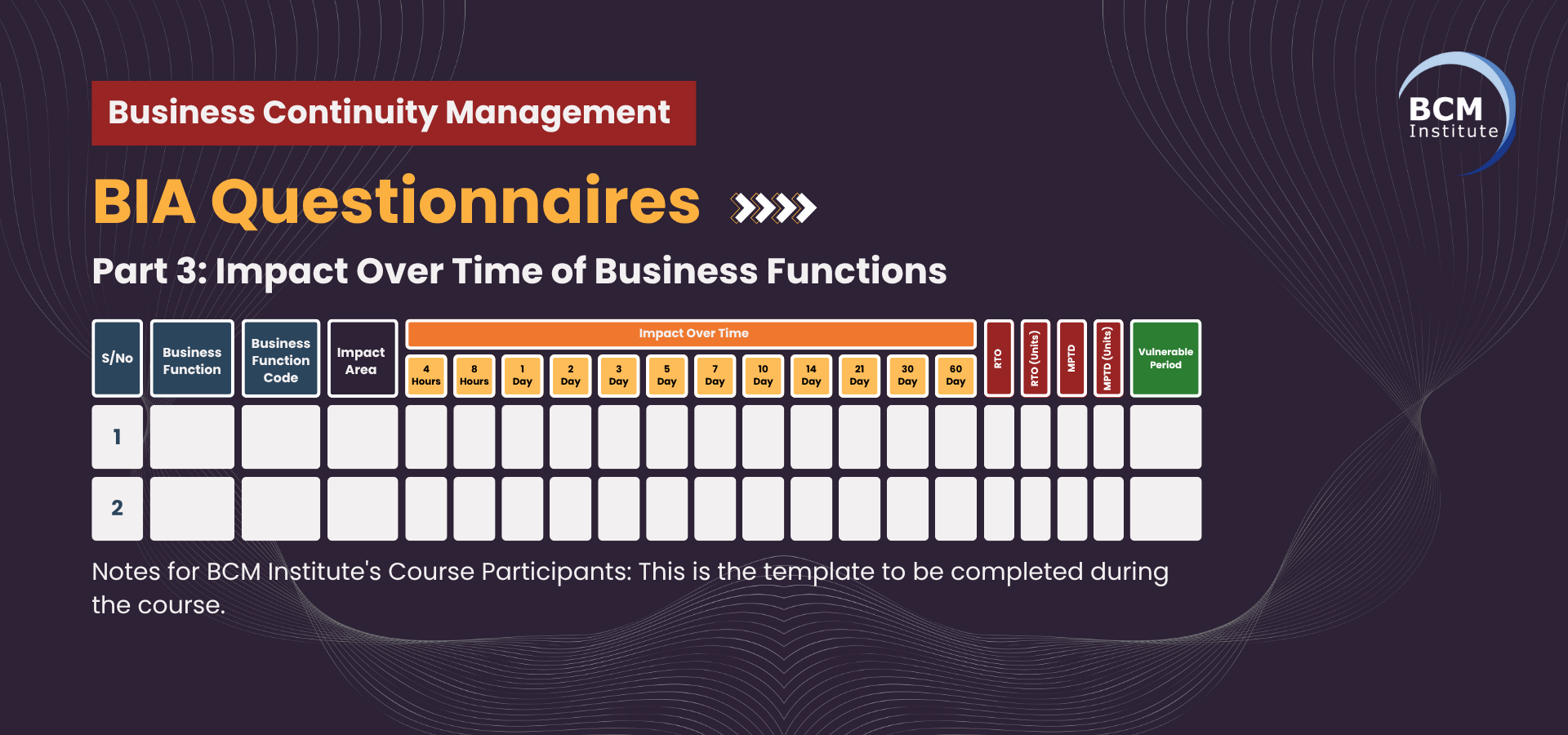
The Impact Over Time assessment is a critical component of SHINE Children and Youth Services’ Business Continuity Management (BCM) planning.
For a high-touch, client-centred service such as Targeted Interventions for At-Risk Youth, disruptions can quickly escalate into significant developmental, emotional, and safety-related consequences for vulnerable children and young persons.
This chapter evaluates how the impact of disruptions evolves across various Sub-Critical Business Functions (Sub-CBFs) within CBF-3, using a scoring scale from 1 (Low Impact) to 5 (Severe Impact).
These scores represent the extent to which interruptions may affect client safety, program continuity, statutory obligations, stakeholder confidence, and organisational reputation over defined time intervals.
The intent of this analysis is to:
- Identify time-sensitive activities that deteriorate rapidly if disrupted.
- Prioritise interventions based on Recovery Time Objectives (RTOs) and Maximum Tolerable Periods of Disruption (MTPDs).
- Highlight vulnerable periods, during which the impact of service disruption peaks.
- Support the design of resilient continuity and recovery strategies for essential youth intervention services.
This structured assessment guides SHINE in safeguarding its mission to provide timely, stabilising, and empowering support for at-risk youth, even during operational disruptions.
![Banner [Table] [BCM] [E3] [BIA] [[P3] Impact Over Time of Business Functions [BIAQ]](https://no-cache.hubspot.com/cta/default/3893111/b31bbcc9-edc2-4fc8-9cae-5c5797e36f84.png)
Table P3: Impact Over Time of Business Functions for CBF-3
|
Sub-CBF Code |
Sub-CBF |
Highest-Impact Area |
4H |
8H |
1D |
2D |
3D |
5D |
7D |
10D |
14D |
21D |
30D |
60D |
RTO |
MTPD |
Vulnerable Period |
|
3.1 |
Case Identification and Assessment |
Client Safety & Well-being |
3 |
3 |
4 |
4 |
4 |
5 |
5 |
5 |
5 |
5 |
5 |
5 |
1 Day |
3 Days |
High-risk reporting windows; peak caseload periods |
|
3.2 |
Individualised Intervention Planning |
Service Continuity & Youth Stability |
2 |
3 |
3 |
4 |
4 |
4 |
5 |
5 |
5 |
5 |
5 |
5 |
2 Days |
5 Days |
Transition points between assessment and intervention |
|
3.3 |
Program Delivery and Monitoring |
Client Safety, Developmental Outcomes |
3 |
4 |
4 |
5 |
5 |
5 |
5 |
5 |
5 |
5 |
5 |
5 |
1 Day |
2 Days |
Ongoing crisis cases; mandated session schedules |
|
3.4 |
Stakeholder Collaboration & Coordination |
Multi-Agency Case Management |
2 |
3 |
3 |
4 |
4 |
4 |
4 |
5 |
5 |
5 |
5 |
5 |
3 Days |
7 Days |
Joint case conference or inter-agency reporting cycles |
|
3.5 |
Crisis Management & Emergency Support |
Immediate Client Safety & Risk Mitigation |
4 |
5 |
5 |
5 |
5 |
5 |
5 |
5 |
5 |
5 |
5 |
5 |
4 Hours |
1 Day |
Acute crisis events; mandatory reporting obligations |
|
3.6 |
Evaluation & Adjustment of Intervention Plans |
Service Quality & Case Progression |
1 |
2 |
3 |
3 |
4 |
4 |
4 |
5 |
5 |
5 |
5 |
5 |
5 Days |
14 Days |
Mid-point reviews; end-of-cycle evaluations |
|
3.7 |
Post-Intervention Follow-Up |
Long-Term Youth Outcomes & Relapse Prevention |
1 |
1 |
2 |
2 |
3 |
3 |
3 |
4 |
4 |
5 |
5 |
5 |
7 Days |
21 Days |
Reintegration milestones; known relapse-risk periods |
![Banner [BCM] [E3] [BIA] [Summing Up] [P3] Impact Over Time of Business Functions [BIAQ]](https://no-cache.hubspot.com/cta/default/3893111/987f8ca5-0ba4-4281-be57-5221186733d0.png)
The Impact Over Time analysis for CBF-3 Targeted Interventions for At-Risk Youth highlights the essential and time-critical nature of SHINE's work with vulnerable young persons.
Many Sub-CBFs—particularly crisis management, case assessment, and program delivery—experience a rapid rise in impact severity within the first 24 to 48 hours of disruption.
Key takeaways include:
- CBF-3.5 Crisis Management & Emergency Support has the shortest RTO (4 hours), reflecting its direct connection to client safety and statutory safeguarding duties.
- CBF-3.1 Case Identification and Assessment and CBF-3.3 Program Delivery and Monitoring must resume within 1 day to prevent escalation of risk or deterioration in client well-being.
- Functions related to longer-term service quality, such as evaluation and follow-up, can tolerate more prolonged disruptions but still accumulate severe impact when sustained beyond their respective MTPDs.
- Understanding vulnerable periods helps SHINE prioritise staffing, access to technology, alternative communication channels, and emergency procedures during disruptions.
By mapping how the consequences of disruption evolve, SHINE is better equipped to plan effective recovery strategies, uphold service continuity, and safeguard the well-being of at-risk youth under its care.

![Banner [BCM] [E3] [BIA] [P4] Supporting IT Systems and Applications](https://no-cache.hubspot.com/cta/default/3893111/e60ed308-5615-4727-b6c2-5fb4eed933d7.png)
CBF-3 Targeted Interventions for At-Risk Youth
The effectiveness of SHINE Children and Youth Services’ Targeted Interventions for At-Risk Youth (CBF-3) depends heavily on reliable, secure, and resilient information systems.
These systems enable caseworkers and programme teams to identify at-risk youth, plan interventions, monitor progress, collaborate with partners, and respond to crises.
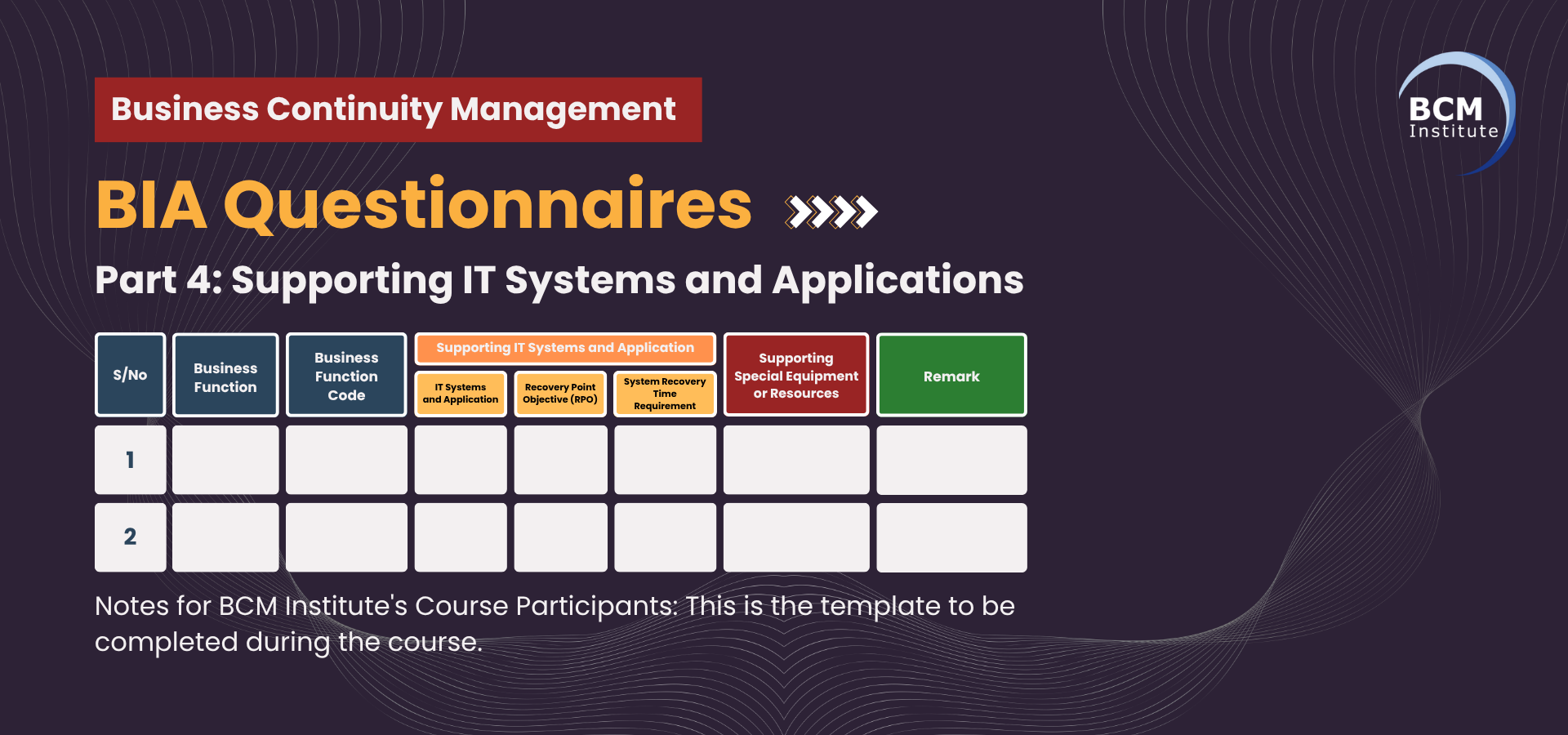
In alignment with ISO 22301 Business Continuity Management (BCM) requirements, this chapter identifies the IT systems, applications, and special equipment that support each Sub-CBF.
It also specifies the Recovery Point Objective (RPO) and the System Recovery Time Objective (RTO) to ensure service continuity during disruptions.
This mapping enables SHINE to:
- Understand system dependencies across the entire intervention lifecycle
- Prioritise recovery of systems aligned to service-critical processes
- Strengthen resilience in digital workflows
- Safeguard the continuity of essential youth support services
The following table summarises the key IT enablers required to sustain the continuity of CBF-3.
![Banner [Table] [BCM] [E3] [BIA] [P4] Supporting IT Systems and Applications [BIAQ]](https://no-cache.hubspot.com/cta/default/3893111/b0e47631-f680-46d1-b7a9-040fce25e117.png)
Table P4: Supporting IT Systems and Applications for CBF-3
|
Sub-CBF Code |
Sub-CBF |
IT Systems and Applications |
RPO |
System RTO |
Supporting Special Equipment or Resources |
Remarks |
|
3.1 |
Case Identification and Assessment |
• Client Case Management System (e.g., Social Service Sector ICT systems) • Secure Document Repository • Email & Communication Platforms • CRM/Intake Tracking Tools |
24 hours |
8 hours |
• Laptops/ tablets • Secure Wi-Fi access • Multi-factor authentication tokens |
Timely access ensures uninterrupted intake and triage for at-risk youth. |
|
3.2 |
Individualised Intervention Planning |
• Case Management System • Digital Assessment Tools • Shared Team Workspace (Microsoft 365 / Google Workspace) |
24 hours |
8 hours |
• Encrypted storage devices • Collaboration headsets/meeting tools |
Supports documentation of intervention goals and tracking. |
|
3.3 |
Program Delivery and Monitoring |
• Scheduling/Appointment Systems • Digital Monitoring Tools • Online Learning/Intervention Platforms |
24 hours |
8 hours |
• Mobile devices for field work • Tele-intervention tools |
Needed to maintain continuity of counselling and monitoring activities. |
|
3.4 |
Stakeholder Collaboration and Coordination |
• Email & Messaging Tools • Virtual Meeting Platforms • Shared Documentation Portals |
24 hours |
4–8 hours |
• Video-conferencing equipment • Secure file-sharing tools |
Coordination with schools, agencies, and partners depends heavily on the reliability of communication systems. |
|
3.5 |
Crisis Management and Emergency Support |
• Emergency Contact Database • Mobile Communication Tools • Case Management System (quick-access mode) |
4 hours |
2–4 hours |
• Emergency mobile phones • Portable power banks • Offline access to emergency protocols |
High criticality due to urgent response needs for youth safety. |
|
3.6 |
Evaluation and Adjustment of Intervention Plans |
• Case Progress Tracking Tools • Data Analytics/Reporting Platforms • Document Repository |
24 hours |
8 hours |
• Laptops/desktops • Data visualisation software |
Data integrity is essential for informed decision-making. |
|
3.7 |
Post-Intervention Follow-Up |
• Client Follow-Up Tracking System • CRM Tools • Communication Platforms |
24 hours |
8 hours |
• Mobile devices • Secure messaging tools |
Supports ongoing engagement with youth and families after programme completion. |
![Banner [BCM] [E3] [BIA] [Summing Up] [P4] Supporting IT Systems and Applications [BIAQ]](https://no-cache.hubspot.com/cta/default/3893111/9bde2d75-0c8e-4d9e-a8ca-e8d1655a082c.png)
A resilient digital environment is essential for SHINE to continue delivering targeted interventions that safeguard the well-being of at-risk youth.
By identifying system requirements, RPO/RTO expectations, and specialised equipment for each Sub-CBF, this chapter provides a clear blueprint for ensuring uninterrupted service delivery during disruptions.
With this structured understanding of system dependencies, SHINE can:
- Prioritise IT recovery efforts based on service criticality
- Strengthen data protection and service continuity
- Maintain operational effectiveness even during crises
- Continue providing timely and reliable support to vulnerable youth
This alignment of technology with business continuity principles ensures that SHINE remains prepared, responsive, and resilient in fulfilling its mission to empower children and youth in need.

| DP | BIAQ T1 | BIAQ T2 | BIAQ T3 | BCS T2 | BCS T3 | PD |
![[BCM] [SHINE] [E3] [BIA] [DP] [CBF] [3] Targeted Interventions for At-Risk Youth](https://no-cache.hubspot.com/cta/default/3893111/1d96bce6-a1d5-4358-a10a-fbd98c576282.png) |
![[BCM] [SHINE] [E3] [BIA] [T1] [CBF] [3] Targeted Interventions for At-Risk Youth](https://no-cache.hubspot.com/cta/default/3893111/13de6991-364c-4b4f-9d2a-37ac5f9ceb02.png) |
|
![[BCM] [SHINE] [E3] [BIA] [T3] [CBF] [3] Targeted Interventions for At-Risk Youth](https://no-cache.hubspot.com/cta/default/3893111/6bb2d27c-a270-49fd-ae9e-1d0c7cfa7f31.png) |
![[BCM] [SHINE] [E3] [BCS] [T2] [CBF] [3] Recovery Strategies](https://no-cache.hubspot.com/cta/default/3893111/824ccd00-d2a4-4631-82c3-b207f0a9de0a.png) |
![[BCM] [SHINE] [E3] [BCS] [T3] [CBF] [3] Minimum Resources Required during a Disaster](https://no-cache.hubspot.com/cta/default/3893111/52faee0e-2a50-482e-b1ec-6335f215d119.png) |
![[BCM] [SHINE] [E3] [PD] [CBF] [3] Targeted Interventions for At-Risk Youth](https://no-cache.hubspot.com/cta/default/3893111/72acd31a-53e5-4dbc-8ac5-fe70add4dacf.png) |
![[BCM] [SHINE] [E3] [BIA] MBCO Corporate MBCO](https://no-cache.hubspot.com/cta/default/3893111/8a4c1bad-b882-4431-9db9-564f8d734724.png)
![[BCM] [SHINE] [E3] [BIA] [PS] Key Product and Services](https://no-cache.hubspot.com/cta/default/3893111/5e23190b-1be3-4bd9-b9f4-ea90013c9628.png)
![[BCM] [SHINE] [E3] [RAR] [T1] List of Threats](https://no-cache.hubspot.com/cta/default/3893111/999fd75b-6269-41c1-b833-e44ec6e1be72.png)
![[BCM] [SHINE] [E3] [RAR] [T2] Treatment and Control](https://no-cache.hubspot.com/cta/default/3893111/08e6836a-0f79-4ea5-8059-07eaf1cf927c.png)
![[BCM] [SHINE] [E3] [RAR] [T3] Risk Impact and Likelihood Assessment](https://no-cache.hubspot.com/cta/default/3893111/dfeec650-fd4f-4916-b353-f6860d9e4393.png)
![[BCM] [SHINE] [E3] [BCS] [T1] Mitigation Strategies and Justification](https://no-cache.hubspot.com/cta/default/3893111/03fd32a8-7ffe-4c0b-9eef-a32cb67f2e61.png)
![[BCM] [SHINE] [E1] [C10] Identifying Critical Business Functions](https://no-cache.hubspot.com/cta/default/3893111/6fba5a23-5e02-4368-aa88-65a252d4edd7.png)
More Information About Business Continuity Management Courses
To learn more about the course and schedule, click the buttons below for the BCM-300 Business Continuity Management Implementer [BCM-3] and the BCM-5000 Business Continuity Management Expert Implementer [BCM-5].


![Register [BL-B-3]*](https://no-cache.hubspot.com/cta/default/3893111/ac6cf073-4cdd-4541-91ed-889f731d5076.png)



![FAQ [BL-B-3]](https://no-cache.hubspot.com/cta/default/3893111/b3824ba1-7aa1-4eb6-bef8-94f57121c5ae.png)
![Email to Sales Team [BCM Institute]](https://no-cache.hubspot.com/cta/default/3893111/3c53daeb-2836-4843-b0e0-645baee2ab9e.png)


