
![Banner [BCM] [E3] [BIA] [P1] Identification of Business Functions](https://no-cache.hubspot.com/cta/default/3893111/206ddd7e-615a-42c8-aa2a-3416a1ad06b3.png)


CBF-9 Funding, Resource & Donor Management
![[BCM] [SHINE] [E3] [BIA] [T1] [CBF] [9] Funding, Resource & Donor Management](https://no-cache.hubspot.com/cta/default/3893111/8e53f75f-5eef-496f-a1ba-4b2fdd350bf7.png) SHINE Children and Youth Services (SHINE) is a non-profit organisation dedicated to supporting children, youths, and families through therapeutic, educational, and community-based programmes.
SHINE Children and Youth Services (SHINE) is a non-profit organisation dedicated to supporting children, youths, and families through therapeutic, educational, and community-based programmes.
To sustain these essential services, SHINE relies heavily on stable funding, effective donor relationships, prudent resource management, and strong accountability practices.
Within SHINE’s operational resilience framework, CBF-9: Funding, Resource & Donor Management is a critical enabler function.
While it does not directly deliver frontline services, it underpins SHINE’s ability to continue operations, meet regulatory and donor obligations, and respond swiftly during periods of disruption.
This chapter outlines the key sub-functions under CBF-9. It defines the Business Unit Minimum Business Continuity Objective (MBCO) for each Business Unit, ensuring SHINE can maintain financial stability and stakeholder confidence during adverse events.
![Banner [Table] [BCM] [E3] [BIA] [P1] Identification of Critical Business Functions](https://no-cache.hubspot.com/cta/default/3893111/4fe499c9-0c19-46b4-8b6f-75450dba07d8.png)
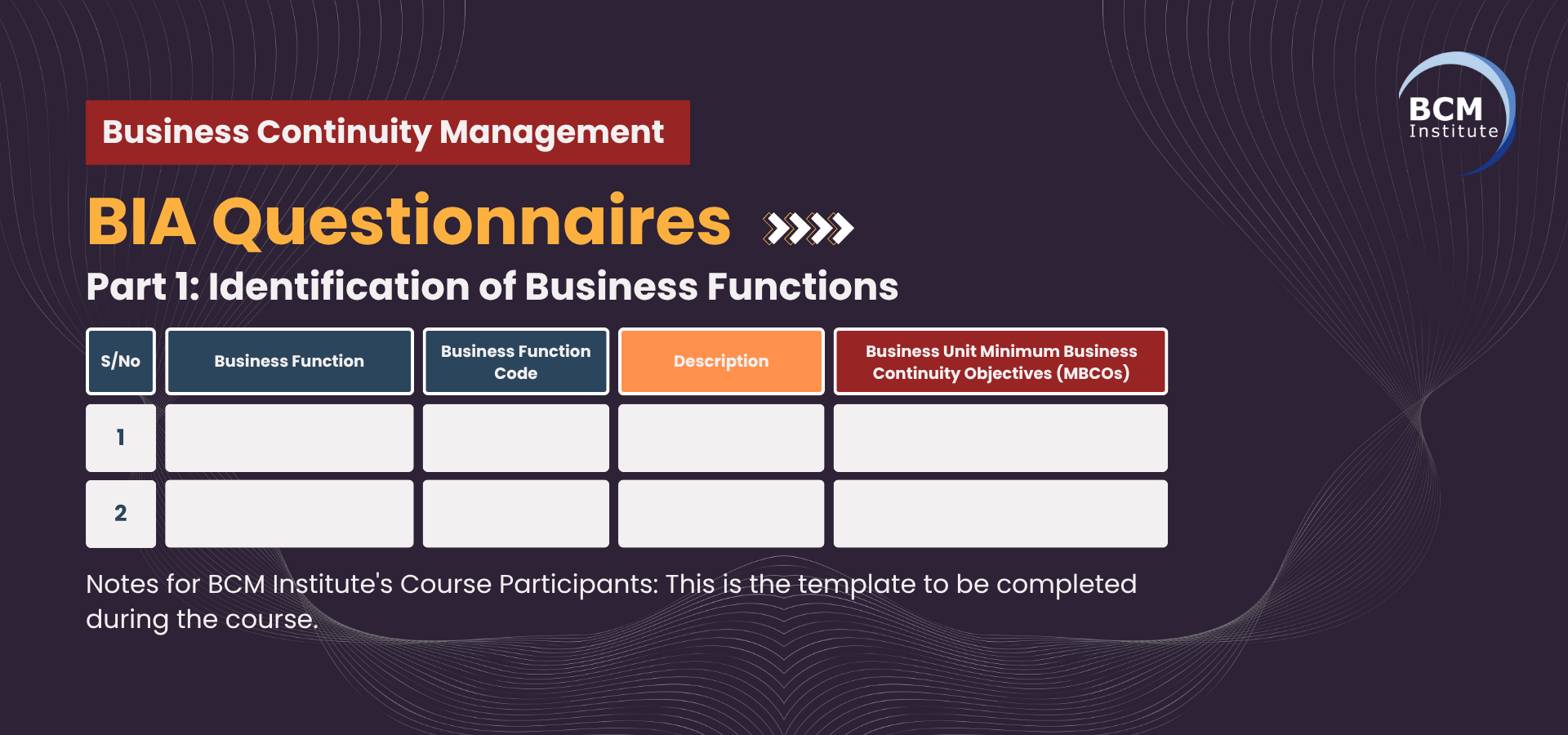
Table P1: Critical Business Functions for CBF-9
|
Sub-CBF Code |
Sub-CBF |
Description of CBF |
Business Unit Minimum Business Continuity Objective (MBCO) |
|
9.1 |
Fundraising & Grant Applications |
Planning, coordinating, and executing fundraising initiatives and grant submissions to secure financial resources for SHINE’s programmes and operations. |
Fundraising activities may be deferred for short periods; however, active grant applications and time-sensitive submissions must resume within 30 calendar days to avoid loss of funding opportunities. |
|
9.2 |
Donor Management |
Managing donor records, communications, acknowledgements, and relationship stewardship to maintain trust and long-term support. |
Core donor communications and record access must be restored within 14 calendar days to preserve donor confidence and meet acknowledgement commitments. |
|
9.3 |
Resource Allocation & Budgeting |
Allocation of financial resources, budgeting, and monitoring expenditure to support programmes and organisational sustainability. |
Budget monitoring and essential approval processes must resume within 7 calendar days to prevent financial misalignment and ensure continuity of critical programmes. |
|
9.4 |
Financial Reporting & Accountability |
Preparation and submission of financial reports to management, donors, regulators, and auditors in accordance with governance and compliance requirements. |
Statutory and donor-required reporting must be met within agreed deadlines; internal financial reporting should resume within 14 calendar days to maintain governance oversight. |
|
9.5 |
Partnership & Stakeholder Engagement |
Managing relationships with funders, corporate partners, government agencies, and community stakeholders supporting SHINE’s mission. |
Essential stakeholder communications must be maintained or restored within 14 calendar days to avoid reputational impact and partnership disengagement. |
|
9.6 |
Emergency Fund Management |
Oversight and deployment of contingency or emergency funds to support operations during crises or unexpected disruptions. |
Access to emergency funds and approval mechanisms must be available within 24–48 hours to ensure uninterrupted support for critical services. |
![Banner [BCM] [E3] [BIA] [Summing Up] [P1] Identification of Critical Business Functions](https://no-cache.hubspot.com/cta/default/3893111/22330ab3-0a0f-4efd-9da7-43032e1e6573.png)
CBF-9: Funding, Resource & Donor Management plays a pivotal role in safeguarding SHINE’s ability to deliver consistent and impactful services to children and youths, particularly during times of disruption.
While many of these functions can tolerate short-term interruptions, prolonged unavailability would significantly affect financial sustainability, stakeholder trust, and regulatory compliance.
By clearly defining Sub-CBFs and their respective Business Unit MBCOs, SHINE strengthens its operational resilience posture, ensuring that financial governance, donor confidence, and emergency responsiveness are maintained even under adverse conditions.
This structured approach enables SHINE to remain mission-focused, financially accountable, and well-positioned to support the communities it serves—today and into the future.

![Banner [BCM] [E3] [BIA] [P2] Impact Area of Business Functions](https://no-cache.hubspot.com/cta/default/3893111/182e67c2-aa89-4b0b-b3e9-144293680ea4.png) CBF-9 Funding, Resource & Donor Management
CBF-9 Funding, Resource & Donor Management
This chapter examines the Impact Area of Business Functions for SHINE Children and Youth Services, with a specific focus on CBF-9: Funding, Resource & Donor Management.
As a non-profit organisation serving vulnerable children and youth, SHINE’s ability to deliver programmes sustainably depends heavily on adequate funding flows, prudent resource management, and substantial donor and stakeholder relationships.
Assessing the impact areas of this critical business function enables SHINE to understand the potential consequences of disruption, particularly in financial, operational, regulatory, and reputational dimensions.
This analysis supports the determination of Minimum Business Continuity Objectives (MBCO) by identifying where funding interruptions or governance lapses could compromise service delivery, organisational credibility, and long-term viability.
![Banner [Table] [BCM] [E3] [BIA] [P2] Impact Areas of Business Functions [BIAQ]](https://no-cache.hubspot.com/cta/default/3893111/91582408-03ad-40e1-90e8-43ce62079aa6.png)
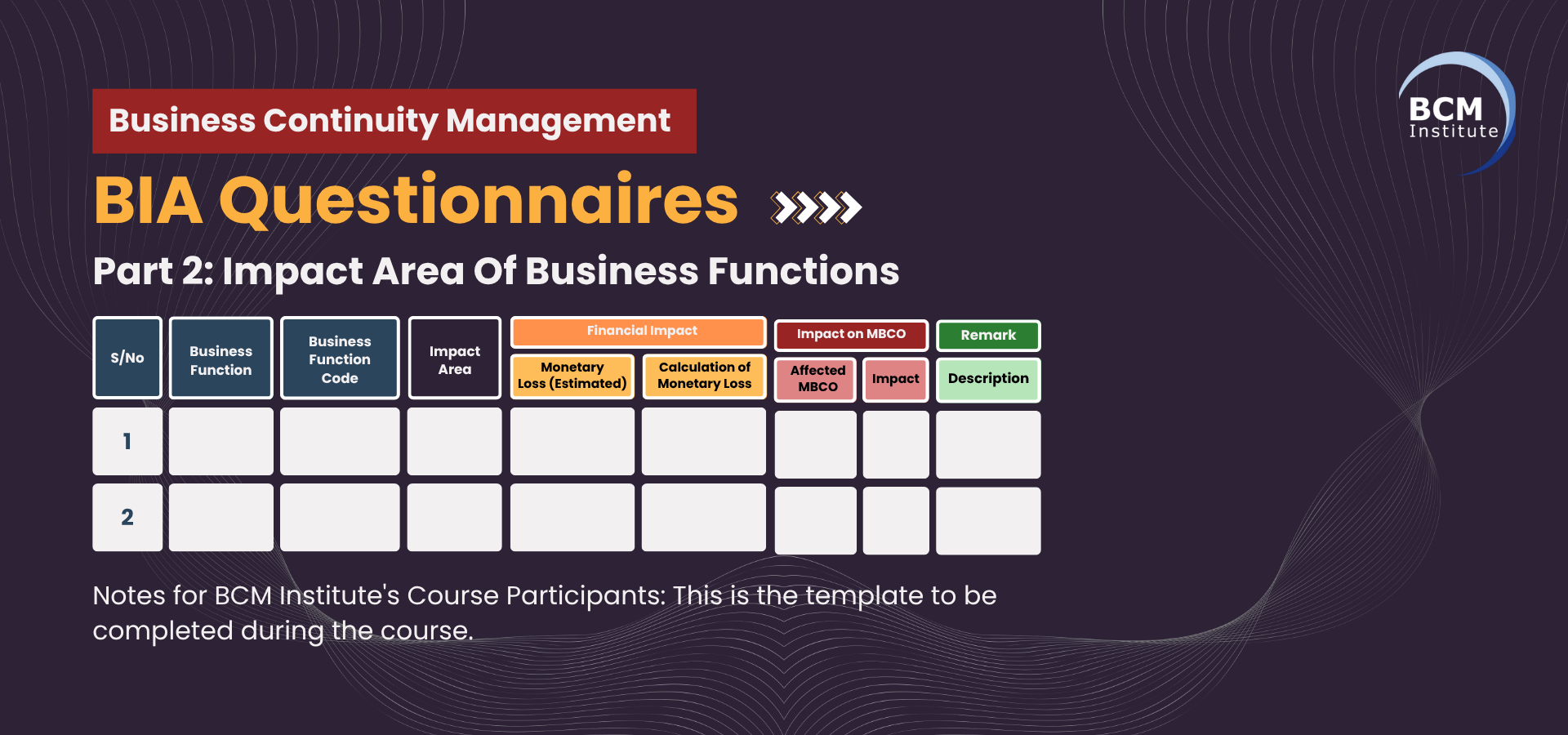
Table P2: Impact Area Assessment for CBF-9
|
Sub-CBF Code |
Sub-CBF |
Impact Area |
Financial Impact – Monetary Loss (Estimated) |
Financial Impact – Calculation of Monetary Loss (Formula) |
Impact on MBCO – Affect MBCO |
Impact on MBCO – Impact |
Remarks – Description |
|
9.1 |
Fundraising & Grant Applications |
Financial, Reputational, Strategic |
SGD 200,000 – 500,000 per funding cycle |
Estimated lost grant value × probability of non-renewal |
Yes |
High |
Failure to secure grants or fundraising income may result in programme scale-down or suspension, directly affecting service continuity. |
|
9.2 |
Donor Management |
Financial, Reputational |
SGD 100,000 – 300,000 annually |
Average annual donor contribution × donor attrition rate |
Yes |
Medium–High |
Ineffective donor engagement may lead to reduced repeat donations and erosion of donor trust, impacting funding stability. |
|
9.3 |
Resource Allocation & Budgeting |
Financial, Operational |
SGD 50,000 – 200,000 per financial year |
Budget variance% × total annual operating budget |
Yes |
High |
Poor allocation of funds may lead to resource shortfalls in critical programmes, affecting SHINE’s ability to meet service commitments. |
|
9.4 |
Financial Reporting & Accountability |
Regulatory, Financial, Reputational |
SGD 20,000 – 100,000 (penalties, funding loss) |
Compliance penalty + potential funding withdrawal value |
Yes |
High |
Inaccurate or delayed reporting can result in regulatory sanctions and loss of funder confidence, threatening organisational sustainability. |
|
9.5 |
Partnership & Stakeholder Engagement |
Strategic, Reputational |
SGD 50,000 – 150,000 per partnership |
Value of partnership funding/support foregone |
Yes |
Medium |
Breakdown in partnerships may reduce access to co-funding, shared resources, and community support networks. |
|
9.6 |
Emergency Fund Management |
Financial, Operational |
SGD 100,000 – 250,000 per major incident |
Emergency response cost – available contingency reserves |
Yes |
Very High |
Inadequate emergency funds may delay crisis response, directly affecting vulnerable beneficiaries and breaching MBCO thresholds. |
![Banner [BCM] [E3] [BIA] [Summing Up] [P2] Impact Areas of Business Functions [BIAQ]](https://no-cache.hubspot.com/cta/default/3893111/76188041-e1c9-43d9-8efa-e550f46ad04d.png)
The impact area assessment for CBF-9: Funding, Resource & Donor Management highlights the critical role of CBF-9 in sustaining SHINE’s mission and ensuring uninterrupted service delivery.
Disruptions within this function carry significant financial, operational, regulatory, and reputational consequences, many of which directly affect SHINE’s Minimum Business Continuity Objectives.
By clearly identifying the impact areas and potential monetary losses across each Sub-CBF, SHINE is better positioned to prioritise resilience measures, strengthen governance controls, and ensure funding continuity even during periods of disruption.
This structured understanding supports informed decision-making, reinforces stakeholder confidence, and enables SHINE to continue delivering meaningful outcomes for children and youth, even in challenging circumstances.

| DP | BIAQ T1 | BIAQ T2 | BIAQ T3 | BCS T2 | BCS T3 | PD |
![[BCM] [SHINE] [E3] [BIA] MBCO Corporate MBCO](https://no-cache.hubspot.com/cta/default/3893111/8a4c1bad-b882-4431-9db9-564f8d734724.png)
![[BCM] [SHINE] [E3] [BIA] [PS] Key Product and Services](https://no-cache.hubspot.com/cta/default/3893111/5e23190b-1be3-4bd9-b9f4-ea90013c9628.png)
![[BCM] [SHINE] [E3] [RAR] [T1] List of Threats](https://no-cache.hubspot.com/cta/default/3893111/999fd75b-6269-41c1-b833-e44ec6e1be72.png)
![[BCM] [SHINE] [E3] [RAR] [T2] Treatment and Control](https://no-cache.hubspot.com/cta/default/3893111/08e6836a-0f79-4ea5-8059-07eaf1cf927c.png)
![[BCM] [SHINE] [E3] [RAR] [T3] Risk Impact and Likelihood Assessment](https://no-cache.hubspot.com/cta/default/3893111/dfeec650-fd4f-4916-b353-f6860d9e4393.png)
![[BCM] [SHINE] [E3] [BCS] [T1] Mitigation Strategies and Justification](https://no-cache.hubspot.com/cta/default/3893111/03fd32a8-7ffe-4c0b-9eef-a32cb67f2e61.png)
![[BCM] [SHINE] [E1] [C10] Identifying Critical Business Functions](https://no-cache.hubspot.com/cta/default/3893111/6fba5a23-5e02-4368-aa88-65a252d4edd7.png)
![[BCM] [SHINE] [E3] [BIA] [DP] [CBF] [9] Funding, Resource & Donor Management](https://no-cache.hubspot.com/cta/default/3893111/e19f17d5-b13c-4db4-911f-dc7c2fbb3fe6.png)
![[BCM] [SHINE] [E3] [BIA] [T2] [CBF] [9] Funding, Resource & Donor Management](https://no-cache.hubspot.com/cta/default/3893111/743035b8-c9aa-4b25-894c-ce26a4e0b8a9.png)
![[BCM] [SHINE] [E3] [BIA] [T3] [CBF] [9] Funding, Resource & Donor Management](https://no-cache.hubspot.com/cta/default/3893111/95451a70-8049-4929-9fdb-becdcb168e53.png)
![[BCM] [SHINE] [E3] [BCS] [T2] [CBF] [9] BCS Recovery Strategy](https://no-cache.hubspot.com/cta/default/3893111/c60808e7-a463-4436-9da5-a5db05358029.png)
![[BCM] [SHINE] [E3] [BCS] [T3] [CBF] [9] Minimum Resources Required during a Disaster](https://no-cache.hubspot.com/cta/default/3893111/792700ce-c95a-479a-9053-18e1f859406a.png)
![[BCM] [SHINE] [E3] [PD] [CBF] [9] Funding, Resource & Donor Management](https://no-cache.hubspot.com/cta/default/3893111/bcbedc4a-1264-4d7c-b73d-b7ded0b6ce36.png)
More Information About Business Continuity Management Courses
To learn more about the course and schedule, click the buttons below for the BCM-300 Business Continuity Management Implementer [BCM-3] and the BCM-5000 Business Continuity Management Expert Implementer [BCM-5].


![Register [BL-B-3]*](https://no-cache.hubspot.com/cta/default/3893111/ac6cf073-4cdd-4541-91ed-889f731d5076.png)



![FAQ [BL-B-3]](https://no-cache.hubspot.com/cta/default/3893111/b3824ba1-7aa1-4eb6-bef8-94f57121c5ae.png)
![Email to Sales Team [BCM Institute]](https://no-cache.hubspot.com/cta/default/3893111/3c53daeb-2836-4843-b0e0-645baee2ab9e.png)


