


![Banner [BCM] [E3] [BIA] [P1] Identification of Business Functions](https://no-cache.hubspot.com/cta/default/3893111/206ddd7e-615a-42c8-aa2a-3416a1ad06b3.png)
CBF-7 Communications & Stakeholder Coordination
![[BCM] [SHINE] [E3] [BIA] [T1] [CBF] [7] Communications & Stakeholder Coordination](https://no-cache.hubspot.com/cta/default/3893111/91959899-2c1b-41eb-8cd9-972ce18d0b00.png)
Effective communication and stakeholder coordination are essential for SHINE Children and Youth Services to maintain operational stability during a disruption.
This Critical Business Function (CBF-7) ensures that both internal and external stakeholders are informed promptly and accurately, that feedback is collected and managed efficiently, and that post-crisis evaluations improve future response strategies.
The Minimum Business Continuity Objective (MBCO) at the business unit level ensures that essential communications and coordination activities continue at a minimum acceptable level to uphold the organization’s mission and reputation.
![Banner [Table] [BCM] [E3] [BIA] [P1] Identification of Critical Business Functions](https://no-cache.hubspot.com/cta/default/3893111/4fe499c9-0c19-46b4-8b6f-75450dba07d8.png)
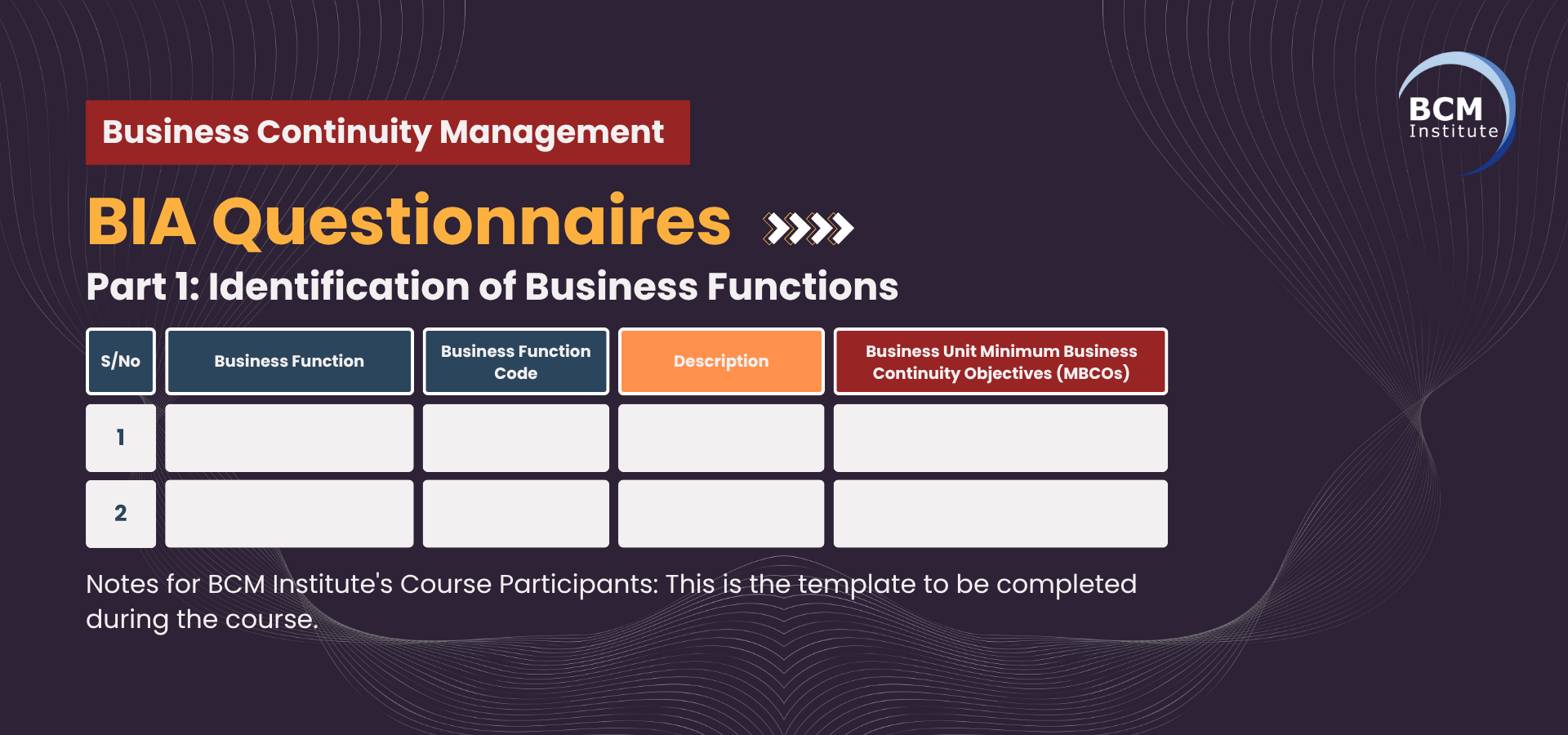
Table P1: Critical Business Functions for CBF-7
|
Sub-CBF Code |
Sub-CBF |
Description of CBF |
Business Unit Minimum Business Continuity Objective (MBCO) |
|
7.1 |
Stakeholder Identification |
Identification and maintenance of key internal and external stakeholders (schools, MOE, MSF, CPS, community partners, caregivers) are required to support community and school social work cases. |
Maintain access to an updated stakeholder contact list to support urgent case coordination within 24 hours of disruption. |
|
7.2 |
Communication Planning |
Development of communication protocols and escalation pathways for community and school social work operations during normal and disrupted conditions. |
Ensure pre-approved communication plans are available and actionable within 1 business day of disruption. |
|
7.3 |
Crisis Communication Execution |
Execution of time-critical communications related to high-risk cases, child protection concerns, or service disruptions affecting schools or communities. |
Enable priority communications for high-risk cases to be initiated within 4–8 hours to prevent safeguarding gaps. |
|
7.4 |
Internal Communications |
Coordination of internal communications among social workers, supervisors, clinical teams, and management to ensure case continuity and staff safety. |
Maintain internal communication capability to support case handovers and task allocation within same working day. |
|
7.5 |
External Communications |
Communication with schools, parents, caregivers, partner agencies, and authorities regarding service continuity, case status, or temporary arrangements. |
Sustain essential external communications for active cases within 24 hours to maintain trust and compliance. |
|
7.6 |
Stakeholder Feedback Collection |
Collection and monitoring of feedback from schools, families, and partners regarding service accessibility and response during disruptions. |
Continue basic feedback collection for critical cases within 3–5 working days to identify service gaps. |
|
7.7 |
Stakeholder Coordination |
Ongoing coordination with multi-agency partners to align interventions, referrals, and case management actions for community and school cases. |
Maintain minimum coordination for active and high-risk cases within 48 hours to prevent case deterioration. |
|
7.8 |
Post-Crisis Communication Review |
Review of communication effectiveness and stakeholder coordination outcomes after disruption or crisis events. |
Conduct post-incident communication review within 2–4 weeks to support service improvement and BCM enhancement. |
![Banner [BCM] [E3] [BIA] [Summing Up] [P1] Identification of Critical Business Functions](https://no-cache.hubspot.com/cta/default/3893111/22330ab3-0a0f-4efd-9da7-43032e1e6573.png)
Maintaining robust communication and stakeholder coordination during disruptions is critical to SHINE’s resilience.
By defining MBCOs for each sub-CBF, the organisation ensures that essential messages are delivered, stakeholders remain informed, and post-crisis improvements are systematically incorporated.
This proactive approach minimises operational and reputational risks, enabling SHINE to continue delivering vital services to children and youth effectively, even under adverse conditions.

![Banner [BCM] [E3] [BIA] [P2] Impact Area of Business Functions](https://no-cache.hubspot.com/cta/default/3893111/182e67c2-aa89-4b0b-b3e9-144293680ea4.png)
CBF-7 Communications & Stakeholder Coordination
Part 2 of the Business Impact Analysis (BIA) examines the impact areas associated with the disruption of critical business functions within SHINE Children and Youth Services (SHINE).
As a social service agency serving children, youths, families, schools, and community stakeholders, SHINE’s ability to communicate effectively and coordinate with stakeholders is essential to safeguarding client wellbeing, organisational credibility, and regulatory compliance.
This chapter focuses on CBF-7: Communications & Stakeholder Coordination, analysing how disruptions to communication-related processes may affect financial sustainability, service continuity, stakeholder confidence, and SHINE’s Minimum Business Continuity Objectives (MBCO).
The assessment considers both direct and indirect financial impacts, as well as non-financial consequences that could escalate into reputational, regulatory, or service delivery risks if not managed within acceptable timeframes.
![Banner [Table] [BCM] [E3] [BIA] [P2] Impact Areas of Business Functions [BIAQ]](https://no-cache.hubspot.com/cta/default/3893111/91582408-03ad-40e1-90e8-43ce62079aa6.png)
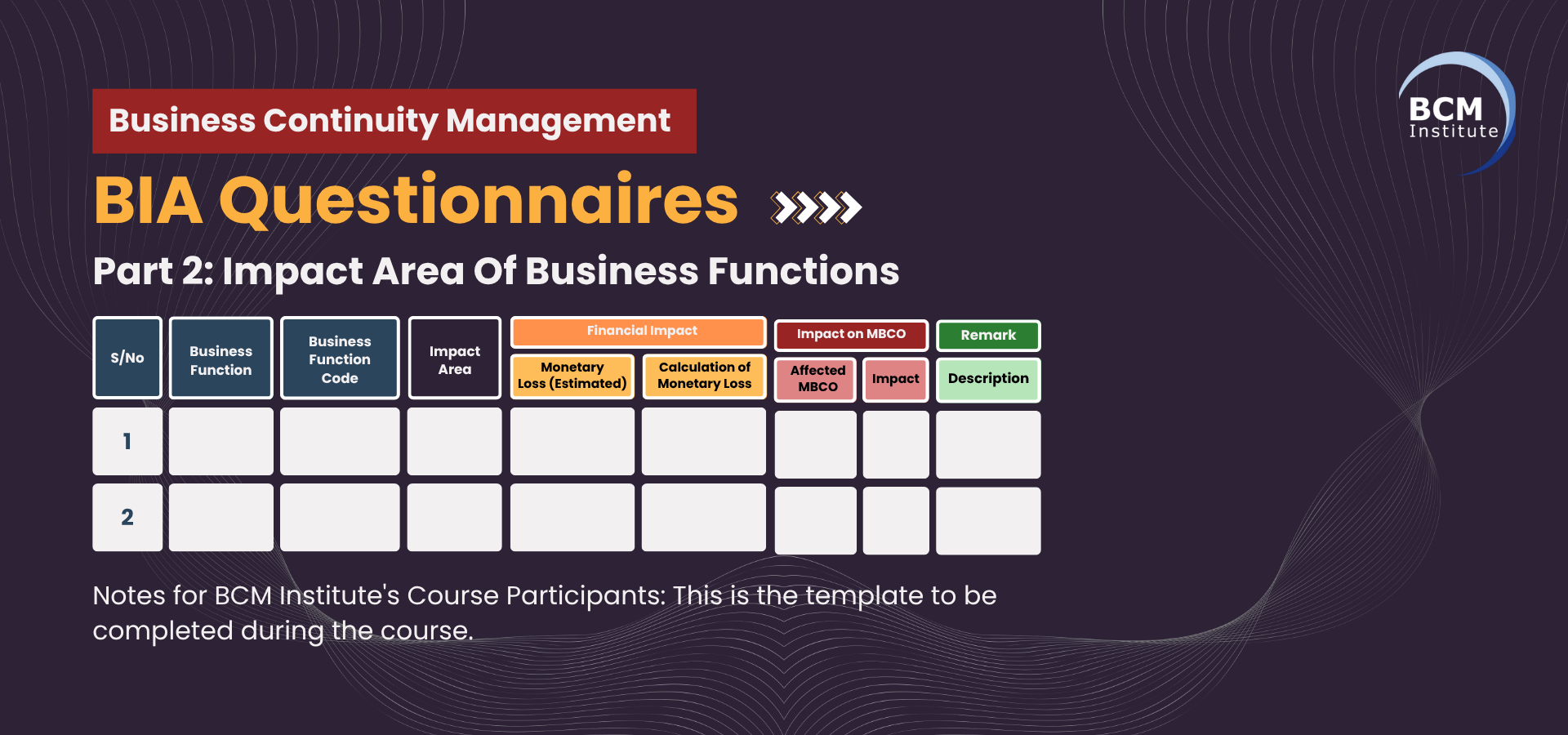
Table P2: Impact Area Assessment for CBF-6
|
Sub-CBF Code |
Sub-CBF |
Impact Area |
Financial Impact - Monetary Loss (Estimated) |
Financial Impact - Calculation of Monetary Loss (State Formula for Calculations) |
Impact on MBCO - Affect MBCO |
Impact on MBCO - Impact |
Remarks - Description |
|
7.1 |
Stakeholder Identification |
Reputational, Operational |
Low to Medium |
Cost of corrective engagement + additional staff hours for stakeholder re-mapping |
Yes |
Delay in coordinated response |
Failure to identify key stakeholders may result in missed communications, delayed support coordination, and misunderstandings during incidents. |
|
7.2 |
Communication Planning |
Strategic, Reputational |
Medium |
Cost of rework + external advisory support (if required) |
Yes |
Reduced response readiness |
Absence of a clear communication plan can lead to inconsistent messaging and slower response during crises. |
|
7.3 |
Crisis Communication Execution |
Reputational, Regulatory, Operational |
High |
Loss of funding/donations + cost of emergency communications + potential compliance penalties |
Yes |
Breach of MBCO timelines |
Ineffective crisis communication may escalate stakeholder concerns, regulatory scrutiny, and public trust erosion. |
|
7.4 |
Internal Communications |
Operational, People |
Medium |
Productivity loss × staff hourly rates |
Yes |
Slower internal coordination |
Disrupted internal communication affects staff alignment, decision-making speed, and service delivery continuity. |
|
7.5 |
External Communications |
Reputational, Financial |
High |
Funding impact + donor withdrawal + cost of reputation recovery initiatives |
Yes |
Significant MBCO impact |
Delays or inaccuracies in external communication may affect funders, partners, schools, and community confidence. |
|
7.6 |
Stakeholder Feedback Collection |
Strategic, Reputational |
Low to Medium |
Cost of additional engagement sessions + data recovery efforts |
No (Indirect) |
Early warning signals missed |
Inability to capture feedback reduces SHINE’s ability to identify emerging issues and improve response effectiveness. |
|
7.7 |
Stakeholder Coordination |
Operational, Strategic |
Medium to High |
Cost of duplicated efforts + inefficiencies + potential service overlap |
Yes |
Prolonged service disruption |
Poor coordination with partners and agencies may delay client support and strain inter-agency relationships. |
|
7.8 |
Post-Crisis Communication Review |
Strategic, Reputational |
Low |
Internal review cost (staff time) |
No |
Long-term resilience impact |
Failure to review communication effectiveness limits organisational learning and future crisis readiness. |
![Banner [BCM] [E3] [BIA] [Summing Up] [P2] Impact Areas of Business Functions [BIAQ]](https://no-cache.hubspot.com/cta/default/3893111/76188041-e1c9-43d9-8efa-e550f46ad04d.png)
The impact analysis of CBF-7 Communications & Stakeholder Coordination highlights that communication-related disruptions pose significant reputational and operational risks to SHINE, with potential downstream financial implications affecting funding, partnerships, and service sustainability.
While not all sub-functions result in immediate monetary loss, many contribute indirectly to MBCO breaches through delayed decision-making, misaligned responses, and reduced stakeholder confidence.
For a people-centric organisation like SHINE, timely, accurate, and coordinated communication is a critical enabler of service continuity.
The findings from this section reinforce the need for robust communication planning, clearly defined stakeholder engagement processes, and regular post-incident reviews.
These insights will directly inform subsequent phases of the BCM lifecycle, particularly recovery time objectives, continuity strategies, and crisis communication planning, ensuring SHINE remains resilient in the face of disruption while continuing to protect and support the communities it serves.

| DP | BIAQ T1 | BIAQ T2 | BIAQ T3 | BCS T2 | BCS T3 | PD |
![[BCM] [SHINE] [E3] [BIA] MBCO Corporate MBCO](https://no-cache.hubspot.com/cta/default/3893111/8a4c1bad-b882-4431-9db9-564f8d734724.png)
![[BCM] [SHINE] [E3] [BIA] [PS] Key Product and Services](https://no-cache.hubspot.com/cta/default/3893111/5e23190b-1be3-4bd9-b9f4-ea90013c9628.png)
![[BCM] [SHINE] [E3] [RAR] [T1] List of Threats](https://no-cache.hubspot.com/cta/default/3893111/999fd75b-6269-41c1-b833-e44ec6e1be72.png)
![[BCM] [SHINE] [E3] [RAR] [T2] Treatment and Control](https://no-cache.hubspot.com/cta/default/3893111/08e6836a-0f79-4ea5-8059-07eaf1cf927c.png)
![[BCM] [SHINE] [E3] [RAR] [T3] Risk Impact and Likelihood Assessment](https://no-cache.hubspot.com/cta/default/3893111/dfeec650-fd4f-4916-b353-f6860d9e4393.png)
![[BCM] [SHINE] [E3] [BCS] [T1] Mitigation Strategies and Justification](https://no-cache.hubspot.com/cta/default/3893111/03fd32a8-7ffe-4c0b-9eef-a32cb67f2e61.png)
![[BCM] [SHINE] [E1] [C10] Identifying Critical Business Functions](https://no-cache.hubspot.com/cta/default/3893111/6fba5a23-5e02-4368-aa88-65a252d4edd7.png)
![[BCM] [SHINE] [E3] [BIA] [DP] [CBF] [7] Communications & Stakeholder Coordination](https://no-cache.hubspot.com/cta/default/3893111/bd413bfe-356c-4d35-92dc-33afa6dd0f6a.png)
![[BCM] [SHINE] [E3] [BIA] [T2] [CBF] [7] Communications & Stakeholder Coordination](https://no-cache.hubspot.com/cta/default/3893111/51959d3c-5ea5-41a7-9741-590ad4a08d01.png)
![[BCM] [SHINE] [E3] [BIA] [T3] [CBF] [7] Communications & Stakeholder Coordination](https://no-cache.hubspot.com/cta/default/3893111/5c950935-f094-437a-95d4-c0f4515cfba2.png)
![[BCM] [SHINE] [E3] [BCS] [T2] [CBF] [7] BCS Recovery Strategy](https://no-cache.hubspot.com/cta/default/3893111/c4baa13b-5b6a-48a1-b971-7877019e51cc.png)
![[BCM] [SHINE] [E3] [BCS] [T3] [CBF] [7] Minimum Resources Required during a Disaster](https://no-cache.hubspot.com/cta/default/3893111/c03d7a6c-4d30-485b-92aa-82f52ff87d4f.png)
![[BCM] [SHINE] [E3] [PD] [CBF] [7] Communications & Stakeholder Coordination](https://no-cache.hubspot.com/cta/default/3893111/d677da0d-cfa9-4830-a106-b33e20ff588f.png)
More Information About Business Continuity Management Courses
To learn more about the course and schedule, click the buttons below for the BCM-300 Business Continuity Management Implementer [BCM-3] and the BCM-5000 Business Continuity Management Expert Implementer [BCM-5].


![Register [BL-B-3]*](https://no-cache.hubspot.com/cta/default/3893111/ac6cf073-4cdd-4541-91ed-889f731d5076.png)



![FAQ [BL-B-3]](https://no-cache.hubspot.com/cta/default/3893111/b3824ba1-7aa1-4eb6-bef8-94f57121c5ae.png)
![Email to Sales Team [BCM Institute]](https://no-cache.hubspot.com/cta/default/3893111/3c53daeb-2836-4843-b0e0-645baee2ab9e.png)


