

![Banner [BCM] [E3] [BIA] [P2] Impact Area of Business Functions](https://no-cache.hubspot.com/cta/default/3893111/182e67c2-aa89-4b0b-b3e9-144293680ea4.png)

![Banner [BCM] [E3] [BIA] [P1] Identification of Business Functions](https://no-cache.hubspot.com/cta/default/3893111/206ddd7e-615a-42c8-aa2a-3416a1ad06b3.png) CBF-6 Client Information & Records Management
CBF-6 Client Information & Records Management
![[BCM] [SHINE] [E3] [BIA] [T1] [CBF] [6] Client Information & Records Management](https://no-cache.hubspot.com/cta/default/3893111/441ad4cc-5ebd-49dd-88bb-d9f993b400f5.png)
The effective management of client information and records is a cornerstone of operational success, particularly for an organisation like SHINE Children and Youth Services (SHINE), where accurate and secure client data is central to service delivery.
As part of Business Continuity Management (BCM), ensuring the continuity and recovery of client information during a disaster or crisis is vital for protecting client welfare, meeting legal obligations, and maintaining operational effectiveness.
This chapter explores the critical business functions within CBF-6 Client Information & Records Management and breaks them down into specific sub-critical business functions (Sub-CBFs).
It will detail the objectives SHINE must maintain during a disruption to ensure continued service and regulatory compliance, and outline the minimum business continuity objectives (MBCOs) for each sub-CBF.
![Banner [Table] [BCM] [E3] [BIA] [P1] Identification of Critical Business Functions](https://no-cache.hubspot.com/cta/default/3893111/4fe499c9-0c19-46b4-8b6f-75450dba07d8.png)
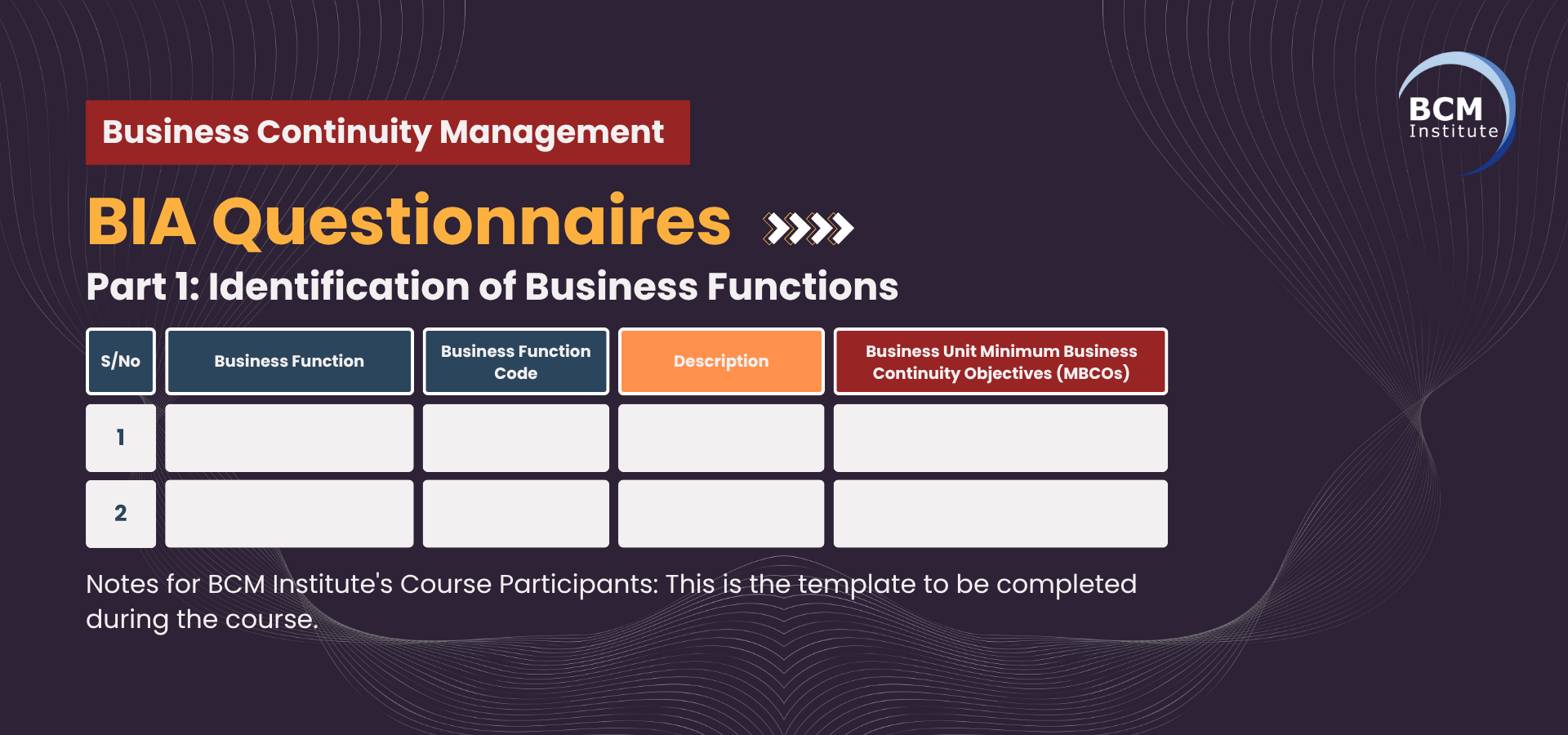
Table P1: Critical Business Functions for CBF-6
|
Sub-CBF Code |
Sub-CBF |
Description of CBF |
Business Unit Minimum Business Continuity Objective (MBCO) |
|
6.1 |
Client Information Collection |
The process of collecting and documenting essential client information in accordance with organisational guidelines and legal requirements. |
Ensure continuous and accurate data collection to support client service delivery and regulatory compliance. Collection processes must be robust enough to function under disaster conditions without disruption. |
|
6.2 |
Client Records Maintenance |
The systematic organisation and upkeep of client records to ensure data integrity, availability, and easy access, while adhering to privacy standards. |
Maintain up-to-date client records, including periodic backups and secure storage, to facilitate quick recovery and seamless service delivery during emergencies. |
|
6.3 |
Confidentiality & Privacy |
Protection of client data from unauthorised access, disclosure, or misuse through secure management practices. |
Ensure that all client data remains confidential and privacy standards are upheld, particularly during disruptions that may impact access to secure systems or personnel availability. |
|
6.4 |
Document Management |
The creation, storage, and retrieval of official documents, ensuring they are stored securely and in compliance with regulatory requirements. |
Develop secure document-management systems that enable recovery and access during or after a disaster, ensuring critical records remain retrievable and preserved. |
|
6.5 |
Record Retrieval & Access Control |
The systematic process of granting and restricting access to client records ensures that authorised personnel can retrieve the information they need. |
Ensure immediate, secure access to client records for authorised personnel, while restricting access to safeguard sensitive information during recovery and continuity operations. |
|
6.6 |
Record Disposal |
The controlled destruction or deletion of client records in a way that protects client confidentiality and complies with regulatory requirements. |
Ensure disposal processes follow guidelines for secure destruction or deletion to prevent data leakage during disaster recovery. |
|
6.7 |
Compliance Monitoring |
Ongoing monitoring of all record-keeping practices to ensure adherence to legal, regulatory, and organisational standards. |
Maintain continuous compliance with data protection and privacy regulations even during business disruptions, with contingency plans to support monitoring activities. |
![Banner [BCM] [E3] [BIA] [Summing Up] [P1] Identification of Critical Business Functions](https://no-cache.hubspot.com/cta/default/3893111/22330ab3-0a0f-4efd-9da7-43032e1e6573.png)
In the face of potential disruptions, SHINE must prioritise the continuity of client information and records management to support its mission and maintain service delivery standards.
The sub-CBFs within CBF-6—ranging from client information collection to compliance monitoring—are crucial for upholding client trust, meeting regulatory requirements, and enabling recovery efforts.
By ensuring that these processes remain operational, even during crises, SHINE can safeguard its core operations and continue to provide vital services to children and youth in need.
Implementing clear MBCOs for each sub-CBF ensures the organisation can swiftly recover from setbacks while maintaining the highest standards of client confidentiality, privacy, and compliance.

CBF-6 Client Information & Records Management
The "Impact Area of Business Functions" chapter highlights the significance of each critical business function (CBF) within SHINE Children and Youth Services.
Specifically, for CBF-6 Client Information & Records Management, this chapter examines how effective data management affects the organisation's efficiency, legal compliance, and operational success.
The accuracy and security of client data are paramount, as they influence service delivery, legal obligations, and financial stability.
![Banner [Table] [BCM] [E3] [BIA] [P2] Impact Areas of Business Functions [BIAQ]](https://no-cache.hubspot.com/cta/default/3893111/91582408-03ad-40e1-90e8-43ce62079aa6.png)
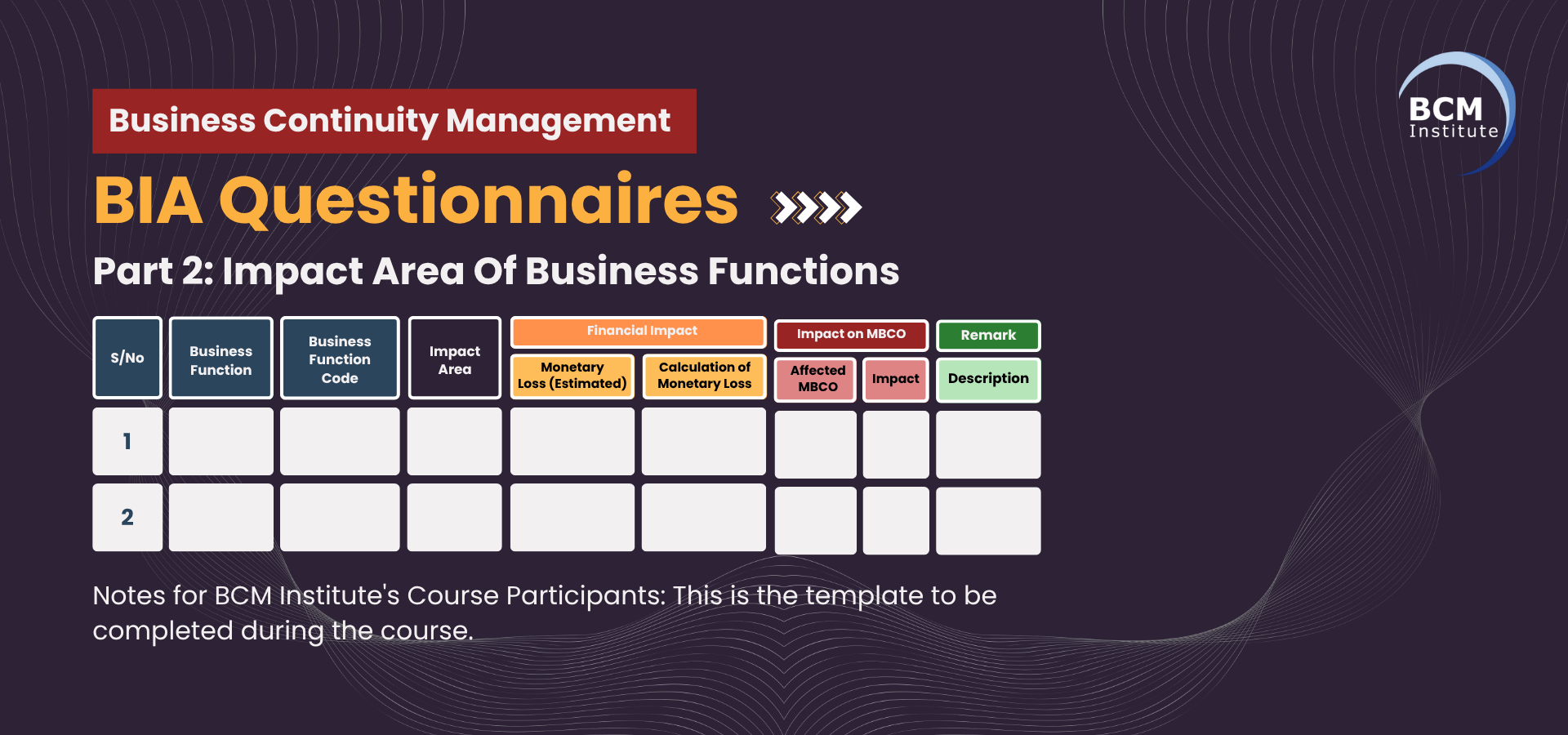
Table P2: Impact Area Assessment for CBF-6
|
Sub-CBF Code |
Sub-CBF |
Impact Area |
Financial Impact - Monetary Loss (Estimated) |
Financial Impact - Calculation of Monetary Loss (State Formula for Calculations) |
Impact on MBCO - Affect MBCO |
Impact on MBCO - Impact |
Remarks - Description |
|
6.1 |
Client Information Collection |
Client Intake, Data Capture, and Accuracy of Information |
Medium |
Cost of data correction, potential penalties for incorrect data |
Yes |
Risk of non-compliance and errors in client information leading to delays or inaccurate support |
The process involves collecting essential client data. Inaccurate or incomplete data can delay service delivery and increase operational costs. |
|
6.2 |
Client Records Maintenance |
Record Updates, Client History Accuracy |
High |
Cost of record maintenance, risk of loss or corruption |
Yes |
Delays in providing necessary services or response to clients |
Ensures that records are updated regularly. Loss or corruption of records can lead to delays in providing services or risk of violating confidentiality agreements. |
|
6.3 |
Confidentiality & Privacy |
Data Security, Legal Compliance |
Very High |
Potential fines, lawsuits, and reputation damage due to data breaches or non-compliance with privacy laws |
Yes |
High legal and compliance risk due to privacy violations |
Ensures client data is handled securely, with measures to prevent unauthorized access. Non-compliance can lead to severe legal consequences. |
|
6.4 |
Document Management |
Storage, Retrieval, Retention |
Medium |
Costs associated with physical or digital storage, retrieval errors, and lost documents |
Yes |
Reduced operational efficiency due to slow retrieval processes |
Involves organizing and storing client documents, both physical and digital. Poor management can lead to delays and errors in retrieving necessary documents, affecting service delivery. |
|
6.5 |
Record Retrieval & Access Control |
Access Management, Availability of Records |
Medium |
Potential loss of revenue due to downtime or inability to access necessary records |
Yes |
Delay in decision-making and resource allocation |
Ensures only authorized personnel can access specific records. Inaccessibility or delayed access to records could hinder decision-making and impact service delivery. |
|
6.6 |
Record Disposal |
Data Disposal, Secure Destruction |
Low |
Cost of secure disposal and risk of breach if data is improperly destroyed |
No |
Minimal impact unless improper disposal leads to data breaches |
Involves the safe disposal of outdated or unnecessary records. Failure to comply with proper disposal processes could lead to data exposure and legal liabilities. |
|
6.7 |
Compliance Monitoring |
Regulatory Compliance, Auditing |
High |
Legal fees, fines, and operational delays due to non-compliance |
Yes |
Risk of legal penalties and operational inefficiencies |
Ensures that client records management processes comply with relevant laws and regulations. Non-compliance can lead to legal risks and operational setbacks. |
![Banner [BCM] [E3] [BIA] [Summing Up] [P2] Impact Areas of Business Functions [BIAQ]](https://no-cache.hubspot.com/cta/default/3893111/76188041-e1c9-43d9-8efa-e550f46ad04d.png)
In conclusion, the proper management of client information and records is crucial for maintaining operational efficiency, ensuring compliance with legal standards, and protecting SHINE’s reputation.
The sub-CBFs under CBF-6 have a profound impact on service delivery and client trust, and any disruptions in these processes can lead to significant financial losses and legal repercussions.
SHINE must implement robust systems and policies to ensure that client records are managed effectively, securely, and in full compliance with applicable laws and regulations.

| DP | BIAQ T1 | BIAQ T2 | BIAQ T3 | BCS T2 | BCS T3 | PD |
![[BCM] [SHINE] [E3] [BIA] MBCO Corporate MBCO](https://no-cache.hubspot.com/cta/default/3893111/8a4c1bad-b882-4431-9db9-564f8d734724.png)
![[BCM] [SHINE] [E3] [BIA] [PS] Key Product and Services](https://no-cache.hubspot.com/cta/default/3893111/5e23190b-1be3-4bd9-b9f4-ea90013c9628.png)
![[BCM] [SHINE] [E3] [RAR] [T1] List of Threats](https://no-cache.hubspot.com/cta/default/3893111/999fd75b-6269-41c1-b833-e44ec6e1be72.png)
![[BCM] [SHINE] [E3] [RAR] [T2] Treatment and Control](https://no-cache.hubspot.com/cta/default/3893111/08e6836a-0f79-4ea5-8059-07eaf1cf927c.png)
![[BCM] [SHINE] [E3] [RAR] [T3] Risk Impact and Likelihood Assessment](https://no-cache.hubspot.com/cta/default/3893111/dfeec650-fd4f-4916-b353-f6860d9e4393.png)
![[BCM] [SHINE] [E3] [BCS] [T1] Mitigation Strategies and Justification](https://no-cache.hubspot.com/cta/default/3893111/03fd32a8-7ffe-4c0b-9eef-a32cb67f2e61.png)
![[BCM] [SHINE] [E1] [C10] Identifying Critical Business Functions](https://no-cache.hubspot.com/cta/default/3893111/6fba5a23-5e02-4368-aa88-65a252d4edd7.png)
![[BCM] [SHINE] [E3] [BIA] [DP] [CBF] [6] Client Information & Records Management](https://no-cache.hubspot.com/cta/default/3893111/f5b469c7-359b-48f9-983f-18f1b31c3cb1.png)
![[BCM] [SHINE] [E3] [BIA] [T2] [CBF] [6] Client Information & Records Management](https://no-cache.hubspot.com/cta/default/3893111/b2bf3ca3-2940-46b0-ac27-84bef79a8e79.png)
![[BCM] [SHINE] [E3] [BIA] [T3] [CBF] [6] Client Information & Records Management](https://no-cache.hubspot.com/cta/default/3893111/16beb9b2-9321-4b46-86a7-dff19fd42eda.png)
![[BCM] [SHINE] [E3] [BCS] [T2] [CBF] [6] BCS Recovery Strategy](https://no-cache.hubspot.com/cta/default/3893111/16523ce7-0670-4dfe-b13a-e1138725d818.png)
![[BCM] [SHINE] [E3] [BCS] [T3] [CBF] [6] Minimum Resources Required during a Disaster](https://no-cache.hubspot.com/cta/default/3893111/dd4907bc-bb88-474a-bccd-befe9a4a1e41.png)
![[BCM] [SHINE] [E3] [PD] [CBF] [6] Client Information & Records Management](https://no-cache.hubspot.com/cta/default/3893111/11455df6-4620-446d-b4b7-8c9ee6a90210.png)
More Information About Business Continuity Management Courses
To learn more about the course and schedule, click the buttons below for the BCM-300 Business Continuity Management Implementer [BCM-3] and the BCM-5000 Business Continuity Management Expert Implementer [BCM-5].


![Register [BL-B-3]*](https://no-cache.hubspot.com/cta/default/3893111/ac6cf073-4cdd-4541-91ed-889f731d5076.png)



![FAQ [BL-B-3]](https://no-cache.hubspot.com/cta/default/3893111/b3824ba1-7aa1-4eb6-bef8-94f57121c5ae.png)
![Email to Sales Team [BCM Institute]](https://no-cache.hubspot.com/cta/default/3893111/3c53daeb-2836-4843-b0e0-645baee2ab9e.png)


