


![Banner [BCM] [E3] [BIA] [P1] Identification of Business Functions](https://no-cache.hubspot.com/cta/default/3893111/206ddd7e-615a-42c8-aa2a-3416a1ad06b3.png)
CBF-4 Counselling & Therapy Services (SH.IFT and related programmes)

Counselling and therapy services form a core pillar of SHINE Children and Youth Services’ mission to support vulnerable children and at-risk youth.
Under the SH.IFT (SHINE Intervention Framework for Therapy) programme and related therapeutic interventions, SHINE provides structured professional support aimed at improving emotional well-being, developmental outcomes, family functioning, and long-term resilience.
Within the context of Business Continuity Management (BCM), these services are classified as a Critical Business Function (CBF) because any prolonged disruption can directly compromise beneficiaries' safety, mental health, and recovery trajectories.
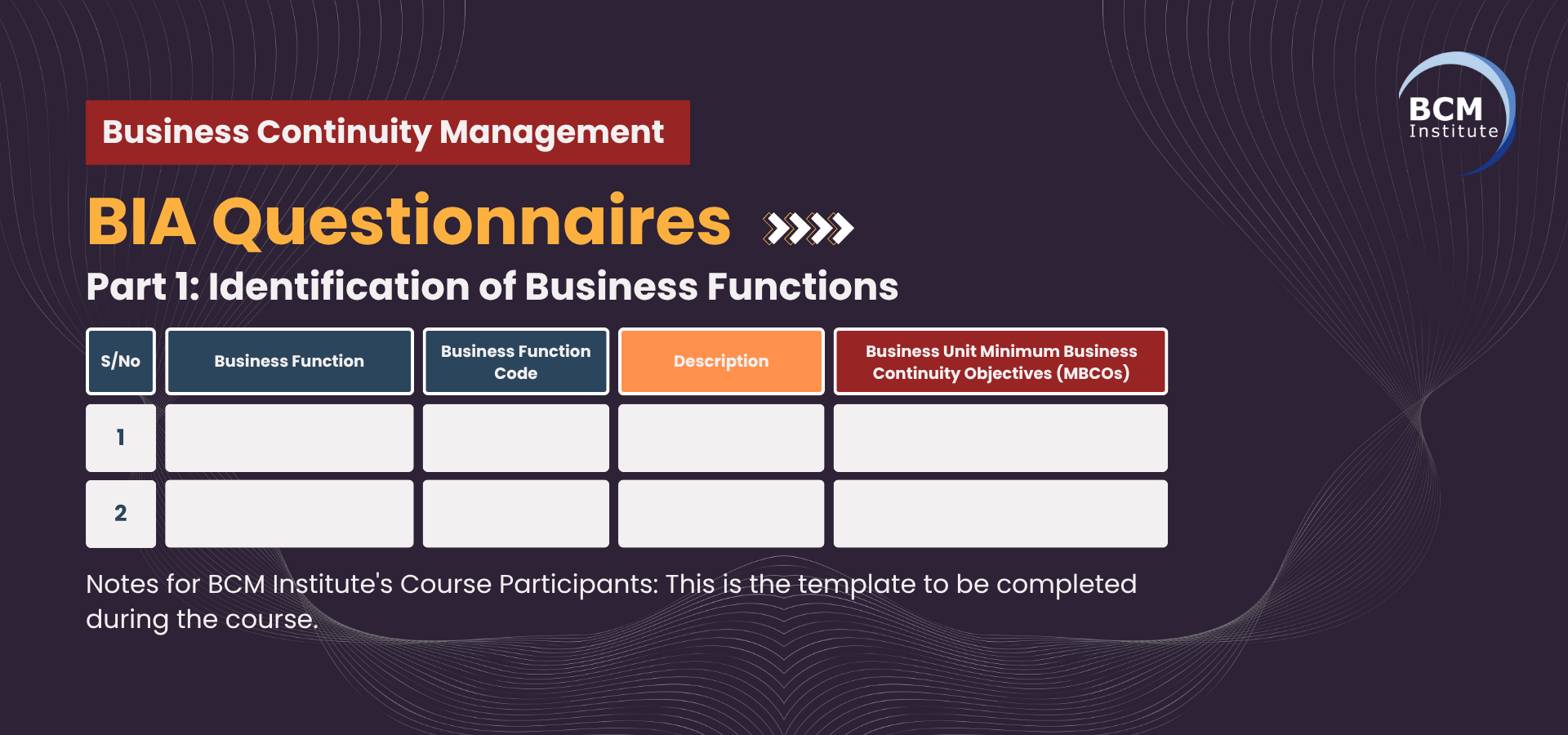
Using the concepts of the Minimum Business Continuity Objective (MBCO)—as defined in BCMpedia and the BCM Institute methodology—the following table identifies the sub-CBFs, describes their purpose, and outlines the Business Unit MBCO, i.e., the minimum acceptable level of service the unit must maintain during a disruption to avoid significant impact on client well-being, legal compliance, and organisational service delivery obligations.
![Banner [Table] [BCM] [E3] [BIA] [P1] Identification of Critical Business Functions](https://no-cache.hubspot.com/cta/default/3893111/4fe499c9-0c19-46b4-8b6f-75450dba07d8.png)
Table P1: Critical Business Functions for CBF-4
|
Sub-CBF Code |
Sub-CBF |
Description of CBF |
Business Unit Minimum Business Continuity Objective (MBCO) |
|
4.1 |
Assessment and Intake Services |
Conducting initial assessments, needs evaluation, psychosocial profiling, and case triaging for new clients entering the therapy pipeline. |
Resume within 24–48 hours using remote/alternative channels to ensure timely support, especially for high-risk youth. |
|
4.2 |
Individual Counselling Sessions |
One-on-one therapy sessions to address emotional, behavioural, developmental, or trauma-related needs. |
Maintain at least 50% service level through hybrid/remote options within 72 hours to avoid therapy gaps. |
|
4.3 |
Group Therapy Sessions |
Structured therapeutic groups addressing common psychosocial issues (e.g., social skills, emotional regulation, trauma processing). |
Resume essential groups within 5 business days, prioritising mandated or high-risk groups. |
|
4.4 |
Crisis Intervention and Immediate Support |
Providing urgent support for youth in crisis, such as emotional breakdowns, high-risk behaviours, or family conflict situations. |
Maintain immediate availability (within 2–4 hours) through on-call arrangements or remote intervention. |
|
4.5 |
Therapeutic Program Development |
Designing and updating therapy frameworks, materials, and intervention modules supporting SH.IFT and related programmes. |
Resume at least 30% operational capability within 10 working days, as delays affect long-term programme quality rather than immediate safety. |
|
4.6 |
Family Therapy and Support |
Delivering counselling and mediation sessions that involve parents/caregivers to improve family dynamics and youth recovery. |
Resume critical sessions within 72 hours, especially where family conflict or safeguarding concerns are present. |
|
4.7 |
Referrals and Collaboration with External Agencies |
Coordination with schools, social service agencies, healthcare providers, police, or MSF for integrated care. |
Maintain critical referral handling within 48 hours, especially mandated cases requiring coordinated follow-up. |
|
4.8 |
Monitoring and Evaluation of Therapy Effectiveness |
Tracking client progress, conducting reviews, and adjusting therapy plans to ensure intervention effectiveness. |
Resume monitoring activities within 5 business days, prioritising cases flagged as high-risk or deteriorating. |
|
4.9 |
Case Documentation and Record-Keeping |
Maintaining secure and accurate client records, session notes, progress reports, and safeguarding documentation. |
Maintain continuous access to essential records through backup systems; resume documentation within 24 hours. |
![Banner [BCM] [E3] [BIA] [Summing Up] [P1] Identification of Critical Business Functions](https://no-cache.hubspot.com/cta/default/3893111/22330ab3-0a0f-4efd-9da7-43032e1e6573.png)
CBF-4 Counselling & Therapy Services is central to SHINE’s role in safeguarding the mental, emotional, and developmental well-being of at-risk youth.
Because disruptions to these services can pose significant safety risks, emotional destabilisation, and reduced intervention effectiveness, defining clear Business Unit MBCOs is essential.
The sub-CBFs outlined above ensure that SHINE maintains an operational baseline that protects beneficiaries, supports mandated obligations, and upholds professional therapeutic standards even during adverse circumstances.
By integrating BCM principles into service delivery, SHINE strengthens its organisational resilience and reaffirms its commitment to delivering uninterrupted care to Singapore’s vulnerable children and youth.

![Banner [BCM] [E3] [BIA] [P2] Impact Area of Business Functions](https://no-cache.hubspot.com/cta/default/3893111/182e67c2-aa89-4b0b-b3e9-144293680ea4.png)
CBF-4 Counselling & Therapy Services (SH.IFT and related programmes)
![[BCM] [SHINE] [E3] [BIA] [T1] [CBF] [4] Counselling & Therapy Services](https://no-cache.hubspot.com/cta/default/3893111/665442ed-e4af-4f1a-8183-bcd9289ae086.png)
These services also extend support to their families and caregivers.
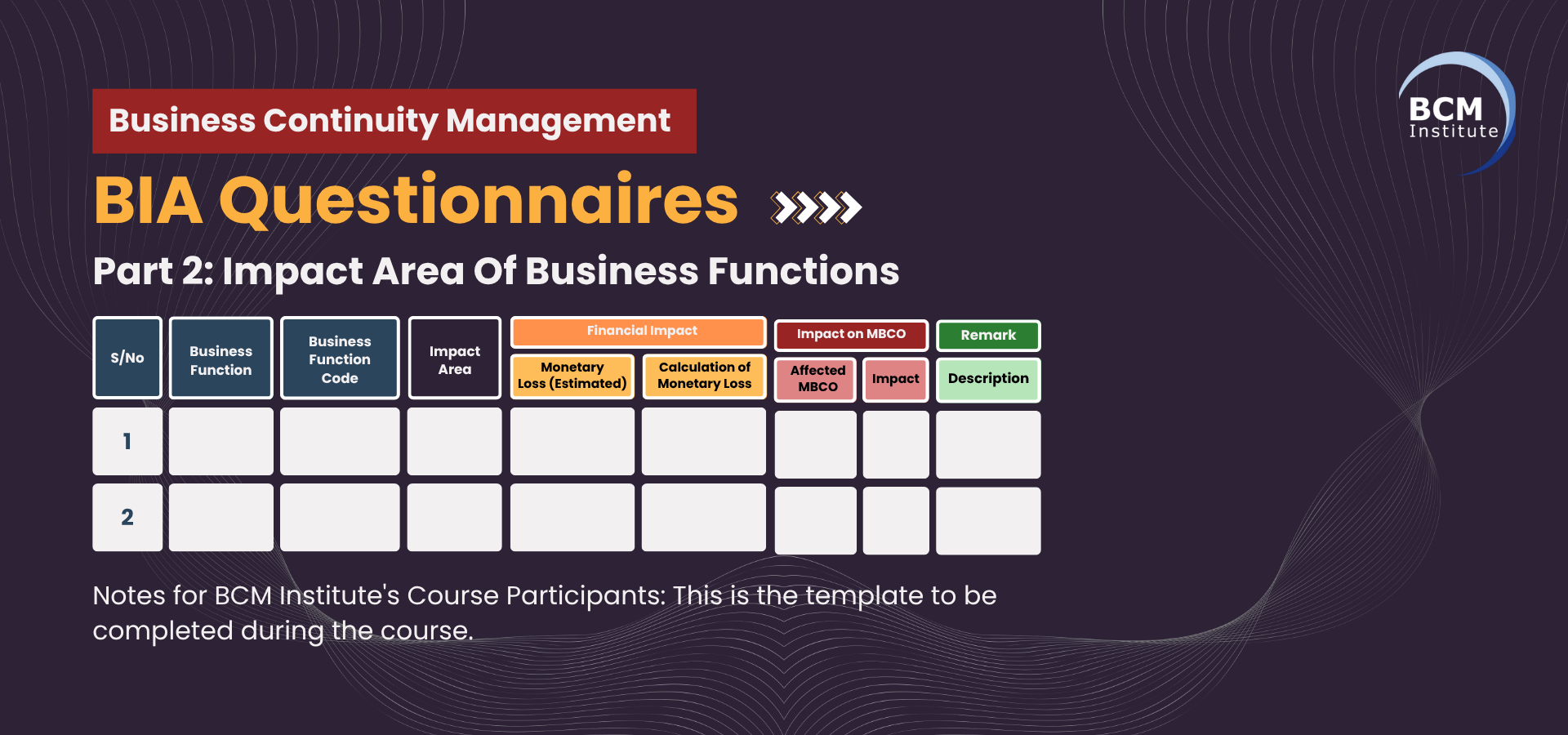
As part of a comprehensive Business Continuity Management (BCM) programme, assessing the impact areas of disruptions to these services is essential for planning recovery priorities, allocating resources, and maintaining service continuity during crises.
This chapter analyses the impact areas associated with each Sub-Critical Business Function (Sub-CBF) under CBF-04 Counselling & Therapy Services.
It covers financial implications, impact on Minimum Business Continuity Objectives (MBCO), and operational considerations, enabling SHINE to understand the consequences of delayed, suspended, or weakened therapeutic services.
The assessment supports compliance with ISO 22301 and ensures the organisation continues to uphold its mission: empowering children, youth, and families through evidence-based interventions.
![Banner [Table] [BCM] [E3] [BIA] [P2] Impact Areas of Business Functions [BIAQ]](https://no-cache.hubspot.com/cta/default/3893111/91582408-03ad-40e1-90e8-43ce62079aa6.png)
Table P2: Impact Area Assessment for CBF-4
|
Sub-CBF Code |
Sub-CBF |
Impact Area |
Financial Impact - Monetary Loss (Estimated) |
Financial Impact - Calculation of Monetary Loss (State Formula for Calculations) |
Impact on MBCO - Affect MBCO |
Impact on MBCO - Impact |
Remarks - Description |
|
4.1 |
Assessment and Intake Services |
Service Delivery, Client Impact, Legal/Compliance |
SGD 500–1,000/day |
No. of missed intakes × cost per assessment × (probability of non-engagement) |
Yes |
Delays clients from entering the programme, reducing overall caseload continuity and potentially breaching service timelines. |
Impacts timely intervention for at-risk youth; delays may escalate client needs. |
|
4.2 |
Individual Counselling Sessions |
Client Impact, Reputational, Service Delivery |
SGD 800–2,000/day |
No. of cancelled sessions × cost per session × no-show conversion risk |
Yes |
Reduced access to mental health support may compromise client well-being and programme outcomes. |
High dependency clients may experience deterioration without continuity. |
|
4.3 |
Group Therapy Sessions |
Client Impact, Operational, Reputational |
SGD 600–1,200/day |
No. of postponed groups × cost per session ÷ participant count |
Moderate |
Missed sessions affect group progress and intervention milestones. |
Loss of therapeutic momentum; rescheduling challenges. |
|
4.4 |
Crisis Intervention and Immediate Support |
Safety, Client Impact, Legal/Compliance |
SGD 1,000–3,000/day |
No. of crisis calls × risk severity × intervention cost factor |
Yes (High Priority) |
Direct risk to clients’ safety and well-being; delayed intervention may lead to escalation. |
Critical for safeguarding high-risk youth; must maintain high continuity readiness. |
|
4.5 |
Therapeutic Programme Development |
Operational, Reputational |
Minimal short-term loss; long-term programme quality impact |
Staff hours lost × hourly cost of programme developers |
No (Short term) |
Delays in programme rollout, evaluation cycles, or grant deliverables. |
Impacts future service effectiveness rather than immediate service continuity. |
|
4.6 |
Family Therapy and Support |
Client Impact, Service Delivery |
SGD 700–1,500/day |
No. of cancelled sessions × cost per session × family risk factor |
Yes |
Affects family functioning and overall case outcomes; may prolong client issues. |
Critical for integrated intervention model (youth + family). |
|
4.7 |
Referrals & Collaboration with External Agencies |
Operational, Client Impact, Compliance |
SGD 300–600/day |
No. of delayed referrals × cost of follow-up × potential breach factor |
Moderate |
Delays access to external services, including medical, legal, or specialised support. |
Could impact MOUs or expectations with partner agencies. |
|
4.8 |
Monitoring & Evaluation of Therapy Effectiveness |
Compliance, Operational |
SGD 200–500/day |
No. of missing evaluation cycles × cost per evaluation |
No (Short term), Yes (Long term) |
Insufficient data affects funding requirements, audits, and programme improvements. |
Impacts KPIs and outcome reporting for donors or regulators. |
|
4.9 |
Case Documentation & Record-Keeping |
Legal/Compliance, Data Security, Operational |
SGD 500–2,000/day |
No. of incomplete cases × administrative hours × compliance penalty factor |
Yes |
Missing or delayed documentation may breach legal requirements, affect case continuity, or compromise client safety. |
Essential for audits, safeguarding, and continuity of therapeutic plans. |
![Banner [BCM] [E3] [BIA] [Summing Up] [P2] Impact Areas of Business Functions [BIAQ]](https://no-cache.hubspot.com/cta/default/3893111/76188041-e1c9-43d9-8efa-e550f46ad04d.png)
Understanding the impact areas of the Sub-CBFs under CBF-04 Counselling & Therapy Services enables SHINE Children and Youth Services to prioritise resources, protect vulnerable clients, and maintain critical counselling operations during disruptions.
The analysis highlights that certain functions—such as crisis intervention, individual counselling, and case documentation—carry higher risks and therefore demand stronger continuity planning.
By integrating these assessments into SHINE’s broader BCM framework, the organisation strengthens its capability to maintain therapeutic support even under challenging circumstances.
This ensures service resilience, safeguards clients’ well-being, and upholds SHINE’s commitment to transforming the lives of children and youths through timely, consistent, and effective interventions.

| DP | BIAQ T1 | BIAQ T2 | BIAQ T3 | BCS T2 | BCS T3 | PD |
![[BCM] [SHINE] [E3] [BIA] [DP] [CBF] [4] Counselling & Therapy Services](https://no-cache.hubspot.com/cta/default/3893111/9c765b1a-3a86-4e66-8b7a-ebb47320c552.png) |
|
![[BCM] [SHINE] [E3] [BIA] [T2] [CBF] [4] Counselling & Therapy Services](https://no-cache.hubspot.com/cta/default/3893111/848d3e91-e258-460f-b17c-ecc007d2129e.png) |
![[BCM] [SHINE] [E3] [BIA] [T3] [CBF] [4] Counselling & Therapy Services](https://no-cache.hubspot.com/cta/default/3893111/a1f7cbbe-2e96-48c3-a920-987a0b5fc537.png) |
![[BCM] [SHINE] [E3] [BCS] [T2] [CBF] [4] BCS Recovery Strategy](https://no-cache.hubspot.com/cta/default/3893111/98cbce60-65d8-4bdf-b290-45379cac2b02.png) |
![[BCM] [SHINE] [E3] [BCS] [T3] [CBF] [4] Minimum Resources Required during a Disaster](https://no-cache.hubspot.com/cta/default/3893111/f394c832-c107-401c-895b-ba91c07001ef.png) |
![[BCM] [SHINE] [E3] [PD] [CBF] [4] Counselling & Therapy Services](https://no-cache.hubspot.com/cta/default/3893111/e43890ac-1740-4376-bf11-e92cbdf18f2b.png) |
![[BCM] [SHINE] [E3] [BIA] MBCO Corporate MBCO](https://no-cache.hubspot.com/cta/default/3893111/8a4c1bad-b882-4431-9db9-564f8d734724.png)
![[BCM] [SHINE] [E3] [BIA] [PS] Key Product and Services](https://no-cache.hubspot.com/cta/default/3893111/5e23190b-1be3-4bd9-b9f4-ea90013c9628.png)
![[BCM] [SHINE] [E3] [RAR] [T1] List of Threats](https://no-cache.hubspot.com/cta/default/3893111/999fd75b-6269-41c1-b833-e44ec6e1be72.png)
![[BCM] [SHINE] [E3] [RAR] [T2] Treatment and Control](https://no-cache.hubspot.com/cta/default/3893111/08e6836a-0f79-4ea5-8059-07eaf1cf927c.png)
![[BCM] [SHINE] [E3] [RAR] [T3] Risk Impact and Likelihood Assessment](https://no-cache.hubspot.com/cta/default/3893111/dfeec650-fd4f-4916-b353-f6860d9e4393.png)
![[BCM] [SHINE] [E3] [BCS] [T1] Mitigation Strategies and Justification](https://no-cache.hubspot.com/cta/default/3893111/03fd32a8-7ffe-4c0b-9eef-a32cb67f2e61.png)
![[BCM] [SHINE] [E1] [C10] Identifying Critical Business Functions](https://no-cache.hubspot.com/cta/default/3893111/6fba5a23-5e02-4368-aa88-65a252d4edd7.png)
More Information About Business Continuity Management Courses
To learn more about the course and schedule, click the buttons below for the BCM-300 Business Continuity Management Implementer [BCM-3] and the BCM-5000 Business Continuity Management Expert Implementer [BCM-5].


![Register [BL-B-3]*](https://no-cache.hubspot.com/cta/default/3893111/ac6cf073-4cdd-4541-91ed-889f731d5076.png)



![FAQ [BL-B-3]](https://no-cache.hubspot.com/cta/default/3893111/b3824ba1-7aa1-4eb6-bef8-94f57121c5ae.png)
![Email to Sales Team [BCM Institute]](https://no-cache.hubspot.com/cta/default/3893111/3c53daeb-2836-4843-b0e0-645baee2ab9e.png)


