



eBook 2: Chapter 8
Program Management Phase for Business Continuity Management Planning Methodology for SHINE Children and Youth Services
Introduction
![[BCM] [SHINE] [E2] [C8] Program Management](https://no-cache.hubspot.com/cta/default/3893111/5d18b31a-a54f-474c-a705-f3b6524d4524.png)
In today’s rapidly evolving landscape, ensuring the continuity of essential services and programs is critical for non-profit organisations, especially those serving vulnerable populations such as children and youth.
SHINE Children and Youth Services (SHINE) is dedicated to providing comprehensive support and care for children, youth, and their families.
However, to ensure that SHINE continues its critical operations under adverse conditions, a robust Business Continuity Management (BCM) program is necessary.
The Program Management Phase is a crucial part of the BCM methodology that lays the foundation for maintaining essential services even in the face of disruptions.
This chapter outlines the specific requirements for SHINE in the Program Management Phase, highlighting the strategies and tools that can safeguard its mission and ensure operational resilience.
Program Management Phase Overview
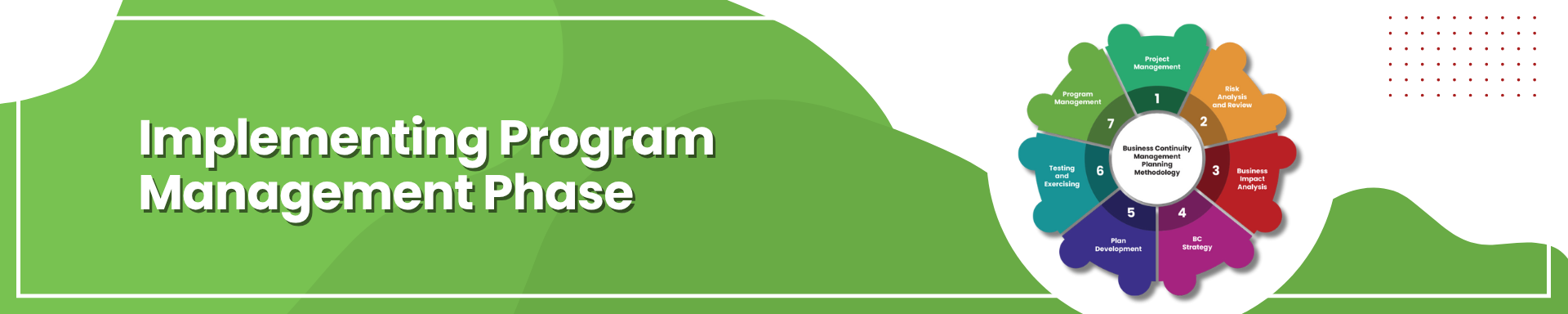
The Program Management Phase in Business Continuity Management refers to the structured management of the BCM program, ensuring that essential services are sustained during crises
For SHINE, this phase is fundamental to integrating business continuity efforts across the organisation, ensuring that essential services are sustained even in times of crisis.
The Program Management Phase involves establishing the BCM framework, developing governance structures, defining roles and responsibilities, and allocating resources to ensure BCM efforts are effectively managed and supported by SHINE’s leadership.
The key components of the Program Management Phase for SHINE include:
- Establishing Governance and Leadership Commitment: Leadership buy-in is essential for the success of any BCM program. SHINE’s senior management must actively endorse the BCM strategy and provide the necessary resources for its implementation. A dedicated BCM team, including a BCM manager, should be appointed to coordinate and lead efforts.
- Developing BCM Policies and Procedures: Policies and procedures provide clear guidelines for implementing the BCM plan. For SHINE, this involves developing policies that reflect the organisation's commitment to continuity of care, taking into account the unique challenges of working with vulnerable children and youth. These policies should also address the protection of sensitive client data and the resilience of IT systems that support service delivery.
- Defining Critical Business Functions (CBFs): Identifying and categorizing critical business functions is a key step in the BCM methodology. For SHINE, these would include services such as case management, counselling, therapy, outreach programs, and support for at-risk youth. These functions must be prioritized to ensure that they can continue even in the event of disruptions.
- Risk Analysis and Review (RAR) and Business Impact Analysis (BIA): SHINE should conduct a thorough risk assessment and BIA to understand the potential threats to its operations and assess the impact of disruptions on its services. The findings from this process will inform the development of recovery strategies and identify areas of vulnerability within SHINE’s operations, such as dependence on key staff, external partners, or technology.
- Resource Allocation and Budgeting: Effective program management requires that sufficient resources be allocated to ensure BCM continuity. This includes not only financial resources but also human resources, training, and technology infrastructure. For SHINE, ensuring the availability of trained staff, backup service providers, and adequate IT systems is critical for the success of its BCM program.
- Training and Awareness Programs: Building awareness and providing regular training to all employees and volunteers is crucial for ensuring that the entire organization understands its role in BCM. SHINE’s staff should be regularly trained on business continuity procedures, ensuring that they are prepared to react quickly and effectively during a disruption.
- Monitoring and Continuous Improvement: The Program Management Phase includes monitoring the effectiveness of the BCM program and making continuous improvements. SHINE should conduct regular audits, tests, and reviews to assess the performance of its BCM efforts, identify gaps, and implement corrective actions.
Specific BCM Requirements for SHINE
To meet the unique needs of SHINE Children and Youth Services, the Program Management Phase must include specific requirements that address the following factors:
- Youth and Family-Centered Approach: Given SHINE’s focus on children and youth, the continuity of care should prioritize keeping critical support services available for at-risk youth, case management, and mental health services. Disruption to these services could have long-lasting impacts on their clients’ well-being.
- Data Privacy and Protection: SHINE handles sensitive personal information, and ensuring the confidentiality and integrity of data is paramount. The BCM strategy must include data protection policies and secure systems for managing client information, particularly in crisis situations.
- Staff and Volunteer Readiness: Since SHINE relies heavily on dedicated staff and volunteers, the continuity plan must include provisions for their availability and role during disruptions. Cross-training staff for multiple roles and maintaining an up-to-date contact list will be critical for operational continuity.
- Collaboration with External Partners: SHINE works closely with community organizations, government bodies, and external service providers. Ensuring that these partnerships are maintained or quickly restored is vital for the continued success of SHINE’s services.
- Technology and IT Systems Resilience: Given the increasing reliance on technology for case management, communications, and reporting, SHINE’s BCM program must include strategies for ensuring the resilience of its IT infrastructure. This includes regular data backups, cybersecurity measures, and alternative communication channels in case of system failures.
![Banner [Summary] [BCM] [E2] [C8] Program Management](https://no-cache.hubspot.com/cta/default/3893111/9ab836f6-9d8f-4673-9d57-5729a3c8d644.png)
The Program Management Phase is foundational to the success of SHINE’s Business Continuity Management efforts.
By establishing a clear governance framework, defining critical business functions, allocating resources, and ensuring staff readiness, SHINE can better protect its mission and continue providing essential services to children and youth, even in the face of unforeseen disruptions.
Moreover, the specific BCM requirements for SHINE, including maintaining a youth-centered approach, safeguarding sensitive data, and ensuring IT system resilience, will help to minimise the impact of crises and support the organization’s long-term sustainability.
As SHINE continues to serve the community, a well-managed BCM program will enable it to adapt, recover, and maintain its essential operations under any circumstances.
![[BCM] [SHINE] [E2] [C1] Business Continuity Management Planning Methodology](https://no-cache.hubspot.com/cta/default/3893111/d65fbada-a07c-44d3-a932-e6b74b77f610.png)
![[BCM] [SHINE] [E2] [C2] Project Management](https://no-cache.hubspot.com/cta/default/3893111/03d8427a-9706-4f3d-a8a0-9a9de56455b1.png)
![[BCM] [SHINE] [E2] [C3] Risk Analysis and Review](https://no-cache.hubspot.com/cta/default/3893111/0df268b4-d8f2-4ae9-9cb9-2eb0ab4ac808.png)
![[BCM] [SHINE] [E2] [C4] Business Impact Analysis](https://no-cache.hubspot.com/cta/default/3893111/0499e267-48d8-4c80-8fae-d0cfe997e70d.png)
![[BCM] [SHINE] [E2] [C5] Business Continuity Strategy](https://no-cache.hubspot.com/cta/default/3893111/c2dbeaf6-54cd-4468-ad97-f0c460f9c430.png)
![[BCM] [SHINE] [E2] [C6] BCM Plan Development](https://no-cache.hubspot.com/cta/default/3893111/215f489e-fb2d-4053-a760-d142f8b4c364.png)
![[BCM] [SHINE] [E2] [C7] Testing and Exercising](https://no-cache.hubspot.com/cta/default/3893111/f4a49829-b26c-426b-b12a-6828196f7662.png)
![[BCM] [SHINE] [E2] [C9] Summary](https://no-cache.hubspot.com/cta/default/3893111/8642de14-5077-4bd6-a477-2436835a4e10.png)
![[BCM] [SHINE] [E2] [C10] Back Cover](https://no-cache.hubspot.com/cta/default/3893111/35916527-3f64-4214-95f7-3dfc7d6646b5.png)
More Information About Business Continuity Management Courses
To learn more about the course and schedule, click the buttons below for the BCM-300 Business Continuity Management Implementer [BCM-3] and the BCM-5000 Business Continuity Management Expert Implementer [BCM-5].


![Register [BL-B-3]*](https://no-cache.hubspot.com/cta/default/3893111/ac6cf073-4cdd-4541-91ed-889f731d5076.png)



![FAQ [BL-B-3]](https://no-cache.hubspot.com/cta/default/3893111/b3824ba1-7aa1-4eb6-bef8-94f57121c5ae.png)
![Email to Sales Team [BCM Institute]](https://no-cache.hubspot.com/cta/default/3893111/3c53daeb-2836-4843-b0e0-645baee2ab9e.png)


