



eBook 2: Chapter 5
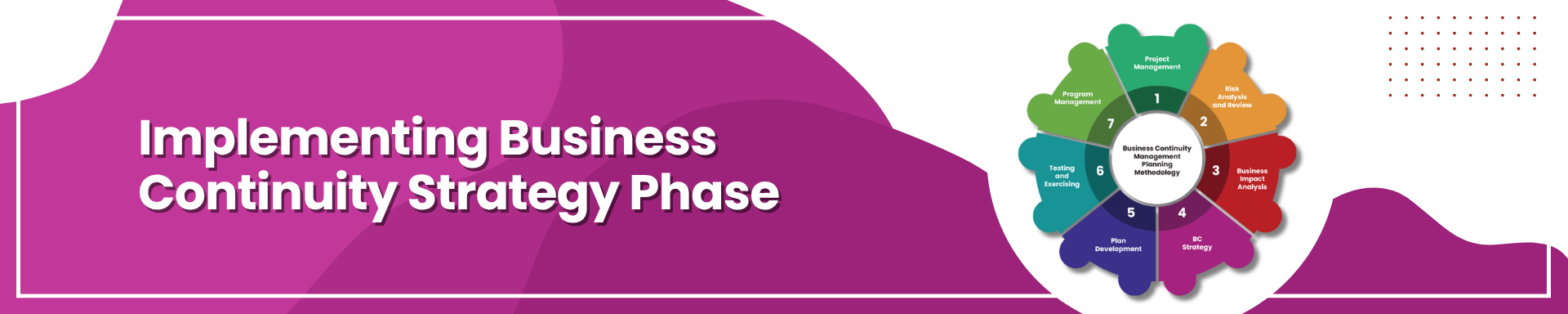
Implementing the Business Continuity Strategy Phase for SHINE Children and Youth Services
Introduction
![[BCM] [SHINE] [E2] [C5] Business Continuity Strategy](https://no-cache.hubspot.com/cta/default/3893111/c2dbeaf6-54cd-4468-ad97-f0c460f9c430.png)
The Business Continuity Strategy (BCS) phase serves as the strategic backbone of SHINE Children and Youth Services’ Business Continuity Management (BCM) framework. Following the completion of the Risk Analysis and Review (RAR) and Business Impact Analysis (BIA), SHINE must identify and implement strategies that ensure its essential programmes, services, and operations remain resilient during and after a disruptive event.
For an organisation whose mission is to empower children, youths, and families with opportunities for resilience and development, continuity of care is paramount. Any interruption in its outreach, therapeutic interventions, school-based social work, or community support functions can significantly impact vulnerable individuals who rely on timely guidance and assistance.
This chapter outlines the mitigation, prevention, and recovery strategies that enable SHINE to safeguard its critical business functions (CBFs). These strategies are aligned with ISO 22301 and contextualised to SHINE’s operational environment, service delivery model, and community-focused mission.
Purpose of the Business Continuity Strategy Phase
The objectives of the Business Continuity Strategy phase for SHINE are to:
- Identify feasible strategies that ensure operations continue within acceptable timeframes (RTOs/RPOs).
- Mitigate or reduce the impact of threats identified in the RAR.
- Strengthen preparedness and resilience across SHINE’s programmes, staff, and technology systems.
- Align resource allocation and investments with continuity priorities.
- Establish structured approaches for recovery and resumption of service delivery.
This phase ensures that SHINE adopts proactive and cost-effective solutions that balance operational effectiveness with the needs of its beneficiaries.
Strategy Development Approach
The following five-step methodology guides SHINE in identifying and selecting appropriate strategies:
- Review RAR and BIA results to understand risk likelihood, impact severity, and service criticality.
- Identify possible mitigation, prevention, and recovery options for each CBF.
- Evaluate strategic feasibility (costs, complexity, practicality, alignment with community services).
- Prioritise strategies based on effectiveness and alignment with mission-critical functions.
- Document chosen strategies to guide subsequent plan development.
Strategy Categories for SHINE
SHINE’s continuity strategies fall into three major categories:
A. Mitigation Strategies
Actions that reduce the likelihood or consequences of disruptions.
Examples relevant to SHINE
- Diversifying digital communication channels (e.g., WhatsApp Business, MS Teams, secure tele-counselling platforms) to maintain contact with youth and families if onsite services are disrupted.
- Securing and maintaining backups of client case files in encrypted cloud-based systems to avoid data loss during system failures.
- Installing safety equipment in service centres (e.g., fire extinguishers, smoke detectors, CCTV) to mitigate physical risks.
- Implementing regular cybersecurity awareness training for social workers and programme teams to prevent phishing and data breaches.
- Contracting multiple logistics providers for material distribution during community outreach events, reducing dependency on a single supplier.
B. Prevention Strategies
Actions that reduce the probability of disruption or prevent incidents from escalating.
Examples relevant to SHINE
- Routine maintenance of IT systems to prevent outages during peak counselling or case management periods.
- Cross-training of social workers and youth workers to ensure programme continuity if key staff are unavailable (e.g., illness, surge in cases, staff turnover).
- Standardised procedures for case file handling to prevent accidental loss or mishandling of sensitive information.
- Ensuring redundancy in leadership roles, enabling seamless delegation during emergencies (e.g., Centre Head Backup, Programme Manager Backup).
- Regular inspection of service centre premises to prevent hazards such as electrical faults, structural issues, or water leaks.
C. Recovery Strategies
Actions that support the timely restoration of operations to acceptable levels.
Examples relevant to SHINE
1. People Recovery Strategies
- Staff relocation or remote-working arrangements to ensure continuity of school social work, casework, and counselling services.
- Deploying floating staff or volunteers to support disrupted programmes while permanent staff recover or facilities become accessible.
- Providing psychological first aid (PFA) to staff during crises to ensure emotional readiness for continued service delivery.
2. Process Recovery Strategies
- Delivering counselling and case management through tele-support if schools or community centres are inaccessible.
- Setting up temporary service points in partner organisations (e.g., community clubs, family service centres).
- Prioritising urgent cases such as youth-at-risk or families in crisis, ensuring RTOs are met.
3. Technology Recovery Strategies
- Cloud-based data backup and restoration to ensure minimal data loss and fast resumption of digital tools.
- Use of portable devices (laptops, secured tablets) for outreach work continuity.
- Activation of alternate IT access points at another SHINE location or co-working space.
4. Facility Recovery Strategies
- Relocating operations to an alternate site (e.g., partnering agencies, temporary rental spaces) during facility disruptions.
- Utilising shared spaces in schools or community partner buildings to maintain continuity in school social work programmes.
- Implementing a tiered space utilisation strategy to prioritise therapy rooms, confidential counselling spaces, and programme activity rooms.
5. External Partner and Vendor Recovery Strategies
- Engaging backup service providers for essential supplies (IT support, printing, transport).
- Pre-agreed MOUs with community partners to share facilities, resources, or equipment during major disruptions.
- Securing emergency funding pathways through government grants, donors, or philanthropic partners to maintain operations.
Business Continuity Strategies for SHINE’s Critical Business Functions (CBFs)
SHINE’s key CBFs include:
- CBF-01: Casework & Counselling (Children and Youth)
- CBF-02: Community Social Work & School Social Work
- CBF-03: Targeted Intervention Programmes (e.g., youth outreach, risk intervention)
- CBF-04: Administrative & Operational Support
Below are examples of tailored strategic approaches:
For CBF-01 — Casework & Counselling
- Implement secure tele-counselling tools.
- Pre-develop digital counselling guidelines for crisis use.
- Prioritise urgent or high-risk cases for outreach.
- Ensure backup access to client databases.
For CBF-02 — Community & School Social Work
- Establish recovery agreements with schools for alternative meeting spaces.
- Use portable devices for student case notes.
- Cross-train staff to support multiple school zones.
For CBF-03 — Targeted Intervention Programmes
- Develop mobile outreach plans for youth in the community.
- Use hybrid delivery models (online group sessions, digital mentoring).
- Pre-pack resource kits for emergency distribution.
For CBF-04 — Admin & Operations
- Enable remote access to finance and HR systems.
- Prepare emergency communication protocols.
- Maintain vendor redundancy for IT and facilities.
Selecting the Most Appropriate Strategies
Criteria used by SHINE include:
- Alignment with mission and critical service needs
- Cost-effectiveness and affordability
- Implementation timeline
- Level of risk reduction
- Impact on vulnerable beneficiaries
- Compatibility with organisational culture and resources
This ensures not only compliance with ISO 22301 but also relevance to SHINE’s operational realities.
![Banner [Summary] [BCM] [E2] [C5] Business Continuity Strategy](https://no-cache.hubspot.com/cta/default/3893111/ca7fd7d5-8923-46f4-b420-08a7eca83bdb.png)
The Business Continuity Strategy phase provides the essential bridge between risk awareness and practical resilience. For SHINE Children and Youth Services, implementing effective strategies is more than an ISO 22301 requirement—it is a commitment to ensuring vulnerable children, youths, and families continue receiving critical support even in moments of disruption.
By establishing robust mitigation, prevention, and recovery approaches grounded in its service model and community-centric mission, SHINE strengthens its organisational resilience and safeguards continuity of care. These strategies empower SHINE to respond swiftly, restore operations effectively, and uphold its mission regardless of the challenges it faces.
With these strategies in place, the next phase—Business Continuity Plan (BCP) Development—can translate them into practical, actionable procedures that staff can execute confidently during real-world disruptions.
![[BCM] [SHINE] [E2] [C1] Business Continuity Management Planning Methodology](https://no-cache.hubspot.com/cta/default/3893111/d65fbada-a07c-44d3-a932-e6b74b77f610.png)
![[BCM] [SHINE] [E2] [C2] Project Management](https://no-cache.hubspot.com/cta/default/3893111/03d8427a-9706-4f3d-a8a0-9a9de56455b1.png)
![[BCM] [SHINE] [E2] [C3] Risk Analysis and Review](https://no-cache.hubspot.com/cta/default/3893111/0df268b4-d8f2-4ae9-9cb9-2eb0ab4ac808.png)
![[BCM] [SHINE] [E2] [C4] Business Impact Analysis](https://no-cache.hubspot.com/cta/default/3893111/0499e267-48d8-4c80-8fae-d0cfe997e70d.png)
![[BCM] [SHINE] [E2] [C6] BCM Plan Development](https://no-cache.hubspot.com/cta/default/3893111/215f489e-fb2d-4053-a760-d142f8b4c364.png)
![[BCM] [SHINE] [E2] [C7] Testing and Exercising](https://no-cache.hubspot.com/cta/default/3893111/f4a49829-b26c-426b-b12a-6828196f7662.png)
![[BCM] [SHINE] [E2] [C8] Program Management](https://no-cache.hubspot.com/cta/default/3893111/5d18b31a-a54f-474c-a705-f3b6524d4524.png)
![[BCM] [SHINE] [E2] [C9] Summary](https://no-cache.hubspot.com/cta/default/3893111/8642de14-5077-4bd6-a477-2436835a4e10.png)
![[BCM] [SHINE] [E2] [C10] Back Cover](https://no-cache.hubspot.com/cta/default/3893111/35916527-3f64-4214-95f7-3dfc7d6646b5.png)
More Information About Business Continuity Management Courses
To learn more about the course and schedule, click the buttons below for the BCM-300 Business Continuity Management Implementer [BCM-3] and the BCM-5000 Business Continuity Management Expert Implementer [BCM-5].


![Register [BL-B-3]*](https://no-cache.hubspot.com/cta/default/3893111/ac6cf073-4cdd-4541-91ed-889f731d5076.png)



![FAQ [BL-B-3]](https://no-cache.hubspot.com/cta/default/3893111/b3824ba1-7aa1-4eb6-bef8-94f57121c5ae.png)
![Email to Sales Team [BCM Institute]](https://no-cache.hubspot.com/cta/default/3893111/3c53daeb-2836-4843-b0e0-645baee2ab9e.png)


