



eBook 2: Chapter 4
Implementing the Business Impact Analysis (BIA) Phase for SHINE Children and Youth Services
Introduction
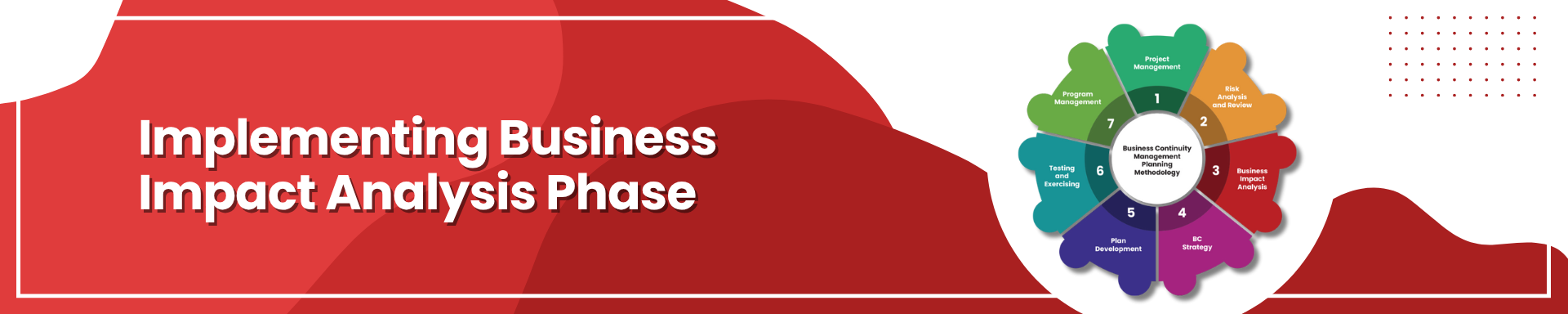
![[BCM] [SHINE] [E2] [C4] Business Impact Analysis](https://no-cache.hubspot.com/cta/default/3893111/0499e267-48d8-4c80-8fae-d0cfe997e70d.png)
The Business Impact Analysis (BIA) phase is a cornerstone of the Business Continuity Management (BCM) Planning Methodology and a mandatory requirement of ISO 22301. For SHINE Children and Youth Services (SHINE), the BIA ensures that the organisation understands how disruptions affect its ability to deliver essential social, educational, and psychological services to children and youth. Given SHINE’s mission to empower vulnerable young persons, any interruption to its services may result in significant developmental, emotional, or safety-related consequences.
This chapter provides a structured approach for implementing the BIA specifically for SHINE, guiding staff and management through the identification, assessment, and prioritisation of critical business functions and their dependencies. The objective is to obtain a clear understanding of recovery priorities, resource needs, and impact thresholds, enabling SHINE to design effective recovery strategies that protect service continuity, client well-being, and stakeholder trust.
Purpose of the Business Impact Analysis
The BIA aims to:
- Identify and validate SHINE’s Critical Business Functions (CBFs) that must be maintained or restored rapidly after a disruption.
- Assess the operational, client, financial, reputational, and regulatory impacts resulting from service outages.
- Determine maximum tolerable downtime (MTD), recovery time objectives (RTOs), and recovery point objectives (RPOs) for each CBF.
- Identify key dependencies, including technology, facilities, partners, data, human resources, and external agencies.
- Provide a data-driven foundation for selecting cost-effective recovery strategies that meet SHINE’s mission and stakeholder expectations.
3. Scope of the BIA for SHINE
The BIA covers:
- All 12 Critical Business Functions (CBFs) identified by SHINE.
- All service delivery sites, counselling centres, school-based social work locations, and administrative offices.
- Both physical and digital modalities of service delivery.
- Internally delivered programmes and externally funded or partner-supported services.
The BIA includes normal operations, peak service periods, and crisis-related surges (e.g., child protection escalations, examination stress periods, or community crises).
4. SHINE’s Critical Business Functions (CBFs)
The following CBFs form the foundation of the BIA. Each will undergo detailed impact assessment and prioritisation.
CBF-01 Educational Psychology Services (EPS)
Assessment, diagnosis, and intervention support for children with learning, emotional, and behavioural needs.
CBF-02 Community Social Work & School Social Work
Support services for children and youth in schools and communities, addressing welfare, behaviour, truancy, and safety concerns.
CBF-03 Targeted Interventions for At-Risk Youth
Programmes for youth exhibiting risk-taking or delinquent behaviours.
CBF-04 Counselling & Therapy Services (SH.IFT & related programmes)
Individual, group, and family-based counselling and therapy services.
CBF-05 Case Management & Client Support Coordination
End-to-end support for vulnerable children and families through assessments, care planning, coordination, and follow-up.
CBF-06 Client Information & Records Management
Management of sensitive client data, digital client records, assessments, counselling notes, and inter-agency referrals.
CBF-07 Communications & Stakeholder Coordination
Internal and external communications, public messaging, partner engagement, and crisis communication.
CBF-08 Human Resource Management & Professional Capability
Hiring, deployment, safeguarding compliance, training and accreditation of social service professionals.
CBF-09 Funding, Resource & Donor Management
Government grants, donor contributions, fundraising accountability, and financial stewardship.
CBF-10 Partnership & Community Network Management
Coordination with schools, government agencies, social service partners, and community networks.
CBF-11 Facilities, IT Systems & Service Infrastructure
Workspaces, counselling rooms, school-based locations, IT systems, cybersecurity, and digital platforms.
CBF-12 Governance, Compliance & Reporting
Regulatory compliance, safeguarding protocols, audit reporting, and organisational governance.
5. Key Steps in Implementing the BIA for SHINE
5.1 Step 1: Validate and Refine CBFs and Sub-CBFs
Each CBF must be broken down into detailed sub-CBFs, such as:
- EPS assessments (CBF-01-S01)
- School-based casework (CBF-02-S02)
- Youth group intervention sessions (CBF-03-S03)
- Therapy session scheduling & delivery (CBF-04-S01)
- Client referral processing (CBF-05-S02)
- Client record access and update (CBF-06-S02)
SHINE’s department heads validate these through workshops and interviews.
5.2 Step 2: Identify Impacts of Disruptions
ISO 22301 requires assessing impacts across categories relevant to SHINE:
a. Client Safety & Well-being Impact
- Delays in intervention may increase the risk of harm, self-neglect, or family conflict.
- Breaks in counselling may exacerbate emotional or behavioural issues.
b. Service Delivery Impact
- Interrupted sessions for EPS assessments or therapy disrupt treatment plans.
- School-based casework disruptions may impact coordination with MOE partners and school staff.
c. Regulatory & Compliance Impact
- Delays in reporting child-protection concerns.
- Non-compliance with MSF or NCSS contractual obligations.
d. Financial Impact
- Grant penalties or withholding of claims.
- Delayed donor reporting is affecting future funding.
e. Reputational Impact
- Loss of trust from schools, parents, donors, and government agencies.
- Negative media attention if vulnerable clients are affected.
f. Operational Impact
- Inability to access client records.
- Loss of ability to schedule, document, and track interventions.
Each impact is measured by severity across time intervals (e.g., immediate, 4 hours, 8 hours, 24 hours, 72 hours).
5.3 Step 3: Determine MTD, RTO, and RPO
Maximum Tolerable Downtime (MTD)
The longest acceptable period a service may be unavailable before causing unacceptable harm.
Recovery Time Objective (RTO)
Target time to resume a function at an acceptable level.
Recovery Point Objective (RPO)
Maximum acceptable data loss (e.g., last 4 hours of counselling notes).
For SHINE:
|
CBF |
Example MTD |
Example RTO |
Example RPO |
|
CBF-01 EPS |
48 hours |
24 hours |
4 hours |
|
CBF-02 Community/School Social Work |
24 hours |
12 hours |
2 hours |
|
CBF-04 Counselling & Therapy |
24 hours |
12 hours |
4 hours |
|
CBF-06 Client Records Mgmt |
8 hours |
4 hours |
1 hour |
|
CBF-07 Communications |
4 hours |
2 hours |
1 hour |
(Values to be validated through workshops.)
5.4 Step 4: Identify Critical Resources for Each CBF
Resources include:
Personnel
- Psychologists, counsellors, social workers, and program leads.
- Staff with safeguarding training and case escalation authority.
Technology
- Case management system (e.g., client record platforms).
- Secure communication channels.
- Scheduling and reporting tools.
Facilities
- Counselling rooms, school-based offices, safe spaces for youth sessions.
Information
- Digital client records, assessment reports, therapy notes, and service schedules.
External Dependencies
- Ministry of Education (MOE)
- Ministry of Social and Family Development (MSF)
- Schools, Family Service Centres, Social Service Offices
- Donors and grant authorities
- Partner agencies delivering joint programmes
Each resource dependency is documented with criticality levels.
5.5 Step 5: Analyse Interdependencies
Understanding interdependencies is vital for SHINE because programme effectiveness relies heavily on collaboration.
Types of Interdependencies
-
- MOE’s access permissions for school premises
- Funding from MSF and NCSS
- Referrals from schools and community partners
-
- Case closure recommendations for families
- Progress reports for schools
- Submission of outcome indicators for grant claims
-
- EPS assessments feeding into school social work cases
- Case management relying on client records (CBF-06)
- Counselling outputs informing at-risk youth programmes
5.6 Step 6: Validate BIA Results with SHINE Leadership
After completing data collection:
- Consolidate all CBF impact ratings.
- Review recovery priorities to confirm feasibility and alignment with the mission.
- Obtain formal endorsement from the CEO, Directors, and Heads of Department.
ISO 22301 requires clear justification for prioritisation decisions.
6. BIA Outputs for SHINE
The BIA will produce the following:
1. Validated list of CBFs and sub-CBFs
Structured service map across all programmes.
2. BIA Worksheets for all CBFs
Including impact analysis, MTD, RTO & RPO, and dependencies.
3. Resource Requirement Tables
Staff, facilities, IT, partners, specialised tools.
4. Prioritised Recovery Sequence
E.g.
- CBF-06 Client Records
- CBF-07 Communications
- CBF-02 School Social Work
- CBF-04 Counselling
- CBF-01 EPS
…and so on.
5. Interdependency Maps
Visual matrix of how programmes rely on one another.
6. BIA Summary Report for Management Review
Formally required under ISO 22301 Clause 8.2.
7. Implementation Considerations Unique to SHINE
The BIA must incorporate SHINE-specific realities:
- Workforce mobility: Many staff operate in schools and community sites. Disruptions affect multiple locations simultaneously.
- Safeguarding obligations: Some cases require immediate escalation; downtime can create safety risks.
- Client confidentiality: Strict controls under PDPA and MSF requirements.
- Digital records centrality: CBF-06 plays a critical enabling role for almost all programmes.
- External partner dependence: Over 100+ schools, government agencies, and community partners contribute to operations.
- Sensitivity of client outcomes: Disruptions may have emotional and behavioural consequences on youth.
These factors influence impact severity and recovery timelines.
![Banner [Summary] [BCM] [E2] [C4] Business Impact Analysis](https://no-cache.hubspot.com/cta/default/3893111/3d259877-5780-4502-9473-1129f6d08a8c.png)
The Business Impact Analysis (BIA) is fundamental to strengthening SHINE’s resilience and ensuring that its core mission—supporting children and youth—remains uninterrupted during disruptions. By systematically identifying impacts, prioritising services, confirming resource needs, and mapping interdependencies, SHINE develops a strong foundation for crafting practical recovery strategies aligned with ISO 22301.
A thoroughly implemented BIA not only fulfils certification requirements but also enhances service continuity, protects client well-being, sustains trust with partners, and reinforces SHINE’s commitment to delivering quality care regardless of crisis or adversity.
![[BCM] [SHINE] [E2] [C1] Business Continuity Management Planning Methodology](https://no-cache.hubspot.com/cta/default/3893111/d65fbada-a07c-44d3-a932-e6b74b77f610.png)
![[BCM] [SHINE] [E2] [C2] Project Management](https://no-cache.hubspot.com/cta/default/3893111/03d8427a-9706-4f3d-a8a0-9a9de56455b1.png)
![[BCM] [SHINE] [E2] [C3] Risk Analysis and Review](https://no-cache.hubspot.com/cta/default/3893111/0df268b4-d8f2-4ae9-9cb9-2eb0ab4ac808.png)
![[BCM] [SHINE] [E2] [C5] Business Continuity Strategy](https://no-cache.hubspot.com/cta/default/3893111/c2dbeaf6-54cd-4468-ad97-f0c460f9c430.png)
![[BCM] [SHINE] [E2] [C6] BCM Plan Development](https://no-cache.hubspot.com/cta/default/3893111/215f489e-fb2d-4053-a760-d142f8b4c364.png)
![[BCM] [SHINE] [E2] [C7] Testing and Exercising](https://no-cache.hubspot.com/cta/default/3893111/f4a49829-b26c-426b-b12a-6828196f7662.png)
![[BCM] [SHINE] [E2] [C8] Program Management](https://no-cache.hubspot.com/cta/default/3893111/5d18b31a-a54f-474c-a705-f3b6524d4524.png)
![[BCM] [SHINE] [E2] [C9] Summary](https://no-cache.hubspot.com/cta/default/3893111/8642de14-5077-4bd6-a477-2436835a4e10.png)
![[BCM] [SHINE] [E2] [C10] Back Cover](https://no-cache.hubspot.com/cta/default/3893111/35916527-3f64-4214-95f7-3dfc7d6646b5.png)
More Information About Business Continuity Management Courses
To learn more about the course and schedule, click the buttons below for the BCM-300 Business Continuity Management Implementer [BCM-3] and the BCM-5000 Business Continuity Management Expert Implementer [BCM-5].


![Register [BL-B-3]*](https://no-cache.hubspot.com/cta/default/3893111/ac6cf073-4cdd-4541-91ed-889f731d5076.png)



![FAQ [BL-B-3]](https://no-cache.hubspot.com/cta/default/3893111/b3824ba1-7aa1-4eb6-bef8-94f57121c5ae.png)
![Email to Sales Team [BCM Institute]](https://no-cache.hubspot.com/cta/default/3893111/3c53daeb-2836-4843-b0e0-645baee2ab9e.png)


