


eBook 2: Chapter 3
Risk Analysis and Review Phase of the BCM Planning Methodology for SHINE Children and Youth Services
Introduction
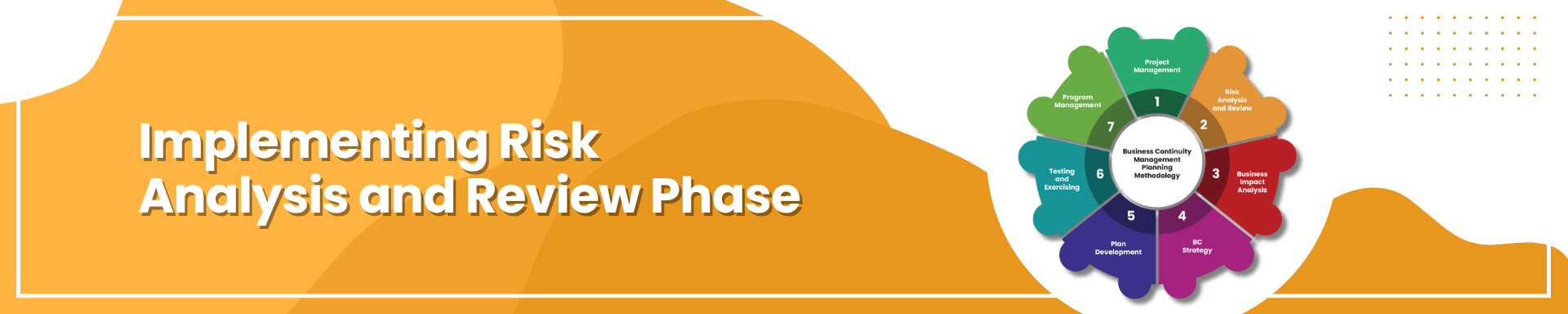
![[BCM] [SHINE] [E2] [C3] Risk Analysis and Review](https://no-cache.hubspot.com/cta/default/3893111/0df268b4-d8f2-4ae9-9cb9-2eb0ab4ac808.png)
The Risk Analysis and Review (RAR) phase is a foundational component of the Business Continuity Management (BCM) Planning Methodology for SHINE Children and Youth Services. As a social service organisation dedicated to empowering children, youth, and families facing adversity, SHINE must ensure that its programmes and support systems remain dependable, even when unexpected disruptions occur.
This chapter outlines the systematic process of identifying, assessing, mitigating, and continuously monitoring risks that could impact SHINE’s operations, service delivery, and ability to safeguard its beneficiaries. Through a structured RAR process aligned with ISO 22301, SHINE enhances its organisational resilience, strengthens preparedness, and ensures that its mission—providing timely, quality care and developmental support—continues uninterrupted, regardless of circumstances.
The purpose of this chapter is to systematically identify, assess, mitigate, and monitor the risks that could threaten SHINE’s ability to deliver its mission of supporting children and youth from disadvantaged backgrounds. By embedding a structured Risk Analysis & Review process, SHINE can proactively protect its operations, staff, service users, and reputation — thereby safeguarding continuity of care.
1. Identifying Risks
In the first step, SHINE must compile a comprehensive list of both internal and external risks that could disrupt its operations. Given SHINE’s nature as a social service and youth care provider, some relevant risk categories and examples include:
- Operational risks
- Disruption of counselling, therapy, or youth-support sessions (e.g., due to loss of venue, staff unavailability, or resource shortages).
- Volunteer shortages or volunteer drop-outs, affecting delivery of community programmes (e.g., reading support, groupwork, mentoring).
- Data loss or confidentiality breaches (e.g., records of psychological assessments, therapy notes, sensitive information about children/youth).
- Human-resource / staffing risks
- Staff turnover or illness (for paid staff or essential volunteers), reducing capacity to run programmes like Educational Psychology, Social Work, or targeted interventions.
- Burnout or stress among staff due to high caseloads or emotionally challenging client situations (especially in therapy or youth counselling).
- External or environmental risks
- Public health crises (e.g., epidemic/pandemic) leading to the temporary closure of physical premises or suspension of face-to-face services.
- Regulatory or funding risks (e.g., changes in charitable funding, subsidies, policy changes, compliance requirements).
- Community-level risks: social unrest, public safety incidents, and economic downturns that could increase demand while limiting resources.
- Reputational risks
- Negative media publicity (e.g., allegations of mishandling of sensitive cases, privacy breach, mismanagement) is reaching a charity that works with vulnerable youth.
- Volunteer misconduct or abuse (which could severely damage trust and credibility).
- Service demand and capacity risks
- Surge in demand for services (e.g., mental health counselling, therapy) without commensurate increase in capacity, leading to waiting lists or degraded service quality.
- Over-reliance on volunteers for critical programmes — volunteer attrition could create gaps.
- Information technology/data risks
- Failure of IT systems used for record-keeping, scheduling, and communication (e.g., client databases, volunteer coordination, and teletherapy platforms).
- Cybersecurity threats or unauthorized access leading to a potential breach of confidential client information.
- Physical risks
- Loss or damage to premises (e.g., fire, flood, structural damage), leading to displacement of offices, counselling rooms, and group work spaces.
- Emergency situations (e.g., natural disasters, power outages) that render venues unusable.
By casting a wide net, SHINE ensures its RAR process captures all plausible threats, even those that may seem remote — because BCM aims to maintain continuity during unexpected disruptions.
2. Assessing Risks
Once risks are identified, SHINE must assess likelihood (how probable it is that a risk will occur) and impact (the severity of consequences if it occurs). The combination yields a risk rating, which enables prioritisation. This follows standard BCM practice where “risk likelihood × risk impact = risk rating/risk level.”
Here is an illustrative risk-assessment table for SHINE (simplified):
|
Risk |
Likelihood* |
Impact* |
Risk Level (Rating) |
Notes / Rationale |
|
Volunteer shortage / high attrition |
Medium |
High |
High |
Many SHINE programmes (mentoring, reading, group work) rely heavily on volunteers; volunteer dropout affects service continuity. |
|
Staff unavailability due to illness/burnout |
Medium |
High |
High |
Affects core service delivery — counselling, educational psychology, and social work. |
|
Data breach/confidentiality breach |
Low–Medium |
Very High |
High |
Risk to client privacy, legal compliance, and reputation. |
|
Suspension of face-to-face programmes due to public health crisis (e.g., pandemic) |
Low–Medium |
Very High |
High |
Could disrupt critical services; may affect many clients simultaneously. |
|
Surge in demand for services beyond capacity |
Medium |
Medium–High |
Medium–High |
Strained resources, longer waiting lists, and compromised quality. |
|
Premises damage (fire, flood, structural) |
Low |
High |
Medium–High |
Displacement may interrupt operations; need alternative locations. |
|
IT system failure |
Low–Medium |
Medium |
Medium–High |
Disrupt scheduling, client records, teletherapy, and communications. |
|
Reputational risk from misconduct / negative publicity |
Low |
Very High |
High |
Could undermine trust, funding, and stakeholder confidence. |
|
Funding/subsidy reduction / regulatory change |
Medium |
High |
High |
May affect financial sustainability and, ability to maintain programmes. |
* These are illustrative — SHINE should calibrate “likelihood” and “impact” definitions according to internal context, historical data (if available), and expert judgment (staff, management, volunteers).
This assessment allows SHINE to focus first on High and High-to-Medium risk items for mitigation or treatment.
3. Mitigating Risks
After assessment, SHINE should define and implement controls, procedures, and strategies to reduce the likelihood and/or impact of high-risk threats. Some example mitigation measures for SHINE:
-
- Establish a robust volunteer recruitment and retention programme — including regular training, support, recognition, and a volunteer-management framework to reduce dropout.
- Maintain a volunteer buffer pool (reserve volunteers) so that if some drop out, programmes can continue.
- Document standard operating procedures (SOPs) for volunteer-led programmes to enable smooth handover if volunteers leave.
2. Staff well-being and redundancy planning
-
- Monitor staff workload and provide mental health/peer support to prevent burnout.
- Cross-train staff so that critical functions (counselling, therapy, admin) have backups — enabling coverage when someone is unavailable.
- Use part-time or contract staff as an additional buffer in high-demand periods.
3. Data protection and IT resilience
-
- Implement secure data-management practices: encrypted storage, restricted access, and regular backups.
- Adopt a disaster-recovery / IT-continuity plan: e.g., redundant backups, cloud storage, alternative communication channels.
- Develop and enforce a privacy/confidentiality policy, especially for sensitive client data.
4. Service delivery resilience
-
- Hybrid delivery model: have capacity for remote/online counselling, therapy, group sessions — so services can continue even if physical premises are inaccessible (e.g., during a public health crisis).
- Identify alternative venues (partner organizations, community centres, schools) as fallback locations for operations in case of premises unavailability.
- Maintain waiting list and triage protocol: prioritise high-risk or urgent clients when demand surges; communicate transparently with clients about waiting times.
5. Financial and funding risk mitigation
-
- Diversify funding sources (donations, grants, corporate sponsorships, fundraising, government subsidies) to avoid over-reliance on a single source.
- Build a reserve fund (“continuity fund”) to cushion operations during funding fluctuations or unexpected financial shocks.
6. Reputation & safeguarding controls
-
- Develop and enforce a code of conduct for staff and volunteers, particularly those interacting with vulnerable children/youth.
- Put in place robust incident-reporting and investigation procedures for misconduct or complaints.
- Maintain transparent communication with stakeholders, donors, clients, and the public.
-
- Draft and maintain emergency response procedures (e.g., fire, flood, utility failure), including evacuation plans, alternative venues, continuity of services, and stakeholder notification.
- Define a crisis-management team and roles/responsibilities, escalation paths, and communication protocols.
Each mitigation control should be documented, approved by management, and integrated into SHINE’s overall BCM / crisis management plan.
4. Continuous Review
Risk Analysis & Review is not a one-time exercise. Instead, it must be ongoing to remain relevant as internal or external conditions change. For SHINE, a continuous review process might involve:
- Annual (or semi-annual) risk-profile refresh — re-evaluate all previously identified risks, re-assess likelihood and impact, add new risks (e.g., arising from new programmes, changing social conditions).
- Trigger-based reviews — e.g., when SHINE expands services, launches new programmes (e.g., new outreach initiatives), enters into partnerships, acquires new premises, or after significant external events (pandemic waves, changes in funding regulation, community crises).
- Post-incident reviews — after any disruption, complaint, breach, or event affecting SHINE’s operations, conduct root-cause analysis, update risk registry, revise controls and procedures accordingly.
- Periodic audits and management review — ensure that mitigation measures (SOPs, policies, alternative delivery methods) are functioning, staff are aware, and the BCM plan remains actionable.
- Stakeholder feedback — gather feedback from staff, volunteers, service users, and community partners about risks they foresee, gaps in delivery, or emerging vulnerabilities.
This cyclical approach ensures that SHINE remains resilient over time, adapts to evolving risks, and can continue to fulfill its mission effectively even under adverse conditions.
5. Implications for SHINE’s Continuity of Care
By embedding a robust RAR process, SHINE gains several advantages critical to its mission:
- Early identification of risks helps prevent disruptions — protecting vulnerable children and youth who rely on consistent support.
- Mitigation measures ensure that services remain available, even if parts of the organisation are affected (e.g., staff illness, venue loss).
- Transparency and structured procedures (especially around data protection and safeguarding) help protect SHINE’s reputation — crucial for stakeholder trust, volunteer recruitment, and funding.
- Continuous review fosters organisational learning, adaptability, and long-term resilience — especially in a social-service context where external factors (social needs, funding, regulations) can change rapidly.
In short, a well-conducted Risk Analysis & Review underpins the sustainability and reliability of SHINE’s continuity-of-care commitment.
![Banner [Summary] [BCM] [E2] [C3] Risk Analysis and Review](https://no-cache.hubspot.com/cta/default/3893111/a7beedb7-3b4e-4374-ae50-974a76b94b61.png)
The Risk Analysis and Review phase equips SHINE Children and Youth Services with the insight and preparedness necessary to navigate a complex and evolving risk environment. By thoroughly identifying potential threats, evaluating their likelihood and impact, and implementing targeted mitigation strategies, SHINE ensures that disruptions do not compromise the quality or continuity of care provided to children and youth.
Continuous review acts as a safeguard, enabling SHINE to adapt its risk profile in response to internal changes, emerging vulnerabilities, and shifts in the broader social service landscape. With a dynamic and proactive RAR process integrated into its BCM framework, SHINE is better positioned to maintain operational stability, protect its stakeholders, and uphold the trust placed in it by families, partners, donors, and the broader community. Through this chapter, SHINE affirms its commitment to organisational resilience and reinforces its capability to sustain its mission even under challenging conditions.
![[BCM] [SHINE] [E2] [C1] Business Continuity Management Planning Methodology](https://no-cache.hubspot.com/cta/default/3893111/d65fbada-a07c-44d3-a932-e6b74b77f610.png)
![[BCM] [SHINE] [E2] [C2] Project Management](https://no-cache.hubspot.com/cta/default/3893111/03d8427a-9706-4f3d-a8a0-9a9de56455b1.png)
![[BCM] [SHINE] [E2] [C4] Business Impact Analysis](https://no-cache.hubspot.com/cta/default/3893111/0499e267-48d8-4c80-8fae-d0cfe997e70d.png)
![[BCM] [SHINE] [E2] [C5] Business Continuity Strategy](https://no-cache.hubspot.com/cta/default/3893111/c2dbeaf6-54cd-4468-ad97-f0c460f9c430.png)
![[BCM] [SHINE] [E2] [C6] BCM Plan Development](https://no-cache.hubspot.com/cta/default/3893111/215f489e-fb2d-4053-a760-d142f8b4c364.png)
![[BCM] [SHINE] [E2] [C7] Testing and Exercising](https://no-cache.hubspot.com/cta/default/3893111/f4a49829-b26c-426b-b12a-6828196f7662.png)
![[BCM] [SHINE] [E2] [C8] Program Management](https://no-cache.hubspot.com/cta/default/3893111/5d18b31a-a54f-474c-a705-f3b6524d4524.png)
![[BCM] [SHINE] [E2] [C9] Summary](https://no-cache.hubspot.com/cta/default/3893111/8642de14-5077-4bd6-a477-2436835a4e10.png)
![[BCM] [SHINE] [E2] [C10] Back Cover](https://no-cache.hubspot.com/cta/default/3893111/35916527-3f64-4214-95f7-3dfc7d6646b5.png)
More Information About Business Continuity Management Courses
To learn more about the course and schedule, click the buttons below for the BCM-300 Business Continuity Management Implementer [BCM-3] and the BCM-5000 Business Continuity Management Expert Implementer [BCM-5].


![Register [BL-B-3]*](https://no-cache.hubspot.com/cta/default/3893111/ac6cf073-4cdd-4541-91ed-889f731d5076.png)



![FAQ [BL-B-3]](https://no-cache.hubspot.com/cta/default/3893111/b3824ba1-7aa1-4eb6-bef8-94f57121c5ae.png)
![Email to Sales Team [BCM Institute]](https://no-cache.hubspot.com/cta/default/3893111/3c53daeb-2836-4843-b0e0-645baee2ab9e.png)


