



eBook 2: Chapter 2
Project Management Phase for Business Continuity Management Planning Methodology for SHINE Children and Youth Services
Introduction
![[BCM] [SHINE] [E2] [C2] Project Management](https://no-cache.hubspot.com/cta/default/3893111/03d8427a-9706-4f3d-a8a0-9a9de56455b1.png)
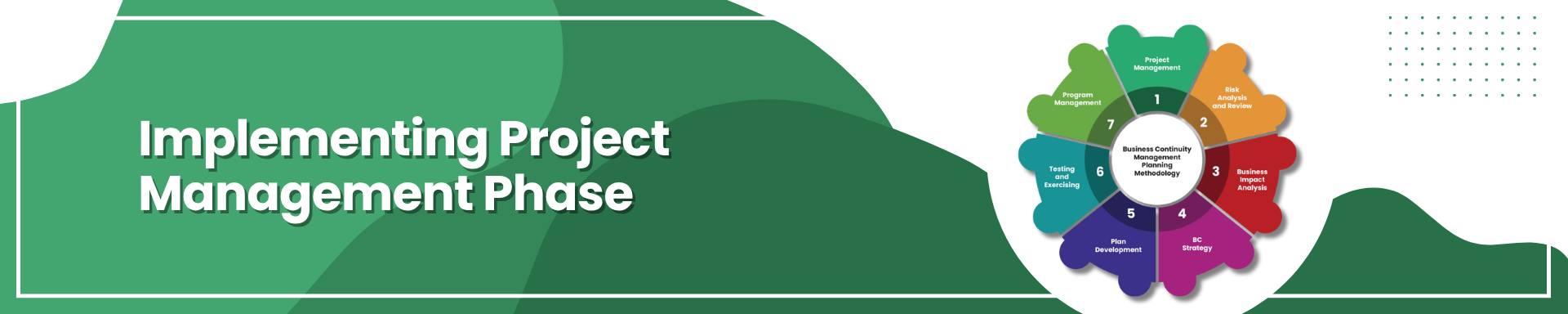
The Project Management Phase forms the foundation of SHINE Children and Youth Services’ Business Continuity Management (BCM) programme. As required under ISO 22301, this phase establishes the governance, resources, structure, and planning approach necessary to ensure that continuity efforts are coordinated, properly executed, and aligned with SHINE’s mission: to empower children, youth, and their families towards resilience and holistic development.
For an organisation like SHINE—whose work involves vulnerable children, at-risk youth, schools, and community partners—any operational disruption could severely affect the delivery of essential programmes such as community social work, youth development services, and school-based interventions. The Project Management Phase sets the stage for building a BCM system that protects these critical services and supports SHINE’s commitment to continuity of care.
1. Establishing Governance and Leadership Commitment
Effective BCM begins with management endorsement. SHINE’s senior leadership team—Executive Director, Deputy Directors, and Programme Heads—must formally commit to sponsoring and guiding the BCM programme.
Key Actions
- Issue a BCM Policy Statement affirming SHINE's commitment to continuity of essential services.
- Appoint a BCM Programme Sponsor, typically the Executive Director, to provide strategic direction.
- Form a BCM Steering Committee involving leaders from Finance, HR, IT, Programme Operations, and Communications.
SHINE-Specific Example
The Executive Director endorses a BCM Policy that emphasises the uninterrupted delivery of services such as School Social Work support and community outreach to at-risk youth. The policy guides staff in prioritizing these services during emergencies.
2. Defining Roles, Responsibilities, and the BCM Team Structure
Clear organisational structure ensures coordinated execution.
Key Roles
- BCM Coordinator – Oversees BCM development, documentation, and exercises.
- Programme Continuity Leads – Appointed for each critical area (e.g., Community Social Work, Youth Services, Administrative Services).
- IT Recovery Lead – Ensures systems supporting case management and communication remain operational.
- Crisis Communication Lead – Manages internal and stakeholder communications.
SHINE-Specific Example
A Programme Head from the School Social Work unit becomes the Programme Continuity Lead, responsible for developing recovery strategies for school counselling sessions, home visits, and casework activities.
3. Developing a BCM Project Plan
A structured project plan ensures the timely completion of BCM activities aligned with ISO 22301 requirements.
Key Components of the Project Plan
- Scope of BCM – SHINE defines scope to include all client-facing programmes, key administrative functions, case management systems, and partnerships with schools.
- Milestones and Deliverables – RAR, BIA, Strategy Development, Plan Creation, Testing, and Programme Management.
- Timeline – Project typically spans 6–12 months, depending on programme breadth.
- Resource Planning – Allocation of staff time, budget, meeting spaces, and digital collaboration tools.
SHINE-Specific Example
The plan includes gathering data from social workers in different regions (e.g., Toa Payoh, Tampines, Woodlands) to identify location-based risks and resource dependencies.
4. Determining BCM Scope and Objectives
Defining scope ensures BCM focuses on the functions essential to SHINE’s mission.
Scope of BCM at SHINE May Include
- Client-facing operations such as:
- Community Social Work
- Youth Development Services
- School Social Work
- Family Support Programmes
- Support services such as:
- Human Resources
- Finance and Grants Management
- IT Systems and Digital Platforms
- Facilities and Administration
BCM Objectives
- Maintain support to vulnerable children and youth even during crises.
- Ensure rapid activation and coordination of programme continuity plans.
- Protect staff safety while maintaining essential outreach and casework functions.
- Comply with funding agency requirements by minimising service disruption.
5. Stakeholder Identification and Engagement
Stakeholders play a vital role in BCM development and execution.
Internal Stakeholders
- Programme Heads
- Social Workers and Counsellors
- IT and HR Teams
- Finance and Administrative Officers
External Stakeholders
- Schools and Ministry of Education (MOE) partners
- Families and caregivers
- Community organisations and volunteers
- Donors, funding agencies, and government regulators
- Vendors providing IT, communication, and facility services
SHINE-Specific Example
Regular check-ins with partner schools ensure that continuity strategies align with school emergency procedures, particularly for on-site casework, counselling sessions, and student interventions.
6. Establishing Documentation Standards
ISO 22301 requires a structured approach to documentation and version control.
Documentation Outputs Include
- BCM Policy
- Project Charter
- BCM Project Plan
- Risk Assessment and Review (RAR)
- Business Impact Analysis (BIA)
- Continuity and Recovery Strategies
- Plan Documents (BCP, Crisis Management Plan, ITDR Plan)
- Records of training, tests, and exercises
SHINE-Specific Example
The BCM Coordinator sets up a digital repository using SharePoint or a secure SHINE network drive to store all BCM documents with proper access controls and version tracking.
7. Communication and Awareness Planning
Raising awareness ensures staff understand their BCM roles.
Activities May Include
- Launch of the BCM programme with organisation-wide briefing sessions.
- Training modules for crisis management, incident reporting, and evacuation protocols.
- Awareness posters are placed across SHINE offices and service centres.
- Regular email or intranet updates.
SHINE-Specific Example
The Communications Lead coordinates a BCM Awareness Week featuring short videos about how disruptions affect SHINE clients and the importance of preparedness.
8. Establishing Success Criteria and Monitoring Mechanisms
The Project Management Phase concludes with the development of evaluation mechanisms to track progress.
Success Indicators
- Timely completion of each milestone (RAR, BIA, strategies, plans).
- Staff participation in interviews, workshops, and surveys.
- Fulfillment of ISO 22301 documentation requirements.
- Completion of at least one tabletop exercise or simulation.
Monitoring Tools
- Progress dashboards
- Monthly Steering Committee reviews
- Risk and compliance updates
SHINE-Specific Example
The BCM Steering Committee monitors the completion of BIAs for each programme centre, ensuring that high-risk service delivery points—such as school-based operations—are addressed first.
![Banner [Summary] [BCM] [E2] [C2] Project Management](https://no-cache.hubspot.com/cta/default/3893111/a27bdcb3-7e9b-40ec-8a47-a1c06d8688ca.png)
The Project Management Phase lays the operational and strategic groundwork for SHINE Children and Youth Services to build a resilient, ISO 22301–aligned Business Continuity Management System.
By establishing governance structures, defining scope, creating a detailed project plan, and engaging stakeholders, SHINE ensures that subsequent BCM phases are implemented with clarity, direction, and organisational support.
For an organisation whose mission focuses on empowering children and youth—many of whom rely on SHINE for consistent support—effective project management in BCM is not just a compliance requirement; it is a commitment to safeguarding continuity of care. This structured start ensures that SHINE will be well-prepared to navigate disruptions while maintaining the trust of families, partners, donors, and the community it serves.
![[BCM] [SHINE] [E2] [C1] Business Continuity Management Planning Methodology](https://no-cache.hubspot.com/cta/default/3893111/d65fbada-a07c-44d3-a932-e6b74b77f610.png)
![[BCM] [SHINE] [E2] [C3] Risk Analysis and Review](https://no-cache.hubspot.com/cta/default/3893111/0df268b4-d8f2-4ae9-9cb9-2eb0ab4ac808.png)
![[BCM] [SHINE] [E2] [C4] Business Impact Analysis](https://no-cache.hubspot.com/cta/default/3893111/0499e267-48d8-4c80-8fae-d0cfe997e70d.png)
![[BCM] [SHINE] [E2] [C5] Business Continuity Strategy](https://no-cache.hubspot.com/cta/default/3893111/c2dbeaf6-54cd-4468-ad97-f0c460f9c430.png)
![[BCM] [SHINE] [E2] [C6] BCM Plan Development](https://no-cache.hubspot.com/cta/default/3893111/215f489e-fb2d-4053-a760-d142f8b4c364.png)
![[BCM] [SHINE] [E2] [C7] Testing and Exercising](https://no-cache.hubspot.com/cta/default/3893111/f4a49829-b26c-426b-b12a-6828196f7662.png)
![[BCM] [SHINE] [E2] [C8] Program Management](https://no-cache.hubspot.com/cta/default/3893111/5d18b31a-a54f-474c-a705-f3b6524d4524.png)
![[BCM] [SHINE] [E2] [C9] Summary](https://no-cache.hubspot.com/cta/default/3893111/8642de14-5077-4bd6-a477-2436835a4e10.png)
![[BCM] [SHINE] [E2] [C10] Back Cover](https://no-cache.hubspot.com/cta/default/3893111/35916527-3f64-4214-95f7-3dfc7d6646b5.png)
More Information About Business Continuity Management Courses
To learn more about the course and schedule, click the buttons below for the BCM-300 Business Continuity Management Implementer [BCM-3] and the BCM-5000 Business Continuity Management Expert Implementer [BCM-5].


![Register [BL-B-3]*](https://no-cache.hubspot.com/cta/default/3893111/ac6cf073-4cdd-4541-91ed-889f731d5076.png)



![FAQ [BL-B-3]](https://no-cache.hubspot.com/cta/default/3893111/b3824ba1-7aa1-4eb6-bef8-94f57121c5ae.png)
![Email to Sales Team [BCM Institute]](https://no-cache.hubspot.com/cta/default/3893111/3c53daeb-2836-4843-b0e0-645baee2ab9e.png)


