
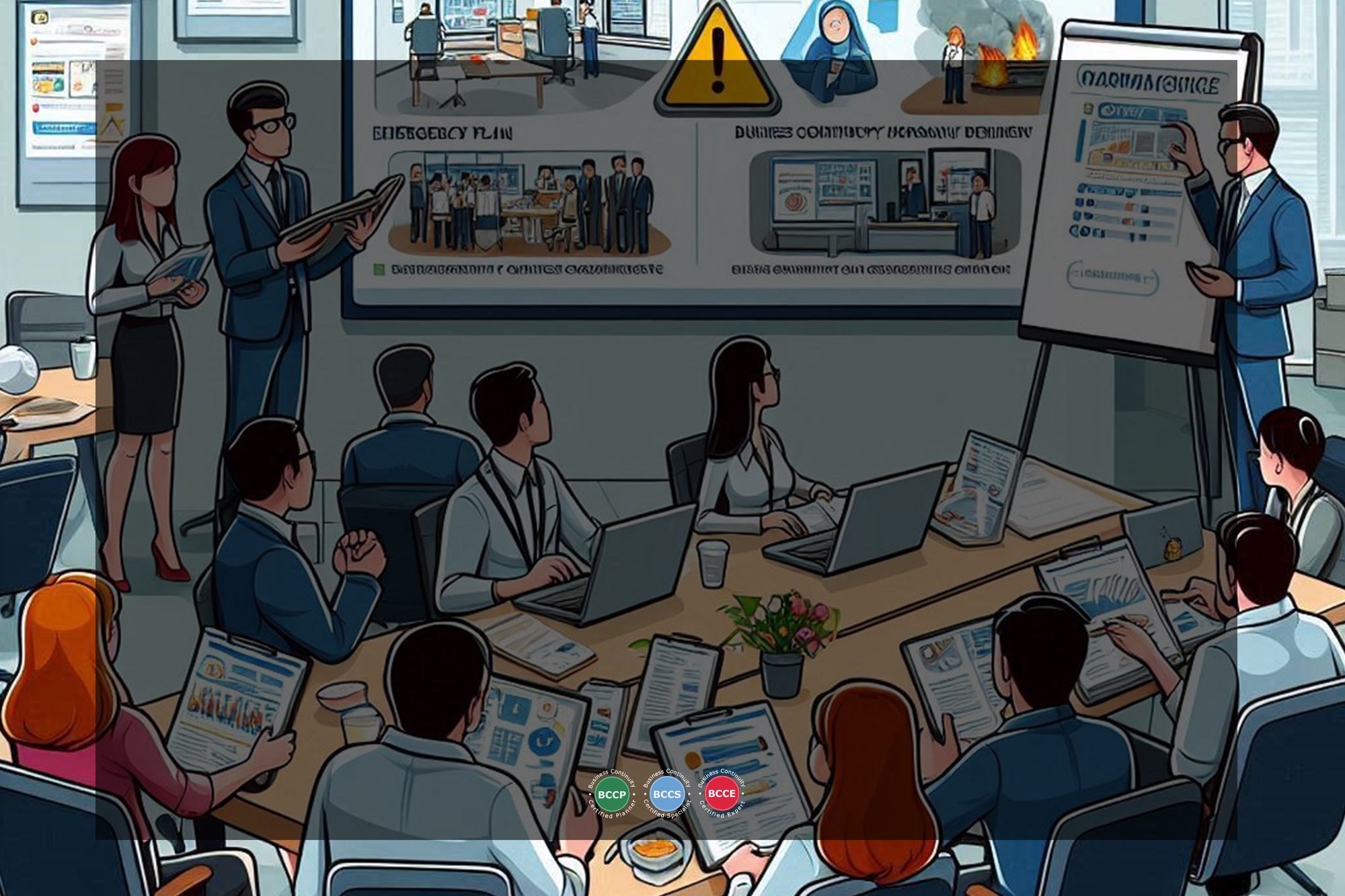



eBook 1: Chapter 5
Determining the SHINE's Business Continuity Assumptions for Implementing its Business Continuity Management
Introduction
![[BCM] [SHINE] [E1] [C5] Determining BC Assumptions](https://no-cache.hubspot.com/cta/default/3893111/20740bd7-cef6-42bf-a6f9-6b255b192c30.png)
Business Continuity Management (BCM) is a vital framework for ensuring that organisations can continue their critical operations even in the face of disruptions.
For SHINE Children and Youth Services, implementing BCM is integral to safeguarding its mission of providing support and care for children and youth facing various challenges.
This chapter discusses the key assumptions that SHINE must consider when implementing its BCM program to ensure that it can continue its critical services under adverse circumstances.
The Role of Business Continuity Assumptions
Business continuity assumptions form the foundational elements upon which a BCM program is built. These assumptions help organisations plan for various scenarios and ensure that all necessary resources, personnel, and processes are available when disruptions occur.
For SHINE, these assumptions help in aligning the BCM strategy with its mission of providing consistent, high-quality care for at-risk youth.
The assumptions provide a baseline for the organisation’s planning and decision-making process, influencing the prioritisation of resources and the identification of potential risks.
These assumptions should be realistic, adaptable, and based on current operational, environmental, and organisational conditions.
Key Assumptions for SHINE’s Business Continuity Management
Assumption of Resource Availability
SHINE assumes that its critical resources (human, technological, and financial) will be available in times of crisis. This includes the availability of qualified staff, adequate funding, and essential systems.
Any disruption in these resources will require the organisation to activate its contingency plans for resource allocation, including partnerships with external agencies for staffing support.
Assumption of Communication Networks
SHINE assumes that communication networks (both internal and external) will remain functional in the event of a disruption.
In the event of communication failure, SHINE will rely on pre-established alternative communication channels (e.g., text messaging, radio, or satellite phones).
Assumption of Legal and Regulatory Compliance
While some regulations may be temporarily modified during emergencies, SHINE must ensure that any changes do not compromise the safety or welfare of the children it serves.
This assumption will guide SHINE’s BCM planning, ensuring compliance with both governmental regulations and the policies set by the Ministry of Social and Family Development (MSF).
Assumption of Critical Partner Availability
It is assumed that these partners will be available to assist SHINE during an emergency.
In the case of partner unavailability, SHINE will need to activate its contingency plan to find alternative partners or redirect its resources to meet immediate needs.
Assumption of Public Safety and Security
The continuity of care in SHINE’s facilities and the protection of its staff and children depend on the timely response of these services in case of a disaster or security threat.
Assumption of Staff Training and Awareness
The staff is expected to be familiar with the emergency procedures and response protocols, ensuring that they can continue to deliver care effectively under challenging conditions.
Regular training exercises and awareness programs will be conducted to keep the staff prepared for emergencies.
Assumption of Operational Flexibility
This could mean adjusting service delivery methods (e.g., shifting from in-person to virtual counselling) or re-prioritising tasks depending on the nature of the disruption.
This assumption allows SHINE to continue delivering core services while adjusting to external challenges.
Assumption of Community Support
During emergencies, SHINE assumes that these community resources will continue to be available to provide additional support.
This may include increased donations, volunteers stepping in to fill gaps, and other forms of solidarity that allow SHINE to maintain its services to vulnerable children and families.
Assumption of Technological Infrastructure Resilience
In case of a technology failure, backup systems and manual processes will be activated to ensure that operations can continue smoothly.
Assumption of Mental Health and Emotional Resilience
Mental health and emotional support programs will be available to staff and clients during and after a crisis to ensure that all stakeholders remain resilient and able to return to normal operations as quickly as possible.
Scenario Planning Based on Assumptions
Once the business continuity assumptions are identified, SHINE will use them to develop and test various scenarios. These scenarios may involve disruptions such as natural disasters, public health emergencies, or cyber-attacks.
For each scenario, SHINE will ensure that the assumptions hold true or that alternative arrangements are made.
For example, if the assumption of resource availability is challenged (e.g., a staff shortage due to illness), SHINE will rely on its partner organisations or establish a temporary staffing arrangement.
Similarly, if communication networks fail, SHINE will activate its emergency communication protocols to ensure that staff and clients are still able to receive critical information.
![Banner [Summary] [BCM] [E1] [C5] Determining BC Assumptions](https://no-cache.hubspot.com/cta/default/3893111/87c25f72-9147-4348-97ea-6398766e5a72.png)
In conclusion, determining the business continuity assumptions is a crucial step in the BCM process for SHINE Children and Youth Services.
By understanding and planning for the resources, processes, and systems that are vital to its operations, SHINE ensures that it can continue delivering its services to children and youth in need, no matter the challenges it faces.
These assumptions, when coupled with detailed scenario testing and contingency planning, help SHINE maintain its mission of providing care and support to its vulnerable community, even during times of crisis.
![[BCM] [SHINE] [E1] [C1] Overview of BCM Implementation](https://no-cache.hubspot.com/cta/default/3893111/011ae09c-87e0-4185-a120-c84d90e3daa2.png)
![[BCM] [SHINE] [E1] [C2] Understanding Your Organisation](https://no-cache.hubspot.com/cta/default/3893111/9947c960-61f4-4dfe-a80e-66b1e76c4994.png)
![[BCM] [SHINE] [E1] [C3] Establishing Organisational Goals](https://no-cache.hubspot.com/cta/default/3893111/971c32b0-414e-412c-8f16-d1e39519ffcb.png)
![[BCM] [SHINE] [E1] [C4] Establishing Business Continuity Objectives](https://no-cache.hubspot.com/cta/default/3893111/a80d5d18-5d7b-4185-8bd3-29dd25b25862.png)
![[BCM] [SHINE] [E1] [C6] Composing BCM Team](https://no-cache.hubspot.com/cta/default/3893111/26eb0c4e-34c6-4a4a-800e-13ffaaf15a5c.png)
![[BCM] [SHINE] [E1] [C7] Analysing Operating Environment](https://no-cache.hubspot.com/cta/default/3893111/7eb3a76c-1a97-463f-a093-117ef05e33d7.png)
![[BCM] [SHINE] [E1] [C8] Implementing the BCM Planning Methodology](https://no-cache.hubspot.com/cta/default/3893111/e999ac05-faa5-4a64-b741-927d27817681.png)
![[BCM] [SHINE] [E1] [C9] Assessing Risks and Threats](https://no-cache.hubspot.com/cta/default/3893111/e0d77059-f6f7-42a1-b305-9f671d64ae0c.png)
![[BCM] [SHINE] [E1] [C10] Identifying Critical Business Functions](https://no-cache.hubspot.com/cta/default/3893111/6fba5a23-5e02-4368-aa88-65a252d4edd7.png)
![[BCM] [SHINE] [E1] [C11] Summary of Understanding Your Organisation](https://no-cache.hubspot.com/cta/default/3893111/753d02a0-7f47-4c5e-8898-0f49988f02c3.png)
![[BCM] [SHINE] [E1] [C12] [Back Cover] eBook 1](https://no-cache.hubspot.com/cta/default/3893111/d4f6ac75-f22f-4d68-b264-693367ca4bef.png)
More Information About Business Continuity Management Courses
To learn more about the course and schedule, click the buttons below for the BCM-300 Business Continuity Management Implementer [BCM-3] and the BCM-5000 Business Continuity Management Expert Implementer [BCM-5].


![Register [BL-B-3]*](https://no-cache.hubspot.com/cta/default/3893111/ac6cf073-4cdd-4541-91ed-889f731d5076.png)



![FAQ [BL-B-3]](https://no-cache.hubspot.com/cta/default/3893111/b3824ba1-7aa1-4eb6-bef8-94f57121c5ae.png)
![Email to Sales Team [BCM Institute]](https://no-cache.hubspot.com/cta/default/3893111/3c53daeb-2836-4843-b0e0-645baee2ab9e.png)


