


eBook 1: Chapter 10
What are the Hanwha Q CELLS Malaysia’s Critical Business Functions Concerning Business Continuity Management?

Organisation Context
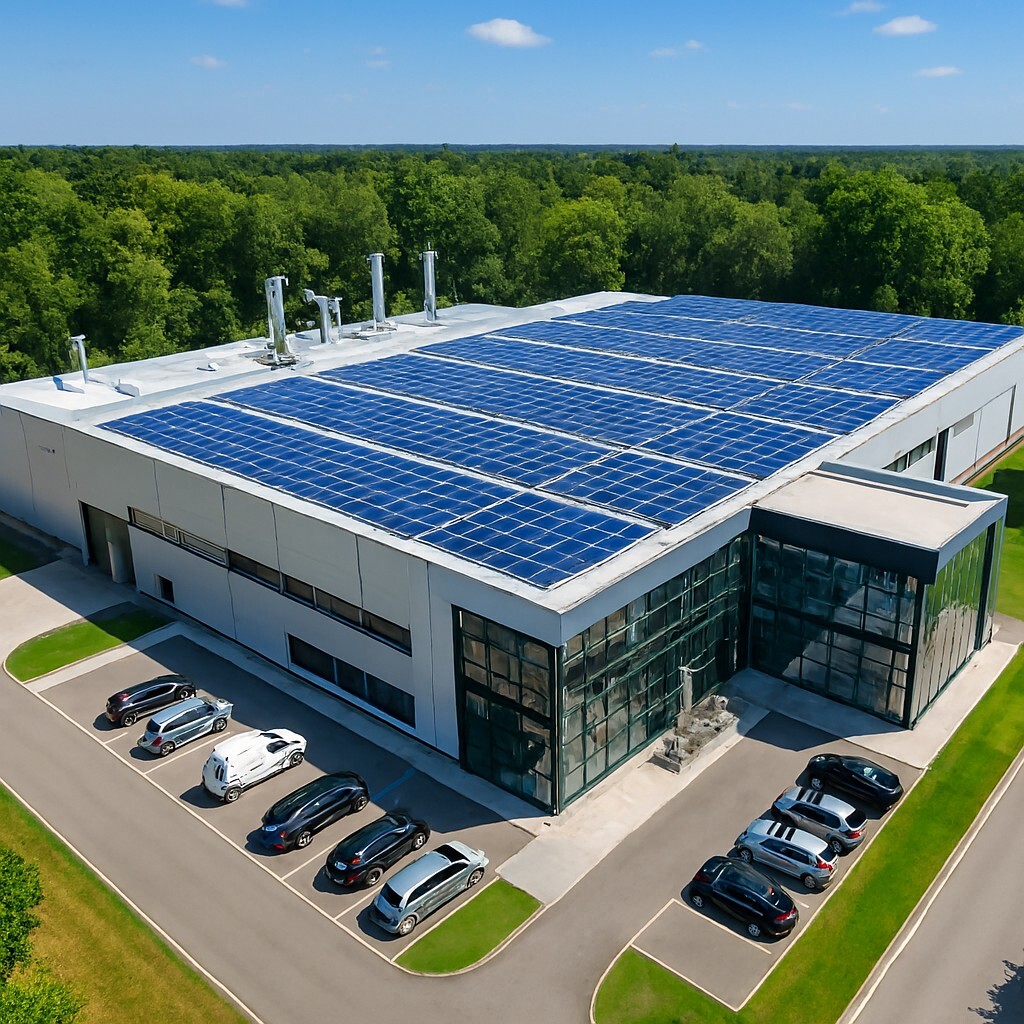
The organisation under study is Hanwha Q CELLS Malaysia Sdn. Bhd., a key manufacturing and operational arm of Hanwha Group, located in Cyberjaya, Selangor.
The facility plays a critical role in the global solar photovoltaic (PV) supply chain, producing high-efficiency solar cells and modules for international markets.
Purpose of This Chapter
 This chapter identifies the Critical Business Functions (CBFs) of Hanwha Q CELLS Malaysia in alignment with ISO 22301: Business Continuity Management Systems (BCMS) requirements, particularly:
- Clause 4: Context of the Organisation – Understanding internal and external dependencies
- Clause 8.2: Business Impact Analysis (BIA) – Identification of time-critical activities
- Clause 8.3: Risk Assessment – Understanding disruption scenarios
- Clause 8.4: Business Continuity Strategies and Solutions
The objective is to define priority functions whose disruption would significantly impact operations, revenue, regulatory compliance, or reputation.
Critical Business Functions (CBFs)
The following table presents the critical business functions of Hanwha Q CELLS Malaysia, structured to meet the requirements of ISO 22301.
|
CBF Code |
Critical Business Function |
Description of Function |
Key Outputs / Deliverables |
Impact if Disrupted (ISO 22301 BIA Perspective) |
|
CBF-1 |
Solar Cell Manufacturing Operations |
End-to-end production of photovoltaic (PV) cells, including wafer processing, diffusion, coating, metallization, and testing |
High-efficiency solar cells meeting global standards |
Immediate production halt; revenue loss; supply chain disruption; contractual penalties |
|
CBF-2 |
Module Assembly and Integration |
Assembly of solar cells into modules, including encapsulation, framing, junction box installation, and final testing |
Finished solar panels are ready for distribution |
Inability to fulfil customer orders; backlog accumulation; customer dissatisfaction |
|
CBF-3 |
Production Planning and Scheduling |
Planning of manufacturing runs, resource allocation, and throughput optimisation |
Production schedules and output targets |
Production inefficiencies; missed delivery timelines; operational bottlenecks |
|
CBF-4 |
Supply Chain and Procurement Management |
Sourcing of raw materials (silicon wafers, chemicals, glass, frames) and vendor management |
Timely availability of materials and supplier coordination |
Production stoppage due to material shortages, increased costs, and supplier dependency risk |
|
CBF-5 |
Quality Assurance and Testing |
Inspection, testing, and certification of solar cells and modules to meet international standards (e.g., IEC) |
Certified, compliant products |
Product defects; regulatory non-compliance; reputational damage; recalls |
|
CBF-6 |
Engineering and Maintenance |
Maintenance of production equipment, utilities, and automation systems; process engineering support |
Operational equipment uptime and process optimisation |
Equipment failure; production downtime; safety risks |
|
CBF-7 |
IT Systems and Manufacturing Execution Systems (MES) |
Management of IT infrastructure, MES, SCADA, and data systems supporting production and operations |
Real-time production monitoring and control |
Loss of operational visibility; production disruption; data integrity issues |
|
CBF-8 |
Utilities and Facility Management |
Provision of critical utilities (power, water, compressed air, HVAC, cleanroom environments) |
Stable operating environment for manufacturing |
Immediate halt of production; equipment damage; safety incidents |
|
CBF-9 |
Logistics and Distribution |
Warehousing, inventory management, and outbound shipment of finished goods |
On-time delivery to global customers |
Delivery delays, contractual penalties, and customer dissatisfaction |
|
CBF-10 |
Health, Safety, and Environmental (HSE) Management |
Management of workplace safety, hazardous materials, and environmental compliance |
Safe and compliant operations |
Regulatory breaches, worker injury, and plant shutdown by authorities |
|
CBF-11 |
Regulatory Compliance and Reporting |
Compliance with Malaysian regulations, export controls, and international standards |
Regulatory submissions and certifications |
Legal penalties, operational suspension, and reputational damage |
|
CBF-12 |
Human Resource Management and Workforce Availability |
Workforce planning, training, and staffing for production and support functions |
Skilled workforce availability |
Labour shortages; reduced productivity; inability to sustain operations |
|
CBF-13 |
Customer Order Management and Sales Coordination |
Processing customer orders, demand forecasting, and coordination with global sales teams |
Confirmed orders and customer communication |
Revenue loss; customer dissatisfaction; order cancellations |
|
CBF-14 |
Crisis Management and Business Continuity Coordination |
Activation of crisis response, incident management, and BC plans during disruptions |
Coordinated response and recovery actions |
Prolonged disruption; uncoordinated response; increased losses |
Alignment with ISO 22301 Requirements
The identification of the above CBFs supports the following ISO 22301 principles:
1. Business Impact Analysis (Clause 8.2)
- Each CBF represents a time-critical activity.
- Enables determination of:
- Maximum Acceptable Outage (MAO)
- Recovery Time Objective (RTO)
- Recovery Point Objective (RPO)
2. Risk Assessment (Clause 8.3)
- Each function is exposed to risks such as:
- Equipment failure (CBF-1, CBF-6)
- Supply chain disruption (CBF-4)
- Cyber incidents (CBF-7)
- Utility outages (CBF-8)
3. Business Continuity Strategies (Clause 8.4)
- Enables development of:
- Alternate suppliers (CBF-4)
- Backup utilities and redundancy (CBF-8)
- IT disaster recovery (CBF-7)
- Workforce contingency planning (CBF-12)
Key Observations for Hanwha Q CELLS Malaysia
- Manufacturing-centric criticality: Unlike banks, the most critical functions are production, utilities, and the supply chain.
- High dependency on utilities and precision engineering: Cleanroom and energy stability are essential.
- Global supply chain exposure: Disruptions upstream (materials) or downstream (logistics) have an immediate impact.
- Technology-driven operations: MES and automation systems are critical enablers.
- Regulatory and environmental sensitivity: HSE and compliance functions are non-negotiable.
![Banner [Summary] [BCM] [E1] [C10] Identifying Critical Business Functions](https://no-cache.hubspot.com/cta/default/3893111/0e59113c-d17a-48a8-8c28-bb1bcf487857.png)
For Hanwha Q CELLS Malaysia Sdn. Bhd., the identification of Critical Business Functions provides the foundation of its Business Continuity Management System (BCMS).
These functions represent the minimum set of operations that must be maintained or rapidly recovered to ensure organisational resilience.
By aligning these CBFs with ISO 22301 requirements, Hanwha Q CELLS Malaysia is positioned to:
- Prioritise recovery strategies effectively
- Allocate resources to high-impact areas
- Enhance preparedness for disruptions
- Strengthen its role in the global renewable energy supply chain
This structured identification is the first critical step toward conducting a detailed Business Impact Analysis and developing robust continuity and recovery strategies in subsequent chapters.

More Information About Business Continuity Management Courses
To learn more about the course and schedule, click the buttons below for the BCM-300 Business Continuity Management Implementer [BCM-3] and the BCM-5000 Business Continuity Management Expert Implementer [BCM-5].


![Register [BL-B-3]*](https://no-cache.hubspot.com/cta/default/3893111/ac6cf073-4cdd-4541-91ed-889f731d5076.png)



![FAQ [BL-B-3]](https://no-cache.hubspot.com/cta/default/3893111/b3824ba1-7aa1-4eb6-bef8-94f57121c5ae.png)
![Email to Sales Team [BCM Institute]](https://no-cache.hubspot.com/cta/default/3893111/3c53daeb-2836-4843-b0e0-645baee2ab9e.png)


