



eBook 2: Chapter 5
Business Continuity Strategy Phase of the BCM Planning Methodology for the Ministry of Manpower
Introduction
The Ministry of Manpower (MOM) is Singapore’s central agency tasked with shaping and safeguarding the nation’s workforce and workplace landscape.![[BCM] [MOM] [E2] [C5] Business Continuity Strategy](https://no-cache.hubspot.com/cta/default/3893111/9d56ef8b-f7b5-4011-abb4-de897b3cb9f3.png)
Its mission encompasses empowering Singaporeans in their careers, ensuring safe and equitable workplaces, and enabling businesses to thrive in a dynamic labour market.
MOM’s strategic functions span policy formulation, regulatory enforcement, workforce facilitation, and crisis preparedness.
Consequently, implementing Business Continuity Strategies is essential to ensure that MOM can sustain its critical services during disruptions—whether pandemics, cyber incidents, natural disasters, or extended system outages.
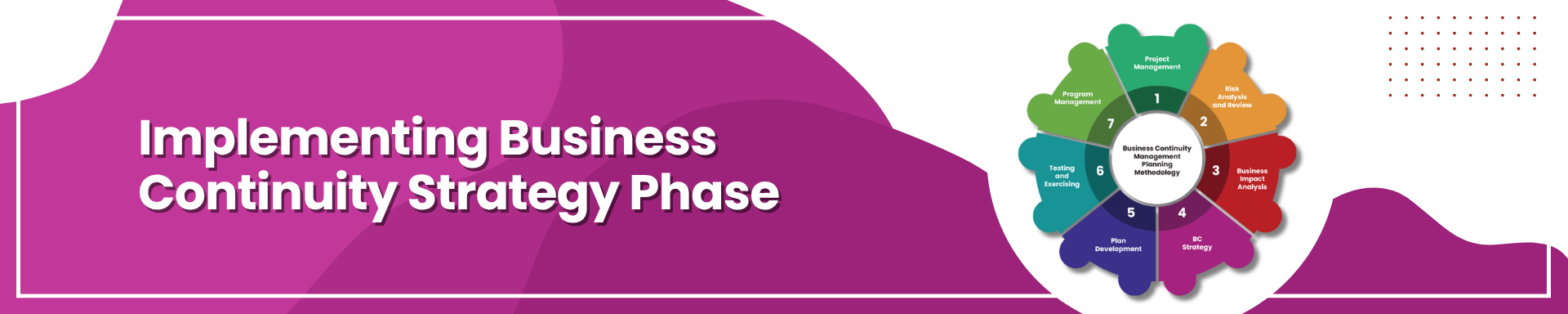
This chapter addresses how MOM operationalises mitigation, prevention, and recovery within the Business Continuity Strategy phase of its Business Continuity Management (BCM) Planning Methodology.
Purpose of the BC Strategy Phase
The Business Continuity Strategy phase builds on business impact analysis and risk assessments to define practical resilience solutions.
It involves translating risk insights into actionable strategies that enable MOM to sustain, adapt, and restore mission-critical functions in the face of disruptions. Key strategy categories include:
- Prevention: Actions to avert disruptions where possible.
- Mitigation: Measures to lessen the severity and impact of unavoidable disruptions.
- Recovery: Mechanisms to restore operations and services to acceptable levels post-disruption.
These strategies must be scalable, tailored to MOM’s services, and aligned with whole-of-government resilience planning.
Prevention Strategies
Strengthening Workforce Preparedness
MOM’s people—policy makers, inspectors, and operational staff—are central to service continuity. To prevent disruptions caused by workforce incapacity:
- Cross-training and role redundancy: Key roles across divisions (e.g., Work Pass Division, Occupational Safety and Health Division) are backstopped by trained personnel who can seamlessly step in when primary staff are unavailable.
- Regular awareness & training drills: The Security and Preparedness Department (SPD) conducts preparedness exercises, enabling staff to anticipate challenges and embed a continuity mindset into daily operations.
These measures not only prepare staff for unexpected events but also enhance organisational agility.
Cybersecurity and Data Protection
As with many modern public agencies, MOM is heavily reliant on digital platforms—whether for work pass processing, workforce data, or internal communications. Preventive strategies include:
- Robust cybersecurity protocols: Continuous monitoring, threat detection, and patch management to block potential cyber threats before they escalate.
- Data backups and secure storage: Regular backups of critical databases to isolated systems to ensure data integrity in case of breaches.
These initiatives help prevent system outages and protect sensitive information critical to operations.
Mitigation Strategies
Mitigation strategies aim to reduce the adverse impact when disruptions occur.
Alternative Working Arrangements
During the COVID-19 pandemic, MOM guided employers on safe management practices and remote work measures to ensure workforce resilience and safety.
Within MOM, mitigation includes:
- Hybrid work protocols: Identifying functions that can continue remotely, and supplying secure remote access tools to minimise service lapses during facility closures.
- Workforce cohorting: Segmenting staff into teams that minimise physical interaction, reducing contagion risk while preserving operational outputs.
Redundant Infrastructure and Technology
MOM ensures continuity of key business functions such as work pass issuance and labour regulation enforcement through:
- Backup systems and failover IT infrastructure that kick in during primary system failure.
- Cloud-hosted services and multi-site provisioning to rapidly shift operations when local systems are compromised.
Resilient infrastructure mitigates the duration and severity of disruptions, supporting near-continuous operation where feasible.
Recovery Strategies
Recovery strategies define how MOM restores normal or acceptable operations after a disruption, with a focus on timeliness, stakeholder communication, and resource mobilisation.
Multilevel Recovery Planning
Each critical business unit within MOM maintains tailored recovery protocols that specify:
- Priority functions: Identifying essential processes (e.g., work pass issuance, workplace safety enforcement) that require rapid resumption.
- Recovery Time Objectives (RTOs): Timelines within which services must be restored to minimise impacts on the public and economy.
- Dependency maps: Identifying interdependencies between systems, stakeholders, and external agencies to optimise sequencing during recovery.
These recovery frameworks ensure structured restoration while maintaining alignment with the Ministry’s mission.
Communication and Stakeholder Engagement
Transparent internal and external communication plays a pivotal role in recovery efforts:
- Internal command and reporting channels: Fast escalation and coordination within MOM, facilitated by established hierarchies and crisis communication tools.
- Public communications: Official updates to the public and stakeholders via MOM channels (e.g., website, press releases) to clarify service expectations and timelines.
Effective communication reinforces trust and ensures coordinated recovery activity across government and partners.
Integrated Example: Pandemic Response
The COVID-19 pandemic tested MOM’s continuity and resilience capacities. As part of its continuity strategies:
- MOM supported businesses by issuing advisories on telecommuting and safe workplace measures, enabling employers to align with regulations while mitigating workforce risks.
- Within MOM, hybrid working arrangements and technology platforms ensured that core regulatory and support functions could continue even during office closures or restricted movements.
This demonstrates how prevention (policies and advisories), mitigation (remote working protocols), and recovery (service restoration after peak disruption) synergise to sustain MOM’s essential services under strain.
Continuous Improvement and Strategic Refinement
Implementing business continuity strategies is not static—it includes ongoing review, testing, and enhancement:
- Regular review cycles to update continuity plans in response to emerging risks.
- Crisis simulations and exercises coordinated by SPD to test real-world readiness and refine strategies.
- Lessons learned from past events to strengthen future responses.
These mechanisms ensure that MOM’s continuity plans remain relevant, proactive, and resilient.
![Banner [Summary] [BCM] [E2] [C5] Business Continuity Strategy](https://no-cache.hubspot.com/cta/default/3893111/ca7fd7d5-8923-46f4-b420-08a7eca83bdb.png)
The implementation phase of MOM’s Business Continuity Strategy ensures that the Ministry’s services remain robust in the face of uncertainty.
By systematically embedding prevention, mitigation, and recovery strategies—supported by workforce readiness, technology resilience, and integrated recovery plans—MOM reinforces its ability to serve Singapore’s workforce and business community without significant interruption.
This strategic phase exemplifies practical resilience that is both structured and adaptive, upholding MOM’s mission across all operating conditions.
![[BCM] [MOM] [E2] [C1] Business Continuity Management Planning Methodology](https://no-cache.hubspot.com/cta/default/3893111/c61b9602-b529-466a-8e50-1ecafcecf3c2.png)
![[BCM] [MOM] [E2] [C2] Project Management](https://no-cache.hubspot.com/cta/default/3893111/135e6f92-2d77-4b8a-8cde-fb9d2334d138.png)
![[BCM] [MOM] [E2] [C3] Risk Analysis and Review](https://no-cache.hubspot.com/cta/default/3893111/d90d6411-35a1-4c8d-84df-8a750fcd2132.png)
![[BCM] [MOM] [E2] [C4] Business Impact Analysis](https://no-cache.hubspot.com/cta/default/3893111/db8894ff-5924-44d3-a069-0bcd5d76fa56.png)
![[BCM] [MOM] [E2] [C6] BCM Plan Development](https://no-cache.hubspot.com/cta/default/3893111/4263c96d-afac-4848-9ae1-d7f4de5991a6.png)
![[BCM] [MOM] [E2] [C7] Testing and Exercising](https://no-cache.hubspot.com/cta/default/3893111/a49b6ccf-0c3a-4edb-a860-5e9ad3bfb253.png)
![[BCM] [MOM] [E2] [C8] Program Management](https://no-cache.hubspot.com/cta/default/3893111/8f25db36-e21c-4d40-90c0-f3d28a6c2a84.png)
![[BCM] [MOM] [E2] [C9] Summary](https://no-cache.hubspot.com/cta/default/3893111/1ef7f4d6-ba8a-440f-931d-35517cd29fa9.png)
![[BCM] [MOM] [E2] [C10] Back Cover for BCM](https://no-cache.hubspot.com/cta/default/3893111/b21681d9-63d8-4ca6-9e2d-d87b27398714.png)
More Information About Business Continuity Management Courses
To learn more about the course and schedule, click the buttons below for the BCM-300 Business Continuity Management Implementer [BCM-3] and the BCM-5000 Business Continuity Management Expert Implementer [BCM-5].


![Register [BL-B-3]*](https://no-cache.hubspot.com/cta/default/3893111/ac6cf073-4cdd-4541-91ed-889f731d5076.png)



![FAQ [BL-B-3]](https://no-cache.hubspot.com/cta/default/3893111/b3824ba1-7aa1-4eb6-bef8-94f57121c5ae.png)
![Email to Sales Team [BCM Institute]](https://no-cache.hubspot.com/cta/default/3893111/3c53daeb-2836-4843-b0e0-645baee2ab9e.png)


