



eBook 2: Chapter 4
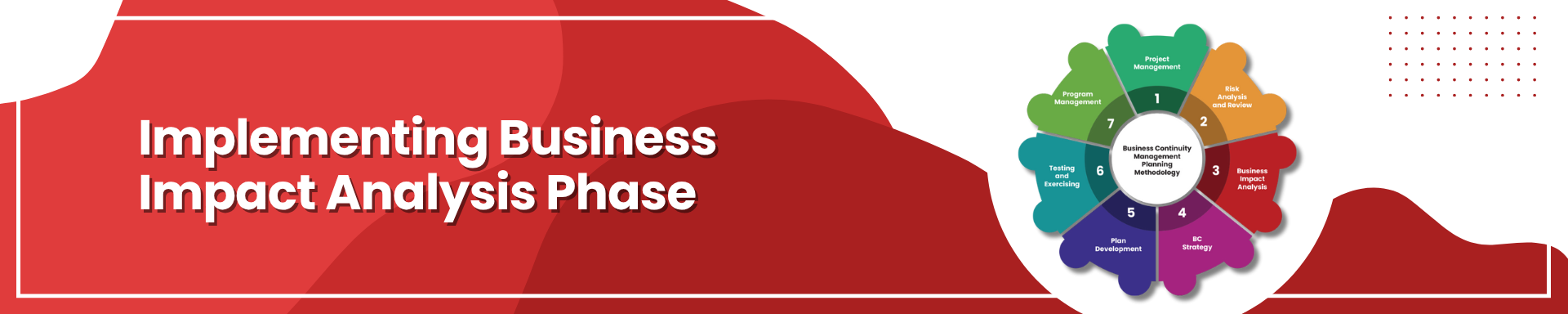
Implementing the Business Impact Analysis Phase in MINDS’ BCM Planning Methodology
Introduction
![[BCM] [MINDS] [E2] [C4] Business Impact Analysis](https://no-cache.hubspot.com/cta/default/3893111/e63b8af3-8a55-42c5-924a-5a3cd7b03a5e.png)
Business Continuity Management (BCM) ensures that essential functions and services continue during and after disruptive incidents. At the heart of BCM is the Business Impact Analysis (BIA)—a structured process for identifying and evaluating the potential effects of interruptions to MINDS’ key services and operations.
As one of Singapore’s largest and longest-standing social service organisations serving Persons With Intellectual Disabilities (PWIDs) and their families across the lifespan, MINDS delivers a wide range of programmes—educational, vocational, residential, healthcare, and community services—that must remain resilient in the face of disruptive events.
The BIA phase sets the foundation for effective continuity strategies and should be conducted with the organisation’s mission and service-critical nature in mind.
Purpose and Scope of the BIA for MINDS
The purpose of conducting a BIA at MINDS is to:
- Identify mission-critical services and functions whose disruption would severely impact PWIDs and caregivers.
- Determine risk tolerance thresholds for downtime based on client needs, regulatory requirements, and organisational goals.
- Prioritise resources and continuity efforts to protect lives, well-being, client trust, legal obligations, and reputation.
The scope of the BIA must cover the full spectrum of MINDS’ operations, including:
- Special Education Schools
- Employment Development Centres and Training & Development Centres
- Residential Homes and Community-based Services
- Medical and Therapy Services
- Caregiver Support Programmes
- Home-Based Care Services and Outreach Activities
- Research, Training, and Advocacy Functions
- Volunteers and Social Enterprise Units
This broad scope helps ensure that no essential service that directly affects clients and caregivers is overlooked.
Key Activities in the BIA Process
Establishing the BIA Team
A multidisciplinary team should be set up under BCM governance, including members from:
- Executive and Operational Leadership
- Service Delivery and Programme Managers
- Human Resources, Finance, and IT
- Healthcare/Allied Health Leads
- Residential and School Programmes
- Risk and Compliance Functions
Given the diversity of programmes in MINDS—education, vocational training, health services, befriending and caregiver support services—the team must represent all stakeholder groups.
Mapping Critical Services and Dependencies
Using stakeholder interviews, service documentation, facility visits and data reviews, the BIA team should:
- Document service workflows and interdependencies (e.g., transport, staff ratios, IT systems, medical facilities).
- Identify critical resources required for operation (people, facilities, equipment, data systems, and third-party partners).
- Understand peak demand periods, such as school terms, vocational training schedules and caregiver support sessions.
This activity helps MINDS visualise how each programme functions under normal and stressed conditions.
Assessing Impact on Clients and Operations
For each key service, assess the effects of disruption across multiple dimensions:
|
Impact Dimension |
Examples for MINDS Context |
|
Client Well-being and Safety |
Delay in medical/therapy services or interruption to residential care risks client health and caregiver stress. |
|
Regulatory / Legal |
Special education and healthcare programmes have compliance obligations. |
|
Operational |
Loss of transport services affects attendance at schools and centres. |
|
Reputation & Trust |
Families rely on continuity of services and communication during an incident. |
|
Financial |
Loss of revenue from social enterprises or partner funding affects sustainability. |
Each service should have a quantified impact rating (e.g., High/Medium/Low) and an estimated maximum tolerable downtime (MTD) before significant harm occurs. Stakeholder interviews with service leads and caregivers are crucial for accurate assessment.
Determining Recovery Time Objectives (RTOs) and Recovery Point Objectives (RPOs)
- RTO (Recovery Time Objective): The maximum acceptable time that a function can be unavailable.
- RPO (Recovery Point Objective): The maximum acceptable data loss measured in time.
For example, residential care and medical services may have very low tolerance for downtime; education programmes might tolerate short interruptions with timely adjustment. RTOs and RPOs must reflect the client-centric and safety-critical nature of many MINDS programmes.
Documenting BIA Findings
The BIA outputs should be compiled into a formal report, including:
- Service prioritisation list
- Impact ratings and description
- RTO and RPO values per service
- Dependencies and critical resource lists
- Vulnerabilities and risk areas
This report becomes a cornerstone for the strategy development and continuity planning phases that follow.
Tailoring MINDS-Specific Continuity Requirements
Given MINDS’ mandate to ensure continuity of care across the lifespan of PWIDs and their families, the BIA must consider:
Client Safety and Welfare
MINDS’ services often involve vulnerable individuals who depend on routine, supervision, and specialised support (e.g., residential care, behavioural therapy).
Any disruption—such as power outages, staff shortages, or facility closures—affects safety and mental well-being. Continuity plans must prioritise safe environments and care continuity.
Regulatory and Compliance Obligations
Special education and healthcare services provided by MINDS are subject to education and health regulatory frameworks. The BIA should identify compliance risks that arise from service interruptions and include those in impact assessments.
Accessibility and Transport
Clients often require transport to and from schools, centres, and events. Disruption of transport services has cascading impacts on attendance and caregiver burden, and should be explicitly accounted for.
Volunteer and Partner Roles
MINDS relies on volunteers (e.g., through MINDS MYG) and community partners for befriending programmes and activities.
The BIA should map these roles and their impact on service delivery when volunteers or partners are unavailable.
Integrating BIA Outputs into BCM and Organisational Culture
The BIA findings should be:
- Built into organisational risk registers
- Used to guide continuity strategies and investment decisions
- Aligned with training, crisis communication plans, and IT resilience planning
- Communicated across MINDS teams to foster a continuity-aware culture
![Banner [Summary] [BCM] [E2] [C4] Business Impact Analysis](https://no-cache.hubspot.com/cta/default/3893111/3d259877-5780-4502-9473-1129f6d08a8c.png)
The Business Impact Analysis is a pivotal step in strengthening MINDS’ resilience against service disruptions.
By systematically identifying critical functions, evaluating impacts, and setting clear recovery objectives, MINDS will be better positioned to sustain its mission of empowering PWIDs and supporting their families, regardless of internal or external shocks.
![[BCM] [MINDS] [E2] [C1] Business Continuity Management Planning Methodology](https://no-cache.hubspot.com/cta/default/3893111/9dcfe7d6-9606-4a86-9e17-4b28d8096760.png)
![[BCM] [MINDS] [E2] [C2] Project Management](https://no-cache.hubspot.com/cta/default/3893111/fcc02778-e6c8-422c-b145-9673c76b0aa6.png)
![[BCM] [MINDS] [E2] [C3] Risk Analysis and Review](https://no-cache.hubspot.com/cta/default/3893111/748f3362-cad1-4149-887f-2b15d14c6e7a.png)
![[BCM] [MINDS] [E2] [C5] Business Continuity Strategy](https://no-cache.hubspot.com/cta/default/3893111/ff357894-8634-4359-8455-e77d0431e6fc.png)
![[BCM] [MINDS] [E2] [C6] BCM Plan Development](https://no-cache.hubspot.com/cta/default/3893111/f1e70ff9-89d1-45e6-a13f-e7e316b86408.png)
![[BCM] [MINDS] [E2] [C7] Testing and Exercising](https://no-cache.hubspot.com/cta/default/3893111/0af72953-42f6-4d2a-a840-4a09fcc90c85.png)
![[BCM] [MINDS] [E2] [C8] Program Management](https://no-cache.hubspot.com/cta/default/3893111/432a0769-4329-4f6e-8a75-9e943fbd0e50.png)
![[BCM] [MINDS] [E2] [C9] Summary](https://no-cache.hubspot.com/cta/default/3893111/8dc20aa4-cb9b-4714-8a8f-d7be5fa53934.png)
![[BCM] [MINDS] [E2] [C10] Back Cover of eBook 2](https://no-cache.hubspot.com/cta/default/3893111/a8280fb5-92e6-48be-bc16-7049d5ceeec3.png)
More Information About Business Continuity Management Courses
To learn more about the course and schedule, click the buttons below for the BCM-300 Business Continuity Management Implementer [BCM-3] and the BCM-5000 Business Continuity Management Expert Implementer [BCM-5].


![Register [BL-B-3]*](https://no-cache.hubspot.com/cta/default/3893111/ac6cf073-4cdd-4541-91ed-889f731d5076.png)



![FAQ [BL-B-3]](https://no-cache.hubspot.com/cta/default/3893111/b3824ba1-7aa1-4eb6-bef8-94f57121c5ae.png)
![Email to Sales Team [BCM Institute]](https://no-cache.hubspot.com/cta/default/3893111/3c53daeb-2836-4843-b0e0-645baee2ab9e.png)


