

![[BCM] [KKH] [Full Banner] Implementing Business Continuity Management for KKH](https://no-cache.hubspot.com/cta/default/3893111/1f88d53c-b518-44bc-a9d0-ba7d040b5378.png)
![Banner [BCM] [E3] [BIA] [P2] Impact Area of Business Functions](https://no-cache.hubspot.com/cta/default/3893111/182e67c2-aa89-4b0b-b3e9-144293680ea4.png)

CBF-1 Emergency Obstetric Processes
![[BCM] [KKH] [E3] [BIA] [T2] [CBF] [1] Emergency Obstetric Services](https://no-cache.hubspot.com/cta/default/3893111/0724500a-3544-46b8-af30-f31b292e5eb9.png)
Following the identification of the Sub-Critical Business Functions (Sub-CBFs) supporting Emergency Obstetric Services, the next stage of the Business Impact Analysis (BIA) is to assess the consequences of disruption to each function.
This assessment enables KKH to understand how interruptions affect the delivery of life-saving maternal and neonatal services, patient safety, clinical outcomes, regulatory obligations, and hospital operations.
Business impacts should be evaluated across impact areas, as each Sub-CBF contributes differently to the overall service.
While some functions have the greatest effect on clinical operations and patient safety, others primarily affect regulatory compliance, information integrity, resource availability, or multidisciplinary coordination.
Evaluating each impact area separately provides a more accurate understanding of organisational risk and helps ensure that continuity strategies address the most critical operational vulnerabilities.
Impact assessment also supports the prioritisation of recovery activities.
By estimating potential financial losses, identifying the Business Unit Minimum Business Continuity Objectives (BU MBCOs) that would be affected, and documenting the operational consequences of disruption, KKH can establish appropriate Recovery Time Objectives (RTOs), allocate critical resources effectively, develop practical Business Continuity Plans (BCPs), and strengthen operational resilience for emergency obstetric services.
![Banner [Table] [BCM] [E3] [BIA] [P2] Impact Areas of Business Functions [BIAQ]](https://no-cache.hubspot.com/cta/default/3893111/91582408-03ad-40e1-90e8-43ce62079aa6.png)
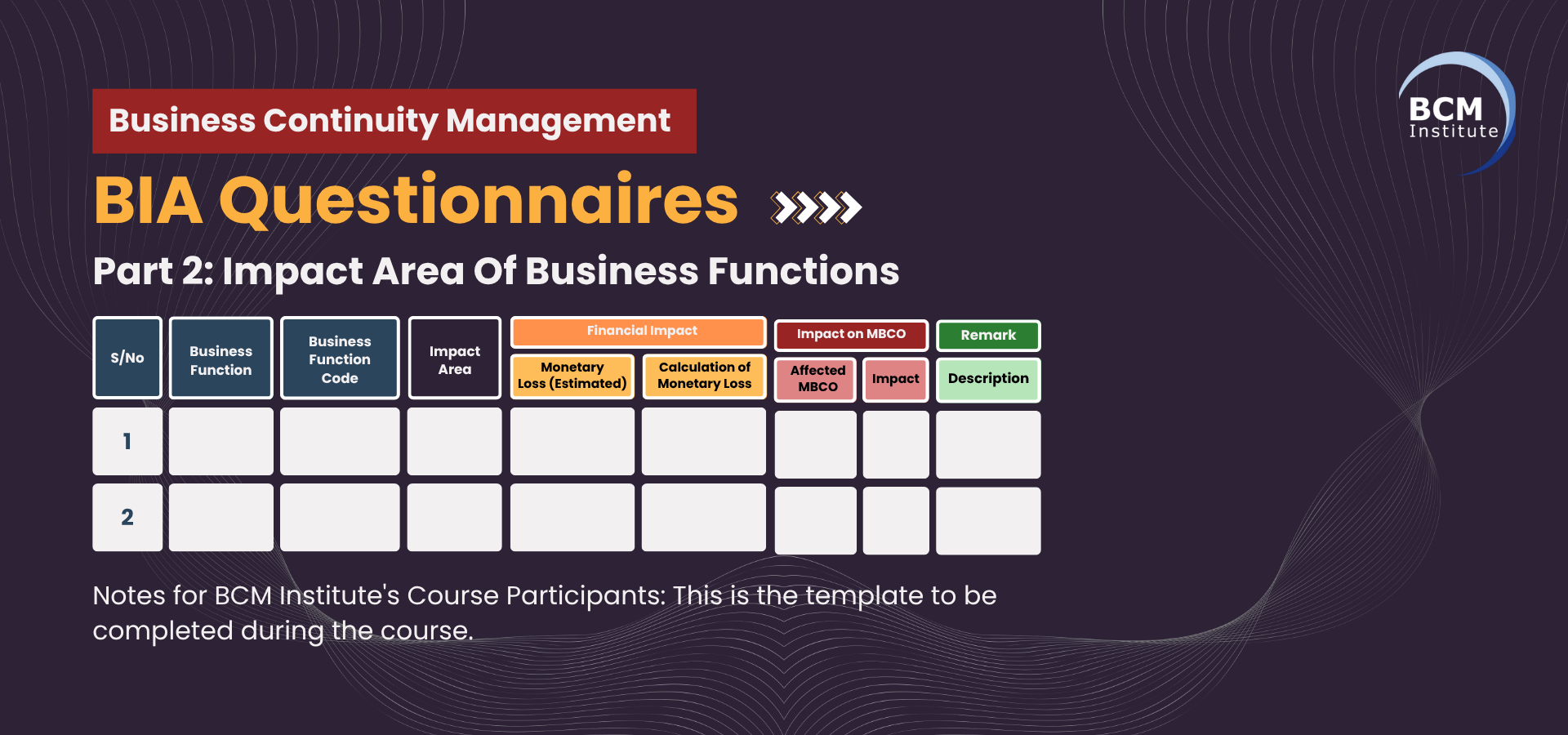
Table P2: Impact Area Assessment for CBF-1
|
Sub-CBF Code |
Sub-Critical Business Function |
Impact Area |
Financial Impact – Monetary Loss (Estimated) |
Financial Impact – Calculation Formula |
Impact on BU MBCO – Affected MBCO |
Impact on BU MBCO – Business Impact |
Remarks / Description |
|
1.1 |
Emergency Patient Arrival and Registration |
Operational |
S$20,000–40,000/day |
Additional staffing + manual registration cost + ambulance diversion cost |
Ability to register and admit all emergency obstetric patients |
Delays in patient identification and commencement of emergency treatment |
Increased waiting time, patient diversion, higher clinical risk and administrative backlog. |
|
1.2 |
Obstetric Triage and Clinical Prioritisation |
Operational |
S$80,000–150,000/day |
Clinical delay cost + additional emergency intervention cost |
Continuous triage of all emergency obstetric patients |
Critical cases may not receive immediate assessment, increasing maternal and fetal risk |
Potential deterioration before treatment and increased emergency resource utilisation. |
|
1.3 |
Emergency Clinical Assessment |
Clinical / Operational |
S$120,000–250,000/day |
Additional treatment cost + delayed diagnosis cost + specialist overtime |
Timely specialist assessment for all high-priority patients |
Delay in diagnosis and treatment planning may compromise patient outcomes |
Significant increase in clinical complications and prolonged hospitalisation. |
|
1.4 |
Diagnostic and Laboratory Support |
Technology |
S$100,000–200,000/day |
Laboratory service disruption cost + outsourced diagnostic services + recovery cost |
Availability of essential laboratory and diagnostic services |
Clinical decisions cannot be made promptly due to unavailable diagnostic results |
Delayed surgery, transfusion, and emergency interventions. |
|
1.5 |
Emergency Obstetric Decision-Making |
Operational |
S$150,000–300,000/day |
Specialist decision delay cost + additional treatment cost |
Availability of senior obstetric decision-making |
Inability to authorise timely emergency interventions |
Increased risk of maternal and neonatal morbidity with possible legal consequences. |
|
1.6 |
Emergency Theatre Preparation |
Operational |
S$250,000–450,000/day |
Theatre downtime + emergency resource mobilisation + external support cost |
Availability of at least one emergency obstetric operating theatre |
Emergency surgical procedures cannot commence within required clinical timeframes |
High risk of surgical delays affecting maternal and fetal survival. |
|
1.7 |
Emergency Obstetric Surgery and Delivery |
Customer / Stakeholder |
S$500,000–1,000,000/day |
Emergency surgery delay cost + medico-legal exposure + recovery cost |
Capability to perform emergency obstetric surgery |
Life-saving surgical interventions cannot be delivered when clinically required |
Severe patient safety implications with substantial reputational and legal exposure. |
|
1.8 |
Anaesthesia and Perioperative Care |
Human Resources |
S$300,000–600,000/day |
Anaesthetist replacement cost + cancelled procedures + overtime |
Continuous emergency anaesthetic support |
Surgical procedures cannot proceed safely due to lack of anaesthetic services |
Significant reduction in emergency surgical capacity. |
|
1.9 |
Neonatal Emergency Support |
Customer / Stakeholder |
S$250,000–500,000/day |
Neonatal intensive care cost + emergency transfer + specialist support |
Neonatal resuscitation capability |
Compromised ability to stabilise newborns immediately after delivery |
Increased neonatal morbidity and urgent transfer to external facilities. |
|
1.10 |
Maternal Critical Care and Stabilisation |
Operational |
S$350,000–700,000/day |
ICU/HDU treatment cost + emergency intervention + prolonged admission |
Stabilisation of critically ill mothers |
High-risk mothers cannot receive appropriate post-operative critical care |
Increased mortality risk and prolonged recovery periods. |
|
1.11 |
Blood Products and Medication Management |
Third-Party Dependency |
S$400,000–800,000/day |
Emergency blood procurement + pharmaceutical replacement + logistics cost |
Availability of blood products and emergency medications |
Life-saving transfusions and medications become unavailable or delayed |
Immediate impact on haemorrhage management and emergency surgery. |
|
1.12 |
Clinical Communication and Care Coordination |
Information |
S$100,000–250,000/day |
Communication failure recovery + operational delay + coordination cost |
Reliable multidisciplinary communication |
Clinical teams cannot coordinate emergency patient management effectively |
Increased treatment delays and greater likelihood of clinical errors. |
|
1.13 |
Patient Monitoring and Ongoing Clinical Management |
Technology |
S$180,000–350,000/day |
Monitoring equipment replacement + extended admission cost |
Continuous monitoring of high-risk patients |
Clinical deterioration may not be detected promptly |
Increased adverse clinical events and longer inpatient stays. |
|
1.14 |
Patient Transfer and Continuity of Care |
Operational |
S$80,000–180,000/day |
Additional transport cost + bed management inefficiency + overtime |
Safe transfer to appropriate care units |
Delays in transferring patients reduce treatment capacity and continuity of care |
Bed shortages, congestion and delayed admissions for new emergency cases. |
|
1.15 |
Clinical Documentation and Regulatory Reporting |
Regulatory |
S$50,000–120,000/day |
Documentation recovery cost + compliance remediation + audit cost |
Accurate clinical documentation and regulatory reporting |
Clinical records become incomplete, delayed or unavailable |
Regulatory non-compliance, medico-legal exposure and compromised continuity of care. |
![Banner [BCM] [E3] [BIA] [Summing Up] [P2] Impact Areas of Business Functions [BIAQ]](https://no-cache.hubspot.com/cta/default/3893111/76188041-e1c9-43d9-8efa-e550f46ad04d.png)
Assessing the impact of disruptions to each Sub-Critical Business Function provides KKH with a structured understanding of how Emergency Obstetric Services could be affected during operational incidents.
The analysis identifies where disruptions create the greatest risks to patient safety, clinical service delivery, regulatory compliance, and hospital operations, enabling management to focus continuity efforts on the most critical functions.
Indicative financial impact estimates provide an additional dimension for decision-making by quantifying the potential cost of service interruptions.
Although these estimates are intended for Business Impact Analysis rather than financial accounting, they help justify investments in resilience measures, contingency resources, and recovery capabilities.
The findings from this impact assessment directly support the establishment of Recovery Time Objectives (RTOs), prioritisation of recovery activities, allocation of critical resources, development of Business Continuity Strategies, and preparation of Business Continuity Plans (BCPs).
By understanding the operational, financial, regulatory, and stakeholder consequences associated with each Sub-CBF, KKH can strengthen its ability to sustain essential emergency obstetric services during disruptive events while enhancing overall organisational resilience.
![[BCM] [KKH] [3/4 Banner] Implementing Business Continuity Management for KKH](https://no-cache.hubspot.com/cta/default/3893111/141669d3-f654-4e57-9ccd-2d2ab49f536d.png)
![BCM] [KKH] [E3] [BIA] MBCO Corporate MBCO](https://no-cache.hubspot.com/cta/default/3893111/55ac38bc-d349-4faf-a6dc-cbc3d3f5431b.png)
![BCM] [KKH] [E3] [BIA] [PS] Key Product and Services](https://no-cache.hubspot.com/cta/default/3893111/b28ee275-3bf7-4832-a3a0-0bcca82d2522.png)
![BCM] [KKH] [E3] [RAR] [T1] List of Threats](https://no-cache.hubspot.com/cta/default/3893111/684e108e-12b3-4872-99e4-6b61ce39596e.png)
![BCM] [KKH] [E3] [RAR] [T2] Treatment and Control](https://no-cache.hubspot.com/cta/default/3893111/6c690eb5-e7da-4206-ac6b-fb88a8966a69.png)
![BCM] [KKH] [E3] [RAR] [T3] Risk Impact and Likelihood Assessment](https://no-cache.hubspot.com/cta/default/3893111/a9730f15-ebd1-4e30-b308-6d574be794a1.png)
![BCM] [KKH] [E3] [BCS] [T1] Mitigation Strategies and Justification](https://no-cache.hubspot.com/cta/default/3893111/28b77d9a-b16b-44e7-9abf-965d3db4f803.png)
![[BCM] [KKH] [E1] [C10] Identifying Critical Business Functions](https://no-cache.hubspot.com/cta/default/3893111/0d1cbf1e-59f6-43c8-a15e-6b34233e632f.png)
![[BCM] [KKH] [E3] [BIA] [DP] [CBF] [1] Emergency Obstetric Services](https://no-cache.hubspot.com/cta/default/3893111/e497eed8-773b-4e86-bbf8-8e9c3032365b.png)
![[BCM] [KKH] [E3] [BIA] [T1] [CBF] [1] Emergency Obstetric Services](https://no-cache.hubspot.com/cta/default/3893111/7bda08a6-461a-4c89-8806-4d6d1216e9f4.png)
![[BCM] [KKH] [E3] [BIA] [T3] [CBF] [1] Emergency Obstetric Services](https://no-cache.hubspot.com/cta/default/3893111/dc455c8b-0db4-45c4-8f33-e81d69d35344.png)
![[BCM] [KKH] [E3] [BIA] [T4] [CBF] [1] Emergency Obstetric Services](https://no-cache.hubspot.com/cta/default/3893111/f4e64c69-124b-40a8-b224-dded90e5631b.png)
![[BCM] [KKH] [E3] [BIA] [T5] [CBF] [1] Emergency Obstetric Services](https://no-cache.hubspot.com/cta/default/3893111/f6eaac47-7206-4cba-b6f4-b58245fa9111.png)
![[BCM] [KKH] [E3] [BIA] [T6] [CBF] [1] Emergency Obstetric Services](https://no-cache.hubspot.com/cta/default/3893111/5aa80ea6-6214-44b6-92a2-4156d7d4cfe5.png)
![[BCM] [KKH] [E3] [BCS] [T2] [CBF] [1] Emergency Obstetric Services](https://no-cache.hubspot.com/cta/default/3893111/8d32e264-3e43-4d37-be2a-1382e798c916.png)
![[BCM] [KKH] [E3] [BCS] [T3] [CBF] [1] Emergency Obstetric Services](https://no-cache.hubspot.com/cta/default/3893111/b53ff102-21b1-4f31-b47e-5b721028ee65.png)
![[BCM] [KKH] [E3] [PD] [CBF] [1] Emergency Obstetric Services](https://no-cache.hubspot.com/cta/default/3893111/f9da91f2-6ad8-4c19-b25f-ef7b136c8a04.png)
More Information About Business Continuity Management Courses
To learn more about the course and schedule, click the buttons below for the BCM-300 Business Continuity Management Implementer [BCM-3] and the BCM-5000 Business Continuity Management Expert Implementer [BCM-5].


![Register [BL-B-3]*](https://no-cache.hubspot.com/cta/default/3893111/ac6cf073-4cdd-4541-91ed-889f731d5076.png)



![FAQ [BL-B-3]](https://no-cache.hubspot.com/cta/default/3893111/b3824ba1-7aa1-4eb6-bef8-94f57121c5ae.png)
![Email to Sales Team [BCM Institute]](https://no-cache.hubspot.com/cta/default/3893111/3c53daeb-2836-4843-b0e0-645baee2ab9e.png)


