

Chapter 6
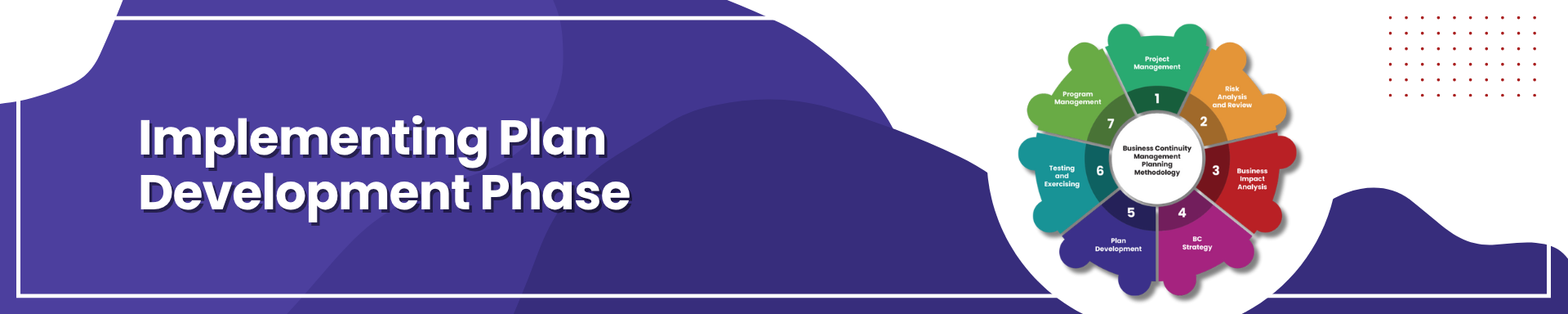
Plan Development Phase Phase as Part of the BCM Planning Methodology for IsDB
![[BCM] [IsDB] [E2] [C6] BCM Plan Development](https://no-cache.hubspot.com/cta/default/3893111/ea88aef4-db3d-4c32-af02-b6d1f26086f4.png)
The Business Continuity Plan (BC Plan) is a critical element of an organisation’s ability to respond effectively to disruptions.
The Islamic Development Bank (IsDB), as a global financial institution, requires a comprehensive and well-structured BCM Plan to ensure its operations remain resilient during times of crisis.
This chapter examines the Business Continuity Plan Development Phase, outlining the essential steps to develop a robust BCM plan at IsDB.
Developing a BCM plan is not a one-size-fits-all process; it requires cross-functional coordination, careful resource allocation, and alignment with business continuity objectives.
This phase is particularly vital for IsDB to maintain its commitment to the continuity of development projects and funding initiatives amid unforeseen events.
What Does Plan Development Entail?
The BCM Plan Development Phase is a systematic process that ensures all elements necessary for a comprehensive continuity plan are addressed.
The following stages outline the key components involved in developing a BCM plan for IsDB.
Determining the Organisation of the BC Plan Document
The first step in developing the BCM plan is to determine the structure and organisation of the BC Plan document.
The document should be clear, concise, and easily accessible to all relevant stakeholders at IsDB.
Designing and Developing the BC Plan Template
- At IsDB, the BCM team works closely with business units (BUs) to create a standardised template that ensures consistency across all departments.
- This template includes sections for roles and responsibilities, recovery strategies, communication protocols, and recovery timelines.
Determining the Recovery Organisation
- This step involves assigning specific roles to team members.
- At IsDB, it is essential to identify recovery leaders across departments to ensure the team is equipped with the expertise and resources needed to implement the BCM plan effectively.
- Each department’s BCM Coordinator is tasked with liaising between business units and the central BCM team to ensure coordination during a crisis.
Conducting a BC Plan Writing Workshop
A key component in the development phase is conducting a BC Plan writing workshop.
This workshop brings together plan writers from various business units to clarify what should be included in the BCM Plan, ensuring all relevant aspects are captured.
Completion of the Plan Template by Individual BU BCM Coordinators
- Each business unit’s BCM Coordinator at IsDB is responsible for completing the plan template for their respective unit.
- The template captures specific risks, recovery priorities, and required resources for each unit’s business continuity plan.
- Coordinators receive templates tailored to their departments' unique needs, ensuring a holistic approach to BCM.
Finalisation of the BC Plan Production
The final stage of plan development involves compiling all the completed plans from each business unit and reviewing them for completeness and accuracy.
Validation by BU BCM Coordinators and Heads of Business Units
- Once the individual BCM plans are completed, they are reviewed and validated by both the BCM Coordinators and the Heads of Business Units.
- At IsDB, this step is crucial to ensure the plans are not only aligned with corporate strategies but also reflect the practical needs and challenges of each department.
- Validating the plans ensures that recovery strategies are feasible and cover all necessary areas for business continuity.
Example
The Role of IsDB’s IT Department in Plan Development
For IsDB, the IT department plays a pivotal role in the Plan Development Phase.
The IT team’s BCM Coordinator would be responsible for developing recovery strategies for critical systems, including financial transaction systems and communication platforms.
These systems are vital for IsDB’s operations, and their recovery is a top priority.
In this context, the IT department’s BCM Coordinator would work with the recovery team to develop detailed procedures for restoring systems in the event of a cyberattack or technical failure.
![Banner [Summary] [BCM] [E2] [C6] BCM Plan Development](https://no-cache.hubspot.com/cta/default/3893111/a8cffab8-99ea-4a3b-8755-e4196a5d5b95.png)
The Business Continuity Plan Development Phase is a structured and collaborative process that ensures all aspects of IsDB’s operations are covered in the event of a disruption.
From the initial design of the plan template to the final validation by business unit leaders, each step is essential for creating a comprehensive and effective BCM plan.
By incorporating input from all departments and aligning with organisational objectives, IsDB can ensure that its BCM plan not only meets ISO 22301 standards but also supports the bank’s mission to foster sustainable development across its member countries.
This phase is just one piece of the larger BCM puzzle, which, when executed successfully, enhances IsDB’s resilience, safeguarding its ability to continue providing vital financial support during crises.
![[BCM] [IsDB] [E2] [C1] Business Continuity Management Planning Methodology](https://no-cache.hubspot.com/cta/default/3893111/3c60ba88-5e0e-41d7-aba9-7b5f99301607.png)
![[BCM] [IsDB] [E2] [C2] Project Management](https://no-cache.hubspot.com/cta/default/3893111/1abb267f-fcc1-4ea9-8286-0b6557d40f52.png)
![[BCM] [IsDB] [E2] [C3] Risk Analysis and Review](https://no-cache.hubspot.com/cta/default/3893111/7a84aefa-3825-4276-83f6-e3d227929da9.png)
![[BCM] [IsDB] [E2] [C4] Business Impact Analysis](https://no-cache.hubspot.com/cta/default/3893111/9f1cd1cd-4f5f-4f0f-b6f9-ebaa6bfbca56.png)
![[BCM] [IsDB] [E2] [C5] Business Continuity Strategy](https://no-cache.hubspot.com/cta/default/3893111/321f0cb1-f10d-42c4-ab52-c9263d75db65.png)
![[BCM] [IsDB] [E2] [C7] Testing and Exercising](https://no-cache.hubspot.com/cta/default/3893111/ba1cbc74-bf97-4e21-955e-522e7558460d.png)
![[BCM] [IsDB] [E2] [C8] Program Management](https://no-cache.hubspot.com/cta/default/3893111/59b1632f-4a06-4644-8953-78de180453ea.png)
![[BCM] [IsDB] [E2] [C9] Summary](https://no-cache.hubspot.com/cta/default/3893111/8cdae626-e7b3-4ef6-b44f-cd3778be7647.png)
![[BCM] [IsDB] [E2] [C10] Back Cover for BCM](https://no-cache.hubspot.com/cta/default/3893111/c91c302e-56e0-454c-86ab-934394982e74.png)
More Information About Business Continuity Management Courses
To learn more about the course and schedule, click the buttons below for the BCM-300 Business Continuity Management Implementer [BCM-3] and the BCM-5000 Business Continuity Management Expert Implementer [BCM-5].


![Register [BL-B-3]*](https://no-cache.hubspot.com/cta/default/3893111/ac6cf073-4cdd-4541-91ed-889f731d5076.png)



![FAQ [BL-B-3]](https://no-cache.hubspot.com/cta/default/3893111/b3824ba1-7aa1-4eb6-bef8-94f57121c5ae.png)
![Email to Sales Team [BCM Institute]](https://no-cache.hubspot.com/cta/default/3893111/3c53daeb-2836-4843-b0e0-645baee2ab9e.png)


