


Chapter 2
Risk Analysis and Review Phase as Part of the BCM Planning Methodology for IsDB
![[BCM] [IsDB] [E2] [C3] Risk Analysis and Review](https://no-cache.hubspot.com/cta/default/3893111/7a84aefa-3825-4276-83f6-e3d227929da9.png)
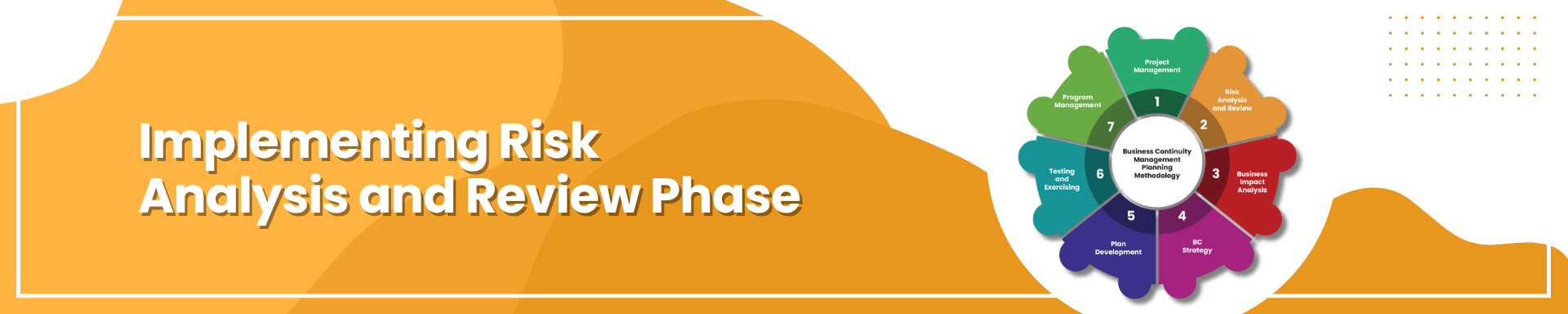
The Risk Analysis and Review phase is critical in the Business Continuity Management (BCM) planning methodology, as it helps identify and mitigate risks that could disrupt an organisation's operations.
For the Islamic Development Bank (IsDB), a global development institution, risk analysis helps minimise disruptions to its business processes, enabling it to continue its critical functions, including financing development projects, providing technical assistance, and fostering economic growth in its member countries.
In this chapter, we will explore the steps in the Risk Analysis and Review phase and how they can be applied to IsDB’s specific needs and challenges.
By understanding these steps, IsDB can effectively manage risks, safeguard its business operations, and protect its stakeholders’ interests.
Identifying Risks
Identifying risks is the first step in the risk analysis process. For IsDB, risks could arise from various sources, including technological, financial, environmental, political, and operational factors.
It is essential to recognise potential threats that could disrupt critical services, including financing operations, project evaluation, and the bank’s IT infrastructure.
Examples for IsDB
- Cybersecurity Threats: Increased reliance on digital platforms for operations and data storage exposes IsDB to potential cyber-attacks that could compromise sensitive financial information or disrupt communication with member countries.
- Geopolitical Instability: As the IsDB serves a wide range of countries, political instability in member nations could affect the bank’s ability to execute development projects or disrupt regional financing.
- Natural Disasters: Earthquakes, floods, or other natural events in key operational regions may pose a risk to facilities or staff, affecting IsDB’s ability to maintain operations in those areas.
Assessing Risks
Once risks are identified, assessing the likelihood and impact of each risk is crucial. This assessment helps IsDB prioritise which risks require immediate attention and resource allocation.
The likelihood and potential consequences of each identified risk must be evaluated to understand its effect on business continuity.
Examples for IsDB
- Cybersecurity Risk Assessment: The likelihood of a cyberattack on IsDB’s systems can be assessed using current cybersecurity trends and historical data from similar organisations. The impact assessment would focus on potential disruptions to critical operations, including online banking services, customer data breaches, and financial fraud.
- Geopolitical Risk: An assessment would evaluate political stability in key regions, the probability of regime changes or unrest, and the potential impact on IsDB’s operations in those countries, including delays in project funding or increased operational costs.
- Environmental Risk: Assessing the impact of natural disasters on IsDB’s facilities and partners, particularly in regions prone to floods or earthquakes, helps IsDB understand how such events could delay project implementation or result in resource loss.
Mitigating Risks
After assessing the risks, IsDB needs to implement measures to reduce those risks to an acceptable level. This phase involves developing and applying controls to prevent, mitigate, or transfer risks.
The goal is to ensure that even in the event of a disruption, IsDB can continue its operations with minimal impact.
Examples for IsDB
- Cybersecurity Controls: IsDB could implement advanced controls, including encryption, multi-factor authentication, and regular vulnerability assessments. Partnering with cybersecurity experts for periodic audits and staff training on phishing attacks could further reduce the risk of cyber threats.
- Geopolitical Risk Management: To address geopolitical risks, IsDB might diversify its portfolio to reduce dependency on any single country or region. The bank could also build contingency plans for sudden changes in regional stability, such as securing alternate suppliers and partners or shifting project focus to more stable areas.
- Disaster Recovery Plans: IsDB could develop disaster recovery plans for its facilities and systems in disaster-prone regions. These plans would include alternate communication channels, backup systems for data recovery, and relocating critical personnel to safe areas if needed.
Continuous Review
Risk management is an ongoing process, and risks evolve with changes in the business environment. IsDB must regularly review and update its risk profile to ensure that its BCM plan remains effective.
This includes monitoring changes in internal operations, external factors, and emerging threats.
Examples for IsDB
- Monitoring Cybersecurity Threats: The technology landscape is constantly evolving, and so are cyber threats. IsDB must continuously monitor emerging threats, update its security protocols, and adapt to new technologies to stay ahead of potential cyber risks.
- Political and Environmental Monitoring: Regular monitoring of global political developments and environmental conditions enables IsDB to assess changes that could affect its operations quickly. This may involve subscribing to geopolitical analysis services or working closely with local governments in member countries to receive timely updates.
- Post-Incident Reviews: After any significant disruption, IsDB should conduct a post-incident review to assess the effectiveness of its response and identify areas for improvement. This could include revising disaster recovery plans, updating risk assessments, or re-training staff on newly identified threats.
![Banner [Summary] [BCM] [E2] [C3] Risk Analysis and Review](https://no-cache.hubspot.com/cta/default/3893111/a7beedb7-3b4e-4374-ae50-974a76b94b61.png)
The Risk Analysis and Review phase is essential to ensure that IsDB can proactively manage and mitigate risks that could disrupt its business operations.
By identifying risks, assessing their potential impact, implementing mitigation strategies, and continuously reviewing the risk landscape, IsDB can strengthen its resilience and maintain its critical functions even in the face of adversity.
This ongoing process not only helps protect the organisation but also ensures that IsDB remains a reliable and trusted partner in driving development projects and economic growth across its member countries.
Through effective risk management, IsDB can continue to foster sustainable development in a dynamic and challenging global environment.
![[BCM] [IsDB] [E2] [C1] Business Continuity Management Planning Methodology](https://no-cache.hubspot.com/cta/default/3893111/3c60ba88-5e0e-41d7-aba9-7b5f99301607.png)
![[BCM] [IsDB] [E2] [C2] Project Management](https://no-cache.hubspot.com/cta/default/3893111/1abb267f-fcc1-4ea9-8286-0b6557d40f52.png)
![[BCM] [IsDB] [E2] [C4] Business Impact Analysis](https://no-cache.hubspot.com/cta/default/3893111/9f1cd1cd-4f5f-4f0f-b6f9-ebaa6bfbca56.png)
![[BCM] [IsDB] [E2] [C5] Business Continuity Strategy](https://no-cache.hubspot.com/cta/default/3893111/321f0cb1-f10d-42c4-ab52-c9263d75db65.png)
![[BCM] [IsDB] [E2] [C6] BCM Plan Development](https://no-cache.hubspot.com/cta/default/3893111/ea88aef4-db3d-4c32-af02-b6d1f26086f4.png)
![[BCM] [IsDB] [E2] [C7] Testing and Exercising](https://no-cache.hubspot.com/cta/default/3893111/ba1cbc74-bf97-4e21-955e-522e7558460d.png)
![[BCM] [IsDB] [E2] [C8] Program Management](https://no-cache.hubspot.com/cta/default/3893111/59b1632f-4a06-4644-8953-78de180453ea.png)
![[BCM] [IsDB] [E2] [C9] Summary](https://no-cache.hubspot.com/cta/default/3893111/8cdae626-e7b3-4ef6-b44f-cd3778be7647.png)
![[BCM] [IsDB] [E2] [C10] Back Cover for BCM](https://no-cache.hubspot.com/cta/default/3893111/c91c302e-56e0-454c-86ab-934394982e74.png)
More Information About Business Continuity Management Courses
To learn more about the course and schedule, click the buttons below for the BCM-300 Business Continuity Management Implementer [BCM-3] and the BCM-5000 Business Continuity Management Expert Implementer [BCM-5].


![Register [BL-B-3]*](https://no-cache.hubspot.com/cta/default/3893111/ac6cf073-4cdd-4541-91ed-889f731d5076.png)



![FAQ [BL-B-3]](https://no-cache.hubspot.com/cta/default/3893111/b3824ba1-7aa1-4eb6-bef8-94f57121c5ae.png)
![Email to Sales Team [BCM Institute]](https://no-cache.hubspot.com/cta/default/3893111/3c53daeb-2836-4843-b0e0-645baee2ab9e.png)


