


Chapter 1
Islamic Development Bank (IsDB)
Introduction
![[BCM] [IsDB] [E2] [C1] Business Continuity Management Planning Methodology](https://no-cache.hubspot.com/cta/default/3893111/3c60ba88-5e0e-41d7-aba9-7b5f99301607.png)
![eBook Cover [BCM] [IsDB] [E2] [2D]](https://no-cache.hubspot.com/cta/default/3893111/131a86ce-68be-4c44-8597-922ef31b6230.png) Business Continuity Management (BCM) is a vital process for ensuring an organisation's resilience, especially in the face of disruptions from unforeseen events such as natural disasters, cyberattacks, or other operational crises.
Business Continuity Management (BCM) is a vital process for ensuring an organisation's resilience, especially in the face of disruptions from unforeseen events such as natural disasters, cyberattacks, or other operational crises.
For the Islamic Development Bank (IsDB), a global financial institution focused on development, economic stability, and support for its member countries, a robust BCM plan is crucial for maintaining the continuity of critical operations and safeguarding stakeholder interests.
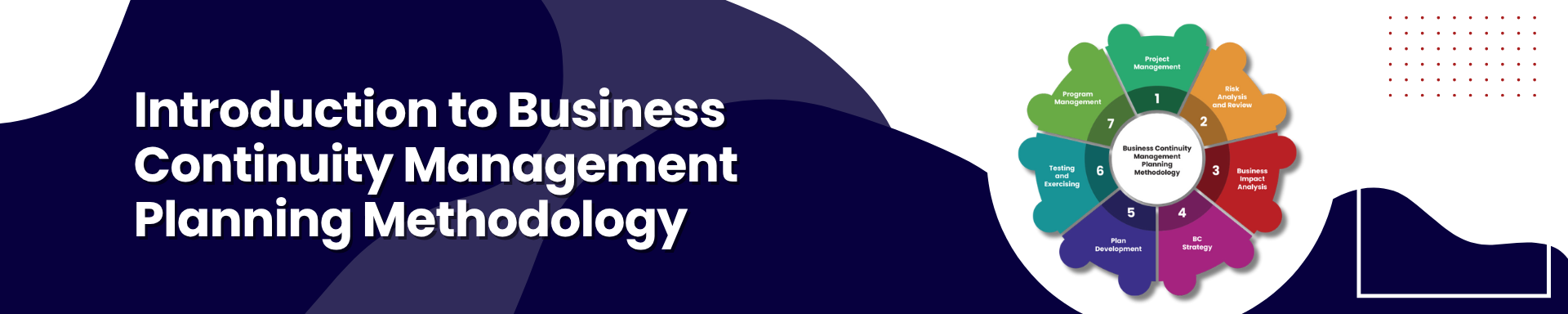
This chapter outlines the BCM planning methodology tailored explicitly to IsDB's operational structure and business needs.
The methodology comprises seven phases that collectively ensure the organisation is prepared to respond effectively to any disruption, thereby minimising potential losses and recovery time.

1. Project Management (PM)
The first phase involves initiating the BCM project. At IsDB, this phase will be overseen by the BCM Steering Committee, which will ensure alignment with the organisation’s overall strategic goals.
The committee will be responsible for establishing clear objectives, defining roles and responsibilities, and allocating necessary resources to implement the BCM plan successfully.
The Project Management phase lays the foundation for subsequent phases, ensuring they are well integrated and support IsDB’s vision for resilience.
IsDB-Specific Requirement
For IsDB, this phase includes creating a detailed project charter that highlights the organisation's development goals and how BCM will support its long-term mission to foster inclusive economic growth and reduce poverty across member countries.
 2. Risk Analysis and Review (RAR)
The Risk Analysis and Review phase focuses on identifying and assessing potential risks that could affect IsDB’s ability to meet its objectives.
This includes both external risks (e.g., geopolitical instability in member countries) and internal risks (e.g., system failures or loss of key personnel).
IsDB-Specific Requirement
IsDB must prioritise risks related to its international operations, including disruptions to financial transactions, banking systems, and logistics arising from global events or regional conflicts.
Additionally, it must consider risks that could undermine trust among member states and partners, given the bank's role in facilitating development.
 3. Business Impact Analysis (BIA)
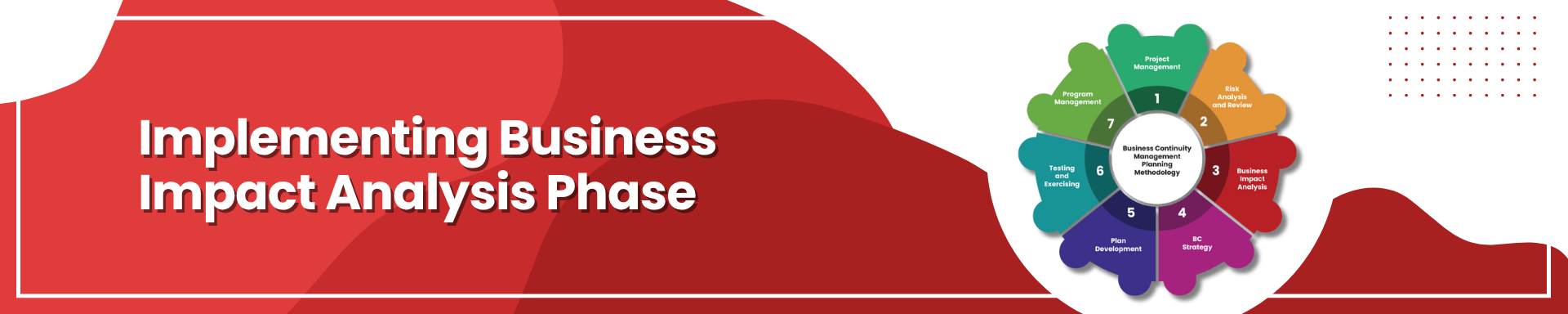
In this phase, IsDB identifies its critical business functions (CBFs) and evaluates the impact of disruptions on them.
The BIA assesses the potential financial, operational, and reputational consequences of disruptions and determines the Recovery Time Objectives (RTO) and Recovery Point Objectives (RPO) for each CBF.
IsDB-Specific Requirement
Given IsDB’s mission to support sustainable development and alleviate poverty, it is essential to focus on critical business functions, including project financing, fund disbursement, and the operational continuity of its regional offices.
A comprehensive BIA should consider both direct financial impacts and indirect effects on member country relationships.
 4. Business Continuity Strategy (BCS)
The Business Continuity Strategy phase involves developing strategies to mitigate identified risks and recover from disruptions.
These strategies should be tailored to IsDB’s unique operating environment, factoring in its geographic distribution, global stakeholders, and the diversity of its development projects.
IsDB-Specific Requirement
IsDB needs to develop contingency plans to ensure the uninterrupted operation of its core services, including project financing, field operations, and support for its member countries.
This phase should prioritise cloud-based solutions for data recovery, establishing alternative communication channels, and cross-border collaboration to ensure operational continuity in affected regions.
 5. Plan Development (PD)
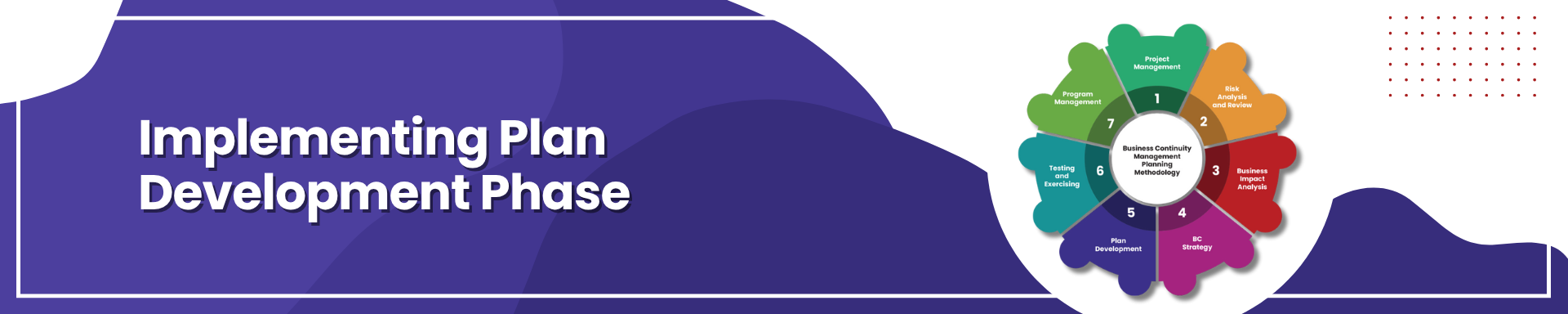
In the Plan Development phase, IsDB will develop and document detailed Business Continuity Plans (BCPs) for each of its critical functions.
These plans should include clear procedures for response and recovery, as well as specific action steps for different types of disruptions.
IsDB-Specific Requirement
The plans should be aligned with IsDB’s commitment to its member states, ensuring that financial and operational support can be rapidly restored in the event of a crisis.
This includes developing specific recovery plans for key regional offices and country-specific initiatives.
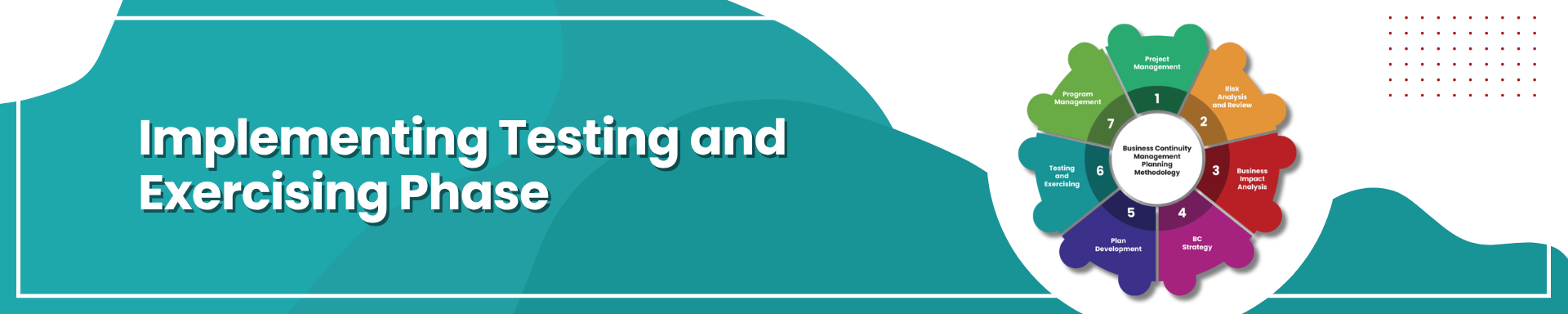 6. Testing and Exercising (TE)
Testing and exercising are critical phases for ensuring the effectiveness of the BCM plan. IsDB must conduct regular tabletop exercises, simulations, and live drills to evaluate the practical application of its BCPs.
IsDB-Specific Requirement
Given IsDB’s broad geographical scope, testing scenarios should involve coordination across multiple offices and regions.
These exercises should simulate simultaneous disruptions across different regions to test cross-border communication and resource-sharing mechanisms.
 7. Program Management (PgM)
The final phase involves the ongoing management and continuous improvement of the BCM program.
Program management ensures that BCM remains aligned with organisational changes, regulatory updates, and evolving risks.
This phase also includes monitoring the performance of BCM initiatives and ensuring that staff are continuously trained.
IsDB-Specific Requirement
IsDB should establish a BCM Governance Framework, which includes continuous training and awareness programs across all levels of the organisation.
Regular reviews should be conducted to ensure that the BCM program evolves in line with IsDB’s expansion and its increasing support for development initiatives globally.
![Banner [Summary] [BCM] [E2] [C1] BCM Planning Methodology](https://no-cache.hubspot.com/cta/default/3893111/c8cd5c83-ee61-4ddf-982d-f49b490dd21d.png)
The Business Continuity Management planning methodology is an essential framework for IsDB to safeguard its critical operations and maintain its mission to foster economic development and alleviate poverty.
By following these seven phases—Project Management, Risk Analysis and Review, Business Impact Analysis, Business Continuity Strategy, Plan Development, Testing and Exercising, and Program Management—IsDB can ensure that it is prepared for any disruption.
This proactive approach will not only protect IsDB’s operations but also enhance its ability to serve its member countries during crises, reinforcing its long-term commitment to sustainable development.
![[BCM] [IsDB] [E2] [C2] Project Management](https://no-cache.hubspot.com/cta/default/3893111/1abb267f-fcc1-4ea9-8286-0b6557d40f52.png)
![[BCM] [IsDB] [E2] [C3] Risk Analysis and Review](https://no-cache.hubspot.com/cta/default/3893111/7a84aefa-3825-4276-83f6-e3d227929da9.png)
![[BCM] [IsDB] [E2] [C4] Business Impact Analysis](https://no-cache.hubspot.com/cta/default/3893111/9f1cd1cd-4f5f-4f0f-b6f9-ebaa6bfbca56.png)
![[BCM] [IsDB] [E2] [C5] Business Continuity Strategy](https://no-cache.hubspot.com/cta/default/3893111/321f0cb1-f10d-42c4-ab52-c9263d75db65.png)
![[BCM] [IsDB] [E2] [C6] BCM Plan Development](https://no-cache.hubspot.com/cta/default/3893111/ea88aef4-db3d-4c32-af02-b6d1f26086f4.png)
![[BCM] [IsDB] [E2] [C7] Testing and Exercising](https://no-cache.hubspot.com/cta/default/3893111/ba1cbc74-bf97-4e21-955e-522e7558460d.png)
![[BCM] [IsDB] [E2] [C8] Program Management](https://no-cache.hubspot.com/cta/default/3893111/59b1632f-4a06-4644-8953-78de180453ea.png)
![[BCM] [IsDB] [E2] [C9] Summary](https://no-cache.hubspot.com/cta/default/3893111/8cdae626-e7b3-4ef6-b44f-cd3778be7647.png)
![[BCM] [IsDB] [E2] [C10] Back Cover for BCM](https://no-cache.hubspot.com/cta/default/3893111/c91c302e-56e0-454c-86ab-934394982e74.png)
More Information About Business Continuity Management Courses
To learn more about the course and schedule, click the buttons below for the BCM-300 Business Continuity Management Implementer [BCM-3] and the BCM-5000 Business Continuity Management Expert Implementer [BCM-5].


![Register [BL-B-3]*](https://no-cache.hubspot.com/cta/default/3893111/ac6cf073-4cdd-4541-91ed-889f731d5076.png)



![FAQ [BL-B-3]](https://no-cache.hubspot.com/cta/default/3893111/b3824ba1-7aa1-4eb6-bef8-94f57121c5ae.png)
![Email to Sales Team [BCM Institute]](https://no-cache.hubspot.com/cta/default/3893111/3c53daeb-2836-4843-b0e0-645baee2ab9e.png)


