

![[Full Banner] Gambling Regulatory Authority](https://no-cache.hubspot.com/cta/default/3893111/19ae41b0-2229-43d0-a2d6-347c7025bf77.png)
![[BCM] [GRA] Legal Disclaimer Banner](https://no-cache.hubspot.com/cta/default/3893111/fbd32178-678a-4274-92db-27247c32d85a.png)
![Banner [BCM] [E3] [BCS] [T1] Mitigation Strategies](https://no-cache.hubspot.com/cta/default/3893111/fdc7087d-c996-4bf1-9dbb-59f7d2ba89c5.png)
![BCM] [GRA] [E3] [BCS] [T1] Mitigation Strategies and Justification](https://no-cache.hubspot.com/cta/default/3893111/07efb463-2472-44c1-8e9b-b2f585615754.png)
This chapter forms part of the Business Continuity Strategy (BCS) phase within the eBook "Implementing Business Continuity Management for the Gambling Regulatory Authority (GRA): A Practical Guide to Organisational Resilience, Service Continuity, and Regulatory Excellence."
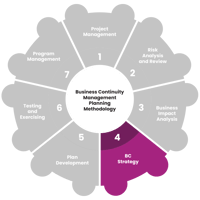 Following the completion of the Risk Analysis and Review (RAR) and Business Impact Analysis (BIA) phases, GRA must determine appropriate mitigation strategies to reduce the likelihood and impact of identified threats.
Mitigation strategies focus on strengthening preventive controls, enhancing resilience, reducing vulnerabilities, and lowering residual risks to acceptable levels.
The purpose of this chapter is to identify additional mitigation measures that can improve GRA's ability to maintain regulatory oversight, licensing administration, enforcement activities, regulatory intelligence functions, stakeholder communications, and supporting corporate services during disruptive events.
![Banner [Table] [BCM] [E3] [BCS] [T1] Mitigation Strategies](https://no-cache.hubspot.com/cta/default/3893111/126d86fd-4977-4d69-8e44-fe000291f236.png)
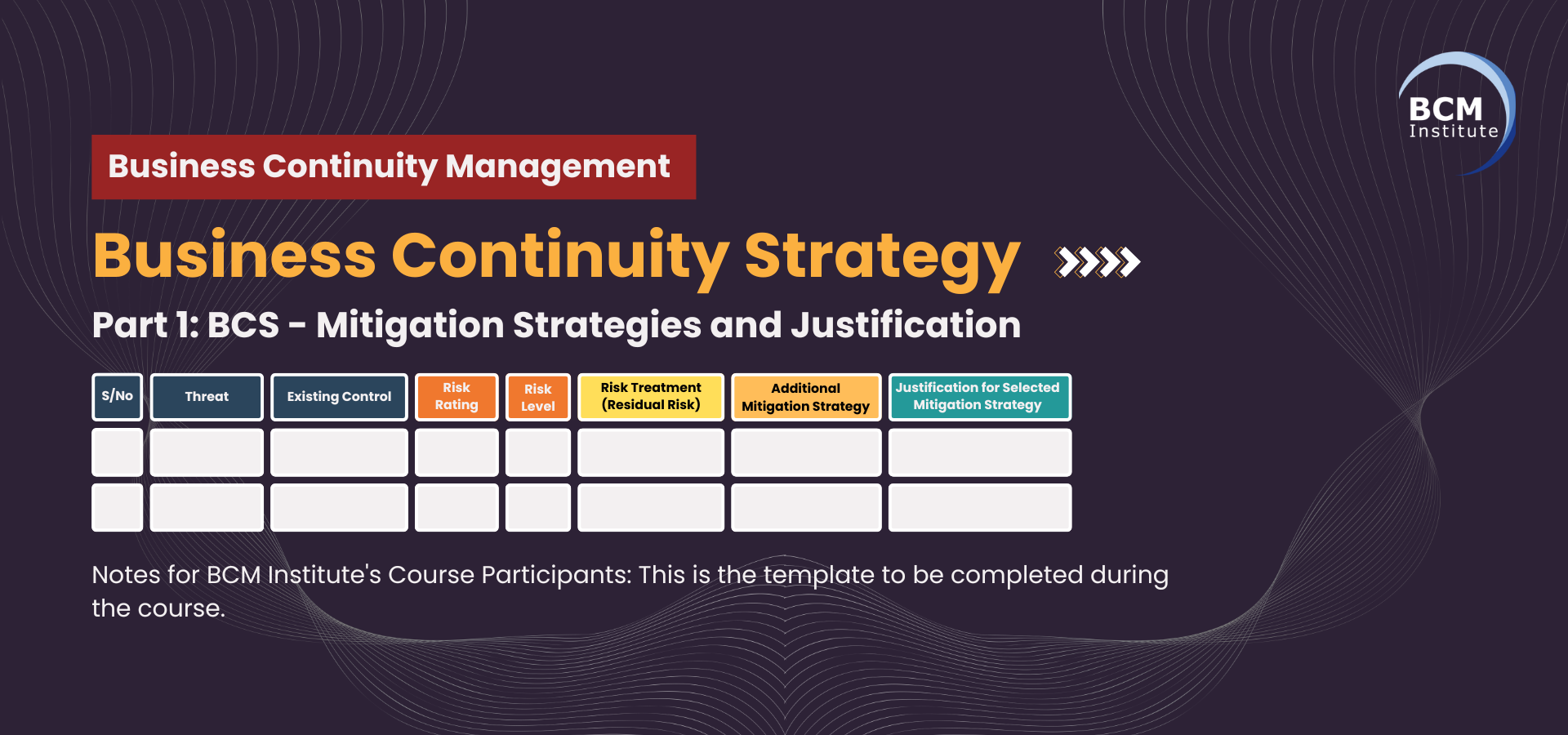
Table T1: Mitigation Strategies
|
Threat |
Existing Controls |
Risk Rating |
Risk Level |
Risk Treatment (Residual Risk) |
Additional Mitigation Strategy |
Justification for Selected Mitigation Strategy |
|
Pandemic / Infectious Disease Outbreak |
Remote work arrangements, split teams, and health protocols |
20 |
Extreme |
Moderate |
Workforce resilience programme, automated workforce monitoring, and remote onboarding capability |
Reduces operational disruption caused by large-scale staff absenteeism |
|
Cyberattack / Ransomware |
MFA, endpoint protection, SIEM, cybersecurity monitoring |
25 |
Extreme |
High |
Zero Trust Security Architecture, Security Operations Centre (SOC), Threat Intelligence Platform |
Cyber threats represent the highest risk to regulatory systems and sensitive information |
|
Data Breach |
Encryption, access controls, and audit logging |
20 |
Extreme |
Moderate |
Data Loss Prevention (DLP), Privileged Access Management (PAM), and continuous monitoring |
Strengthens protection of confidential regulatory and enforcement information |
|
Cloud Service Provider Outage |
Cloud redundancy, backup arrangements |
20 |
Extreme |
Moderate |
Multi-cloud deployment strategy, geographically dispersed recovery environment |
Reduces dependency on a single cloud provider and improves service resilience |
|
Network Failure |
Redundant network infrastructure |
20 |
Extreme |
Moderate |
Software-Defined WAN (SD-WAN), diverse telecommunications providers |
Enhances communication reliability and network availability |
|
Software Failure |
Application monitoring, change management controls |
20 |
Extreme |
Moderate |
Automated application failover and continuous testing environment |
Improves availability of critical regulatory applications |
|
Database Corruption |
Backup and recovery procedures, replication |
20 |
Extreme |
Moderate |
Real-time database integrity monitoring and immutable backup technology |
Protects integrity of regulatory records and critical operational data |
|
AI-Enabled Threats |
Cybersecurity controls, acceptable use policies |
20 |
Extreme |
High |
AI governance framework, AI threat monitoring, deepfake detection capability |
Emerging technology risk requiring proactive governance and monitoring |
|
Distributed Denial of Service (DDoS) Attack |
Network firewalls, ISP protection services |
20 |
Extreme |
Moderate |
Advanced DDoS scrubbing services and web application firewalls |
Protects public-facing regulatory services and online portals |
|
Failure of Regulatory Information Systems |
Disaster recovery environment, system monitoring |
20 |
Extreme |
Moderate |
High-availability architecture with automated failover capability |
Ensures continuity of licensing, monitoring, and enforcement activities |
|
Loss of Key Personnel |
Succession planning, documentation |
15 |
High |
Moderate |
Knowledge management system and structured cross-training programme |
Reduces dependency on specialised personnel |
|
Telecommunications Provider Failure |
Dual telecommunications providers |
15 |
High |
Low |
Satellite communication capability and tertiary provider arrangements |
Enhances communication resilience during major outages |
|
Power Supply Failure |
UPS and standby generators |
15 |
High |
Low |
Extended backup power capability and secondary facility support |
Ensures continuity of critical technology services |
|
Data Centre Outage |
Secondary recovery site |
15 |
High |
Moderate |
Geographically separated active-active data centres |
Improves recovery capability and reduces downtime |
|
Insider Threat |
Background screening, access controls |
15 |
High |
Moderate |
User behaviour analytics and privileged user monitoring |
Detects abnormal activity and reduces internal risks |
|
Vendor Failure |
Supplier assessments and contracts |
12 |
High |
Low |
Multi-vendor sourcing strategy and periodic supplier resilience testing |
Reduces supply chain concentration risk |
|
Flood |
Emergency response procedures, remote work capability |
8 |
Moderate |
Low |
Alternate workplace arrangements and flood monitoring systems |
Reduces disruption caused by facility inaccessibility |
|
Fire |
Fire detection and suppression systems |
10 |
Moderate |
Low |
Smart building monitoring and enhanced recovery site readiness |
Improves response and reduces facility downtime |
|
Terrorist Incident |
Security controls, crisis management plans |
10 |
Moderate |
Moderate |
Enhanced intelligence sharing and emergency response coordination |
Strengthens preparedness for security-related disruptions |
|
Building Structural Failure |
Facilities management programme |
8 |
Moderate |
Low |
Secondary workplace recovery arrangements |
Enables continuity of operations if premises become unusable |
|
Hazardous Material Incident |
Evacuation procedures, emergency response plans |
8 |
Moderate |
Low |
Environmental monitoring and alternate site activation procedures |
Protects employees and ensures operational continuity |
|
Mass Casualty Incident |
Crisis management framework, employee support programmes |
10 |
Moderate |
Moderate |
Family assistance programme and workforce resilience planning |
Supports employee recovery and continuity of operations |
|
Severe Haze Incident |
Flexible work arrangements |
9 |
Moderate |
Low |
Enhanced remote working capability and health monitoring |
Minimises productivity loss and protects employee wellbeing |
|
Travel Restrictions |
Virtual collaboration tools |
9 |
Moderate |
Low |
Digital regulatory inspection and virtual engagement capability |
Maintains regulatory effectiveness during travel disruptions |
|
Civil Disturbance |
Employee safety procedures |
6 |
Moderate |
Low |
Dynamic workforce relocation procedures |
Maintains operational continuity during access restrictions |
|
Extreme Weather Event |
Emergency communication procedures |
9 |
Moderate |
Low |
Real-time environmental monitoring and proactive workforce management |
Improves organisational responsiveness to weather-related disruptions |
Key Mitigation Strategy Priorities
Based on the risk assessment, GRA should prioritise investments in the following areas:
Cyber and Technology Resilience
- Zero Trust Security Architecture.
- Security Operations Centre (SOC).
- Multi-cloud recovery capabilities.
- Real-time monitoring and threat intelligence.
- Automated failover technologies.
Regulatory System Resilience
- High-availability infrastructure.
- Disaster recovery environments.
- Database protection mechanisms.
- Network redundancy.
Workforce Resilience
- Succession planning.
- Cross-training programmes.
- Knowledge management systems.
- Workforce availability monitoring.
Third-Party Risk Management
- Supplier resilience assessments.
- Multi-vendor strategies.
- Cloud service resilience reviews.
- Telecommunications redundancy.
These mitigation initiatives will significantly reduce GRA's exposure to operational disruptions and enhance organisational resilience.
![Banner [BCM] [E3] [BCS] [Summing Up] [T1] Mitigation Strategies](https://no-cache.hubspot.com/cta/default/3893111/c2542a7f-6d92-4371-93ba-348e87d8c1ce.png)
Mitigation strategies represent the first layer of defence against disruptions by reducing the likelihood and impact of identified threats before they materialise.
For the Gambling Regulatory Authority (GRA), the most significant risks arise from cyber threats, technology failures, cloud service dependencies, data breaches, and workforce disruptions.
The mitigation strategies identified in this chapter strengthen GRA's preventive capabilities and reduce residual risks to more acceptable levels.
By implementing enhanced cybersecurity measures, resilient technology architectures, workforce continuity programmes, and robust third-party risk management practices, GRA can significantly improve its ability to sustain critical regulatory services under adverse conditions.
These mitigation strategies also provide the foundation for the next stages of Business Continuity Strategy development, including prevention and recovery strategies, ensuring a comprehensive and integrated approach to organisational resilience and ISO 22301 compliance.
![[Thin Banner] Gambling Regulatory Authority](https://no-cache.hubspot.com/cta/default/3893111/4f23072f-0544-42d8-b1c9-4b74082dae90.png)
![BCM] [GRA] [E3] [BIA] MBCO Corporate MBCO](https://no-cache.hubspot.com/cta/default/3893111/0928875b-21b0-4069-a7d1-cf71945665fd.png)
![BCM] [GRA] [E3] [BIA] [PS] Key Product and Services](https://no-cache.hubspot.com/cta/default/3893111/e5ef9b95-2b3a-4aef-b926-9216ad45c3df.png)
![BCM] [GRA] [E3] [RAR] [T1] List of Threats](https://no-cache.hubspot.com/cta/default/3893111/b6d1802e-aac8-4351-a34d-f9deebccc3c9.png)
![[BCM] [GRA] [E3] [RAR] [T2] Treatment and Control](https://no-cache.hubspot.com/cta/default/3893111/2425431c-533d-4f91-8091-1961d97b12dd.png)
![[BCM] [GRA] [E3] [RAR] [T3] Risk Impact and Likelihood Assessment](https://no-cache.hubspot.com/cta/default/3893111/e5ca5611-3aac-456e-9409-537c3d48ec6f.png)
![[BCM] [GRA] [E1] [C10] Identifying Critical Business Functions](https://no-cache.hubspot.com/cta/default/3893111/a38bb175-c38a-41d4-9121-eca90cf91bb8.png)
More Information About Business Continuity Management Courses
To learn more about the course and schedule, click the buttons below for the BCM-300 Business Continuity Management Implementer [BCM-3] and the BCM-5000 Business Continuity Management Expert Implementer [BCM-5].


![Register [BL-B-3]*](https://no-cache.hubspot.com/cta/default/3893111/ac6cf073-4cdd-4541-91ed-889f731d5076.png)



![FAQ [BL-B-3]](https://no-cache.hubspot.com/cta/default/3893111/b3824ba1-7aa1-4eb6-bef8-94f57121c5ae.png)
![Email to Sales Team [BCM Institute]](https://no-cache.hubspot.com/cta/default/3893111/3c53daeb-2836-4843-b0e0-645baee2ab9e.png)


