

![[Full Banner] Gambling Regulatory Authority](https://no-cache.hubspot.com/cta/default/3893111/19ae41b0-2229-43d0-a2d6-347c7025bf77.png)
![[BCM] [GRA] Legal Disclaimer Banner](https://no-cache.hubspot.com/cta/default/3893111/fbd32178-678a-4274-92db-27247c32d85a.png)
eBook 2: Chapter 2
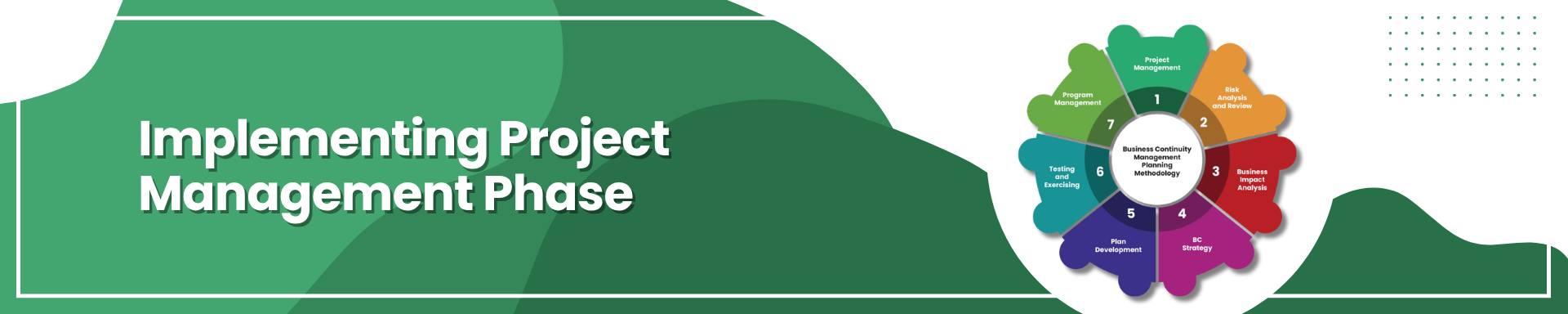
Project Management Phase for BCM Planning Methodology for Gambling Regulatory Authority (GRA)
![[BCM] [GRA] [E2] [C2] Project Management](https://no-cache.hubspot.com/cta/default/3893111/f582601e-58a4-4d69-b0e0-cb3c5ea8643b.png)
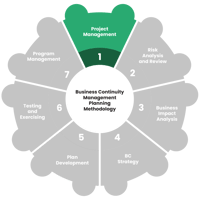 Before an organisation can conduct risk assessments, identify critical business functions, develop recovery strategies, or create business continuity plans, it must first establish a structured approach for managing the Business Continuity Management (BCM) implementation project.
This is achieved through the Project Management (PM) Phase, which serves as the foundation of the BCM Planning Methodology.
The purpose of the Project Management Phase is to establish governance, secure management commitment, define project scope, allocate resources, assign responsibilities, and create a roadmap for BCM implementation.
A well-managed BCM project ensures that continuity activities are coordinated, measurable, and aligned with organisational objectives.
For GRA, the Project Management Phase is particularly important because the Authority performs critical regulatory functions that support Singapore's gambling regulatory framework.
Effective project management ensures that all regulatory, operational, technology, and support functions are appropriately represented and that the BCM programme receives the leadership support required for successful implementation.
Objective and Scope of the Project Management Phase
The Project Management Phase establishes the framework for implementing a Business Continuity Management System (BCMS).
The objectives are to:
- Obtain executive sponsorship and commitment.
- Establish BCM governance structures.
- Define project scope and objectives.
- Identify stakeholders and responsibilities.
- Allocate resources and budgets.
- Develop implementation schedules.
- Establish reporting and communication mechanisms.
- Align BCM activities with ISO 22301 requirements.
Without effective project management, BCM initiatives may become fragmented, inconsistent, or fail to achieve their intended outcomes.
Key Deliverables of the Project Management Phase
The Project Management Phase should produce several important deliverables.
|
Deliverable |
Purpose |
|
BCM Policy |
Provides strategic direction and management commitment |
|
BCM Project Charter |
Defines project objectives, scope, and authority |
|
BCM Governance Structure |
Establishes oversight and accountability |
|
BCM Project Plan |
Defines activities, milestones, and timelines |
|
BCM Team Structure |
Assigns roles and responsibilities |
|
Communication Plan |
Supports stakeholder engagement |
|
Resource Plan |
Identifies personnel, technology, and budget requirements |
|
Management Approval |
Authorises the BCM implementation programme |
These deliverables provide the foundation for subsequent BCM activities.
Establishing Executive Sponsorship
Executive sponsorship is one of the most critical success factors in BCM implementation.
Senior management must demonstrate commitment by:
- Endorsing the BCM programme.
- Approving BCM policies.
- Providing funding and resources.
- Participating in governance activities.
- Promoting BCM awareness throughout the organisation.
GRA Example
The Chief Executive and senior leadership team may formally endorse the BCM programme and establish BCM as a strategic initiative supporting:
- Regulatory effectiveness.
- Operational resilience.
- Public confidence.
- Regulatory compliance.
- Organisational sustainability.
Executive sponsorship ensures BCM receives the attention and resources necessary for long-term success.
Defining BCM Scope
The BCM scope determines which business units, processes, facilities, systems, and services will be included in the BCM programme.
Scope Considerations
The scope should consider:
- Organisational objectives.
- Regulatory obligations.
- Critical business services.
- Stakeholder expectations.
- Technology dependencies.
- Third-party relationships.
GRA Example
The BCM programme scope may include:
Regulatory Functions
- Licensing and Permit Administration.
- Regulatory Compliance Monitoring.
- Enforcement and Investigations.
- Regulatory Intelligence and Surveillance.
Corporate Support Functions
- Human Resources.
- Finance and Procurement.
- Corporate Communications.
- Information Technology Services.
Supporting Assets
- Regulatory databases.
- Licensing platforms.
- Communication systems.
- Office facilities.
Clearly defining the scope prevents omissions and ensures comprehensive coverage.
Establishing BCM Governance
Governance provides oversight, accountability, and decision-making authority.
BCM Governance Structure
A typical governance structure includes:
|
Governance Level |
Responsibilities |
|
Executive Management |
Strategic oversight and approval |
|
BCM Steering Committee |
Programme governance and direction |
|
BCM Manager |
Programme management and coordination |
|
Business Unit Heads |
Ownership of continuity plans |
|
BCM Coordinators |
BCM implementation within departments |
|
Recovery Teams |
Execution of recovery activities |
GRA Example
A BCM Steering Committee may include representatives from:
- Executive Management.
- Licensing Division.
- Enforcement Division.
- Regulatory Compliance Division.
- Information Technology Division.
- Corporate Services Division.
This ensures organisation-wide participation and oversight.
Forming the BCM Project Team
The BCM project team is responsible for implementing the BCM programme.
Team Composition
The team should include:
- BCM Project Sponsor.
- BCM Project Manager.
- BCM Coordinator.
- Business Unit Representatives.
- IT Representatives.
- Risk Management Representatives.
- Communications Representatives.
GRA Example
The BCM Project Team may include:
|
Role |
Department |
|
Project Sponsor |
Executive Management |
|
BCM Manager |
Corporate Services |
|
BCM Coordinator |
BCM Programme Office |
|
Regulatory Representative |
Licensing Division |
|
Enforcement Representative |
Enforcement Division |
|
IT Representative |
Information Technology |
|
Communications Representative |
Corporate Communications |
The project team ensures expertise from all critical functions is incorporated into the programme.
Developing the BCM Project Plan
The project plan provides the roadmap for BCM implementation.
Components of the Project Plan
The plan should include:
- Objectives.
- Scope.
- Deliverables.
- Milestones.
- Roles and responsibilities.
- Resource requirements.
- Budget estimates.
- Project schedule.
Example BCM Project Timeline
The timeline may vary depending on organisational complexity and available resources.
|
Phase |
Duration |
|
Project Management |
1 Month |
|
Risk Analysis and Review |
1 Month |
|
Business Impact Analysis |
2 Months |
|
Business Continuity Strategy |
1 Month |
|
Plan Development |
2 Months |
|
Testing and Exercising |
1 Month |
|
Programme Management Transition |
Ongoing |
Stakeholder Management and Communication
Successful BCM implementation requires active stakeholder engagement.
Stakeholder Categories
Examples include:
Internal Stakeholders
- Executive Management.
- Department Heads.
- Employees.
- Recovery Teams.
External Stakeholders
- Government agencies.
- Gambling operators.
- Technology vendors.
- Telecommunications providers.
- Regulatory partners.
GRA Example
Communication activities may include:
- BCM awareness briefings.
- Steering Committee meetings.
- Project status reports.
- Department workshops.
- Progress presentations to management.
Regular communication promotes engagement and reduces resistance to change.
Resource Planning
Adequate resources are required to support BCM implementation.
Resource Categories
|
Resource Type |
Examples |
|
Human Resources |
BCM team, facilitators, coordinators |
|
Financial Resources |
Project funding and consultancy support |
|
Technology Resources |
BCM software, collaboration tools |
|
Facilities |
Meeting rooms and recovery sites |
|
Training Resources |
Awareness and competency programmes |
GRA Example
Resource planning may include:
- Dedicated BCM coordinators.
- Budget for BCM awareness programmes.
- Exercise and testing resources.
- Technology tools supporting BCM documentation and reporting.
BCM Success Factors
Several factors influence the success of BCM implementation.
Critical Success Factors
- Executive sponsorship.
- Clear governance.
- Adequate funding.
- Skilled BCM coordinators.
- Organisation-wide participation.
- Effective communication.
- Realistic project schedules.
- Alignment with organisational objectives.
For GRA, strong collaboration between regulatory, operational, and technology functions will be essential.
Outputs from the Project Management Phase
At the completion of this phase, GRA should have:
- Approved BCM Policy.
- Defined BCM scope.
- Established governance structure.
- Appointed BCM team members.
- Approved project plan.
- Allocated resources.
- Management endorsement.
These outputs enable the organisation to proceed confidently to the next phase of the BCM Planning Methodology—Risk Analysis and Review (RAR).
![Banner [Summary] [BCM] [E2] [C2] Project Management](https://no-cache.hubspot.com/cta/default/3893111/a27bdcb3-7e9b-40ec-8a47-a1c06d8688ca.png)
The Project Management Phase provides the essential foundation for implementing a successful Business Continuity Management System within the Gambling Regulatory Authority (GRA).
By establishing governance, defining scope, securing executive sponsorship, forming the project team, allocating resources, and developing a structured implementation roadmap, GRA can ensure its BCM programme aligns with organisational objectives and ISO 22301 requirements.
Effective project management transforms BCM from a concept into an organised and measurable initiative.
It creates the structure necessary to coordinate multiple stakeholders, manage resources, and guide the organisation through the subsequent phases of Risk Analysis and Review, Business Impact Analysis, Strategy Development, Plan Development, Testing and Exercising, and Programme Management.
For GRA, a strong Project Management Phase is the critical first step toward building a resilient organisation capable of maintaining regulatory oversight and essential services during disruptive events while continuing to uphold its mission of regulatory excellence.
![[Thin Banner] Gambling Regulatory Authority](https://no-cache.hubspot.com/cta/default/3893111/4f23072f-0544-42d8-b1c9-4b74082dae90.png)
![[BCM] [GRA] [E2] [C1] Business Continuity Management Planning Methodology](https://no-cache.hubspot.com/cta/default/3893111/01d882c6-04f6-408f-97ab-2f4cde8d1f6b.png)
![[BCM] [GRA] [E2] [C3] Risk Analysis and Review](https://no-cache.hubspot.com/cta/default/3893111/55ec9acb-df16-4fc7-b0be-6cc3656c406c.png)
![[BCM] [GRA] [E2] [C4] Business Impact Analysis](https://no-cache.hubspot.com/cta/default/3893111/fb15dbb1-c559-4f54-88bb-6cc2274c6553.png)
![[BCM] [GRA] [E2] [C5] Business Continuity Strategy](https://no-cache.hubspot.com/cta/default/3893111/b9f0877f-b8b5-4cb4-97ce-ab032e34cd3f.png)
![[BCM] [GRA] [E2] [C6] BCM Plan Development](https://no-cache.hubspot.com/cta/default/3893111/3a85f1b6-b018-483f-bd97-760464351273.png)
![[BCM] [GRA] [E2] [C7] Testing and Exercising](https://no-cache.hubspot.com/cta/default/3893111/68abc237-9fe7-440c-b9d6-5d107996f67d.png)
![[BCM] [GRA] [E2] [C8] Program Management](https://no-cache.hubspot.com/cta/default/3893111/4845d6bf-6033-44e4-b851-09bdb3d92c88.png)
![[BCM] [GRA] [E2] [C9] Summary](https://no-cache.hubspot.com/cta/default/3893111/93c5feac-87dc-48fd-bc58-32a8347bf16a.png)
![[BCM] [GRA] [E2] [C10] Back Cover of eBook 2](https://no-cache.hubspot.com/cta/default/3893111/d39a2276-e4a6-4b9b-b0b5-10384cd96e93.png)
More Information About Business Continuity Management Courses
To learn more about the course and schedule, click the buttons below for the BCM-300 Business Continuity Management Implementer [BCM-3] and the BCM-5000 Business Continuity Management Expert Implementer [BCM-5].


![Register [BL-B-3]*](https://no-cache.hubspot.com/cta/default/3893111/ac6cf073-4cdd-4541-91ed-889f731d5076.png)



![FAQ [BL-B-3]](https://no-cache.hubspot.com/cta/default/3893111/b3824ba1-7aa1-4eb6-bef8-94f57121c5ae.png)
![Email to Sales Team [BCM Institute]](https://no-cache.hubspot.com/cta/default/3893111/3c53daeb-2836-4843-b0e0-645baee2ab9e.png)


