---
title: [BCM] [GRA] [E1] [C8] Implementing the BCM Planning Methodology
description: [BCM] [GRA] [E1] [C8] Implementing the BCM Planning Methodology
image: https://blog.bcm-institute.org/hubfs/Gambling%20Regulatory%20Authority%20Graphic%20Folder/GRA%20E1%20Morepost/%5BBCM%5D%20%5BGRA%5D%20%5BE1%5D%20%5BC8%5D%20Implementing%20the%20BCM%20Planning%20Methodology.jpg
---
.
[](http://www.bcm-institute.org/)
- [Home](https://www.bcm-institute.org/)
- [About Us](https://www.bcm-institute.org/about-us-3/)
- [A President’s Perspective](https://www.bcm-institute.org/about-us/a-presidents-perspective/)
- [Our History](https://www.bcm-institute.org/about-us/our-history/)
- [Our Advisory Council](https://www.bcm-institute.org/about-us/our-advisory-council/)
- [Customers’ Testimonials](https://www.bcm-institute.org/about-us/customers-testimonials/)
- [Credential Verification](https://www.bcm-institute.org/about-us/credential-verification/)
- [Courses](https://blog.bcm-institute.org/blog/course-fees-for-blended-learning-courses-master-catalog)
- [ISO 22301 Business Continuity Management System Audit](https://blog.bcm-institute.org/audit/business-continuity-management-audit-courses)
- [ISO 22301 Business Continuity Management](https://blog.bcm-institute.org/bcm/business-continuity-management-courses)
- [Crisis Communication](https://blog.bcm-institute.org/crisis-communication/crisis-communication-courses)
- [Crisis Management](https://blog.bcm-institute.org/en/crisis-management/courses)
- [IT Disaster Recovery](https://blog.bcm-institute.org/it-disaster-recovery/courses)
- [Operational Resilience](https://blog.bcm-institute.org/operational-resilience/courses)
- [Operational Resilience Audit](https://blog.bcm-institute.org/operational-resilience-audit/courses)
- [Certification](https://blog.bcm-institute.org/certification/types-of-certifications-offered)
- [ISO 22301 BCMS Audit Certification](https://blog.bcm-institute.org/certification/business-continuity-management-audit-certification)
- [ISO22301 Business Continuity Management Certification](https://blog.bcm-institute.org/bcm/business-continuity-management-certification)
- [Crisis Communication Certification](https://blog.bcm-institute.org/crisis-communication/crisis-communication-certification)
- [Crisis Management Certification](https://blog.bcm-institute.org/en/crisis-management/crisis-management-certification)
- [IT Disaster Recovery Planning Certification](https://blog.bcm-institute.org/it-disaster-recovery/it-disaster-recovery-certification)
- [Operational Resilience Certification](https://blog.bcm-institute.org/operational-resilience/operational-resilience-certification)
- [Operational Resilience Audit Certification](https://blog.bcm-institute.org/operational-resilience-audit)
- [Seminars](https://blog.bcm-institute.org/meet-the-expert/mte-webinar-mainpage)
- [Store](https://www.bcm-institute.org/store-2/)
- [Contact Us](http://www.bcm-institute.org/about-us/contact-us/)
-
-
##### Implementing Business Continuity Management for the Gambling Regulatory Authority (GRA): A Practical Guide to Organisational Resilience, Service Continuity, and Regulatory Excellence
# \[BCM\] \[GRA\] \[E1\] \[C8\] Implementing the BCM Planning Methodology
[![\[Full Banner\] Gambling Regulatory Authority](https://no-cache.hubspot.com/cta/default/3893111/19ae41b0-2229-43d0-a2d6-347c7025bf77.png)](https://cta-redirect.hubspot.com/cta/redirect/3893111/19ae41b0-2229-43d0-a2d6-347c7025bf77)
A successful Business Continuity Management (BCM) programme requires a structured, repeatable methodology that guides the organisation through planning, implementation, validation, maintenance, and continual improvement.
ISO 22301 advocates a lifecycle approach that ensures BCM activities are systematic, risk-based, and aligned with organisational objectives.
For the Gambling Regulatory Authority (GRA), BCM is particularly important because of its responsibility to regulate gambling activities, administer licensing regimes, enforce compliance, coordinate with government agencies, and protect public confidence in Singapore’s gambling regulatory framework.
Any disruption affecting these responsibilities could have significant regulatory, legal, operational, and reputational consequences.
[](https://cta-redirect.hubspot.com/cta/redirect/3893111/087d509d-3aea-4a9d-b16b-25b27f8e4623)
[Moh Heng Goh](https://blog.bcm-institute.org/ebook/author/moh-heng-goh) Jun 17, 2026
###### Business Continuity Management Certified Planner-Specialist-Expert
[![\[BCM\] \[GRA\] Legal Disclaimer Banner](https://no-cache.hubspot.com/cta/default/3893111/fbd32178-678a-4274-92db-27247c32d85a.png)](https://cta-redirect.hubspot.com/cta/redirect/3893111/fbd32178-678a-4274-92db-27247c32d85a)
### eBook 1: Chapter 8
### [](https://cta-redirect.hubspot.com/cta/redirect/3893111/087d509d-3aea-4a9d-b16b-25b27f8e4623)
### Business Continuity Management Planning Methodology for Gambling Regulatory Authority (GRA)
#### Introduction
[![\[BCM\] \[GRA\] \[E1\] \[C8\] Implementing the BCM Planning Methodology](https://no-cache.hubspot.com/cta/default/3893111/e7c43b43-c7e0-4fdd-9bd0-35b47aac1c29.png)](https://cta-redirect.hubspot.com/cta/redirect/3893111/e7c43b43-c7e0-4fdd-9bd0-35b47aac1c29)
A successful Business Continuity Management (BCM) programme requires a structured, repeatable methodology that guides the organisation through planning, implementation, validation, maintenance, and continual improvement.
ISO 22301 advocates a lifecycle approach that ensures BCM activities are systematic, risk-based, and aligned with organisational objectives.
For the Gambling Regulatory Authority (GRA), BCM is particularly important because of its responsibility to regulate gambling activities, administer licensing regimes, enforce compliance, coordinate with government agencies, and protect public confidence in Singapore’s gambling regulatory framework.
Any disruption affecting these responsibilities could have significant regulatory, legal, operational, and reputational consequences.
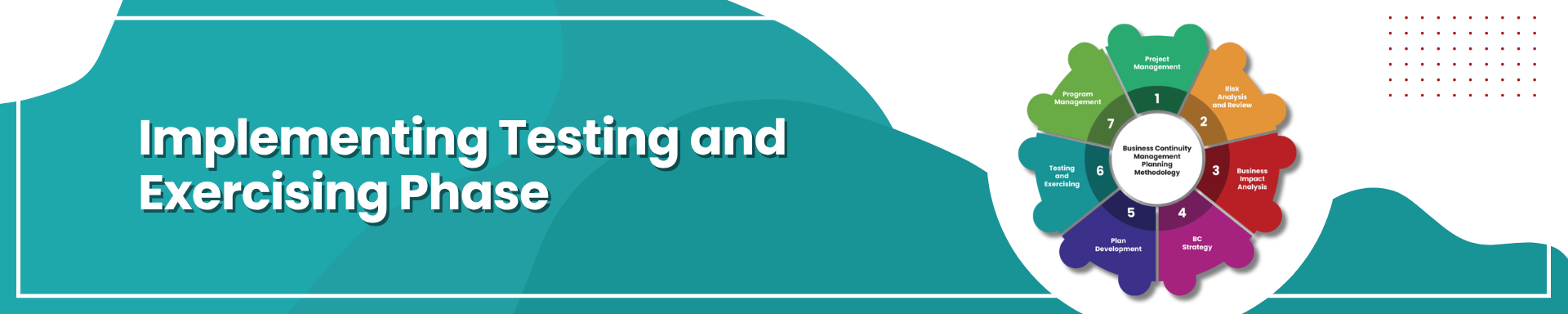
To ensure resilience across its regulatory functions, GRA should adopt a seven-phase BCM Planning Methodology consisting of the following seven phases:
1. [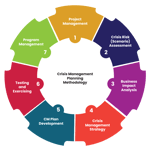](https://cta-redirect.hubspot.com/cta/redirect/3893111/1a8e2a34-95f1-46f9-9ee1-abdd9d608470)Project Management (PM)
2. Risk Analysis and Review (RAR)
3. Business Impact Analysis (BIA)
4. Business Continuity Strategy (BCS)
5. Plan Development (PD)
6. Testing and Exercising (TE)
7. Program Management (PgM)
These phases collectively enable **GRA** to establish a practical, sustainable, and organisation-wide BCM capability aligned with operational objectives and resilience requirements.
### The Seven-Phase BCM Planning Methodology
#### **[](https://cta-redirect.hubspot.com/cta/redirect/3893111/6a36f258-76ba-49d2-9dae-bbb8dc227461)Phase 1: Project Management (PM)**
##### **Purpose**
To establish the governance, leadership, scope, resources, and implementation structure required for BCM.
##### **Key Activities**
- [![\[BCM\] \[GRA\] \[E2\] \[C2\] Project Management](https://no-cache.hubspot.com/cta/default/3893111/f582601e-58a4-4d69-b0e0-cb3c5ea8643b.png)](https://cta-redirect.hubspot.com/cta/redirect/3893111/f582601e-58a4-4d69-b0e0-cb3c5ea8643b)Obtain senior management commitment.
- Define BCM policy and programme objectives.
- Establish BCM governance structure.
- Appoint the BCM Steering Committee and the BCM Coordinator.
- Define project scope covering all critical regulatory functions.
- Develop an implementation schedule and milestones.
- Allocate resources and budget.
##### **GRA-Specific Requirement**
GRA should establish BCM governance that includes representatives from Licensing, Compliance, Enforcement, Legal, ICT, Corporate Services, Communications, and Risk Management to ensure continuity planning reflects all regulatory functions.
[](https://cta-redirect.hubspot.com/cta/redirect/3893111/c2dfdab1-7ab0-4a8b-bd31-7876fd39633e)
#### **Phase 2: Risk Analysis and Review (RAR)**
##### **Purpose**
To identify, assess, and evaluate threats that may disrupt GRA’s operations.
##### **Key Activities**
- [![\[BCM\] \[GRA\] \[E2\] \[C3\] Risk Analysis and Review](https://no-cache.hubspot.com/cta/default/3893111/55ec9acb-df16-4fc7-b0be-6cc3656c406c.png)](https://cta-redirect.hubspot.com/cta/redirect/3893111/55ec9acb-df16-4fc7-b0be-6cc3656c406c)Identify internal and external threats.
- Assess likelihood and impact.
- Evaluate existing controls.
- Determine residual risks.
- Recommend risk treatment measures.
##### **Key Risks Relevant to GRA**
- Cyber attacks on licensing systems.
- Data breaches involving regulatory information.
- Loss of government communication networks.
- Failure of outsourced ICT services.
- Pandemic-related workforce disruption.
- Building access restrictions.
- Regulatory crises involving licensed operators.
##### **GRA-Specific Requirement**
Special emphasis should be placed on threats affecting regulatory decision-making systems, licensing databases, enforcement systems, and inter-agency communication channels.
[](https://cta-redirect.hubspot.com/cta/redirect/3893111/a1b4b4e2-f0aa-44df-a197-431397a7927c)
#### **Phase 3: Business Impact Analysis (BIA)**
##### **Purpose**
To determine the consequences of disruption and establish recovery priorities.
##### **Key Activities**
- [![\[BCM\] \[GRA\] \[E2\] \[C4\] Business Impact Analysis](https://no-cache.hubspot.com/cta/default/3893111/fb15dbb1-c559-4f54-88bb-6cc2274c6553.png)](https://cta-redirect.hubspot.com/cta/redirect/3893111/fb15dbb1-c559-4f54-88bb-6cc2274c6553)Identify Critical Business Functions (CBFs).
- Identify supporting resources and dependencies.
- Assess operational, financial, legal, and reputational impacts.
- Establish Recovery Time Objectives (RTOs).
- Determine Recovery Point Objectives (RPOs).
- Define Maximum Tolerable Period of Disruption (MTPD).
##### **Example Critical Functions**
- Gambling Licensing and Approval.
- Regulatory Oversight and Compliance Monitoring.
- Enforcement and Investigation.
- Responsible Gambling Programmes.
- Regulatory Intelligence and Risk Assessment.
#### **GRA-Specific Requirement**
The BIA should prioritise functions that directly affect regulatory control, licensing authority, enforcement capability, and public confidence.
[](https://cta-redirect.hubspot.com/cta/redirect/3893111/fac23b58-f744-480a-b86b-13a824a53308)
#### **Phase 4: Business Continuity Strategy (BCS)**
##### **Purpose**
To determine how critical functions will continue or be recovered following a disruption.
##### **Key Activities**
- [![\[BCM\] \[GRA\] \[E2\] \[C5\] Business Continuity Strategy](https://no-cache.hubspot.com/cta/default/3893111/b9f0877f-b8b5-4cb4-97ce-ab032e34cd3f.png)](https://cta-redirect.hubspot.com/cta/redirect/3893111/b9f0877f-b8b5-4cb4-97ce-ab032e34cd3f)Identify continuity options.
- Evaluate alternative work arrangements.
- Determine technology recovery solutions.
- Develop workforce continuity strategies.
- Establish supplier continuity arrangements.
- Select cost-effective recovery solutions.
##### **Potential Strategies**
- Remote working capability.
- Alternate office locations.
- Cloud-based system recovery.
- Cross-training of regulatory personnel.
- Alternate communication channels.
- Reciprocal government agency support arrangements.
##### **GRA-Specific Requirement**
GRA should maintain the capability to continue issuing urgent licensing approvals, making enforcement decisions, and conducting regulatory communications even if primary systems or facilities are unavailable.
[](https://cta-redirect.hubspot.com/cta/redirect/3893111/8be70e4c-1b23-4b38-bf36-5bd899b28e17)
#### **Phase 5: Plan Development (PD)**
##### **Purpose**
To document procedures required to respond to and recover from disruptions.
##### **Key Activities**
- [![\[BCM\] \[GRA\] \[E2\] \[C6\] BCM Plan Development](https://no-cache.hubspot.com/cta/default/3893111/3a85f1b6-b018-483f-bd97-760464351273.png)](https://cta-redirect.hubspot.com/cta/redirect/3893111/3a85f1b6-b018-483f-bd97-760464351273)Develop Incident Response Procedures.
- Develop Business Continuity Plans.
- Develop Department Recovery Plans.
- Develop Crisis Communication Plans.
- Develop ICT Disaster Recovery Plans.
- Define recovery roles and responsibilities.
##### **Plan Categories**
- Crisis Management Plan.
- Business Continuity Plan.
- IT Disaster Recovery Plan.
- Emergency Response Procedures.
- Department Recovery Procedures.
##### **GRA-Specific Requirement**
Recovery procedures should include manual fallback methods for licensing applications, emergency regulatory approvals, enforcement actions, and stakeholder communications.
[](https://cta-redirect.hubspot.com/cta/redirect/3893111/05ab08af-9acb-430c-8a4d-030a6a0e0fe2)
#### **Phase 6: Testing and Exercising (TE)**
##### **Purpose**
To validate the effectiveness of BCM plans and preparedness arrangements.
##### **Key Activities**
- [![\[BCM\] \[GRA\] \[E2\] \[C7\] Testing and Exercising](https://no-cache.hubspot.com/cta/default/3893111/68abc237-9fe7-440c-b9d6-5d107996f67d.png)](https://cta-redirect.hubspot.com/cta/redirect/3893111/68abc237-9fe7-440c-b9d6-5d107996f67d)Conduct tabletop exercises.
- Perform simulation exercises.
- Execute call tree tests.
- Validate ICT disaster recovery procedures.
- Test alternate worksite capabilities.
- Review exercise outcomes and improvement actions.
##### **Suggested Exercise Scenarios**
- Cyberattack affecting licensing systems.
- Major data centre outage.
- Regulatory crisis involving a licensed operator.
- Loss of access to regulatory offices.
- Failure of inter-agency communications.
##### **GRA-Specific Requirement**
At least one annual exercise should simulate disruption to gambling licensing and regulatory oversight functions to validate continuity arrangements under realistic conditions.
[](https://cta-redirect.hubspot.com/cta/redirect/3893111/2c2fa354-3d59-4e3e-ab4c-d1e1d1ac521c)
#### **Phase 7: Programme Management (PgM)**
##### **Purpose**
To ensure the BCM programme remains effective, up to date, and aligned with organisational changes.
##### **Key Activities**
- [![\[BCM\] \[GRA\] \[E2\] \[C8\] Program Management](https://no-cache.hubspot.com/cta/default/3893111/4845d6bf-6033-44e4-b851-09bdb3d92c88.png)](https://cta-redirect.hubspot.com/cta/redirect/3893111/4845d6bf-6033-44e4-b851-09bdb3d92c88)Conduct annual BCM reviews.
- Update plans following organisational changes.
- Monitor corrective actions.
- Perform internal audits.
- Track BCM performance indicators.
- Conduct management reviews.
- Promote BCM awareness and training.
##### **Continuous Improvement Activities**
- Lessons learned reviews.
- Audit recommendations.
- Regulatory changes monitoring.
- Technology change assessments.
- Third-party dependency reviews.
##### **GRA-Specific Requirement**
Programme reviews should consider emerging gambling technologies, changes in regulatory frameworks, cyber threats, and evolving stakeholder expectations that may affect continuity requirements.
### [![Banner \[Summary\] \[BCM\] \[E1\] \[C8\] Implementing the BCM Planning Methodology](https://no-cache.hubspot.com/cta/default/3893111/e44be53e-a156-4a00-b518-a7714cf21ce3.png)](https://cta-redirect.hubspot.com/cta/redirect/3893111/e44be53e-a156-4a00-b518-a7714cf21ce3)
The seven-phase BCM Planning Methodology provides the Gambling Regulatory Authority (GRA) with a comprehensive framework for establishing, implementing, maintaining, and continually improving its Business Continuity Management programme in accordance with ISO 22301.
By systematically progressing through Project Management, Risk Analysis and Review, Business Impact Analysis, Business Continuity Strategy, Plan Development, Testing and Exercising, and Programme Management, GRA can strengthen organisational resilience and ensure continuity of critical regulatory functions during disruptions.
Most importantly, this methodology enables GRA to continue licensing, regulatory oversight, enforcement, stakeholder engagement, and public protection activities even during adverse events, thereby preserving regulatory integrity, maintaining public confidence, and supporting the effective governance of Singapore's gambling sector.
[](https://cta-redirect.hubspot.com/cta/redirect/3893111/3aefb2d2-3110-47c1-ad4f-d3e6e5381066)
[![\[Thin Banner\] Gambling Regulatory Authority](https://no-cache.hubspot.com/cta/default/3893111/4f23072f-0544-42d8-b1c9-4b74082dae90.png)](https://cta-redirect.hubspot.com/cta/redirect/3893111/4f23072f-0544-42d8-b1c9-4b74082dae90)
| **eBook 1: Understanding Your Organisation** | | | | | |
| --- | --- | --- | --- | --- | --- |
| **C1** | **C2** | **C3** | **C4** | **C5** | **C6** |
| [![\[BCM\] \[GRA\] \[E1\] \[C1\] Overview of BCM Case Study](https://no-cache.hubspot.com/cta/default/3893111/0fc35b92-1285-4ef1-a9ce-59f0d5f44a47.png)](https://cta-redirect.hubspot.com/cta/redirect/3893111/0fc35b92-1285-4ef1-a9ce-59f0d5f44a47) | [![\[BCM\] \[GRA\] \[E1\] \[C2\] Understanding Your Organisation](https://no-cache.hubspot.com/cta/default/3893111/d1bf2cfa-6ae3-48b6-bea9-09dffdf3b675.png)](https://cta-redirect.hubspot.com/cta/redirect/3893111/d1bf2cfa-6ae3-48b6-bea9-09dffdf3b675) | [![\[BCM\] \[GRA\] \[E1\] \[C3\] Establishing Organisational Goals](https://no-cache.hubspot.com/cta/default/3893111/e5368eb8-2cb5-426c-8119-4cb0e0a1d545.png)](https://cta-redirect.hubspot.com/cta/redirect/3893111/e5368eb8-2cb5-426c-8119-4cb0e0a1d545) | [![\[BCM\] \[GRA\] \[E1\] \[C4\] Establishing Business Continuity Objectives](https://no-cache.hubspot.com/cta/default/3893111/c53c34b9-5159-407b-a0eb-e9ed33aba85a.png)](https://cta-redirect.hubspot.com/cta/redirect/3893111/c53c34b9-5159-407b-a0eb-e9ed33aba85a) | [![\[BCM\] \[GRA\] \[E1\] \[C5\] Determining BC Assumptions](https://no-cache.hubspot.com/cta/default/3893111/1db0c5e9-c92e-4c75-97cc-ef017021613b.png)](https://cta-redirect.hubspot.com/cta/redirect/3893111/1db0c5e9-c92e-4c75-97cc-ef017021613b) | [![\[BCM\] \[GRA\] \[E1\] \[C6\] Composing BCM Team](https://no-cache.hubspot.com/cta/default/3893111/d235fc7f-4864-44be-ac89-1931924a3303.png)](https://cta-redirect.hubspot.com/cta/redirect/3893111/d235fc7f-4864-44be-ac89-1931924a3303) |
| **C7** | **C8** | **C9** | **C10** | **C11** | **C12** |
| [![\[BCM\] \[GRA\] \[E1\] \[C7\] Analysing Operating Environment](https://no-cache.hubspot.com/cta/default/3893111/a5d3b991-4ce5-4d49-869a-8adb6b053a48.png)](https://cta-redirect.hubspot.com/cta/redirect/3893111/a5d3b991-4ce5-4d49-869a-8adb6b053a48) | [![\[BCM\] \[GRA\] \[E1\] \[C8\] Implementing the BCM Planning Methodology](https://no-cache.hubspot.com/cta/default/3893111/e7c43b43-c7e0-4fdd-9bd0-35b47aac1c29.png)](https://cta-redirect.hubspot.com/cta/redirect/3893111/e7c43b43-c7e0-4fdd-9bd0-35b47aac1c29) | [![\[BCM\] \[GRA\] \[E1\] \[C9\] Assessing Risks and Threats](https://no-cache.hubspot.com/cta/default/3893111/021959c6-f07a-44dd-982e-e084e764ab0f.png)](https://cta-redirect.hubspot.com/cta/redirect/3893111/021959c6-f07a-44dd-982e-e084e764ab0f) | [![\[BCM\] \[GRA\] \[E1\] \[C10\] Identifying Critical Business Functions](https://no-cache.hubspot.com/cta/default/3893111/a38bb175-c38a-41d4-9121-eca90cf91bb8.png)](https://cta-redirect.hubspot.com/cta/redirect/3893111/a38bb175-c38a-41d4-9121-eca90cf91bb8) | [![\[BCM\] \[GRA\] \[E1\] \[C11\] Summary of Understanding Your Organisation](https://no-cache.hubspot.com/cta/default/3893111/d560be80-304a-41ea-a3b8-ecc65e30bc2f.png)](https://cta-redirect.hubspot.com/cta/redirect/3893111/d560be80-304a-41ea-a3b8-ecc65e30bc2f) | [![\[BCM\] \[GRA\] \[E1\] \[C12\] \[Back Cover\] eBook 1](https://no-cache.hubspot.com/cta/default/3893111/7e5fabc9-5c15-460f-ac75-cdd3abe1972c.png)](https://cta-redirect.hubspot.com/cta/redirect/3893111/7e5fabc9-5c15-460f-ac75-cdd3abe1972c) |
| | | | | | |
#### More Information About Business Continuity Management Courses
To learn more about the course and schedule, click the buttons below for BCM-300 Business Continuity Management Implementer \[BCM-3\] and BCM-5000 Business Continuity Management Expert Implementer \[BCM-5\].
| [](https://cta-redirect.hubspot.com/cta/redirect/3893111/f3922b80-e96a-46d6-8993-dc150a5de2d5) | [](https://cta-redirect.hubspot.com/cta/redirect/3893111/9ff8a3dc-e39a-465b-929f-72e232cdd5fb) | [![Register \[BL-B-3\]*](https://no-cache.hubspot.com/cta/default/3893111/ac6cf073-4cdd-4541-91ed-889f731d5076.png)](https://cta-redirect.hubspot.com/cta/redirect/3893111/ac6cf073-4cdd-4541-91ed-889f731d5076) |
| --- | --- | --- |
| [](https://cta-redirect.hubspot.com/cta/redirect/3893111/21525c10-4003-4934-95fc-fe218174bc5b) | [](https://cta-redirect.hubspot.com/cta/redirect/3893111/46460171-c91a-4936-9bb2-8dc5928a0e02) | [](https://cta-redirect.hubspot.com/cta/redirect/3893111/1cb17ac7-50b2-4f88-bc4b-c7444e4b57b5) |
| [![FAQ \[BL-B-3\]](https://no-cache.hubspot.com/cta/default/3893111/b3824ba1-7aa1-4eb6-bef8-94f57121c5ae.png)](https://cta-redirect.hubspot.com/cta/redirect/3893111/b3824ba1-7aa1-4eb6-bef8-94f57121c5ae) | Please feel free to send us a note if you have any questions. [![Email to Sales Team \[BCM Institute\]](https://no-cache.hubspot.com/cta/default/3893111/3c53daeb-2836-4843-b0e0-645baee2ab9e.png)](https://cta-redirect.hubspot.com/cta/redirect/3893111/3c53daeb-2836-4843-b0e0-645baee2ab9e) | [](https://cta-redirect.hubspot.com/cta/redirect/3893111/9c199ae8-c470-4bb7-9612-73c7a084e94c) |
| [](https://cta-redirect.hubspot.com/cta/redirect/3893111/8999211a-2c51-4be7-bf49-c393f6c67974) | [](https://cta-redirect.hubspot.com/cta/redirect/3893111/5c1aa95d-f6dd-4067-a95c-5cc0c32d7ed8) | [](https://cta-redirect.hubspot.com/cta/redirect/3893111/086ab3b9-4d66-4a95-b2f7-1148e9803a9c) |
### Your Comments Here :
### More Posts
[](https://cta-redirect.hubspot.com/cta/redirect/3893111/839787f4-a4fd-456f-accf-54c947026558)

All rights reserved. Copyright 2026
```json
{
"@context" : "https://schema.org",
"@type" : "BlogPosting",
"author" : {
"@type" : "Person",
"name" : "Moh Heng Goh",
"url" : "https://blog.bcm-institute.org/ebook/author/moh-heng-goh"
},
"dateModified" : "2026-06-17T11:57:47.878Z",
"datePublished" : "2026-06-17T07:45:32.000Z",
"headline" : "[BCM] [GRA] [E1] [C8] Implementing the BCM Planning Methodology",
"mainEntityOfPage" : {
"@id" : "https://blog.bcm-institute.org/ebook/bcm-gra-e1-c8-implementing-the-bcm-planning-methodology",
"@type" : "WebPage"
},
"publisher" : {
"@type" : "Organization",
"logo" : {
"@type" : "ImageObject",
"url" : "https://blog.bcm-institute.org/hubfs/BCMI%20Logo.png"
},
"name" : "BCMI Pte Ltd"
}
}
```