
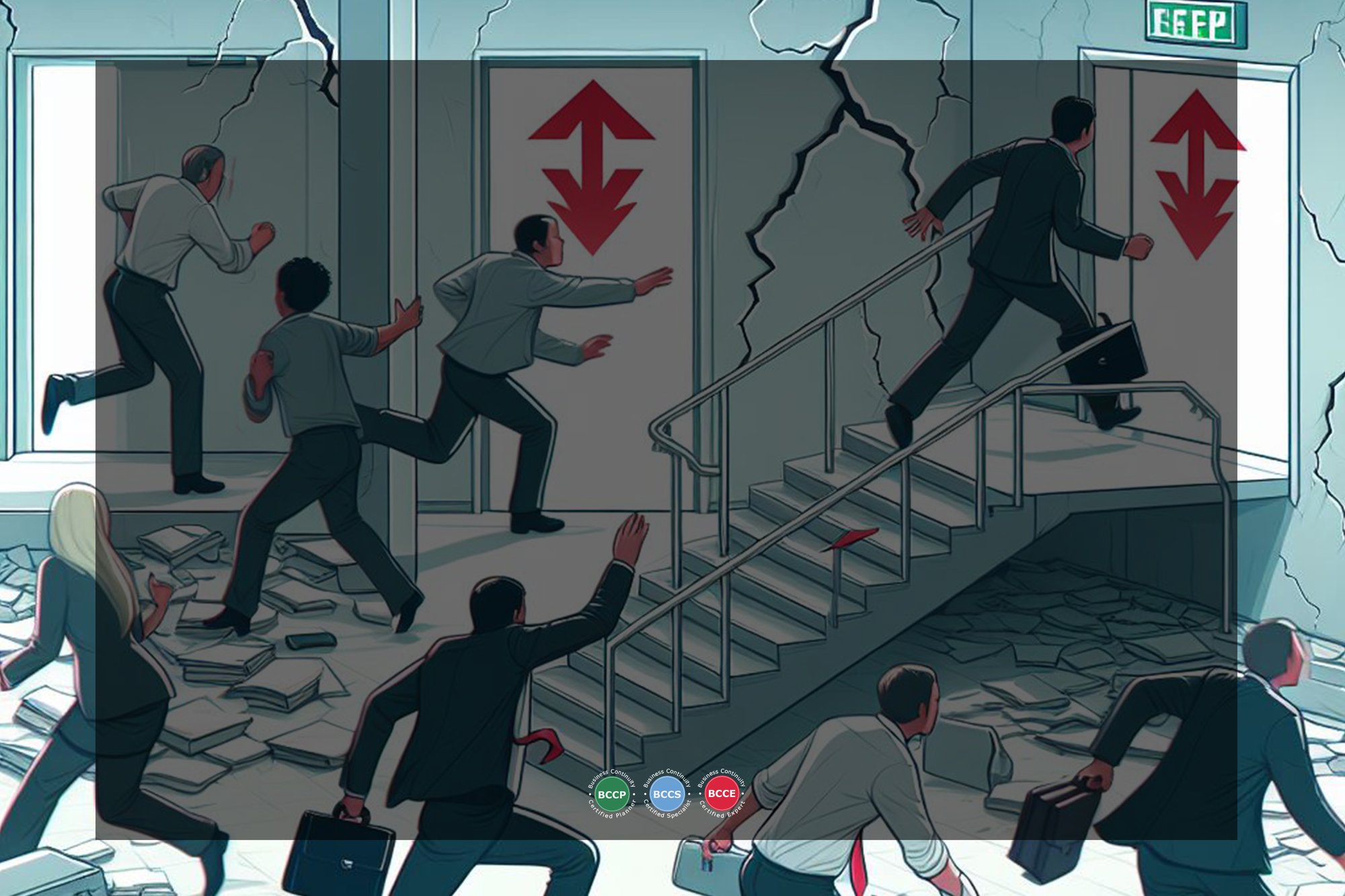
 Chapter 10: Maintaining and Reviewing the BCM Program

/Maintaining%20and%20Reviewing%20the%20Business%20Continuity%20Program.png?width=332&height=332&name=Maintaining%20and%20Reviewing%20the%20Business%20Continuity%20Program.png) Chapter 10 emphasises the ongoing nature of Business Continuity Management (BCM).
Chapter 10 emphasises the ongoing nature of Business Continuity Management (BCM). This is the "Program Management" phase of the BCM Planning Methodology.
An effective BCM Plan is a living document that requires constant maintenance and review to adapt to a dynamic environment. This chapter highlights the importance of monitoring changes within the organisation and its external environment.
Regular RAR, BIA, and BCM Plan updates are crucial to ensure they remain relevant and address current threats and vulnerabilities. Lessons learned from disruptions and BCM Plan testing should also be incorporated for continuous improvement.
Scheduled reviews are essential to ensure the BCM Plan reflects the organisation's current state. The chapter recommends establishing a review schedule, forming a review team with diverse representation, and thoroughly evaluating BCM procedures, communication protocols, and resource allocation.
Scheduled reviews are essential to ensure the BCM Plan reflects the organisation's current state. The chapter recommends establishing a review schedule, forming a review team with diverse representation, and thoroughly evaluating BCM procedures, communication protocols, and resource allocation.
Any updates or revisions should be documented following the review. Finally, the chapter stresses fostering a culture of continuous improvement within the BCM program.
Employee awareness, encouraging feedback, benchmarking against best practices, and investing in new technologies ensure the BCM program safeguards critical operations and promotes long-term organisational resilience.
Program Management![BCM Planning Methodology [7] [PgM} Program Management Phase](https://no-cache.hubspot.com/cta/default/3893111/de6d4a67-78b4-4ad8-9814-2209983d0425.png)
A well-crafted BCM Plan is a living document that requires continuous maintenance and review to ensure its effectiveness in safeguarding critical business functions.
This chapter explores strategies for keeping the BCM Plan current, conducting regular reviews and updates, and fostering a culture of continuous improvement within the BCM program.
Maintaining Currency in a Dynamic Environment
Organisations and their operating environments are constantly evolving. Here's how to ensure the BCM Plan remains relevant:
Monitor Changes
Proactively monitor:
- internal changes (e.g., new technologies, personnel changes, department restructuring)
- external changes (e.g., new regulations, emerging threats) that may impact the BC planning.
Update BIA and Risk Assessment
Review and update the Risk Analysis and Review (RAR) and Business Impact Analysis (BIA) regularly to reflect changes in critical business functions (CBFs), recovery time objectives (RTOs), recovery point objectives (RPOs), and the threat landscape.
Incorporate Lessons Learned
Following disruptions or BCM testing, analyse lessons learned and incorporate those insights into the BCM Plans to improve future response efforts.
By maintaining currency, BCM Plans ensure the plan remains aligned with the organisation's current needs and effectively addresses the most pressing threats.
Conducting Regular Reviews and Updates
Scheduled reviews are essential for identifying areas for improvement and ensuring the BCM Plan reflects the organisation's current state.
Here is how to approach BCM reviews:
Establish a Review Schedule
Define a regular review schedule for the BCM program, considering factors like the organisation's risk profile and the frequency of changes.
Annual reviews are expected, with additional reviews following significant disruptions or BCM testing.
Assemble a Review Team
Form a review team with representatives from various departments to evaluate the BCM Plan comprehensively from different perspectives.
Review Procedures and Processes
Evaluate the effectiveness of recovery procedures, communication protocols, and resource allocation strategies outlined in the BCM Plan.
Document Updates and Revisions
Document any updates or revisions made to the BCM Plan following the review process.
Regular reviews and updates ensure the BC M Plan remains relevant and accurate in reflecting the organisation's risk posture and recovery needs.
Continuous Improvement
Continuous improvement is the Cornerstone of a robust BCM program.
A thriving BCM program fosters a culture of continuous improvement. Here are some key aspects to consider:
Promote BCM Awareness
Once the plan is completed, educate employees at all levels about the importance of BCM and their roles in the BCM planning process. This can be achieved through training programs, communication campaigns, and awareness initiatives.
Encourage Feedback
Create channels for employees to provide feedback on the BCM program and plans and suggest potential improvements. This fosters a sense of ownership and engagement with the BCM program.
Benchmarking and Best Practices
Regularly benchmark your BCM program against industry best practices and learn from other organisations' experiences.
Invest in Technology
Continuously evaluate new technologies, such as automated recovery tools or communication platforms, that can enhance the BCM Plan's effectiveness.
Summing Up ...
By embracing continuous improvement, organisations can ensure their BCM program effectively mitigates risks, safeguards critical operations, and promotes long-term organisational resilience.
This concludes the exploration of the essential components of a robust BCM program. By following the principles outlined in this eBook, organisations can develop, implement, and maintain a comprehensive BCM Plan that safeguards critical functions and ensures a swift recovery from disruptions.
Remember, a successful BCM program requires ongoing commitment, continuous improvement, and active participation from all stakeholders within the organisation.




More Information About Business Continuity Management Courses
To learn more about the course and schedule, click the buttons below for the BCM-300 Business Continuity Management Implementer [BCM-3] and the BCM-5000 Business Continuity Management Expert Implementer [BCM-5].


![Register [BL-B-3]*](https://no-cache.hubspot.com/cta/default/3893111/ac6cf073-4cdd-4541-91ed-889f731d5076.png)



![FAQ [BL-B-3]](https://no-cache.hubspot.com/cta/default/3893111/b3824ba1-7aa1-4eb6-bef8-94f57121c5ae.png)
![Email to Sales Team [BCM Institute]](https://no-cache.hubspot.com/cta/default/3893111/3c53daeb-2836-4843-b0e0-645baee2ab9e.png)


