

![[BCM] [Damanat] [Full Banner] Implementing BCM for The Saudi Mortgage Guarantees Services Company](https://no-cache.hubspot.com/cta/default/3893111/221734db-8c33-48bd-8147-fc740eecaf83.png)

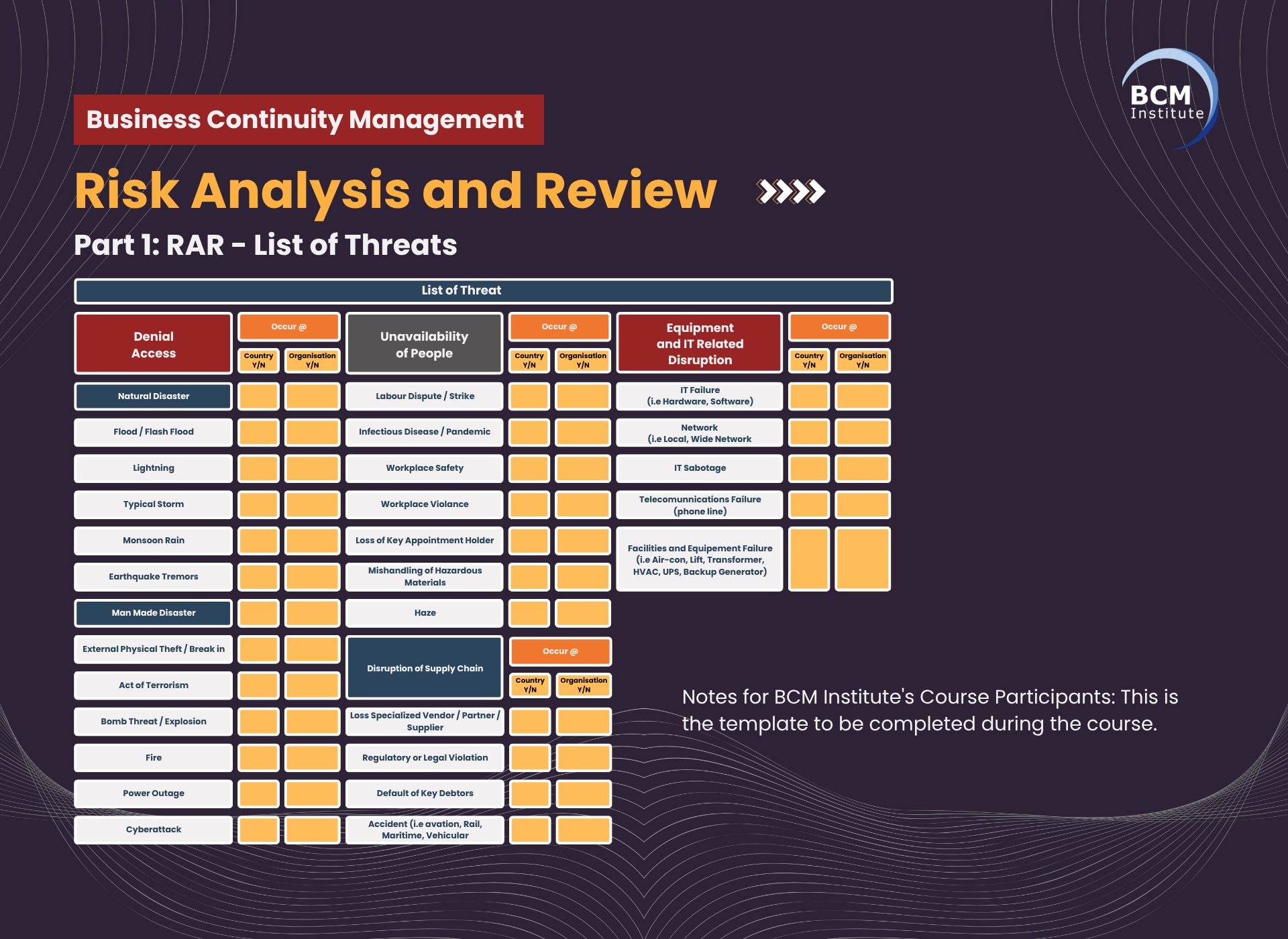
List of Threats ![Banner [BCM] [E3] [RAR] [T1] List of Threats](https://no-cache.hubspot.com/cta/default/3893111/65957ea5-03c3-451d-aabe-bbf23d32c897.png)
Introduction
![[BCM] [Damanat] [E3] [RAR] [T1] List of Threats](https://no-cache.hubspot.com/cta/default/3893111/3c267477-b524-461e-982d-1218d6bcac5b.png)
The Saudi Mortgage Guarantees Services Company (Damanat) plays a vital role in supporting the Kingdom of Saudi Arabia's housing finance ecosystem by providing mortgage guarantee services that enhance lenders' confidence and expand homeownership opportunities.
The continuity of its services depends upon the availability of skilled personnel, secure information systems, resilient facilities, trusted third-party service providers and effective governance.
The purpose of this Threat Register is to establish a comprehensive inventory of threats that could disrupt Damanat's operations.
The Threat Register forms the foundation of the Risk Analysis and Review (RAR) and will subsequently support Business Impact Analysis (BIA), Business Continuity Strategy (BCS), Crisis Management planning, and Operational Resilience activities.
This chapter identifies potential threats only and does not assess likelihood, impact or risk ratings.

Table RAR T1: List of Threats for Damanat
|
Category of Threats |
Types of Threats |
Description of Threats |
Country Level |
Organisation Level |
|
Denial of Access – Natural Disaster |
Earthquake |
Seismic activity affecting buildings, ICT infrastructure and transportation networks. |
Saudi Arabia experiences occasional seismic activity, particularly in western regions, which may affect infrastructure and essential services. |
Temporary closure of offices, disruption to mortgage guarantee processing, staff safety concerns and possible ICT service interruption. |
|
Flash Flood |
Heavy rainfall is causing flash flooding around business premises or transport routes. |
Flash floods periodically affect several regions, disrupting transport, utilities and public services. |
Employees are unable to reach offices, there is an interruption to business operations and possible damage to facilities. |
|
|
Severe Sandstorm |
Dust storms are reducing visibility and affecting transport, power and communications. |
Sandstorms are common climatic events that disrupt travel, aviation and utility services. |
Reduced workforce availability, degraded network connectivity and delays in guarantee processing. |
|
|
Extreme Heat |
Prolonged high temperatures affecting people and critical infrastructure. |
Seasonal extreme temperatures increase pressure on national power infrastructure and cooling systems. |
Reduced employee productivity, overheating of ICT equipment and increased facility operating risks. |
|
|
Pandemic |
Widespread infectious disease outbreak affecting the workforce. |
National health emergencies may restrict movement and business operations. |
High absenteeism, remote-working dependency, and reduced operational capacity. |
|
|
Denial of Access – Man-made Disaster |
Fire |
Fire affecting offices, archives or ICT facilities. |
Fire incidents may disrupt utility infrastructure and neighbouring developments. |
Damage to facilities, records and ICT equipment resulting in operational disruption. |
|
Explosion |
Explosion in or near operational facilities. |
Industrial or urban incidents may affect nearby organisations. |
Evacuation of premises, damage to infrastructure and prolonged interruption of services. |
|
|
Hazardous Material Release |
Chemical spill or hazardous substance affecting business premises. |
Industrial accidents or transportation incidents may create exclusion zones. |
Restricted access to facilities and temporary suspension of operations. |
|
|
Civil Disturbance |
Public disorder affecting transportation or access. |
Localised security incidents may disrupt movement within affected areas. |
Staff are unable to access workplaces and delays in operational activities. |
|
|
Terrorist Incident |
Deliberate attack targeting public infrastructure or critical services. |
National critical infrastructure may become the target of security threats. |
Activation of crisis management arrangements and prolonged disruption to essential services. |
|
|
Building Access Restriction |
Authorities prohibit access due to safety or security concerns. |
Government-imposed restrictions following emergencies or investigations. |
Temporary relocation of staff and interruption to customer services. |
|
|
Unavailability of People |
Loss of Key Personnel |
Departure, illness or unavailability of personnel with specialist knowledge. |
Competition for specialised financial and ICT professionals within the national labour market. |
Delays in mortgage guarantee assessments, approvals and strategic decision-making. |
|
Industrial Action |
Workforce disputes affecting employee availability. |
Labour-related disruptions may affect outsourced service providers or contractors. |
Reduced staffing levels and slower service delivery. |
|
|
High Staff Absenteeism |
Significant number of employees unavailable simultaneously. |
Public health events or transport disruptions affecting workforce availability. |
Processing backlogs and reduced customer service capability. |
|
|
Skills Shortage |
Insufficient availability of specialised personnel. |
National demand for skilled financial, cybersecurity and technology professionals. |
Increased dependency on a limited number of employees and reduced organisational resilience. |
|
|
Human Error |
Mistakes during operational activities. |
Human error remains a universal organisational risk across all industries. |
Incorrect mortgage guarantee decisions, operational delays and increased rework. |
|
|
Disruption to the Supply Chain |
Critical Supplier Failure |
Failure of a key supplier providing critical business services. |
National or regional disruptions affecting suppliers and logistics. |
Loss of essential external services supporting business operations. |
|
Cloud Service Provider Outage |
Failure of cloud infrastructure supporting applications. |
Regional cloud service disruptions affecting multiple organisations. |
Reduced availability of business applications and customer services. |
|
|
Telecommunications Failure |
Failure of telecommunications networks. |
Nationwide telecommunications outages affecting public and private sectors. |
Loss of communication between staff, customers and financial institutions. |
|
|
Internet Service Provider Failure |
Internet connectivity disruption. |
National network failures or infrastructure maintenance affecting connectivity. |
Inability to access cloud applications and external business services. |
|
|
Credit Bureau Service Failure |
Credit information services become unavailable. |
National financial infrastructure disruption affecting credit reporting services. |
Delays in borrower verification and guarantee approval processes. |
|
|
Banking Partner System Failure |
Partner financial institutions experience system outages. |
Banking sector operational disruptions affecting financial transactions. |
Delayed mortgage guarantee issuance and settlement activities. |
|
|
Outsourced ICT Support Failure |
External ICT support provider unavailable. |
Service provider disruption affecting multiple customers. |
Delayed incident response and extended ICT recovery times. |
|
|
Equipment and IT-Related Disruption |
Commercial Power Failure |
Loss of electrical power to business premises or ICT facilities. |
National or regional electricity disruptions affecting businesses. |
Interruption of business operations and system availability. |
|
HVAC Failure |
Failure of cooling or environmental control systems. |
Infrastructure failures affecting commercial buildings. |
Overheating of ICT equipment and reduced workplace usability. |
|
|
Network Failure |
Failure of internal or external communications networks. |
National telecommunications infrastructure issues affecting connectivity. |
Business systems become inaccessible, interrupting guarantee processing. |
|
|
Data Centre Outage |
Primary hosting environment unavailable. |
Regional infrastructure disruption affecting hosting facilities. |
Critical business applications unavailable for extended periods. |
|
|
Core Mortgage Guarantee System Failure |
Failure of the primary mortgage guarantee application. |
Software defects or infrastructure failures affecting financial platforms. |
Suspension of guarantee processing and customer services. |
|
|
Database Failure |
Corruption or failure of operational databases. |
Technology failures affecting enterprise information management. |
Loss of transaction integrity and delayed operational recovery. |
|
|
Identity and Access Management Failure |
Authentication or access control services unavailable. |
Cyber or infrastructure incidents affecting identity services. |
Employees unable to access critical business applications. |
|
|
Backup Failure |
Backup processes fail or cannot be restored successfully. |
Technology failures affecting backup infrastructure. |
Increased recovery time and potential information loss. |
|
|
Storage System Failure |
Enterprise storage infrastructure becomes unavailable. |
Hardware failures affecting digital infrastructure. |
Loss of business information availability and operational disruption. |
|
|
Cybersecurity Threats |
Ransomware Attack |
Malware encrypting critical systems and business information. |
Increasing cyber threats targeting government and financial sectors globally and nationally. |
Complete disruption of business systems and recovery operations. |
|
Malware Infection |
Malicious software compromising ICT assets. |
Continuous cyber threat environment affecting organisations. |
Reduced system availability, data compromise and operational disruption. |
|
|
Phishing Attack |
Fraudulent attempts to obtain credentials or confidential information. |
Persistent cybercrime targeting financial institutions. |
Compromise of user accounts and unauthorised access to systems. |
|
|
Business Email Compromise |
Fraud involving spoofed or compromised email communications. |
Increasing financial cybercrime targeting organisations. |
Financial losses, fraudulent transactions and reputational damage. |
|
|
Distributed Denial-of-Service (DDoS) Attack |
Attack overwhelming online services. |
National critical infrastructure and financial institutions remain potential targets. |
Customer-facing services become unavailable. |
|
|
Insider Cyber Threat |
Malicious or negligent actions by employees or contractors. |
Insider risks affecting organisations across all sectors. |
Data leakage, fraud and operational disruption. |
|
|
Data Breach |
Unauthorised disclosure of confidential information. |
Cybersecurity incidents affecting financial institutions worldwide. |
Regulatory investigations, reputational damage and stakeholder loss of confidence. |
|
|
Information Management |
Loss of Physical Records |
Destruction or loss of paper-based records. |
Fire, flooding or accidental loss affecting document repositories. |
Delays in regulatory compliance and customer servicing. |
|
Electronic Record Corruption |
Corruption of electronic documents and records. |
ICT failures affecting enterprise information repositories. |
Loss of business information integrity and operational disruption. |
|
|
Data Integrity Failure |
Information becomes inaccurate or incomplete. |
Data quality issues affecting financial decision-making. |
Incorrect guarantee decisions and financial exposure. |
|
|
Financial Threats
|
Fraudulent Mortgage Applications |
Submission of false borrower or property information. |
Mortgage fraud affecting financial institutions and housing markets. |
Financial loss, increased credit risk and reputational damage. |
|
Internal Fraud |
Fraud committed by employees or contractors. |
Fraud risks inherent across financial organisations. |
Financial losses, legal exposure and reduced stakeholder confidence. |
|
|
Financial Market Instability |
Economic fluctuations affecting mortgage markets. |
National or global financial uncertainty impacting housing finance. |
Increased business volatility and operational planning challenges. |
|
|
Regulatory and Legal Threats |
Regulatory Change |
New laws or regulatory expectations were introduced. |
Regulatory reforms affecting financial services organisations. |
Business process changes, compliance costs and operational adjustments. |
|
Regulatory Investigation |
Supervisory reviews or investigations. |
Increased regulatory oversight across financial institutions. |
Resource diversion, operational disruption and reputational exposure. |
|
|
Legal Proceedings |
Litigation involving the organisation. |
Legal disputes affecting financial institutions. |
Financial liabilities and management distraction. |
|
|
Physical Security Threats |
Physical Intrusion |
Unauthorised access to business premises. |
Security incidents affecting commercial buildings. |
Theft, sabotage or information compromise. |
|
Theft |
Theft of ICT assets or confidential information. |
Criminal activities affecting businesses. |
Financial loss and disruption to operations. |
|
|
Vandalism |
Deliberate damage to facilities or equipment. |
Local criminal activity affecting commercial premises. |
Repair costs and temporary service disruption. |
|
|
Operational Threats |
Process Failure |
Failure of critical business processes. |
Operational weaknesses affecting financial institutions. |
Delayed mortgage guarantee processing and customer dissatisfaction. |
|
Manual Workaround Failure |
Manual procedures ineffective during ICT disruption. |
Organisations unable to sustain operations without technology. |
Extended interruption of critical services. |
|
|
Inadequate Business Continuity Planning |
Continuity arrangements are incomplete or outdated. |
Organisations insufficiently prepared for disruptive events. |
Longer recovery times and increased operational risk. |
|
|
Inadequate Crisis Management |
Ineffective coordination during major incidents. |
National emergencies requiring coordinated organisational response. |
Poor decision-making and delayed recovery. |
|
|
Failure of Disaster Recovery Arrangements |
ICT recovery capability proves ineffective. |
Technology recovery failures affecting critical infrastructure. |
Extended ICT outages and prolonged operational disruption. |
|
|
Reputational Threats |
Negative Media Coverage |
Adverse publicity concerning the organisation. |
Media scrutiny affecting public confidence in financial institutions. |
Reduced stakeholder trust and reputational harm. |
|
Social Media Misinformation |
False or misleading information is circulating online. |
Rapid dissemination of misinformation across digital platforms. |
Increased customer enquiries and loss of public confidence. |
|
|
Service Delivery Failure |
Failure to meet customer or stakeholder expectations. |
Reduced confidence in financial sector services. |
Customer dissatisfaction and reputational damage. |
|
|
Strategic Threats |
Governance Failure |
Ineffective leadership or oversight. |
Weak governance affecting organisational resilience. |
Poor strategic decisions and increased operational risk. |
|
Poor Change Management |
Inadequate management of organisational or technology changes. |
Transformation initiatives introduce operational risks. |
System instability, project failure and business disruption. |
|
|
Third-Party Concentration Risk |
Over-reliance on a small number of suppliers. |
National dependence on limited specialised service providers. |
Increased exposure to supplier failures and reduced resilience. |
|
|
Simultaneous Multiple Disruptions |
Multiple unrelated incidents occurring concurrently. |
Large-scale emergencies affecting multiple sectors simultaneously. |
Enterprise-wide disruption requiring coordinated crisis and continuity management. |
![Banner [Table] [BCM] [E3] [RAR] [Summing Up] [T1] List of Threats](https://no-cache.hubspot.com/cta/default/3893111/d4dc8faf-623d-4f0d-acf8-26776beec0f4.png)
This Threat Register provides a comprehensive catalogue of credible threats that could affect the continuity of operations at The Saudi Mortgage Guarantees Services Company (Damanat).
It encompasses natural hazards, man-made events, workforce disruptions, supply chain dependencies, technology failures, cybersecurity incidents, regulatory challenges, operational weaknesses, and reputational risks relevant to a mortgage guarantee provider operating in Saudi Arabia.
The Threat Register establishes the foundation for the next stages of the Business Continuity Management lifecycle.
In subsequent chapters, each threat will be evaluated to determine existing controls, treatment approaches, likelihood, impact, risk level and appropriate mitigation strategies.
This structured approach enables Damanat to prioritise resilience investments, strengthen operational continuity, and maintain uninterrupted delivery of its mortgage guarantee services in alignment with ISO 22301, ISO 22313, ISO 31000, and recognised enterprise risk management practices.
![[BCM] [Damanat] [3/4 Banner] Implementing BCM for The Saudi Mortgage Guarantees Services Company](https://no-cache.hubspot.com/cta/default/3893111/0252380a-b2dc-4059-be10-b5566002b711.png)
![[BCM] [Damanat] [E3] [BIA] MBCO Corporate MBCO](https://no-cache.hubspot.com/cta/default/3893111/be2d62c7-973a-489a-8556-d73428e73448.png)
![[BCM] [Damanat] [E3] [BIA] [PS] Key Product and Services](https://no-cache.hubspot.com/cta/default/3893111/db1b84bd-ff7f-4d59-8efb-d610b612a861.png)
![[BCM] [Damanat] [E3] [RAR] [T2] Treatment and Control](https://no-cache.hubspot.com/cta/default/3893111/683192aa-bac0-4658-981a-a392b104aa51.png)
![[BCM] [Damanat] [E3] [RAR] [T3] Risk Impact and Likelihood Assessment](https://no-cache.hubspot.com/cta/default/3893111/0cbb6459-eaf8-44bb-8d84-8071cc4c1028.png)
![[BCM] [Damanat] [E3] [BCS] [T1] Mitigation Strategies and Justification](https://no-cache.hubspot.com/cta/default/3893111/65dcb68f-d4c9-4517-94f6-8d6df193c7bd.png)
![BCM] [Damanat] [E1] [C10] Identifying Critical Business Functions](https://no-cache.hubspot.com/cta/default/3893111/09f61f4b-0a96-4099-90ad-ec4db212874e.png)
More Information About Business Continuity Management Courses
To learn more about the course and schedule, click the buttons below for the BCM-300 Business Continuity Management Implementer [BCM-3] and the BCM-5000 Business Continuity Management Expert Implementer [BCM-5].


![Register [BL-B-3]*](https://no-cache.hubspot.com/cta/default/3893111/ac6cf073-4cdd-4541-91ed-889f731d5076.png)



![FAQ [BL-B-3]](https://no-cache.hubspot.com/cta/default/3893111/b3824ba1-7aa1-4eb6-bef8-94f57121c5ae.png)
![Email to Sales Team [BCM Institute]](https://no-cache.hubspot.com/cta/default/3893111/3c53daeb-2836-4843-b0e0-645baee2ab9e.png)


