

![[BCM] [ALPS] [Full Banner] Implementing Business Continuity Management for ALPS Healthcare](https://no-cache.hubspot.com/cta/default/3893111/a577c05a-ab89-4043-9a89-1dea0d883afc.png)
eBook 2: Chapter 2
Project Management Phase for BCM Planning Methodology for ALPS Healthcare
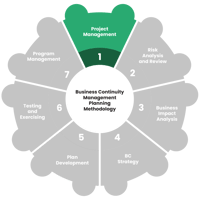
The successful implementation of a Business Continuity![[BCM] [ALPS] [E2] [C2] Project Management](https://no-cache.hubspot.com/cta/default/3893111/2a25b902-93e0-4adc-9793-121a2849bfab.png) Management (BCM) programme depends significantly on effective project management.
Management (BCM) programme depends significantly on effective project management.
While ISO 22301 specifies the requirements for establishing, implementing, maintaining, and continually improving a Business Continuity Management System (BCMS), organisations require a structured project management approach to ensure that the implementation is delivered consistently, efficiently, and with appropriate governance.
For ALPS Healthcare (ALPS), project management is particularly important because the organisation plays a critical role in Singapore's public healthcare supply chain.
ALPS is responsible for the procurement, warehousing, inventory management, logistics, and distribution of pharmaceuticals, medical devices, consumables, and healthcare supplies supporting multiple public healthcare institutions. Any disruption to these critical business functions can have direct consequences for healthcare service delivery and patient care.
Unlike organisations with relatively independent business units, ALPS operates within a highly interconnected healthcare ecosystem involving healthcare clusters, suppliers, logistics providers, technology vendors, government agencies, regulators, and numerous outsourced service providers.
Consequently, the implementation of BCM requires extensive coordination across multiple stakeholders, disciplined project governance, executive sponsorship, and clear communication throughout the organisation.
The objective of the Project Management Phase is to establish the governance framework, define project objectives, secure management commitment, allocate resources, engage stakeholders, manage project risks, and monitor implementation progress.
A well-managed BCM project provides the foundation upon which the remaining six phases of the BCM Planning Methodology can be successfully executed.
This chapter presents a practical project management framework tailored specifically to ALPS Healthcare. It incorporates recognised project management practices while aligning with ISO 22301 requirements and the operational realities of Singapore's healthcare supply chain.
This phase also provides the management structure for the subsequent phases of the BCM Planning Methodology:
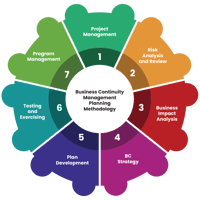 Project Management (PM) → Risk Analysis and Review (RAR) → Business Impact Analysis (BIA) → Business Continuity Strategy (BCS) → Plan Development (PD) → Testing and Exercising (TE) → Program Management (PgM).
Purpose of the Project Management Phase
The Project Management Phase aims to:
- Obtain executive sponsorship for the BCM programme.
- Establish an effective BCM governance structure.
- Define the implementation scope and objectives.
- Develop a realistic implementation roadmap.
- Allocate financial and human resources.
- Coordinate participation across business units.
- Monitor implementation progress.
- Manage implementation risks.
- Ensure timely delivery of project milestones.
- Establish a foundation for continual improvement.
Project Management Lifecycle
The BCM Project Management Phase consists of several integrated activities.
|
Stage |
Description |
Primary Deliverables |
|
Project Initiation |
Obtain approval and define project scope |
Project Charter |
|
Governance Establishment |
Create steering committee and project team |
Governance Structure |
|
Planning |
Develop implementation roadmap |
Project Plan |
|
Resource Allocation |
Assign people and budget |
Resource Plan |
|
Stakeholder Engagement |
Identify and engage stakeholders |
Stakeholder Register |
|
Project Execution |
Conduct implementation activities |
Phase Deliverables |
|
Monitoring and Reporting |
Track progress and risks |
Status Reports |
|
Project Closure |
Review project outcomes |
Lessons Learned Report |
Establish Executive Sponsorship
Executive sponsorship is the single most important success factor for a BCM implementation project.
Senior management should demonstrate visible commitment by:
- Approving the BCM Policy.
- Endorsing project objectives.
- Allocating sufficient resources.
- Removing organisational barriers.
- Supporting cross-functional collaboration.
- Reviewing implementation progress.
- Participating in management reviews.
Example – ALPS Healthcare
The Chief Executive Officer appoints a senior executive sponsor to oversee the enterprise BCM programme. Executive sponsorship ensures that procurement, warehouse operations, logistics, finance, information technology, cybersecurity, quality assurance, human resources, and corporate services actively support the implementation rather than viewing BCM as solely the responsibility of the Risk or Corporate Planning department.
Develop the BCM Project Charter
The Project Charter formally authorises the BCM project.
It should define:
- Business justification
- Project objectives
- Project scope
- Success criteria
- Project assumptions
- Constraints
- Governance structure
- Budget
- Timeline
- Deliverables
Example – ALPS Healthcare
The Project Charter states that the BCM programme aims to enhance the resilience of ALPS' healthcare supply chain by ensuring continuity of pharmaceutical procurement, medical supply distribution, warehouse operations, supplier management, and supporting ICT systems during disruptive incidents.
Define the BCM Scope
Clearly defining the project scope prevents misunderstandings and uncontrolled project expansion.
The scope should identify:
- Business units included
- Physical locations
- Warehouses
- Distribution centres
- Information systems
- Third-party providers
- Healthcare partners
- Regulatory obligations
Example – ALPS Healthcare
The implementation scope includes:
- Strategic Procurement
- Pharmaceutical Procurement
- Medical Supply Procurement
- Warehouse Operations
- Cold-Chain Logistics
- Distribution Operations
- Supplier Management
- ICT Infrastructure
- Enterprise Applications
- Corporate Support Services
Out-of-scope items are documented separately and scheduled for future implementation phases.
Establish BCM Governance Structure
Effective governance provides oversight throughout implementation.
Typical governance includes:
Executive Sponsor
Provides strategic direction and approvals.
BCM Steering Committee
Provides governance and decision-making.
BCM Project Manager
Coordinates daily implementation activities.
Business Continuity Coordinator
Facilitates workshops and documentation.
Department Representatives
Provide operational knowledge.
Subject Matter Experts
Support technical assessments.
Example – ALPS Healthcare Governance
|
Role |
Responsibilities |
|
Executive Sponsor |
Strategic oversight and executive approvals |
|
BCM Steering Committee |
Programme governance |
|
BCM Manager |
Overall coordination |
|
Procurement Representatives |
Procurement continuity |
|
Warehouse Operations |
Warehouse resilience |
|
Logistics Team |
Distribution continuity |
|
ICT Team |
Technology resilience |
|
Cybersecurity Team |
ICT security resilience |
|
Supplier Management |
Third-party continuity |
|
Quality Assurance |
Product quality during disruptions |
|
Human Resources |
Workforce continuity |
|
Corporate Communications |
Crisis communication |
Identify Stakeholders
Stakeholder engagement ensures organisation-wide participation.
Internal stakeholders include:
- Senior Management
- Procurement
- Warehouse Operations
- Logistics
- Finance
- Human Resources
- ICT
- Cybersecurity
- Legal
- Corporate Communications
External stakeholders include:
- Public Healthcare Clusters
- Pharmaceutical Suppliers
- Medical Device Manufacturers
- Third-Party Logistics Providers
- Cloud Service Providers
- Government Agencies
- Emergency Services
- Regulatory Authorities
Example – ALPS Healthcare
Representatives from Singapore's public healthcare institutions participate during Business Impact Analysis workshops to validate recovery priorities and ensure that BCM objectives support healthcare service continuity.
Develop the Project Plan
The project plan should include:
- Activities
- Deliverables
- Responsibilities
- Dependencies
- Schedule
- Milestones
- Budget
- Risks
- Reporting requirements
Typical milestones include:
- Project Kick-off
- Risk Assessment Completed
- Business Impact Analysis Completed
- Recovery Strategy Approved
- BCM Plans Developed
- Initial Exercise Conducted
- Management Review Completed
Example – ALPS Healthcare
The project schedule aligns implementation with procurement cycles and avoids major system upgrades or annual inventory stocktakes to minimise operational disruption.
Resource Planning
Successful BCM implementation requires adequate resources.
Resources include:
Human Resources
- Project Manager
- BCM Specialists
- Business Representatives
- ICT Specialists
- Administrative Support
Financial Resources
- Consultancy
- Training
- Software
- Exercises
- Awareness programmes
Technology Resources
- Collaboration platforms
- Risk assessment tools
- BCM software
- Documentation repositories
Example – ALPS Healthcare
ALPS allocates dedicated BCM coordinators from procurement, warehouse operations, logistics, ICT, and supplier management to ensure that operational expertise is incorporated into all implementation activities.
Communication Management
Communication is essential for maintaining stakeholder engagement.
Communication activities include:
- Executive briefings
- Steering Committee meetings
- Department workshops
- Progress newsletters
- Awareness sessions
- Project dashboards
- Issue escalation
Example – ALPS Healthcare
Monthly progress updates are presented to senior management, highlighting completed milestones, outstanding risks, upcoming workshops, and resource requirements.
Project Risk Management
Project risks should be actively managed throughout implementation.
Common project risks include:
- Limited management commitment
- Insufficient resources
- Poor stakeholder participation
- Changing organisational priorities
- Technology implementation delays
- Supplier dependency changes
- Regulatory changes
- Staff turnover
Example – ALPS Healthcare
If a major warehouse automation project begins during BCM implementation, the Steering Committee reviews project priorities to avoid resource conflicts and adjusts the implementation schedule while preserving key BCM milestones.
Project Monitoring and Reporting
Regular monitoring ensures that implementation remains on schedule.
Performance indicators may include:
- Percentage completion
- Milestones achieved
- Workshops completed
- Business units assessed
- BCM plans completed
- Risks closed
- Issues outstanding
- Budget utilisation
Example – ALPS Healthcare
A monthly dashboard reports progress across procurement, warehouse operations, logistics, supplier management, ICT resilience, documentation completion, training participation, and exercise readiness.
Change Management
Projects evolve over time.
Formal change control should evaluate:
- Scope changes
- Resource changes
- Timeline changes
- Regulatory changes
- Technology changes
- Organisational restructuring
Example – ALPS Healthcare
When ALPS introduces a new cloud-based procurement platform during the BCM implementation, the project scope is updated to include continuity planning and recovery procedures for the new system.
Project Closure
At project completion:
- Review objectives.
- Confirm deliverables.
- Obtain management approval.
- Conduct lessons learned.
- Transfer ownership to the BCM Programme Manager.
- Establish ongoing maintenance activities.
Example – ALPS Healthcare
Following completion of the initial implementation, the Steering Committee formally transitions responsibility from the project team to the permanent BCM governance structure, ensuring that periodic reviews, plan maintenance, exercises, and continual improvement become part of normal business operations.
Success Factors for ALPS Healthcare
Critical success factors include:
- Strong executive leadership.
- Enterprise-wide participation.
- Clear governance.
- Effective project planning.
- Adequate funding.
- Experienced project team.
- Collaboration across healthcare stakeholders.
- Integration with enterprise risk management.
- Alignment with healthcare operational priorities.
- Commitment to continual improvement.
![Banner [Summary] [BCM] [E2] [C2] Project Management](https://no-cache.hubspot.com/cta/default/3893111/a27bdcb3-7e9b-40ec-8a47-a1c06d8688ca.png)
The Project Management Phase establishes the governance, leadership, structure, and discipline necessary for implementing an effective Business Continuity Management programme at ALPS Healthcare.
By securing executive sponsorship, defining a clear scope, assigning responsibilities, engaging stakeholders, allocating resources, and maintaining effective oversight, ALPS creates a strong foundation for all subsequent phases of the BCM Planning Methodology.
Given ALPS' critical role in Singapore's healthcare supply chain, successful project management must extend beyond internal coordination to include meaningful collaboration with healthcare institutions, suppliers, logistics partners, technology providers, and government agencies.
Effective governance ensures that BCM implementation remains aligned with organisational priorities while supporting the continuity of essential healthcare procurement, warehousing, inventory management, and distribution services.
The deliverables produced during this phase—including the Project Charter, governance framework, implementation roadmap, stakeholder engagement plan, communication strategy, and project monitoring mechanisms—provide the organisational structure required to guide the remaining BCM implementation activities.
In the next chapter, the focus shifts to the Risk Analysis and Review (RAR) Phase, where ALPS Healthcare systematically identifies, assesses, and evaluates threats and vulnerabilities that could disrupt its critical business functions, enabling informed decisions on risk treatment and continuity planning.
![[BCM] [ALPS] [3/4 Banner] Implementing Business Continuity Management for ALPS Healthcare](https://no-cache.hubspot.com/cta/default/3893111/5bb3d163-ccf4-4942-8e51-90cb0e0de84f.png)
![[BCM] [ALPS] [E2] [C1] Business Continuity Management Planning Methodology](https://no-cache.hubspot.com/cta/default/3893111/34a98265-b1ac-4365-8fb1-b89701c81850.png)
![[BCM] [ALPS] [E2] [C3] Risk Analysis and Review](https://no-cache.hubspot.com/cta/default/3893111/74b8cdd9-6407-4d41-bfa9-1c382a227c82.png)
![[BCM] [ALPS] [E2] [C4] Business Impact Analysis](https://no-cache.hubspot.com/cta/default/3893111/eedd40d9-b511-4e16-96de-58834c1e7d92.png)
![[BCM] [ALPS] [E2] [C5] Business Continuity Strategy](https://no-cache.hubspot.com/cta/default/3893111/404ab765-7f69-49dd-ac4a-b9079f065d1c.png)
![[BCM] [ALPS] [E2] [C6] BCM Plan Development](https://no-cache.hubspot.com/cta/default/3893111/4df32844-f3fe-4e88-b9e0-c33cd4f354f5.png)
![[BCM] [ALPS] [E2] [C7] Testing and Exercising](https://no-cache.hubspot.com/cta/default/3893111/be2eeb3c-4b1a-4d42-bebd-0a30e1047952.png)
![[BCM] [ALPS] [E2] [C8] Program Management](https://no-cache.hubspot.com/cta/default/3893111/52497940-4ed8-4ee5-b5e9-0a1b21e83f29.png)
![[BCM] [ALPS] [E2] [C9] Summary](https://no-cache.hubspot.com/cta/default/3893111/c702d1dd-d76e-4015-8be8-58641496151a.png)
![[BCM] [ALPS] [E2] [C10] Back Cover of eBook 2](https://no-cache.hubspot.com/cta/default/3893111/7f72c39b-5844-4487-92a5-c9d0f38f0bad.png)
More Information About Business Continuity Management Courses
To learn more about the course and schedule, click the buttons below for BCM-300 Business Continuity Management Implementer [BCM-3] and BCM-5000 Business Continuity Management Expert Implementer [BCM-5]


![Register [BL-B-3]*](https://no-cache.hubspot.com/cta/default/3893111/ac6cf073-4cdd-4541-91ed-889f731d5076.png)



![FAQ [BL-B-3]](https://no-cache.hubspot.com/cta/default/3893111/b3824ba1-7aa1-4eb6-bef8-94f57121c5ae.png)
![Email to Sales Team [BCM Institute]](https://no-cache.hubspot.com/cta/default/3893111/3c53daeb-2836-4843-b0e0-645baee2ab9e.png)


