

![[BCM] [ALPS] [Full Banner] Implementing Business Continuity Management for ALPS Healthcare](https://no-cache.hubspot.com/cta/default/3893111/a577c05a-ab89-4043-9a89-1dea0d883afc.png)
![x eBook Cover [BCM] [ALPS] [E1] [2D]](https://no-cache.hubspot.com/cta/default/3893111/b5679347-4c2f-400c-bfdb-65c0cf960dcb.png)

eBook 1: Chapter 8
Business Continuity Management Planning Methodology for ALPS Healthcare
Introduction
![[BCM] [ALPS] [E1] [C8] Implementing the BCM Planning Methodology](https://no-cache.hubspot.com/cta/default/3893111/26cf9a0b-9e5d-47ef-b238-ceb196d11c90.png) Business Continuity Management (BCM) works best when implemented through a structured, repeatable methodology rather than as a collection of isolated activities.
Business Continuity Management (BCM) works best when implemented through a structured, repeatable methodology rather than as a collection of isolated activities.
ISO 22301 sets out the requirements for a Business Continuity Management System (BCMS), but organisations must adopt an implementation methodology to turn those requirements into practical actions.
A well-defined methodology provides a logical sequence of activities, ensures consistency across business units, and supports continual improvement of organisational resilience.
For ALPS Healthcare (ALPS), a structured BCM planning methodology is essential because the organisation supports Singapore's public healthcare sector through strategic procurement, healthcare supply chain management, warehousing, logistics, pharmaceutical sourcing, inventory management, and supplier coordination.
The continuity of these services is critical to ensuring hospitals and healthcare institutions continue to receive essential medical products during disruptive events. Consequently, the BCM methodology must be comprehensive, scalable, and aligned with both ISO 22301 and Singapore's healthcare governance expectations.
This chapter introduces the seven-phase BCM Planning Methodology adopted throughout this eBook series. The methodology provides a framework to guide ALPS Healthcare from initiating its BCM programme through risk assessment, business impact analysis, strategy development, plan preparation, testing, and ongoing programme management.
Each subsequent phase is explained in detail in Implementing Business Continuity Management for ALPS Healthcare (eBook 2) and applied practically in Starting Your BCM Implementation for ALPS Healthcare (eBook 3).
Chapter Objectives
This chapter aims to:
- Explain the purpose of a structured BCM planning methodology.
- Align the methodology with ISO 22301 requirements.
- Introduce the seven phases of ALPS Healthcare's BCM implementation approach.
- Describe the objectives and outputs of each phase.
- Demonstrate how the phases are integrated into a continual improvement cycle.
- Provide practical examples relevant to ALPS Healthcare.
Why a Structured BCM Planning Methodology Is Important
Business continuity implementation involves multiple business units, support functions, suppliers, technologies, and stakeholders. Without a structured methodology, organisations often produce inconsistent plans, duplicate effort, overlook critical dependencies, or fail to maintain their continuity capabilities over time.
A structured methodology enables ALPS Healthcare to:
- Establish a consistent enterprise-wide approach.
- Align BCM activities with ISO 22301.
- Improve governance and accountability.
- Ensure Critical Business Functions are systematically analysed.
- Prioritise continuity investments.
- Standardise documentation.
- Facilitate training and awareness.
- Support regulatory compliance.
- Promote continual improvement.
- Build organisational resilience.
Example – ALPS Healthcare
Rather than each department developing continuity plans independently, the seven-phase methodology provides a common framework for procurement, warehousing, logistics, quality assurance, information technology, and corporate support functions to follow, ensuring consistency across the organisation.
Overview of the Seven-Phase BCM Planning Methodology
The recommended BCM Planning Methodology for ALPS Healthcare consists of seven integrated phases.
|
Phase |
Abbreviation |
Primary Purpose |
|
Phase 1 |
Project Management |
Establish and govern the BCM programme |
|
Phase 2 |
Risk Analysis and Review |
Identify and evaluate threats and risks |
|
Phase 3 |
Business Impact Analysis |
Identify Critical Business Functions and recovery priorities |
|
Phase 4 |
Business Continuity Strategy |
Develop appropriate continuity and recovery strategies |
|
Phase 5 |
Plan Development |
Prepare Business Continuity Plans and supporting procedures |
|
Phase 6 |
Testing and Exercising |
Validate plans, strategies, and organisational readiness |
|
Phase 7 |
Programme Management |
Maintain, review, and continually improve the BCMS |
The methodology is cyclical rather than linear, ensuring that lessons learned, organisational changes, and emerging risks are continuously incorporated into the Business Continuity Management System.
The Seven-Phase BCM Planning Methodology
 Phase 1: Project Management (PjM)
Objective
Project Management establishes the governance, resources, scope, objectives, and implementation framework required to initiate the Business Continuity Management programme.
Major Activities
- Obtain executive sponsorship.
- Establish BCM governance.
- Define project scope.
- Appoint the BCM Team.
- Develop the implementation roadmap.
- Allocate resources.
- Establish project schedules.
- Define reporting arrangements.
Deliverables
- BCM Policy.
- BCM Charter.
- Project Plan.
- Governance Structure.
- Implementation Schedule.
- Communication Plan.
Example – ALPS Healthcare
ALPS Healthcare establishes a BCM Steering Committee chaired by senior management and appoints Business Unit BCM Coordinators from procurement, warehousing, logistics, information technology, quality assurance, finance, and human resources.

Phase 2: Risk Analysis and Review (RAR)
Objective
Risk Analysis and Review identifies and evaluates threats that may disrupt ALPS Healthcare's ability to deliver critical healthcare supply chain services.
Major Activities
- Identify threats.
- Assess vulnerabilities.
- Evaluate existing controls.
- Analyse likelihood and consequences.
- Prioritise organisational risks.
- Develop the organisational risk profile.
Deliverables
- Threat Register.
- Risk Register.
- Risk Assessment Report.
- Risk Treatment Recommendations.
Example – ALPS Healthcare
The assessment identifies ransomware, pharmaceutical shortages, warehouse fires, logistics disruptions, cold-chain failures, and supplier insolvency as significant threats requiring continuity planning.
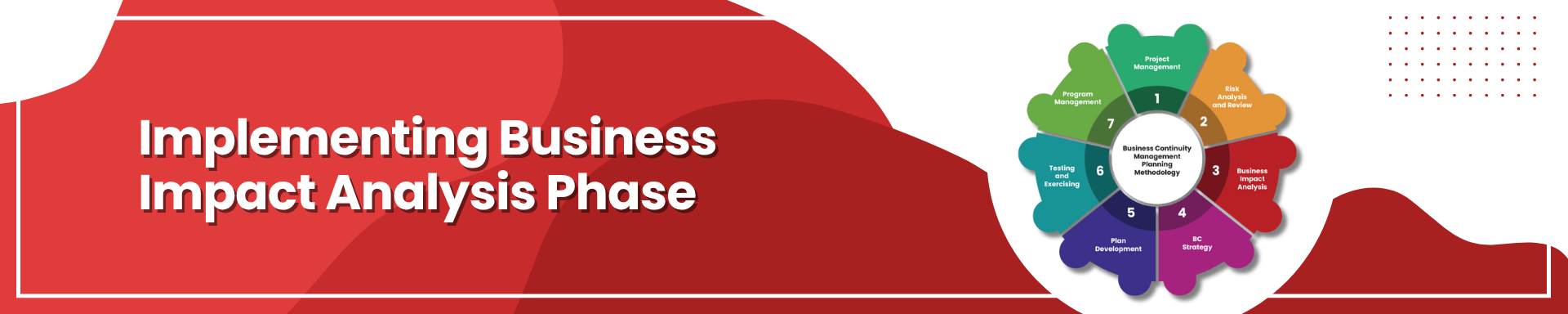
Phase 3: Business Impact Analysis (BIA)
Objective
The Business Impact Analysis determines which business functions are critical, evaluates the consequences of disruption, and establishes recovery priorities.
Major Activities
- Identify Critical Business Functions.
- Analyse operational impacts.
- Determine Recovery Time Objectives (RTOs).
- Determine Recovery Point Objectives (RPOs) where applicable.
- Identify resource requirements.
- Document operational dependencies.
Deliverables
- Business Impact Analysis Report.
- Critical Business Function Catalogue.
- Recovery Priorities.
- Resource Dependency Register.
Example – ALPS Healthcare
The BIA identifies Healthcare Distribution and Delivery Operations, Pharmaceutical Procurement, and Cold-Chain Logistics as requiring the highest recovery priority because of their direct impact on patient care.

Phase 4: Business Continuity Strategy (BCS)
Objective
Business Continuity Strategy identifies practical solutions that enable ALPS Healthcare to continue or recover its critical operations within acceptable recovery objectives.
Major Activities
- Evaluate strategic options.
- Develop continuity solutions.
- Identify alternate facilities.
- Develop workforce continuity strategies.
- Strengthen supplier resilience.
- Enhance technology resilience.
- Establish emergency logistics arrangements.
Deliverables
- Business Continuity Strategy Report.
- Recovery Strategy Catalogue.
- Resource Requirements.
- Investment Recommendations.
Example – ALPS Healthcare
To reduce dependence on a single warehouse, ALPS Healthcare establishes geographically separated warehousing arrangements and pre-qualified alternate logistics providers for emergency distribution.
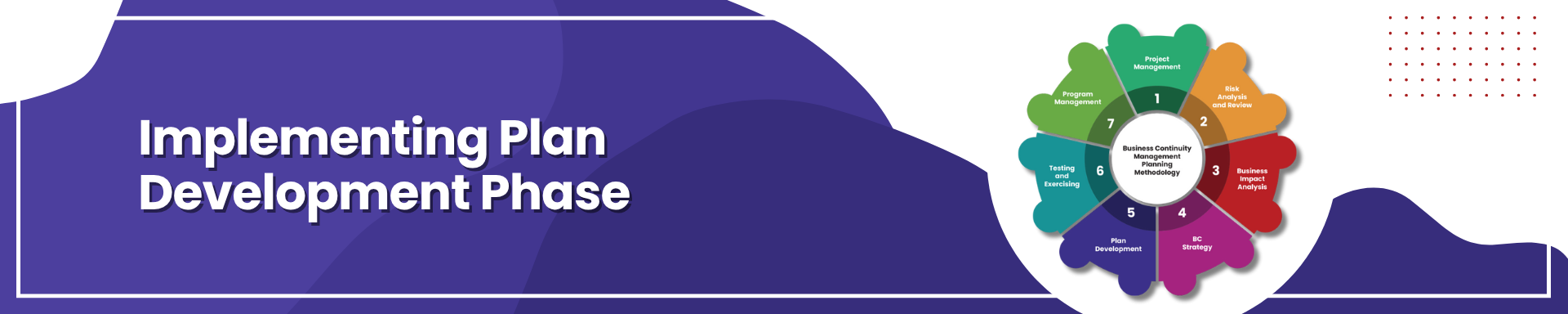
Phase 5: Plan Development (PD)
Objective
Plan Development translates continuity strategies into documented procedures that guide the organisation during disruptive incidents.
Major Activities
- Develop Business Continuity Plans.
- Develop Crisis Management Plans.
- Prepare Incident Response Procedures.
- Document recovery processes.
- Establish emergency communication procedures.
- Develop departmental recovery plans.
Deliverables
- Business Continuity Plans (BCPs).
- Crisis Management Plan.
- Departmental Recovery Plans.
- Emergency Contact Directories.
- Communication Templates.
- Recovery Checklists.
Example – ALPS Healthcare
Warehouse Operations develops a Business Continuity Plan that details inventory relocation procedures, emergency order processing, manual stock management, and alternative distribution arrangements in the event the primary warehouse becomes unavailable.
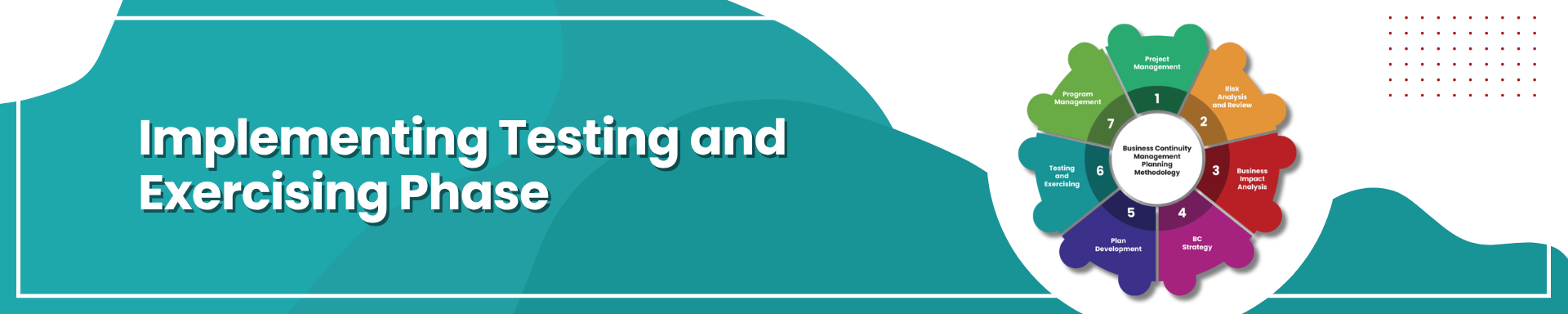
Phase 6: Testing and Exercising (TE)
Objective
Testing and Exercising validates the effectiveness of continuity strategies, plans, personnel, and organisational readiness.
Major Activities
- Tabletop exercises.
- Functional exercises.
- Simulation exercises.
- Technical recovery tests.
- Communication exercises.
- Supplier participation exercises.
- Lessons learned reviews.
Deliverables
- Exercise Plans.
- Exercise Reports.
- Improvement Action Plans.
- Corrective Action Register.
- Updated Business Continuity Plans.
Example – ALPS Healthcare
A simulation exercise tests the organisation's response to a ransomware attack that simultaneously disrupts procurement systems, warehouse operations, and supplier communications.

Phase 7: Programme Management (PgM)
Objective
Programme Management ensures that the Business Continuity Management System remains effective, up to date, and aligned with organisational changes.
Major Activities
- Conduct internal audits.
- Review Business Continuity Plans.
- Update Business Impact Analyses.
- Review risks.
- Monitor performance indicators.
- Conduct management reviews.
- Deliver training and awareness.
- Implement continual improvement.
Deliverables
- BCMS Performance Reports.
- Audit Reports.
- Management Review Reports.
- Updated Documentation.
- Improvement Plans.
- Training Records.
Example – ALPS Healthcare
Following changes to its pharmaceutical distribution network, ALPS Healthcare updates its Business Impact Analysis, revises continuity strategies, and conducts a validation exercise to confirm that recovery arrangements remain effective.
Relationship Between the Seven Phases
The seven phases are interdependent and should be implemented sequentially while supporting continual improvement.
|
Phase |
Primary Output |
Supports |
|
Project Management |
Governance and implementation framework |
All subsequent phases |
|
Risk Analysis and Review |
Organisational risk profile |
BIA and Strategy Development |
|
Business Impact Analysis |
Recovery priorities |
Strategy Development |
|
Business Continuity Strategy |
Recovery solutions |
Plan Development |
|
Plan Development |
Business Continuity Plans |
Testing and Exercising |
|
Testing and Exercising |
Validated capabilities and improvement actions |
Programme Management |
|
Programme Management |
Continual improvement |
Entire BCMS lifecycle |
Integration with ISO 22301
The methodology aligns with the key requirements of ISO 22301.
|
ISO 22301 Requirement |
BCM Planning Methodology Phase |
|
Leadership |
Project Management |
|
Planning |
Project Management and Risk Analysis |
|
Support |
Programme Management |
|
Operation |
BIA, Strategy, Plan Development |
|
Performance Evaluation |
Testing and Exercising, Programme Management |
|
Improvement |
Programme Management |
This alignment ensures that ALPS Healthcare's BCMS supports certification readiness and internationally recognised good practice.
Benefits of the BCM Planning Methodology
Implementing this structured methodology enables ALPS Healthcare to:
- Improve organisational resilience.
- Protect healthcare supply continuity.
- Strengthen executive governance.
- Improve coordination across business units.
- Enhance supplier resilience.
- Reduce operational disruption.
- Improve crisis response.
- Increase regulatory confidence.
- Support continual improvement.
- Protect the organisation's reputation.
Example – ALPS Healthcare
By following the seven-phase methodology, ALPS Healthcare can systematically identify vulnerabilities within its healthcare supply chain, establish practical recovery strategies, and validate its readiness through regular exercises, thereby improving its ability to sustain critical services during disruptions.
Key Takeaways
- A structured BCM Planning Methodology provides a consistent and repeatable approach for implementing ISO 22301.
- The seven phases—Project Management, Risk Analysis and Review, Business Impact Analysis, Business Continuity Strategy, Plan Development, Testing and Exercising, and Programme Management—collectively form the lifecycle of ALPS Healthcare's Business Continuity Management System.
- Each phase produces defined outputs that become essential inputs for subsequent phases, ensuring traceability, governance, and continual improvement.
- Applying this methodology enables ALPS Healthcare to strengthen the resilience of its healthcare supply chain, improve organisational preparedness, and maintain the continuity of critical services that support Singapore's public healthcare sector.
![Banner [Summary] [BCM] [E1] [C8] Implementing the BCM Planning Methodology](https://no-cache.hubspot.com/cta/default/3893111/e44be53e-a156-4a00-b518-a7714cf21ce3.png)
A structured Business Continuity Management Planning Methodology provides the framework through which organisational resilience is systematically developed, implemented, validated, and continuously improved.
For ALPS Healthcare, whose operations underpin the continuity of Singapore's public healthcare supply chain, adopting a disciplined and enterprise-wide methodology is essential to ensuring that critical procurement, warehousing, logistics, supplier management, and distribution activities can continue during disruptive events.
By aligning its Business Continuity Management System with ISO 22301, ALPS Healthcare establishes a consistent approach that integrates governance, risk management, operational analysis, recovery planning, exercising, and continual improvement.
The seven-phase methodology presented in this chapter provides a practical roadmap for implementing Business Continuity Management across the organisation.
Beginning with Project Management and progressing through Risk Analysis and Review, Business Impact Analysis, Business Continuity Strategy, Plan Development, Testing and Exercising, and Programme Management, each phase builds upon the outputs of the previous stage to create a comprehensive and sustainable BCMS.
This structured progression ensures that continuity capabilities are developed systematically rather than through isolated initiatives.
The following eBooks in this series expand on each of these seven phases in detail. Implementing Business Continuity Management for ALPS Healthcare explains the objectives, activities, deliverables, and expected outcomes of every phase, while Starting Your BCM Implementation for ALPS Healthcare provides practical implementation guidance, templates, and examples.
Together, these resources will enable ALPS Healthcare to establish a resilient Business Continuity Management System that supports uninterrupted operations of the healthcare supply chain, strengthens organisational resilience, and contributes to the continued delivery of safe and reliable healthcare services across Singapore.
![[BCM] [ALPS] [3/4 Banner] Implementing Business Continuity Management for ALPS Healthcare](https://no-cache.hubspot.com/cta/default/3893111/5bb3d163-ccf4-4942-8e51-90cb0e0de84f.png)
![[BCM] [ALPS] [E1] [C1] Overview of BCM Case Study](https://no-cache.hubspot.com/cta/default/3893111/aba468a7-0793-4be6-aa3a-e4e515274515.png)
![[BCM] [ALPS] [E1] [C2] Understanding Your Organisation](https://no-cache.hubspot.com/cta/default/3893111/2e1e0c68-8366-4d9e-bbba-58827b5c9b60.png)
![[BCM] [ALPS] [E1] [C3] Establishing Organisational Goals](https://no-cache.hubspot.com/cta/default/3893111/232c98bf-11f2-470d-a0df-edbd82ffe021.png)
![[BCM] [ALPS] [E1] [C4] Establishing Business Continuity Objectives](https://no-cache.hubspot.com/cta/default/3893111/589c62fb-41d7-42d8-a663-afc6981b199a.png)
![[BCM] [ALPS] [E1] [C5] Determining BC Assumptions](https://no-cache.hubspot.com/cta/default/3893111/0528f41a-eac9-4a50-8577-ae3893d5e225.png)
![[BCM] [ALPS] [E1] [C6] Composing BCM Team](https://no-cache.hubspot.com/cta/default/3893111/5e9da81a-1c9a-40dd-87b5-b2207013c2c2.png)
![[BCM] [ALPS] [E1] [C7] Analysing Operating Environment](https://no-cache.hubspot.com/cta/default/3893111/890857b2-cdf3-4c59-9fa0-c327aff136ce.png)

![[BCM] [ALPS] [E1] [C10] Identifying Critical Business Functions](https://no-cache.hubspot.com/cta/default/3893111/94f8b16c-55da-4543-a948-448f2241296e.png)
![[BCM] [ALPS] [E1] [C11] Summary](https://no-cache.hubspot.com/cta/default/3893111/8dc02c4d-9b11-4a35-8e71-731bde54727f.png)
![[BCM] [ALPS] [E1] [C12] [Back Cover] eBook 1](https://no-cache.hubspot.com/cta/default/3893111/20e1d7d9-607f-44fd-b9a0-13cfdd9bfa41.png)
More Information About Business Continuity Management Courses
To learn more about the course and schedule, click the buttons below for BCM-300 Business Continuity Management Implementer [BCM-3] and BCM-5000 Business Continuity Management Expert Implementer [BCM-5].


![Register [BL-B-3]*](https://no-cache.hubspot.com/cta/default/3893111/ac6cf073-4cdd-4541-91ed-889f731d5076.png)



![FAQ [BL-B-3]](https://no-cache.hubspot.com/cta/default/3893111/b3824ba1-7aa1-4eb6-bef8-94f57121c5ae.png)
![Email to Sales Team [BCM Institute]](https://no-cache.hubspot.com/cta/default/3893111/3c53daeb-2836-4843-b0e0-645baee2ab9e.png)


