---
title: [OR] [UBP] [E3] [CBS] [1] [DP] Deposit and Account Services
description: [OR] [UBP] [E3] [CBS] [1] [DP] Deposit and Account Services
image: https://blog.bcm-institute.org/hubfs/PH%20Bank%20Graphic%20Folder/%5BPH%5D%20Union%20Bank%20Graphic%20Folder/UBP%20CBS%201%20Morepost/%5BOR%5D%20%5BUBP%5D%20%5BPH%5D%20%5BE3%5D%20%5BCBS%5D%20%5B1%5D%20%5BDP%5D%20Deposit%20and%20Account%20Services.jpg
---
. .
[](http://www.bcm-institute.org/)
- [Home](https://www.bcm-institute.org/)
- [About Us](https://www.bcm-institute.org/about-us-3/)
- [A President’s Perspective](https://www.bcm-institute.org/about-us/a-presidents-perspective/)
- [Our History](https://www.bcm-institute.org/about-us/our-history/)
- [Our Advisory Council](https://www.bcm-institute.org/about-us/our-advisory-council/)
- [Customers’ Testimonials](https://www.bcm-institute.org/about-us/customers-testimonials/)
- [Credential Verification](https://www.bcm-institute.org/about-us/credential-verification/)
- [Courses](https://blog.bcm-institute.org/blog/course-fees-for-blended-learning-courses-master-catalog)
- [ISO 22301 Business Continuity Management System Audit](https://blog.bcm-institute.org/audit/business-continuity-management-audit-courses)
- [ISO 22301 Business Continuity Management](https://blog.bcm-institute.org/bcm/business-continuity-management-courses)
- [Crisis Communication](https://blog.bcm-institute.org/crisis-communication/crisis-communication-courses)
- [Crisis Management](https://blog.bcm-institute.org/en/crisis-management/courses)
- [IT Disaster Recovery](https://blog.bcm-institute.org/it-disaster-recovery/courses)
- [Operational Resilience](https://blog.bcm-institute.org/operational-resilience/courses)
- [Operational Resilience Audit](https://blog.bcm-institute.org/operational-resilience-audit/courses)
- [Certification](https://blog.bcm-institute.org/certification/types-of-certifications-offered)
- [ISO 22301 BCMS Audit Certification](https://blog.bcm-institute.org/certification/business-continuity-management-audit-certification)
- [ISO22301 Business Continuity Management Certification](https://blog.bcm-institute.org/bcm/business-continuity-management-certification)
- [Crisis Communication Certification](https://blog.bcm-institute.org/crisis-communication/crisis-communication-certification)
- [Crisis Management Certification](https://blog.bcm-institute.org/en/crisis-management/crisis-management-certification)
- [IT Disaster Recovery Planning Certification](https://blog.bcm-institute.org/it-disaster-recovery/it-disaster-recovery-certification)
- [Operational Resilience Certification](https://blog.bcm-institute.org/operational-resilience/operational-resilience-certification)
- [Operational Resilience Audit Certification](https://blog.bcm-institute.org/operational-resilience-audit)
- [Seminars](https://blog.bcm-institute.org/meet-the-expert/mte-webinar-mainpage)
- [Store](https://www.bcm-institute.org/store-2/)
- [Contact Us](http://www.bcm-institute.org/about-us/contact-us/)
-
-
###### From Planning to Execution: Operational Resilience at Union Bank of the Philippines
# \[OR\] \[UBP\] \[E3\] \[CBS\] \[1\] \[DP\] Deposit and Account Services
[![x \[OR\] \[UBP\] Title Banner](https://no-cache.hubspot.com/cta/default/3893111/aa51436c-5f73-485a-aa99-6d6a6b3882db.png)](https://cta-redirect.hubspot.com/cta/redirect/3893111/aa51436c-5f73-485a-aa99-6d6a6b3882db)
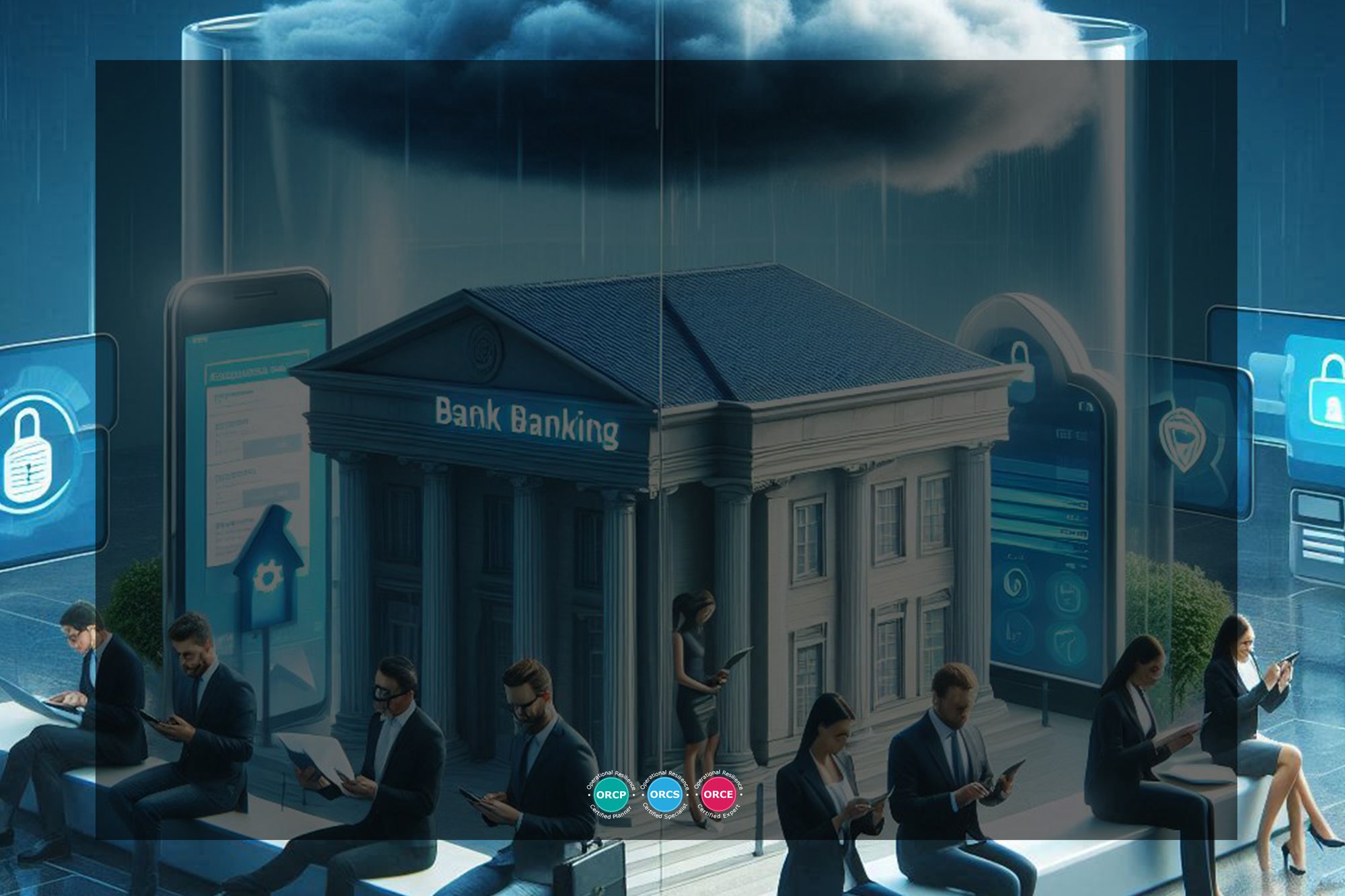
For Union Bank of the Philippines, the ability to deliver **Deposit and Account Services (CBS-1)** consistently, securely, and without interruption is fundamental to maintaining customer trust and financial system stability.
As one of the core banking services, CBS-1 encompasses a wide range of interconnected processes that support customer onboarding, account management, transaction processing, and regulatory compliance.[![eBook Cover \[OR\] \[UBP\] \[PH\] \[E3\] \[2D\]](https://no-cache.hubspot.com/cta/default/3893111/785a4dce-1045-47d8-9578-65f1f2530e13.png)](https://cta-redirect.hubspot.com/cta/redirect/3893111/785a4dce-1045-47d8-9578-65f1f2530e13)
In the context of operational resilience, it is no longer sufficient to view this service at a high level.
Instead, banks are required to **decompose critical business services into granular, manageable components**, referred to as detailed processes or Sub-CBS.
This level of detail enables the organisation to better understand how services are delivered, identify dependencies, and assess vulnerabilities across people, processes, technology, and third-party providers.
Aligned with the expectations of BSP Circular No. 1203 Series of 2024, this chapter provides a structured breakdown of CBS-1 into its constituent Sub-CBS.
This decomposition forms the foundation for subsequent operational resilience activities, including dependency mapping, impact tolerance setting, and scenario testing.
[](https://cta-redirect.hubspot.com/cta/redirect/3893111/732790df-c975-4982-a409-321d37ad0f1c)
[Moh Heng Goh](https://blog.bcm-institute.org/ebook-or/author/moh-heng-goh) Apr 7, 2026
###### Operational Resilience Certified Planner-Specialist-Expert
### [![\[OR\] \[UBP\] Legal Disclaimer Banner](https://no-cache.hubspot.com/cta/default/3893111/f97d48f5-b443-4ad0-83f8-36f7744591e6.png)](https://cta-redirect.hubspot.com/cta/redirect/3893111/f97d48f5-b443-4ad0-83f8-36f7744591e6)
### [](https://cta-redirect.hubspot.com/cta/redirect/3893111/732790df-c975-4982-a409-321d37ad0f1c)CBS-1 Deposit & Account Services
[![\[OR\] \[UBP\] \[PH\] \[E3\] \[CBS\] \[1\] \[DP\] Deposit and Account Services](https://no-cache.hubspot.com/cta/default/3893111/caed34e9-155d-45e6-988d-03e9bcbb003d.png)](https://cta-redirect.hubspot.com/cta/redirect/3893111/caed34e9-155d-45e6-988d-03e9bcbb003d)
For Union Bank of the Philippines, the ability to deliver **Deposit and Account Services (CBS-1)** consistently, securely, and without interruption is fundamental to maintaining customer trust and financial system stability.
As one of the core banking services, CBS-1 encompasses a wide range of interconnected processes that support customer onboarding, account management, transaction processing, and regulatory compliance.
In the context of operational resilience, it is no longer sufficient to view this service at a high level. Instead, banks are required to **decompose critical business services into granular, manageable components**, referred to as detailed processes or Sub-CBS.
This level of detail enables the organisation to better understand how services are delivered, identify dependencies, and assess vulnerabilities across people, processes, technology, and third-party providers.
Aligned with the expectations of BSP Circular No. 1203 Series of 2024, this chapter provides a structured breakdown of CBS-1 into its constituent Sub-CBS.
This decomposition forms the foundation for subsequent operational resilience activities, including dependency mapping, impact tolerance setting, and scenario testing.
#### **Purpose of the Chapter**
The purpose of this chapter is to **equip the reader with a clear and structured understanding of the detailed processes that underpin CBS-1 Deposit and Account Services** within Union Bank of the Philippines.
By presenting these Sub-CBS in a systematic manner, the chapter enables stakeholders to appreciate how each process contributes to the end-to-end delivery of the service, and how disruptions at any point may affect overall service continuity.
In alignment with the BSP Circular No. 1203 Series of 2024, the following table presents the detailed business processes (Sub-CBS) underpinning the critical business service **CBS-1: Deposit and Account Services**.
These processes reflect end-to-end service delivery and are structured to support operational resilience by clearly identifying dependencies, impact tolerances, and scenario testing readiness.
[![Banner \[Table\] \[OR\] \[E3\] Detailed Processes](https://no-cache.hubspot.com/cta/default/3893111/3ecaed5c-33ef-4660-bbad-bdc9839aa08c.png)](https://cta-redirect.hubspot.com/cta/redirect/3893111/3ecaed5c-33ef-4660-bbad-bdc9839aa08c)
Table P1: Detailed Processes for CBS-1
| **Sub-CBS Code** | **Name of Sub-CBS** | **Description of Sub-CBS** |
| --- | --- | --- |
| **1.1** | **Customer Onboarding and Account Application** | **Captures customer information through digital or branch channels, including account selection, application submission, and initial data validation.** |
| **1.2** | **Customer Identification and Verification (KYC/CDD)** | **Performs identity verification, screening against sanctions/PEP lists, and compliance with AML/CFT requirements in accordance with regulatory standards.** |
| **1.3** | **Account Approval and Opening** | **Reviews application data, performs risk assessment, and approves account creation within core banking systems.** |
| **1.4** | **Initial Funding and Deposit Booking** | **Facilitates first deposit transactions via cash, cheque, or electronic channels and records them in the core banking system.** |
| **1.5** | **Product Terms Setup and Account Parameter Maintenance** | **Configures account attributes such as interest rates, fees, limits, and product features based on approved product structures.** |
| **1.6** | **Deposit Transactions Processing** | **Handles routine transactions, including deposits, transfers, and credits, through branches, ATMs, and digital banking platforms.** |
| **1.7** | **Withdrawal and Funds Access Processing** | **Enables customer withdrawals through multiple channels (ATM, branch, digital) while ensuring transaction validation and limits enforcement.** |
| **1.8** | **Account Servicing and Customer Maintenance** | **Updates customer records, handles service requests, and maintains account information, including address changes and account upgrades.** |
| **1.9** | **Interest, Fees, and Charges Processing** | **Calculates and applies interest accruals, service fees, penalties, and other charges based on account terms and schedules.** |
| **1.10** | **Statement, Passbook, and Balance Reporting** | **Generates account statements, passbook updates, and provides real-time balance information across channels.** |
| **1.11** | **Digital Account Access and Channel Integration** | **Provides customers with access to accounts via mobile apps, internet banking, and APIs, ensuring seamless integration across channels.** |
| **1.12** | **ATM and Card-Based Access Management** | **Manages issuance, activation, and maintenance of debit cards and ATM access, including PIN management and transaction authorisation.** |
| **1.13** | **Account Reconciliation and Exception Handling** | **Performs daily reconciliation of transactions, identifies discrepancies, and resolves exceptions to ensure ledger accuracy.** |
| **1.14** | **Dormancy, Holds, Restrictions, and Account Control Administration** | **Applies regulatory or operational controls such as account dormancy tagging, freezes, garnishments, and restrictions.** |
| **1.15** | **Fraud Monitoring and Transaction Surveillance for Deposit Accounts** | **Monitors transactions for suspicious activity using fraud detection systems and escalates alerts for investigation.** |
| **1.16** | **Complaints, Disputes, and Service Recovery** | **Handles customer complaints, dispute resolution (e.g., failed transactions), and ensures timely remediation and communication.** |
| **1.17** | **Regulatory Reporting and Compliance Monitoring** | **Prepares and submits required regulatory reports (e.g., deposit liabilities, AML reports) and ensures ongoing compliance with BSP requirements.** |
| **1.18** | **Business Continuity and Service Recovery for Deposit Services** | **Activates continuity plans, recovery strategies, and alternate processing arrangements to maintain service availability during disruptions.** |
#### **Regulatory Requirements and Operational Resilience Considerations**
Under **BSP Circular No. 1203 (2024)**, Philippine banks, such as Union Bank, are required to embed operational resilience in their critical business services, including CBS-1. Key requirements and how they apply to the above Sub-CBS include:
##### **1. Identification of Critical Business Services**
- Banks must identify services whose disruption would significantly impact customers or financial stability.
- **Example:**
- Deposit withdrawals (Sub-CBS 1.7) and digital access (1.11) are critical to customer trust and access to liquidity.
##### **2. Mapping of Interdependencies**
- Banks must map dependencies across **people, processes, technology, and third parties**.
- **Example:**
##### **3. Setting Impact Tolerances**
- Institutions must define maximum tolerable disruption thresholds (e.g., time, data loss).
- **Example:**
##### **4. Scenario Testing (Severe but Plausible Events)**
- Banks must test resilience against scenarios such as cyberattacks, system outages, or third-party failures.
- **Example:**
##### **5. Business Continuity and Recovery Capability**
- Banks must ensure continuity strategies are in place and regularly tested.
- **Example:**
##### **6. Governance and Continuous Improvement**
- Senior management must oversee resilience frameworks and ensure continuous monitoring and improvement.
- **Example:**
[![Banner \[Summing\] \[OR\] \[E3\] Detailed Processes](https://no-cache.hubspot.com/cta/default/3893111/bce25519-5bf0-4302-aa7e-f4d565499b6d.png)](https://cta-redirect.hubspot.com/cta/redirect/3893111/bce25519-5bf0-4302-aa7e-f4d565499b6d)
The decomposition of **CBS-1 Deposit and Account Services** into detailed Sub-CBS provides a critical lens through which Union Bank of the Philippines can assess and strengthen its operational resilience posture.
By breaking down the service into its core components, the organisation gains visibility into how value is delivered to customers and where potential points of failure may exist.
This structured approach not only supports compliance with BSP Circular No. 1203 Series of 2024 but also enables more effective planning, testing, and continuous improvement of resilience capabilities.
As the organisation progresses to subsequent stages—such as dependency mapping, impact tolerance setting, and scenario testing—the Sub-CBS defined in this chapter will serve as the essential building blocks to ensure that critical services remain within acceptable levels of disruption, even under severe but plausible scenarios.

| **eBook 3: Starting Your OR Implementation** | | | | | |
| --- | --- | --- | --- | --- | --- |
| **CBS-1 Deposit & Account Services** | | | | | |
| **CBS-1 DP** | **CBS-1 MD** | **CBS-1 MPR** | **CBS-1 ITo** | **CBS-1 SuPS** | **CBS-1 ST** |
| [![\[OR\] \[UBP\] \[PH\] \[E3\] \[CBS\] \[1\] \[DP\] Deposit and Account Services](https://no-cache.hubspot.com/cta/default/3893111/caed34e9-155d-45e6-988d-03e9bcbb003d.png)](https://cta-redirect.hubspot.com/cta/redirect/3893111/caed34e9-155d-45e6-988d-03e9bcbb003d) | [![\[OR\] \[UBP\] \[PH\] \[E3\] \[CBS\] \[1\] \[MD\] Deposit and Account Services](https://no-cache.hubspot.com/cta/default/3893111/113936d7-f143-4c8c-87ce-63cf4fced435.png)](https://cta-redirect.hubspot.com/cta/redirect/3893111/113936d7-f143-4c8c-87ce-63cf4fced435) | [![\[OR\] \[UBP\] \[PH\] \[E3\] \[CBS\] \[1\] \[MPR\] Deposit and Account Services](https://no-cache.hubspot.com/cta/default/3893111/64c8092a-a90a-403b-9b46-b356a1396c07.png)](https://cta-redirect.hubspot.com/cta/redirect/3893111/64c8092a-a90a-403b-9b46-b356a1396c07) | [![\[OR\] \[UBP\] \[PH\] \[E3\] \[CBS\] \[1\] \[ITo\] Deposit and Account Services](https://no-cache.hubspot.com/cta/default/3893111/aeed3fca-6ddb-4656-8785-190e39bdc8db.png)](https://cta-redirect.hubspot.com/cta/redirect/3893111/aeed3fca-6ddb-4656-8785-190e39bdc8db) | [![\[OR\] \[UBP\] \[PH\] \[E3\] \[CBS\] \[1\] \[SuPS\] Deposit and Account Services](https://no-cache.hubspot.com/cta/default/3893111/bf6cd570-c698-489d-a90b-cebfddf55d7a.png)](https://cta-redirect.hubspot.com/cta/redirect/3893111/bf6cd570-c698-489d-a90b-cebfddf55d7a) | [![\[OR\] \[UBP\] \[PH\] \[E3\] \[CBS\] \[1\] \[ST\] Deposit and Account Services](https://no-cache.hubspot.com/cta/default/3893111/dfb366bd-9c4a-484c-aa95-81a7de3966f2.png)](https://cta-redirect.hubspot.com/cta/redirect/3893111/dfb366bd-9c4a-484c-aa95-81a7de3966f2) |
[](https://cta-redirect.hubspot.com/cta/redirect/3893111/084e620a-46c5-419a-82ed-6a681d15c0b6)Gain Competency: For organisations looking to accelerate their journey, BCM Institute’s training and certification programs, including the OR-5000 Operational Resilience Expert Implementer course, provide in-depth insights and practical toolkits for effectively embedding this model.
#### More Information About OR-5000 \[OR-5\] or OR-300 \[OR-3\]
To learn more about the course and schedule, click the buttons below for the OR-300 Operational Resilience Implementer course and the OR-5000 Operational Resilience Expert Implementer course.
| [](https://cta-redirect.hubspot.com/cta/redirect/3893111/3530eccb-515d-401e-afc2-3469e26d7fbf) | [](https://cta-redirect.hubspot.com/cta/redirect/3893111/fdd4fa9c-ed69-40c1-925f-4eb6a1c5c255) | [](https://cta-redirect.hubspot.com/cta/redirect/3893111/77a34b84-0a6d-44f8-b8d6-6ab04cdf5edd) |
| --- | --- | --- |
| [](https://cta-redirect.hubspot.com/cta/redirect/3893111/6e5c0cda-39b9-4bbd-b3d4-4cf46a790b14) | [](https://cta-redirect.hubspot.com/cta/redirect/3893111/a68a08aa-36d3-4216-9551-202c9fde06ea) | [![ \[BL-OR\] \[3-4-5\] View Schedule](https://no-cache.hubspot.com/cta/default/3893111/d0d733a1-16c0-4b68-a26d-adbfd4fc6069.png)](https://cta-redirect.hubspot.com/cta/redirect/3893111/d0d733a1-16c0-4b68-a26d-adbfd4fc6069) |
| [![\[BL-OR\] \[3\] FAQ OR-300](https://no-cache.hubspot.com/cta/default/3893111/f20c71b4-f5e8-4aa5-8056-c374ca33a091.png)](https://cta-redirect.hubspot.com/cta/redirect/3893111/f20c71b4-f5e8-4aa5-8056-c374ca33a091) | If you have any questions, click to contact us.[![Email to Sales Team \[BCM Institute\]](https://no-cache.hubspot.com/cta/default/3893111/3c53daeb-2836-4843-b0e0-645baee2ab9e.png)](https://cta-redirect.hubspot.com/cta/redirect/3893111/3c53daeb-2836-4843-b0e0-645baee2ab9e) | [](https://cta-redirect.hubspot.com/cta/redirect/3893111/7f2718a4-ea80-4f84-a319-dc2d4df37a46) |
| [](https://cta-redirect.hubspot.com/cta/redirect/3893111/74b1e556-8cd2-4a74-8821-db1804534955) | [](https://cta-redirect.hubspot.com/cta/redirect/3893111/f2bd8eb1-32d2-4732-9267-ea53223cf58f) | [](https://cta-redirect.hubspot.com/cta/redirect/3893111/084e620a-46c5-419a-82ed-6a681d15c0b6) |
#### **Comments:**
---

---

---
---


All rights reserved. Copyright 2026
```json
{
"@context" : "https://schema.org",
"@type" : "BlogPosting",
"author" : {
"@type" : "Person",
"name" : "Moh Heng Goh",
"url" : "https://blog.bcm-institute.org/ebook-or/author/moh-heng-goh"
},
"dateModified" : "2026-04-13T13:38:55.405Z",
"datePublished" : "2026-04-07T06:41:24.000Z",
"headline" : "[OR] [UBP] [E3] [CBS] [1] [DP] Deposit and Account Services",
"mainEntityOfPage" : {
"@id" : "https://blog.bcm-institute.org/ebook-or/or-ubp-e3-cbs-1-dp-deposit-and-account-services",
"@type" : "WebPage"
},
"publisher" : {
"@type" : "Organization",
"logo" : {
"@type" : "ImageObject",
"url" : "https://blog.bcm-institute.org/hubfs/BCMI%20Logo.png"
},
"name" : "BCMI Pte Ltd"
}
}
```