---
title: [OR] [PTC] [E3] [CBS] [1] [DP] Deposit and Account Services
description: [OR] [PTC] [E3] [CBS] [1] [DP] Deposit and Account Services
image: https://blog.bcm-institute.org/hubfs/PH%20Bank%20Graphic%20Folder/%5BPH%5D%20Philippine%20Trust%20Company%20Graphic%20Folder/PTC%20CBS%201%20Morepost/%5BOR%5D%20%5BPTC%5D%20%5BPH%5D%20%5BE3%5D%20%5BCBS%5D%20%5B1%5D%20%5BDP%5D%20Deposit%20and%20Account%20Services.jpg
---
. .
[](http://www.bcm-institute.org/)
- [Home](https://www.bcm-institute.org/)
- [About Us](https://www.bcm-institute.org/about-us-3/)
- [A President’s Perspective](https://www.bcm-institute.org/about-us/a-presidents-perspective/)
- [Our History](https://www.bcm-institute.org/about-us/our-history/)
- [Our Advisory Council](https://www.bcm-institute.org/about-us/our-advisory-council/)
- [Customers’ Testimonials](https://www.bcm-institute.org/about-us/customers-testimonials/)
- [Credential Verification](https://www.bcm-institute.org/about-us/credential-verification/)
- [Courses](https://blog.bcm-institute.org/blog/course-fees-for-blended-learning-courses-master-catalog)
- [ISO 22301 Business Continuity Management System Audit](https://blog.bcm-institute.org/audit/business-continuity-management-audit-courses)
- [ISO 22301 Business Continuity Management](https://blog.bcm-institute.org/bcm/business-continuity-management-courses)
- [Crisis Communication](https://blog.bcm-institute.org/crisis-communication/crisis-communication-courses)
- [Crisis Management](https://blog.bcm-institute.org/en/crisis-management/courses)
- [IT Disaster Recovery](https://blog.bcm-institute.org/it-disaster-recovery/courses)
- [Operational Resilience](https://blog.bcm-institute.org/operational-resilience/courses)
- [Operational Resilience Audit](https://blog.bcm-institute.org/operational-resilience-audit/courses)
- [Certification](https://blog.bcm-institute.org/certification/types-of-certifications-offered)
- [ISO 22301 BCMS Audit Certification](https://blog.bcm-institute.org/certification/business-continuity-management-audit-certification)
- [ISO22301 Business Continuity Management Certification](https://blog.bcm-institute.org/bcm/business-continuity-management-certification)
- [Crisis Communication Certification](https://blog.bcm-institute.org/crisis-communication/crisis-communication-certification)
- [Crisis Management Certification](https://blog.bcm-institute.org/en/crisis-management/crisis-management-certification)
- [IT Disaster Recovery Planning Certification](https://blog.bcm-institute.org/it-disaster-recovery/it-disaster-recovery-certification)
- [Operational Resilience Certification](https://blog.bcm-institute.org/operational-resilience/operational-resilience-certification)
- [Operational Resilience Audit Certification](https://blog.bcm-institute.org/operational-resilience-audit)
- [Seminars](https://blog.bcm-institute.org/meet-the-expert/mte-webinar-mainpage)
- [Store](https://www.bcm-institute.org/store-2/)
- [Contact Us](http://www.bcm-institute.org/about-us/contact-us/)
-
-
###### From Risk to Resilience: A Strategic Operational Resilience Framework for Philippine Trust Company
# \[OR\] \[PTC\] \[E3\] \[CBS\] \[1\] \[DP\] Deposit and Account Services
[![x \[OR\] \[PTC\] Title Banner](https://no-cache.hubspot.com/cta/default/3893111/eb5b75e5-6faa-45be-b4bf-f22ddb4f8509.png)](https://cta-redirect.hubspot.com/cta/redirect/3893111/eb5b75e5-6faa-45be-b4bf-f22ddb4f8509)
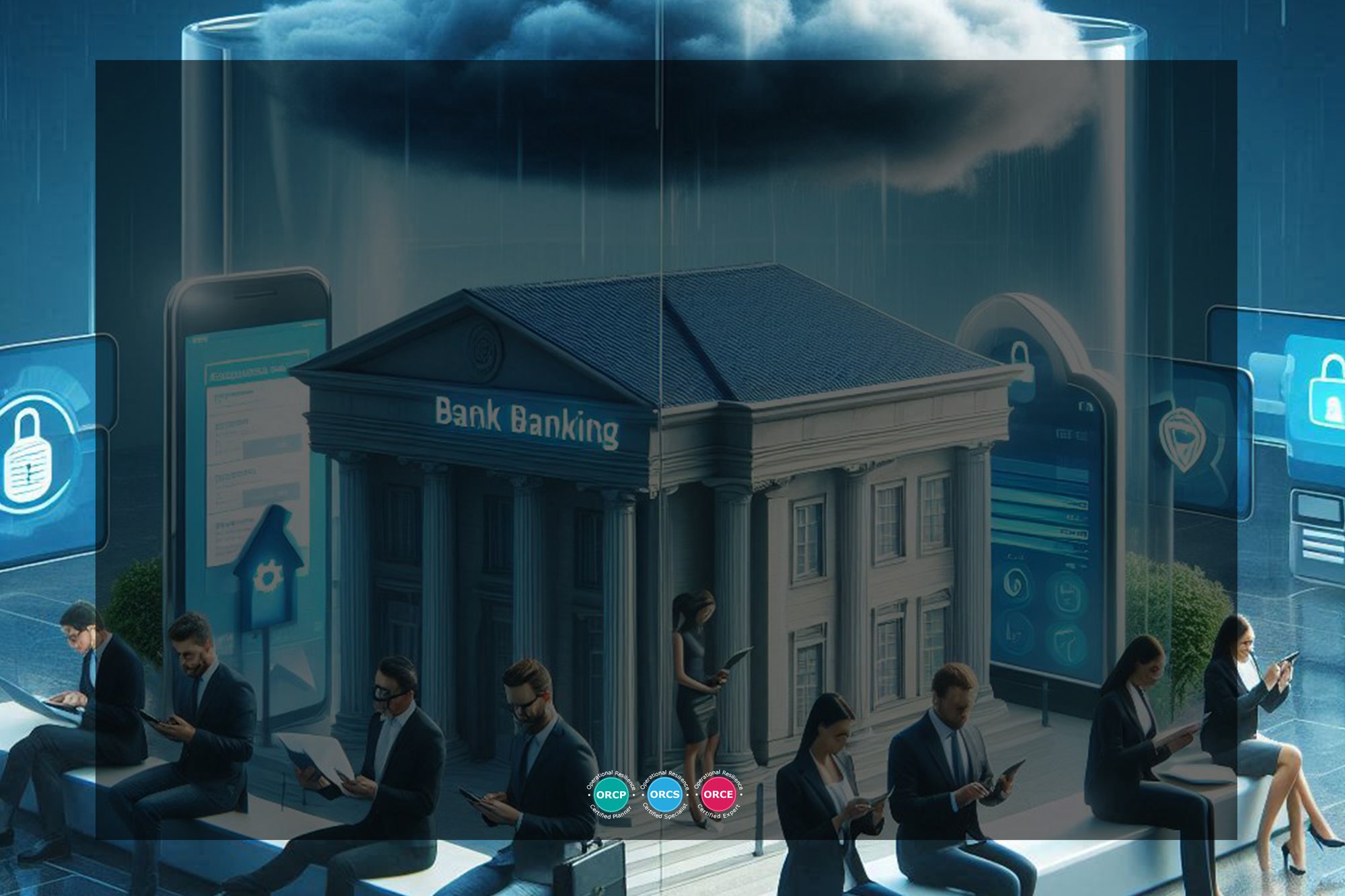
Deposit and Account Services form the foundational banking service for Philippine Trust Company, enabling customers to securely store funds, conduct daily transactions, and access financial services across physical and digital channels.
[![eBook Cover \[OR\] \[PTC\] \[PH\] \[E3\] \[2D\]](https://no-cache.hubspot.com/cta/default/3893111/e15dc2e1-ebe1-4e76-a644-2072724ecfa4.png)](https://cta-redirect.hubspot.com/cta/redirect/3893111/e15dc2e1-ebe1-4e76-a644-2072724ecfa4)From an operational resilience perspective, this Critical Business Service (CBS-1) is highly sensitive due to its direct impact on customers, financial stability, and regulatory compliance.
In alignment with BSP Circular No. 1203 Series of 2024 issued by the Bangko Sentral ng Pilipinas, banks are required to identify, map, and maintain the resilience of critical business services by breaking them down into detailed processes. This enables institutions to assess vulnerabilities, dependencies, and recovery capabilities across the service lifecycle.
[](https://cta-redirect.hubspot.com/cta/redirect/3893111/732790df-c975-4982-a409-321d37ad0f1c)
[Moh Heng Goh](https://blog.bcm-institute.org/ebook-or/author/moh-heng-goh) Apr 15, 2026
###### Operational Resilience Certified Planner-Specialist-Expert
### [![x \[PH\] \[PTC\] Legal Disclaimer Banner](https://no-cache.hubspot.com/cta/default/3893111/7c430549-26ff-4b42-bdb6-332f54f85759.png)](https://cta-redirect.hubspot.com/cta/redirect/3893111/7c430549-26ff-4b42-bdb6-332f54f85759)
### [](https://cta-redirect.hubspot.com/cta/redirect/3893111/732790df-c975-4982-a409-321d37ad0f1c)CBS-1 Deposit & Account Services
[![\[OR\] \[PTC\] \[PH\] \[E3\] \[CBS\] \[1\] \[DP\] Deposit and Account Services](https://no-cache.hubspot.com/cta/default/3893111/10501ea6-f700-45f9-aeab-5b1e723d7f90.png)](https://cta-redirect.hubspot.com/cta/redirect/3893111/10501ea6-f700-45f9-aeab-5b1e723d7f90)Deposit and Account Services form the foundational banking service for Philippine Trust Company, enabling customers to securely store funds, conduct daily transactions, and access financial services across physical and digital channels.
From an operational resilience perspective, this Critical Business Service (CBS-1) is highly sensitive due to its direct impact on customers, financial stability, and regulatory compliance.
In alignment with BSP Circular No. 1203 Series of 2024 issued by the Bangko Sentral ng Pilipinas, banks are required to identify, map, and maintain the resilience of critical business services by breaking them down into detailed processes. This enables institutions to assess vulnerabilities, dependencies, and recovery capabilities across the service lifecycle.
#### **Purpose of the Chapter**
The purpose of this chapter is to decompose the high-level CBS-1 Deposit and Account Services into granular Sub-CBS components. This structured breakdown enables Philippine Trust Company to:
- Identify operational dependencies (people, processes, technology, and third parties)
- Assess potential disruption points
- Support impact tolerance setting and scenario testing
- Align with regulatory expectations under BSP Circular No. 1203
By understanding these detailed processes, stakeholders can better design controls and resilience strategies to ensure continuous service delivery.
[![Banner \[Table\] \[OR\] \[E3\] Detailed Processes](https://no-cache.hubspot.com/cta/default/3893111/3ecaed5c-33ef-4660-bbad-bdc9839aa08c.png)](https://cta-redirect.hubspot.com/cta/redirect/3893111/3ecaed5c-33ef-4660-bbad-bdc9839aa08c)
Table P1: Detailed Processes for CBS-1
| **Sub-CBS Code** | **Name of Sub-CBS** | **Description of Sub-CBS** |
| --- | --- | --- |
| **1.1** | **Customer Onboarding and Account Application** | **Collection of customer information, application forms, and initial documentation through branch or digital channels to initiate account opening.** |
| **1.2** | **Customer Identification and Verification (KYC/CDD)** | **Verification of customer identity and risk profiling in compliance with AML/CFT regulations, including screening against watchlists and sanctions databases.** |
| **1.3** | **Account Approval and Opening** | **Review and approval of account applications, assignment of account numbers, and creation of customer records in core banking systems.** |
| **1.4** | **Initial Funding and Deposit Booking** | **Processing of initial deposits, validation of funds, and recording transactions into the bank’s general ledger and core systems.** |
| **1.5** | **Product Terms Setup and Account Parameter Maintenance** | **Configuration of account features such as interest rates, fees, limits, and product-specific conditions within banking systems.** |
| **1.6** | **Deposit Transactions Processing** | **Handling of deposits via multiple channels (branch, ATM, online banking), including validation, posting, and reconciliation of transactions.** |
| **1.7** | **Withdrawal and Funds Access Processing** | **Processing of withdrawals via over-the-counter, ATM, and digital channels, ensuring proper authentication and fund availability checks.** |
| **1.8** | **Account Servicing and Customer Maintenance** | **Updates to customer information, account modifications, issuance of account-related services (e.g., address changes, account linking).** |
| **1.9** | **Interest, Fees, and Charges Processing** | **Calculation and posting of interest earnings, service fees, and penalties in accordance with product terms and regulatory requirements.** |
| **1.10** | **Statement, Passbook, and Balance Reporting** | **Generation and delivery of account statements, passbook updates, and real-time balance inquiries across customer channels.** |
| **1.11** | **Digital Account Access and Channel Integration** | **Integration of deposit accounts with digital banking platforms, ensuring secure access, authentication, and transaction capabilities.** |
| **1.12** | **ATM and Card-Based Access Management** | **Issuance, activation, and lifecycle management of debit/ATM cards, including PIN management and transaction enablement.** |
| **1.13** | **Account Reconciliation and Exception Handling** | **Daily reconciliation of transactions and balances, identification of discrepancies, and resolution of exceptions.** |
| **1.14** | **Dormancy, Holds, Restrictions, and Account Control Administration** | **Management of inactive accounts, imposition of holds or restrictions, and compliance with regulatory rules on dormant accounts.** |
| **1.15** | **Fraud Monitoring and Transaction Surveillance for Deposit Accounts** | **Continuous monitoring of transactions to detect suspicious activities, fraud attempts, and unauthorized access.** |
| **1.16** | **Complaints, Disputes, and Service Recovery** | **Handling of customer complaints, dispute resolution, and service recovery processes to restore customer confidence.** |
| **1.17** | **Regulatory Reporting and Compliance Monitoring** | **Preparation and submission of regulatory reports related to deposits and accounts, ensuring adherence to BSP requirements.** |
| **1.18** | **Incident Response, Business Continuity, and Service Recovery** | **Activation of incident management and business continuity plans to maintain or restore deposit services during disruptions.** |
#### **Regulatory Requirements and Examples (BSP Circular No. 1203)**
Under BSP Circular No. 1203 Series of 2024, Philippine banks such as Philippine Trust Company are expected to implement the following operational resilience practices:
##### **1. Identification of Critical Business Services**
Banks must identify services whose disruption could cause intolerable harm to customers or financial stability.
**Example:** Deposit and Account Services are classified as critical due to their role in liquidity access and payment facilitation.
##### **2. Mapping of Interdependencies**
Institutions must map end-to-end processes, including dependencies on:
- Core banking systems
- Payment networks (e.g., PESONet, InstaPay)
- Third-party service providers
**Example:** Sub-CBS 1.6 and 1.11 rely heavily on digital banking infrastructure and telecom networks.
##### **3. Setting Impact Tolerances**
Banks must define acceptable levels of disruption (e.g., maximum downtime).
**Example:**
- ATM withdrawal services may have a tolerance of near-zero downtime
- Account balance inquiries must be restored within minutes to avoid customer impact
##### **4. Scenario Testing**
Banks must test resilience against severe but plausible scenarios.
**Example scenarios:**
- Cyberattack affecting online banking (impacting Sub-CBS 1.11)
- Core banking system outage affecting transaction processing (Sub-CBS 1.6, 1.7)
- Natural disaster disrupting branch operations
##### **5. Governance and Continuous Improvement**
Senior management must oversee resilience strategies and ensure continuous improvement.
**Example:** Regular review of Sub-CBS processes and updating business continuity plans for deposit services.
[![Banner \[Summing\] \[OR\] \[E3\] Detailed Processes](https://no-cache.hubspot.com/cta/default/3893111/bce25519-5bf0-4302-aa7e-f4d565499b6d.png)](https://cta-redirect.hubspot.com/cta/redirect/3893111/bce25519-5bf0-4302-aa7e-f4d565499b6d)
The detailed decomposition of CBS-1 Deposit and Account Services into Sub-CBS components provides a structured foundation for operational resilience planning within Philippine Trust Company. By identifying each process step, the organisation gains visibility into operational dependencies, vulnerabilities, and recovery requirements.
Aligned with BSP Circular No. 1203 Series of 2024, this granular approach enables Philippine Trust Company to effectively map, test, and strengthen its resilience capabilities. Ultimately, it ensures that critical deposit services remain available, secure, and reliable—even in the face of severe disruptions—thereby safeguarding customer trust and financial stability.

| **eBook 3: Starting Your OR Implementation** | | | | | |
| --- | --- | --- | --- | --- | --- |
| **CBS-1 Deposit & Account Services** | | | | | |
| **CBS-1 DP** | **CBS-1 MD** | **CBS-1 MPR** | **CBS-1 ITo** | **CBS-1 SuPS** | **CBS-1 ST** |
| [![\[OR\] \[PTC\] \[PH\] \[E3\] \[CBS\] \[1\] \[DP\] Deposit and Account Services](https://no-cache.hubspot.com/cta/default/3893111/10501ea6-f700-45f9-aeab-5b1e723d7f90.png)](https://cta-redirect.hubspot.com/cta/redirect/3893111/10501ea6-f700-45f9-aeab-5b1e723d7f90) | [![\[OR\] \[PTC\] \[PH\] \[E3\] \[CBS\] \[1\] \[MD\] Deposit and Account Services](https://no-cache.hubspot.com/cta/default/3893111/83b3397a-bfae-4450-94e5-5fa7a03d3629.png)](https://cta-redirect.hubspot.com/cta/redirect/3893111/83b3397a-bfae-4450-94e5-5fa7a03d3629) | [![\[OR\] \[PTC\] \[PH\] \[E3\] \[CBS\] \[1\] \[MPR\] Deposit and Account Services](https://no-cache.hubspot.com/cta/default/3893111/11ced2a5-04b8-4c17-8bf2-d6cff7940beb.png)](https://cta-redirect.hubspot.com/cta/redirect/3893111/11ced2a5-04b8-4c17-8bf2-d6cff7940beb) | [![\[OR\] \[PTC\] \[PH\] \[E3\] \[CBS\] \[1\] \[ITo\] Deposit and Account Services](https://no-cache.hubspot.com/cta/default/3893111/2a42a72f-401a-4bbf-90cc-59e68a0cf4e8.png)](https://cta-redirect.hubspot.com/cta/redirect/3893111/2a42a72f-401a-4bbf-90cc-59e68a0cf4e8) | [![\[OR\] \[PTC\] \[PH\] \[E3\] \[CBS\] \[1\] \[SuPS\] Deposit and Account Services](https://no-cache.hubspot.com/cta/default/3893111/bc4e9089-a76b-43d2-9138-61a4c7887476.png)](https://cta-redirect.hubspot.com/cta/redirect/3893111/bc4e9089-a76b-43d2-9138-61a4c7887476) | [![\[OR\] \[PTC\] \[PH\] \[E3\] \[CBS\] \[1\] \[ST\] Deposit and Account Services](https://no-cache.hubspot.com/cta/default/3893111/2ae96dd4-c876-4d1a-a255-122762fad1d1.png)](https://cta-redirect.hubspot.com/cta/redirect/3893111/2ae96dd4-c876-4d1a-a255-122762fad1d1) |
[](https://cta-redirect.hubspot.com/cta/redirect/3893111/084e620a-46c5-419a-82ed-6a681d15c0b6)Gain Competency: For organisations looking to accelerate their journey, BCM Institute’s training and certification programs, including the OR-5000 Operational Resilience Expert Implementer course, provide in-depth insights and practical toolkits for effectively embedding this model.
#### More Information About OR-5000 \[OR-5\] or OR-300 \[OR-3\]
To learn more about the course and schedule, click the buttons below for the OR-300 Operational Resilience Implementer course and the OR-5000 Operational Resilience Expert Implementer course.
| [](https://cta-redirect.hubspot.com/cta/redirect/3893111/3530eccb-515d-401e-afc2-3469e26d7fbf) | [](https://cta-redirect.hubspot.com/cta/redirect/3893111/fdd4fa9c-ed69-40c1-925f-4eb6a1c5c255) | [](https://cta-redirect.hubspot.com/cta/redirect/3893111/77a34b84-0a6d-44f8-b8d6-6ab04cdf5edd) |
| --- | --- | --- |
| [](https://cta-redirect.hubspot.com/cta/redirect/3893111/6e5c0cda-39b9-4bbd-b3d4-4cf46a790b14) | [](https://cta-redirect.hubspot.com/cta/redirect/3893111/a68a08aa-36d3-4216-9551-202c9fde06ea) | [![ \[BL-OR\] \[3-4-5\] View Schedule](https://no-cache.hubspot.com/cta/default/3893111/d0d733a1-16c0-4b68-a26d-adbfd4fc6069.png)](https://cta-redirect.hubspot.com/cta/redirect/3893111/d0d733a1-16c0-4b68-a26d-adbfd4fc6069) |
| [![\[BL-OR\] \[3\] FAQ OR-300](https://no-cache.hubspot.com/cta/default/3893111/f20c71b4-f5e8-4aa5-8056-c374ca33a091.png)](https://cta-redirect.hubspot.com/cta/redirect/3893111/f20c71b4-f5e8-4aa5-8056-c374ca33a091) | If you have any questions, click to contact us.[![Email to Sales Team \[BCM Institute\]](https://no-cache.hubspot.com/cta/default/3893111/3c53daeb-2836-4843-b0e0-645baee2ab9e.png)](https://cta-redirect.hubspot.com/cta/redirect/3893111/3c53daeb-2836-4843-b0e0-645baee2ab9e) | [](https://cta-redirect.hubspot.com/cta/redirect/3893111/7f2718a4-ea80-4f84-a319-dc2d4df37a46) |
| [](https://cta-redirect.hubspot.com/cta/redirect/3893111/74b1e556-8cd2-4a74-8821-db1804534955) | [](https://cta-redirect.hubspot.com/cta/redirect/3893111/f2bd8eb1-32d2-4732-9267-ea53223cf58f) | [](https://cta-redirect.hubspot.com/cta/redirect/3893111/084e620a-46c5-419a-82ed-6a681d15c0b6) |
#### **Comments:**
---

---

---
---


All rights reserved. Copyright 2026
```json
{
"@context" : "https://schema.org",
"@type" : "BlogPosting",
"author" : {
"@type" : "Person",
"name" : "Moh Heng Goh",
"url" : "https://blog.bcm-institute.org/ebook-or/author/moh-heng-goh"
},
"dateModified" : "2026-04-15T02:23:34.526Z",
"datePublished" : "2026-04-15T02:23:34.000Z",
"headline" : "[OR] [PTC] [E3] [CBS] [1] [DP] Deposit and Account Services",
"mainEntityOfPage" : {
"@id" : "https://blog.bcm-institute.org/ebook-or/or-ptc-e3-cbs-1-dp-deposit-and-account-services",
"@type" : "WebPage"
},
"publisher" : {
"@type" : "Organization",
"logo" : {
"@type" : "ImageObject",
"url" : "https://blog.bcm-institute.org/hubfs/BCMI%20Logo.png"
},
"name" : "BCMI Pte Ltd"
}
}
```