---
title: [OR] [PNB] [E3] [CBS] [1] [DP] Retail Deposit and Account Services
description: [OR] [PNB] [E3] [CBS] [1] [DP] Retail Deposit and Account Services
image: https://blog.bcm-institute.org/hubfs/PH%20Bank%20Graphic%20Folder/%5BPH%5D%20Philippine%20National%20Bank%20Graphic%20Folder/PNB%20CBS%201%20Morepost/%5BOR%5D%20%5BPNB%5D%20%5BPH%5D%20%5BE3%5D%20%5BCBS%5D%20%5B1%5D%20%5BDP%5D%20Retail%20Deposit%20%26%20Account%20Services.jpg
---
. .
[](http://www.bcm-institute.org/)
- [Home](https://www.bcm-institute.org/)
- [About Us](https://www.bcm-institute.org/about-us-3/)
- [A President’s Perspective](https://www.bcm-institute.org/about-us/a-presidents-perspective/)
- [Our History](https://www.bcm-institute.org/about-us/our-history/)
- [Our Advisory Council](https://www.bcm-institute.org/about-us/our-advisory-council/)
- [Customers’ Testimonials](https://www.bcm-institute.org/about-us/customers-testimonials/)
- [Credential Verification](https://www.bcm-institute.org/about-us/credential-verification/)
- [Courses](https://blog.bcm-institute.org/blog/course-fees-for-blended-learning-courses-master-catalog)
- [ISO 22301 Business Continuity Management System Audit](https://blog.bcm-institute.org/audit/business-continuity-management-audit-courses)
- [ISO 22301 Business Continuity Management](https://blog.bcm-institute.org/bcm/business-continuity-management-courses)
- [Crisis Communication](https://blog.bcm-institute.org/crisis-communication/crisis-communication-courses)
- [Crisis Management](https://blog.bcm-institute.org/en/crisis-management/courses)
- [IT Disaster Recovery](https://blog.bcm-institute.org/it-disaster-recovery/courses)
- [Operational Resilience](https://blog.bcm-institute.org/operational-resilience/courses)
- [Operational Resilience Audit](https://blog.bcm-institute.org/operational-resilience-audit/courses)
- [Certification](https://blog.bcm-institute.org/certification/types-of-certifications-offered)
- [ISO 22301 BCMS Audit Certification](https://blog.bcm-institute.org/certification/business-continuity-management-audit-certification)
- [ISO22301 Business Continuity Management Certification](https://blog.bcm-institute.org/bcm/business-continuity-management-certification)
- [Crisis Communication Certification](https://blog.bcm-institute.org/crisis-communication/crisis-communication-certification)
- [Crisis Management Certification](https://blog.bcm-institute.org/en/crisis-management/crisis-management-certification)
- [IT Disaster Recovery Planning Certification](https://blog.bcm-institute.org/it-disaster-recovery/it-disaster-recovery-certification)
- [Operational Resilience Certification](https://blog.bcm-institute.org/operational-resilience/operational-resilience-certification)
- [Operational Resilience Audit Certification](https://blog.bcm-institute.org/operational-resilience-audit)
- [Seminars](https://blog.bcm-institute.org/meet-the-expert/mte-webinar-mainpage)
- [Store](https://www.bcm-institute.org/store-2/)
- [Contact Us](http://www.bcm-institute.org/about-us/contact-us/)
-
-
###### Building Operational Resilience: Implementation Methodology for Philippine National Bank
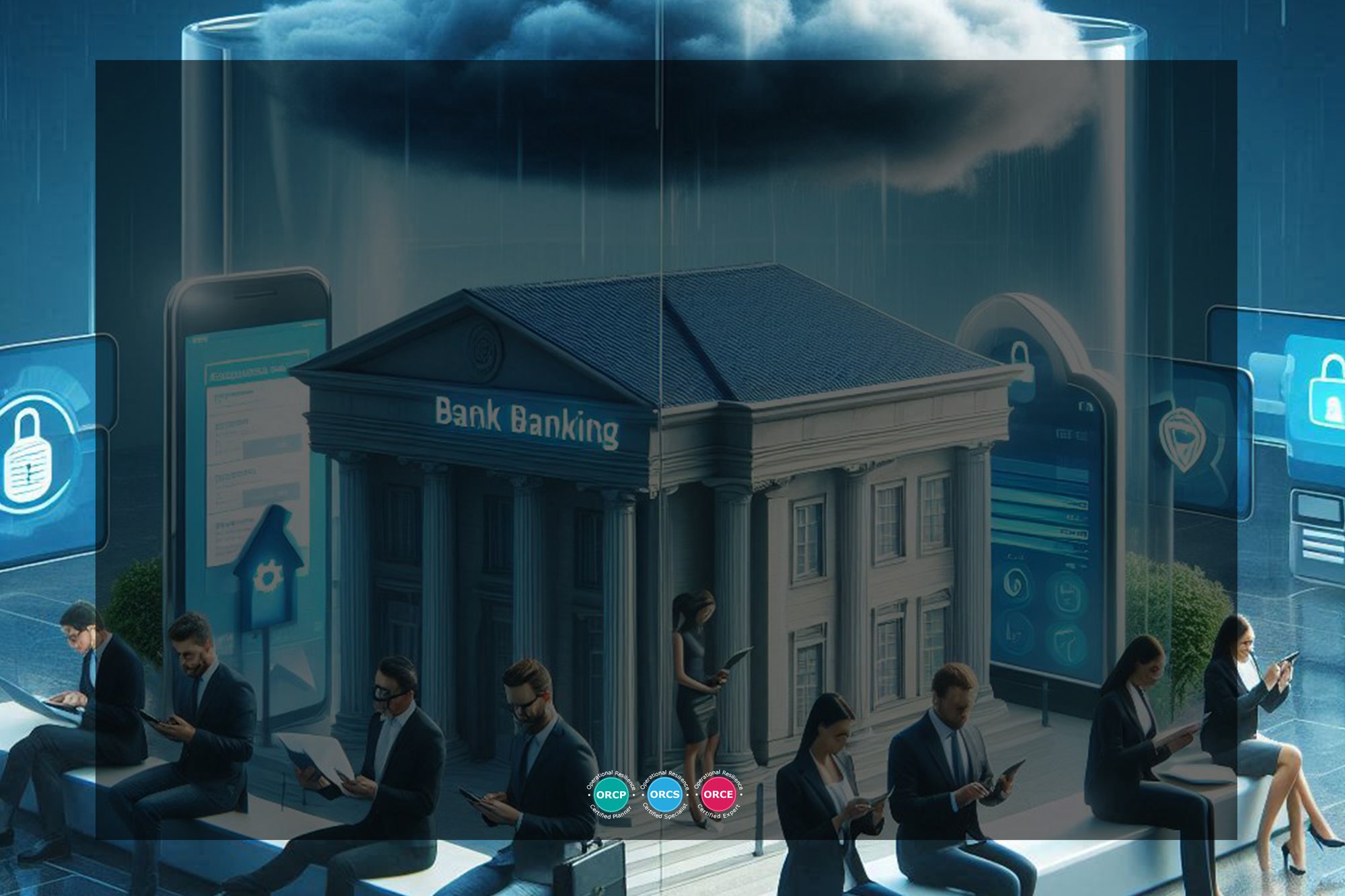
# \[OR\] \[PNB\] \[E3\] \[CBS\] \[1\] \[DP\] Retail Deposit and Account Services
[![x \[OR\] \[PNB\] Title Banner](https://no-cache.hubspot.com/cta/default/3893111/789bf06c-42f0-41e8-a770-6963d73be85b.png)](https://cta-redirect.hubspot.com/cta/redirect/3893111/789bf06c-42f0-41e8-a770-6963d73be85b)
For the Philippine National Bank (PNB), the delivery of **Retail Deposit and Account Services (CBS-1)** represents one of the most fundamental and customer-facing critical business services.
It encompasses the full lifecycle of a depositor relationship—from onboarding and account opening to ongoing servicing, transaction processing, and customer access across branch and digital channels.
In the context of operational resilience, this service is not merely a collection of banking activities but a continuous, integrated service chain that must remain available, secure, and reliable even during disruptions.
Aligned with the expectations set out in BSP Circular No. 1203, banks are required to move beyond high-level service identification and develop a **granular understanding of the underlying processes** that support each critical business service.
This requires decomposing CBS-1 into its detailed business processes (Sub-CBS), enabling the bank to identify vulnerabilities, map dependencies, and assess the resilience of each component.
### [](https://cta-redirect.hubspot.com/cta/redirect/3893111/732790df-c975-4982-a409-321d37ad0f1c)
[Moh Heng Goh](https://blog.bcm-institute.org/ebook-or/author/moh-heng-goh) Apr 1, 2026
###### Operational Resilience Certified Planner-Specialist-Expert
### [![\[OR\] \[PNB\] Legal Disclaimer Banner](https://no-cache.hubspot.com/cta/default/3893111/b38949f8-c0f0-41e7-b859-ff8da7a6f16c.png)](https://cta-redirect.hubspot.com/cta/redirect/3893111/b38949f8-c0f0-41e7-b859-ff8da7a6f16c)
### [](https://cta-redirect.hubspot.com/cta/redirect/3893111/732790df-c975-4982-a409-321d37ad0f1c)CBS-1 Retail Deposit & Account Services
[![\[OR\] \[PNB\] \[PH\] \[E3\] \[CBS\] \[1\] \[DP\] Retail Deposit & Account Services](https://no-cache.hubspot.com/cta/default/3893111/8e6870f3-c593-492d-a426-37672d7e82cb.png)](https://cta-redirect.hubspot.com/cta/redirect/3893111/8e6870f3-c593-492d-a426-37672d7e82cb)
For the Philippine National Bank (PNB), the delivery of **Retail Deposit and Account Services (CBS-1)** represents one of the most fundamental and customer-facing critical business services.
It encompasses the full lifecycle of a depositor relationship—from onboarding and account opening to ongoing servicing, transaction processing, and customer access across branch and digital channels.
In the context of operational resilience, this service is not merely a collection of banking activities but a continuous, integrated service chain that must remain available, secure, and reliable even during disruptions.
Aligned with the expectations set out in BSP Circular No. 1203, banks are required to move beyond high-level service identification and develop a **granular understanding of the underlying processes** that support each critical business service.
This requires decomposing CBS-1 into its detailed business processes (Sub-CBS), enabling the bank to identify vulnerabilities, map dependencies, and assess the resilience of each component.
By breaking down CBS-1 into its constituent processes, PNB lays the foundation for subsequent stages, including dependency mapping, resource mapping, impact tolerance setting, and scenario testing.
#### **Purpose of the Chapter**
The purpose of this chapter is to **provide a structured and detailed breakdown of the end-to-end processes** that constitute CBS-1 Retail Deposit and Account Services for PNB.
By presenting the Sub-CBS clearly and systematically, this chapter enables readers to understand how each process contributes to the overall delivery of the service and where potential disruptions may arise.
It pre-empts the reader by stating that **operational resilience begins with process clarity**—without a precise understanding of how services are delivered, it is not possible to assess resilience or design effective safeguards.
At the end of this chapter, the reader is expected to gain a **comprehensive view of the operational building blocks** of CBS-1 and be able to use this decomposition as a reference point for the next phases of the Operational Resilience Planning Methodology, particularly in identifying dependencies, assessing critical resources, and defining impact tolerances in accordance with regulatory expectations.
Below is a recommended decomposition of **CBS-1 Retail Deposit and Account Services** for the** Philippine**** National Bank (PNB)**.
It is aligned to the operational resilience lens in **BSP Circular No. 1203 (2024)**, which requires banks to identify critical operations, their supporting assets, interconnections, and interdependencies, disruption tolerances, and severe but plausible scenarios.
The Circular also makes clear that supporting assets include **people, technology, information, facilities, clearing and settlement arrangements, and outsourced services**.
PNB’s public product and channel information supports treating retail deposit servicing as a critical business service: PNB offers deposit accounts such as **Debit Savings, Regular Checking, Passbook Savings, Budget Checking, My First Savings, Greencheck, Pensioner Savings, Top Saver Account, and foreign currency deposits**, and PNB Digital supports enrolled deposit accounts, transaction viewing, transfers, bill payments, cardless withdrawal, checkbook orders, and savings account application through the mobile app.
[![Banner \[Table\] \[OR\] \[E3\] Detailed Processes](https://no-cache.hubspot.com/cta/default/3893111/3ecaed5c-33ef-4660-bbad-bdc9839aa08c.png)](https://cta-redirect.hubspot.com/cta/redirect/3893111/3ecaed5c-33ef-4660-bbad-bdc9839aa08c)
Table P1: Detailed Processes for CBS-1
| **Sub-CBS Code** | **Name of Sub-CBS** | **Description of Sub-CBS** |
| --- | --- | --- |
| **1.1** | **Customer Onboarding and Account Application** | **The end-to-end process for receiving and validating a customer’s application for a retail deposit account, whether through branch-assisted, relationship-managed, or eligible digital channels. For PNB, this covers account-opening workflows for savings, checking, passbook, pensioner, and related retail deposit products.** |
| **1.2** | **Customer Identification and Verification (KYC/CDD)** | **The process of verifying customer identity, screening documents, performing customer due diligence, and ensuring that account opening meets regulatory and internal compliance requirements before the account is activated. This is a necessary control point because BSP Circular 1203 expects critical operations to be supported by robust controls and governance.** |
| **1.3** | **Account Approval and Opening** | **The workflow for review, approval, account number generation, signature and mandate setup, customer record creation, and formal activation of the deposit account in core banking systems. This is the decisive stage where an applicant becomes an active depositor.** |
| **1.4** | **Initial Funding and Deposit Booking** | **The process involves accepting the initial deposit, validating the source and amount, posting the opening balance, and confirming that the account is ready for use. This includes teller, branch, or digitally linked funding steps where applicable.** |
| **1.5** | **Product Terms Setup and Account Parameter Maintenance** | **The configuration of account features, such as product type, minimum balance rules, fees, interest terms, statement mode, passbook/chequebook options, debit card linkage, and account restrictions. This sub-process is important because product parameters directly affect the continuity and integrity of customer servicing.** |
| **1.6** | **Deposit Transactions Processing** | **The handling of routine deposit transactions, such as cash deposits, over-the-counter credits, internal transfers into deposit accounts, and posting of incoming funds. Since BSP treats deposit-taking activities as critical functions, transaction processing should be included in the critical service chain.** |
| **1.7** | **Withdrawal and Funds Access Processing** | **The process by which customers access their deposited funds through branch withdrawal, ATM/debit card use, cardless withdrawal, or authorised digital channels. BSP Circular 1203 expressly cites servicing of withdrawals and certain deposit-taking activities as examples of critical functions.** |
| **1.8** | **Account Servicing and Customer Maintenance** | **Ongoing maintenance activities after account opening, including customer data updates, mandate changes, account status changes, replacement of cards or passbooks where relevant, and handling of service requests and complaints related to deposit accounts.** |
| **1.9** | **Interest, Fees, and Charges Processing** | **The periodic computation, accrual, posting, and adjustment of deposit interest, service fees, dormancy charges, below-minimum penalties, and other product-linked charges. This process preserves the financial accuracy and contractual integrity of the deposit service.** |
| **1.10** | **Statement, Passbook, and Balance Reporting** | **The generation and delivery of account balance information, statements, passbook updates, transaction histories, and related customer reporting outputs through branch and digital channels. PNB Digital publicly states that depositors can monitor balances and view previous transactions.** |
| **1.11** | **Digital Account Access and Channel Integration** | **The enablement and servicing of deposit access through PNB Digital, including enrollment of eligible account types, device registration, authentication, digital key usage, online viewing, and transaction initiation across supported channels. PNB states that eligible accounts include Debit/ATM Cards, Passbook Savings Accounts, Checking Accounts, Pensioner Accounts, and Joint or OR Accounts.** |
| **1.12** | **Reconciliation and Exception Management** | **The process of reconciling deposit transactions, balancing teller and channel postings, investigating mismatches, correcting posting errors, and resolving unposted or failed transactions. BSP expects banks to identify vulnerabilities through mapping and to adopt action plans to address them.** |
| **1.13** | **Fraud Detection and Transaction Monitoring** | **The monitoring of deposit account activity for suspicious behaviour, unauthorised access, unusual transactions, and channel abuse, together with escalation and protective controls. PNB’s use of OTP and Digital Key reflects this control layer for reducing unauthorised transactions.** |
| **1.14** | **Regulatory Reporting and Compliance Monitoring** | **The process of producing internal and regulatory information related to deposit servicing, compliance exceptions, operational incidents, and management reporting. BSP Circular 1203 also requires annual-report disclosure of a bank’s operational resilience approach after the applicable implementation phase.** |
| **1.15** | **Incident Response, Business Continuity, and Recovery** | **The coordinated response process for maintaining or restoring retail deposit and account services during disruption, including incident escalation, fallback processing, recovery steps, customer communication, and post-incident improvement. BSP requires operational resilience to work through disruption, and its self-assessment questions specifically address incident response plans, BCM integration, and testing of critical operations against tolerances.** |
#### **Operational resilience requirements from BSP Circular No. 1203 relevant to this CBS**
For a Philippine bank, the table above should not be treated as just a process map.
Under BSP Circular No. 1203, PNB should identify which of these retail deposit processes form part of a **critical operation**, identify the **supporting assets** behind them, and understand the **interconnections and interdependencies** across people, systems, facilities, clearing arrangements, and third parties.
The Circular says that identifying critical operations drives the subsequent steps of setting disruption tolerance and mapping dependencies.
The Circular also requires banks to set a **tolerance for disruption** for each identified critical operation, using at a minimum a **time-based metric**, and possibly other measures such as affected customers or transaction volumes/values.
Those tolerances must then be tested against **severe but plausible scenarios**.
Examples named by BSP include the **“Big One” earthquake**, a severe typhoon, a failure of a critical third-party service provider, payment and settlement disturbances, and simultaneous or coordinated cyberattacks or **ransomware on banks**.
For deposit and account services specifically, regulator-facing examples would include: disruption to branch withdrawals, outage of mobile banking access to deposit accounts, failure of account-opening/ KYC systems, unavailability of ATM or cardless withdrawal capability, prolonged reconciliation backlogs, and failure of outsourced or third-party components supporting customer onboarding, messaging, authentication, or channel connectivity.
BSP also says banks should ensure third parties supporting critical operations meet the bank’s operational resilience expectations and support the bank’s mapping and tolerance requirements.
### [![Banner \[Summing\] \[OR\] \[E3\] Detailed Processes](https://no-cache.hubspot.com/cta/default/3893111/bce25519-5bf0-4302-aa7e-f4d565499b6d.png)](https://cta-redirect.hubspot.com/cta/redirect/3893111/bce25519-5bf0-4302-aa7e-f4d565499b6d)
The decomposition of CBS-1 Retail Deposit and Account Services into detailed Sub-CBS provides PNB with a **clear operational blueprint** of how one of its most critical customer services is delivered.
Each Sub-CBS represents a vital link in the service chain, and collectively, they illustrate the complexity and interdependency inherent in modern banking operations.
From onboarding and KYC processes to transaction handling, digital access, and incident response, the continuity of this service depends on the seamless functioning of multiple interconnected components.
More importantly, this structured breakdown enables PNB to meet the intent of BSP Circular No. 1203 by establishing a strong foundation for resilience analysis. With clearly defined processes, the bank is better positioned to **identify critical dependencies, assess vulnerabilities, set realistic impact tolerances, and design severe but plausible scenarios for testing**.
This ensures that the bank is not only prepared to withstand disruptions but also able to continue delivering essential services to its customers with minimal impact.
As PNB progresses to the next stages of its operational resilience journey, the Sub-CBS defined in this chapter will serve as a **reference framework for deeper analysis and implementation**, ensuring that resilience is embedded at every level of service delivery and aligned with both regulatory expectations and customer needs.
[![x \[OR\] \[PNB\] Title Banner](https://no-cache.hubspot.com/cta/default/3893111/789bf06c-42f0-41e8-a770-6963d73be85b.png)](https://cta-redirect.hubspot.com/cta/redirect/3893111/789bf06c-42f0-41e8-a770-6963d73be85b)
| **eBook 3: Starting Your OR Implementation** | | | | | |
| --- | --- | --- | --- | --- | --- |
| **CBS-1 Retail Deposit & Account Services** | | | | | |
| **CBS-1 DP** | **CBS-1 MD** | **CBS-1 MPR** | **CBS-1 ITo** | **CBS-1 SuPS** | **CBS-1 ST** |
| [![\[OR\] \[PNB\] \[PH\] \[E3\] \[CBS\] \[1\] \[DP\] Retail Deposit & Account Services](https://no-cache.hubspot.com/cta/default/3893111/8e6870f3-c593-492d-a426-37672d7e82cb.png)](https://cta-redirect.hubspot.com/cta/redirect/3893111/8e6870f3-c593-492d-a426-37672d7e82cb) | [![\[OR\] \[PNB\] \[PH\] \[E3\] \[CBS\] \[1\] \[MD\] Retail Deposit & Account Services](https://no-cache.hubspot.com/cta/default/3893111/d95777e4-66a8-4bc6-92e7-17ac8e0d02f0.png)](https://cta-redirect.hubspot.com/cta/redirect/3893111/d95777e4-66a8-4bc6-92e7-17ac8e0d02f0) | [![\[OR\] \[PNB\] \[PH\] \[E3\] \[CBS\] \[1\] \[MPR\] Retail Deposit & Account Services](https://no-cache.hubspot.com/cta/default/3893111/a6dfdeec-a1ee-4951-9ab6-470cd435b7d9.png)](https://cta-redirect.hubspot.com/cta/redirect/3893111/a6dfdeec-a1ee-4951-9ab6-470cd435b7d9) | [![\[OR\] \[PNB\] \[PH\] \[E3\] \[CBS\] \[1\] \[ITo\] Retail Deposit & Account Services](https://no-cache.hubspot.com/cta/default/3893111/59676cf6-b0b0-42d5-9d91-4aab36b0714e.png)](https://cta-redirect.hubspot.com/cta/redirect/3893111/59676cf6-b0b0-42d5-9d91-4aab36b0714e) | [![\[OR\] \[PNB\] \[PH\] \[E3\] \[CBS\] \[1\] \[SuPS\] Retail Deposit & Account Services](https://no-cache.hubspot.com/cta/default/3893111/6b79b9ec-5782-4226-a5bf-a26891e5720e.png)](https://cta-redirect.hubspot.com/cta/redirect/3893111/6b79b9ec-5782-4226-a5bf-a26891e5720e) | [![\[OR\] \[PNB\] \[PH\] \[E3\] \[CBS\] \[1\] \[ST\] Retail Deposit & Account Services](https://no-cache.hubspot.com/cta/default/3893111/a7c4007e-2c5a-48b9-a0f5-ef16ecb8dd91.png)](https://cta-redirect.hubspot.com/cta/redirect/3893111/a7c4007e-2c5a-48b9-a0f5-ef16ecb8dd91) |
[](https://cta-redirect.hubspot.com/cta/redirect/3893111/084e620a-46c5-419a-82ed-6a681d15c0b6)Gain Competency: For organisations looking to accelerate their journey, BCM Institute’s training and certification programs, including the OR-5000 Operational Resilience Expert Implementer course, provide in-depth insights and practical toolkits for effectively embedding this model.
#### More Information About OR-5000 \[OR-5\] or OR-300 \[OR-3\]
To learn more about the course and schedule, click the buttons below for the OR-300 Operational Resilience Implementer course and the OR-5000 Operational Resilience Expert Implementer course.
| [](https://cta-redirect.hubspot.com/cta/redirect/3893111/3530eccb-515d-401e-afc2-3469e26d7fbf) | [](https://cta-redirect.hubspot.com/cta/redirect/3893111/fdd4fa9c-ed69-40c1-925f-4eb6a1c5c255) | [](https://cta-redirect.hubspot.com/cta/redirect/3893111/77a34b84-0a6d-44f8-b8d6-6ab04cdf5edd) |
| --- | --- | --- |
| [](https://cta-redirect.hubspot.com/cta/redirect/3893111/6e5c0cda-39b9-4bbd-b3d4-4cf46a790b14) | [](https://cta-redirect.hubspot.com/cta/redirect/3893111/a68a08aa-36d3-4216-9551-202c9fde06ea) | [![ \[BL-OR\] \[3-4-5\] View Schedule](https://no-cache.hubspot.com/cta/default/3893111/d0d733a1-16c0-4b68-a26d-adbfd4fc6069.png)](https://cta-redirect.hubspot.com/cta/redirect/3893111/d0d733a1-16c0-4b68-a26d-adbfd4fc6069) |
| [![\[BL-OR\] \[3\] FAQ OR-300](https://no-cache.hubspot.com/cta/default/3893111/f20c71b4-f5e8-4aa5-8056-c374ca33a091.png)](https://cta-redirect.hubspot.com/cta/redirect/3893111/f20c71b4-f5e8-4aa5-8056-c374ca33a091) | If you have any questions, click to contact us.[![Email to Sales Team \[BCM Institute\]](https://no-cache.hubspot.com/cta/default/3893111/3c53daeb-2836-4843-b0e0-645baee2ab9e.png)](https://cta-redirect.hubspot.com/cta/redirect/3893111/3c53daeb-2836-4843-b0e0-645baee2ab9e) | [](https://cta-redirect.hubspot.com/cta/redirect/3893111/7f2718a4-ea80-4f84-a319-dc2d4df37a46) |
| [](https://cta-redirect.hubspot.com/cta/redirect/3893111/74b1e556-8cd2-4a74-8821-db1804534955) | [](https://cta-redirect.hubspot.com/cta/redirect/3893111/f2bd8eb1-32d2-4732-9267-ea53223cf58f) | [](https://cta-redirect.hubspot.com/cta/redirect/3893111/084e620a-46c5-419a-82ed-6a681d15c0b6) |
#### **Comments:**
---

---

---
---


All rights reserved. Copyright 2026
```json
{
"@context" : "https://schema.org",
"@type" : "BlogPosting",
"author" : {
"@type" : "Person",
"name" : "Moh Heng Goh",
"url" : "https://blog.bcm-institute.org/ebook-or/author/moh-heng-goh"
},
"dateModified" : "2026-04-15T13:22:07.156Z",
"datePublished" : "2026-04-01T09:28:07.000Z",
"headline" : "[OR] [PNB] [E3] [CBS] [1] [DP] Retail Deposit and Account Services",
"mainEntityOfPage" : {
"@id" : "https://blog.bcm-institute.org/ebook-or/or-pnb-e3-cbs-1-dp-retail-deposit-and-account-services",
"@type" : "WebPage"
},
"publisher" : {
"@type" : "Organization",
"logo" : {
"@type" : "ImageObject",
"url" : "https://blog.bcm-institute.org/hubfs/BCMI%20Logo.png"
},
"name" : "BCMI Pte Ltd"
}
}
```