---
title: [OR] [PBCOM] [E3] [CBS] [1] [ST] Perform Scenario Testing
description: [OR] [PBCOM] [E3] [CBS] [1] [ST] Perform Scenario Testing
image: https://blog.bcm-institute.org/hubfs/PH%20Bank%20Graphic%20Folder/%5BPH%5D%20PBCOM%20Graphic%20Folder/PBCOM%20CBS%201%20Morepost/%5BOR%5D%20%5BPBCOM%5D%20%5BPH%5D%20%5BE3%5D%20%5BCBS%5D%20%5B1%5D%20%5BST%5D%20Deposit%20and%20Account%20Services.jpg
---
. .
[](http://www.bcm-institute.org/)
- [Home](https://www.bcm-institute.org/)
- [About Us](https://www.bcm-institute.org/about-us-3/)
- [A President’s Perspective](https://www.bcm-institute.org/about-us/a-presidents-perspective/)
- [Our History](https://www.bcm-institute.org/about-us/our-history/)
- [Our Advisory Council](https://www.bcm-institute.org/about-us/our-advisory-council/)
- [Customers’ Testimonials](https://www.bcm-institute.org/about-us/customers-testimonials/)
- [Credential Verification](https://www.bcm-institute.org/about-us/credential-verification/)
- [Courses](https://blog.bcm-institute.org/blog/course-fees-for-blended-learning-courses-master-catalog)
- [ISO 22301 Business Continuity Management System Audit](https://blog.bcm-institute.org/audit/business-continuity-management-audit-courses)
- [ISO 22301 Business Continuity Management](https://blog.bcm-institute.org/bcm/business-continuity-management-courses)
- [Crisis Communication](https://blog.bcm-institute.org/crisis-communication/crisis-communication-courses)
- [Crisis Management](https://blog.bcm-institute.org/en/crisis-management/courses)
- [IT Disaster Recovery](https://blog.bcm-institute.org/it-disaster-recovery/courses)
- [Operational Resilience](https://blog.bcm-institute.org/operational-resilience/courses)
- [Operational Resilience Audit](https://blog.bcm-institute.org/operational-resilience-audit/courses)
- [Certification](https://blog.bcm-institute.org/certification/types-of-certifications-offered)
- [ISO 22301 BCMS Audit Certification](https://blog.bcm-institute.org/certification/business-continuity-management-audit-certification)
- [ISO22301 Business Continuity Management Certification](https://blog.bcm-institute.org/bcm/business-continuity-management-certification)
- [Crisis Communication Certification](https://blog.bcm-institute.org/crisis-communication/crisis-communication-certification)
- [Crisis Management Certification](https://blog.bcm-institute.org/en/crisis-management/crisis-management-certification)
- [IT Disaster Recovery Planning Certification](https://blog.bcm-institute.org/it-disaster-recovery/it-disaster-recovery-certification)
- [Operational Resilience Certification](https://blog.bcm-institute.org/operational-resilience/operational-resilience-certification)
- [Operational Resilience Audit Certification](https://blog.bcm-institute.org/operational-resilience-audit)
- [Seminars](https://blog.bcm-institute.org/meet-the-expert/mte-webinar-mainpage)
- [Store](https://www.bcm-institute.org/store-2/)
- [Contact Us](http://www.bcm-institute.org/about-us/contact-us/)
-
-
###### Strengthening Operational Resilience in the Philippine Bank of Communications
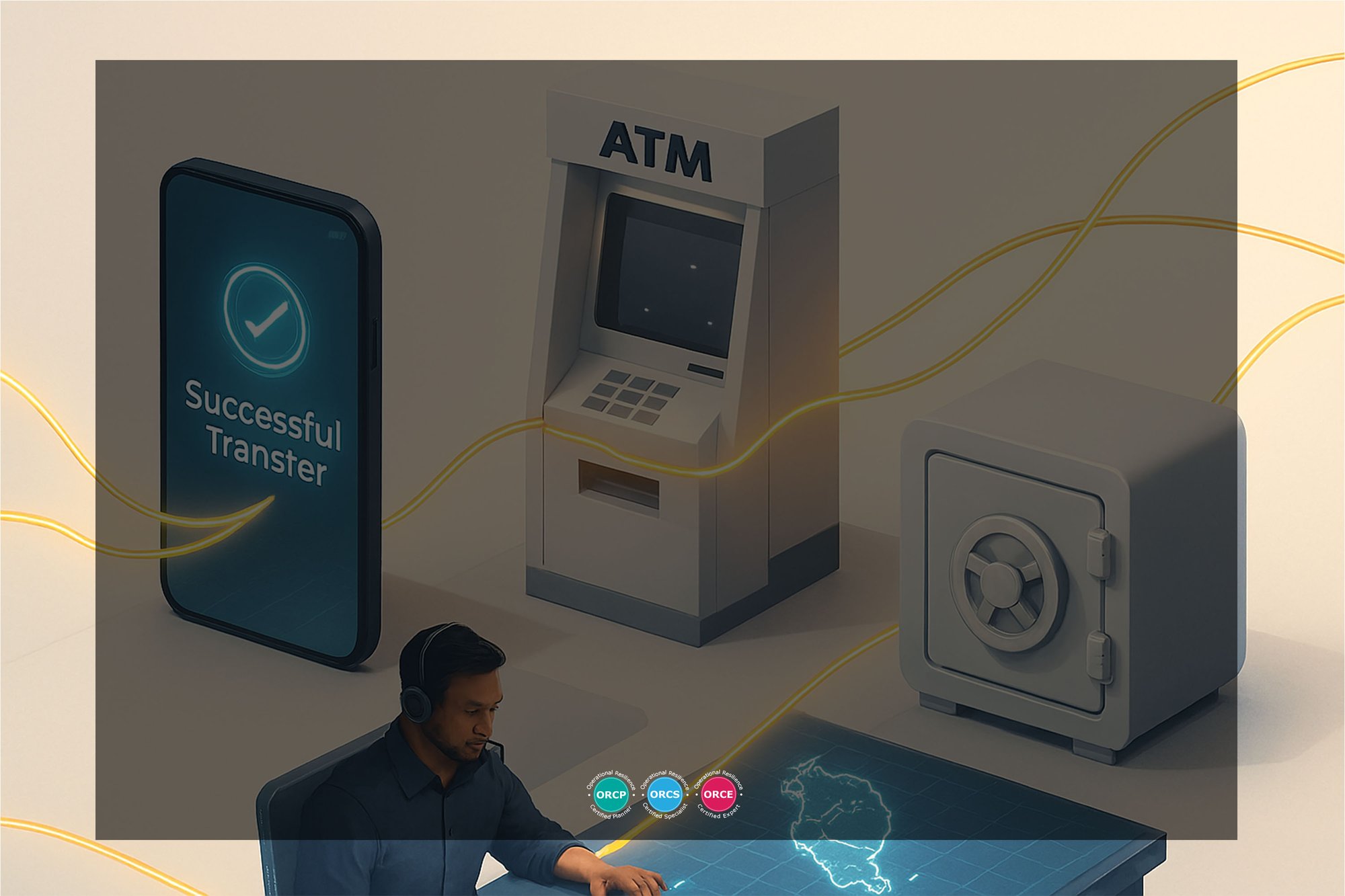
# \[OR\] \[PBCOM\] \[E3\] \[CBS\] \[1\] \[ST\] Perform Scenario Testing
[![\[OR\] \[PBCOM\] Title Banner](https://no-cache.hubspot.com/cta/default/3893111/97a5a5ca-090f-4ff6-88e1-74f83df74b8a.png)](https://cta-redirect.hubspot.com/cta/redirect/3893111/97a5a5ca-090f-4ff6-88e1-74f83df74b8a)
**Scenario testing** is the practical validation of a bank's ability to continue delivering its critical business services within defined impact tolerances during disruption.
BCM Institute defines scenario testing as the structured execution of **severe but plausible scenarios** to assess resilience capabilities, identify weaknesses, and improve response and recovery effectiveness.
It goes beyond documentation by simulating real-world disruptions across people, process, technology, and third-party dependencies.
For **The Philippine Bank of Communications (PBCom)**, this aligns with the expectations of **Bangko Sentral ng Pilipinas** under **BSP Circular No. 1203 Series of 2024**, which requires banks to conduct **scenario testing of critical operations**, assess their ability to remain within impact tolerance, and incorporate **cyber and ICT risks** into these tests.
BSP emphasises that testing should include **extreme but plausible disruptions**, validate recovery strategies, and produce evidence of continuous improvement.
### [](https://cta-redirect.hubspot.com/cta/redirect/3893111/3c32e9b3-ea88-44c3-9182-fa3e6a9aadee)
[Moh Heng Goh](https://blog.bcm-institute.org/ebook-or/author/moh-heng-goh) Apr 17, 2026
###### Operational Resilience Certified Planner-Specialist-Expert
### [![x \[OR\] \[PBCOM\] Legal Disclaimer Banner](https://no-cache.hubspot.com/cta/default/3893111/8411b9c7-8ede-4f5f-b20e-a2c6767234a0.png)](https://cta-redirect.hubspot.com/cta/redirect/3893111/8411b9c7-8ede-4f5f-b20e-a2c6767234a0)
### [](https://cta-redirect.hubspot.com/cta/redirect/3893111/3c32e9b3-ea88-44c3-9182-fa3e6a9aadee)**CBS-1 Deposit & Account Services**
#### Introduction
[](https://cta-redirect.hubspot.com/cta/redirect/3893111/fe85e2f2-f972-49ad-8321-d370fcfd9caf)
[![\[OR\] \[PBCOM\] \[E3\] \[CBS\] \[1\] \[ST\] Perform Scenario Testing](https://no-cache.hubspot.com/cta/default/3893111/9beaea6d-89b2-41ea-893c-63c6c173b036.png)](https://cta-redirect.hubspot.com/cta/redirect/3893111/9beaea6d-89b2-41ea-893c-63c6c173b036)
**Scenario testing** is the practical validation of a bank's ability to continue delivering its critical business services within defined impact tolerances during disruption.
BCM Institute defines scenario testing as the structured execution of **severe but plausible scenarios** to assess resilience capabilities, identify weaknesses, and improve response and recovery effectiveness.
It goes beyond documentation by simulating real-world disruptions across people, process, technology, and third-party dependencies.
For **The Philippine Bank of Communications (PBCom)**, this aligns with the expectations of **Bangko Sentral ng Pilipinas** under **BSP Circular No. 1203 Series of 2024**, which requires banks to conduct **scenario testing of critical operations**, assess their ability to remain within impact tolerance, and incorporate **cyber and ICT risks** into these tests.
BSP emphasises that testing should include **extreme but plausible disruptions**, validate recovery strategies, and produce evidence of continuous improvement.
[![Banner \[Table\] \[OR\] \[E3\] Perform Scenario Testing](https://no-cache.hubspot.com/cta/default/3893111/a45e9708-7139-4f4e-8e0e-41179f5cacc3.png)](https://cta-redirect.hubspot.com/cta/redirect/3893111/a45e9708-7139-4f4e-8e0e-41179f5cacc3)
###### Table P6: Perform Scenario Testing for CBS-1
| Sub-CBS Code | Sub-CBS | Recommended Scenario Test Themes | Impact / Effect | Evidence of Proactive Risk Management Action |
| --- | --- | --- | --- | --- |
| 1.1 | Customer Onboarding and Account Application | Branch denial-of-access (typhoon/earthquake) + digital onboarding surge test | Backlog in account opening; shift to digital channels | Test results showing digital onboarding capacity scaling and alternate branch routing procedures |
| 1.2 | Customer Identification and Verification (KYC/CDD) | KYC system outage + cyber compromise of screening engine | Inability to verify customers; compliance risk | Evidence of fallback manual KYC process and alternate screening provider activation logs |
| 1.3 | Account Approval and Opening | Core banking workflow failure simulation | Delayed account activation | Documented manual approval workflow execution and recovery time validation |
| 1.4 | Initial Funding and Deposit Booking | Payment clearing disruption + delayed posting scenario | Funds not credited on time; customer complaints | Test logs showing use of suspense accounts and successful deferred posting reconciliation |
| 1.5 | Product Setup and Account Parameter Maintenance | Failed system change deployment (configuration error test) | Incorrect fees/interest applied | Change rollback test results and validation controls evidence |
| 1.6 | Deposit Transactions Processing | Core banking outage + ransomware simulation | Transaction halt; severe customer impact | DR activation reports, transaction replay logs, and recovery time within tolerance |
| 1.7 | Withdrawal and Funds Access Processing | ATM network outage + cash shortage scenario | Customers are unable to withdraw funds | Evidence of alternate cash access procedures and branch contingency activation |
| 1.8 | Account Servicing and Customer Maintenance | CRM system outage + data sync failure test | Inability to process service requests | Manual servicing records and successful batch update reconciliation post-recovery |
| 1.9 | Interest, Fees, and Charges Processing | End-of-day batch failure simulation | Incorrect or delayed charges | Re-run batch logs and adjustment tracking reports |
| 1.10 | Statement, Passbook, and Balance Reporting | Reporting system outage + data unavailability | Customers cannot access statements | Evidence of alternate inquiry channels and report regeneration capability |
| 1.11 | Digital Account Access Enablement | Telecom outage + OTP failure scenario | Customers unable to log in | Test results showing alternate authentication (e.g., backup OTP or branch-assisted access) |
| 1.12 | ATM and Card-Based Access Management | Card network failure + cyber breach simulation | Card transactions fail; widespread disruption | Evidence of switching to alternate networks and emergency card controls |
| 1.13 | Account Reconciliation and Exception Handling | Delayed data feeds + reconciliation system failure | Unresolved breaks; inaccurate balances | Manual reconciliation logs and backlog clearance within defined thresholds |
| 1.14 | Dormancy, Holds, and Account Restrictions Management | Unauthorised access simulation (privileged account misuse) | Incorrect account restrictions applied | Audit trail validation and dual-authorisation control test results |
| 1.15 | Fraud Monitoring and Transaction Surveillance | Advanced fraud attack simulation bypassing rules | Undetected fraud; financial loss | Evidence of enhanced monitoring rules, real-time alert escalation, and manual blocking actions |
| 1.16 | Complaints, Disputes, and Service Recovery | Surge in complaints during the system outage scenario | Delayed response; reputational damage | Call centre surge capacity activation reports and prioritisation logs |
| 1.17 | Regulatory Reporting and Compliance Monitoring | Data corruption + reporting deadline stress test | Delayed or incorrect regulatory submission | Backup reporting templates and regulator communication evidence |
| 1.18 | Business Continuity and Service Recovery | Combined cyberattack + natural disaster (compound scenario test) | Enterprise-wide disruption across CBS | Full crisis management activation reports, DR test results, and recovery sequencing validation |
#### Integration of Cyber and ICT Risks (Embedded Across Scenarios)
All scenario tests above inherently integrate **cyber and ICT risks**, as required by BSP Circular 1203. Examples include:
- **Core banking outages and ransomware attacks** affecting transaction processing (1.6)
- **Telecommunications and authentication failures** impacting digital access (1.11)
- **Third-party network and card system disruptions** affecting ATM/card services (1.12)
- **Data corruption and system compromise** affecting reporting and reconciliation (1.13, 1.17)
- **Cyber-enabled fraud attacks** testing detection and response capabilities (1.15)
This integration ensures that PBCom’s resilience testing reflects the **increasing convergence of operational and cyber risks**.
#### Regulatory Requirements and Examples (BSP Circular 1203)
Under **BSP Circular No. 1203 Series of 2024**, banks are required to:
- Conduct **scenario testing using severe but plausible scenarios**
- Assess whether critical services remain within **impact tolerance**
- Include **cyber and ICT disruptions, third-party failures, and natural disasters**
- Use testing outcomes to **identify vulnerabilities and implement improvements**
- Ensure **board oversight and documentation of results**
**Examples applicable to CBS-1 include:**
- A **“Big One” earthquake** disrupting branch operations and staff availability
- A **system-wide cyberattack or ransomware incident** affecting multiple banks
- A **failure of a key third-party provider,** such as telecom or payment networks
- A **payment system disruption** affecting fund transfers and deposit posting
[![Banner \[Summing\] \[OR\] \[E3\] Perform Scenario Testing](https://no-cache.hubspot.com/cta/default/3893111/11895c06-91e9-4cec-acb6-4356741952e4.png)](https://cta-redirect.hubspot.com/cta/redirect/3893111/11895c06-91e9-4cec-acb6-4356741952e4)
Scenario testing for **CBS-1 Deposit and Account Services** enables PBCom to move from theoretical resilience planning to **practical validation of its capabilities**.
By systematically testing each Sub-CBS against realistic disruption scenarios, the bank can identify whether its processes, systems, and people can sustain operations within defined impact tolerances.
In line with **Bangko Sentral ng Pilipinas** expectations, these tests must be **regular, evolving, and integrated into continuous improvement cycles**.
The inclusion of cyber and ICT risks across all scenarios ensures that PBCom is prepared for modern, complex disruptions.
Ultimately, effective scenario testing strengthens the bank’s ability to **protect customers, maintain trust, and ensure continuity of essential banking services under extreme conditions**.
[![\[OR\] \[PBCOM\] Title Banner](https://no-cache.hubspot.com/cta/default/3893111/97a5a5ca-090f-4ff6-88e1-74f83df74b8a.png)](https://cta-redirect.hubspot.com/cta/redirect/3893111/97a5a5ca-090f-4ff6-88e1-74f83df74b8a)
| **eBook 3: Starting Your OR Implementation** | | | | | |
| --- | --- | --- | --- | --- | --- |
| **CBS-1 Deposit & Account Services** | | | | | |
| **CBS-1 DP** | **CBS-1 MD** | **CBS-1 MPR** | **CBS-1 ITo** | **CBS-1 SuPS** | **CBS-1 ST** |
| [![\[OR\] \[PBCOM\] \[E3\] \[CBS\] \[1\] \[DP\] Deposit and Account Services](https://no-cache.hubspot.com/cta/default/3893111/9ce02257-0280-4ea4-a5ad-4951ba0d07fd.png)](https://cta-redirect.hubspot.com/cta/redirect/3893111/9ce02257-0280-4ea4-a5ad-4951ba0d07fd) | [![\[OR\] \[PBCOM\] \[E3\] \[CBS\] \[1\] \[MD\] Map Dependency](https://no-cache.hubspot.com/cta/default/3893111/f33f70bb-40b6-4baa-8100-90b2b4b5c95e.png)](https://cta-redirect.hubspot.com/cta/redirect/3893111/f33f70bb-40b6-4baa-8100-90b2b4b5c95e) | [![\[OR\] \[PBCOM\] \[E3\] \[CBS\] \[1\] \[MPR\] Map Processes and Resources](https://no-cache.hubspot.com/cta/default/3893111/a9cd33e1-a816-4986-bb34-1447a7f67422.png)](https://cta-redirect.hubspot.com/cta/redirect/3893111/a9cd33e1-a816-4986-bb34-1447a7f67422) | [![\[OR\] \[PBCOM\] \[E3\] \[CBS\] \[1\] \[ITo\] Establish Impact Tolerances](https://no-cache.hubspot.com/cta/default/3893111/008171cf-041b-4253-89e1-cca9382c1802.png)](https://cta-redirect.hubspot.com/cta/redirect/3893111/008171cf-041b-4253-89e1-cca9382c1802) | [![\[OR\] \[PBCOM\] \[E3\] \[CBS\] \[1\] \[SuPS\] Identify Severe but Plausible Scenarios](https://no-cache.hubspot.com/cta/default/3893111/e7d74cf4-d2d4-42b7-91ff-4f3940baee4a.png)](https://cta-redirect.hubspot.com/cta/redirect/3893111/e7d74cf4-d2d4-42b7-91ff-4f3940baee4a) | [![\[OR\] \[PBCOM\] \[E3\] \[CBS\] \[1\] \[ST\] Perform Scenario Testing](https://no-cache.hubspot.com/cta/default/3893111/9beaea6d-89b2-41ea-893c-63c6c173b036.png)](https://cta-redirect.hubspot.com/cta/redirect/3893111/9beaea6d-89b2-41ea-893c-63c6c173b036) |
[](https://cta-redirect.hubspot.com/cta/redirect/3893111/084e620a-46c5-419a-82ed-6a681d15c0b6)
**Gain Competency:** For organisations looking to accelerate their journey, BCM Institute’s training and certification programs, including the **OR-5000 Operational Resilience Expert Implementer course**, provide in-depth insights and practical toolkits for effectively embedding this model.
#### More Information About OR-5000 \[OR-5\] or OR-300 \[OR-3\]
To learn more about the course and schedule, click the buttons below for the OR-300 Operational Resilience Implementer course and the OR-5000 Operational Resilience Expert Implementer course.
| [](https://cta-redirect.hubspot.com/cta/redirect/3893111/3530eccb-515d-401e-afc2-3469e26d7fbf) | [](https://cta-redirect.hubspot.com/cta/redirect/3893111/fdd4fa9c-ed69-40c1-925f-4eb6a1c5c255) | [](https://cta-redirect.hubspot.com/cta/redirect/3893111/77a34b84-0a6d-44f8-b8d6-6ab04cdf5edd) |
| --- | --- | --- |
| [](https://cta-redirect.hubspot.com/cta/redirect/3893111/6e5c0cda-39b9-4bbd-b3d4-4cf46a790b14) | [](https://cta-redirect.hubspot.com/cta/redirect/3893111/a68a08aa-36d3-4216-9551-202c9fde06ea) | [![ \[BL-OR\] \[3-4-5\] View Schedule](https://no-cache.hubspot.com/cta/default/3893111/d0d733a1-16c0-4b68-a26d-adbfd4fc6069.png)](https://cta-redirect.hubspot.com/cta/redirect/3893111/d0d733a1-16c0-4b68-a26d-adbfd4fc6069) |
| [![\[BL-OR\] \[3\] FAQ OR-300](https://no-cache.hubspot.com/cta/default/3893111/f20c71b4-f5e8-4aa5-8056-c374ca33a091.png)](https://cta-redirect.hubspot.com/cta/redirect/3893111/f20c71b4-f5e8-4aa5-8056-c374ca33a091) | If you have any questions, click to contact us.[![Email to Sales Team \[BCM Institute\]](https://no-cache.hubspot.com/cta/default/3893111/3c53daeb-2836-4843-b0e0-645baee2ab9e.png)](https://cta-redirect.hubspot.com/cta/redirect/3893111/3c53daeb-2836-4843-b0e0-645baee2ab9e) | [](https://cta-redirect.hubspot.com/cta/redirect/3893111/7f2718a4-ea80-4f84-a319-dc2d4df37a46) |
| [](https://cta-redirect.hubspot.com/cta/redirect/3893111/74b1e556-8cd2-4a74-8821-db1804534955) | [](https://cta-redirect.hubspot.com/cta/redirect/3893111/f2bd8eb1-32d2-4732-9267-ea53223cf58f) | [](https://cta-redirect.hubspot.com/cta/redirect/3893111/084e620a-46c5-419a-82ed-6a681d15c0b6) |
#### **Comments:**
---

---

---
---


All rights reserved. Copyright 2026
```json
{
"@context" : "https://schema.org",
"@type" : "BlogPosting",
"author" : {
"@type" : "Person",
"name" : "Moh Heng Goh",
"url" : "https://blog.bcm-institute.org/ebook-or/author/moh-heng-goh"
},
"dateModified" : "2026-04-17T15:44:11.403Z",
"datePublished" : "2026-04-17T06:02:29.000Z",
"headline" : "[OR] [PBCOM] [E3] [CBS] [1] [ST] Perform Scenario Testing",
"mainEntityOfPage" : {
"@id" : "https://blog.bcm-institute.org/ebook-or/or-pbcom-e3-cbs-1-st-perform-scenario-testing",
"@type" : "WebPage"
},
"publisher" : {
"@type" : "Organization",
"logo" : {
"@type" : "ImageObject",
"url" : "https://blog.bcm-institute.org/hubfs/BCMI%20Logo.png"
},
"name" : "BCMI Pte Ltd"
}
}
```