---
title: [OR] [P2] [S5] [LL] [C18] Advancing Operational Resilience Through Lessons Learned
description: [OR] [P2] [S5] [LL] [C1] Introduction to Lessons Learned in Operational Resilience
image: https://blog.bcm-institute.org/hubfs/OR%20Implement%20Mapping%20Graphic/OR%20Implement%20Series%20Lesson%20Learned%20Morepost/%5BOR%5D%20%5BP2%5D%20%5BS5%5D%20%5BLL%5D%20%5BC18%5D%20Back%20Cover.jpg
---
. .
[](http://www.bcm-institute.org/)
- [Home](https://www.bcm-institute.org/)
- [About Us](https://www.bcm-institute.org/about-us-3/)
- [A President’s Perspective](https://www.bcm-institute.org/about-us/a-presidents-perspective/)
- [Our History](https://www.bcm-institute.org/about-us/our-history/)
- [Our Advisory Council](https://www.bcm-institute.org/about-us/our-advisory-council/)
- [Customers’ Testimonials](https://www.bcm-institute.org/about-us/customers-testimonials/)
- [Credential Verification](https://www.bcm-institute.org/about-us/credential-verification/)
- [Courses](https://blog.bcm-institute.org/blog/course-fees-for-blended-learning-courses-master-catalog)
- [ISO 22301 Business Continuity Management System Audit](https://blog.bcm-institute.org/audit/business-continuity-management-audit-courses)
- [ISO 22301 Business Continuity Management](https://blog.bcm-institute.org/bcm/business-continuity-management-courses)
- [Crisis Communication](https://blog.bcm-institute.org/crisis-communication/crisis-communication-courses)
- [Crisis Management](https://blog.bcm-institute.org/en/crisis-management/courses)
- [IT Disaster Recovery](https://blog.bcm-institute.org/it-disaster-recovery/courses)
- [Operational Resilience](https://blog.bcm-institute.org/operational-resilience/courses)
- [Operational Resilience Audit](https://blog.bcm-institute.org/operational-resilience-audit/courses)
- [Certification](https://blog.bcm-institute.org/certification/types-of-certifications-offered)
- [ISO 22301 BCMS Audit Certification](https://blog.bcm-institute.org/certification/business-continuity-management-audit-certification)
- [ISO22301 Business Continuity Management Certification](https://blog.bcm-institute.org/bcm/business-continuity-management-certification)
- [Crisis Communication Certification](https://blog.bcm-institute.org/crisis-communication/crisis-communication-certification)
- [Crisis Management Certification](https://blog.bcm-institute.org/en/crisis-management/crisis-management-certification)
- [IT Disaster Recovery Planning Certification](https://blog.bcm-institute.org/it-disaster-recovery/it-disaster-recovery-certification)
- [Operational Resilience Certification](https://blog.bcm-institute.org/operational-resilience/operational-resilience-certification)
- [Operational Resilience Audit Certification](https://blog.bcm-institute.org/operational-resilience-audit)
- [Seminars](https://blog.bcm-institute.org/meet-the-expert/mte-webinar-mainpage)
- [Store](https://www.bcm-institute.org/store-2/)
- [Contact Us](http://www.bcm-institute.org/about-us/contact-us/)
-
-
###### Improving Lessons Learned: Strengthening Operational Resilience Through Continuous Improvement
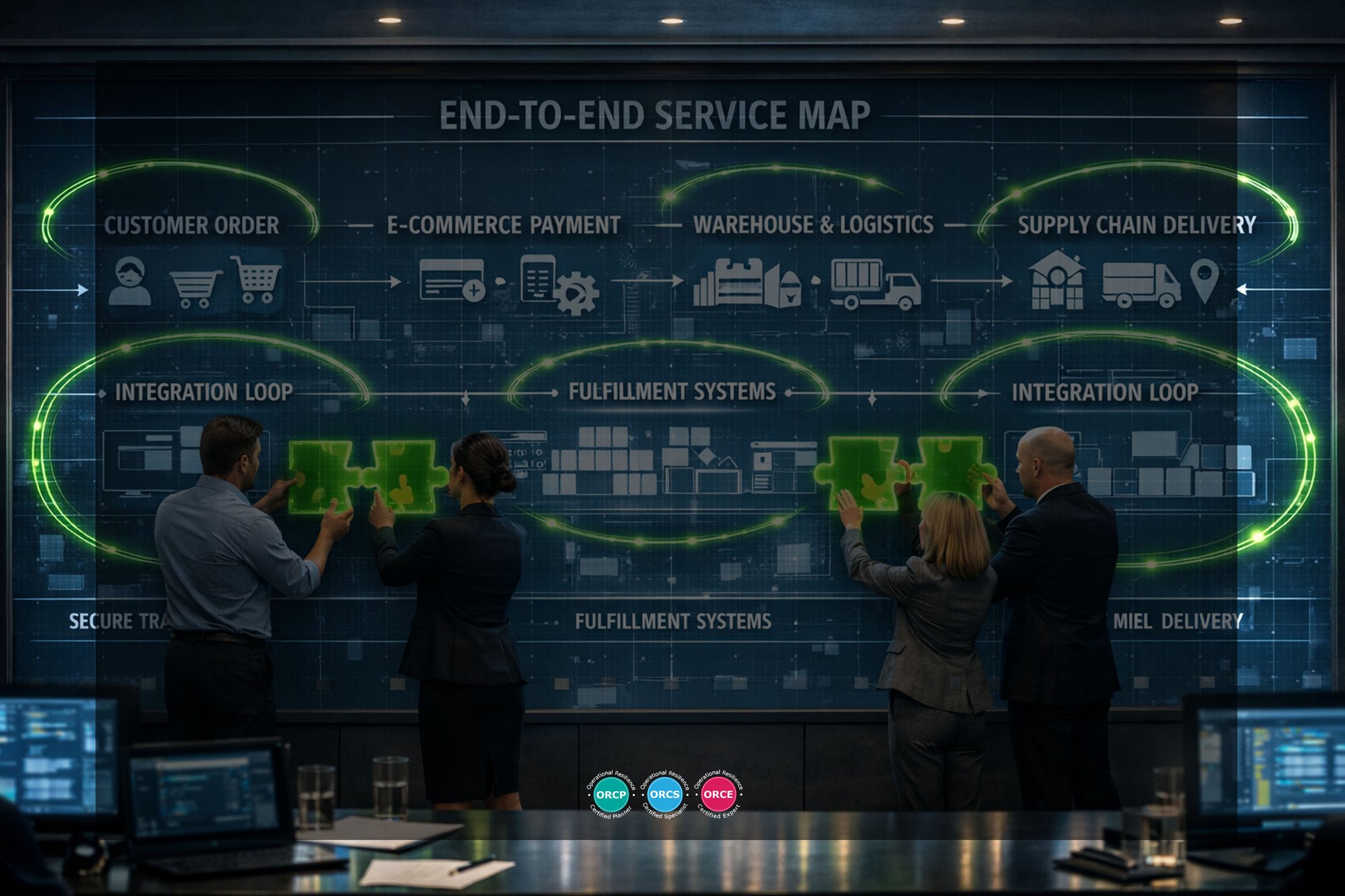
# \[OR\] \[P2\] \[S5\] \[LL\] \[C18\] Advancing Operational Resilience Through Lessons Learned
[](https://cta-redirect.hubspot.com/cta/redirect/3893111/4b69ddd1-f01e-4fa9-a2e1-ffa60ba221fc)
This eBook has taken a structured journey through the **“Improve Lessons Learned” stage** of the BCM Institute’s Operational Resilience Planning Methodology—positioning it not as a closing activity, but as a **critical inflection point** in the resilience lifecycle.
We began by defining Lessons Learned as more than observations—they are:
- Analysed insights
- Rooted in evidence
- Translated into actionable improvements
We then explored how these insights:
- Integrate into the operational resilience lifecycle
- Strengthen Critical Business Services (CBS)
- Drive continuous improvement across the organisation
The journey clearly demonstrates that Lessons Learned is not an endpoint—it is the **engine that powers resilience evolution**.
[](https://cta-redirect.hubspot.com/cta/redirect/3893111/2545ed73-a288-4ae5-9525-acc4b7887e4c)
[Moh Heng Goh](https://blog.bcm-institute.org/ebook-or/author/moh-heng-goh) May 14, 2026
###### Operational Resilience Certified Planner-Specialist-Expert
### [](https://cta-redirect.hubspot.com/cta/redirect/3893111/3c164f95-e606-4b33-8624-b491c3f0fa1a)
### \[P2\] \[S5\] Chapter 18
### [](https://cta-redirect.hubspot.com/cta/redirect/3893111/4b69ddd1-f01e-4fa9-a2e1-ffa60ba221fc)Introduction to Lessons Learned in Operational Resilience
#### Reflecting on the Journey
This eBook has taken a structured journey through the **“Improve Lessons Learned” stage** of the BCM Institute’s Operational Resilience Planning Methodology—positioning it not as a closing activity, but as a **critical inflection point** in the resilience lifecycle.
We began by defining Lessons Learned as more than observations—they are:
- Analysed insights
- Rooted in evidence
- Translated into actionable improvements
We then explored how these insights:
- Integrate into the operational resilience lifecycle
- Strengthen Critical Business Services (CBS)
- Drive continuous improvement across the organisation
The journey clearly demonstrates that Lessons Learned is not an endpoint—it is the **engine that powers resilience evolution**.
#### **Purpose of the Conclusion**
To reinforce the central themes of this eBook, synthesise key insights, and provide a **strategic closing perspective** on how organisations can leverage Lessons Learned to achieve **sustainable operational resilience and long-term organisational strength**.
#### **Lessons Learned as the Bridge Between Experience and Improvement**
At its core, Lessons Learned serves as the **bridge between experience and transformation**.
Every disruption, whether minor or severe, presents:
- A test of resilience capabilities
- A learning opportunity
However, the differentiator between resilient and non-resilient organisations lies in their ability to:
- Capture insights systematically
- Analyse root causes effectively
- Implement improvements consistently
Without this bridge:
- Experiences are lost
- Mistakes are repeated
- Resilience stagnates
With it:
- Organisations evolve
- Capabilities strengthen
- Risks are proactively managed
#### **The Shift from Compliance to Resilience Maturity**
A recurring theme throughout this eBook is the shift from:
- **Compliance-driven approaches → Outcome-driven resilience**
Organisations can no longer rely on:
- Static plans
- Documented frameworks
- Periodic reviews
Instead, they must demonstrate:
- Continuous improvement
- Real-world resilience
- Measurable outcomes
Lessons Learned is central to this shift because it provides:
- Evidence of learning
- Proof of improvement
- Visibility into resilience maturity
#### **Embedding a Service-Centric Mindset**
One of the most important transformations in operational resilience is the move towards a **service-centric mindset**.
Lessons Learned must focus on:
- **Critical Business Services (CBS)**
- End-to-end service delivery
- Customer outcomes
This ensures that:
- Improvements are meaningful
- Resources are prioritised effectively
- Resilience is strengthened where it matters most
By aligning Lessons Learned with CBS, organisations can:
- Enhance service continuity
- Reduce customer impact
- Meet regulatory expectations
#### **Continuous Improvement as a Strategic Capability**
Continuous improvement is not a process—it is a **capability** that must be:
- Embedded into governance
- Integrated into operations
- Reinforced through culture
Through Lessons Learned, organisations establish:
- Feedback loops
- Learning cycles
- Improvement mechanisms
This enables a transition from:
- Reactive response → Proactive management → Predictive resilience
Organisations that successfully embed continuous improvement will:
- Adapt faster to change
- Anticipate risks more effectively
- Sustain resilience over time
#### **The Role of Governance, Technology, and Culture**
The effectiveness of Lessons Learned depends on three critical enablers:
##### **6.1 Governance**
- Provides structure and accountability
- Ensures consistency and oversight
##### **6.2 Technology**
- Enables scalability and efficiency
- Supports data-driven insights
##### **6.3 Culture**
- Encourages openness and learning
- Drives engagement and participation
These elements must work together to create a **holistic and sustainable Lessons Learned capability**.
#### **Preparing for the Future of Operational Resilience**
The future of operational resilience will be shaped by:
- Increasing regulatory scrutiny
- Rapid technological advancements
- Evolving risk landscapes
Lessons Learned will evolve to become:
- **Real-time and data-driven**
- **Predictive and proactive**
- **Integrated across ecosystems and industries**
Organisations that embrace these trends will:
- Gain competitive advantage
- Enhance resilience maturity
- Build long-term sustainability
#### **Final Call to Action**
To truly embed Lessons Learned as a core capability, organisations must act decisively:
**Immediate Priorities**
- Establish a structured Lessons Learned framework
- Define governance and accountability
- Integrate lessons into operational resilience components
**Medium-Term Actions**
- Enhance scenario testing and impact tolerance
- Invest in technology and analytics
- Strengthen cross-functional collaboration
**Long-Term Vision**
- Build a predictive resilience capability
- Foster a culture of continuous learning
- Achieve resilience maturity
#### [![\[Banner\] \[Summing\] \[OR\] \[E2\] \[C13\] Improving Lessons Learned](https://no-cache.hubspot.com/cta/default/3893111/71190ffb-94e6-4ae9-b40a-8f29585ab4ec.png)](https://cta-redirect.hubspot.com/cta/redirect/3893111/71190ffb-94e6-4ae9-b40a-8f29585ab4ec)
Operational resilience is not defined by perfection—it is defined by **progress**.
Disruptions will continue to occur. Systems will fail. Risks will evolve.
What defines a resilient organisation is not the absence of these events, but its ability to:
- **Learn from every experience**
- **Adapt to changing conditions**
- **Improve continuously and systematically**
##### **Closing Statement**
**“Resilience is not built by avoiding disruption—it is built by learning from it, acting on it, and improving because of it.”**
[](https://cta-redirect.hubspot.com/cta/redirect/3893111/49818a85-5555-4d5b-a3ca-28d5300db18b)
| **C1** | **C2** | **C3** | **C4** | **C5** | **C6** |
| --- | --- | --- | --- | --- | --- |
| [![\[OR\] \[P2\] \[S5\] \[LL\] \[C1\] Introduction to Lessons Learned in OR](https://no-cache.hubspot.com/cta/default/3893111/b76a622a-f295-4503-87fa-4c58f5f087a8.png)](https://cta-redirect.hubspot.com/cta/redirect/3893111/b76a622a-f295-4503-87fa-4c58f5f087a8) | [![\[OR\] \[P2\] \[S5\] \[LL\] \[C2\] The Role of Lessons Learned in the OR Lifecycle](https://no-cache.hubspot.com/cta/default/3893111/b9f0d952-dfd0-400d-b37f-24d9c59f2baa.png)](https://cta-redirect.hubspot.com/cta/redirect/3893111/b9f0d952-dfd0-400d-b37f-24d9c59f2baa) | [![\[OR\] \[P2\] \[S5\] \[LL\] \[C3\] Governance and Ownership of Lessons Learned](https://no-cache.hubspot.com/cta/default/3893111/8e352c01-ff6a-4ff6-b81b-90ad0ad15f46.png)](https://cta-redirect.hubspot.com/cta/redirect/3893111/8e352c01-ff6a-4ff6-b81b-90ad0ad15f46) | [![\[OR\] \[P2\] \[S5\] \[LL\] \[C4\] Sources and Triggers for Capturing Lessons Learned](https://no-cache.hubspot.com/cta/default/3893111/856c1acb-96c5-49ed-afa3-ffbb8e61d9e6.png)](https://cta-redirect.hubspot.com/cta/redirect/3893111/856c1acb-96c5-49ed-afa3-ffbb8e61d9e6) | [![\[OR\] \[P2\] \[S5\] \[LL\] \[C5\] Lessons Learned Framework and Methodology](https://no-cache.hubspot.com/cta/default/3893111/c86a2b1e-05a8-44b9-a74f-730d85b6d046.png)](https://cta-redirect.hubspot.com/cta/redirect/3893111/c86a2b1e-05a8-44b9-a74f-730d85b6d046) | [![\[OR\] \[P2\] \[S5\] \[LL\] \[C6\] Root Cause Analysis (RCA) Techniques](https://no-cache.hubspot.com/cta/default/3893111/b3d2f707-1f82-4f0a-8d51-f3451c78c337.png)](https://cta-redirect.hubspot.com/cta/redirect/3893111/b3d2f707-1f82-4f0a-8d51-f3451c78c337) |
| **C7** | **C8** | **C9** | **C10** | **C11** | **C12 ** |
| [![\[OR\] \[P2\] \[S5\] \[LL\] \[C7\] Linking Lessons Learned to CBS](https://no-cache.hubspot.com/cta/default/3893111/f484c1bf-992a-4298-8752-6fec87c33912.png)](https://cta-redirect.hubspot.com/cta/redirect/3893111/f484c1bf-992a-4298-8752-6fec87c33912) | [![\[OR\] \[P2\] \[S5\] \[LL\] \[C8\] Integration with Scenario Testing and Impact Tolerance](https://no-cache.hubspot.com/cta/default/3893111/5eaa1a40-8d88-414b-8f38-9db2edd6ca0b.png)](https://cta-redirect.hubspot.com/cta/redirect/3893111/5eaa1a40-8d88-414b-8f38-9db2edd6ca0b) | [![\[OR\] \[P2\] \[S5\] \[LL\] \[C9\] Developing and Prioritising Improvement Actions](https://no-cache.hubspot.com/cta/default/3893111/af3c93f2-7736-4431-84d3-664e4bc9e425.png)](https://cta-redirect.hubspot.com/cta/redirect/3893111/af3c93f2-7736-4431-84d3-664e4bc9e425) | [![\[OR\] \[P2\] \[S5\] \[LL\] \[C10\] Embedding Continuous Improvement](https://no-cache.hubspot.com/cta/default/3893111/505103ad-4012-41a7-9fb9-afda3baeb58d.png)](https://cta-redirect.hubspot.com/cta/redirect/3893111/505103ad-4012-41a7-9fb9-afda3baeb58d) | [![\[OR\] \[P2\] \[S5\] \[LL\] \[C11\] Communication of Lessons Learned](https://no-cache.hubspot.com/cta/default/3893111/fba3d8cc-8854-4f13-9408-37d1ebc49091.png)](https://cta-redirect.hubspot.com/cta/redirect/3893111/fba3d8cc-8854-4f13-9408-37d1ebc49091) | [![\[OR\] \[P2\] \[S5\] \[LL\] \[C12\] Technology and Tools for Lessons Learned Management](https://no-cache.hubspot.com/cta/default/3893111/2b75ccca-cdc3-4327-84ff-e06677302878.png)](https://cta-redirect.hubspot.com/cta/redirect/3893111/2b75ccca-cdc3-4327-84ff-e06677302878) |
| **C13** | **C14** | **C15** | **C16** | **C17** | **C18** |
| [![\[OR\] \[P2\] \[S5\] \[LL\] \[C13\] Regulatory Expectations and Compliance](https://no-cache.hubspot.com/cta/default/3893111/516c631b-bb38-4b5f-9446-afcedbe2751c.png)](https://cta-redirect.hubspot.com/cta/redirect/3893111/516c631b-bb38-4b5f-9446-afcedbe2751c) | [![\[OR\] \[P2\] \[S5\] \[LL\] \[C14\] Common Challenges and Pitfalls](https://no-cache.hubspot.com/cta/default/3893111/afb5b7fb-efcb-4832-a6bd-44f3f36c97ee.png)](https://cta-redirect.hubspot.com/cta/redirect/3893111/afb5b7fb-efcb-4832-a6bd-44f3f36c97ee) | [![\[OR\] \[P2\] \[S5\] \[LL\] \[C15\] Practical Case Study (Banking Sector Example)](https://no-cache.hubspot.com/cta/default/3893111/9769f9fc-a994-4962-b5cf-7b2aa9ad5875.png)](https://cta-redirect.hubspot.com/cta/redirect/3893111/9769f9fc-a994-4962-b5cf-7b2aa9ad5875) | [![\[OR\] \[P2\] \[S5\] \[LL\] \[C16\] Future Trends in Lessons Learned](https://no-cache.hubspot.com/cta/default/3893111/b0a94161-20fe-4a63-a164-12d2be9c007c.png)](https://cta-redirect.hubspot.com/cta/redirect/3893111/b0a94161-20fe-4a63-a164-12d2be9c007c) | [![\[OR\] \[P2\] \[S5\] \[LL\] \[C16\] Future Trends in Lessons Learned](https://no-cache.hubspot.com/cta/default/3893111/b0a94161-20fe-4a63-a164-12d2be9c007c.png)](https://cta-redirect.hubspot.com/cta/redirect/3893111/b0a94161-20fe-4a63-a164-12d2be9c007c) | [![\[OR\] \[P2\] \[S5\] \[LL\] \[C18\] Back Cover](https://no-cache.hubspot.com/cta/default/3893111/6b6d918c-c6a7-4861-8e83-5760b1c19713.png)](https://cta-redirect.hubspot.com/cta/redirect/3893111/6b6d918c-c6a7-4861-8e83-5760b1c19713) |
#### More Information About OR-5000 \[OR-5\] or OR-300 \[OR-3\]
To learn more about the course and schedule, click the buttons below for the OR-300 Operational Resilience Implementer course and the OR-5000 Operational Resilience Expert Implementer course.
| [](https://cta-redirect.hubspot.com/cta/redirect/3893111/3530eccb-515d-401e-afc2-3469e26d7fbf) | [](https://cta-redirect.hubspot.com/cta/redirect/3893111/fdd4fa9c-ed69-40c1-925f-4eb6a1c5c255) | [](https://cta-redirect.hubspot.com/cta/redirect/3893111/77a34b84-0a6d-44f8-b8d6-6ab04cdf5edd) |
| --- | --- | --- |
| [](https://cta-redirect.hubspot.com/cta/redirect/3893111/6e5c0cda-39b9-4bbd-b3d4-4cf46a790b14) | [](https://cta-redirect.hubspot.com/cta/redirect/3893111/a68a08aa-36d3-4216-9551-202c9fde06ea) | [![ \[BL-OR\] \[3-4-5\] View Schedule](https://no-cache.hubspot.com/cta/default/3893111/d0d733a1-16c0-4b68-a26d-adbfd4fc6069.png)](https://cta-redirect.hubspot.com/cta/redirect/3893111/d0d733a1-16c0-4b68-a26d-adbfd4fc6069) |
| [![\[BL-OR\] \[3\] FAQ OR-300](https://no-cache.hubspot.com/cta/default/3893111/f20c71b4-f5e8-4aa5-8056-c374ca33a091.png)](https://cta-redirect.hubspot.com/cta/redirect/3893111/f20c71b4-f5e8-4aa5-8056-c374ca33a091) | If you have any questions, click to contact us.[![Email to Sales Team \[BCM Institute\]](https://no-cache.hubspot.com/cta/default/3893111/3c53daeb-2836-4843-b0e0-645baee2ab9e.png)](https://cta-redirect.hubspot.com/cta/redirect/3893111/3c53daeb-2836-4843-b0e0-645baee2ab9e) | [](https://cta-redirect.hubspot.com/cta/redirect/3893111/7f2718a4-ea80-4f84-a319-dc2d4df37a46) |
| [](https://cta-redirect.hubspot.com/cta/redirect/3893111/74b1e556-8cd2-4a74-8821-db1804534955) | [](https://cta-redirect.hubspot.com/cta/redirect/3893111/f2bd8eb1-32d2-4732-9267-ea53223cf58f) | [](https://cta-redirect.hubspot.com/cta/redirect/3893111/084e620a-46c5-419a-82ed-6a681d15c0b6) |
#### **Comments:**
---

---

---
---


All rights reserved. Copyright 2026
```json
{
"@context" : "https://schema.org",
"@type" : "BlogPosting",
"author" : {
"@type" : "Person",
"name" : "Moh Heng Goh",
"url" : "https://blog.bcm-institute.org/ebook-or/author/moh-heng-goh"
},
"dateModified" : "2026-05-14T15:29:56.493Z",
"datePublished" : "2026-05-14T15:26:16.000Z",
"headline" : "[OR] [P2] [S5] [LL] [C18] Advancing Operational Resilience Through Lessons Learned",
"mainEntityOfPage" : {
"@id" : "https://blog.bcm-institute.org/ebook-or/or-p2-s5-ll-c18-advancing-operational-resilience-through-lessons-learned",
"@type" : "WebPage"
},
"publisher" : {
"@type" : "Organization",
"logo" : {
"@type" : "ImageObject",
"url" : "https://blog.bcm-institute.org/hubfs/BCMI%20Logo.png"
},
"name" : "BCMI Pte Ltd"
}
}
```