---
title: [OR] [P2] [S5] [LL] [C11] Communication of Lessons Learned
description: [OR] [P2] [S5] [LL] [C11] Communication of Lessons Learned
image: https://blog.bcm-institute.org/hubfs/OR%20Implement%20Mapping%20Graphic/OR%20Implement%20Series%20Lesson%20Learned%20Morepost/%5BOR%5D%20%5BP2%5D%20%5BS5%5D%20%5BLL%5D%20%5BC11%5D%20Communication%20of%20Lessons%20Learned.jpg
---
. .
[](http://www.bcm-institute.org/)
- [Home](https://www.bcm-institute.org/)
- [About Us](https://www.bcm-institute.org/about-us-3/)
- [A President’s Perspective](https://www.bcm-institute.org/about-us/a-presidents-perspective/)
- [Our History](https://www.bcm-institute.org/about-us/our-history/)
- [Our Advisory Council](https://www.bcm-institute.org/about-us/our-advisory-council/)
- [Customers’ Testimonials](https://www.bcm-institute.org/about-us/customers-testimonials/)
- [Credential Verification](https://www.bcm-institute.org/about-us/credential-verification/)
- [Courses](https://blog.bcm-institute.org/blog/course-fees-for-blended-learning-courses-master-catalog)
- [ISO 22301 Business Continuity Management System Audit](https://blog.bcm-institute.org/audit/business-continuity-management-audit-courses)
- [ISO 22301 Business Continuity Management](https://blog.bcm-institute.org/bcm/business-continuity-management-courses)
- [Crisis Communication](https://blog.bcm-institute.org/crisis-communication/crisis-communication-courses)
- [Crisis Management](https://blog.bcm-institute.org/en/crisis-management/courses)
- [IT Disaster Recovery](https://blog.bcm-institute.org/it-disaster-recovery/courses)
- [Operational Resilience](https://blog.bcm-institute.org/operational-resilience/courses)
- [Operational Resilience Audit](https://blog.bcm-institute.org/operational-resilience-audit/courses)
- [Certification](https://blog.bcm-institute.org/certification/types-of-certifications-offered)
- [ISO 22301 BCMS Audit Certification](https://blog.bcm-institute.org/certification/business-continuity-management-audit-certification)
- [ISO22301 Business Continuity Management Certification](https://blog.bcm-institute.org/bcm/business-continuity-management-certification)
- [Crisis Communication Certification](https://blog.bcm-institute.org/crisis-communication/crisis-communication-certification)
- [Crisis Management Certification](https://blog.bcm-institute.org/en/crisis-management/crisis-management-certification)
- [IT Disaster Recovery Planning Certification](https://blog.bcm-institute.org/it-disaster-recovery/it-disaster-recovery-certification)
- [Operational Resilience Certification](https://blog.bcm-institute.org/operational-resilience/operational-resilience-certification)
- [Operational Resilience Audit Certification](https://blog.bcm-institute.org/operational-resilience-audit)
- [Seminars](https://blog.bcm-institute.org/meet-the-expert/mte-webinar-mainpage)
- [Store](https://www.bcm-institute.org/store-2/)
- [Contact Us](http://www.bcm-institute.org/about-us/contact-us/)
-
-
###### Improving Lessons Learned: Strengthening Operational Resilience Through Continuous Improvement
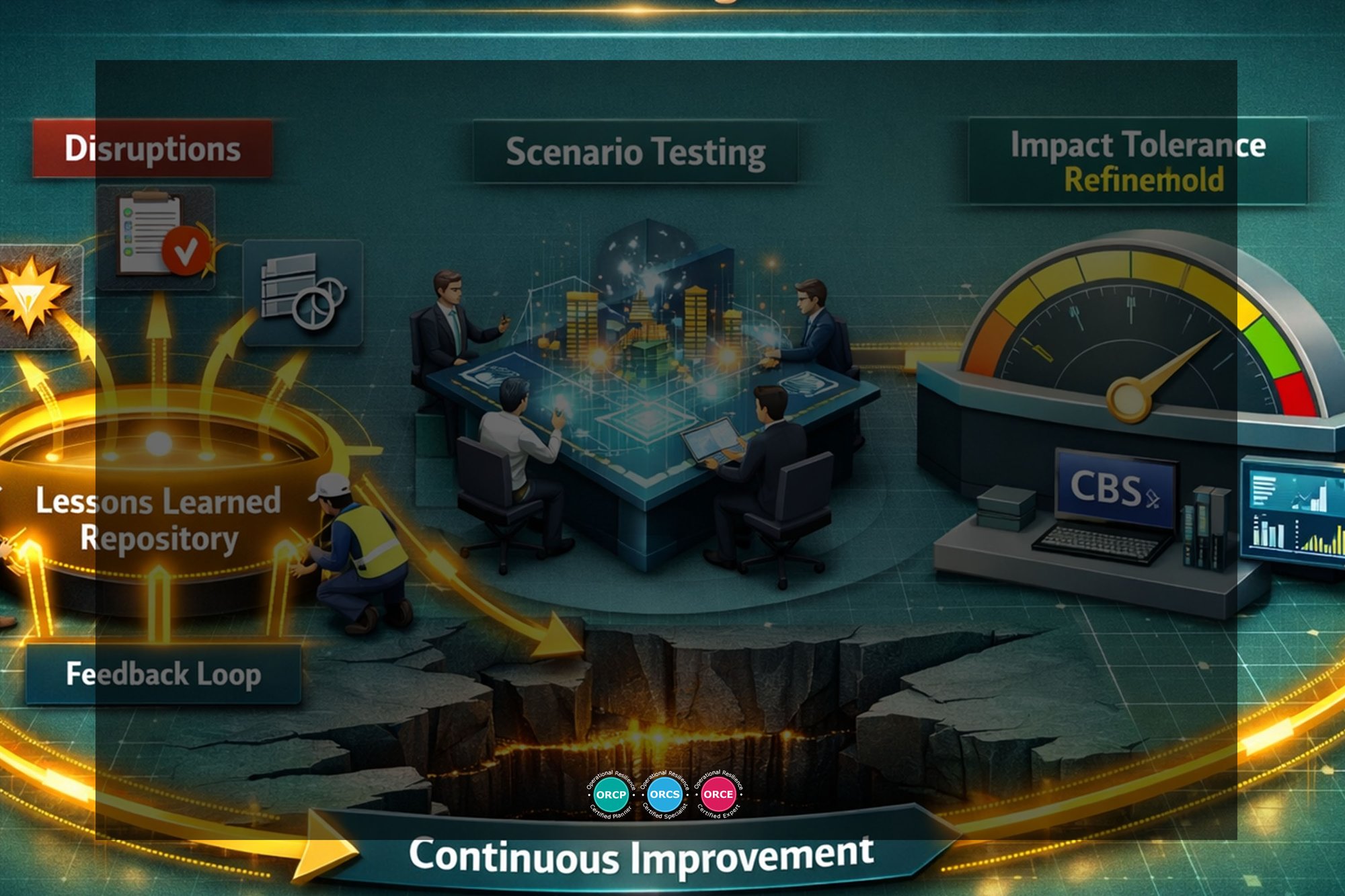
# \[OR\] \[P2\] \[S5\] \[LL\] \[C11\] Communication of Lessons Learned
[](https://cta-redirect.hubspot.com/cta/redirect/3893111/4b69ddd1-f01e-4fa9-a2e1-ffa60ba221fc)
Lessons learned only create value when they are **effectively communicated and understood**. Many organisations capture and analyse lessons but fail to:
- Share insights beyond immediate teams
- Influence organisational behaviour
- Drive enterprise-wide improvement
In operational resilience, communication is critical to ensure that:
- Learning is **disseminated across all relevant stakeholders**
- Risks are clearly understood
- Improvement actions are aligned and executed
This chapter explores how organisations can design and implement a **robust communication framework** for lessons learned.
[](https://cta-redirect.hubspot.com/cta/redirect/3893111/2545ed73-a288-4ae5-9525-acc4b7887e4c)
[Moh Heng Goh](https://blog.bcm-institute.org/ebook-or/author/moh-heng-goh) May 14, 2026
###### Operational Resilience Certified Planner-Specialist-Expert
### [](https://cta-redirect.hubspot.com/cta/redirect/3893111/3c164f95-e606-4b33-8624-b491c3f0fa1a)
### \[P2\] \[S5\] Chapter 11
### [](https://cta-redirect.hubspot.com/cta/redirect/3893111/4b69ddd1-f01e-4fa9-a2e1-ffa60ba221fc)Communication of Lessons Learned
#### **Introduction**
#### **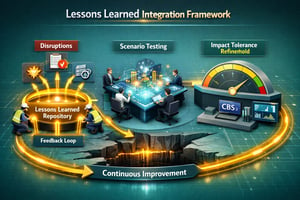**
Lessons learned only create value when they are **effectively communicated and understood**. Many organisations capture and analyse lessons but fail to:
- Share insights beyond immediate teams
- Influence organisational behaviour
- Drive enterprise-wide improvement
In operational resilience, communication is critical to ensure that:
- Learning is **disseminated across all relevant stakeholders**
- Risks are clearly understood
- Improvement actions are aligned and executed
This chapter explores how organisations can design and implement a **robust communication framework** for lessons learned.
#### **Purpose of the Chapter**
To establish a **structured and effective approach for communicating Lessons Learned**, ensuring that insights are shared across the organisation, drive awareness, influence decision-making, and strengthen operational resilience capabilities.
#### **Objectives of Communicating Lessons Learned**
Effective communication of lessons learned aims to:
- **Promote organisational awareness** of risks and vulnerabilities
- **Enhance decision-making** at all levels
- **Drive accountability** for improvement actions
- **Prevent recurrence** of incidents
- **Support regulatory transparency and compliance**
Ultimately, communication ensures that lessons learned become **institutional knowledge**, not isolated insights.
#### **Key Principles of Effective Communication**
##### **Clarity**
- Present information in a clear and concise manner
- Avoid technical jargon where possible
##### **Relevance**
- Tailor messages to the audience
- Focus on what matters to stakeholders
##### **Timeliness**
- Communicate lessons promptly
- Avoid delays that reduce impact
##### **Transparency**
- Share both successes and failures
- Promote openness
##### **Action-Oriented**
- Highlight required actions
- Emphasise accountability
#### **Target Audiences for Lessons Learned**
Different stakeholders require different levels of detail and focus.
##### **Senior Management and Board**
- Strategic insights
- High-level risks and impacts
- Status of improvement actions
##### **Business Units**
- Operational impacts
- Process improvements
- Action ownership
##### **Risk and Compliance Functions**
- Control weaknesses
- Risk implications
- Regulatory considerations
##### **IT and Technology Teams**
- System vulnerabilities
- Technical improvements
##### **External Stakeholders**
- Regulators
- Customers (where appropriate)
- Third-party vendors
#### **Communication Channels and Methods**
##### **Formal Reports**
- Post-incident reports
- Post-exercise reports
- Audit reports
##### **Dashboards and Visualisations**
- Real-time tracking of:
##### **Meetings and Workshops**
- Lessons learned review sessions
- Cross-functional workshops
##### **Training and Awareness Programs**
- Incorporate lessons into training materials
- Conduct awareness sessions
##### **Digital Platforms**
- Intranet portals
- Knowledge management systems
#### **Structuring Lessons Learned Reports**
A standardised report format ensures consistency and clarity.
##### **Key Components of a Report**
| Section | Description |
| --- | --- |
| Executive Summary | Overview of key findings |
| Incident Overview | Description of event |
| Impact Assessment | CBS, customer, and regulatory impact |
| Root Cause Analysis | Key causes identified |
| Lessons Learned | Key insights |
| Improvement Actions | Planned actions |
| Status Update | Progress tracking |
#### **Tailoring Communication to Stakeholders**
##### **Executive-Level Communication**
- Focus on:
##### **Operational-Level Communication**
- Focus on:
##### **Technical Communication**
- Focus on:
#### **Promoting Organisational Awareness**
##### **Knowledge Sharing**
- Share lessons across departments
- Encourage cross-functional learning
##### **Awareness Campaigns**
- Highlight key lessons
- Reinforce learning culture
##### **Continuous Engagement**
- Regular updates
- Ongoing communication
#### **Integration with Training and Exercises**
##### **Incorporating Lessons into Training**
- Update training materials
- Use real-life examples
##### **Enhancing Scenario Testing**
- Use lessons to design scenarios
- Improve realism
##### **Reinforcing Learning**
- Conduct follow-up exercises
#### **Technology and Tools for Communication**
##### **Knowledge Management Systems**
- Central repository for lessons learned
- Easy access for stakeholders
##### **Dashboards**
- Visual representation of:
##### **Collaboration Tools**
- Facilitate communication across teams
#### **Measuring Effectiveness of Communication**
##### **Key Metrics**
- Stakeholder awareness levels
- Participation in training sessions
- Reduction in recurring incidents
##### **Feedback Mechanisms**
- Surveys
- Workshops
- Stakeholder feedback
##### **Continuous Improvement**
- Refine communication strategies based on feedback
#### **Regulatory Expectations**
Regulators expect organisations to:
- Communicate lessons learned effectively
- Demonstrate transparency
- Provide evidence of continuous improvement
Communication supports:
- Regulatory reporting
- Audit requirements
- Compliance with resilience frameworks
#### **Common Challenges**
##### ** Poor Communication Channels**
- Limited reach
- Ineffective dissemination
##### **Information Overload**
- Too much detail
- Lack of focus
##### **Lack of Engagement**
- Stakeholders not actively involved
##### **Siloed Information**
- Lessons not shared across departments
#### **Best Practices**
##### **Standardise Communication Formats**
- Use consistent templates
##### **Tailor Messages**
- Adapt to audience needs
##### **Use Visual Tools**
- Dashboards and infographics
##### ** Promote Transparency**
- Share both successes and failures
##### **Encourage Feedback**
- Continuously improve communication
#### **Case Example: Communication in Banking Sector**
**Scenario**
A bank experiences a system outage affecting customer transactions.
**Communication Approach**
- Immediate notification to stakeholders
- Detailed post-incident report
- Workshops to discuss lessons learned
**Outcome**
- Improved awareness
- Enhanced response processes
- Reduced recurrence
#### [![\[Banner\] \[Summing\] \[OR\] \[E2\] \[C13\] Improving Lessons Learned](https://no-cache.hubspot.com/cta/default/3893111/71190ffb-94e6-4ae9-b40a-8f29585ab4ec.png)](https://cta-redirect.hubspot.com/cta/redirect/3893111/71190ffb-94e6-4ae9-b40a-8f29585ab4ec)
Effective communication of lessons learned is essential for transforming insights into **organisation-wide improvements**. It ensures that:
- Knowledge is shared
- Risks are understood
- Actions are implemented
By establishing a structured communication framework, organisations can:
- Enhance operational resilience
- Strengthen governance
- Foster a culture of continuous learning
##### **Transition to Next Chapter**
With effective communication in place, the next chapter will explore **technology and tools for managing lessons learned**, focusing on how digital solutions can enhance capture, analysis, and reporting.
[](https://cta-redirect.hubspot.com/cta/redirect/3893111/49818a85-5555-4d5b-a3ca-28d5300db18b)
| **C1** | **C2** | **C3** | **C4** | **C5** | **C6** |
| --- | --- | --- | --- | --- | --- |
| [![\[OR\] \[P2\] \[S5\] \[LL\] \[C1\] Introduction to Lessons Learned in OR](https://no-cache.hubspot.com/cta/default/3893111/b76a622a-f295-4503-87fa-4c58f5f087a8.png)](https://cta-redirect.hubspot.com/cta/redirect/3893111/b76a622a-f295-4503-87fa-4c58f5f087a8) | [![\[OR\] \[P2\] \[S5\] \[LL\] \[C2\] The Role of Lessons Learned in the OR Lifecycle](https://no-cache.hubspot.com/cta/default/3893111/b9f0d952-dfd0-400d-b37f-24d9c59f2baa.png)](https://cta-redirect.hubspot.com/cta/redirect/3893111/b9f0d952-dfd0-400d-b37f-24d9c59f2baa) | [![\[OR\] \[P2\] \[S5\] \[LL\] \[C3\] Governance and Ownership of Lessons Learned](https://no-cache.hubspot.com/cta/default/3893111/8e352c01-ff6a-4ff6-b81b-90ad0ad15f46.png)](https://cta-redirect.hubspot.com/cta/redirect/3893111/8e352c01-ff6a-4ff6-b81b-90ad0ad15f46) | [![\[OR\] \[P2\] \[S5\] \[LL\] \[C4\] Sources and Triggers for Capturing Lessons Learned](https://no-cache.hubspot.com/cta/default/3893111/856c1acb-96c5-49ed-afa3-ffbb8e61d9e6.png)](https://cta-redirect.hubspot.com/cta/redirect/3893111/856c1acb-96c5-49ed-afa3-ffbb8e61d9e6) | [![\[OR\] \[P2\] \[S5\] \[LL\] \[C5\] Lessons Learned Framework and Methodology](https://no-cache.hubspot.com/cta/default/3893111/c86a2b1e-05a8-44b9-a74f-730d85b6d046.png)](https://cta-redirect.hubspot.com/cta/redirect/3893111/c86a2b1e-05a8-44b9-a74f-730d85b6d046) | [![\[OR\] \[P2\] \[S5\] \[LL\] \[C6\] Root Cause Analysis (RCA) Techniques](https://no-cache.hubspot.com/cta/default/3893111/b3d2f707-1f82-4f0a-8d51-f3451c78c337.png)](https://cta-redirect.hubspot.com/cta/redirect/3893111/b3d2f707-1f82-4f0a-8d51-f3451c78c337) |
| **C7** | **C8** | **C9** | **C10** | **C11** | **C12 ** |
| [![\[OR\] \[P2\] \[S5\] \[LL\] \[C7\] Linking Lessons Learned to CBS](https://no-cache.hubspot.com/cta/default/3893111/f484c1bf-992a-4298-8752-6fec87c33912.png)](https://cta-redirect.hubspot.com/cta/redirect/3893111/f484c1bf-992a-4298-8752-6fec87c33912) | [![\[OR\] \[P2\] \[S5\] \[LL\] \[C8\] Integration with Scenario Testing and Impact Tolerance](https://no-cache.hubspot.com/cta/default/3893111/5eaa1a40-8d88-414b-8f38-9db2edd6ca0b.png)](https://cta-redirect.hubspot.com/cta/redirect/3893111/5eaa1a40-8d88-414b-8f38-9db2edd6ca0b) | [![\[OR\] \[P2\] \[S5\] \[LL\] \[C9\] Developing and Prioritising Improvement Actions](https://no-cache.hubspot.com/cta/default/3893111/af3c93f2-7736-4431-84d3-664e4bc9e425.png)](https://cta-redirect.hubspot.com/cta/redirect/3893111/af3c93f2-7736-4431-84d3-664e4bc9e425) | [![\[OR\] \[P2\] \[S5\] \[LL\] \[C10\] Embedding Continuous Improvement](https://no-cache.hubspot.com/cta/default/3893111/505103ad-4012-41a7-9fb9-afda3baeb58d.png)](https://cta-redirect.hubspot.com/cta/redirect/3893111/505103ad-4012-41a7-9fb9-afda3baeb58d) | [![\[OR\] \[P2\] \[S5\] \[LL\] \[C14\] Common Challenges and Pitfalls](https://no-cache.hubspot.com/cta/default/3893111/afb5b7fb-efcb-4832-a6bd-44f3f36c97ee.png)](https://cta-redirect.hubspot.com/cta/redirect/3893111/afb5b7fb-efcb-4832-a6bd-44f3f36c97ee) | [![\[OR\] \[P2\] \[S5\] \[LL\] \[C12\] Technology and Tools for Lessons Learned Management](https://no-cache.hubspot.com/cta/default/3893111/2b75ccca-cdc3-4327-84ff-e06677302878.png)](https://cta-redirect.hubspot.com/cta/redirect/3893111/2b75ccca-cdc3-4327-84ff-e06677302878) |
| **C13** | **C14** | **C15** | **C16** | **C17** | **C18** |
| [![\[OR\] \[P2\] \[S5\] \[LL\] \[C13\] Regulatory Expectations and Compliance](https://no-cache.hubspot.com/cta/default/3893111/516c631b-bb38-4b5f-9446-afcedbe2751c.png)](https://cta-redirect.hubspot.com/cta/redirect/3893111/516c631b-bb38-4b5f-9446-afcedbe2751c) | [![\[OR\] \[P2\] \[S5\] \[LL\] \[C14\] Common Challenges and Pitfalls](https://no-cache.hubspot.com/cta/default/3893111/afb5b7fb-efcb-4832-a6bd-44f3f36c97ee.png)](https://cta-redirect.hubspot.com/cta/redirect/3893111/afb5b7fb-efcb-4832-a6bd-44f3f36c97ee) | [![\[OR\] \[P2\] \[S5\] \[LL\] \[C15\] Practical Case Study (Banking Sector Example)](https://no-cache.hubspot.com/cta/default/3893111/9769f9fc-a994-4962-b5cf-7b2aa9ad5875.png)](https://cta-redirect.hubspot.com/cta/redirect/3893111/9769f9fc-a994-4962-b5cf-7b2aa9ad5875) | [![\[OR\] \[P2\] \[S5\] \[LL\] \[C16\] Future Trends in Lessons Learned](https://no-cache.hubspot.com/cta/default/3893111/b0a94161-20fe-4a63-a164-12d2be9c007c.png)](https://cta-redirect.hubspot.com/cta/redirect/3893111/b0a94161-20fe-4a63-a164-12d2be9c007c) | [![\[OR\] \[P2\] \[S5\] \[LL\] \[C17\] Key Takeaways and Call to Action](https://no-cache.hubspot.com/cta/default/3893111/edcf7673-1c76-45e7-9b70-12cda97ceac6.png)](https://cta-redirect.hubspot.com/cta/redirect/3893111/edcf7673-1c76-45e7-9b70-12cda97ceac6) | [![\[OR\] \[P2\] \[S5\] \[LL\] \[C18\] Back Cover](https://no-cache.hubspot.com/cta/default/3893111/6b6d918c-c6a7-4861-8e83-5760b1c19713.png)](https://cta-redirect.hubspot.com/cta/redirect/3893111/6b6d918c-c6a7-4861-8e83-5760b1c19713) |
#### More Information About OR-5000 \[OR-5\] or OR-300 \[OR-3\]
To learn more about the course and schedule, click the buttons below for the OR-300 Operational Resilience Implementer course and the OR-5000 Operational Resilience Expert Implementer course.
| [](https://cta-redirect.hubspot.com/cta/redirect/3893111/3530eccb-515d-401e-afc2-3469e26d7fbf) | [](https://cta-redirect.hubspot.com/cta/redirect/3893111/fdd4fa9c-ed69-40c1-925f-4eb6a1c5c255) | [](https://cta-redirect.hubspot.com/cta/redirect/3893111/77a34b84-0a6d-44f8-b8d6-6ab04cdf5edd) |
| --- | --- | --- |
| [](https://cta-redirect.hubspot.com/cta/redirect/3893111/6e5c0cda-39b9-4bbd-b3d4-4cf46a790b14) | [](https://cta-redirect.hubspot.com/cta/redirect/3893111/a68a08aa-36d3-4216-9551-202c9fde06ea) | [![ \[BL-OR\] \[3-4-5\] View Schedule](https://no-cache.hubspot.com/cta/default/3893111/d0d733a1-16c0-4b68-a26d-adbfd4fc6069.png)](https://cta-redirect.hubspot.com/cta/redirect/3893111/d0d733a1-16c0-4b68-a26d-adbfd4fc6069) |
| [![\[BL-OR\] \[3\] FAQ OR-300](https://no-cache.hubspot.com/cta/default/3893111/f20c71b4-f5e8-4aa5-8056-c374ca33a091.png)](https://cta-redirect.hubspot.com/cta/redirect/3893111/f20c71b4-f5e8-4aa5-8056-c374ca33a091) | If you have any questions, click to contact us.[![Email to Sales Team \[BCM Institute\]](https://no-cache.hubspot.com/cta/default/3893111/3c53daeb-2836-4843-b0e0-645baee2ab9e.png)](https://cta-redirect.hubspot.com/cta/redirect/3893111/3c53daeb-2836-4843-b0e0-645baee2ab9e) | [](https://cta-redirect.hubspot.com/cta/redirect/3893111/7f2718a4-ea80-4f84-a319-dc2d4df37a46) |
| [](https://cta-redirect.hubspot.com/cta/redirect/3893111/74b1e556-8cd2-4a74-8821-db1804534955) | [](https://cta-redirect.hubspot.com/cta/redirect/3893111/f2bd8eb1-32d2-4732-9267-ea53223cf58f) | [](https://cta-redirect.hubspot.com/cta/redirect/3893111/084e620a-46c5-419a-82ed-6a681d15c0b6) |
#### **Comments:**

---

---

---

---


All rights reserved. Copyright 2026
```json
{
"@context" : "https://schema.org",
"@type" : "BlogPosting",
"author" : {
"@type" : "Person",
"name" : "Moh Heng Goh",
"url" : "https://blog.bcm-institute.org/ebook-or/author/moh-heng-goh"
},
"dateModified" : "2026-05-14T15:29:54.157Z",
"datePublished" : "2026-05-14T13:40:47.000Z",
"headline" : "[OR] [P2] [S5] [LL] [C11] Communication of Lessons Learned",
"mainEntityOfPage" : {
"@id" : "https://blog.bcm-institute.org/ebook-or/or-p2-s5-ll-c11-communication-of-lessons-learned",
"@type" : "WebPage"
},
"publisher" : {
"@type" : "Organization",
"logo" : {
"@type" : "ImageObject",
"url" : "https://blog.bcm-institute.org/hubfs/BCMI%20Logo.png"
},
"name" : "BCMI Pte Ltd"
}
}
```