---
title: [OR] [P2] [S4] [ST] [C5] Types of Scenario Testing
description: [OR] [P2] [S4] [ST] [C5] Types of Scenario Testing
image: https://blog.bcm-institute.org/hubfs/OR%20Conducting%20Scenario%20Testing%20P2%20Morepost/%5BOR%5D%20%5BP2%5D%20%5BS4%5D%20%5BST%5D%20%5BC5%5D%20Types%20of%20Scenario%20Testing.jpg
---
. .
[](http://www.bcm-institute.org/)
- [Home](https://www.bcm-institute.org/)
- [About Us](https://www.bcm-institute.org/about-us-3/)
- [A President’s Perspective](https://www.bcm-institute.org/about-us/a-presidents-perspective/)
- [Our History](https://www.bcm-institute.org/about-us/our-history/)
- [Our Advisory Council](https://www.bcm-institute.org/about-us/our-advisory-council/)
- [Customers’ Testimonials](https://www.bcm-institute.org/about-us/customers-testimonials/)
- [Credential Verification](https://www.bcm-institute.org/about-us/credential-verification/)
- [Courses](https://blog.bcm-institute.org/blog/course-fees-for-blended-learning-courses-master-catalog)
- [ISO 22301 Business Continuity Management System Audit](https://blog.bcm-institute.org/audit/business-continuity-management-audit-courses)
- [ISO 22301 Business Continuity Management](https://blog.bcm-institute.org/bcm/business-continuity-management-courses)
- [Crisis Communication](https://blog.bcm-institute.org/crisis-communication/crisis-communication-courses)
- [Crisis Management](https://blog.bcm-institute.org/en/crisis-management/courses)
- [IT Disaster Recovery](https://blog.bcm-institute.org/it-disaster-recovery/courses)
- [Operational Resilience](https://blog.bcm-institute.org/operational-resilience/courses)
- [Operational Resilience Audit](https://blog.bcm-institute.org/operational-resilience-audit/courses)
- [Certification](https://blog.bcm-institute.org/certification/types-of-certifications-offered)
- [ISO 22301 BCMS Audit Certification](https://blog.bcm-institute.org/certification/business-continuity-management-audit-certification)
- [ISO22301 Business Continuity Management Certification](https://blog.bcm-institute.org/bcm/business-continuity-management-certification)
- [Crisis Communication Certification](https://blog.bcm-institute.org/crisis-communication/crisis-communication-certification)
- [Crisis Management Certification](https://blog.bcm-institute.org/en/crisis-management/crisis-management-certification)
- [IT Disaster Recovery Planning Certification](https://blog.bcm-institute.org/it-disaster-recovery/it-disaster-recovery-certification)
- [Operational Resilience Certification](https://blog.bcm-institute.org/operational-resilience/operational-resilience-certification)
- [Operational Resilience Audit Certification](https://blog.bcm-institute.org/operational-resilience-audit)
- [Seminars](https://blog.bcm-institute.org/meet-the-expert/mte-webinar-mainpage)
- [Store](https://www.bcm-institute.org/store-2/)
- [Contact Us](http://www.bcm-institute.org/about-us/contact-us/)
-
-
###### Conducting Scenario Testing: A Practical Guide for Operational Resilience Implementation
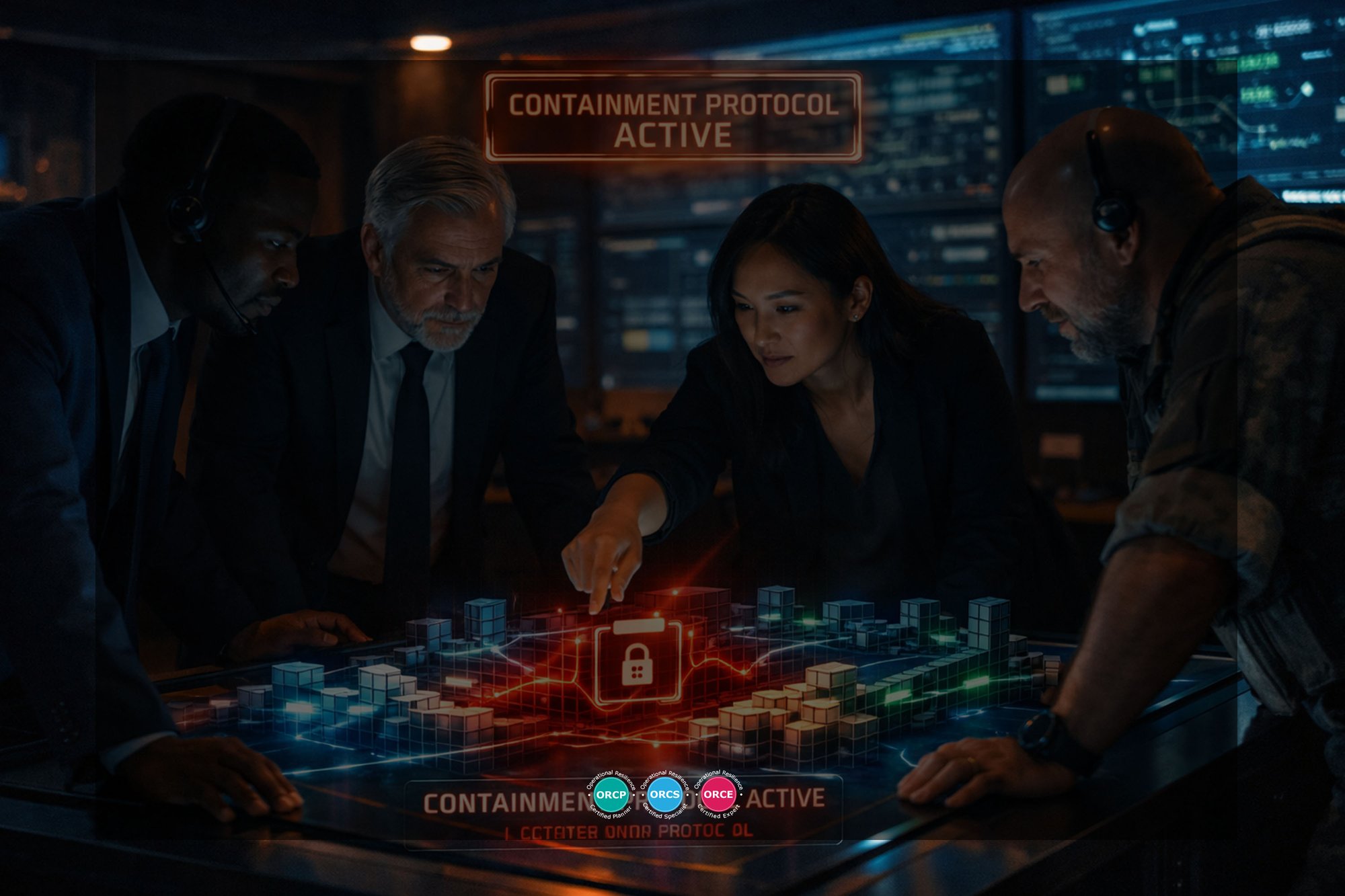
# \[OR\] \[P2\] \[S4\] \[ST\] \[C5\] Types of Scenario Testing
[![Banner \[OR\] \[P2\] \[S4\] Conducting Scenario Testing](https://no-cache.hubspot.com/cta/default/3893111/a8ba87ed-c76c-4e8f-b4fa-4eb3aed30b67.png)](https://cta-redirect.hubspot.com/cta/redirect/3893111/a8ba87ed-c76c-4e8f-b4fa-4eb3aed30b67)
Scenario testing in operational resilience encompasses a wide range of testing approaches, each designed to evaluate different aspects of an organisation’s ability to withstand and recover from disruptions.
No single type of test is sufficient on its own. Instead, organisations must adopt a **layered and integrated testing strategy** that reflects the complexity of their operations, dependencies, and risk landscape.
Traditionally, testing focused on business continuity plans in isolation.
However, modern operational resilience frameworks require organisations to go beyond plan validation and assess the **end-to-end delivery of Critical Business Services (CBS)** under stress.
This has led to the evolution of multiple testing types—ranging from structured tabletop exercises to highly complex, multi-entity simulations.
This chapter classifies the key types of scenario testing, outlining their purpose, characteristics, and role within a comprehensive operational resilience programme.
[](https://cta-redirect.hubspot.com/cta/redirect/3893111/9589a5fd-463e-499e-a6db-cb1d11448796)
[Moh Heng Goh](https://blog.bcm-institute.org/ebook-or/author/moh-heng-goh) May 11, 2026
###### Operational Resilience Certified Planner-Specialist-Expert
### [](https://cta-redirect.hubspot.com/cta/redirect/3893111/58ea4ab9-998a-451c-bb54-801ae4cb782d)
### \[P2\] \[S4\] Chapter 5
### [![Banner \[OR\] \[P2\] \[S4\] Conducting Scenario Testing](https://no-cache.hubspot.com/cta/default/3893111/a8ba87ed-c76c-4e8f-b4fa-4eb3aed30b67.png)](https://cta-redirect.hubspot.com/cta/redirect/3893111/a8ba87ed-c76c-4e8f-b4fa-4eb3aed30b67)Types of Scenario Testing
#### **Introduction**
[![\[OR\] \[P2\] \[S4\] \[ST\] \[C5\] Types of Scenario Testing](https://no-cache.hubspot.com/cta/default/3893111/3756e6ec-bf7e-462f-9f8c-52d15f718c81.png)](https://cta-redirect.hubspot.com/cta/redirect/3893111/3756e6ec-bf7e-462f-9f8c-52d15f718c81)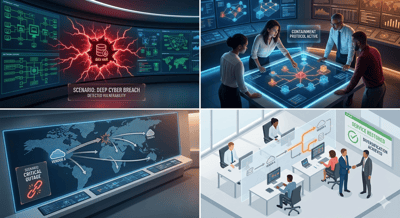Scenario testing in operational resilience encompasses a wide range of testing approaches, each designed to evaluate different aspects of an organisation’s ability to withstand and recover from disruptions.
No single type of test is sufficient on its own. Instead, organisations must adopt a **layered and integrated testing strategy** that reflects the complexity of their operations, dependencies, and risk landscape.
Traditionally, testing focused on business continuity plans in isolation.
However, modern operational resilience frameworks require organisations to go beyond plan validation and assess the **end-to-end delivery of Critical Business Services (CBS)** under stress.
This has led to the evolution of multiple testing types—ranging from structured tabletop exercises to highly complex, multi-entity simulations.
This chapter classifies the key types of scenario testing, outlining their purpose, characteristics, and role within a comprehensive operational resilience programme.
#### **Purpose of the Chapter**
The purpose of this chapter is to classify the different forms of scenario testing and to help organisations understand how each type contributes to validating resilience capabilities across people, processes, technology, and third-party ecosystems.
#### **Business Continuity Exercises**
Business Continuity Management (BCM) exercises are the foundation of scenario testing.
They focus on validating the organisation’s ability to execute continuity and recovery plans during disruptions.
##### **Types of BCM Exercises**
**a. Tabletop Exercises**
- Discussion-based sessions involving key stakeholders
- Walkthrough of scenarios and response actions
- Focus on roles, responsibilities, and decision-making
- Low-cost and effective for awareness and training
**b. Simulation Exercises**
- More dynamic and interactive than tabletop exercises
- Use of scenario “injects” to simulate evolving conditions
- Test coordination, communication, and escalation processes
**c. Live Tests (Full Interruption or Partial Tests)**
- Real execution of recovery strategies (e.g., system failover, relocation to alternate sites)
- Provide the highest level of realism
- Validate actual recovery capabilities and timelines
##### **Role in Operational Resilience**
- Validate operational readiness of continuity plans
- Test recovery time objectives against real execution
- Build organisational familiarity with disruption scenarios
#### **Crisis Management Exercises**
Crisis management exercises focus on the **strategic and leadership response** to major disruptions that escalate beyond operational incidents.
##### **Key Focus Areas**
- Activation of crisis management teams
- Command, control, and coordination structures
- Strategic decision-making under uncertainty
- Internal and external communications (media, regulators, customers)
##### **Types of Crisis Exercises**
- Tabletop crisis simulations
- Media and communication drills
- Executive-level crisis simulations
##### **Role in Operational Resilience**
- Assess leadership effectiveness during high-impact events
- Validate escalation and governance frameworks
- Ensure alignment with crisis management standards such as ISO 22361
#### **Technology and Cyber Resilience Testing**
Technology and cyber resilience testing evaluate the organisation’s ability to withstand and recover from **IT failures, cyberattacks, and digital disruptions**.
##### **Key Testing Areas**
- System failover and disaster recovery (DR) testing
- Cyberattack simulations (e.g., ransomware, DDoS)
- Data integrity and recovery validation
- Cloud resilience and infrastructure testing
##### **Advanced Practices**
- Red teaming and penetration testing
- Cyber range simulations
- Continuous vulnerability assessments
##### **Role in Operational Resilience**
- Validate the resilience of critical technology supporting CBS
- Ensure recovery capabilities meet impact tolerance thresholds
- Address increasing regulatory focus on cyber resilience
#### **Third-Party and Supply Chain Disruption Testing**
Third-party dependencies are a major source of operational risk. Scenario testing must therefore include disruptions originating from **external providers and supply chains**.
##### **Key Focus Areas**
- Failure of critical vendors or service providers
- Disruption in outsourced operations
- Supply chain breakdowns (logistics, infrastructure, utilities)
- Concentration risk (over-reliance on a single provider)
##### **Testing Approaches**
- Simulated vendor outage scenarios
- Joint exercises with key third parties
- Contractual and SLA validation exercises
##### **Role in Operational Resilience**
- Validate resilience beyond organisational boundaries
- Assess the effectiveness of third-party risk management
- Ensure continuity of CBS despite external disruptions
#### **Integrated End-to-End Scenario Testing (CBS-Aligned)**
Integrated scenario testing represents the **most advanced and comprehensive form** of scenario testing.
##### **Key Characteristics**
- Focus on end-to-end delivery of Critical Business Services
- Incorporates multiple disruption types simultaneously
- Tests across business units, functions, and dependencies
- Aligns directly with impact tolerance thresholds
**Example**
A cyberattack affecting a payment processing system:
- Disrupts technology infrastructure
- Impacts operational processes
- Requires crisis management activation
- Involves third-party service providers
##### **Role in Operational Resilience**
- Provides a holistic view of organisational resilience
- Validates interdependencies and cascading effects
- Meets regulatory expectations for CBS-aligned testing
#### **Cross-Border and Systemic Scenarios**
In an increasingly globalised and interconnected environment, organisations must consider **cross-border and systemic disruptions**.
##### **Cross-Border Scenarios**
- Disruptions affecting multiple geographic locations
- Regulatory differences across jurisdictions
- Cross-border data and transaction dependencies
##### **Systemic Scenarios**
- Industry-wide or market-wide disruptions
- Financial system instability
- Critical infrastructure failures (e.g., power grids, telecommunications)
**Examples**
- Global cyberattack affecting financial institutions
- Regional natural disasters impacting multiple operations
- Failure of a major clearing or settlement system
##### **Role in Operational Resilience**
- Assess resilience at an ecosystem level
- Evaluate coordination with regulators and industry participants
- Prepare for large-scale, low-frequency, high-impact events
[![Banner \[Summing\] \[OR\] \[E3\] Perform Scenario Testing](https://no-cache.hubspot.com/cta/default/3893111/11895c06-91e9-4cec-acb6-4356741952e4.png)](https://cta-redirect.hubspot.com/cta/redirect/3893111/11895c06-91e9-4cec-acb6-4356741952e4)
Scenario testing in operational resilience is not a one-size-fits-all activity.
It encompasses a spectrum of testing types, each addressing different dimensions of organisational resilience—from operational recovery and crisis leadership to technology robustness and third-party dependencies.
To achieve meaningful outcomes, organisations must adopt a **balanced and integrated testing approach**, combining:
- Foundational BCM exercises
- Strategic crisis management simulations
- Technical and cyber resilience testing
- Third-party disruption scenarios
- End-to-end CBS-aligned testing
- Cross-border and systemic scenarios
By leveraging these diverse testing types, organisations can build a comprehensive understanding of their resilience capabilities, identify gaps across all layers of operations, and ensure that they are prepared to respond effectively to a wide range of disruptions.
Ultimately, the maturity of an organisation’s scenario testing programme is reflected not in the number of tests conducted, but in the **depth, realism, and integration** of these testing approaches within the operational resilience framework.
[](https://cta-redirect.hubspot.com/cta/redirect/3893111/528ff540-9963-430c-9ca6-c102ce4270df)
| **C1** | **C2** | **C3** | **C4** | **C5** |
| --- | --- | --- | --- | --- |
| [![\[OR\] \[P2\] \[S4\] \[ST\] \[C1\] Introduction to Scenario Testing](https://no-cache.hubspot.com/cta/default/3893111/910c0230-708f-4661-a87e-56cb7cbd2b37.png)](https://cta-redirect.hubspot.com/cta/redirect/3893111/910c0230-708f-4661-a87e-56cb7cbd2b37) | [![\[OR\] \[P2\] \[S4\] \[ST\] \[C2\] Regulatory and Standards Context](https://no-cache.hubspot.com/cta/default/3893111/e21c745f-5f7c-4c8b-b845-7a8712b2a67d.png)](https://cta-redirect.hubspot.com/cta/redirect/3893111/e21c745f-5f7c-4c8b-b845-7a8712b2a67d) | [![\[OR\] \[P2\] \[S4\] \[ST\] \[C3\] Objectives of Scenario Testing](https://no-cache.hubspot.com/cta/default/3893111/d2eb2181-1303-4ca7-89a2-d717dc5e972f.png)](https://cta-redirect.hubspot.com/cta/redirect/3893111/d2eb2181-1303-4ca7-89a2-d717dc5e972f) | [![\[OR\] \[P2\] \[S4\] \[ST\] \[C4\] Scenario Testing within the Operational Resilience Framework](https://no-cache.hubspot.com/cta/default/3893111/c7c5fe26-c69a-4176-be52-c7ba8939ca8c.png)](https://cta-redirect.hubspot.com/cta/redirect/3893111/c7c5fe26-c69a-4176-be52-c7ba8939ca8c) | [![\[OR\] \[P2\] \[S4\] \[ST\] \[C5\] Types of Scenario Testing](https://no-cache.hubspot.com/cta/default/3893111/3756e6ec-bf7e-462f-9f8c-52d15f718c81.png)](https://cta-redirect.hubspot.com/cta/redirect/3893111/3756e6ec-bf7e-462f-9f8c-52d15f718c81) |
| **C6** | **C7** | **C8** | **C9** | **C10** |
| [![\[OR\] \[P2\] \[S4\] \[ST\] \[C6\] Designing Severe but Plausible Scenarios](https://no-cache.hubspot.com/cta/default/3893111/07cc13e4-e1eb-4bb4-b257-d155b9a30cd4.png)](https://cta-redirect.hubspot.com/cta/redirect/3893111/07cc13e4-e1eb-4bb4-b257-d155b9a30cd4) | [![\[OR\] \[P2\] \[S4\] \[ST\] \[C7\] Scenario Development Framework](https://no-cache.hubspot.com/cta/default/3893111/1976475f-5469-473c-a441-cb8c05247055.png)](https://cta-redirect.hubspot.com/cta/redirect/3893111/1976475f-5469-473c-a441-cb8c05247055) | [![\[OR\] \[P2\] \[S4\] \[ST\] \[C8\] Mapping Dependencies for Scenario Testing](https://no-cache.hubspot.com/cta/default/3893111/3934df2c-a632-4331-809e-62f4ac791efd.png)](https://cta-redirect.hubspot.com/cta/redirect/3893111/3934df2c-a632-4331-809e-62f4ac791efd) | [![\[OR\] \[P2\] \[S4\] \[ST\] \[C9\] Setting Testing Scope and Boundaries](https://no-cache.hubspot.com/cta/default/3893111/0ff8be42-fbfa-4777-880d-855094a0def4.png)](https://cta-redirect.hubspot.com/cta/redirect/3893111/0ff8be42-fbfa-4777-880d-855094a0def4) | [![\[OR\] \[P2\] \[S4\] \[ST\] \[C10\] Executing Scenario Testing](https://no-cache.hubspot.com/cta/default/3893111/b68def17-a3fd-412a-9a11-3e55c24c51f9.png)](https://cta-redirect.hubspot.com/cta/redirect/3893111/b68def17-a3fd-412a-9a11-3e55c24c51f9) |
| **C11** | **C12** | **C13** | **C14** | **C15** |
| [![\[OR\] \[P2\] \[S4\] \[ST\] \[C11\] Metrics and Evaluation of Results](https://no-cache.hubspot.com/cta/default/3893111/ca1ee7cd-3a0b-4460-8ed2-90b89f2d2761.png)](https://cta-redirect.hubspot.com/cta/redirect/3893111/ca1ee7cd-3a0b-4460-8ed2-90b89f2d2761) | [![\[OR\] \[P2\] \[S4\] \[ST\] \[C12\] Scenario Testing Output and Reporting](https://no-cache.hubspot.com/cta/default/3893111/36ab22b4-9316-413d-ab9c-5d945f6009b2.png)](https://cta-redirect.hubspot.com/cta/redirect/3893111/36ab22b4-9316-413d-ab9c-5d945f6009b2) | [![\[OR\] \[P2\] \[S4\] \[ST\] \[C13\] Common Challenges and Pitfalls](https://no-cache.hubspot.com/cta/default/3893111/9fb81eaf-a3eb-4192-b607-48c6ac3277da.png)](https://cta-redirect.hubspot.com/cta/redirect/3893111/9fb81eaf-a3eb-4192-b607-48c6ac3277da) | [![\[OR\] \[P2\] \[S4\] \[ST\] \[C14\] Overcoming Challenges in Scenario Testing](https://no-cache.hubspot.com/cta/default/3893111/f9660d67-9e43-45fe-a52d-4c9ca2812c83.png)](https://cta-redirect.hubspot.com/cta/redirect/3893111/f9660d67-9e43-45fe-a52d-4c9ca2812c83) | [![\[OR\] \[P2\] \[S4\] \[ST\] \[C15\] Integrating Scenario Testing with Risk Management and BCM](https://no-cache.hubspot.com/cta/default/3893111/2334c95f-f874-4b14-b348-779c63730269.png)](https://cta-redirect.hubspot.com/cta/redirect/3893111/2334c95f-f874-4b14-b348-779c63730269) |
| **C16** | **C17** | **C18** | **C19** | **C20** |
| [![\[OR\] \[P2\] \[S4\] \[ST\] \[C16\] Continuous Improvement and Lessons Learned](https://no-cache.hubspot.com/cta/default/3893111/62af1507-9de8-42d4-b519-adc3e945a7f3.png)](https://cta-redirect.hubspot.com/cta/redirect/3893111/62af1507-9de8-42d4-b519-adc3e945a7f3) | [![\[OR\] \[P2\] \[S4\] \[ST\] \[C17\] Practical Case Study (Banking Sector Example)](https://no-cache.hubspot.com/cta/default/3893111/fed5643b-1564-4177-a2d9-7fc4f4049a5c.png)](https://cta-redirect.hubspot.com/cta/redirect/3893111/fed5643b-1564-4177-a2d9-7fc4f4049a5c) | [![\[OR\] \[P2\] \[S4\] \[ST\] \[C18\] Future Trends in Scenario Testing](https://no-cache.hubspot.com/cta/default/3893111/c0547827-8e71-4c91-8c44-b4d2d2b81526.png)](https://cta-redirect.hubspot.com/cta/redirect/3893111/c0547827-8e71-4c91-8c44-b4d2d2b81526) | [![\[OR\] \[P2\] \[S4\] \[ST\] \[C19\] Key Takeaways and Call to Action](https://no-cache.hubspot.com/cta/default/3893111/8d431102-ed70-4707-ac87-e750e4db29de.png)](https://cta-redirect.hubspot.com/cta/redirect/3893111/8d431102-ed70-4707-ac87-e750e4db29de) | [![\[OR\] \[P2\] \[S4\] \[ST\] \[C20\] Back Cover](https://no-cache.hubspot.com/cta/default/3893111/fbb82511-9fd7-4ed9-aaa9-dc8aad0ea177.png)](https://cta-redirect.hubspot.com/cta/redirect/3893111/fbb82511-9fd7-4ed9-aaa9-dc8aad0ea177) |
#### More Information About OR-5000 \[OR-5\] or OR-300 \[OR-3\]
To learn more about the course and schedule, click the buttons below for the OR-300 Operational Resilience Implementer and OR-5000 Operational Resilience Expert Implementer courses.
| [](https://cta-redirect.hubspot.com/cta/redirect/3893111/3530eccb-515d-401e-afc2-3469e26d7fbf) | [](https://cta-redirect.hubspot.com/cta/redirect/3893111/fdd4fa9c-ed69-40c1-925f-4eb6a1c5c255) | [](https://cta-redirect.hubspot.com/cta/redirect/3893111/77a34b84-0a6d-44f8-b8d6-6ab04cdf5edd) |
| --- | --- | --- |
| [](https://cta-redirect.hubspot.com/cta/redirect/3893111/6e5c0cda-39b9-4bbd-b3d4-4cf46a790b14) | [](https://cta-redirect.hubspot.com/cta/redirect/3893111/a68a08aa-36d3-4216-9551-202c9fde06ea) | [![ \[BL-OR\] \[3-4-5\] View Schedule](https://no-cache.hubspot.com/cta/default/3893111/d0d733a1-16c0-4b68-a26d-adbfd4fc6069.png)](https://cta-redirect.hubspot.com/cta/redirect/3893111/d0d733a1-16c0-4b68-a26d-adbfd4fc6069) |
| [![\[BL-OR\] \[3\] FAQ OR-300](https://no-cache.hubspot.com/cta/default/3893111/f20c71b4-f5e8-4aa5-8056-c374ca33a091.png)](https://cta-redirect.hubspot.com/cta/redirect/3893111/f20c71b4-f5e8-4aa5-8056-c374ca33a091) | If you have any questions, click to contact us.[![Email to Sales Team \[BCM Institute\]](https://no-cache.hubspot.com/cta/default/3893111/3c53daeb-2836-4843-b0e0-645baee2ab9e.png)](https://cta-redirect.hubspot.com/cta/redirect/3893111/3c53daeb-2836-4843-b0e0-645baee2ab9e) | [](https://cta-redirect.hubspot.com/cta/redirect/3893111/7f2718a4-ea80-4f84-a319-dc2d4df37a46) |
| [](https://cta-redirect.hubspot.com/cta/redirect/3893111/74b1e556-8cd2-4a74-8821-db1804534955) | [](https://cta-redirect.hubspot.com/cta/redirect/3893111/f2bd8eb1-32d2-4732-9267-ea53223cf58f) | [](https://cta-redirect.hubspot.com/cta/redirect/3893111/084e620a-46c5-419a-82ed-6a681d15c0b6) |
#### **Comments:**

---

---

---

---


All rights reserved. Copyright 2026
```json
{
"@context" : "https://schema.org",
"@type" : "BlogPosting",
"author" : {
"@type" : "Person",
"name" : "Moh Heng Goh",
"url" : "https://blog.bcm-institute.org/ebook-or/author/moh-heng-goh"
},
"dateModified" : "2026-05-11T08:06:54.313Z",
"datePublished" : "2026-05-11T08:06:30.000Z",
"headline" : "[OR] [P2] [S4] [ST] [C5] Types of Scenario Testing",
"mainEntityOfPage" : {
"@id" : "https://blog.bcm-institute.org/ebook-or/or-p2-s4-st-c5-types-of-scenario-testing",
"@type" : "WebPage"
},
"publisher" : {
"@type" : "Organization",
"logo" : {
"@type" : "ImageObject",
"url" : "https://blog.bcm-institute.org/hubfs/BCMI%20Logo.png"
},
"name" : "BCMI Pte Ltd"
}
}
```