

[P2] [S3] Chapter 8
Scenario-Based Calibration of Impact Tolerance
Introduction
![[OR] [P2] [S3] [ITo] [C8] Scenario-Based Calibration of Impact Tolerance](https://no-cache.hubspot.com/cta/default/3893111/23b3a54d-37ce-494b-acb1-33b3cc5e1655.png)
 Defining impact tolerance is only the first step. The real test of its effectiveness lies in whether the organisation can operate within those tolerances under stress.
Without validation, impact tolerances risk being theoretical, overly optimistic, or misaligned with real-world disruption dynamics.
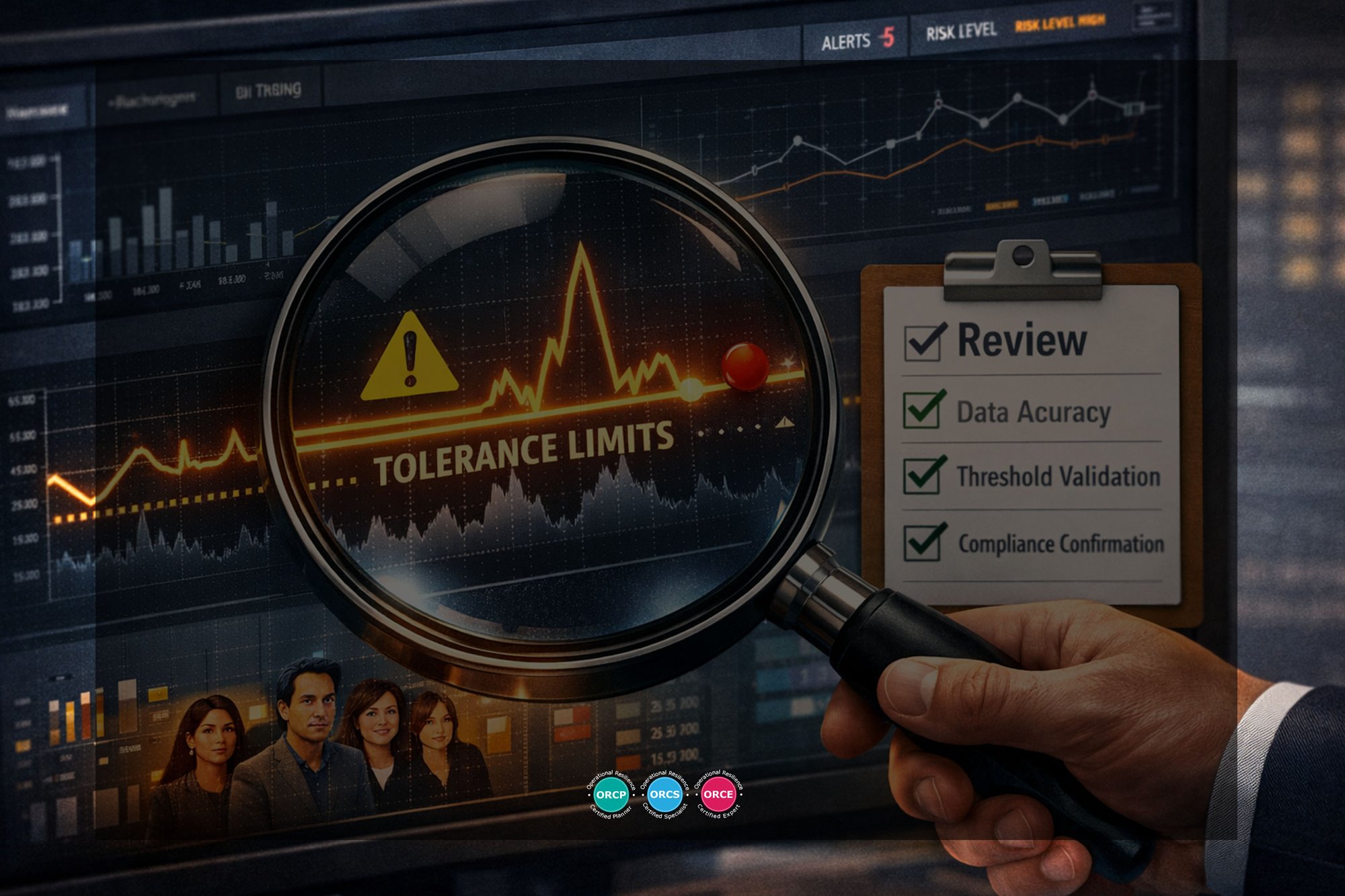
Scenario-based calibration ensures that tolerances are realistic, evidence-based, and defensible. It enables organisations to simulate disruptions, observe how impacts evolve, and determine whether existing capabilities are sufficient to prevent breaches.
This chapter focuses on how to use structured scenarios—particularly Severe but Plausible Scenarios (SuPS)—to test, validate, and refine impact tolerances.
Purpose of the Chapter
The purpose of this chapter is to:
- Ensure that impact tolerances are realistic and achievable
- Introduce the concept and application of Severe but Plausible Scenarios (SuPS)
- Guide on selecting and designing relevant disruption scenarios
- Demonstrate how to assess time-based service degradation
- Enable organisations to test tolerance limits under stress conditions
Severe but Plausible Scenarios (SuPS)
Scenario-based calibration is anchored on the concept of Severe but Plausible Scenarios (SuPS).
Definition
A Severe but Plausible Scenario is:
A disruption event that is sufficiently severe to challenge the organisation’s resilience, yet credible based on its operating environment, historical incidents, and emerging risks.
Characteristics of Effective SuPS
Effective scenarios should be:
|
Characteristic |
Description |
|
Severe |
Capable of significantly disrupting critical services |
|
Plausible |
Realistic given organisational context and external environment |
|
Relevant |
Directly linked to the identified CBS and dependencies |
|
End-to-End |
Reflect a full service delivery chain, not isolated components |
|
Measurable |
Allow impact to be assessed against defined tolerance thresholds |
Purpose of SuPS in Impact Tolerance
SuPS are used to:
- Validate whether the organisation can remain within defined tolerances
- Identify hidden vulnerabilities and interdependencies
- Stress-test operational, technological, and organisational capabilities
- Provide evidence for regulatory and governance review
Scenario Types for Calibration
Organisations should develop a diverse set of scenarios that reflect key risk domains.
Technology Failure
Technology disruptions are among the most common and impactful scenarios.
Examples:
- Core banking system outage
- Payment processing system failure
- Data centre outage
- Network connectivity disruption
Impact Considerations:
- Immediate service unavailability
- Transaction processing delays
- Data synchronisation issues
- Dependency on backup systems
Cyber Attack
Cyber incidents can escalate rapidly and affect multiple services simultaneously.
Examples:
- Ransomware attack encrypting core systems
- Distributed Denial-of-Service (DDoS) attack on digital channels
- Data breach affecting customer records
- Malware disrupting transaction processing
Impact Considerations:
- Extended system downtime
- Data integrity concerns
- Regulatory reporting obligations
- Reputational damage
Third-Party Disruption
Modern organisations rely heavily on external providers.
Examples:
- Cloud service provider outage
- Payment gateway failure
- Telecommunications disruption
- Vendor system compromise
Impact Considerations:
- Limited control over recovery timelines
- Cascading failures across multiple CBS
- Contractual and SLA limitations
- Concentration risk
Pandemic / People Unavailability
People-related disruptions can significantly affect operational capacity.
Examples:
- Pandemic is causing widespread staff absenteeism
- Industrial action or labour disruption
- Travel restrictions limiting workforce mobility
- Loss of key personnel or specialised roles
Impact Considerations:
- Reduced processing capacity
- Increased operational backlog
- Dependence on cross-trained staff
- Challenges in manual workaround execution
Time-Based Degradation Analysis
A key component of scenario-based calibration is understanding how impact evolves.
Impact tolerance is not static—it reflects the point at which disruption becomes unacceptable.
Typical Degradation Profile
|
Time Elapsed |
Service Condition |
Impact Level |
|
0–30 minutes |
Initial disruption, alerts triggered |
Low |
|
30 minutes–2 hours |
Transaction delays, increased customer enquiries |
Moderate |
|
2–4 hours |
Significant backlog, customer dissatisfaction |
High |
|
4–8 hours |
Potential tolerance breach, regulatory concern |
Very High |
|
8–24 hours |
Severe disruption, financial and reputational damage |
Extreme |
Key Observations
- Impact is non-linear: escalation often accelerates after a threshold
- Customer harm increases rapidly after a few hours for critical services
- Operational strain accumulates, making recovery more complex
- Manual workarounds degrade over time due to fatigue and volume
Application in Calibration
For each scenario, organisations should:
- Track how the CBS performs over time
- Compare actual performance against defined tolerance thresholds
- Identify the point at which tolerance is breached or at risk
This enables calibration of whether the defined tolerance is:
- Too lenient (risk of excessive harm)
- Too strict (unrealistic or unachievable)
- Appropriate (aligned with capability and expectations)
Testing Tolerance Limits Under Stress
Scenario testing should explicitly assess whether the organisation can remain within impact tolerance.
Key Testing Questions
- Can the CBS continue operating within tolerance limits?
- How long does it take before thresholds are approached or breached?
- Which dependencies fail first?
- Are backup systems and recovery strategies effective?
- Do manual workarounds sustain operations?
- Are escalation and crisis management processes timely and effective?
Example Scenario Assessment
|
Scenario |
CBS |
Tolerance |
Observed Outcome |
Result |
|
Core Banking Outage |
Deposit Services |
4 hours MTD |
Recovery in 5 hours |
Breach |
|
Payment Gateway Failure |
Payments Services |
2 hours MTD |
Recovery in 1.5 hours |
Within Tolerance |
|
Cloud Provider Outage |
Digital Banking |
3 hours MTD |
Recovery in 4 hours |
Breach |
|
Pandemic Absenteeism |
Operations Processing |
70% capacity |
Operated at 60% |
Breach |
Interpretation
- Breaches indicate gaps in resilience capability
- Near-breaches indicate risk of future failure under slightly worse conditions
- Successful outcomes provide confidence and validation
Calibration and Refinement of Tolerance
Scenario testing results should be used to refine impact tolerances.
Calibration Actions
|
Scenario Outcome |
Calibration Action |
|
Tolerance consistently breached |
Strengthen resilience capabilities or revise tolerance |
|
Tolerance nearly breached |
Enhance controls and monitoring |
|
Tolerance easily met |
Consider tightening the tolerance if appropriate |
|
Unrealistic tolerance identified |
Reassess based on practical capability |
Balancing Considerations
Calibration must balance:
- Customer expectations (minimise harm)
- Operational feasibility (realistic capabilities)
- Regulatory expectations (compliance and defensibility)
- Cost of resilience investment
Integration with Scenario Testing
Scenario-based calibration is closely linked to Operational Resilience Phase 2 – Stage 4: Scenario Testing
|
Stage |
Role in Calibration |
|
Identify CBS |
Defines the scope of testing |
|
Map Dependencies |
Identifies failure points |
|
Set Impact Tolerance |
Defines thresholds |
|
Scenario Testing |
Validates and calibrates tolerances |
|
Improvement |
Drives remediation actions |
Scenario testing provides the evidence base for refining tolerances.
Common Challenges in Scenario-Based Calibration
|
Challenge |
Description |
|
Overly simplistic scenarios |
Fails to capture real-world complexity |
|
Lack of data |
Difficulty quantifying impact accurately |
|
Siloed testing |
Does not reflect end-to-end service impact |
|
Underestimating interdependencies |
Misses cascading failures |
|
Unrealistic assumptions |
Leads to invalid conclusions |
|
Limited stakeholder involvement |
Results lack credibility |
Best Practices
To ensure effective calibration:
- Use cross-functional workshops to design scenarios
- Incorporate historical incidents and near misses
- Include third-party and ecosystem dependencies
- Simulate prolonged disruptions, not just short-term outages
- Test multiple concurrent disruptions where relevant
- Document assumptions, outcomes, and lessons learned
- Align with regulatory expectations and audit requirements
![Banner [Summing] [OR] [E3] Establish Impact Tolerance](https://no-cache.hubspot.com/cta/default/3893111/5e80e50f-5e3e-44ea-8c43-16bf42d4f3b5.png)
Scenario-based calibration is essential to ensure that impact tolerances are not merely theoretical but grounded in operational reality.
By applying Severe but Plausible Scenarios, organisations can test how disruptions unfold, understand how impact escalates over time, and determine whether they can truly operate within defined thresholds.
This process transforms impact tolerance from a static definition into a dynamic, evidence-based capability.
It enables organisations to identify weaknesses, prioritise improvements, and demonstrate to regulators that their resilience framework is both credible and effective.
In the next chapter, we will examine how to embed impact tolerance into governance, monitoring, and reporting, ensuring that it becomes an integral part of day-to-day resilience management rather than a one-time exercise.

![[OR] [P2] [S3] [ITo] [C1] Introduction to Impact Tolerance](https://no-cache.hubspot.com/cta/default/3893111/a2d06a13-c2ac-4e0a-b8ea-c5afcab91844.png)
![[OR] [P2] [S3] [ITo] [C2] Regulatory and Standards Landscape](https://no-cache.hubspot.com/cta/default/3893111/04df8f17-629c-458f-af01-67e3da528b63.png)
![[OR] [P2] [S3] [ITo] [C3] Understanding Impact Tolerance in Context](https://no-cache.hubspot.com/cta/default/3893111/ea66bac0-7b34-4d56-9c93-c33c8f7964bc.png)
![[OR] [P2] [S3] [ITo] [C4] Linking Impact Tolerance to Critical Business Services (CBS)](https://no-cache.hubspot.com/cta/default/3893111/24ceb290-50c2-4af4-be00-41894f00c7cb.png)
![[OR] [P2] [S3] [ITo] [C5] Key Components of Impact Tolerance](https://no-cache.hubspot.com/cta/default/3893111/6e9d8a15-c0a3-4e28-b9a4-c2dcc3e2081e.png)
![[OR] [P2] [S3] [ITo] [C6] Methodology for Setting Impact Tolerance](https://no-cache.hubspot.com/cta/default/3893111/77526e47-fc15-4c7b-bf03-cadd672b40db.png)
![[OR] [P2] [S3] [ITo] [C7] Impact Tolerance Assessment Framework](https://no-cache.hubspot.com/cta/default/3893111/abf28462-aba4-4970-81be-55cf66dc6147.png)
![[OR] [P2] [S3] [ITo] [C9] Role of Dependency Mapping in Impact Tolerance](https://no-cache.hubspot.com/cta/default/3893111/d35fd8b0-e936-4ab3-9706-4366bfcb8cbe.png)
![[OR] [P2] [S3] [ITo] [C10] Governance, Ownership, and Accountability](https://no-cache.hubspot.com/cta/default/3893111/de12fefd-b6c6-4156-83a9-5d19ca5bc508.png)
![[OR] [P2] [S3] [ITo] [C11] Integration with Operational Resilience Framework](https://no-cache.hubspot.com/cta/default/3893111/84d3d3c4-0647-4ffd-99b4-a20a12526019.png)
![[OR] [P2] [S3] [ITo] [C12] Testing and Validation of Impact Tolerances](https://no-cache.hubspot.com/cta/default/3893111/9a9cb7eb-1ca3-4790-b39e-f6b0035a1eae.png)
![[OR] [P2] [S3] [ITo] [C13] Monitoring, Metrics, and Continuous Improvement](https://no-cache.hubspot.com/cta/default/3893111/1a32f981-3a16-427a-a63f-5a40ab93ea21.png)
![[OR] [P2] [S3] [ITo] [C14] Common Challenges and Pitfalls](https://no-cache.hubspot.com/cta/default/3893111/8831463d-a357-4203-806b-fb31ef71d615.png)
![[OR] [P2] [S3] [ITo] [C15] Practical Case Study (Banking Sector Example)](https://no-cache.hubspot.com/cta/default/3893111/fef15761-14c6-4e2b-b157-554cceb33d14.png)
![[OR] [P2] [S3] [ITo] [C16] Future Trends in Impact Tolerance](https://no-cache.hubspot.com/cta/default/3893111/b6a701db-167e-4630-88ad-de0d43deb322.png)
![[OR] [P2] [S3] [ITo] [C17] Key Takeaways and Call to Action](https://no-cache.hubspot.com/cta/default/3893111/bf49e0c2-33a3-48bc-97d2-eb939aed77bd.png)
![[OR] [P2] [S3] [ITo] [C18] Back Cover](https://no-cache.hubspot.com/cta/default/3893111/3623335d-0b26-4ee7-afbf-0d431358b390.png)
More Information About OR-5000 [OR-5] or OR-300 [OR-3]
To learn more about the course and schedule, click the buttons below for the OR-300 Operational Resilience Implementer course and the OR-5000 Operational Resilience Expert Implementer course.


![[BL-OR] [3-4-5] View Schedule](https://no-cache.hubspot.com/cta/default/3893111/d0d733a1-16c0-4b68-a26d-adbfd4fc6069.png)
![[BL-OR] [3] FAQ OR-300](https://no-cache.hubspot.com/cta/default/3893111/f20c71b4-f5e8-4aa5-8056-c374ca33a091.png)
![Email to Sales Team [BCM Institute]](https://no-cache.hubspot.com/cta/default/3893111/3c53daeb-2836-4843-b0e0-645baee2ab9e.png)