---
title: [OR] [P2] [S3] [ITo] [C17] Key Takeaways and Call to Action
description: [OR] [P2] [S3] [ITo] [C17] Key Takeaways and Call to Action
image: https://blog.bcm-institute.org/hubfs/OR%20Setting%20Impact%20Tolerances%20P2%20Morepost/%5BOR%5D%20%5BP2%5D%20%5BS3%5D%20%5BITo%5D%20%5BC17%5D%20Key%20Takeaways%20and%20Call%20to%20Action.jpg
---
. .
[](http://www.bcm-institute.org/)
- [Home](https://www.bcm-institute.org/)
- [About Us](https://www.bcm-institute.org/about-us-3/)
- [A President’s Perspective](https://www.bcm-institute.org/about-us/a-presidents-perspective/)
- [Our History](https://www.bcm-institute.org/about-us/our-history/)
- [Our Advisory Council](https://www.bcm-institute.org/about-us/our-advisory-council/)
- [Customers’ Testimonials](https://www.bcm-institute.org/about-us/customers-testimonials/)
- [Credential Verification](https://www.bcm-institute.org/about-us/credential-verification/)
- [Courses](https://blog.bcm-institute.org/blog/course-fees-for-blended-learning-courses-master-catalog)
- [ISO 22301 Business Continuity Management System Audit](https://blog.bcm-institute.org/audit/business-continuity-management-audit-courses)
- [ISO 22301 Business Continuity Management](https://blog.bcm-institute.org/bcm/business-continuity-management-courses)
- [Crisis Communication](https://blog.bcm-institute.org/crisis-communication/crisis-communication-courses)
- [Crisis Management](https://blog.bcm-institute.org/en/crisis-management/courses)
- [IT Disaster Recovery](https://blog.bcm-institute.org/it-disaster-recovery/courses)
- [Operational Resilience](https://blog.bcm-institute.org/operational-resilience/courses)
- [Operational Resilience Audit](https://blog.bcm-institute.org/operational-resilience-audit/courses)
- [Certification](https://blog.bcm-institute.org/certification/types-of-certifications-offered)
- [ISO 22301 BCMS Audit Certification](https://blog.bcm-institute.org/certification/business-continuity-management-audit-certification)
- [ISO22301 Business Continuity Management Certification](https://blog.bcm-institute.org/bcm/business-continuity-management-certification)
- [Crisis Communication Certification](https://blog.bcm-institute.org/crisis-communication/crisis-communication-certification)
- [Crisis Management Certification](https://blog.bcm-institute.org/en/crisis-management/crisis-management-certification)
- [IT Disaster Recovery Planning Certification](https://blog.bcm-institute.org/it-disaster-recovery/it-disaster-recovery-certification)
- [Operational Resilience Certification](https://blog.bcm-institute.org/operational-resilience/operational-resilience-certification)
- [Operational Resilience Audit Certification](https://blog.bcm-institute.org/operational-resilience-audit)
- [Seminars](https://blog.bcm-institute.org/meet-the-expert/mte-webinar-mainpage)
- [Store](https://www.bcm-institute.org/store-2/)
- [Contact Us](http://www.bcm-institute.org/about-us/contact-us/)
-
-
###### Setting Impact Tolerances: A Practical Guide for Operational Resilience Implementation
# \[OR\] \[P2\] \[S3\] \[ITo\] \[C17\] Key Takeaways and Call to Action
[](https://cta-redirect.hubspot.com/cta/redirect/3893111/b130e2d2-651f-4fd6-af68-9a5a85e124da)
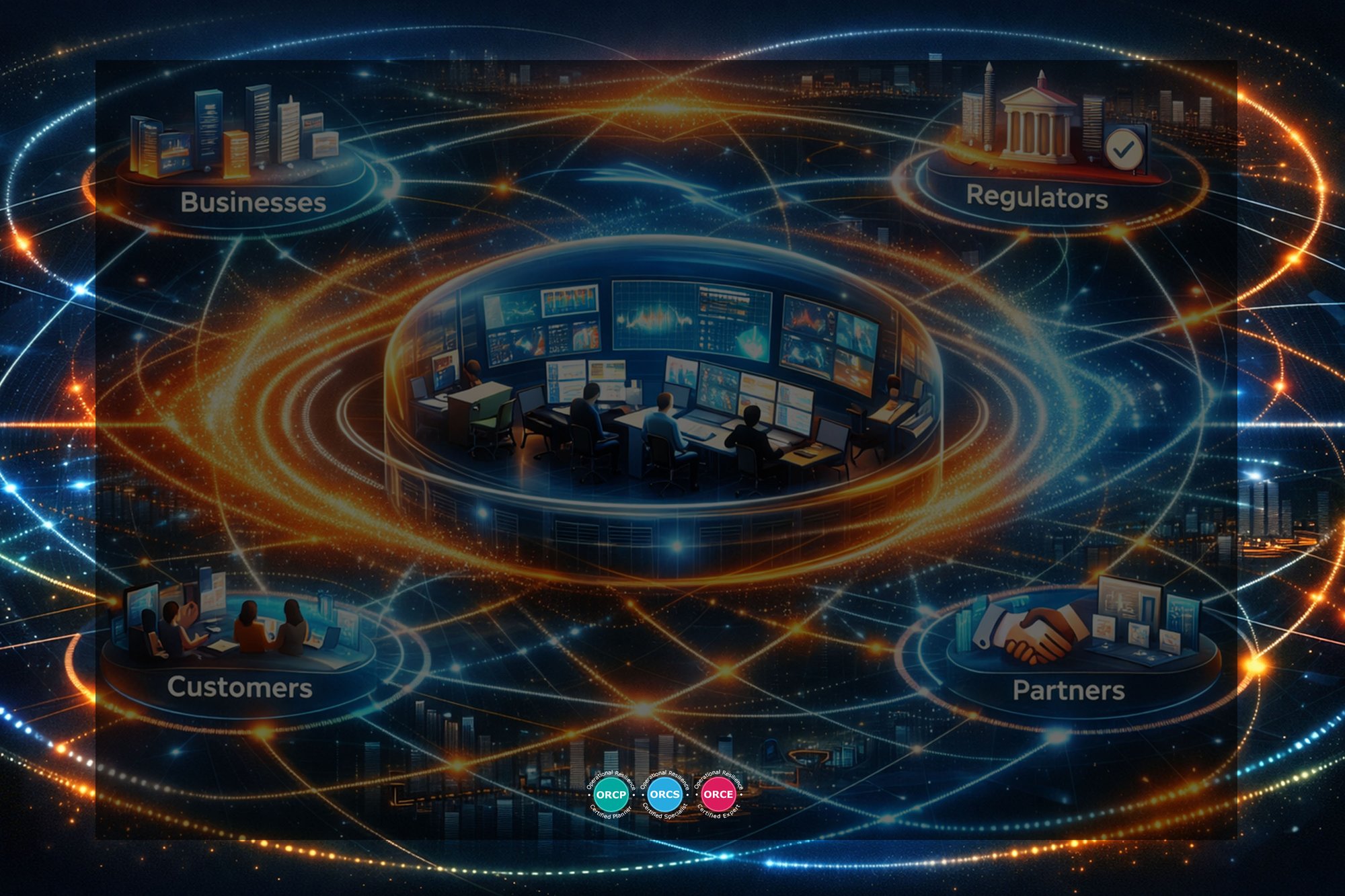
Impact tolerance is more than a regulatory requirement—it is a **defining capability of a resilient organisation**. Throughout this eBook, we have explored how impact tolerance shifts the focus from recovering systems to **sustaining critical services**, ensuring that organisations can continue delivering value even under disruption.
As organisations face increasing complexity, digital dependency, and regulatory scrutiny, the ability to define, validate, and operate within impact tolerances becomes a **strategic differentiator**.
This final chapter consolidates the key insights and provides a clear call to action to move from understanding to implementation.
[](https://cta-redirect.hubspot.com/cta/redirect/3893111/e5fad794-08a2-4f8b-ba94-5d32e15ba9bc)
[Moh Heng Goh](https://blog.bcm-institute.org/ebook-or/author/moh-heng-goh) May 8, 2026
###### Operational Resilience Certified Planner-Specialist-Expert
#### [](https://cta-redirect.hubspot.com/cta/redirect/3893111/00e8044a-8a62-4f8f-be7c-9c267d8b3dfc)
### \[P2\] \[S3\] Chapter 17
### [](https://cta-redirect.hubspot.com/cta/redirect/3893111/b130e2d2-651f-4fd6-af68-9a5a85e124da)
### **Key Takeaways and Call to Action**
#### **Introduction**
[![\[OR\] \[P2\] \[S3\] \[ITo\] \[C17\] Key Takeaways and Call to Action](https://no-cache.hubspot.com/cta/default/3893111/bf49e0c2-33a3-48bc-97d2-eb939aed77bd.png)](https://cta-redirect.hubspot.com/cta/redirect/3893111/bf49e0c2-33a3-48bc-97d2-eb939aed77bd)
Impact tolerance is more than a regulatory requirement—it is a **defining capability of a resilient organisation**. Throughout this eBook, we have explored how impact tolerance shifts the focus from recovering systems to **sustaining critical services**, ensuring that organisations can continue delivering value even under disruption.
As organisations face increasing complexity, digital dependency, and regulatory scrutiny, the ability to define, validate, and operate within impact tolerances becomes a **strategic differentiator**.
This final chapter consolidates the key insights and provides a clear call to action to move from understanding to implementation.
#### **Purpose of the Chapter**
The purpose of this chapter is to:
- Summarise the key principles of impact tolerance
- Reinforce its role as a core operational resilience metric
- Emphasise the shift from compliance to resilience maturity
- Highlight critical success factors
- Provide a practical roadmap for organisations
#### **Impact Tolerance as a Core Resilience Metric**
Impact tolerance represents the **maximum acceptable level of disruption** an organisation can sustain while continuing to deliver its critical business services.
##### **Key Insight**
Impact tolerance is the **bridge between strategy and operations**, translating risk appetite into measurable service outcomes
##### **Why It Matters**
- Defines **clear boundaries for acceptable disruption**
- Aligns business, technology, and risk functions
- Supports **customer-centric decision-making**
- Provides a **measurable benchmark for resilience performance**
- Enables organisations to demonstrate **regulatory compliance and operational capability**
#### **Shift from Compliance → Resilience Maturity**
Many organisations begin their impact tolerance journey driven by regulatory requirements. However, true value is realised when they move beyond compliance toward **resilience maturity**.
##### **Compliance-Focused Approach**
- Minimal adherence to regulatory requirements
- Static documentation of tolerances
- Limited testing and validation
##### **Resilience-Mature Approach**
- Embedded into **business and operational decision-making**
- Continuously monitored and refined
- Integrated across all resilience disciplines
- Supported by **data, testing, and governance**
##### **Key Shift**
From “meeting requirements” → **“building a sustainable resilience capability.”**
#### **Critical Success Factors**
Successful implementation of impact tolerance depends on several key principles.
##### **Service-Centric Thinking**
- Focus on **end-to-end service delivery**, not individual systems
- Define tolerances based on **customer and stakeholder impact**
- Ensure visibility across **interdependencies and service chains**
##### **Scenario-Based Validation**
- Use **severe but plausible scenarios (SuPS)** to test assumptions
- Validate tolerances through **realistic stress conditions**
- Identify gaps and refine capabilities
##### **Continuous Improvement**
- Monitor performance against defined tolerances
- Capture lessons from incidents and testing
- Update tolerances based on **changing risks and environments**
##### **Key Principle**
Impact tolerance is not static—it must evolve with the organisation
#### **Practical Roadmap for Organisations**
To move from concept to implementation, organisations can follow a structured roadmap.
##### **Phase 1: Establish Foundations**
- Define an **operational resilience framework**
- Align with **risk appetite and regulatory expectations**
- Establish governance and ownership structures
##### **Phase 2: Identify and Map**
- Identify **Critical Business Services (CBS)**
- Map **dependencies and resources**
- Understand interconnections and vulnerabilities
##### **Phase 3: Set Impact Tolerance**
- Define **impact dimensions** (customer, regulatory, financial, systemic)
- Establish **measurable tolerance thresholds**
- Validate with stakeholders
##### **Phase 4: Test and Validate**
- Conduct **scenario testing (OR-P2-S4)**
- Perform **end-to-end CBS testing**
- Measure actual performance vs tolerance
##### **Phase 5: Monitor and Improve**
- Implement **metrics and Key Risk Indicators (KRIs)**
- Establish **real-time monitoring mechanisms**
- Drive continuous improvement through feedback loops
##### **Phase 6: Embed and Scale**
- Integrate into **ORM, BCM, Cyber, and TPRM frameworks**
- Align with **incident response and crisis management**
- Extend across **all business units and services**
#### **Common Pitfalls to Avoid**
As highlighted in earlier chapters, organisations should avoid:
- Over-reliance on traditional metrics (RTO/RPO)
- Lack of service-level perspective
- Poor dependency mapping
- Unrealistic tolerance setting
- Weak governance and ownership
- Inadequate testing and monitoring
#### **Call to Action**
Organisations must take decisive steps to operationalise impact tolerance.
##### **Immediate Actions**
- **Assess current maturity** in operational resilience
- **Identify the priority CBS** requiring a tolerance definition
- **Initiate dependency mapping exercises**
- **Define initial impact tolerance thresholds**
##### **Short-Term Actions**
- Conduct **scenario testing and validation**
- Establish **governance and approval processes**
- Implement **monitoring and reporting mechanisms**
##### **Long-Term Actions**
- Integrate impact tolerance into **enterprise-wide frameworks**
- Leverage **technology and analytics for real-time monitoring**
- Build a culture of **continuous resilience improvement**
##### **Key Message**
The question is no longer whether to implement impact tolerance, but **how quickly and effectively it can be embedded into the organisation**
#### [![Banner \[Summing\] \[OR\] \[E3\] Establish Impact Tolerance](https://no-cache.hubspot.com/cta/default/3893111/5e80e50f-5e3e-44ea-8c43-16bf42d4f3b5.png)](https://cta-redirect.hubspot.com/cta/redirect/3893111/5e80e50f-5e3e-44ea-8c43-16bf42d4f3b5)
Impact tolerance is the cornerstone of modern operational resilience. It provides clarity on what matters most, defines the limits of acceptable disruption, and ensures that organisations can continue to serve customers and maintain stability even in adverse conditions.
By adopting a service-centric approach, validating tolerances through realistic scenarios, and committing to continuous improvement, organisations can move beyond compliance and build a **robust, sustainable resilience capability**.
The journey does not end with defining tolerances—it begins there. The real value lies in **embedding, testing, and continuously refining** them to meet the challenges of an increasingly complex and uncertain world.
### **Final Thought**
Resilience is not measured by how quickly you recover—it is measured by how well you continue to operate within acceptable limits.
[](https://cta-redirect.hubspot.com/cta/redirect/3893111/05996af2-38e1-4f05-96c6-6f5d6469c9de)
| **C1** | **C2** | **C3** | **C4** | **C5** | **C6** |
| --- | --- | --- | --- | --- | --- |
| [![\[OR\] \[P2\] \[S3\] \[ITo\] \[C1\] Introduction to Impact Tolerance](https://no-cache.hubspot.com/cta/default/3893111/a2d06a13-c2ac-4e0a-b8ea-c5afcab91844.png)](https://cta-redirect.hubspot.com/cta/redirect/3893111/a2d06a13-c2ac-4e0a-b8ea-c5afcab91844) | [![\[OR\] \[P2\] \[S3\] \[ITo\] \[C2\] Regulatory and Standards Landscape](https://no-cache.hubspot.com/cta/default/3893111/04df8f17-629c-458f-af01-67e3da528b63.png)](https://cta-redirect.hubspot.com/cta/redirect/3893111/04df8f17-629c-458f-af01-67e3da528b63) | [![\[OR\] \[P2\] \[S3\] \[ITo\] \[C3\] Understanding Impact Tolerance in Context](https://no-cache.hubspot.com/cta/default/3893111/ea66bac0-7b34-4d56-9c93-c33c8f7964bc.png)](https://cta-redirect.hubspot.com/cta/redirect/3893111/ea66bac0-7b34-4d56-9c93-c33c8f7964bc) | [![\[OR\] \[P2\] \[S3\] \[ITo\] \[C4\] Linking Impact Tolerance to Critical Business Services (CBS)](https://no-cache.hubspot.com/cta/default/3893111/24ceb290-50c2-4af4-be00-41894f00c7cb.png)](https://cta-redirect.hubspot.com/cta/redirect/3893111/24ceb290-50c2-4af4-be00-41894f00c7cb) | [![\[OR\] \[P2\] \[S3\] \[ITo\] \[C5\] Key Components of Impact Tolerance](https://no-cache.hubspot.com/cta/default/3893111/6e9d8a15-c0a3-4e28-b9a4-c2dcc3e2081e.png)](https://cta-redirect.hubspot.com/cta/redirect/3893111/6e9d8a15-c0a3-4e28-b9a4-c2dcc3e2081e) | [![\[OR\] \[P2\] \[S3\] \[ITo\] \[C6\] Methodology for Setting Impact Tolerance](https://no-cache.hubspot.com/cta/default/3893111/77526e47-fc15-4c7b-bf03-cadd672b40db.png)](https://cta-redirect.hubspot.com/cta/redirect/3893111/77526e47-fc15-4c7b-bf03-cadd672b40db) |
| **C7** | **C8** | **C9** | **C10** | **C11** | **C12 ** |
| [![\[OR\] \[P2\] \[S3\] \[ITo\] \[C7\] Impact Tolerance Assessment Framework](https://no-cache.hubspot.com/cta/default/3893111/abf28462-aba4-4970-81be-55cf66dc6147.png)](https://cta-redirect.hubspot.com/cta/redirect/3893111/abf28462-aba4-4970-81be-55cf66dc6147) | [![\[OR\] \[P2\] \[S3\] \[ITo\] \[C8\] Scenario-Based Calibration of Impact Tolerance](https://no-cache.hubspot.com/cta/default/3893111/23b3a54d-37ce-494b-acb1-33b3cc5e1655.png)](https://cta-redirect.hubspot.com/cta/redirect/3893111/23b3a54d-37ce-494b-acb1-33b3cc5e1655) | [![\[OR\] \[P2\] \[S3\] \[ITo\] \[C9\] Role of Dependency Mapping in Impact Tolerance](https://no-cache.hubspot.com/cta/default/3893111/d35fd8b0-e936-4ab3-9706-4366bfcb8cbe.png)](https://cta-redirect.hubspot.com/cta/redirect/3893111/d35fd8b0-e936-4ab3-9706-4366bfcb8cbe) | [![\[OR\] \[P2\] \[S3\] \[ITo\] \[C10\] Governance, Ownership, and Accountability](https://no-cache.hubspot.com/cta/default/3893111/de12fefd-b6c6-4156-83a9-5d19ca5bc508.png)](https://cta-redirect.hubspot.com/cta/redirect/3893111/de12fefd-b6c6-4156-83a9-5d19ca5bc508) | [![\[OR\] \[P2\] \[S3\] \[ITo\] \[C11\] Integration with Operational Resilience Framework](https://no-cache.hubspot.com/cta/default/3893111/84d3d3c4-0647-4ffd-99b4-a20a12526019.png)](https://cta-redirect.hubspot.com/cta/redirect/3893111/84d3d3c4-0647-4ffd-99b4-a20a12526019) | [![\[OR\] \[P2\] \[S3\] \[ITo\] \[C12\] Testing and Validation of Impact Tolerances](https://no-cache.hubspot.com/cta/default/3893111/9a9cb7eb-1ca3-4790-b39e-f6b0035a1eae.png)](https://cta-redirect.hubspot.com/cta/redirect/3893111/9a9cb7eb-1ca3-4790-b39e-f6b0035a1eae) |
| **C13** | **C14** | **C15** | **C16** | **C17** | **C18** |
| [![\[OR\] \[P2\] \[S3\] \[ITo\] \[C13\] Monitoring, Metrics, and Continuous Improvement](https://no-cache.hubspot.com/cta/default/3893111/1a32f981-3a16-427a-a63f-5a40ab93ea21.png)](https://cta-redirect.hubspot.com/cta/redirect/3893111/1a32f981-3a16-427a-a63f-5a40ab93ea21) | [![\[OR\] \[P2\] \[S3\] \[ITo\] \[C14\] Common Challenges and Pitfalls](https://no-cache.hubspot.com/cta/default/3893111/8831463d-a357-4203-806b-fb31ef71d615.png)](https://cta-redirect.hubspot.com/cta/redirect/3893111/8831463d-a357-4203-806b-fb31ef71d615) | [![\[OR\] \[P2\] \[S3\] \[ITo\] \[C15\] Practical Case Study (Banking Sector Example)](https://no-cache.hubspot.com/cta/default/3893111/fef15761-14c6-4e2b-b157-554cceb33d14.png)](https://cta-redirect.hubspot.com/cta/redirect/3893111/fef15761-14c6-4e2b-b157-554cceb33d14) | [![\[OR\] \[P2\] \[S3\] \[ITo\] \[C16\] Future Trends in Impact Tolerance](https://no-cache.hubspot.com/cta/default/3893111/b6a701db-167e-4630-88ad-de0d43deb322.png)](https://cta-redirect.hubspot.com/cta/redirect/3893111/b6a701db-167e-4630-88ad-de0d43deb322) | [![\[OR\] \[P2\] \[S3\] \[ITo\] \[C17\] Key Takeaways and Call to Action](https://no-cache.hubspot.com/cta/default/3893111/bf49e0c2-33a3-48bc-97d2-eb939aed77bd.png)](https://cta-redirect.hubspot.com/cta/redirect/3893111/bf49e0c2-33a3-48bc-97d2-eb939aed77bd) | [![\[OR\] \[P2\] \[S3\] \[ITo\] \[C18\] Back Cover](https://no-cache.hubspot.com/cta/default/3893111/3623335d-0b26-4ee7-afbf-0d431358b390.png)](https://cta-redirect.hubspot.com/cta/redirect/3893111/3623335d-0b26-4ee7-afbf-0d431358b390) |
#### More Information About OR-5000 \[OR-5\] or OR-300 \[OR-3\]
To learn more about the course and schedule, click the buttons below for the OR-300 Operational Resilience Implementer course and the OR-5000 Operational Resilience Expert Implementer course.
| [](https://cta-redirect.hubspot.com/cta/redirect/3893111/3530eccb-515d-401e-afc2-3469e26d7fbf) | [](https://cta-redirect.hubspot.com/cta/redirect/3893111/fdd4fa9c-ed69-40c1-925f-4eb6a1c5c255) | [](https://cta-redirect.hubspot.com/cta/redirect/3893111/77a34b84-0a6d-44f8-b8d6-6ab04cdf5edd) |
| --- | --- | --- |
| [](https://cta-redirect.hubspot.com/cta/redirect/3893111/6e5c0cda-39b9-4bbd-b3d4-4cf46a790b14) | [](https://cta-redirect.hubspot.com/cta/redirect/3893111/a68a08aa-36d3-4216-9551-202c9fde06ea) | [![ \[BL-OR\] \[3-4-5\] View Schedule](https://no-cache.hubspot.com/cta/default/3893111/d0d733a1-16c0-4b68-a26d-adbfd4fc6069.png)](https://cta-redirect.hubspot.com/cta/redirect/3893111/d0d733a1-16c0-4b68-a26d-adbfd4fc6069) |
| [![\[BL-OR\] \[3\] FAQ OR-300](https://no-cache.hubspot.com/cta/default/3893111/f20c71b4-f5e8-4aa5-8056-c374ca33a091.png)](https://cta-redirect.hubspot.com/cta/redirect/3893111/f20c71b4-f5e8-4aa5-8056-c374ca33a091) | If you have any questions, click to contact us.[![Email to Sales Team \[BCM Institute\]](https://no-cache.hubspot.com/cta/default/3893111/3c53daeb-2836-4843-b0e0-645baee2ab9e.png)](https://cta-redirect.hubspot.com/cta/redirect/3893111/3c53daeb-2836-4843-b0e0-645baee2ab9e) | [](https://cta-redirect.hubspot.com/cta/redirect/3893111/7f2718a4-ea80-4f84-a319-dc2d4df37a46) |
| [](https://cta-redirect.hubspot.com/cta/redirect/3893111/74b1e556-8cd2-4a74-8821-db1804534955) | [](https://cta-redirect.hubspot.com/cta/redirect/3893111/f2bd8eb1-32d2-4732-9267-ea53223cf58f) | [](https://cta-redirect.hubspot.com/cta/redirect/3893111/084e620a-46c5-419a-82ed-6a681d15c0b6) |
#### **Comments:**
---

---

---

---


All rights reserved. Copyright 2026
```json
{
"@context" : "https://schema.org",
"@type" : "BlogPosting",
"author" : {
"@type" : "Person",
"name" : "Moh Heng Goh",
"url" : "https://blog.bcm-institute.org/ebook-or/author/moh-heng-goh"
},
"dateModified" : "2026-05-11T07:42:42.475Z",
"datePublished" : "2026-05-08T10:03:55.000Z",
"headline" : "[OR] [P2] [S3] [ITo] [C17] Key Takeaways and Call to Action",
"mainEntityOfPage" : {
"@id" : "https://blog.bcm-institute.org/ebook-or/or-p2-s3-ito-c17-key-takeaways-and-call-to-action",
"@type" : "WebPage"
},
"publisher" : {
"@type" : "Organization",
"logo" : {
"@type" : "ImageObject",
"url" : "https://blog.bcm-institute.org/hubfs/BCMI%20Logo.png"
},
"name" : "BCMI Pte Ltd"
}
}
```