---
title: [OR] [P2] [S2] [MII] [C4] Step 1 - Define Scope of Mapping Introduction
description: [OR] [P2] [S2] [MII] [C4] Step 1 - Define Scope of Mapping Introduction
image: https://blog.bcm-institute.org/hubfs/OR%20P2%20S2%20Mapping%20Interconnections%20and%20Interdependencies/%5BOR%5D%20%5BP2%5D%20%5BS2%5D%20%5BMII%5D%20%5BC4%5D%20Step%201%20%E2%80%93%20Define%20Scope%20of%20Mapping.jpg
---
. .
[](http://www.bcm-institute.org/)
- [Home](https://www.bcm-institute.org/)
- [About Us](https://www.bcm-institute.org/about-us-3/)
- [A President’s Perspective](https://www.bcm-institute.org/about-us/a-presidents-perspective/)
- [Our History](https://www.bcm-institute.org/about-us/our-history/)
- [Our Advisory Council](https://www.bcm-institute.org/about-us/our-advisory-council/)
- [Customers’ Testimonials](https://www.bcm-institute.org/about-us/customers-testimonials/)
- [Credential Verification](https://www.bcm-institute.org/about-us/credential-verification/)
- [Courses](https://blog.bcm-institute.org/blog/course-fees-for-blended-learning-courses-master-catalog)
- [ISO 22301 Business Continuity Management System Audit](https://blog.bcm-institute.org/audit/business-continuity-management-audit-courses)
- [ISO 22301 Business Continuity Management](https://blog.bcm-institute.org/bcm/business-continuity-management-courses)
- [Crisis Communication](https://blog.bcm-institute.org/crisis-communication/crisis-communication-courses)
- [Crisis Management](https://blog.bcm-institute.org/en/crisis-management/courses)
- [IT Disaster Recovery](https://blog.bcm-institute.org/it-disaster-recovery/courses)
- [Operational Resilience](https://blog.bcm-institute.org/operational-resilience/courses)
- [Operational Resilience Audit](https://blog.bcm-institute.org/operational-resilience-audit/courses)
- [Certification](https://blog.bcm-institute.org/certification/types-of-certifications-offered)
- [ISO 22301 BCMS Audit Certification](https://blog.bcm-institute.org/certification/business-continuity-management-audit-certification)
- [ISO22301 Business Continuity Management Certification](https://blog.bcm-institute.org/bcm/business-continuity-management-certification)
- [Crisis Communication Certification](https://blog.bcm-institute.org/crisis-communication/crisis-communication-certification)
- [Crisis Management Certification](https://blog.bcm-institute.org/en/crisis-management/crisis-management-certification)
- [IT Disaster Recovery Planning Certification](https://blog.bcm-institute.org/it-disaster-recovery/it-disaster-recovery-certification)
- [Operational Resilience Certification](https://blog.bcm-institute.org/operational-resilience/operational-resilience-certification)
- [Operational Resilience Audit Certification](https://blog.bcm-institute.org/operational-resilience-audit)
- [Seminars](https://blog.bcm-institute.org/meet-the-expert/mte-webinar-mainpage)
- [Store](https://www.bcm-institute.org/store-2/)
- [Contact Us](http://www.bcm-institute.org/about-us/contact-us/)
-
-
###### From Complexity to Clarity: Mapping Interconnections and Interdependencies for Operational Resilience
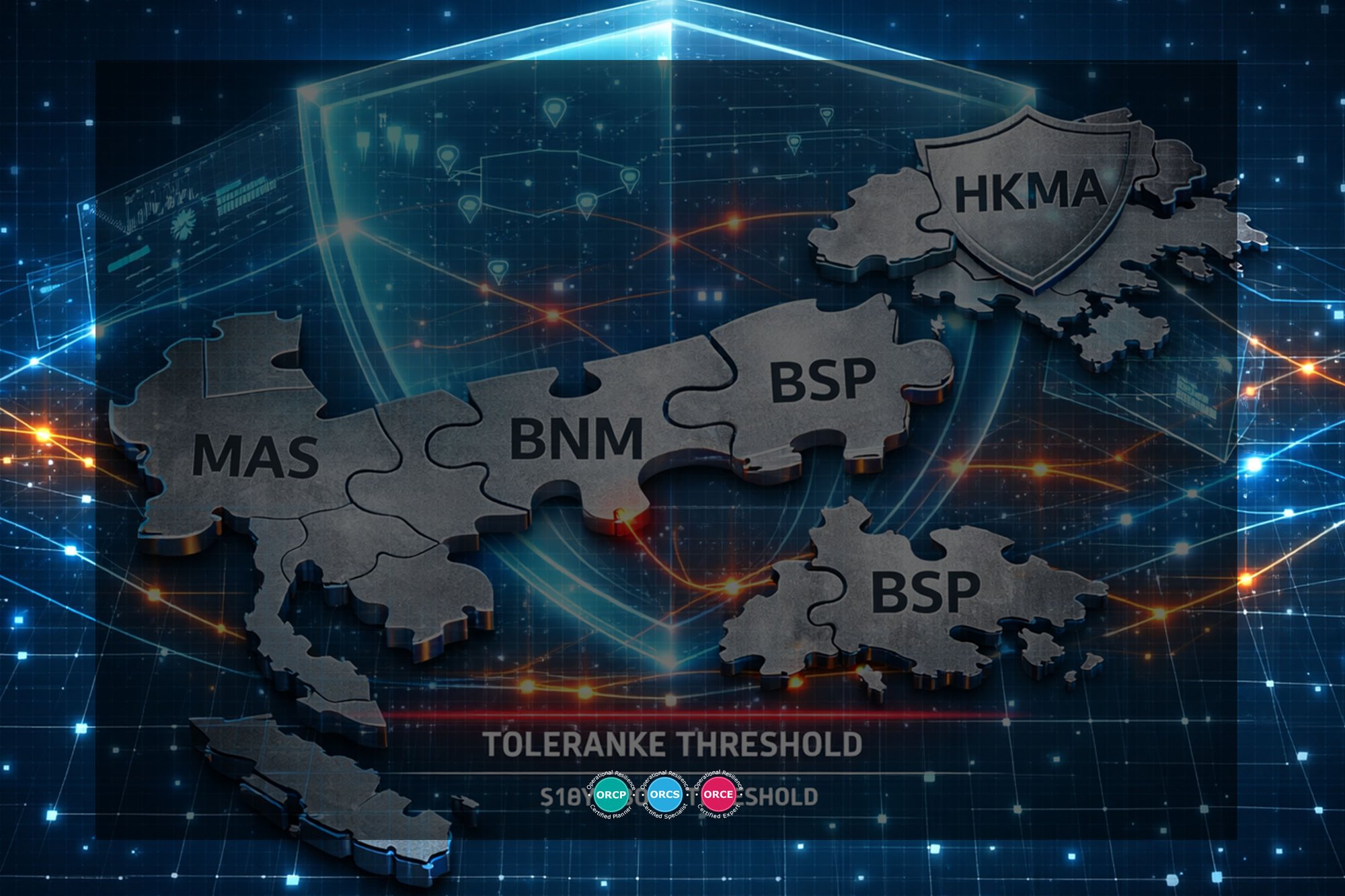
# \[OR\] \[P2\] \[S2\] \[MII\] \[C4\] Step 1 - Define Scope of Mapping Introduction
[](https://cta-redirect.hubspot.com/cta/redirect/3893111/0b279667-64c6-44b6-9618-1127feb5334f)
The success of interconnection and interdependency mapping depends heavily on how well the **scope of mapping is defined at the outset**. Without a clearly defined scope, organisations risk producing fragmented, inconsistent, or overly complex mapping outputs that fail to support operational resilience objectives.
Defining the scope ensures that mapping efforts are:
- **Focused on what truly matters** (Critical Business Services)
- **Aligned with regulatory expectations**
- **Structured and manageable**
- **Relevant for downstream activities** such as impact tolerance setting, scenario testing, and recovery planning
This chapter outlines the first and most critical step in the mapping process: **defining the scope**, including identifying Critical Business Services (CBS), establishing end-to-end boundaries, and determining stakeholders and governance structures.
[](https://cta-redirect.hubspot.com/cta/redirect/3893111/dbcad25a-5ca0-4bd8-ae1b-7906de022d85)
[Moh Heng Goh](https://blog.bcm-institute.org/ebook-or/author/moh-heng-goh) May 4, 2026
###### Operational Resilience Certified Planner-Specialist-Expert
### [](https://cta-redirect.hubspot.com/cta/redirect/3893111/6072e46a-8b7a-441a-9257-0c17043af1f5)
### \[P2\] \[S2\] Chapter 4
#### [](https://cta-redirect.hubspot.com/cta/redirect/3893111/0b279667-64c6-44b6-9618-1127feb5334f)
### Step 1 - Define Scope of Mapping Introduction
#### **Introduction**
The success of interconnection and interdependency mapping depends heavily on how well the **scope of mapping is defined at the outset**. Without a clearly defined scope, organisations risk producing fragmented, inconsistent, or overly complex mapping outputs that fail to support operational resilience objectives.
Defining the scope ensures that mapping efforts are:[![\[OR\] \[P2\] \[S2\] \[MII\] \[C4\] Step 1 – Define Scope of Mapping](https://no-cache.hubspot.com/cta/default/3893111/69cc922b-c86c-4242-b85b-315a3f941e12.png)](https://cta-redirect.hubspot.com/cta/redirect/3893111/69cc922b-c86c-4242-b85b-315a3f941e12)
- **Focused on what truly matters** (Critical Business Services)
- **Aligned with regulatory expectations**
- **Structured and manageable**
- **Relevant for downstream activities** such as impact tolerance setting, scenario testing, and recovery planning
This chapter outlines the first and most critical step in the mapping process: **defining the scope**, including identifying Critical Business Services (CBS), establishing end-to-end boundaries, and determining stakeholders and governance structures.
#### **Purpose of the Chapter**
[](https://cta-redirect.hubspot.com/cta/redirect/3893111/b5438182-f1e5-4248-bea5-2d5044665d8d)
The purpose of this chapter is to:
- Establish a structured approach to **defining the scope of mapping**
- Explain how to identify and prioritise **Critical Business Services (CBS)**
- Define **end-to-end service boundaries**
- Identify key **stakeholders and governance structures**
- Provide clear **deliverables** for this phase
#### **Identify Critical Business Services (CBS)**
##### **Definition of CBS**
Critical Business Services (CBS) are the services that, if disrupted, would result in:
- Significant harm to customers
- Financial or operational impact to the organisation
- Breach of regulatory obligations
- Systemic impact on the financial ecosystem
##### **Importance of CBS Identification**
CBS identification is the **anchor point for all mapping activities**. Without clearly defined CBS:
- Mapping may focus on non-critical areas
- Resources may be misallocated
- Resilience efforts may not align with regulatory expectations
##### **Approach to Identifying CBS**
Organisations should:
- Adopt a **service-centric perspective**
- Focus on **outcomes delivered to customers or stakeholders**
- Consider regulatory guidance and industry practices
##### **Typical CBS Examples (Banking Context)**
- Deposit and Account Services
- Payments and Funds Transfer Services
- Lending and Credit Services
- Digital Banking Access
Each CBS should be clearly defined in terms of:
- Service description
- Customer segments served
- Key outcomes delivered
#### **Define Boundaries (End-to-End Service View)**
##### **Importance of Defining Boundaries**
Once CBS are identified, organisations must define the **boundaries of each service**. This ensures that mapping captures the **complete service delivery chain**, rather than isolated components.
##### **End-to-End Service Perspective**
An end-to-end view includes:
- Service initiation (e.g., customer request)
- Processing and execution
- Completion and delivery of outcomes
##### **Key Boundary Considerations**
When defining boundaries, organisations should consider:
##### **Start Point**
- Where the service is initiated
- Example: Customer login or transaction request
##### **End Point**
- Where the service outcome is delivered
- Example: Successful completion of payment or account update
##### **Internal Components**
- Processes
- Systems
- Teams
##### **External Components**
- Third-party providers
- Market infrastructure (e.g., payment networks)
##### **Avoiding Common Pitfalls**
- **Overly narrow scope:** Missing critical dependencies
- **Overly broad scope:** Creating unnecessary complexity
- **Process-centric boundaries:** Ignoring end-to-end service flow
##### **Outcome**
Clearly defined boundaries ensure that mapping:
- Captures all relevant interconnections
- Reflects real-world service delivery
- Supports accurate risk and resilience analysis
#### **Identify Stakeholders and Governance**
##### **Importance of Stakeholder Identification**
Mapping interconnections and interdependencies is a **cross-functional activity**. It requires collaboration across multiple business and support units.
Without proper stakeholder involvement:
- Mapping may be incomplete
- Critical dependencies may be missed
- Validation becomes difficult
##### **Key Stakeholders**
Stakeholders typically include:
##### **Business Units**
- CBS owners
- Process owners
- Operations teams
##### **Technology Teams**
- Application owners
- Infrastructure teams
- Cybersecurity teams
##### **Risk and Compliance**
- Operational risk
- Business continuity management
- Regulatory compliance
##### **Third-Party Management**
- Vendor management teams
- Procurement
##### **Senior Management**
- Oversight and accountability
- Decision-making authority
##### **Governance Structure**
A structured governance framework should include:
- **Executive Sponsor:** Provides strategic direction
- **Program Lead:** Oversees mapping initiative
- **CBS Owners:** Accountable for service mapping
- **Working Groups:** Execute mapping activities
- **Validation Committee:** Reviews and approves outputs
##### **Roles and Responsibilities**
Clear roles must be defined to ensure:
- Accountability
- Consistency in mapping
- Timely completion of activities
This aligns with the **Three Lines of Defence model**, ensuring:
- First line: Ownership and execution
- Second line: Oversight and challenge
- Third line: Independent assurance
#### **Deliverables of Step 1**
The output of this step provides the **foundation for all subsequent mapping activities**.
##### **CBS Inventory**
A structured list of all identified Critical Business Services, including:
- CBS name and description
- Service owner
- Customer segments
- Key outcomes
##### **Purpose:**
- Establish scope of resilience focus
- Align organisation on priority services
##### **Mapping Scope Definition**
A formal document defining:
- Selected CBS for mapping
- Boundaries of each CBS
- Inclusion and exclusion criteria
- Assumptions and constraints
##### **Purpose:**
- Ensure consistency in mapping
- Prevent scope creep
- Provide clarity to all stakeholders
##### **Stakeholder Matrix**
A structured matrix identifying:
- Stakeholders involved
- Roles and responsibilities
- Level of involvement (e.g., owner, contributor, reviewer)
##### **Example Fields:**
- Stakeholder Group
- Role
- Responsibility
- CBS Coverage
- Contact Point
##### **Purpose:**
- Facilitate coordination
- Ensure accountability
- Support validation and governance
[](https://cta-redirect.hubspot.com/cta/redirect/3893111/2dbf77a9-2b10-4a06-b39b-ac8f1611e999)
Defining the scope of mapping is the **critical first step** in building an effective interconnection and interdependency framework. By clearly identifying **Critical Business Services**, establishing **end-to-end boundaries**, and engaging the right **stakeholders**, organisations lay a strong foundation for accurate and meaningful mapping.
This step ensures that mapping efforts are:
- Focused on what truly matters
- Aligned with regulatory expectations
- Structured for effective execution
The deliverables—**CBS inventory, mapping scope definition, and stakeholder matrix**—serve as essential reference points for all subsequent phases.
In the next chapter, we will explore **Step 2: Identify Data Sources**, which focuses on gathering the necessary information required to perform detailed and accurate mapping of interconnections and interdependencies.
[](https://cta-redirect.hubspot.com/cta/redirect/3893111/90d1498f-0cc7-4057-bec0-aca399cc07aa)
| **C1** | **C2** | **C3** | **C4** | **C5** | **C6** |
| --- | --- | --- | --- | --- | --- |
| [![\[OR\] \[P2\] \[S2\] \[MII\] \[C1\] Introduction to Interconnections and Interdependencies](https://no-cache.hubspot.com/cta/default/3893111/8cbaf41b-9671-404d-83b3-9a20c9fd69f7.png)](https://cta-redirect.hubspot.com/cta/redirect/3893111/8cbaf41b-9671-404d-83b3-9a20c9fd69f7) | [![\[OR\] \[P2\] \[S2\] \[MII\] \[C2\] Why Mapping is Critical for Operational Resilience](https://no-cache.hubspot.com/cta/default/3893111/a7625fb5-1205-4fc5-97d4-4b7492c2b25f.png)](https://cta-redirect.hubspot.com/cta/redirect/3893111/a7625fb5-1205-4fc5-97d4-4b7492c2b25f) | [![\[OR\] \[P2\] \[S2\] \[MII\] \[C3\] Core Components of Interconnections and Dependencies](https://no-cache.hubspot.com/cta/default/3893111/38a3cbd4-322a-41bd-974f-5090a2ce52aa.png)](https://cta-redirect.hubspot.com/cta/redirect/3893111/38a3cbd4-322a-41bd-974f-5090a2ce52aa) | [![\[OR\] \[P2\] \[S2\] \[MII\] \[C4\] Step 1 – Define Scope of Mapping](https://no-cache.hubspot.com/cta/default/3893111/69cc922b-c86c-4242-b85b-315a3f941e12.png)](https://cta-redirect.hubspot.com/cta/redirect/3893111/69cc922b-c86c-4242-b85b-315a3f941e12) | [![\[OR\] \[P2\] \[S2\] \[MII\] \[C5\] Step 2- Identify Data Sources](https://no-cache.hubspot.com/cta/default/3893111/622d0fcc-71bf-4c3b-a569-213cb48bd1db.png)](https://cta-redirect.hubspot.com/cta/redirect/3893111/622d0fcc-71bf-4c3b-a569-213cb48bd1db) | [![\[OR\] \[P2\] \[S2\] \[MII\] \[C6\] Step 3 – Develop Mapping Framework](https://no-cache.hubspot.com/cta/default/3893111/95581d69-3824-4acd-accf-03c2cab43765.png)](https://cta-redirect.hubspot.com/cta/redirect/3893111/95581d69-3824-4acd-accf-03c2cab43765) |
| **C7** | **C8** | **C9** | **C10** | **C11** | ** C12** |
| [![\[OR\] \[P2\] \[S2\] \[MII\] \[C7\] Step 4 – Map Processes and Resources](https://no-cache.hubspot.com/cta/default/3893111/a4ffedf2-c795-41e9-9a8b-c5e24eea7159.png)](https://cta-redirect.hubspot.com/cta/redirect/3893111/a4ffedf2-c795-41e9-9a8b-c5e24eea7159) | [![\[OR\] \[P2\] \[S2\] \[MII\] \[C8\] Step 5 – Map Interconnections and Interdependencies](https://no-cache.hubspot.com/cta/default/3893111/10f06848-f21f-457d-aa80-ca4e3b20ce9e.png)](https://cta-redirect.hubspot.com/cta/redirect/3893111/10f06848-f21f-457d-aa80-ca4e3b20ce9e) | [![\[OR\] \[P2\] \[S2\] \[MII\] \[C9\] Step 6 – Validate Mapping](https://no-cache.hubspot.com/cta/default/3893111/57d7a65a-a462-4919-9324-53e0bb207f3e.png)](https://cta-redirect.hubspot.com/cta/redirect/3893111/57d7a65a-a462-4919-9324-53e0bb207f3e) | [![\[OR\] \[P2\] \[S2\] \[MII\] \[C10\] Step 7 – Analyse Mapping Outputs](https://no-cache.hubspot.com/cta/default/3893111/44bbb252-fdf5-4026-90ba-cbbdbe9c099a.png)](https://cta-redirect.hubspot.com/cta/redirect/3893111/44bbb252-fdf5-4026-90ba-cbbdbe9c099a) | [![\[OR\] \[P2\] \[S2\] \[MII\] \[C11\] Mapping Tools and Techniques](https://no-cache.hubspot.com/cta/default/3893111/d2fab757-0d78-42dd-8553-044eead7390e.png)](https://cta-redirect.hubspot.com/cta/redirect/3893111/d2fab757-0d78-42dd-8553-044eead7390e) | [![\[OR\] \[P2\] \[S2\] \[MII\] \[C12\] Standard Templates and Data Structures](https://no-cache.hubspot.com/cta/default/3893111/4f04214c-3a0f-4bed-b2f8-6352c6d3cda0.png)](https://cta-redirect.hubspot.com/cta/redirect/3893111/4f04214c-3a0f-4bed-b2f8-6352c6d3cda0) |
| **C13** | **C14** | **C15** | **C16** | **C17** | ** C18** |
| [![\[OR\] \[P2\] \[S2\] \[MII\] \[C13\] Integration with Operational Resilience Framework](https://no-cache.hubspot.com/cta/default/3893111/c9628dd2-bbcb-4b54-b5b5-490066640d6d.png)](https://cta-redirect.hubspot.com/cta/redirect/3893111/c9628dd2-bbcb-4b54-b5b5-490066640d6d) | [![\[OR\] \[P2\] \[S2\] \[MII\] \[C14\] Mapping Third-Party and Supply Chain Dependencies](https://no-cache.hubspot.com/cta/default/3893111/0c13b720-3d3e-4452-91e4-b9533260b3a4.png)](https://cta-redirect.hubspot.com/cta/redirect/3893111/0c13b720-3d3e-4452-91e4-b9533260b3a4) | [![\[OR\] \[P2\] \[S2\] \[MII\] \[C15\] Mapping for Digital and Cloud Environments](https://no-cache.hubspot.com/cta/default/3893111/1c90de74-af6b-44d3-ae4f-26d01eac3cf7.png)](https://cta-redirect.hubspot.com/cta/redirect/3893111/1c90de74-af6b-44d3-ae4f-26d01eac3cf7) | [![\[OR\] \[P2\] \[S2\] \[MII\] \[C16\] Common Challenges and Pitfalls](https://no-cache.hubspot.com/cta/default/3893111/32bbd8d7-f947-42ac-9db9-b88b0b156813.png)](https://cta-redirect.hubspot.com/cta/redirect/3893111/32bbd8d7-f947-42ac-9db9-b88b0b156813) | [![\[OR\] \[P2\] \[S2\] \[MII\] \[C17\] Case Study – Banking Sector CBS Mapping](https://no-cache.hubspot.com/cta/default/3893111/5a846fed-f810-4f6b-a1d8-0c2100f0eeac.png)](https://cta-redirect.hubspot.com/cta/redirect/3893111/5a846fed-f810-4f6b-a1d8-0c2100f0eeac) | [![\[OR\] \[P2\] \[S2\] \[MII\] \[C18\] Governance and Ownership of Mapping](https://no-cache.hubspot.com/cta/default/3893111/44ed11f0-5263-4485-98db-725a423c5fd6.png)](https://cta-redirect.hubspot.com/cta/redirect/3893111/44ed11f0-5263-4485-98db-725a423c5fd6) |
| **C19** | **C20** | **C21** | **C22** | | |
| [![\[OR\] \[P2\] \[S2\] \[MII\] \[C19\] Using Mapping for Scenario Testing](https://no-cache.hubspot.com/cta/default/3893111/b7bf0bc8-b382-4892-821d-c7c867303f14.png)](https://cta-redirect.hubspot.com/cta/redirect/3893111/b7bf0bc8-b382-4892-821d-c7c867303f14) | [![\[OR\] \[P2\] \[S2\] \[MII\] \[C20\] Maintaining and Updating Mapping](https://no-cache.hubspot.com/cta/default/3893111/41d34d1f-78bd-4346-845e-b0b86232cfa6.png)](https://cta-redirect.hubspot.com/cta/redirect/3893111/41d34d1f-78bd-4346-845e-b0b86232cfa6) | [![\[OR\] \[P2\] \[S2\] \[MII\] \[C21\] Key Takeaways and Future Direction](https://no-cache.hubspot.com/cta/default/3893111/d8414f6b-4b4e-4a50-adb3-963546f13951.png)](https://cta-redirect.hubspot.com/cta/redirect/3893111/d8414f6b-4b4e-4a50-adb3-963546f13951) | [![\[OR\] \[P2\] \[S2\] \[MII\] \[C22\] Back Cover](https://no-cache.hubspot.com/cta/default/3893111/0f96fecf-9a98-4404-8377-d37c1233df10.png)](https://cta-redirect.hubspot.com/cta/redirect/3893111/0f96fecf-9a98-4404-8377-d37c1233df10) | | |
#### More Information About OR-5000 \[OR-5\] or OR-300 \[OR-3\]
To learn more about the course and schedule, click the buttons below for the OR-300 Operational Resilience Implementer course and the OR-5000 Operational Resilience Expert Implementer course.
| [](https://cta-redirect.hubspot.com/cta/redirect/3893111/3530eccb-515d-401e-afc2-3469e26d7fbf) | [](https://cta-redirect.hubspot.com/cta/redirect/3893111/fdd4fa9c-ed69-40c1-925f-4eb6a1c5c255) | [](https://cta-redirect.hubspot.com/cta/redirect/3893111/77a34b84-0a6d-44f8-b8d6-6ab04cdf5edd) |
| --- | --- | --- |
| [](https://cta-redirect.hubspot.com/cta/redirect/3893111/6e5c0cda-39b9-4bbd-b3d4-4cf46a790b14) | [](https://cta-redirect.hubspot.com/cta/redirect/3893111/a68a08aa-36d3-4216-9551-202c9fde06ea) | [![ \[BL-OR\] \[3-4-5\] View Schedule](https://no-cache.hubspot.com/cta/default/3893111/d0d733a1-16c0-4b68-a26d-adbfd4fc6069.png)](https://cta-redirect.hubspot.com/cta/redirect/3893111/d0d733a1-16c0-4b68-a26d-adbfd4fc6069) |
| [![\[BL-OR\] \[3\] FAQ OR-300](https://no-cache.hubspot.com/cta/default/3893111/f20c71b4-f5e8-4aa5-8056-c374ca33a091.png)](https://cta-redirect.hubspot.com/cta/redirect/3893111/f20c71b4-f5e8-4aa5-8056-c374ca33a091) | If you have any questions, click to contact us.[![Email to Sales Team \[BCM Institute\]](https://no-cache.hubspot.com/cta/default/3893111/3c53daeb-2836-4843-b0e0-645baee2ab9e.png)](https://cta-redirect.hubspot.com/cta/redirect/3893111/3c53daeb-2836-4843-b0e0-645baee2ab9e) | [](https://cta-redirect.hubspot.com/cta/redirect/3893111/7f2718a4-ea80-4f84-a319-dc2d4df37a46) |
| [](https://cta-redirect.hubspot.com/cta/redirect/3893111/74b1e556-8cd2-4a74-8821-db1804534955) | [](https://cta-redirect.hubspot.com/cta/redirect/3893111/f2bd8eb1-32d2-4732-9267-ea53223cf58f) | [](https://cta-redirect.hubspot.com/cta/redirect/3893111/084e620a-46c5-419a-82ed-6a681d15c0b6) |
#### **Comments:**
---

---

---

---


All rights reserved. Copyright 2026
```json
{
"@context" : "https://schema.org",
"@type" : "BlogPosting",
"author" : {
"@type" : "Person",
"name" : "Moh Heng Goh",
"url" : "https://blog.bcm-institute.org/ebook-or/author/moh-heng-goh"
},
"dateModified" : "2026-05-15T14:11:33.782Z",
"datePublished" : "2026-05-04T12:56:18.000Z",
"headline" : "[OR] [P2] [S2] [MII] [C4] Step 1 - Define Scope of Mapping Introduction",
"mainEntityOfPage" : {
"@id" : "https://blog.bcm-institute.org/ebook-or/or-p2-s2-mii-c4-step-1-define-scope-of-mapping-introduction",
"@type" : "WebPage"
},
"publisher" : {
"@type" : "Organization",
"logo" : {
"@type" : "ImageObject",
"url" : "https://blog.bcm-institute.org/hubfs/BCMI%20Logo.png"
},
"name" : "BCMI Pte Ltd"
}
}
```