---
title: [OR] [P2] [S2] [MII] [C17] Case Study – Banking Sector CBS Mapping
description: [OR] [P2] [S2] [MII] [C17] Case Study – Banking Sector CBS Mapping
image: https://blog.bcm-institute.org/hubfs/OR%20P2%20S2%20Mapping%20Interconnections%20and%20Interdependencies/%5BOR%5D%20%5BP2%5D%20%5BS2%5D%20%5BMII%5D%20%5BC17%5D%20Case%20Study%20%E2%80%93%20Banking%20Sector%20CBS%20Mapping.jpg
---
. .
[](http://www.bcm-institute.org/)
- [Home](https://www.bcm-institute.org/)
- [About Us](https://www.bcm-institute.org/about-us-3/)
- [A President’s Perspective](https://www.bcm-institute.org/about-us/a-presidents-perspective/)
- [Our History](https://www.bcm-institute.org/about-us/our-history/)
- [Our Advisory Council](https://www.bcm-institute.org/about-us/our-advisory-council/)
- [Customers’ Testimonials](https://www.bcm-institute.org/about-us/customers-testimonials/)
- [Credential Verification](https://www.bcm-institute.org/about-us/credential-verification/)
- [Courses](https://blog.bcm-institute.org/blog/course-fees-for-blended-learning-courses-master-catalog)
- [ISO 22301 Business Continuity Management System Audit](https://blog.bcm-institute.org/audit/business-continuity-management-audit-courses)
- [ISO 22301 Business Continuity Management](https://blog.bcm-institute.org/bcm/business-continuity-management-courses)
- [Crisis Communication](https://blog.bcm-institute.org/crisis-communication/crisis-communication-courses)
- [Crisis Management](https://blog.bcm-institute.org/en/crisis-management/courses)
- [IT Disaster Recovery](https://blog.bcm-institute.org/it-disaster-recovery/courses)
- [Operational Resilience](https://blog.bcm-institute.org/operational-resilience/courses)
- [Operational Resilience Audit](https://blog.bcm-institute.org/operational-resilience-audit/courses)
- [Certification](https://blog.bcm-institute.org/certification/types-of-certifications-offered)
- [ISO 22301 BCMS Audit Certification](https://blog.bcm-institute.org/certification/business-continuity-management-audit-certification)
- [ISO22301 Business Continuity Management Certification](https://blog.bcm-institute.org/bcm/business-continuity-management-certification)
- [Crisis Communication Certification](https://blog.bcm-institute.org/crisis-communication/crisis-communication-certification)
- [Crisis Management Certification](https://blog.bcm-institute.org/en/crisis-management/crisis-management-certification)
- [IT Disaster Recovery Planning Certification](https://blog.bcm-institute.org/it-disaster-recovery/it-disaster-recovery-certification)
- [Operational Resilience Certification](https://blog.bcm-institute.org/operational-resilience/operational-resilience-certification)
- [Operational Resilience Audit Certification](https://blog.bcm-institute.org/operational-resilience-audit)
- [Seminars](https://blog.bcm-institute.org/meet-the-expert/mte-webinar-mainpage)
- [Store](https://www.bcm-institute.org/store-2/)
- [Contact Us](http://www.bcm-institute.org/about-us/contact-us/)
-
-
###### From Complexity to Clarity: Mapping Interconnections and Interdependencies for Operational Resilience
# \[OR\] \[P2\] \[S2\] \[MII\] \[C17\] Case Study – Banking Sector CBS Mapping
[](https://cta-redirect.hubspot.com/cta/redirect/3893111/0b279667-64c6-44b6-9618-1127feb5334f)
To translate theory into practice, this chapter presents a **banking sector case study** illustrating how to map interconnections and interdependencies for Critical Business Services (CBS). The objective is to demonstrate how mapping moves from **high-level identification** to **end-to-end dependency visibility**, enabling actionable operational resilience outcomes.
The case study focuses on two commonly identified CBS in banks:
- **CBS-1: Deposit & Account Services**
- **CBS-2: Payments & Funds Transfer Services**
These services are foundational to banking operations and are typically prioritised by regulators and institutions due to their **customer impact, systemic importance, and regulatory significance**.
[](https://cta-redirect.hubspot.com/cta/redirect/3893111/dbcad25a-5ca0-4bd8-ae1b-7906de022d85)
[Moh Heng Goh](https://blog.bcm-institute.org/ebook-or/author/moh-heng-goh) May 15, 2026
###### Operational Resilience Certified Planner-Specialist-Expert
### [](https://cta-redirect.hubspot.com/cta/redirect/3893111/6072e46a-8b7a-441a-9257-0c17043af1f5)
### \[P2\] \[S2\] Chapter 17
#### [](https://cta-redirect.hubspot.com/cta/redirect/3893111/0b279667-64c6-44b6-9618-1127feb5334f)
### Case Study – Banking Sector CBS Mapping
#### **Introduction**

To translate theory into practice, this chapter presents a **banking sector case study** illustrating how to map interconnections and interdependencies for Critical Business Services (CBS). The objective is to demonstrate how mapping moves from **high-level identification** to **end-to-end dependency visibility**, enabling actionable operational resilience outcomes.[![\[OR\] \[P2\] \[S2\] \[MII\] \[C17\] Case Study – Banking Sector CBS Mapping](https://no-cache.hubspot.com/cta/default/3893111/5a846fed-f810-4f6b-a1d8-0c2100f0eeac.png)](https://cta-redirect.hubspot.com/cta/redirect/3893111/5a846fed-f810-4f6b-a1d8-0c2100f0eeac)
The case study focuses on two commonly identified CBS in banks:
- **CBS-1: Deposit & Account Services**
- **CBS-2: Payments & Funds Transfer Services**
These services are foundational to banking operations and are typically prioritised by regulators and institutions due to their **customer impact, systemic importance, and regulatory significance**.
#### **Purpose of the Chapter**
[](https://cta-redirect.hubspot.com/cta/redirect/3893111/b5438182-f1e5-4248-bea5-2d5044665d8d)
The purpose of this chapter is to:
- Provide a **practical illustration** of CBS mapping
- Demonstrate **end-to-end dependency mapping**
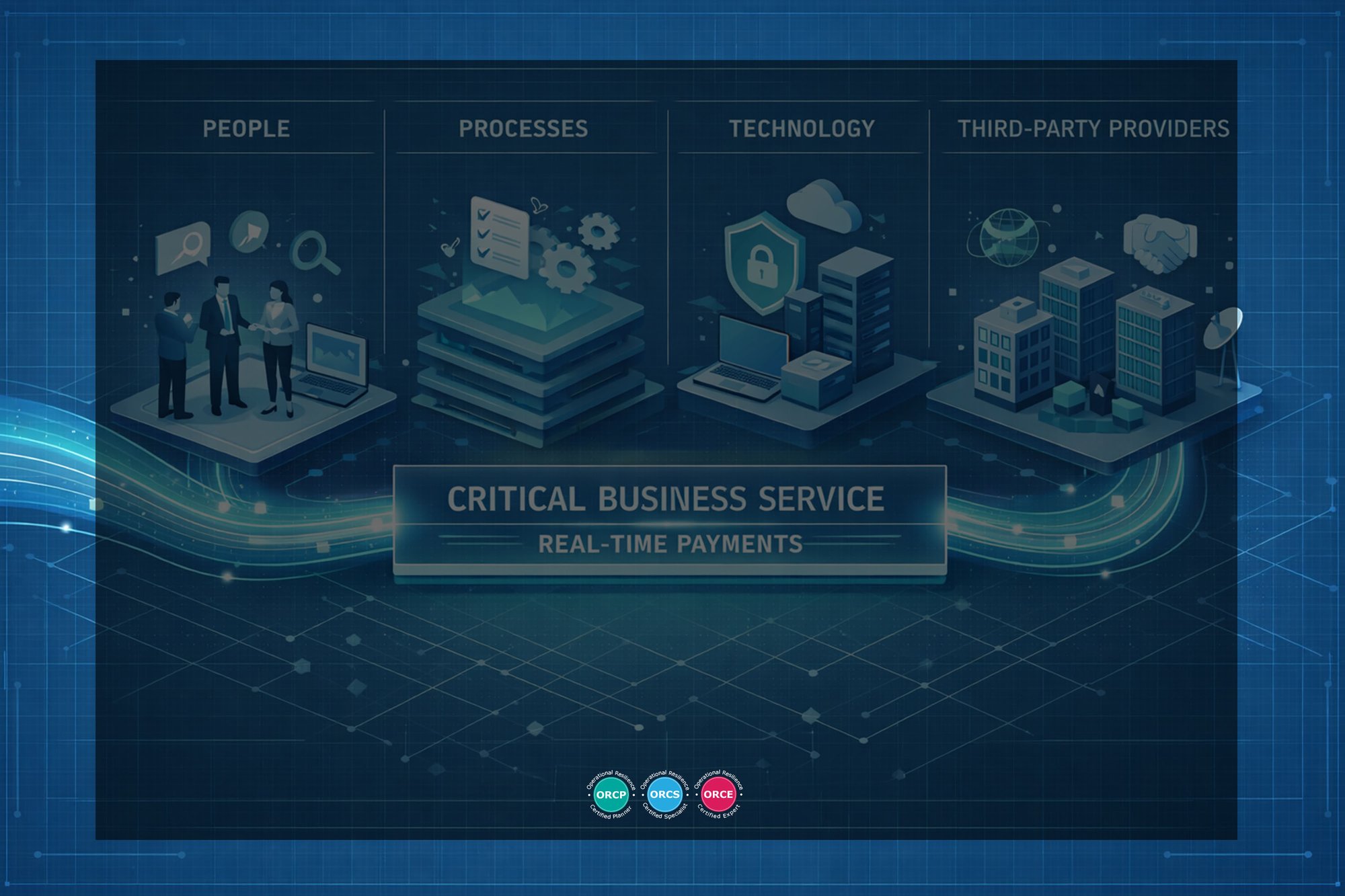
- Show how interconnections span **people, processes, technology, and third parties**
- Highlight how mapping supports **operational resilience analysis**
#### **Overview of Selected CBS**
##### **CBS-1: Deposit & Account Services**
This CBS includes services related to:
- Customer onboarding and account opening
- Deposit and withdrawal transactions
- Account maintenance and servicing
- Balance reporting and statements
**Key Characteristics:**
- High customer dependency
- Continuous availability expectations
- Regulatory reporting requirements
##### **CBS-2: Payments & Funds Transfer Services**
This CBS includes services related to:
- Domestic and cross-border payments
- Fund transfers between accounts
- Bill payments and standing instructions
- Clearing and settlement processes
**Key Characteristics:**
- Time-critical processing
- Integration with external payment networks
- High systemic importance
#### **End-to-End Mapping Approach**
For both CBS, mapping follows an **end-to-end service delivery approach**, covering:
1. Service initiation
2. Processing and validation
3. Execution and settlement
4. Completion and reporting
Each stage is supported by:
- Processes
- People
- Technology
- Data
- Third-party providers
#### **CBS-1: Deposit & Account Services – Dependency Mapping**
##### **Sub-CBS Structure**
| Sub-CBS Code | Sub-CBS |
| --- | --- |
| 1.1 | Customer Onboarding & Account Application |
| 1.2 | Customer Identification & Verification (KYC/CDD) |
| 1.3 | Account Approval & Opening |
| 1.4 | Deposit Transactions Processing |
| 1.5 | Withdrawal & Funds Access Processing |
| 1.6 | Account Servicing & Maintenance |
| 1.7 | Statement & Balance Reporting |
##### **Sample Dependency Mapping**
| Sub-CBS | Dependency Type | Dependency Detail | Connectivity |
| --- | --- | --- | --- |
| Customer Onboarding | Process | Customer data collection workflow | Initiates onboarding process |
| KYC Verification | Technology | KYC System | Validates customer identity via API |
| Account Opening | People | Operations Officer | Approves and activates account |
| Deposit Processing | Technology | Core Banking System | Processes deposit transactions |
| Withdrawal Processing | Third Party | ATM Network | Enables cash withdrawal |
| Account Servicing | Data | Customer Database | Supports updates and maintenance |
| Reporting | Technology | Reporting System | Generates statements |
**Key Observations**
- Heavy reliance on **core banking systems** (shared dependency)
- Integration with **external networks (ATM, KYC providers)**
- Sequential dependencies across onboarding → approval → activation
- Potential concentration risk in **centralised systems and data platforms**
#### **CBS-2: Payments & Funds Transfer – Dependency Mapping**
##### **Sub-CBS Structure**
| Sub-CBS Code | Sub-CBS |
| --- | --- |
| 2.1 | Payment Initiation |
| 2.2 | Authentication & Authorisation |
| 2.3 | Fraud Detection & Risk Screening |
| 2.4 | Funds Availability Check |
| 2.5 | Payment Routing & Processing |
| 2.6 | Clearing & Settlement |
| 2.7 | Transaction Posting & Notification |
##### **Sample Dependency Mapping**
| Sub-CBS | Dependency Type | Dependency Detail | Connectivity |
| --- | --- | --- | --- |
| Payment Initiation | Technology | Mobile Banking App | Captures customer request |
| Authentication | Technology | Authentication System | Verifies user identity |
| Fraud Screening | Technology | Fraud Detection Engine | Screens transactions |
| Funds Check | Data | Account Balance Database | Validates funds availability |
| Payment Processing | Technology | Payment Engine | Executes transactions |
| Clearing & Settlement | Third Party | Payment Network | Processes interbank settlement |
| Notification | Technology | Notification System | Sends transaction alerts |
##### **Key Observations**
- Strong reliance on **external payment networks** (external dependency)
- Multiple **real-time system integrations** (API connectivity)
- Sequential dependencies with high time sensitivity
- Concentration risk in **authentication and payment processing systems**
#### **End-to-End Interdependency Illustration**
##### **Combined Dependency Flow**
An example of end-to-end interconnection for a payment transaction:
1. Customer initiates payment via mobile app
2. Authentication system verifies identity
3. Fraud detection engine screens transaction
4. Core banking system checks funds
5. Payment engine processes transaction
6. External payment network performs clearing
7. Settlement occurs between banks
8. Notification system confirms transaction
##### **Interdependency Characteristics**
- **Sequential Dependencies:** Each step must occur in order
- **Shared Dependencies:** Core banking and authentication systems support multiple CBS
- **External Dependencies:** Payment networks and third-party providers
- **Data Dependencies:** Continuous data flow across systems
#### **Key Risks Identified**
**Single Points of Failure**
- Core banking system
- Authentication platform
**Critical Dependencies**
- Payment processing engine
- KYC system
- Customer database
**Concentration Risks**
- Single cloud or infrastructure provider
- Centralised data centres
- Shared third-party vendors
#### **Link to Operational Resilience**
##### ** Impact Tolerance**
- Mapping identifies critical points affecting downtime thresholds
- Helps define acceptable disruption levels
##### **Scenario Testing**
- Enables design of realistic scenarios such as:
##### **Recovery Planning**
- Supports prioritisation of recovery actions
- Ensures restoration of end-to-end service delivery
#### **Lessons Learned**
**1. Service-Centric Mapping is Critical**
Focusing on CBS ensures alignment with customer outcomes and regulatory expectations.
**2. Interdependencies are Complex and Multi-Layered**
Dependencies span across internal systems, external providers, and data flows.
**3. External Dependencies Drive Risk Exposure**
Third-party and ecosystem dependencies significantly influence resilience.
**4. Mapping Enables Actionable Insights**
Identifies vulnerabilities, concentration risks, and recovery priorities.
[](https://cta-redirect.hubspot.com/cta/redirect/3893111/2dbf77a9-2b10-4a06-b39b-ac8f1611e999)
This case study demonstrates how interconnection and interdependency mapping can be applied in a banking context to provide **end-to-end visibility of Critical Business Services**.
By mapping:
- **CBS-1: Deposit & Account Services**
- **CBS-2: Payments & Funds Transfer Services**
organisations can clearly understand how services are delivered, where dependencies exist, and how disruptions may propagate.
The outcome is a **comprehensive and actionable view of operational resilience**, enabling:
- Better risk identification
- More effective scenario testing
- Stronger recovery planning
Ultimately, this practical illustration reinforces the central theme of this eBook—moving **from complexity to clarity**, ensuring that interconnections and interdependencies are not only mapped, but fully understood and effectively managed.
[](https://cta-redirect.hubspot.com/cta/redirect/3893111/90d1498f-0cc7-4057-bec0-aca399cc07aa)
| **C1** | **C2** | **C3** | **C4** | **C5** | **C6** |
| --- | --- | --- | --- | --- | --- |
| [![\[OR\] \[P2\] \[S2\] \[MII\] \[C1\] Introduction to Interconnections and Interdependencies](https://no-cache.hubspot.com/cta/default/3893111/8cbaf41b-9671-404d-83b3-9a20c9fd69f7.png)](https://cta-redirect.hubspot.com/cta/redirect/3893111/8cbaf41b-9671-404d-83b3-9a20c9fd69f7) | [![\[OR\] \[P2\] \[S2\] \[MII\] \[C2\] Why Mapping is Critical for Operational Resilience](https://no-cache.hubspot.com/cta/default/3893111/a7625fb5-1205-4fc5-97d4-4b7492c2b25f.png)](https://cta-redirect.hubspot.com/cta/redirect/3893111/a7625fb5-1205-4fc5-97d4-4b7492c2b25f) | [![\[OR\] \[P2\] \[S2\] \[MII\] \[C3\] Core Components of Interconnections and Dependencies](https://no-cache.hubspot.com/cta/default/3893111/38a3cbd4-322a-41bd-974f-5090a2ce52aa.png)](https://cta-redirect.hubspot.com/cta/redirect/3893111/38a3cbd4-322a-41bd-974f-5090a2ce52aa) | [![\[OR\] \[P2\] \[S2\] \[MII\] \[C4\] Step 1 – Define Scope of Mapping](https://no-cache.hubspot.com/cta/default/3893111/69cc922b-c86c-4242-b85b-315a3f941e12.png)](https://cta-redirect.hubspot.com/cta/redirect/3893111/69cc922b-c86c-4242-b85b-315a3f941e12) | [![\[OR\] \[P2\] \[S2\] \[MII\] \[C5\] Step 2- Identify Data Sources](https://no-cache.hubspot.com/cta/default/3893111/622d0fcc-71bf-4c3b-a569-213cb48bd1db.png)](https://cta-redirect.hubspot.com/cta/redirect/3893111/622d0fcc-71bf-4c3b-a569-213cb48bd1db) | [![\[OR\] \[P2\] \[S2\] \[MII\] \[C6\] Step 3 – Develop Mapping Framework](https://no-cache.hubspot.com/cta/default/3893111/95581d69-3824-4acd-accf-03c2cab43765.png)](https://cta-redirect.hubspot.com/cta/redirect/3893111/95581d69-3824-4acd-accf-03c2cab43765) |
| **C7** | **C8** | **C9** | **C10** | **C11** | ** C12** |
| [![\[OR\] \[P2\] \[S2\] \[MII\] \[C7\] Step 4 – Map Processes and Resources](https://no-cache.hubspot.com/cta/default/3893111/a4ffedf2-c795-41e9-9a8b-c5e24eea7159.png)](https://cta-redirect.hubspot.com/cta/redirect/3893111/a4ffedf2-c795-41e9-9a8b-c5e24eea7159) | [![\[OR\] \[P2\] \[S2\] \[MII\] \[C8\] Step 5 – Map Interconnections and Interdependencies](https://no-cache.hubspot.com/cta/default/3893111/10f06848-f21f-457d-aa80-ca4e3b20ce9e.png)](https://cta-redirect.hubspot.com/cta/redirect/3893111/10f06848-f21f-457d-aa80-ca4e3b20ce9e) | [![\[OR\] \[P2\] \[S2\] \[MII\] \[C9\] Step 6 – Validate Mapping](https://no-cache.hubspot.com/cta/default/3893111/57d7a65a-a462-4919-9324-53e0bb207f3e.png)](https://cta-redirect.hubspot.com/cta/redirect/3893111/57d7a65a-a462-4919-9324-53e0bb207f3e) | [![\[OR\] \[P2\] \[S2\] \[MII\] \[C10\] Step 7 – Analyse Mapping Outputs](https://no-cache.hubspot.com/cta/default/3893111/44bbb252-fdf5-4026-90ba-cbbdbe9c099a.png)](https://cta-redirect.hubspot.com/cta/redirect/3893111/44bbb252-fdf5-4026-90ba-cbbdbe9c099a) | [![\[OR\] \[P2\] \[S2\] \[MII\] \[C11\] Mapping Tools and Techniques](https://no-cache.hubspot.com/cta/default/3893111/d2fab757-0d78-42dd-8553-044eead7390e.png)](https://cta-redirect.hubspot.com/cta/redirect/3893111/d2fab757-0d78-42dd-8553-044eead7390e) | [![\[OR\] \[P2\] \[S2\] \[MII\] \[C12\] Standard Templates and Data Structures](https://no-cache.hubspot.com/cta/default/3893111/4f04214c-3a0f-4bed-b2f8-6352c6d3cda0.png)](https://cta-redirect.hubspot.com/cta/redirect/3893111/4f04214c-3a0f-4bed-b2f8-6352c6d3cda0) |
| **C13** | **C14** | **C15** | **C16** | **C17** | ** C18** |
| [![\[OR\] \[P2\] \[S2\] \[MII\] \[C13\] Integration with Operational Resilience Framework](https://no-cache.hubspot.com/cta/default/3893111/c9628dd2-bbcb-4b54-b5b5-490066640d6d.png)](https://cta-redirect.hubspot.com/cta/redirect/3893111/c9628dd2-bbcb-4b54-b5b5-490066640d6d) | [![\[OR\] \[P2\] \[S2\] \[MII\] \[C14\] Mapping Third-Party and Supply Chain Dependencies](https://no-cache.hubspot.com/cta/default/3893111/0c13b720-3d3e-4452-91e4-b9533260b3a4.png)](https://cta-redirect.hubspot.com/cta/redirect/3893111/0c13b720-3d3e-4452-91e4-b9533260b3a4) | [![\[OR\] \[P2\] \[S2\] \[MII\] \[C15\] Mapping for Digital and Cloud Environments](https://no-cache.hubspot.com/cta/default/3893111/1c90de74-af6b-44d3-ae4f-26d01eac3cf7.png)](https://cta-redirect.hubspot.com/cta/redirect/3893111/1c90de74-af6b-44d3-ae4f-26d01eac3cf7) | [![\[OR\] \[P2\] \[S2\] \[MII\] \[C16\] Common Challenges and Pitfalls](https://no-cache.hubspot.com/cta/default/3893111/32bbd8d7-f947-42ac-9db9-b88b0b156813.png)](https://cta-redirect.hubspot.com/cta/redirect/3893111/32bbd8d7-f947-42ac-9db9-b88b0b156813) | [![\[OR\] \[P2\] \[S2\] \[MII\] \[C17\] Case Study – Banking Sector CBS Mapping](https://no-cache.hubspot.com/cta/default/3893111/5a846fed-f810-4f6b-a1d8-0c2100f0eeac.png)](https://cta-redirect.hubspot.com/cta/redirect/3893111/5a846fed-f810-4f6b-a1d8-0c2100f0eeac) | [![\[OR\] \[P2\] \[S2\] \[MII\] \[C18\] Governance and Ownership of Mapping](https://no-cache.hubspot.com/cta/default/3893111/44ed11f0-5263-4485-98db-725a423c5fd6.png)](https://cta-redirect.hubspot.com/cta/redirect/3893111/44ed11f0-5263-4485-98db-725a423c5fd6) |
| **C19** | **C20** | **C21** | **C22** | | |
| [![\[OR\] \[P2\] \[S2\] \[MII\] \[C19\] Using Mapping for Scenario Testing](https://no-cache.hubspot.com/cta/default/3893111/b7bf0bc8-b382-4892-821d-c7c867303f14.png)](https://cta-redirect.hubspot.com/cta/redirect/3893111/b7bf0bc8-b382-4892-821d-c7c867303f14) | [![\[OR\] \[P2\] \[S2\] \[MII\] \[C20\] Maintaining and Updating Mapping](https://no-cache.hubspot.com/cta/default/3893111/41d34d1f-78bd-4346-845e-b0b86232cfa6.png)](https://cta-redirect.hubspot.com/cta/redirect/3893111/41d34d1f-78bd-4346-845e-b0b86232cfa6) | [![\[OR\] \[P2\] \[S2\] \[MII\] \[C21\] Key Takeaways and Future Direction](https://no-cache.hubspot.com/cta/default/3893111/d8414f6b-4b4e-4a50-adb3-963546f13951.png)](https://cta-redirect.hubspot.com/cta/redirect/3893111/d8414f6b-4b4e-4a50-adb3-963546f13951) | [![\[OR\] \[P2\] \[S2\] \[MII\] \[C22\] Back Cover](https://no-cache.hubspot.com/cta/default/3893111/0f96fecf-9a98-4404-8377-d37c1233df10.png)](https://cta-redirect.hubspot.com/cta/redirect/3893111/0f96fecf-9a98-4404-8377-d37c1233df10) | | |
#### More Information About OR-5000 \[OR-5\] or OR-300 \[OR-3\]
To learn more about the course and schedule, click the buttons below for the OR-300 Operational Resilience Implementer course and the OR-5000 Operational Resilience Expert Implementer course.
| [](https://cta-redirect.hubspot.com/cta/redirect/3893111/3530eccb-515d-401e-afc2-3469e26d7fbf) | [](https://cta-redirect.hubspot.com/cta/redirect/3893111/fdd4fa9c-ed69-40c1-925f-4eb6a1c5c255) | [](https://cta-redirect.hubspot.com/cta/redirect/3893111/77a34b84-0a6d-44f8-b8d6-6ab04cdf5edd) |
| --- | --- | --- |
| [](https://cta-redirect.hubspot.com/cta/redirect/3893111/6e5c0cda-39b9-4bbd-b3d4-4cf46a790b14) | [](https://cta-redirect.hubspot.com/cta/redirect/3893111/a68a08aa-36d3-4216-9551-202c9fde06ea) | [![ \[BL-OR\] \[3-4-5\] View Schedule](https://no-cache.hubspot.com/cta/default/3893111/d0d733a1-16c0-4b68-a26d-adbfd4fc6069.png)](https://cta-redirect.hubspot.com/cta/redirect/3893111/d0d733a1-16c0-4b68-a26d-adbfd4fc6069) |
| [![\[BL-OR\] \[3\] FAQ OR-300](https://no-cache.hubspot.com/cta/default/3893111/f20c71b4-f5e8-4aa5-8056-c374ca33a091.png)](https://cta-redirect.hubspot.com/cta/redirect/3893111/f20c71b4-f5e8-4aa5-8056-c374ca33a091) | If you have any questions, click to contact us.[![Email to Sales Team \[BCM Institute\]](https://no-cache.hubspot.com/cta/default/3893111/3c53daeb-2836-4843-b0e0-645baee2ab9e.png)](https://cta-redirect.hubspot.com/cta/redirect/3893111/3c53daeb-2836-4843-b0e0-645baee2ab9e) | [](https://cta-redirect.hubspot.com/cta/redirect/3893111/7f2718a4-ea80-4f84-a319-dc2d4df37a46) |
| [](https://cta-redirect.hubspot.com/cta/redirect/3893111/74b1e556-8cd2-4a74-8821-db1804534955) | [](https://cta-redirect.hubspot.com/cta/redirect/3893111/f2bd8eb1-32d2-4732-9267-ea53223cf58f) | [](https://cta-redirect.hubspot.com/cta/redirect/3893111/084e620a-46c5-419a-82ed-6a681d15c0b6) |
#### **Comments:**

---

---

---

---


All rights reserved. Copyright 2026
```json
{
"@context" : "https://schema.org",
"@type" : "BlogPosting",
"author" : {
"@type" : "Person",
"name" : "Moh Heng Goh",
"url" : "https://blog.bcm-institute.org/ebook-or/author/moh-heng-goh"
},
"dateModified" : "2026-05-19T02:35:04.281Z",
"datePublished" : "2026-05-15T13:17:26.000Z",
"headline" : "[OR] [P2] [S2] [MII] [C17] Case Study – Banking Sector CBS Mapping",
"mainEntityOfPage" : {
"@id" : "https://blog.bcm-institute.org/ebook-or/or-p2-s2-mii-c17-case-study-banking-sector-cbs-mapping",
"@type" : "WebPage"
},
"publisher" : {
"@type" : "Organization",
"logo" : {
"@type" : "ImageObject",
"url" : "https://blog.bcm-institute.org/hubfs/BCMI%20Logo.png"
},
"name" : "BCMI Pte Ltd"
}
}
```