---
title: [OR] [LBP] [E3] [CBS] [1] [DP] Retail Deposit and Account Services
description: [OR] [LBP] [E3] [CBS] [1] [DP] Retail Deposit and Account Services
image: https://blog.bcm-institute.org/hubfs/PH%20Bank%20Graphic%20Folder/Land%20Bank%20E3%20CBS%201%20Morepost/%5BOR%5D%20%5BLBP%5D%20%5BPH%5D%20%5BE3%5D%20%5BCBS%5D%20%5B1%5D%20%5BDP%5D%20Retail%20Deposit%20%26%20Account%20Services.jpg
---
. .
[](http://www.bcm-institute.org/)
- [Home](https://www.bcm-institute.org/)
- [About Us](https://www.bcm-institute.org/about-us-3/)
- [A President’s Perspective](https://www.bcm-institute.org/about-us/a-presidents-perspective/)
- [Our History](https://www.bcm-institute.org/about-us/our-history/)
- [Our Advisory Council](https://www.bcm-institute.org/about-us/our-advisory-council/)
- [Customers’ Testimonials](https://www.bcm-institute.org/about-us/customers-testimonials/)
- [Credential Verification](https://www.bcm-institute.org/about-us/credential-verification/)
- [Courses](https://blog.bcm-institute.org/blog/course-fees-for-blended-learning-courses-master-catalog)
- [ISO 22301 Business Continuity Management System Audit](https://blog.bcm-institute.org/audit/business-continuity-management-audit-courses)
- [ISO 22301 Business Continuity Management](https://blog.bcm-institute.org/bcm/business-continuity-management-courses)
- [Crisis Communication](https://blog.bcm-institute.org/crisis-communication/crisis-communication-courses)
- [Crisis Management](https://blog.bcm-institute.org/en/crisis-management/courses)
- [IT Disaster Recovery](https://blog.bcm-institute.org/it-disaster-recovery/courses)
- [Operational Resilience](https://blog.bcm-institute.org/operational-resilience/courses)
- [Operational Resilience Audit](https://blog.bcm-institute.org/operational-resilience-audit/courses)
- [Certification](https://blog.bcm-institute.org/certification/types-of-certifications-offered)
- [ISO 22301 BCMS Audit Certification](https://blog.bcm-institute.org/certification/business-continuity-management-audit-certification)
- [ISO22301 Business Continuity Management Certification](https://blog.bcm-institute.org/bcm/business-continuity-management-certification)
- [Crisis Communication Certification](https://blog.bcm-institute.org/crisis-communication/crisis-communication-certification)
- [Crisis Management Certification](https://blog.bcm-institute.org/en/crisis-management/crisis-management-certification)
- [IT Disaster Recovery Planning Certification](https://blog.bcm-institute.org/it-disaster-recovery/it-disaster-recovery-certification)
- [Operational Resilience Certification](https://blog.bcm-institute.org/operational-resilience/operational-resilience-certification)
- [Operational Resilience Audit Certification](https://blog.bcm-institute.org/operational-resilience-audit)
- [Seminars](https://blog.bcm-institute.org/meet-the-expert/mte-webinar-mainpage)
- [Store](https://www.bcm-institute.org/store-2/)
- [Contact Us](http://www.bcm-institute.org/about-us/contact-us/)
-
-
###### Strengthening Operational Resilience in Land Bank of the Philippines: A Practical Implementation Guide
# \[OR\] \[LBP\] \[E3\] \[CBS\] \[1\] \[DP\] Retail Deposit and Account Services
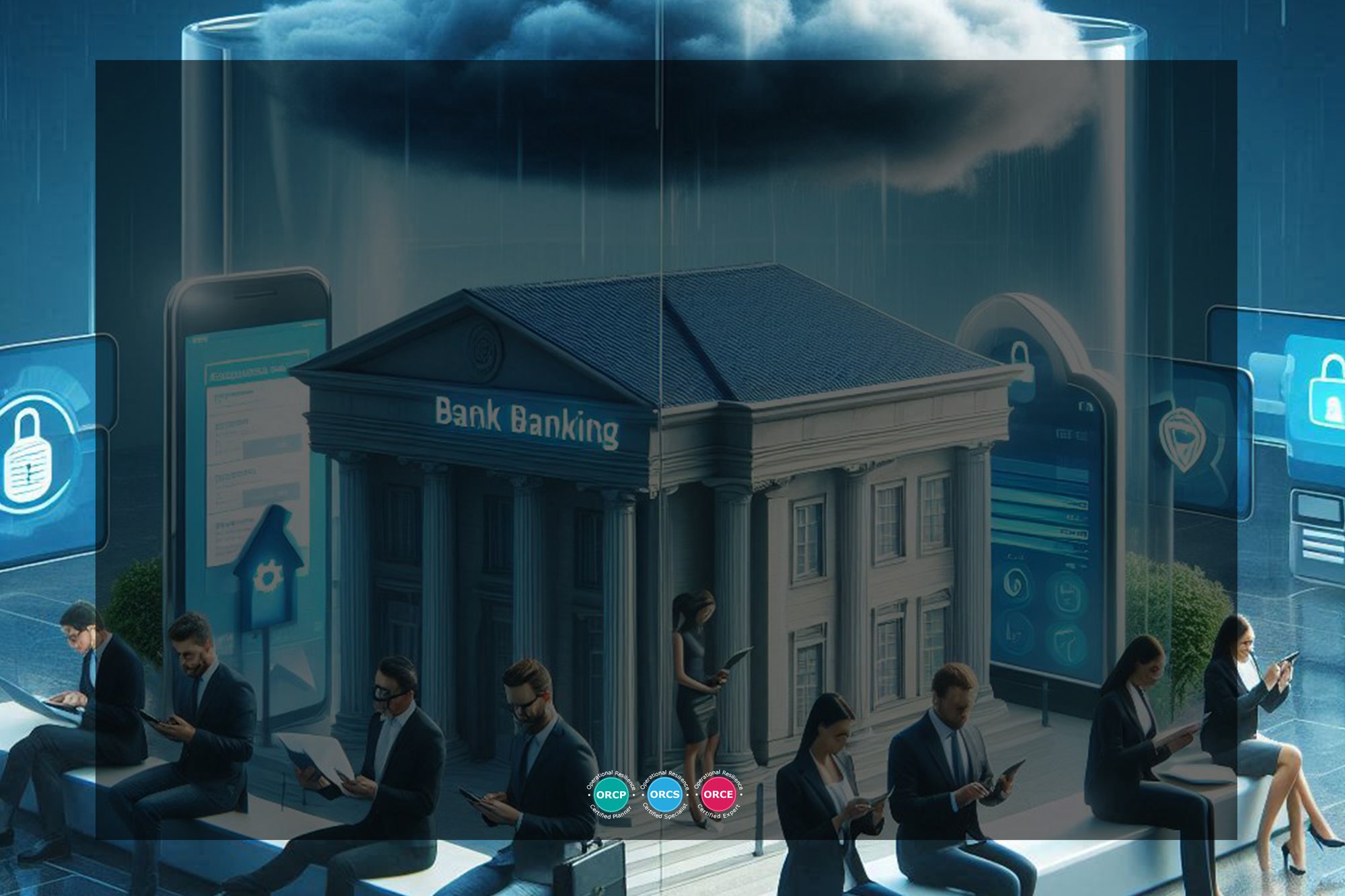
[![x \[OR\] \[LandBank\] Title Banner](https://no-cache.hubspot.com/cta/default/3893111/5af8c6f4-33f3-4662-b9e6-064232570c94.png)](https://cta-redirect.hubspot.com/cta/redirect/3893111/5af8c6f4-33f3-4662-b9e6-064232570c94)For the Land Bank of the Philippines (LBP), **Deposit and Account Services (CBS-1)** form the foundation of its mandate as a government financial institution supporting inclusive banking, agricultural development, and public sector financing.
These services are among the most **customer-facing and transaction-intensive critical business services**, underpinning the daily financial activities of individuals, corporates, and government entities.
As such, any disruption to deposit-taking, account access, or funds availability would have immediate consequences on customer trust, financial stability, and regulatory compliance.
In the context of operational resilience, CBS-1 must be understood not merely as a product offering but as an **end-to-end service composed of multiple interdependent business processes**.
These processes span onboarding, account maintenance, transaction processing, digital access, reconciliation, and recovery capabilities.
Consistent with the expectations of the Bangko Sentral ng Pilipinas under BSP Circular No. 1203 (Operational Resilience Guidelines), LBP is required to comprehensively identify and map these processes, including the supporting resources, dependencies, and vulnerabilities that could affect service delivery during disruptions.
This chapter, therefore, provides a structured decomposition of CBS-1 into its **detailed business processes (Sub-CBS)**.
By breaking down the service into granular components, LBP can better understand how each process contributes to the overall delivery of deposit and account services, and how disruptions in any component may impact the bank’s ability to remain within its defined impact tolerances.
### [](https://cta-redirect.hubspot.com/cta/redirect/3893111/732790df-c975-4982-a409-321d37ad0f1c)
[Moh Heng Goh](https://blog.bcm-institute.org/ebook-or/author/moh-heng-goh) Apr 2, 2026
###### Operational Resilience Certified Planner-Specialist-Expert
### [![\[OR\] \[LBP\] Legal Disclaimer Banner](https://no-cache.hubspot.com/cta/default/3893111/2b7fea9a-03e9-47b5-be3a-84dc0128eb83.png)](https://cta-redirect.hubspot.com/cta/redirect/3893111/2b7fea9a-03e9-47b5-be3a-84dc0128eb83)
### [](https://cta-redirect.hubspot.com/cta/redirect/3893111/732790df-c975-4982-a409-321d37ad0f1c)CBS-1 Deposit & Account Services
[![\[OR\] \[LBP\] \[PH\] \[E3\] \[CBS\] \[1\] \[DP\] Retail Deposit & Account Services](https://no-cache.hubspot.com/cta/default/3893111/912392ab-7a11-4801-8ee5-b72502b1872d.png)](https://cta-redirect.hubspot.com/cta/redirect/3893111/912392ab-7a11-4801-8ee5-b72502b1872d)For the Land Bank of the Philippines (LBP), **Deposit and Account Services (CBS-1)** form the foundation of its mandate as a government financial institution supporting inclusive banking, agricultural development, and public sector financing.
These services are among the most **customer-facing and transaction-intensive critical business services**, underpinning the daily financial activities of individuals, corporates, and government entities.
As such, any disruption to deposit-taking, account access, or funds availability would have immediate consequences on customer trust, financial stability, and regulatory compliance.
In the context of operational resilience, CBS-1 must be understood not merely as a product offering but as an **end-to-end service composed of multiple interdependent business processes**.
These processes span onboarding, account maintenance, transaction processing, digital access, reconciliation, and recovery capabilities.
Consistent with the expectations of the Bangko Sentral ng Pilipinas under BSP Circular No. 1203 (Operational Resilience Guidelines), LBP is required to comprehensively identify and map these processes, including the supporting resources, dependencies, and vulnerabilities that could affect service delivery during disruptions.
This chapter, therefore, provides a structured decomposition of CBS-1 into its **detailed business processes (Sub-CBS)**. By breaking down the service into granular components, LBP can better understand how each process contributes to the overall delivery of deposit and account services, and how disruptions in any component may impact the bank’s ability to remain within its defined impact tolerances.
#### **Purpose of the Chapter**
The purpose of this chapter is to **enable a clear, structured understanding of the end-to-end processes that constitute CBS-1 Deposit and Account Services**, and to establish a foundation for subsequent operational resilience activities.
Specifically, the reader is expected to learn how to **systematically decompose a critical business service into actionable Sub-CBS components**, which can then be used for dependency mapping, impact tolerance setting, scenario testing, and resilience improvement planning.
By the end of this chapter, the reader should be able to identify not only *what* processes are critical, but also *why* they are critical, and how they collectively ensure the continuity of essential banking services under both normal and disrupted conditions.
[![Banner \[Table\] \[OR\] \[E3\] Detailed Processes](https://no-cache.hubspot.com/cta/default/3893111/3ecaed5c-33ef-4660-bbad-bdc9839aa08c.png)](https://cta-redirect.hubspot.com/cta/redirect/3893111/3ecaed5c-33ef-4660-bbad-bdc9839aa08c)
Table P1: Detailed Processes for CBS-1
| **Sub-CBS Code** | **Name of Sub-CBS** | **Description of Sub-CBS** |
| --- | --- | --- |
| 1.1 | Customer Onboarding and Account Application | End-to-end intake of new deposit account applications, including branch-based and digital application channels, product selection, customer profiling, capture of personal or institutional information, and initiation of account opening workflows. |
| 1.2 | Customer Identification and Verification | Verification of identity, supporting documents, eligibility, and authenticity of customer information to support compliant account opening and maintenance. This includes KYC/CIP checks and screening against required internal and regulatory criteria before account activation. |
| 1.3 | Account Approval and Opening | Review, validation, approval, account number creation, CIF/customer record creation or update, and formal establishment of the deposit or current account in the core banking environment. |
| 1.4 | Initial Funding and Deposit Booking | Processing the first deposit, validating the source and amount, posting the opening balances, and confirming that the account is live and usable in accordance with product rules. |
| 1.5 | Product Terms Setup and Account Parameter Maintenance | Configuration and maintenance of product-specific account rules such as account type, minimum balance, interest eligibility, account restrictions, fees, dormancy parameters, statement preferences, and linked services. |
| 1.6 | Deposit Transactions Processing | Acceptance and posting of over-the-counter, cash, cheque, electronic, payroll, government, or internal deposits into customer accounts, including validation and transaction recording. |
| 1.7 | Withdrawal and Funds Access Processing | Processing customer withdrawals and funds access requests through branch, ATM, or other permitted channels, including balance validation, account controls, and posting. This is particularly important because BSP cites the servicing of withdrawals as an example of a critical function. |
| 1.8 | Account Servicing and Customer Maintenance | Routine servicing of active accounts, including change of customer information, passbook or ATM-related servicing, mandate updates, stop instructions, reactivation support, account restrictions, and handling of service requests. |
| 1.9 | Interest, Fees, and Charges Processing | Automated or manual computation, accrual, posting, and adjustment of deposit interest, service charges, penalties, and related account-level entries in accordance with product terms. |
| 1.10 | Statement, Passbook, and Balance Reporting | Generation and provision of account balances, transaction histories, statements, passbook updates, and customer confirmations across branch and digital channels. |
| 1.11 | Digital Account Access Enablement | Enrolment, activation, and maintenance of customer access to digital banking channels linked to deposit accounts, such as internet or mobile banking, enabling customers to view balances and use permitted account services. LANDBANK publicly offers iAccess and mobile banking tied to eligible savings and current accounts. |
| 1.12 | ATM and Card-Based Access Management | Issuance, activation, replacement, control, and maintenance of ATM-linked access for eligible deposit accounts, including card-related customer servicing and access control. |
| 1.13 | Account Reconciliation and Exception Handling | Reconciliation of deposit account balances, branch and channel transactions, suspense items, unmatched entries, failed postings, and investigation/resolution of discrepancies to preserve ledger integrity. |
| 1.14 | Dormancy, Holds, Restrictions, and Account Control Administration | Monitoring and administration of dormant accounts, legal or internal holds, blocked accounts, restricted transactions, account freezes, and other controls required to protect customers and the bank. |
| 1.15 | Fraud Monitoring and Transaction Surveillance for Deposit Accounts | Detection, escalation, and response to suspicious account behaviour, anomalous transactions, scams, mule activity indicators, and other risks affecting deposit account integrity and customer protection. |
| 1.16 | Complaints, Disputes, and Service Recovery | Handling of customer complaints, deposit-account-related disputes, erroneous postings, failed access, service delays, and other issues requiring investigation, correction, and communication. |
| 1.17 | Regulatory Reporting and Compliance Support for Deposit Services | Capture and maintenance of records, reports, audit trails, and compliance data required for supervisory, legal, and regulatory obligations related to deposit-taking and account servicing. |
| 1.18 | Business Continuity and Recovery for Deposit Services | Recovery and continuity arrangements to maintain or restore deposit and account services during operational disruption, including branch contingency procedures, alternate channels, data recovery, incident response, and prioritised restoration of critical account functions. BSP Circular No. 1203 requires BSFIs to identify the end-to-end resources that support critical operations, set tolerances for disruption, manage vulnerabilities, and integrate BCM and testing into the operational resilience framework. |
#### **Operational resilience requirements from BSP Circular No. 1203 relevant to CBS-1**
For a Philippine bank, BSP Circular No. 1203 requires the bank to identify **critical operations** from an end-to-end perspective, rather than in isolation by systems or teams.
The Circular states that critical operations include activities, processes, services, and supporting assets, and specifically notes that supporting assets encompass **people, technology, information, facilities, internal processes, IT systems, clearing and settlement facilities, and outsourced services**.
That means LBP’s “Deposit and Account Services” should not be mapped only at the product level; it should be decomposed into Sub-CBS processes such as onboarding, deposit posting, withdrawals, account maintenance, digital access, reconciliation, and recovery.
The Circular also expects governance and accountability. The board is responsible for overseeing and approving the operational resilience framework, while senior management must implement it, allocate resources, and report on resilience capability.
In practice, for **CBS-1 Deposit and Account Services**, this means LBP should clearly assign ownership of each Sub-CBS, define escalation paths for incidents, and ensure that first-line business owners understand which people, systems, branches, vendors, and digital channels are essential to keep deposit services within tolerance during disruptions.
BSP further requires BSFIs to identify vulnerabilities in their mapping exercise, keep mapping current, and plan for risks to the delivery of critical operations.
A regulator-aligned example for LBP would be to identify vulnerabilities such as branch outages, core banking unavailability, ATM network failures, internet banking disruptions, fraud-related account blocking, or failures of third-party service providers that support customer notifications, card services, or digital onboarding.
The bank should document action plans and review/update this mapping regularly.
Finally, BSP requires BCM** and testing** to be integrated into the operational resilience framework.
For CBS-1, this means continuity plans and tests should cover the identified critical deposit processes and assess whether the bank can continue to service them or restore them within the defined disruption tolerance.
A practical example would be testing whether LBP can still support account access, balance inquiries, deposit postings, and withdrawals through alternate branches or digital channels when the primary site, application, or service provider is unavailable.
### [![Banner \[Summing\] \[OR\] \[E3\] Detailed Processes](https://no-cache.hubspot.com/cta/default/3893111/bce25519-5bf0-4302-aa7e-f4d565499b6d.png)](https://cta-redirect.hubspot.com/cta/redirect/3893111/bce25519-5bf0-4302-aa7e-f4d565499b6d)
The decomposition of CBS-1 Deposit and Account Services into detailed Sub-CBS processes provides LBP with a **practical, actionable blueprint for implementing operational resilience**.
Rather than viewing deposit services as a single aggregated function, this structured approach reveals the **complex network of processes, controls, and service interactions** that must be maintained to ensure uninterrupted customer service.
Each Sub-CBS is a critical building block that enables the bank to deliver essential services with acceptable levels of disruption.
More importantly, this level of process granularity enables LBP to move beyond theoretical resilience planning toward **evidence-based resilience management**.
With clearly defined Sub-CBS processes, the bank can now identify dependencies (people, processes, technology, and third parties), assess vulnerabilities, establish impact tolerances, and design severe but plausible scenarios aligned with regulatory expectations under BSP Circular No. 1203.
This ensures that resilience is not treated as a compliance exercise, but as an embedded capability that strengthens the bank’s ability to **anticipate, withstand, recover, and adapt** in an increasingly complex risk environment.
[![x \[OR\] \[LandBank\] Title Banner](https://no-cache.hubspot.com/cta/default/3893111/5af8c6f4-33f3-4662-b9e6-064232570c94.png)](https://cta-redirect.hubspot.com/cta/redirect/3893111/5af8c6f4-33f3-4662-b9e6-064232570c94)
| **eBook 3: Starting Your OR Implementation** | | | | | |
| --- | --- | --- | --- | --- | --- |
| **CBS-1 Deposit & Account Services** | | | | | |
| **CBS-1 DP** | **CBS-1 MD** | **CBS-1 MPR** | **CBS-1 ITo** | **CBS-1 SuPS** | **CBS-1 ST** |
| [![\[OR\] \[LBP\] \[PH\] \[E3\] \[CBS\] \[1\] \[DP\] Retail Deposit & Account Services](https://no-cache.hubspot.com/cta/default/3893111/912392ab-7a11-4801-8ee5-b72502b1872d.png)](https://cta-redirect.hubspot.com/cta/redirect/3893111/912392ab-7a11-4801-8ee5-b72502b1872d) | [](https://cta-redirect.hubspot.com/cta/redirect/3893111/b398eb6f-dc40-42e3-aa85-ec2a6fbcb410) | [](https://cta-redirect.hubspot.com/cta/redirect/3893111/cebdb2a3-51bb-44d1-b1d9-acc961d3fd0c) | [](https://cta-redirect.hubspot.com/cta/redirect/3893111/29277b1f-540e-400d-abe7-159a367a27f9) | [](https://cta-redirect.hubspot.com/cta/redirect/3893111/778c0fc2-c065-4b80-a4aa-38e23bad1dcd) | [](https://cta-redirect.hubspot.com/cta/redirect/3893111/b5172b9c-a581-4eb8-a3cd-ded632dda909) |
[](https://cta-redirect.hubspot.com/cta/redirect/3893111/084e620a-46c5-419a-82ed-6a681d15c0b6)Gain Competency: For organisations looking to accelerate their journey, BCM Institute’s training and certification programs, including the OR-5000 Operational Resilience Expert Implementer course, provide in-depth insights and practical toolkits for effectively embedding this model.
#### More Information About OR-5000 \[OR-5\] or OR-300 \[OR-3\]
To learn more about the course and schedule, click the buttons below for the OR-300 Operational Resilience Implementer course and the OR-5000 Operational Resilience Expert Implementer course.
| [](https://cta-redirect.hubspot.com/cta/redirect/3893111/3530eccb-515d-401e-afc2-3469e26d7fbf) | [](https://cta-redirect.hubspot.com/cta/redirect/3893111/fdd4fa9c-ed69-40c1-925f-4eb6a1c5c255) | [](https://cta-redirect.hubspot.com/cta/redirect/3893111/77a34b84-0a6d-44f8-b8d6-6ab04cdf5edd) |
| --- | --- | --- |
| [](https://cta-redirect.hubspot.com/cta/redirect/3893111/6e5c0cda-39b9-4bbd-b3d4-4cf46a790b14) | [](https://cta-redirect.hubspot.com/cta/redirect/3893111/a68a08aa-36d3-4216-9551-202c9fde06ea) | [![ \[BL-OR\] \[3-4-5\] View Schedule](https://no-cache.hubspot.com/cta/default/3893111/d0d733a1-16c0-4b68-a26d-adbfd4fc6069.png)](https://cta-redirect.hubspot.com/cta/redirect/3893111/d0d733a1-16c0-4b68-a26d-adbfd4fc6069) |
| [![\[BL-OR\] \[3\] FAQ OR-300](https://no-cache.hubspot.com/cta/default/3893111/f20c71b4-f5e8-4aa5-8056-c374ca33a091.png)](https://cta-redirect.hubspot.com/cta/redirect/3893111/f20c71b4-f5e8-4aa5-8056-c374ca33a091) | If you have any questions, click to contact us.[![Email to Sales Team \[BCM Institute\]](https://no-cache.hubspot.com/cta/default/3893111/3c53daeb-2836-4843-b0e0-645baee2ab9e.png)](https://cta-redirect.hubspot.com/cta/redirect/3893111/3c53daeb-2836-4843-b0e0-645baee2ab9e) | [](https://cta-redirect.hubspot.com/cta/redirect/3893111/7f2718a4-ea80-4f84-a319-dc2d4df37a46) |
| [](https://cta-redirect.hubspot.com/cta/redirect/3893111/74b1e556-8cd2-4a74-8821-db1804534955) | [](https://cta-redirect.hubspot.com/cta/redirect/3893111/f2bd8eb1-32d2-4732-9267-ea53223cf58f) | [](https://cta-redirect.hubspot.com/cta/redirect/3893111/084e620a-46c5-419a-82ed-6a681d15c0b6) |
#### **Comments:**

---

---

---

---


All rights reserved. Copyright 2026
```json
{
"@context" : "https://schema.org",
"@type" : "BlogPosting",
"author" : {
"@type" : "Person",
"name" : "Moh Heng Goh",
"url" : "https://blog.bcm-institute.org/ebook-or/author/moh-heng-goh"
},
"dateModified" : "2026-04-13T12:51:40.624Z",
"datePublished" : "2026-04-02T06:54:31.000Z",
"headline" : "[OR] [LBP] [E3] [CBS] [1] [DP] Retail Deposit and Account Services",
"mainEntityOfPage" : {
"@id" : "https://blog.bcm-institute.org/ebook-or/or-lbp-e3-cbs-1-dp-retail-deposit-and-account-services",
"@type" : "WebPage"
},
"publisher" : {
"@type" : "Organization",
"logo" : {
"@type" : "ImageObject",
"url" : "https://blog.bcm-institute.org/hubfs/BCMI%20Logo.png"
},
"name" : "BCMI Pte Ltd"
}
}
```