![x [OR] [DBP] Title Banner](https://no-cache.hubspot.com/cta/default/3893111/baadd64d-9096-4178-8f82-e3cc263abf78.png)
![eBook Cover [OR] [DBP] [PH] [E3] [2D]](https://no-cache.hubspot.com/cta/default/3893111/4d391ee4-9a6f-43ab-92ce-9de41e906a45.png)
![[OR] [DBP] Legal Disclaimer Banner](https://no-cache.hubspot.com/cta/default/3893111/39340e49-edb0-4bef-baa2-32294d677282.png)
 CBS-1 Deposit & Account Services
![[OR] [DBP] [PH] [E3] [CBS] [1] [DP] Deposit and Account Services](https://no-cache.hubspot.com/cta/default/3893111/aa944974-5687-4847-8a2f-de39ae1210d6.png)
For the Development Bank of the Philippines, the identification and decomposition of Critical Business Services (CBS) into detailed business processes are fundamental steps in building a robust operational resilience framework.
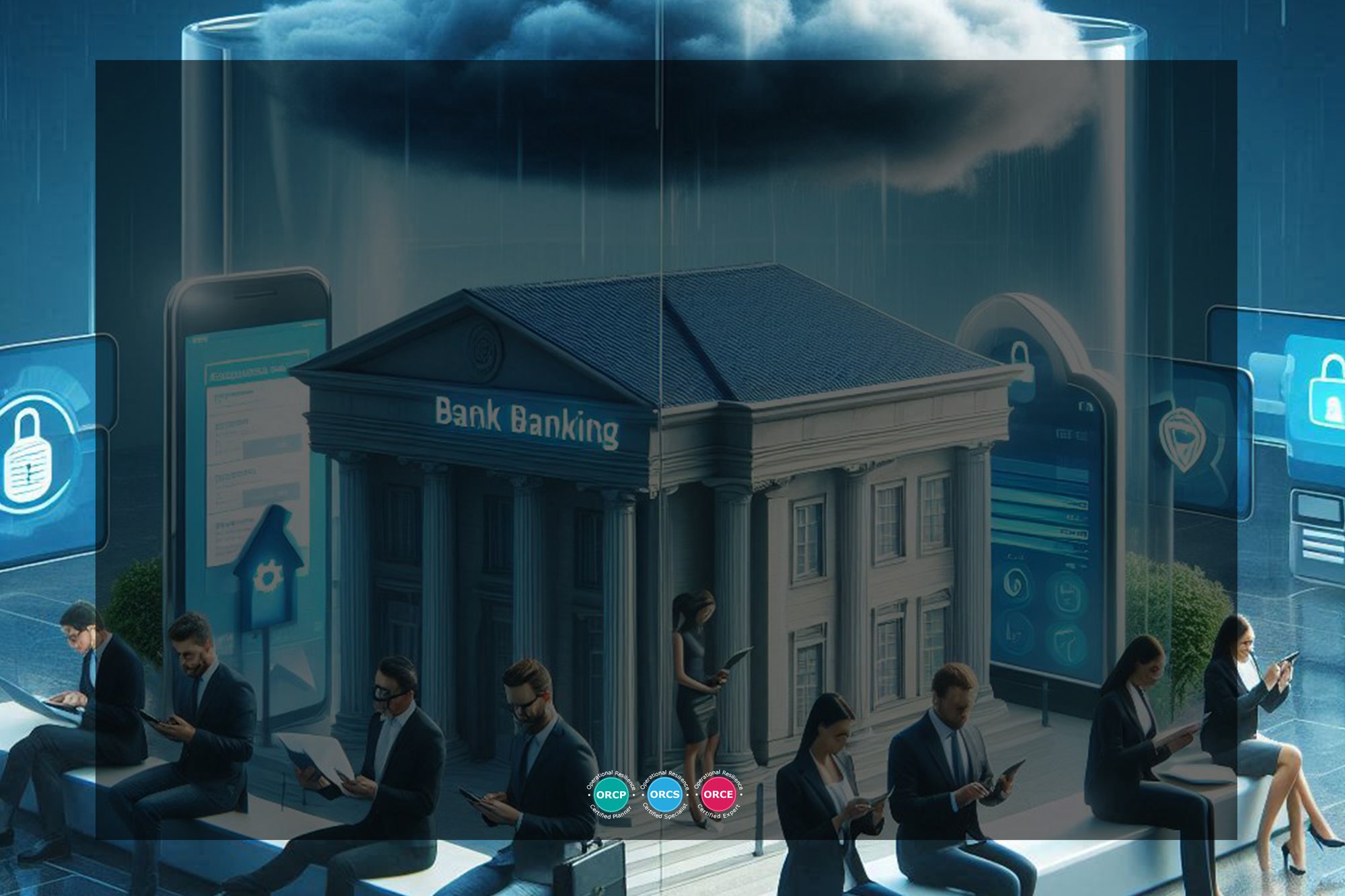
Among these, CBS-1 Deposit and Account Services represents a core banking function that directly supports customer trust, financial inclusion, and day-to-day liquidity access. Any disruption to this service can have immediate and far-reaching consequences for customers, counterparties, and the broader financial system.
In line with the expectations of BSP Circular No. 1203 Series of 2024, banks are required to move beyond high-level service identification and adopt a granular, end-to-end view of service delivery. This involves breaking down CBS into Sub-CBS (detailed processes) to better understand operational dependencies, interconnections, and potential points of failure.
Such granularity enables institutions to design targeted resilience strategies, establish impact tolerances, and conduct meaningful scenario testing across all components of the service.
Purpose of the Chapter
The purpose of this chapter is to provide a structured and detailed breakdown of CBS-1 Deposit and Account Services into its constituent Sub-CBS, enabling the reader to understand how this critical service operates at an operational level. By examining each process individually, the chapter equips stakeholders with the ability to identify dependencies across people, processes, technology, and third parties, as well as to assess vulnerabilities and resilience gaps.
This level of insight is essential for complying with regulatory expectations, particularly those outlined in BSP Circular No. 1203, and for ensuring that the bank can maintain service continuity under severe but plausible disruption scenarios.
Ultimately, the reader is expected to gain a clear understanding of how detailed process mapping supports the broader objectives of operational resilience planning, implementation, and continuous improvement.
In alignment with the operational resilience expectations set out in BSP Circular No. 1203 Series of 2024, the following table presents the detailed business processes (Sub-CBS) supporting the critical business service CBS-1 Deposit and Account Services. These processes reflect end-to-end service delivery and are structured to support mapping, impact tolerance setting, and scenario testing.
![Banner [Table] [OR] [E3] Detailed Processes](https://no-cache.hubspot.com/cta/default/3893111/3ecaed5c-33ef-4660-bbad-bdc9839aa08c.png)
Table P1: Detailed Processes for CBS-1
|
Sub-CBS Code |
Name of Sub-CBS |
Description of Sub-CBS |
|
1.1 |
Customer Onboarding and Account Application |
Captures customer information, product selection, and application submission through branch or digital channels. |
|
1.2 |
Customer Identification and Verification (KYC/CDD) |
Performs identity verification, due diligence, and sanctions screening in compliance with AML/CFT regulations. |
|
1.3 |
Account Approval and Opening |
Reviews the application, performs risk checks, and creates a customer account in the core banking system. |
|
1.4 |
Initial Funding and Deposit Booking |
Processes initial deposits, validates funds, and records transactions in the bank’s ledger. |
|
1.5 |
Product Terms Setup and Account Parameter Maintenance |
Configures account features such as interest rates, fees, limits, and conditions in banking systems. |
|
1.6 |
Deposit Transactions Processing |
Handles routine deposit activities, including cash, cheque, and electronic deposits. |
|
1.7 |
Withdrawal and Funds Access Processing |
Facilitates withdrawals via branches, ATMs, or digital platforms while ensuring authorization and limit control. |
|
1.8 |
Account Servicing and Customer Maintenance |
Updates customer records, manages account changes, and handles service requests. |
|
1.9 |
Interest, Fees, and Charges Processing |
Calculates and applies interest accruals, service fees, and penalties according to product rules. |
|
1.10 |
Statement, Passbook, and Balance Reporting |
Generates account statements, passbook updates, and provides balance inquiry services. |
|
1.11 |
Digital Account Access and Channel Integration |
Enables access via online banking, mobile apps, and integration with payment channels. |
|
1.12 |
ATM and Card-Based Access Management |
Issues and manages debit cards, PINs, and ATM access, including transaction authorization. |
|
1.13 |
Account Reconciliation and Exception Handling |
Performs daily reconciliation, identifies discrepancies, and resolves exceptions. |
|
1.14 |
Dormancy, Holds, Restrictions, and Account Control Administration |
Manages inactive accounts, applies regulatory holds, and enforces account restrictions. |
|
1.15 |
Fraud Monitoring and Transaction Surveillance for Deposit Accounts |
Monitors transactions for suspicious activity and triggers alerts or investigations. |
|
1.16 |
Complaints, Disputes, and Service Recovery |
Handles customer complaints, dispute resolution, and remediation actions. |
|
1.17 |
Regulatory Reporting and Compliance Monitoring |
Prepares reports required by regulators and ensures compliance with banking regulations. |
|
1.18 |
Incident Response, Business Continuity, and Recovery |
Activates response plans, ensures service continuity, and restores operations during disruptions. |
Regulatory Requirements and Examples (Philippines Context)
Under BSP Circular No. 1203 Series of 2024, Philippine banks such as the Development Bank of the Philippines are required to adopt a structured and proactive approach to operational resilience. The Sub-CBS identified above directly supports compliance with the following expectations:
1. Identification of Critical Business Services
- Banks must identify services whose disruption would cause intolerable harm to customers, financial stability, or market integrity.
- Example: Deposit and Account Services (CBS-1) is inherently critical as it underpins liquidity access and financial inclusion.
2. End-to-End Mapping of Dependencies
- Institutions must map people, processes, technology, facilities, and third parties supporting each Sub-CBS.
- Example:
- Sub-CBS 1.11 (Digital Account Access) depends on mobile banking platforms, telecom networks, and cybersecurity controls.
3. Establishment of Impact Tolerances
- Banks must define maximum tolerable downtime (MTD) and data loss thresholds for each service.
- Example:
- Sub-CBS 1.7 (Withdrawal Processing) may have near-zero tolerance for downtime due to customer reliance on cash access.
4. Scenario Testing and Severe but Plausible Events
- Banks are required to test resilience against disruptions such as cyberattacks, system outages, and third-party failures.
- Example:
- Sub-CBS 1.15 (Fraud Monitoring) must be tested against large-scale cyber fraud scenarios.
5. Governance and Continuous Improvement
- Senior management and the Board must oversee resilience strategies, ensuring regular review, testing, and improvement.
- Example:
- Sub-CBS 1.18 (Incident Response and Recovery) must be supported by board-approved business continuity and disaster recovery frameworks.
![Banner [Summing] [OR] [E3] Detailed Processes](https://no-cache.hubspot.com/cta/default/3893111/bce25519-5bf0-4302-aa7e-f4d565499b6d.png)
The detailed articulation of Sub-CBS for CBS-1 Deposit and Account Services provides the Development Bank of the Philippines with a comprehensive blueprint for operational resilience implementation. By breaking down the service into discrete, manageable components, the bank is better positioned to identify critical dependencies, assess operational risks, and implement targeted controls to mitigate disruptions.
Aligned with the principles of BSP Circular No. 1203 Series of 2024, this structured approach ensures that resilience is embedded not only at the strategic level but also within day-to-day operations. As the bank progresses to subsequent stages—such as dependency mapping, impact tolerance setting, and scenario testing—these Sub-CBS serve as the foundational building blocks for strengthening its ability to withstand, respond to, and recover from operational disruptions, thereby safeguarding customer confidence and financial system stability.

![[OR] [DBP] [PH] [E3] [CBS] [1] [MD] Deposit and Account Services](https://no-cache.hubspot.com/cta/default/3893111/bceb7b2a-c26c-4270-8d82-5615486acf98.png)
![[OR] [DBP] [PH] [E3] [CBS] [1] [MPR] Deposit and Account Services](https://no-cache.hubspot.com/cta/default/3893111/4031a3bc-6354-48f7-bd8f-a736a20245dd.png)
![[OR] [DBP] [PH] [E3] [CBS] [1] [ITo] Deposit and Account Services](https://no-cache.hubspot.com/cta/default/3893111/88965267-70ef-4f08-896a-3048a7c3d0ce.png)
![[OR] [DBP] [PH] [E3] [CBS] [1] [SuPS] Deposit and Account Services](https://no-cache.hubspot.com/cta/default/3893111/cc1f10b9-f670-407a-bfb3-926ecd110afd.png)
![[OR] [DBP] [PH] [E3] [CBS] [1] [ST] Deposit and Account Services](https://no-cache.hubspot.com/cta/default/3893111/42c86c66-5072-4f85-8ca2-6fd2f78f2357.png)
 Gain Competency: For organisations looking to accelerate their journey, BCM Institute’s training and certification programs, including the OR-5000 Operational Resilience Expert Implementer course, provide in-depth insights and practical toolkits for effectively embedding this model.
More Information About OR-5000 [OR-5] or OR-300 [OR-3]
To learn more about the course and schedule, click the buttons below for the OR-300 Operational Resilience Implementer course and the OR-5000 Operational Resilience Expert Implementer course.


![[BL-OR] [3-4-5] View Schedule](https://no-cache.hubspot.com/cta/default/3893111/d0d733a1-16c0-4b68-a26d-adbfd4fc6069.png)
![[BL-OR] [3] FAQ OR-300](https://no-cache.hubspot.com/cta/default/3893111/f20c71b4-f5e8-4aa5-8056-c374ca33a091.png)
![Email to Sales Team [BCM Institute]](https://no-cache.hubspot.com/cta/default/3893111/3c53daeb-2836-4843-b0e0-645baee2ab9e.png)