---
title: [OR] [CCB] [E3] [CBS] [2] [MD] Map Dependency
description: [OR] [CCB] [E3] [CBS] [2] [MD] Map Dependency
image: https://blog.bcm-institute.org/hubfs/eBook%20Generic%20Morepost/OR/OR%20GEN%20E3%20Morepost/%5BOR%5D%20%5BGEN%5D%20%5BE3%5D%20%5BCBS%5D%20%5BMD%5D%20Map%20Dependency.jpg
---
. .
[](http://www.bcm-institute.org/)
- [Home](https://www.bcm-institute.org/)
- [About Us](https://www.bcm-institute.org/about-us-3/)
- [A President’s Perspective](https://www.bcm-institute.org/about-us/a-presidents-perspective/)
- [Our History](https://www.bcm-institute.org/about-us/our-history/)
- [Our Advisory Council](https://www.bcm-institute.org/about-us/our-advisory-council/)
- [Customers’ Testimonials](https://www.bcm-institute.org/about-us/customers-testimonials/)
- [Credential Verification](https://www.bcm-institute.org/about-us/credential-verification/)
- [Courses](https://blog.bcm-institute.org/blog/course-fees-for-blended-learning-courses-master-catalog)
- [ISO 22301 Business Continuity Management System Audit](https://blog.bcm-institute.org/audit/business-continuity-management-audit-courses)
- [ISO 22301 Business Continuity Management](https://blog.bcm-institute.org/bcm/business-continuity-management-courses)
- [Crisis Communication](https://blog.bcm-institute.org/crisis-communication/crisis-communication-courses)
- [Crisis Management](https://blog.bcm-institute.org/en/crisis-management/courses)
- [IT Disaster Recovery](https://blog.bcm-institute.org/it-disaster-recovery/courses)
- [Operational Resilience](https://blog.bcm-institute.org/operational-resilience/courses)
- [Operational Resilience Audit](https://blog.bcm-institute.org/operational-resilience-audit/courses)
- [Certification](https://blog.bcm-institute.org/certification/types-of-certifications-offered)
- [ISO 22301 BCMS Audit Certification](https://blog.bcm-institute.org/certification/business-continuity-management-audit-certification)
- [ISO22301 Business Continuity Management Certification](https://blog.bcm-institute.org/bcm/business-continuity-management-certification)
- [Crisis Communication Certification](https://blog.bcm-institute.org/crisis-communication/crisis-communication-certification)
- [Crisis Management Certification](https://blog.bcm-institute.org/en/crisis-management/crisis-management-certification)
- [IT Disaster Recovery Planning Certification](https://blog.bcm-institute.org/it-disaster-recovery/it-disaster-recovery-certification)
- [Operational Resilience Certification](https://blog.bcm-institute.org/operational-resilience/operational-resilience-certification)
- [Operational Resilience Audit Certification](https://blog.bcm-institute.org/operational-resilience-audit)
- [Seminars](https://blog.bcm-institute.org/meet-the-expert/mte-webinar-mainpage)
- [Store](https://www.bcm-institute.org/store-2/)
- [Contact Us](http://www.bcm-institute.org/about-us/contact-us/)
-
-
###### Building a Resilient Banking Institution: Operational Resilience Implementation at China Construction Bank (Malaysia)
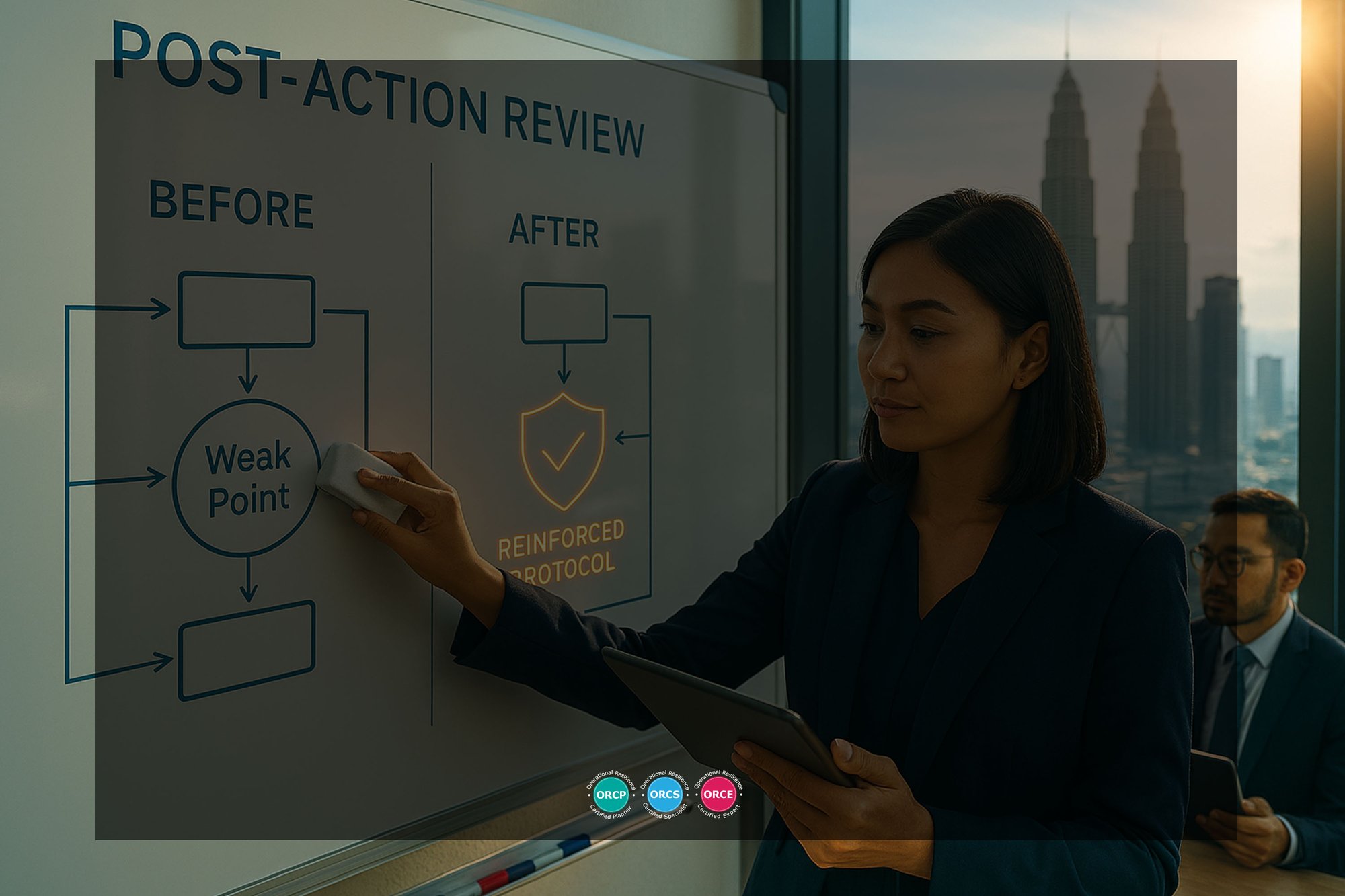
# \[OR\] \[CCB\] \[E3\] \[CBS\] \[2\] \[MD\] Map Dependency
[](https://cta-redirect.hubspot.com/cta/redirect/3893111/94e06422-4ab9-4bfe-94bd-545de5200261)
Operational resilience requires financial institutions to clearly understand how their critical business services (CBS) are supported by interconnected people, processes, technology, and third parties.
For CBS-2 Payments & Funds Transfer Services, dependency mapping provides visibility over the operational backbone that enables seamless domestic and cross-border fund movements.
By applying the principles outlined in the BCM Institute’s guidance on mapping interconnections and interdependencies, China Construction Bank (Malaysia) Berhad (CCB Malaysia) can identify concentration risks, single points of failure, upstream/downstream dependencies, and systemic vulnerabilities across its payment ecosystem.
### [](https://cta-redirect.hubspot.com/cta/redirect/3893111/677f466a-109d-4603-b6e8-82e42e2f6e0b)
[Moh Heng Goh](https://blog.bcm-institute.org/ebook-or/author/moh-heng-goh) Mar 12, 2026
###### Operational Resilience Certified Planner-Specialist-Expert
### [![\[OR\] \[CCB\] Legal Disclaimer Banner](https://no-cache.hubspot.com/cta/default/3893111/6b0c36e9-6fb9-4705-a42a-089010976426.png)](https://cta-redirect.hubspot.com/cta/redirect/3893111/6b0c36e9-6fb9-4705-a42a-089010976426)
### [](https://cta-redirect.hubspot.com/cta/redirect/3893111/677f466a-109d-4603-b6e8-82e42e2f6e0b)CBS-2 Payments & Funds Transfer Services
#### Introduction
[![\[OR\] \[CCB\] \[E3\] \[CBS\] \[2\] \[MD\] Map Dependency](https://no-cache.hubspot.com/cta/default/3893111/da942e74-1023-4795-be5b-7fdd6a6f7cc9.png)](https://cta-redirect.hubspot.com/cta/redirect/3893111/da942e74-1023-4795-be5b-7fdd6a6f7cc9)
Operational resilience requires financial institutions to clearly understand how their **critical business services (CBS)** are supported by interconnected people, processes, technology, and third parties.
For CBS-2 Payments & Funds Transfer Services, dependency mapping provides visibility over the operational backbone that enables seamless domestic and cross-border fund movements.
By applying the principles outlined in the BCM Institute’s guidance on mapping interconnections and interdependencies, China Construction Bank (Malaysia) Berhad (CCB Malaysia) can identify concentration risks, single points of failure, upstream/downstream dependencies, and systemic vulnerabilities across its payment ecosystem.
This chapter maps the detailed dependencies of CBS-2, covering account transfers, real-time payments, remittances, corporate e-banking interfaces, and QR-enabled digital channels. The mapping highlights how internal operational units, core banking systems, payment gateways, regulatory interfaces, and external infrastructures integrate to deliver resilient payment services aligned with regulatory expectations.
[![Banner \[Table\] \[OR\] \[E3\] Map Dependency](https://no-cache.hubspot.com/cta/default/3893111/8a44ad9d-681b-48ff-90b1-b994a1c12a64.png)](https://cta-redirect.hubspot.com/cta/redirect/3893111/8a44ad9d-681b-48ff-90b1-b994a1c12a64)
###### Table P2: Detailed Processes for CBS-2
| Sub-CBS Code | Sub-CBS | Dependency Type | Dependency Detail (What/Who is involved) | Connectivity (How it connects/interacts) |
| --- | --- | --- | --- | --- |
| 2.1 | Account-to-Account Transfers | People | Retail Operations Team, Branch Operations Staff, Treasury Operations | Initiates, verifies, authorises, and monitors transfers within customer accounts |
| | | Process | Funds transfer validation, AML screening, transaction posting, and reconciliation | Links customer instruction → AML screening → Core Banking posting → GL update |
| | | Technology | Core Banking System (CBS), AML system, Payment engine, SWIFT gateway | CBS processes debit/credit entries; AML screens transactions; SWIFT handles interbank messages |
| | | Third Party | SWIFT, Domestic clearing houses | Enables interbank settlement and message exchange |
| 2.2 | Real-Time & Instructional Payments | People | Digital Banking Team, IT Operations, Payment Operations | Oversees real-time monitoring and exception handling |
| | | Process | Real-time payment validation, liquidity checks, and fraud monitoring | Integrates fraud engine → liquidity management → instant settlement |
| | | Technology | Real-Time Payment Switch, Fraud Detection System, Core Banking | Connects customer digital channels to the national instant payment infrastructure |
| | | Third Party | PayNet | Provides DuitNow/Instant Transfer infrastructure connectivity |
| 2.3 | Bill Payment & Provider Settlement | People | Corporate Banking Ops, Finance & Settlement Team | Manages settlement with billers and service providers |
| | | Process | Bill aggregation, file validation, and settlement batching | Receives biller files → validates → posts to CBS → settlement via clearing |
| | | Technology | Bill Payment Gateway, API Middleware, Core Banking | API connects billers to bank systems; CBS executes settlement |
| | | Third Party | Utility Providers, Telcos, Government agencies | Receive settlement funds and remittance advice |
| 2.4 | Cross-Border Remittances | People | Remittance Operations, Compliance & Sanctions Team, Treasury | Oversees FX conversion, sanctions checks, and correspondent coordination |
| | | Process | FX pricing, Sanctions screening, Nostro reconciliation | Transaction passes FX engine → sanctions filter → SWIFT transmission |
| | | Technology | SWIFT Alliance, FX Trading Platform, Core Banking | Enables cross-border messaging, FX conversion, and settlement |
| | | Third Party | Correspondent Banks, SWIFT | Facilitates overseas clearing and settlement |
| 2.5 | Batch & Bulk Payments | People | Corporate Operations Team, File Processing Unit | Validates payroll/bulk files before execution |
| | | Process | File upload validation, limit checking, batch settlement | Corporate file → validation engine → CBS batch posting |
| | | Technology | Corporate e-Banking Portal, Batch Processing Engine, Database servers | Portal receives files; engine processes high-volume transactions |
| | | Third Party | Corporate Clients (Payroll processors), Clearing Houses | External payroll systems integrate via secure upload/API |
| 2.6 | Corporate e-Banking Payments Interface | People | Relationship Managers, IT Application Support, Cybersecurity Team | Ensures client onboarding, system uptime, and cyber monitoring |
| | | Process | User authentication, transaction approval workflow, and audit logging | Multi-level approval flows integrated with core banking |
| | | Technology | Corporate Internet Banking Platform, IAM system, Firewall, API Gateway | Secures and routes transactions from corporate clients to CBS |
| | | Third Party | Cloud hosting providers (if applicable), Cybersecurity vendors | Provide infrastructure resilience and threat detection |
| 2.7 | QR Payment & Digital Channels | People | Digital Product Team, Mobile App Support, Fraud Monitoring Team | Monitors QR transactions and fraud alerts |
| | | Process | QR generation, payment routing, and merchant settlement | QR scan → payment switch → merchant settlement |
| | | Technology | Mobile Banking App, QR Payment Engine, API Gateway | Connects mobile users to an instant payment infrastructure |
| | | Third Party | PayNet, Merchants | Facilitates DuitNow QR and merchant fund settlement |
##### **Key Interconnection Themes Across CBS-2**
- **Core Banking System as Central Node**
All sub-CBS components ultimately depend on the Core Banking System for posting, ledger updates, and balance integrity — representing a critical concentration risk.
- **National Payment Infrastructure Dependency**
Real-time and QR services rely heavily on Malaysia’s national payment rails (PayNet), creating external systemic interdependencies.
- **Cross-Border Messaging Concentration**
SWIFT dependency introduces geopolitical, cyber, and network availability risks affecting remittance services.
- **Cyber & ICT Risk Integration**
Digital interfaces (corporate e-banking and QR channels) increase exposure to:
- **Liquidity & Treasury Interdependency**
Real-time payments and remittances depend on treasury liquidity buffers and nostro account balances.
[![Banner \[Summing\] \[OR\] \[E3\] Map Dependency](https://no-cache.hubspot.com/cta/default/3893111/d9c4296b-54cd-48e0-ae66-b7f4a8a03ff7.png)](https://cta-redirect.hubspot.com/cta/redirect/3893111/d9c4296b-54cd-48e0-ae66-b7f4a8a03ff7)
Mapping dependencies for CBS-2 Payments & Funds Transfer Services enables China Construction Bank (Malaysia) Berhad to gain a structured and transparent view of how payment services are delivered and sustained under both normal and stressed conditions.
By identifying the interconnections between people, operational processes, enabling technologies, and critical third-party infrastructures, the bank can proactively manage single points of failure, concentration risks, and systemic exposures.
This dependency mapping strengthens operational resilience by supporting impact tolerance setting, scenario testing, third-party risk oversight, and ICT risk integration. Ultimately, a well-documented dependency framework ensures that payment services — which are core to customer trust and financial system stability — remain available, secure, and recoverable within acceptable disruption thresholds.
| Building a Resilient Banking Institution: Operational Resilience Implementation at China Construction Bank (Malaysia) | | | | | | | | | | |
| --- | --- | --- | --- | --- | --- | --- | --- | --- | --- | --- |
| **eBook 3: Starting Your OR Implementation** | | | | | | | | | | |
| **CBS-2 Payments & Funds Transfer Services** | | | | | | | | | | |
| **CBS-2 DP** | **CBS-2 MD** | **CBS-2 MPR** | **CBS-2 ITo** | **CBS-2 SuPS** | ** CBS-2 ST ** | **eBook 2** | | | | |
| [](https://cta-redirect.hubspot.com/cta/redirect/3893111/21e83d5a-5a06-41a6-b8af-a2401034af49) | [![\[OR\] \[CCB\] \[E3\] \[CBS\] \[2\] \[MD\] Map Dependency](https://no-cache.hubspot.com/cta/default/3893111/da942e74-1023-4795-be5b-7fdd6a6f7cc9.png)](https://cta-redirect.hubspot.com/cta/redirect/3893111/da942e74-1023-4795-be5b-7fdd6a6f7cc9) | [![\[OR\] \[CCB\] \[E3\] \[CBS\] \[2\] \[MPR\] Map Processes and Resources](https://no-cache.hubspot.com/cta/default/3893111/a106c656-951f-4914-a7d4-112942258094.png)](https://cta-redirect.hubspot.com/cta/redirect/3893111/a106c656-951f-4914-a7d4-112942258094) | [![\[OR\] \[CCB\] \[E3\] \[CBS\] \[2\] \[ITo\] Establish Impact Tolerances](https://no-cache.hubspot.com/cta/default/3893111/4185dac6-4c22-44da-befc-5de4fddc02b4.png)](https://cta-redirect.hubspot.com/cta/redirect/3893111/4185dac6-4c22-44da-befc-5de4fddc02b4) | [![\[OR\] \[CCB\] \[E3\] \[CBS\] \[2\] \[SuPS\] Identify Severe but Plausible Scenarios](https://no-cache.hubspot.com/cta/default/3893111/c4c51f50-d65e-4de5-ae0f-84eef5617733.png)](https://cta-redirect.hubspot.com/cta/redirect/3893111/c4c51f50-d65e-4de5-ae0f-84eef5617733) | [![\[OR\] \[CCB\] \[E3\] \[CBS\] \[2\] \[ST\] Perform Scenario Testing](https://no-cache.hubspot.com/cta/default/3893111/a77d4c6b-6562-4930-a6d7-0540c23377ec.png)](https://cta-redirect.hubspot.com/cta/redirect/3893111/a77d4c6b-6562-4930-a6d7-0540c23377ec) | [![eBook Cover \[OR\] \[CCB\] \[E2\] \[2D\]](https://no-cache.hubspot.com/cta/default/3893111/9b21eac0-621d-41c1-a95b-81665c719a89.png)](https://cta-redirect.hubspot.com/cta/redirect/3893111/9b21eac0-621d-41c1-a95b-81665c719a89) | | | | [](https://cta-redirect.hubspot.com/cta/redirect/3893111/0fd66f64-f7a8-4c65-a54b-9c56982c138c) |
[](https://cta-redirect.hubspot.com/cta/redirect/3893111/084e620a-46c5-419a-82ed-6a681d15c0b6)[](https://cta-redirect.hubspot.com/cta/redirect/3893111/13a448f1-f09c-42da-a57e-0988e41658c5)Gain Competency: For organisations looking to accelerate their journey, BCM Institute’s training and certification programs, including the OR-5000 Operational Resilience Expert Implementer course, provide in-depth insights and practical toolkits for effectively embedding this model.
#### More Information About OR-5000 \[OR-5\] or OR-300 \[OR-3\]
To learn more about the course and schedule, click the buttons below for the OR-300 Operational Resilience Implementer course and the OR-5000 Operational Resilience Expert Implementer course.
| [](https://cta-redirect.hubspot.com/cta/redirect/3893111/3530eccb-515d-401e-afc2-3469e26d7fbf) | [](https://cta-redirect.hubspot.com/cta/redirect/3893111/fdd4fa9c-ed69-40c1-925f-4eb6a1c5c255) | [](https://cta-redirect.hubspot.com/cta/redirect/3893111/77a34b84-0a6d-44f8-b8d6-6ab04cdf5edd) |
| --- | --- | --- |
| [](https://cta-redirect.hubspot.com/cta/redirect/3893111/6e5c0cda-39b9-4bbd-b3d4-4cf46a790b14) | [](https://cta-redirect.hubspot.com/cta/redirect/3893111/a68a08aa-36d3-4216-9551-202c9fde06ea) | [![ \[BL-OR\] \[3-4-5\] View Schedule](https://no-cache.hubspot.com/cta/default/3893111/d0d733a1-16c0-4b68-a26d-adbfd4fc6069.png)](https://cta-redirect.hubspot.com/cta/redirect/3893111/d0d733a1-16c0-4b68-a26d-adbfd4fc6069) |
| [![\[BL-OR\] \[3\] FAQ OR-300](https://no-cache.hubspot.com/cta/default/3893111/f20c71b4-f5e8-4aa5-8056-c374ca33a091.png)](https://cta-redirect.hubspot.com/cta/redirect/3893111/f20c71b4-f5e8-4aa5-8056-c374ca33a091) | If you have any questions, click to contact us.[![Email to Sales Team \[BCM Institute\]](https://no-cache.hubspot.com/cta/default/3893111/3c53daeb-2836-4843-b0e0-645baee2ab9e.png)](https://cta-redirect.hubspot.com/cta/redirect/3893111/3c53daeb-2836-4843-b0e0-645baee2ab9e) | [](https://cta-redirect.hubspot.com/cta/redirect/3893111/7f2718a4-ea80-4f84-a319-dc2d4df37a46) |
| [](https://cta-redirect.hubspot.com/cta/redirect/3893111/74b1e556-8cd2-4a74-8821-db1804534955) | [](https://cta-redirect.hubspot.com/cta/redirect/3893111/f2bd8eb1-32d2-4732-9267-ea53223cf58f) | [](https://cta-redirect.hubspot.com/cta/redirect/3893111/084e620a-46c5-419a-82ed-6a681d15c0b6) |
#### **Comments:**

---

---

---

---


All rights reserved. Copyright 2026
```json
{
"@context" : "https://schema.org",
"@type" : "BlogPosting",
"author" : {
"@type" : "Person",
"name" : "Moh Heng Goh",
"url" : "https://blog.bcm-institute.org/ebook-or/author/moh-heng-goh"
},
"dateModified" : "2026-03-12T04:11:40.938Z",
"datePublished" : "2026-03-12T04:11:40.000Z",
"headline" : "[OR] [CCB] [E3] [CBS] [2] [MD] Map Dependency",
"mainEntityOfPage" : {
"@id" : "https://blog.bcm-institute.org/ebook-or/or-ccb-e3-cbs-2-md-map-dependency",
"@type" : "WebPage"
},
"publisher" : {
"@type" : "Organization",
"logo" : {
"@type" : "ImageObject",
"url" : "https://blog.bcm-institute.org/hubfs/BCMI%20Logo.png"
},
"name" : "BCMI Pte Ltd"
}
}
```