---
title: [OR] [CCB] [E3] [CBS] [1] [ITo] Establish Impact Tolerances
description: [OR] [CCB] [E3] [CBS] [1] [ITo] Establish Impact Tolerances
image: https://blog.bcm-institute.org/hubfs/eBook%20Generic%20Morepost/OR/OR%20GEN%20E3%20Morepost/%5BOR%5D%20%5BGEN%5D%20%5BE3%5D%20%5BCBS%5D%20%5BITo%5D%20Establish%20Impact%20Tolerances.jpg
---
. .
[](http://www.bcm-institute.org/)
- [Home](https://www.bcm-institute.org/)
- [About Us](https://www.bcm-institute.org/about-us-3/)
- [A President’s Perspective](https://www.bcm-institute.org/about-us/a-presidents-perspective/)
- [Our History](https://www.bcm-institute.org/about-us/our-history/)
- [Our Advisory Council](https://www.bcm-institute.org/about-us/our-advisory-council/)
- [Customers’ Testimonials](https://www.bcm-institute.org/about-us/customers-testimonials/)
- [Credential Verification](https://www.bcm-institute.org/about-us/credential-verification/)
- [Courses](https://blog.bcm-institute.org/blog/course-fees-for-blended-learning-courses-master-catalog)
- [ISO 22301 Business Continuity Management System Audit](https://blog.bcm-institute.org/audit/business-continuity-management-audit-courses)
- [ISO 22301 Business Continuity Management](https://blog.bcm-institute.org/bcm/business-continuity-management-courses)
- [Crisis Communication](https://blog.bcm-institute.org/crisis-communication/crisis-communication-courses)
- [Crisis Management](https://blog.bcm-institute.org/en/crisis-management/courses)
- [IT Disaster Recovery](https://blog.bcm-institute.org/it-disaster-recovery/courses)
- [Operational Resilience](https://blog.bcm-institute.org/operational-resilience/courses)
- [Operational Resilience Audit](https://blog.bcm-institute.org/operational-resilience-audit/courses)
- [Certification](https://blog.bcm-institute.org/certification/types-of-certifications-offered)
- [ISO 22301 BCMS Audit Certification](https://blog.bcm-institute.org/certification/business-continuity-management-audit-certification)
- [ISO22301 Business Continuity Management Certification](https://blog.bcm-institute.org/bcm/business-continuity-management-certification)
- [Crisis Communication Certification](https://blog.bcm-institute.org/crisis-communication/crisis-communication-certification)
- [Crisis Management Certification](https://blog.bcm-institute.org/en/crisis-management/crisis-management-certification)
- [IT Disaster Recovery Planning Certification](https://blog.bcm-institute.org/it-disaster-recovery/it-disaster-recovery-certification)
- [Operational Resilience Certification](https://blog.bcm-institute.org/operational-resilience/operational-resilience-certification)
- [Operational Resilience Audit Certification](https://blog.bcm-institute.org/operational-resilience-audit)
- [Seminars](https://blog.bcm-institute.org/meet-the-expert/mte-webinar-mainpage)
- [Store](https://www.bcm-institute.org/store-2/)
- [Contact Us](http://www.bcm-institute.org/about-us/contact-us/)
-
-
###### Building a Resilient Banking Institution: Operational Resilience Implementation at China Construction Bank (Malaysia)
# \[OR\] \[CCB\] \[E3\] \[CBS\] \[1\] \[ITo\] Establish Impact Tolerances
[](https://cta-redirect.hubspot.com/cta/redirect/3893111/94e06422-4ab9-4bfe-94bd-545de5200261)
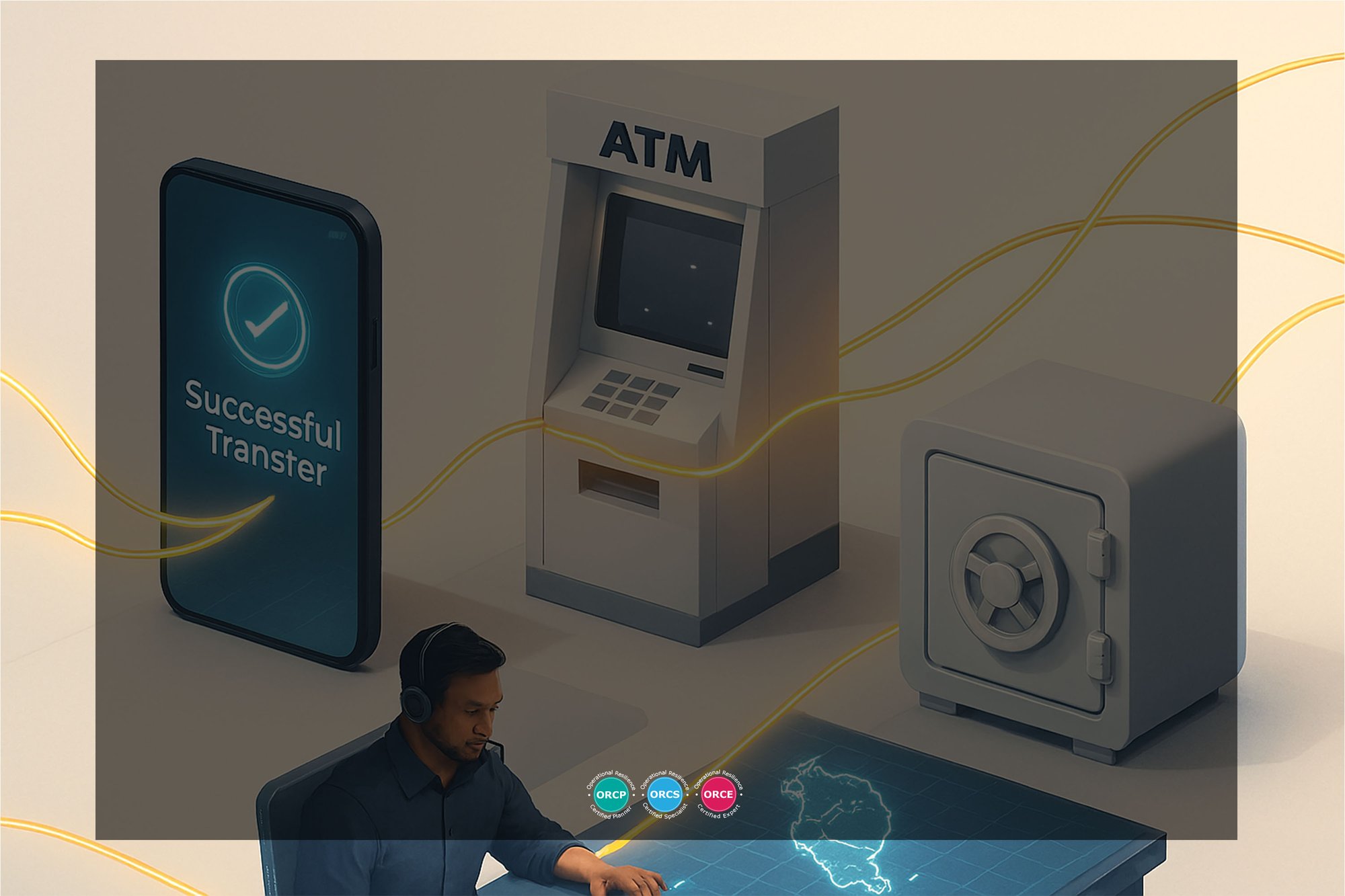
Operational resilience requires China Construction Bank (Malaysia) Berhad (CCB Malaysia) to identify its Critical Business Services (CBS) and define **impact tolerances**—the maximum level of disruption to a service that the bank can tolerate before causing intolerable harm to customers, market integrity, financial stability, or breaching regulatory obligations.
For **CBS-1: Core Deposit & Account Services**, the bank provides fundamental banking functions, including account opening, deposit maintenance, transaction processing, payments, and foreign currency deposit services.
These services underpin customer confidence, liquidity management, and daily banking operations.
### [](https://cta-redirect.hubspot.com/cta/redirect/3893111/0430108a-ef49-43aa-ac7d-ee6bb474eba8)
[Moh Heng Goh](https://blog.bcm-institute.org/ebook-or/author/moh-heng-goh) Mar 12, 2026
###### Operational Resilience Certified Planner-Specialist-Expert
### [![\[OR\] \[CCB\] Legal Disclaimer Banner](https://no-cache.hubspot.com/cta/default/3893111/6b0c36e9-6fb9-4705-a42a-089010976426.png)](https://cta-redirect.hubspot.com/cta/redirect/3893111/6b0c36e9-6fb9-4705-a42a-089010976426)
### [](https://cta-redirect.hubspot.com/cta/redirect/3893111/0430108a-ef49-43aa-ac7d-ee6bb474eba8)
### CBS-1 Core Deposit & Account Services
#### Introduction
[![\[OR\] \[CCB\] \[E3\] \[CBS\] \[1\] \[ITo\] Establish Impact Tolerances](https://no-cache.hubspot.com/cta/default/3893111/031102ef-eb14-442d-822e-f4779c89cd15.png)](https://cta-redirect.hubspot.com/cta/redirect/3893111/031102ef-eb14-442d-822e-f4779c89cd15)Operational resilience requires China Construction Bank (Malaysia) Berhad (CCB Malaysia) to identify its Critical Business Services (CBS) and define **impact tolerances**—the maximum level of disruption to a service that the bank can tolerate before causing intolerable harm to customers, market integrity, financial stability, or breaching regulatory obligations.
For **CBS-1: Core Deposit & Account Services**, the bank provides fundamental banking functions, including account opening, deposit maintenance, transaction processing, payments, and foreign currency deposit services.
These services underpin customer confidence, liquidity management, and daily banking operations.
[](https://cta-redirect.hubspot.com/cta/redirect/3893111/bbca4643-69de-4387-b2fe-f7e363f08101)[](https://cta-redirect.hubspot.com/cta/redirect/3893111/9598c70d-42e4-4fa5-8837-526f2c5dc74b)In line with regulatory expectations on operational resilience (as outlined in Bank Negara Malaysia’s Operational Resilience policy and global best practices), impact tolerances are defined using measurable metrics such as:
- **Maximum Tolerable Downtime (MTD)** – Maximum duration a service can be disrupted.
- **Maximum Tolerable Data Loss (MTDL)** – Maximum acceptable data loss measured in time (e.g., Recovery Point Objective).**Customer Impact Thresholds** – Number or segment of customers affected and financial exposure.
- **Regulatory Impact Thresholds** – Risk of regulatory breach, non-compliance, or supervisory intervention.
The following table summarises the proposed impact tolerances for each Sub-CBS under CBS-1.
[![Banner \[Table\] \[OR\] \[E3\] Establish Impact Tolerance](https://no-cache.hubspot.com/cta/default/3893111/627c33a8-714d-40af-9a2b-0d7957fb8afa.png)](https://cta-redirect.hubspot.com/cta/redirect/3893111/627c33a8-714d-40af-9a2b-0d7957fb8afa)
###### Table P4: Detailed Processes for CBS-1
| Sub-CBS Code | Sub-CBS | Maximum Tolerable Downtime (MTD) | Maximum Tolerable Data Loss (MTDL) | Customer Impact | Regulatory Impact | Impact Type | Current Resilience Status | Action Required |
| --- | --- | --- | --- | --- | --- | --- | --- | --- |
| 1.1 | Account Opening & Onboarding | 8 hours (within business day) | ≤ 30 minutes | Delayed onboarding, reputational impact, and potential loss of new customers | Delay in fulfilling KYC/CDD obligations | Customer / Regulatory | Moderate – Manual fallback available | Enhance digital onboarding redundancy; improve system failover |
| 1.2 | Deposit Maintenance & Account Administration | 4 hours | ≤ 15 minutes | Customers are unable to update account details; service dissatisfaction | Risk of inaccurate records breaching regulatory reporting | Customer / Compliance | Strong – Core system redundancy in place | Periodic resilience testing & reconciliation checks |
| 1.3 | Deposit Transactions Processing | 2 hours | ≤ 5 minutes | Customers unable to access funds; liquidity stress; high complaint risk | Breach of payment settlement obligations; supervisory scrutiny | Financial / Systemic | Moderate – DR site active, limited live failover testing | Increase frequency of DR simulation and real-time replication |
| 1.4 | Interest & Charges Calculation & Posting | 24 hours (end-of-day batch critical) | ≤ 1 hour | Incorrect interest accrual; financial disputes | Financial reporting inaccuracies; audit findings | Financial / Regulatory | Moderate – Batch backup available | Strengthen automated reconciliation and dual validation |
| 1.5 | Account Inquiry & Statement Services | 6 hours | ≤ 30 minutes | Customers unable to view balances; reputational impact | Potential transparency concerns | Customer / Reputational | Strong – Multi-channel access (branch, RM support) | Improve mobile/online redundancy |
| 1.6 | Transfer & Payment Execution | 1 hour | ≤ 5 minutes | Payment failures; customer financial distress; corporate liquidity risk | Breach of payment network rules; regulatory penalties | Financial / Systemic | Moderate – High availability design, needs stress testing | Implement active-active architecture; enhance monitoring |
| 1.7 | Foreign Currency Deposit Services | 4 hours | ≤ 15 minutes | FX settlement delays; corporate client impact | Exposure to market risk and cross-border compliance breach | Financial / Regulatory | Moderate | Improve FX system integration and real-time backup |
| 1.8 | Account Closure & Dormancy Management | 2 business days | ≤ 1 hour | Delay in releasing funds; customer dissatisfaction | AML/CFT compliance risk if dormancy controls fail | Compliance / Reputational | Moderate – Manual workaround available | Automate dormancy triggers and monitoring alerts |
##### **Key Observations**
- **Highest Criticality Sub-CBS:**
- *1.6 Transfer & Payment Execution*
- *1.3 Deposit Transactions Processing*
These services have the shortest MTD (1–2 hours) due to immediate liquidity and systemic implications.
- **Regulatory Sensitivity Areas:**
- Account Opening (KYC/CDD compliance)
- Dormancy Management (AML/CFT monitoring)
- Payment Execution (Settlement obligations)
- **Data Integrity Importance:**
Core transactional services require near-zero data loss (≤ 5 minutes), aligning with stringent Recovery Point Objectives (RPO).
[![Banner \[Summing\] \[OR\] \[E3\] Establish Impact Tolerance](https://no-cache.hubspot.com/cta/default/3893111/5e80e50f-5e3e-44ea-8c43-16bf42d4f3b5.png)](https://cta-redirect.hubspot.com/cta/redirect/3893111/5e80e50f-5e3e-44ea-8c43-16bf42d4f3b5)
Establishing impact tolerances for **CBS-1: Core Deposit & Account Services** enables China Construction Bank (Malaysia) Berhad to define clear disruption thresholds and align resilience capabilities with regulatory expectations and customer protection objectives.
The defined tolerances reflect:
- The **criticality of deposit and payment services** to customers and financial stability
- The **regulatory obligations** imposed by Bank Negara Malaysia and international banking standards
- The need for **measurable, time-bound recovery objectives**
- The importance of balancing operational cost with systemic risk exposure
By formalising these tolerances, CCB Malaysia strengthens its operational resilience framework, ensures proactive investment in system redundancy and disaster recovery capabilities, and enhances its ability to prevent, adapt to, respond to, and recover from severe but plausible disruptions.
Ultimately, clear impact tolerances provide a structured benchmark against which the bank can continuously test, monitor, and improve resilience—ensuring sustained delivery of critical banking services even under adverse conditions.
| Building a Resilient Banking Institution: Operational Resilience Implementation at China Construction Bank (Malaysia) | | | | | | | | | | |
| --- | --- | --- | --- | --- | --- | --- | --- | --- | --- | --- |
| **eBook 3: Starting Your OR Implementation** | | | | | | | | | | |
| **CBS-1 Core Deposit & Account Services** | | | | | | | | | | |
| **CBS-1 DP** | **CBS-1 MD** | **CBS-1 MPR** | **CBS-1 ITo** | **CBS-1 SuPS** | ** CBS-1 ST ** | **eBook 2** | | | | |
| [![\[OR\] \[CCB\] \[E3\] \[CBS\] \[1\] \[DP\] Core Deposit & Account Services](https://no-cache.hubspot.com/cta/default/3893111/70b3123a-bbfb-4846-abc4-03afd7ed6295.png)](https://cta-redirect.hubspot.com/cta/redirect/3893111/70b3123a-bbfb-4846-abc4-03afd7ed6295) | [![\[OR\] \[CCB\] \[E3\] \[CBS\] \[1\] \[MD\] Map Dependency](https://no-cache.hubspot.com/cta/default/3893111/7783bc34-2caf-41dd-8a79-f49495b3fa7c.png)](https://cta-redirect.hubspot.com/cta/redirect/3893111/7783bc34-2caf-41dd-8a79-f49495b3fa7c) | [![\[OR\] \[CCB\] \[E3\] \[CBS\] \[1\] \[MPR\] Map Processes and Resources](https://no-cache.hubspot.com/cta/default/3893111/33402972-1850-4473-8b4e-941bff695fb6.png)](https://cta-redirect.hubspot.com/cta/redirect/3893111/33402972-1850-4473-8b4e-941bff695fb6) | [![\[OR\] \[CCB\] \[E3\] \[CBS\] \[1\] \[ITo\] Establish Impact Tolerances](https://no-cache.hubspot.com/cta/default/3893111/031102ef-eb14-442d-822e-f4779c89cd15.png)](https://cta-redirect.hubspot.com/cta/redirect/3893111/031102ef-eb14-442d-822e-f4779c89cd15) | [![\[OR\] \[CCB\] \[E3\] \[CBS\] \[1\] \[SuPS\] Identify Severe but Plausible Scenarios](https://no-cache.hubspot.com/cta/default/3893111/b42bebcb-9b67-4235-a6be-d107512cf0de.png)](https://cta-redirect.hubspot.com/cta/redirect/3893111/b42bebcb-9b67-4235-a6be-d107512cf0de) | [![\[OR\] \[CCB\] \[E3\] \[CBS\] \[1\] \[ST\] Perform Scenario Testing](https://no-cache.hubspot.com/cta/default/3893111/7ce11b80-4ff1-48c5-8b98-d245d2b2558f.png)](https://cta-redirect.hubspot.com/cta/redirect/3893111/7ce11b80-4ff1-48c5-8b98-d245d2b2558f) | [![eBook Cover \[OR\] \[CCB\] \[E2\] \[2D\]](https://no-cache.hubspot.com/cta/default/3893111/9b21eac0-621d-41c1-a95b-81665c719a89.png)](https://cta-redirect.hubspot.com/cta/redirect/3893111/9b21eac0-621d-41c1-a95b-81665c719a89) | | | | [](https://cta-redirect.hubspot.com/cta/redirect/3893111/0fd66f64-f7a8-4c65-a54b-9c56982c138c) |
[](https://cta-redirect.hubspot.com/cta/redirect/3893111/084e620a-46c5-419a-82ed-6a681d15c0b6)[](https://cta-redirect.hubspot.com/cta/redirect/3893111/13a448f1-f09c-42da-a57e-0988e41658c5)Gain Competency: For organisations looking to accelerate their journey, BCM Institute’s training and certification programs, including the OR-5000 Operational Resilience Expert Implementer course, provide in-depth insights and practical toolkits for effectively embedding this model.
#### More Information About OR-5000 \[OR-5\] or OR-300 \[OR-3\]
To learn more about the course and schedule, click the buttons below for the OR-300 Operational Resilience Implementer course and the OR-5000 Operational Resilience Expert Implementer course.
| [](https://cta-redirect.hubspot.com/cta/redirect/3893111/3530eccb-515d-401e-afc2-3469e26d7fbf) | [](https://cta-redirect.hubspot.com/cta/redirect/3893111/fdd4fa9c-ed69-40c1-925f-4eb6a1c5c255) | [](https://cta-redirect.hubspot.com/cta/redirect/3893111/77a34b84-0a6d-44f8-b8d6-6ab04cdf5edd) |
| --- | --- | --- |
| [](https://cta-redirect.hubspot.com/cta/redirect/3893111/6e5c0cda-39b9-4bbd-b3d4-4cf46a790b14) | [](https://cta-redirect.hubspot.com/cta/redirect/3893111/a68a08aa-36d3-4216-9551-202c9fde06ea) | [![ \[BL-OR\] \[3-4-5\] View Schedule](https://no-cache.hubspot.com/cta/default/3893111/d0d733a1-16c0-4b68-a26d-adbfd4fc6069.png)](https://cta-redirect.hubspot.com/cta/redirect/3893111/d0d733a1-16c0-4b68-a26d-adbfd4fc6069) |
| [![\[BL-OR\] \[3\] FAQ OR-300](https://no-cache.hubspot.com/cta/default/3893111/f20c71b4-f5e8-4aa5-8056-c374ca33a091.png)](https://cta-redirect.hubspot.com/cta/redirect/3893111/f20c71b4-f5e8-4aa5-8056-c374ca33a091) | If you have any questions, click to contact us.[![Email to Sales Team \[BCM Institute\]](https://no-cache.hubspot.com/cta/default/3893111/3c53daeb-2836-4843-b0e0-645baee2ab9e.png)](https://cta-redirect.hubspot.com/cta/redirect/3893111/3c53daeb-2836-4843-b0e0-645baee2ab9e) | [](https://cta-redirect.hubspot.com/cta/redirect/3893111/7f2718a4-ea80-4f84-a319-dc2d4df37a46) |
| [](https://cta-redirect.hubspot.com/cta/redirect/3893111/74b1e556-8cd2-4a74-8821-db1804534955) | [](https://cta-redirect.hubspot.com/cta/redirect/3893111/f2bd8eb1-32d2-4732-9267-ea53223cf58f) | [](https://cta-redirect.hubspot.com/cta/redirect/3893111/084e620a-46c5-419a-82ed-6a681d15c0b6) |
#### **Comments:**
---

---

---
---


All rights reserved. Copyright 2026
```json
{
"@context" : "https://schema.org",
"@type" : "BlogPosting",
"author" : {
"@type" : "Person",
"name" : "Moh Heng Goh",
"url" : "https://blog.bcm-institute.org/ebook-or/author/moh-heng-goh"
},
"dateModified" : "2026-03-13T13:55:06.243Z",
"datePublished" : "2026-03-12T03:00:13.000Z",
"headline" : "[OR] [CCB] [E3] [CBS] [1] [ITo] Establish Impact Tolerances",
"mainEntityOfPage" : {
"@id" : "https://blog.bcm-institute.org/ebook-or/or-ccb-e3-cbs-1-ito-establish-impact-tolerances",
"@type" : "WebPage"
},
"publisher" : {
"@type" : "Organization",
"logo" : {
"@type" : "ImageObject",
"url" : "https://blog.bcm-institute.org/hubfs/BCMI%20Logo.png"
},
"name" : "BCMI Pte Ltd"
}
}
```