---
title: [OR] [CCB] [E1] [C1] Overview of OR Case Study
description: [OR] [CCB] [E1] [C1] Overview of OR Case Study
image: https://blog.bcm-institute.org/hubfs/eBook%20Generic%20Morepost/OR/OR%20E1%20GEN%20Morepost/%5BOR%5D%20%5BGEN%5D%20%5BE1%5D%20%5BC1%5D%20Introducing%20OR%20Case%20Study.jpg
---
.
[](http://www.bcm-institute.org/)
- [Home](https://www.bcm-institute.org/)
- [About Us](https://www.bcm-institute.org/about-us-3/)
- [A President’s Perspective](https://www.bcm-institute.org/about-us/a-presidents-perspective/)
- [Our History](https://www.bcm-institute.org/about-us/our-history/)
- [Our Advisory Council](https://www.bcm-institute.org/about-us/our-advisory-council/)
- [Customers’ Testimonials](https://www.bcm-institute.org/about-us/customers-testimonials/)
- [Credential Verification](https://www.bcm-institute.org/about-us/credential-verification/)
- [Courses](https://blog.bcm-institute.org/blog/course-fees-for-blended-learning-courses-master-catalog)
- [ISO 22301 Business Continuity Management System Audit](https://blog.bcm-institute.org/audit/business-continuity-management-audit-courses)
- [ISO 22301 Business Continuity Management](https://blog.bcm-institute.org/bcm/business-continuity-management-courses)
- [Crisis Communication](https://blog.bcm-institute.org/crisis-communication/crisis-communication-courses)
- [Crisis Management](https://blog.bcm-institute.org/en/crisis-management/courses)
- [IT Disaster Recovery](https://blog.bcm-institute.org/it-disaster-recovery/courses)
- [Operational Resilience](https://blog.bcm-institute.org/operational-resilience/courses)
- [Operational Resilience Audit](https://blog.bcm-institute.org/operational-resilience-audit/courses)
- [Certification](https://blog.bcm-institute.org/certification/types-of-certifications-offered)
- [ISO 22301 BCMS Audit Certification](https://blog.bcm-institute.org/certification/business-continuity-management-audit-certification)
- [ISO22301 Business Continuity Management Certification](https://blog.bcm-institute.org/bcm/business-continuity-management-certification)
- [Crisis Communication Certification](https://blog.bcm-institute.org/crisis-communication/crisis-communication-certification)
- [Crisis Management Certification](https://blog.bcm-institute.org/en/crisis-management/crisis-management-certification)
- [IT Disaster Recovery Planning Certification](https://blog.bcm-institute.org/it-disaster-recovery/it-disaster-recovery-certification)
- [Operational Resilience Certification](https://blog.bcm-institute.org/operational-resilience/operational-resilience-certification)
- [Operational Resilience Audit Certification](https://blog.bcm-institute.org/operational-resilience-audit)
- [Seminars](https://blog.bcm-institute.org/meet-the-expert/mte-webinar-mainpage)
- [Store](https://www.bcm-institute.org/store-2/)
- [Contact Us](http://www.bcm-institute.org/about-us/contact-us/)
-
-
###### Building a Resilient Banking Institution: Operational Resilience Implementation at China Construction Bank (Malaysia)
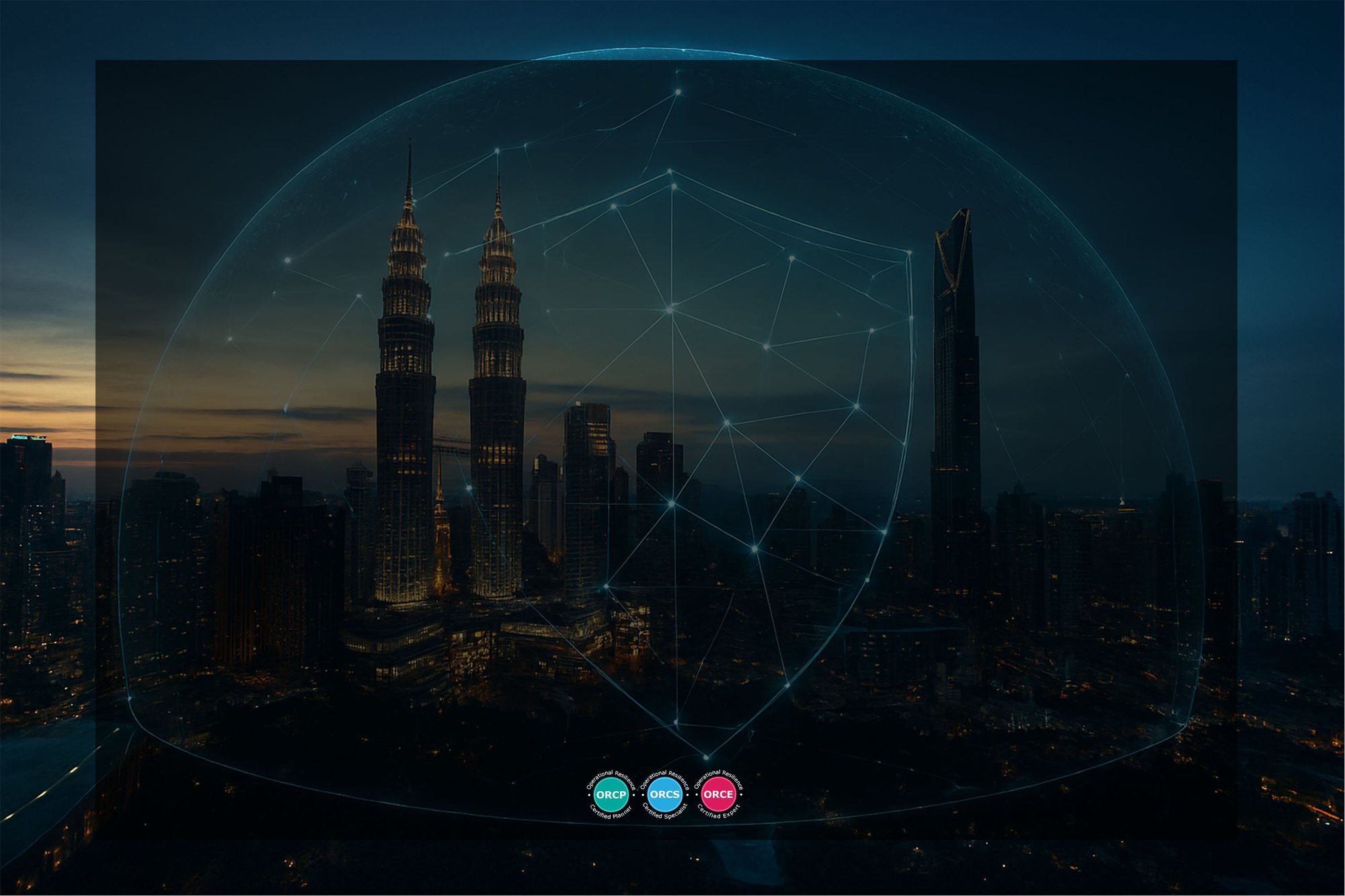
# \[OR\] \[CCB\] \[E1\] \[C1\] Overview of OR Case Study
[![eBook Cover \[OR\] \[CCB\] \[E1\] \[2D\]](https://no-cache.hubspot.com/cta/default/3893111/fd6e83b2-3804-4304-a46c-c92423cc4bf1.png)](https://cta-redirect.hubspot.com/cta/redirect/3893111/fd6e83b2-3804-4304-a46c-c92423cc4bf1)
Operational resilience [](https://cta-redirect.hubspot.com/cta/redirect/3893111/94e06422-4ab9-4bfe-94bd-545de5200261) has become a strategic imperative for financial institutions operating in increasingly complex, digital, and interconnected environments. For China Construction Bank (Malaysia) Berhad (CCB Malaysia), operational resilience is not merely a regulatory requirement—it is a critical enabler of trust, stability, and sustainable growth within Malaysia’s financial ecosystem.
As a wholly owned subsidiary of China Construction Bank Corporation—one of the largest banks globally—CCB Malaysia operates at the intersection of international banking standards, Malaysian regulatory expectations, and cross-border financial flows. This unique positioning presents both opportunities and operational risks that must be managed proactively.
This case study explores how CCB Malaysia can design and implement a structured operational resilience (OR) framework aligned with:
- Bank Negara Malaysia (BNM) regulatory requirements
- Global best practices in operational resilience
- Group-level governance and risk management standards
- The expectations of corporate, institutional, and cross-border clients
The purpose of this section is to gain a deep understanding of CCB Malaysia as an organisation before designing and implementing an operational resilience programme.
[](https://cta-redirect.hubspot.com/cta/redirect/3893111/82999100-d8aa-47ed-b3b7-b418c3698d2a)
[Dr Goh Moh Heng](https://blog.bcm-institute.org/ebook-or/author/dr-goh-moh-heng) Feb 24, 2026
###### Operational Resilience Certified Planner-Specialist-Expert
#### [![\[OR\] \[CCB\] Legal Disclaimer Banner](https://no-cache.hubspot.com/cta/default/3893111/6b0c36e9-6fb9-4705-a42a-089010976426.png)](https://cta-redirect.hubspot.com/cta/redirect/3893111/6b0c36e9-6fb9-4705-a42a-089010976426)
### eBook 1: Chapter 1
##### [](https://cta-redirect.hubspot.com/cta/redirect/3893111/82999100-d8aa-47ed-b3b7-b418c3698d2a)
### **Understanding China Construction Bank (Malaysia)**
#### Operational Resilience Foundations
[![\[OR\] \[CCB\] \[E1\] \[C1\] Introducing OR Case Study](https://no-cache.hubspot.com/cta/default/3893111/4206490b-bdfa-4a73-ac9d-2cad7899c708.png)](https://cta-redirect.hubspot.com/cta/redirect/3893111/4206490b-bdfa-4a73-ac9d-2cad7899c708)[![eBook Cover \[OR\] \[CCB\] \[E1\] \[2D\]](https://no-cache.hubspot.com/cta/default/3893111/fd6e83b2-3804-4304-a46c-c92423cc4bf1.png)](https://cta-redirect.hubspot.com/cta/redirect/3893111/fd6e83b2-3804-4304-a46c-c92423cc4bf1)
Operational resilience has become a strategic imperative for financial institutions operating in increasingly complex, digital, and interconnected environments.
For China Construction Bank (Malaysia) Berhad (CCB Malaysia), operational resilience is not merely a regulatory requirement—it is a critical enabler of trust, stability, and sustainable growth within Malaysia’s financial ecosystem.
As a wholly owned subsidiary of China Construction Bank Corporation—one of the largest banks globally—CCB Malaysia operates at the intersection of international banking standards, Malaysian regulatory expectations, and cross-border financial flows. This unique positioning presents both opportunities and operational risks that must be managed proactively.
This case study explores how CCB Malaysia can design and implement a structured operational resilience (OR) framework aligned with:
- Bank Negara Malaysia (BNM) regulatory requirements
- Global best practices in operational resilience
- Group-level governance and risk management standards
- The expectations of corporate, institutional, and cross-border clients
The purpose of this section is to gain a deep understanding of CCB Malaysia as an organisation before designing and implementing an operational resilience programme.
#### Purpose of Chapter
This chapter lays the foundation for understanding China Construction Bank (Malaysia) (CCB Malaysia) as the subject of an operational resilience case study.
Before an organisation can design and implement an effective operational resilience framework, it must first understand its structure, strategy, operating model, regulatory environment, and risk landscape.
For CCB Malaysia—an internationally connected, corporate-focused banking institution operating under both Malaysian regulatory oversight and global group expectations—this foundational understanding is especially critical.
The complexity arising from cross-border transactions, technology dependencies, and regulatory obligations makes it essential to first examine how the organisation functions before determining how it should build resilience.
The purpose of this chapter is to equip the reader with a structured appreciation of CCB Malaysia’s organisational profile and operating context.
By the end of this chapter, the reader should be able to identify the bank’s critical business services, recognise its key operational dependencies, understand the composition of an effective operational resilience governance structure, and appreciate the strategic goals that should guide resilience implementation.
This understanding forms the baseline for the subsequent sections—designing and implementing operational resilience.
#### **From Organisational Insight to Resilience Strategy**
China Construction Bank (Malaysia) Berhad is a licensed commercial bank operating in Malaysia and regulated by Bank Negara Malaysia (BNM). It serves as an important financial bridge supporting:
- Trade and investment flows between Malaysia and China
- Chinese enterprises operating in Malaysia
- Malaysian corporates engaged in cross-border business
- Institutional and selected corporate clients
As a subsidiary of China Construction Bank Corporation (CCB Group), the bank benefits from:
- Strong capital backing
- Advanced global banking infrastructure
- Established risk management frameworks
- International banking expertise
However, it must also operate within:
- Malaysian prudential and operational regulations
- Local market dynamics
- Domestic banking competition
- Localised customer expectations
##### **Business Model and Strategic Positioning**
CCB Malaysia’s business model typically focuses on:
- Corporate banking
- Trade finance
- Cross-border financing
- Treasury and financial markets activities
- Syndicated loans and structured financing
Its strategic positioning includes:
- Acting as a financial gateway for Belt and Road Initiative (BRI)-related activities
- Supporting Chinese state-owned and private enterprises
- Facilitating RMB (Renminbi) internationalisation in Malaysia
- Serving large corporate and institutional clients
Operational resilience must therefore account for:
- Cross-border dependencies
- Foreign exchange exposures
- High-value transaction volumes
- Regulatory expectations in multiple jurisdictions
#### **China Construction Bank (Malaysia)’s Operating Environment**
Understanding the operating environment is critical for resilience planning.
##### **Regulatory Environment**
CCB Malaysia operates under:
- Bank Negara Malaysia (BNM) regulations
- Risk Management in Technology (RMiT) guidelines
- Operational Risk Management standards
- Outsourcing and third-party risk requirements
- Business continuity and disaster recovery expectations
Regulatory scrutiny in Malaysia is strong, particularly around:
- IT risk management
- Cybersecurity
- Data protection
- Anti-money laundering (AML) and counter-terrorism financing (CTF)
- Cross-border transaction monitoring
Operational resilience implementation must align with BNM’s expectations on:
- Identifying critical business services
- Setting impact tolerances
- Conducting severe but plausible scenario testing
- Ensuring recovery within defined timeframes
##### **Economic and Market Environment**
CCB Malaysia operates within:
- A competitive Malaysian banking sector
- An increasingly digital banking ecosystem
- A regional financial hub environment (ASEAN focus)
- Growing cross-border trade between Malaysia and China
Key environmental factors affecting resilience:
- Volatility in global trade flows
- Geopolitical developments
- Currency fluctuations
- Increasing cyber threats
- Growing dependency on digital platforms
##### **Technological Environment**
The bank’s operations rely heavily on:
- Core banking systems
- Payment and settlement systems
- SWIFT and cross-border messaging networks
- Treasury trading platforms
- Group IT infrastructure
- Third-party vendors and cloud providers (where applicable)
Operational resilience must account for:
- Group-system dependencies
- Cross-border IT integration
- Cybersecurity risks
- Data centre resilience
- Vendor concentration risk
#### **Composition of an Operational Resilience Team for China Construction Bank (Malaysia)**
To effectively implement operational resilience, CCB Malaysia requires a cross-functional governance structure.
##### **Board and Senior Management Oversight**
**Board of Directors**
- Approves OR framework
- Defines risk appetite
- Reviews resilience testing outcomes
- Ensures regulatory compliance
**Senior Management**
- Accountable for OR implementation
- Allocates resources
- Embeds resilience into strategy
##### **Core Operational Resilience Team**
A structured OR team should include:
| Function | Role in Operational Resilience |
| --- | --- |
| Risk Management | Define risk methodology, impact tolerances |
| IT & Technology | System resilience, cybersecurity, recovery capability |
| Operations | Process mapping, recovery planning |
| Business Units | Identification of critical services |
| Compliance | Regulatory alignment |
| Business Continuity Management (BCM) | Crisis management & DR testing |
| Information Security | Cyber resilience controls |
| Finance | Financial impact assessment |
| HR | Workforce resilience and crisis staffing |
| Communications | Stakeholder and media response |
##### **Extended Stakeholders**
- Group Head Office (China Construction Bank Corporation)
- Critical third-party vendors
- Payment networks
- Regulators (BNM)
- Corporate clients (for service impact considerations)
Operational resilience must be enterprise-wide, not silo-based.
#### **Critical Business Services of China Construction Bank (Malaysia): Key Considerations for Operational Resilience**
Operational resilience begins with identifying critical business services (CBS).
##### **Likely Critical Business Services**
For CCB Malaysia, these may include:
1. Corporate Payment Processing
2. Trade Finance Issuance and Settlement
3. Cross-Border Funds Transfer (SWIFT/RMB)
4. Treasury and FX Transactions
5. Loan Disbursement and Repayment Processing
6. Customer Account Access and Reporting
##### **Key Considerations in Identifying Critical Services**
Criticality should be assessed based on:
- Impact on customers
- Impact on financial stability
- Regulatory consequences
- Reputational damage
- Financial loss magnitude
- Cross-border systemic impact
Each service must have:
- Defined maximum tolerable disruption (MTD)
- Impact tolerance (time-based threshold)
- End-to-end process mapping
- Identified resource dependencies (people, systems, facilities, data, third parties)
##### **Interconnectedness and Concentration Risk**
CCB Malaysia must evaluate:
- Dependence on group-level IT systems
- Single data centre reliance
- Outsourced service providers
- SWIFT network dependency
- Key personnel concentration
Operational resilience requires understanding how failures cascade across services.
#### **Key Characteristics of China Construction Bank (Malaysia)**
Several defining characteristics influence its resilience strategy:
##### **Subsidiary of a Global Banking Group**
- Benefits from global standards
- Subject to group oversight
- Possible dependency on offshore systems
- Dual regulatory expectations
##### **Cross-Border Focus**
- High exposure to international trade flows
- Currency and FX dependencies
- RMB settlement infrastructure reliance
- Exposure to geopolitical risks
##### **Corporate-Centric Client Base**
- High-value, lower-volume transactions
- Significant reputational exposure per incident
- Client-specific service customisation
##### **Regulatory Sensitivity**
- Subject to strict Malaysian banking regulations
- Increased scrutiny on AML/CTF
- Technology risk oversight
These characteristics require:
- Strong governance
- Mature risk management
- Robust IT resilience
- Clear crisis communication structures
#### **Establishing Organisational Goals for Operational Resilience**
Operational resilience goals must align with CCB Malaysia’s strategy and regulatory obligations.
##### **Strategic Objectives**
1. Protect Critical Business Services from disruption beyond impact tolerance
2. Ensure recovery within regulatory time expectations
3. Maintain confidence of regulators, clients, and shareholders
4. Reduce systemic risk from cross-border dependencies
5. Strengthen cyber and technology resilience
##### **Operational Resilience Maturity Goals**
CCB Malaysia should aim to:
- Move from a reactive BCP-focused approach to a proactive resilience engineering
- Integrate OR into enterprise risk management (ERM)
- Conduct regular severe but plausible scenario testing
- Embed resilience into product design and outsourcing decisions
- Establish continuous monitoring and resilience metrics
##### **Cultural and Governance Goals**
Operational resilience must become:
- A board-level agenda item
- Embedded into performance KPIs
- Part of the project approval processes
- Integrated into vendor selection criteria
- Supported by ongoing staff training
**[![Banner \[Summing\] \[OR\] \[E1\] \[C1\] Introducing OR Case Study](https://no-cache.hubspot.com/cta/default/3893111/d2e2c339-9a7d-496d-924a-d75107cf7afe.png)](https://cta-redirect.hubspot.com/cta/redirect/3893111/d2e2c339-9a7d-496d-924a-d75107cf7afe)**
Understanding the organisation is the first and most important step in building operational resilience. In examining China Construction Bank (Malaysia), this chapter has highlighted how its corporate-focused banking model, cross-border positioning, regulatory environment, and group-level integration shape its operational risk profile.
The identification of critical business services, governance structures, operating environment factors, and organisational characteristics provides a clear view of where vulnerabilities may exist and where resilience capabilities must be strengthened.
Operational resilience cannot be implemented in isolation from organisational realities. It must reflect the bank’s strategic objectives, regulatory obligations, client expectations, and operational dependencies.
With a comprehensive understanding of CCB Malaysia now established, the reader is ready to proceed to the next stage: translating organisational insight into a structured, actionable operational resilience implementation framework.
[](https://cta-redirect.hubspot.com/cta/redirect/3893111/3aefb2d2-3110-47c1-ad4f-d3e6e5381066)
Blogs marked \[x\] are under construction.
| **Building a Resilient Banking Institution: Operational Resilience Implementation at China Construction Bank (Malaysia)** | | | |
| --- | --- | --- | --- |
| **eBook 1: Understanding Your Organisation: China Construction Bank (Malaysia) ** | | | |
| **C1** | **C2 \[x\]** | **C3 \[x\]** | **C4 \[x\]** |
| [![\[OR\] \[CCB\] \[E1\] \[C1\] Introducing OR Case Study](https://no-cache.hubspot.com/cta/default/3893111/4206490b-bdfa-4a73-ac9d-2cad7899c708.png)](https://cta-redirect.hubspot.com/cta/redirect/3893111/4206490b-bdfa-4a73-ac9d-2cad7899c708) | [![\[OR\] \[GEN\] \[E1\] \[C2\] Understanding Your Organisation](https://no-cache.hubspot.com/cta/default/3893111/ced1bdb4-c85e-4ebe-8878-082aea79ef6a.png)](https://cta-redirect.hubspot.com/cta/redirect/3893111/ced1bdb4-c85e-4ebe-8878-082aea79ef6a) | [![\[OR\] \[GEN\] \[E1\] \[C3\] Examining Operating Environment](https://no-cache.hubspot.com/cta/default/3893111/cc870a30-329c-416c-bda9-ffd799be3d62.png)](https://cta-redirect.hubspot.com/cta/redirect/3893111/cc870a30-329c-416c-bda9-ffd799be3d62) | [![\[OR\] \[GEN\] \[E1\] \[C4\] Composing the OR Team](https://no-cache.hubspot.com/cta/default/3893111/695d257f-c746-48a6-a463-26b3b6a8a7d1.png)](https://cta-redirect.hubspot.com/cta/redirect/3893111/695d257f-c746-48a6-a463-26b3b6a8a7d1) |
| **C5** | **C6 \[x\]** | **C7 \[x\]** | **C8 \[x\]** |
| [![\[OR\] \[CCB\] \[E1\] \[C5\] Identifying Critical Business Services](https://no-cache.hubspot.com/cta/default/3893111/28c28098-c8f2-450e-9530-0f0b0c595647.png)](https://cta-redirect.hubspot.com/cta/redirect/3893111/28c28098-c8f2-450e-9530-0f0b0c595647) | [![\[OR\] \[GEN\] \[E1\] \[C6\] Analysing Key Characteristics](https://no-cache.hubspot.com/cta/default/3893111/312be1e5-fa5e-40cd-ae3b-55f729092d4a.png)](https://cta-redirect.hubspot.com/cta/redirect/3893111/312be1e5-fa5e-40cd-ae3b-55f729092d4a) | [![\[OR\] \[GEN\] \[E1\] \[C7\] Establishing Organisational Goals for Operational Resilience](https://no-cache.hubspot.com/cta/default/3893111/36ee9cb1-b726-4615-ad89-cfdebc4ecbf4.png)](https://cta-redirect.hubspot.com/cta/redirect/3893111/36ee9cb1-b726-4615-ad89-cfdebc4ecbf4) | [![\[OR\] \[GEN\] \[E1\] \[C8\] Summary](https://no-cache.hubspot.com/cta/default/3893111/24dde137-e587-4125-ac61-a0b0577d1f61.png)](https://cta-redirect.hubspot.com/cta/redirect/3893111/24dde137-e587-4125-ac61-a0b0577d1f61) |
| | | | |
**[](https://cta-redirect.hubspot.com/cta/redirect/3893111/084e620a-46c5-419a-82ed-6a681d15c0b6)[](https://cta-redirect.hubspot.com/cta/redirect/3893111/13a448f1-f09c-42da-a57e-0988e41658c5)**
For organisations looking to accelerate their journey, BCM Institute’s training and certification programs, including the **OR-5000 Operational Resilience Expert Implementer course**, provide in-depth insights and practical toolkits for effectively embedding this model.
#### More Information About OR-5000 \[OR-5\] or OR-300 \[OR-3\]
To learn more about the course and schedule, click the buttons below for the OR-300 Operational Resilience Implementer course and the OR-5000 Operational Resilience Expert Implementer course.
| [](https://cta-redirect.hubspot.com/cta/redirect/3893111/3530eccb-515d-401e-afc2-3469e26d7fbf) | [](https://cta-redirect.hubspot.com/cta/redirect/3893111/fdd4fa9c-ed69-40c1-925f-4eb6a1c5c255) | [](https://cta-redirect.hubspot.com/cta/redirect/3893111/77a34b84-0a6d-44f8-b8d6-6ab04cdf5edd) |
| --- | --- | --- |
| [](https://cta-redirect.hubspot.com/cta/redirect/3893111/6e5c0cda-39b9-4bbd-b3d4-4cf46a790b14) | [](https://cta-redirect.hubspot.com/cta/redirect/3893111/a68a08aa-36d3-4216-9551-202c9fde06ea) | [![ \[BL-OR\] \[3-4-5\] View Schedule](https://no-cache.hubspot.com/cta/default/3893111/d0d733a1-16c0-4b68-a26d-adbfd4fc6069.png)](https://cta-redirect.hubspot.com/cta/redirect/3893111/d0d733a1-16c0-4b68-a26d-adbfd4fc6069) |
| [![\[BL-OR\] \[3\] FAQ OR-300](https://no-cache.hubspot.com/cta/default/3893111/f20c71b4-f5e8-4aa5-8056-c374ca33a091.png)](https://cta-redirect.hubspot.com/cta/redirect/3893111/f20c71b4-f5e8-4aa5-8056-c374ca33a091) | If you have any questions, click to contact us.[![Email to Sales Team \[BCM Institute\]](https://no-cache.hubspot.com/cta/default/3893111/3c53daeb-2836-4843-b0e0-645baee2ab9e.png)](https://cta-redirect.hubspot.com/cta/redirect/3893111/3c53daeb-2836-4843-b0e0-645baee2ab9e) | [](https://cta-redirect.hubspot.com/cta/redirect/3893111/7f2718a4-ea80-4f84-a319-dc2d4df37a46) |
| [](https://cta-redirect.hubspot.com/cta/redirect/3893111/74b1e556-8cd2-4a74-8821-db1804534955) | [](https://cta-redirect.hubspot.com/cta/redirect/3893111/f2bd8eb1-32d2-4732-9267-ea53223cf58f) | [](https://cta-redirect.hubspot.com/cta/redirect/3893111/084e620a-46c5-419a-82ed-6a681d15c0b6) |
#### **Comments:**
---

---

---
---


All rights reserved. Copyright 2026
```json
{
"@context" : "https://schema.org",
"@type" : "BlogPosting",
"author" : {
"@type" : "Person",
"name" : "Dr Goh Moh Heng",
"url" : "https://blog.bcm-institute.org/ebook-or/author/dr-goh-moh-heng"
},
"dateModified" : "2026-02-24T06:00:50.219Z",
"datePublished" : "2026-02-24T03:29:00.000Z",
"headline" : "[OR] [CCB] [E1] [C1] Overview of OR Case Study",
"mainEntityOfPage" : {
"@id" : "https://blog.bcm-institute.org/ebook-or/or-ccb-e1-c1-overview-of-or-case-study",
"@type" : "WebPage"
},
"publisher" : {
"@type" : "Organization",
"logo" : {
"@type" : "ImageObject",
"url" : "https://blog.bcm-institute.org/hubfs/BCMI%20Logo.png"
},
"name" : "BCMI Pte Ltd"
}
}
```